Employment reports and market data
Documents



MTG Corporate Responsibility Report 2013
In 2013 the media group embedded sustainability within its core strategy, aligning business growth with responsible practices and earning inclusion in the Dow Jones Sustainability Europe Index and FTSE 4Good.
- MTG achieved €14.1 billion in net sales and €1.9 billion in operating profit in 2013, supported by a workforce of 3,361 employees and the launch of the digital platform MTGx.
- The company earned inclusion in the Dow Jones Sustainability Europe Index and FTSE4Good by integrating sustainability into its core business strategy.
- MTG utilized its media assets to provide over €4.3 million in value for Typhoon Haiyan relief, alongside significant charitable contributions for various health, education, and community initiatives.
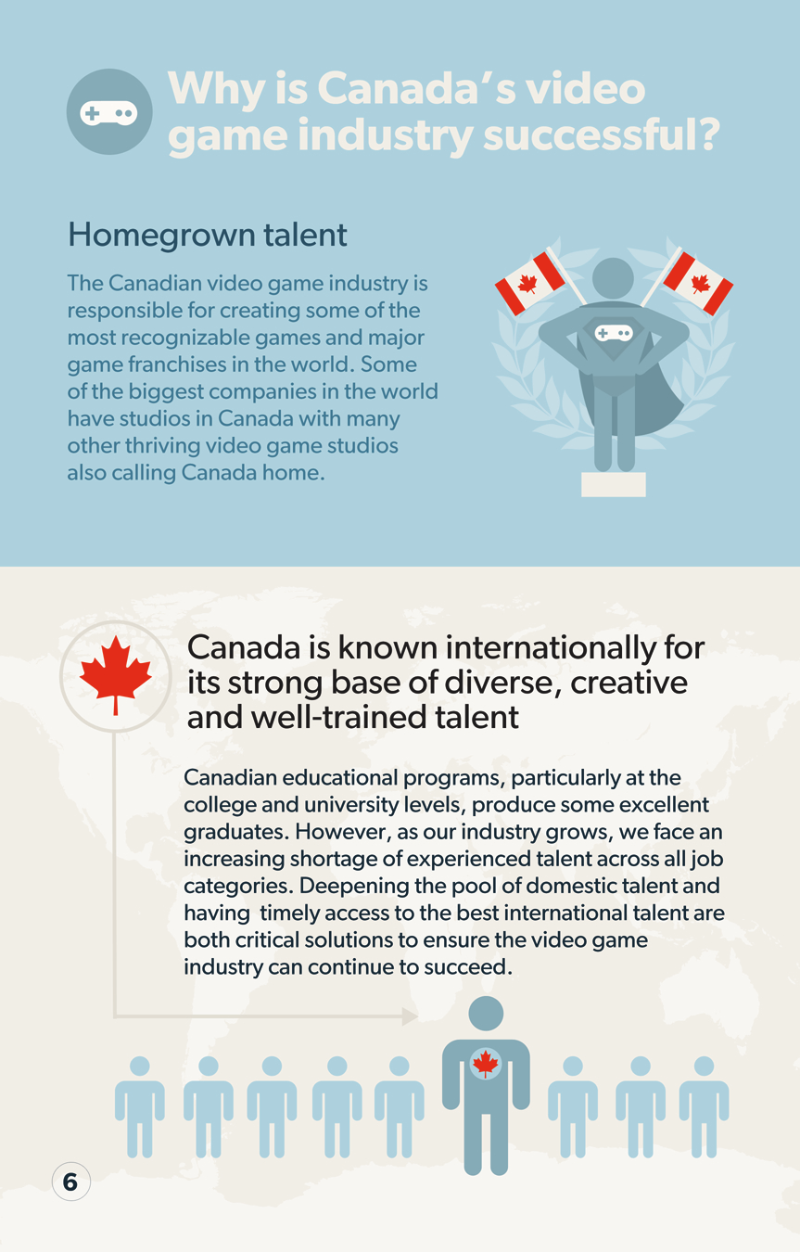


Essential Facts 2013: Canada
The 2013 industry analysis of the Canadian video game sector highlights a robust, globally significant market that serves as the third-largest video game development hub in the world.
- The U.S. computer and video game industry generated $21.53 billion in total revenue during 2013.
- Consumer spending on game content reached $15.39 billion, representing the largest portion of total industry revenue.
- Digital format sales experienced an 11 percent year-over-year growth rate in 2013.



Faits Essentiels 2013 : Canada
The Canadian video game industry experienced significant growth and economic impact as of 2013, positioning Canada as the third-largest developer globally and the first on a per-capita basis.
- Canada is the world's third-largest video game developer and leads globally on a per-capita basis, with the industry contributing $2.3 billion annually to the national economy.
- The sector employs over 16,500 full-time workers across 329 studios, with 68% of that workforce concentrated in the 12% of firms classified as large studios.
- Quebec is the industry hub with 8,750 employees, followed by British Columbia with 5,150, while Ontario’s market is defined by a high density of micro-studios focused on mobile and casual gaming.



Game Developer Index: Sweden 2012
The Swedish video game industry underwent a period of unprecedented expansion in 2012, characterized by a 60 percent increase in total turnover to 414 million euros and a 163 percent surge in profits to 38 million euros.
- In 2012, the Swedish video game industry experienced rapid growth, with total turnover rising 60% to 414 million euros and profits surging 163% to 38 million euros.
- The industry workforce expanded by 30% to 1,967 full-time professionals, supported by the launch of 37 new companies.
- Market success was driven by global hits like Minecraft and Candy Crush Saga, alongside established AAA output from studios such as DICE and Starbreeze.

On Game Schools - How to Find a Good Degree - Extra Credits
The pursuit of a formal education in game design requires careful scrutiny, as the industry is currently bifurcated between legitimate, high-quality institutions and predatory, for-profit entities.
- Prioritize traditional, accredited universities offering foundational degrees in computer science, mathematics, or the arts to ensure versatile, transferable career skills.
- Avoid predatory, for-profit institutions that use commission-based recruiters, misleading marketing, and accelerated two-year programs to secure tuition loans without providing professional value.
- Evaluate potential programs by verifying regional or national accreditation, student hiring ratios, and the professional credentials of the faculty.

Politics - How to Make Your Voice Heard - Extra Credits
This analysis addresses the perceived disenfranchisement of the American public regarding the political process, specifically within the context of digital rights and censorship.
- Local and state-level elections are the most effective venues for individual influence, as outcomes in these races are frequently decided by margins of only a few hundred to a few thousand votes.
- Voter apathy is a primary barrier to political efficacy, as historical data indicates that the majority of 20th-century presidential elections could have been altered if the unregistered population had participated.
- Direct communication methods like phone calls and emails are significantly more effective than online petitions because they allow for the verification of residency within a representative's specific district.

So You Want to Be a Developer - II: Understand Your Coworkers and Your Users - Extra Credits
Professional software development requires a transition from the solitary hacker archetype to a collaborative team member.
- Professional software development requires transitioning from a solitary hacker mindset to a collaborative team member who can effectively coordinate with artists, managers, and marketers.
- Technical proficiency is insufficient for success; developers must treat communication as a core skill by practicing active listening and respecting the expertise of non-technical colleagues.
- Developers must maintain deep technical knowledge of low-level languages like C and assembly, as well as hardware, networking, and operating systems, to troubleshoot performance issues beneath high-level abstractions.

Mailbag 4 - Questions About the Game Industry - Extra Credits
This discussion addresses a variety of inquiries regarding the game industry, ranging from professional development and design resources to market trends and corporate analysis.
- Professional success in the game industry is driven by tangible output and functional prototypes rather than abstract concepts or academic degrees in fields like psychology or economics.
- Aspiring designers should prioritize practical skill development and portfolio building, supplemented by foundational texts such as Jesse Shell’s 'The Art of Game Design: A Book of Lenses' and Don Norman’s 'The Design of Everyday Things'.
- Digital distribution platforms like EA’s Origin are essential business model pivots necessitated by the ongoing decline of physical game sales.

Mailbag 3 - Questions About the Game Industry - Extra Credits
This analysis addresses common inquiries regarding the game industry, focusing on professional development, studio management, and market dynamics.
- Practical experience and project completion are the most effective credentials for career advancement, outweighing traditional management degrees for aspiring producers.
- Aspiring producers should prioritize studies in psychology or business over management-specific degrees to better navigate the interpersonal and operational challenges of game development.
- Launching an independent studio is a low-barrier process that requires only a core team, the formation of a legal entity like an LLC, and active promotion through public platforms and competitions.
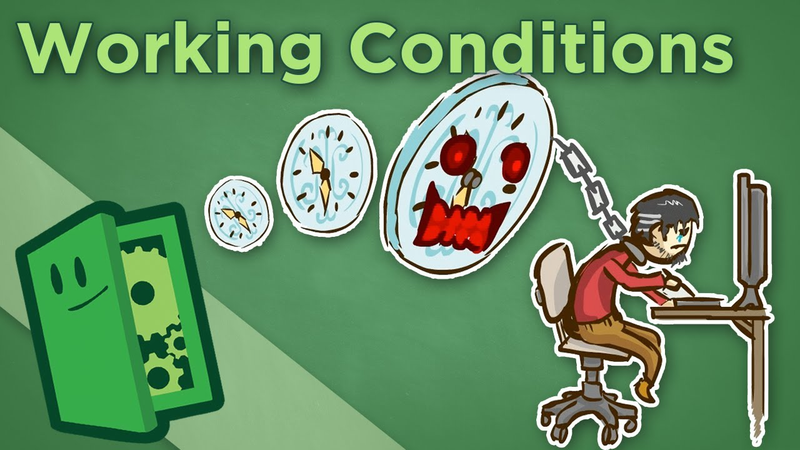
Working Conditions - The Deplorable Status Quo that Killed a Studio - Extra Credits
The game industry faces a systemic crisis regarding working conditions, characterized by chronic, mandatory crunch time and poor management practices that undermine both employee well-being and product quality.
- Chronic crunch is primarily a failure of management and planning rather than a requirement for creative excellence, often resulting in burnout, high turnover, and studio closure.
- The development of L.A. Noire by Team Bondi serves as a primary case study of how toxic labor practices and unsustainable work cycles over an eight-year period led to internal conflict and eventual bankruptcy.
- Studios frequently trap themselves in 'death marches' by failing to adopt modular design principles that prioritize a core, shippable product before adding secondary features.

So You Want To Be a Producer - How to Lead a Development Team - Extra Credits
The role of a producer in the video game industry is frequently misunderstood, yet it remains essential for project completion and studio sustainability.
- The producer's primary function is to act as a facilitator who removes obstacles and resolves pipeline bottlenecks to ensure the development team remains effective.
- Producers must maintain emotional detachment from the game's features to objectively prioritize the project's budget and schedule over creative ambition.
- A successful producer acts as a final arbiter and process champion rather than a creative director, avoiding micromanagement by trusting the expertise of specialized staff.

So You Want To Be a Game Designer - Career Advice for Making Games - Extra Credits
Effective game design requires a multifaceted skill set that extends far beyond the ability to conceive of creative concepts.
- Game design is primarily a role of facilitation and communication, requiring the designer to bridge the gap between the distinct technical and artistic perspectives of team members.
- Effective designers must move beyond high-level conceptualization to focus on the practical execution of systems, mechanics, and level design.
- Project failure is most frequently caused by poor scope management, necessitating that designers evaluate the time and financial cost of every decision to ensure maximum value.