1 free read left. Create a free account for unlimited reading + AI research.
Create free account
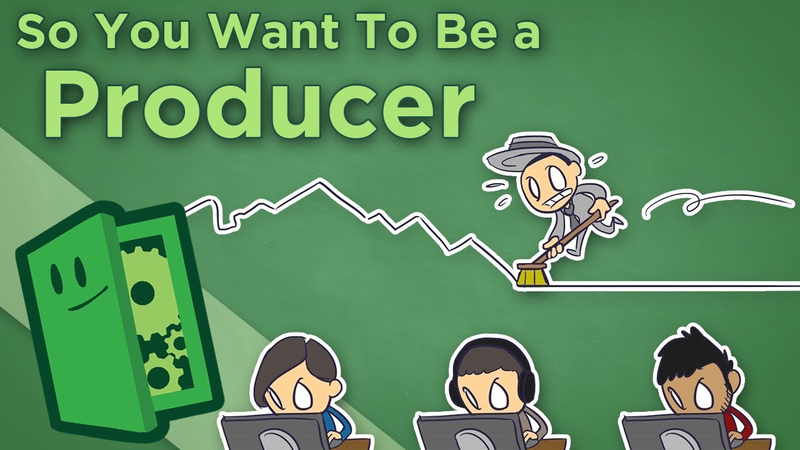
So You Want To Be a Producer - How to Lead a Development Team - Extra Credits
Key insights
6 takeaways- 01The producer's primary function is to act as a facilitator who removes obstacles and resolves pipeline bottlenecks to ensure the development team remains effective.
- 02A successful producer acts as a final arbiter and process champion rather than a creative director, avoiding micromanagement by trusting the expertise of specialized staff.
- 03The role requires making difficult, unpopular decisions—such as cutting features—to ensure the project successfully reaches completion and shipping.
- 04Producers must maintain emotional detachment from the game's features to objectively prioritize the project's budget and schedule over creative ambition.
- 05Effective production relies on a high-level view of the project to manage logistical realities and balance the tension between creative goals and technical constraints.
- 06The position demands a focus on team dynamics and problem-solving, as the producer's ultimate goal is to foster an environment that secures the studio's sustainability.
Ask AI about this video
Transcript
At long last, the guest art marathon is finally coming to an end. Allison is recovered and ready to come back starting next week. But first, we have one final guest here to wrap this marathon up nice. It is my pleasure to introduce Lily Skull-de-Fairey, a good friend of ours. She's a student at VFS and the artist behind the weekly web comic Name Game. And this week, she's going to help us to talk about one of the less appreciated in the game industry, the producer. When James goes to talk at different schools, he periodically has people come up to him and say, "I really want to be a producer." It doesn't happen that often, but it's a great thing to see. The industry needs more exceptional junior producers. In fact, it needs more devoted producers at all levels because production failures are one of the most common things to sink projects or turn crunch time into a death march. But like I said, not many people come forward with that career in mind. Far more students are itching to be designers, and it's not that hard to understand why. Production hasn't been mythologized in popular culture quite the same way
design has. And maybe that's not a bad thing, but it does mean that often, even the people who want to become producers only have a vague and nebulous idea of what a producer does. And really, who can blame them? Even the industry doesn't have a clear consensus on what a producer does. Every studio treats them a little bit differently and breaks down their responsibilities in different ways. Heck, we even give them different titles. If you're entering the industry as a producer, your first job could be associate producer, junior producer, just plain old producer. But one thing remains constant in almost every studio out there. Being a producer ultimately means being a manager. But what does that mean? It's a question you have to be able to answer if you want to be one, but I often see aspiring producers struggle answering it. Being a manager doesn't mean being a boss. Being a manager means being a facilitator. As a producer, it is your job to make sure that as many people on your team are as effective as possible at all times. This can mean anything from helping people communicate more easily to picking up takeout when people are working late. As a producer, you have a little bit of a higher level view of the project than most of the developers. So it's your responsibility to help smooth over the facts of production that the folks in the trenches might not even see. For
example, fairly early on in his career, James was thrown into a production role on a project. There was a hiccup in the art pipeline, which was forcing the art team to routinely do a workaround, which wasted maybe 10 minutes of their time each day. It didn't seem like that big a deal, and everyone in the art team assumed it would take forever for the programmers to fix, so they didn't really want to bug them about it. But, when you add it up, 10 minutes a day per person meant roughly 3 man-hours a day for this team, completely lost because of this pipeline problem. That adds up over time. So, once James got a first-hand look at the crazy workaround the artists had to use just to do their job, he walked over to the programming section of the office and grabbed the nearest available programmer who was waiting for his code to compile. James described the problem and asked, "How long would this take to fix?" Turns out, almost in no time at all. It took four lines of code and done. The guy had the problem isolated before his compiling job was even finished. James mentioned it to the programming lead, and the fix was implemented by the next day. Just like that, the art team was better able to do their job. But, being a facilitator is actually the easiest part of a producer's job. To be a good producer requires a level of psychological discipline, firmness of spirit, and evenness of temper that
comes naturally to very few people. Production, like anything else, is a discipline that you have to work at. The first thing a good producer must come to terms with is the limitations of their own abilities. As a producer, you're going to be the expert when it comes to scheduling, but that's about it. Art, programming, design, sound, you will never be the person who has the best understanding of the subject in the room. When you're having meetings with various departments, you've got to remember that the people around you dedicate every day of their lives to their specialization. You are simply there to listen, collate the data they give you, and relate that information to other departments as it applies to them. You are a connection point for the very specialized people you're working with, but you are not an expert yourself. It's very easy to assert your opinions as a producer, but it's an urge you must fight. You've got to train yourself to accept the fact that you aren't there to make development decisions, and honestly, you probably aren't the best qualified one to be making them anyway. Instead, learn to trust those around you. This can be especially hard for those who started in those other disciplines and became producers later. James will confess to this from experience. But, even if you were a hot shot programmer or an artist before you
became a producer, you got to remember the people on your team working in that field right now are a lot closer to their parts of the project than you can possibly be. They are focusing on that task every hour of every work day. And if you start trying to foist your ideas on the team, you'll undermine the authority of your leads and completely destroy their respect for you, which just leads to a deadly cycle of micromanaging. So, once you've learned to trust your team and learned to put your faith in their hands, after that comes the next remarkably difficult aspect of a producer's job. There are many styles of decision making on teams, but the style I found the most effective has the producers acting as the Supreme Court. The leads in each department make all the decisions, but the producer can veto any decision if they think it jeopardizes the project as a whole. But, even this system is prone to abuse. A bad producer can easily start inventing reasons why a decision they don't like will push the schedule or take vital resources away from another part of the project. To do this job well, you have to be introspective and self-aware enough to fight that temptation. Now, this leads us to the last major point, and really the big reason why a producer's job is so important. Shipping a video game is a very, very hard thing.
It doesn't matter if it's your first title working with a student team, or if you've got a budget somewhere north of a hundred million dollars, shipping a video game is still a very hard thing. Fundamentally, the producer's job is to see that product ship, to see that everyone's hard work reaches an audience, and to see that the studio survives to soldier on to a new project. This means you have to be emotionally invested in seeing the product ship, but not in the product itself. Now, I know a lot of producers are going to balk at this, but I'm going to say it anyway. Everyone else on the team is very emotionally invested in the product. They will fight all day, every day to make sure that that game is the best game it can possibly be. The producer's job is to be the counterweight. You must keep the project grounded in reality. Without producers, none of us would ever manage to ship a game, because no one has ever shipped a game they felt was a hundred percent finished. We can always think of some small way we could make it better. Producers are the anchor that aligns the wild aspirations of the development team with the harsh realities of schedule and budget. This means a producer has to be bitterly honest with themselves. If time and budget require you to redline your favorite feature, you must be able to do
so without hesitation. It'll kill you to do it, but you can't let your personal desires influence the decision. A producer can't allow themselves to blindly believe that the team might be able to get that awesome feature in somehow, simply because it's a feature they love. This is one of the hardest parts of the job, and it's made even harder because it's a job no one will thank you for at the time. When you have to redline the feature you love, no one's going to see the discipline and the anguish it took to do so. All they'll see is that you just redlined their favorite feature. If you're lucky and you have a good team, everyone will thank you when launch day comes, but even that can be uncommon. Unfortunately, producing can be a pretty thankless job at times, which is a shame when you consider how crucial they are to the success of a project. If you happen to be watching this from a development studio right now, go give your producer a hug. They could probably use one. Now, before we wrap things up, here's one last piece of advice for the producers who are just starting out. It is totally okay if you don't always have the answers at your fingertips. Because you're the connection point between so many people, it's easy to feel like you have to have an answer immediately on the spot whenever someone asks something. It's not even a conscious thought. You feel responsible. You don't want it to look like you don't know what
you're doing, especially around all these people who've been doing it so much longer than you, and you really want to be helpful. Easy mistake to make. Just remember these golden words, "I'll look into that." or "Hmm, I'll think on it." These words are the producers' most powerful tools. No one will think less of you for taking the time to work through their problems, and in the end, you'll be able to give them a real solution instead of making up a suggestion on the spot. Being a bad producer is probably the easiest job in the game industry, certainly the easiest to get away with not being fired, but being a good producer is probably the hardest. A producer has to love not games, but game development. You have to love helping a team function as a unit. You have to love solving all the quirky problems that come up with putting together an interactive experience, rather than just the experience itself. The best producers are genuinely passionate about seeing their team's hard work rewarded and can be equally invested in that goal whether they're working on a dreadful license title or the game of their dreams. If I had to say which you should try to learn as you work your way towards being a producer, go learn everything you can about people. And also, learn some humility. There is more authority in humility than in all the swagger and bluster in the
world. Well, hopefully that has at least helped to clear up what a producer does. And seriously, go hug your producer. See you next week. Mark the cherry and try to do the can. Oh, we've been disrespected all your life, but I'd rather eat raw green beans. Shrimp and grits. I don't care about your bacon and transport. Just roll me to the food. I can feel the cool breeze in every city in the town. Most of these apples are nothing like the ones I recognize. Apples are round and oranges are not round. Real spinach grows in roots of the big green trees like soy sauce.
Summary
The role of a producer in the video game industry is frequently misunderstood, yet it remains essential for project completion and studio sustainability. While designers and artists often receive more public recognition, the producer serves as the primary facilitator for the development team. Their core responsibility is to ensure that team members remain effective by removing obstacles, improving communication, and managing the logistical realities of production. By maintaining a high-level view of the project, producers can identify and resolve inefficiencies—such as pipeline bottlenecks—that might otherwise hinder the progress of specialized staff.
Effective production requires a specific set of psychological disciplines, most notably the ability to act as a grounded counterweight to the creative team. Because developers are often deeply invested in the quality of their specific features, the producer must remain emotionally detached from the product itself to prioritize the project’s schedule and budget. This often involves making difficult, unpopular decisions, such as cutting features to ensure the game actually ships. A successful producer avoids micromanagement by trusting the expertise of their team, acting as a final arbiter rather than a creative director.
Ultimately, the producer’s role is to champion the development process rather than the game itself. This requires humility, self-awareness, and the patience to gather information before making decisions. Because the position is often thankless and requires navigating the tension between creative ambition and technical constraints, it demands a genuine passion for team dynamics and problem-solving. By fostering an environment where specialists can perform their best work, the producer ensures that the collective effort of the studio reaches an audience, thereby securing the future of the team.





















Comments