1 free read left. Create a free account for unlimited reading + AI research.
Create free account
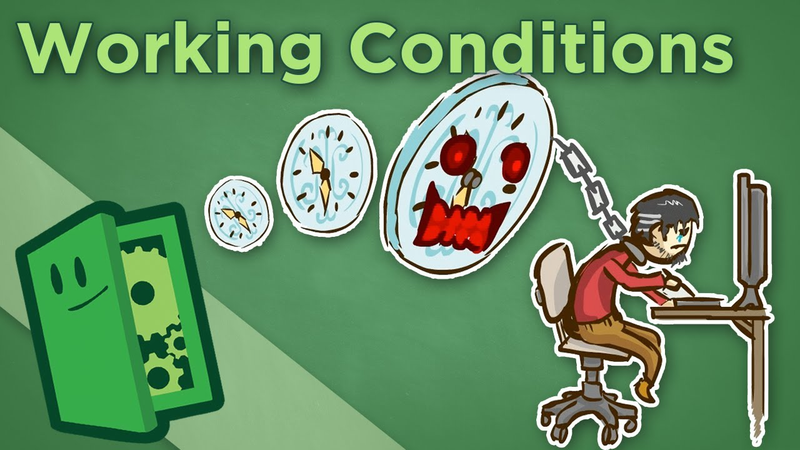
Working Conditions - The Deplorable Status Quo that Killed a Studio - Extra Credits
Key insights
6 takeaways- 01The development of L.A. Noire by Team Bondi serves as a primary case study of how toxic labor practices and unsustainable work cycles over an eight-year period led to internal conflict and eventual bankruptcy.
- 02Industry culture often weaponizes developer passion, using the threat of career termination to justify exploitative labor and the maintenance of unstable, parallel builds for promotional demos.
- 03Studios frequently trap themselves in 'death marches' by failing to adopt modular design principles that prioritize a core, shippable product before adding secondary features.
- 04The rise of digital distribution and independent studios founded on ethical labor principles is beginning to shift the industry away from historical failures in professional management and production.
- 05Chronic crunch is primarily a failure of management and planning rather than a requirement for creative excellence, often resulting in burnout, high turnover, and studio closure.
- 06Aggressive publisher milestones and the forced inclusion of unnecessary features, such as tacked-on multiplayer modes, frequently dilute final product quality and disrupt development workflows.
Ask AI about this video
Transcript
All right. So, I know I said the guest art marathon was over before, and it is. This This is for something different. Um okay. So, during our fundraiser for Allison, our friends over at Nine Dots Studios put together $1,000 to contribute, which means they get to pick a topic. So, they asked us to talk a little bit about what it's really like to work in the industry and some of the bad practices that go on, because Nine Dots was founded on the very principle of getting away from all that stuff. Frankly, that's a topic we've been planning to do for a long time, so we're happy to oblige. And as an added bonus, the team's lead artist volunteered to do the art. Allow me to introduce Etienne Vallée. Glad to have you with us. So, here we go. Many people see the game industry as all Nerf gun fights and miniatures in your cubicle. And that's how the industry usually likes to portray itself, but that's not really what we are. At our best, we're an alchemist's lab, the Ames Research Center, Michelangelo's workshop, and the City Lights bookstore all rolled into one. But at our worst, we keep the same hours as a sweatshop. We have the
maturity level of a preschool and the fiscal responsibility of a subprime mortgage trader. Most of you will be familiar with the story of Team Bondi, the team that made L.A. Noire. Over the span of eight years, they were only able to turn out one game after blowing through over a hundred million dollars. They went through almost perpetual crunch time, with 12-hour days seven days a week often being considered the norm. They were run by a tyrannical boss who would circumvent his leads and shout at individual employees in the middle of the office at the slightest provocation. And in the end, when their one product was forced out the door with a great deal of help from Rockstar staff, most of the people who worked on it were maliciously left off the credits, because the studio heads didn't want to give credit to anyone who didn't endure this the whole way through. In fact, so many people were left off the credits that Bondi employees took it upon themselves to create a webpage offering the correct credits. And after all that, after the product finally shipped, uh the company sold off all its assets and filed for bankruptcy. And though many of us salivate over any Rockstar title, the truth is that L.A. Noire still didn't live up to what it could have been. One game, eight years of hell, and you're out of a job. That's pretty bad. But honestly, in this industry, it's not
anywhere near as uncommon a story as it should be. I mean, it took seven years of this for these issues to even get out to the public. And therein lies the first problem with working conditions in this industry. When anyone complains about the long hours or the unreasonable management, they'll often be reminded how lucky they are to be working in this industry. I've met people who told me that during the first two or three years of their career, they were essentially intimidated into going above and beyond all to compensate for bad business practices or incompetence from above. They were regularly told, "You will never find another job in this industry if you quit." And it's true. Before you ship your first game, it's really easy to think that if you lose your job, you'll never get to work on a game again. Beyond that, we often create a culture in our studios where if you leave before 7:00 p.m., you're looked at like a traitor. Now, I will readily admit it. I'm actually not opposed to the idea of crunch time. I think that artists will very often choose to make sacrifices for their art. I mean, there's a lot in this life that each of us have given up to walk the paths we've taken, and we don't regret it. But sacrifice must come with a purpose. There has to be a good reason. Now, we could take a whole episode talking about this, but James works from a principle
called modular design. You figure out what the minimum shippable product is, and then you figure out all the ancillary features that would improve the game, but don't fundamentally alter how you develop the core of the product. For example, shooting would be part of the core feature set in a Call of Duty game, but things like kill streak rewards would probably be one of the modular features. As a designer, you should be able to design the core of your game so that your team can create and ship it without anyone having to crunch. Otherwise, you failed at your job. But in every department, you're going to find modular features which are going to be really hard to squeeze in without somebody doing some overtime. If people want to make a great game, they'll put in the hours it takes to make some of those extra features happen. But at least then, people know what they're crunching for. They have a purpose, and they can see an end in sight. Having a specific features you're personally motivated to spend extra hours working on is totally different than a studio-wide mandatory death march where the entire crew is putting in excessive hours with no particular goal except maybe eventually shipping the product, all because of poor planning somewhere up the chain. And that's another problem. We're just getting the hang of management and scheduling in this industry. And it sounds ridiculous to say that about a multi-billion dollar
international high-tech field like this one, but the truth is that for the longest time, we as an industry pretty much relied on the idea that "Oh, we'll just work extra hard if our estimates turn out to be wrong." Which, as you can imagine, leads to a lot of games falling apart and never shipping at all. Also, as we mentioned a while back, we still don't have a clear idea of what a producer does in this industry. So, you get wild variance in both the quality and actual responsibilities of management. But, the developers aren't the only ones at fault. If you choose to work in this industry, you'll almost certainly have a project canceled or a studio close underneath you for reasons that have nothing to do with that studio. As game studio consolidation increases and more studios end up wholly owned by their publishers, a developer has less and less control over their own fate. James once worked for a company where everyone seemed to know that a particular partner studio was going to be closed by the end of the fiscal year, except the developers at the studio itself. The publisher company was just waiting a little longer for tax reasons. And the studio wasn't being closed because it was bad, either. Just because the project they were working on wasn't estimated to have as high a return as other potential products the publisher was thinking about pursuing. But, you know, at the end of the day, it's a
business. And as terrible as this can be for a developer, this really isn't the publisher's fault. If the publisher's making smart decisions to ensure that they're able to put out a wider selection of better games in the future, then sure. I understand triage is sometimes necessary. But, you know what is a publisher's fault? Unreasonable demands. Often, working conditions in game studios become hellish because the publisher asks for things that simply can't be accomplished without slavish labor. And the developer has no choice but to comply. Worse still, the things publishers demand from these studios are often unnecessary or even counterproductive. The mildest of these harmful demands is the request for unreasonable milestones. James has worked with more than one publisher who feels that it's a good practice to push the development team and try to maximize the workload you can get out of them. This is fundamentally a breakdown of trust. Like we said in our publishing episode, this comes from the publisher mindset that your developers are somehow trying to teach you or pull a fast one on you so they can be lazy. But really, if that's the attitude your developer really has, no form of aggressive milestones going to help you. I mean, they're just going to cheat you anyway. And if they aren't trying to cheat you, then you've really only succeeded in driving the team into the ground. Overly aggressive milestones force a team to
crunch when it's not necessary, which leads to sloppy, rushed work and exhausted developers. Worse still, from the publisher's perspective, it often leads to corner cutting and milestone builds that are more cludged smoke and mirror tricks than real demonstrations of gameplay. But the truly tragic moments come when the publisher requests something grueling that won't even help the end product. This usually comes in one of two ways. Either the publisher's feeling pressure to have a big showing at a press or a promotional event, or the publisher's gotten a hold of some buzzword or a piece of industry wisdom which they think all their games now need. Let's talk about the press demos first. Scraping together a demo takes time. It pulls team members away from the predicted development path and generally throws the schedule into chaos, especially if milestones and ship dates aren't adjusted to take account of such things. In the worst cases, a studio can get sucked into a perpetual press cycle where after E3, they're asked to have a demo for PAX, and then a Gamescom demo, and then maybe something prepared for Game Informer to see when they wander into the office. Over and over to the point where they are practically working on two parallel builds of the game. And sure, some of the work done from the demos can be salvaged, but you'd be surprised how much rushed demo work has to be redone
or scrapped entirely afterwards. But the second case is the real project killer. When publishers get a bee in their bonnet, they'll sometimes mandate the inclusion of specific features, even long after development's begun. James had several friends working on first-person shooters whose projects were essentially destroyed when competitive multiplayer became really hot because they were all told that all first-person shooters must include competitive multiplayer or consumers won't buy them. Obviously, we all know this to be false, but that didn't stop a lot of games from getting absolutely crippled. If you look back at all the mediocre shooters released between 2007 and 2009 with what feels like tacked-on multiplayer features, I can almost guarantee you that's what happened. It's a shame, too, because some of those games might have been amazing single-player experiences if they just left well enough alone. But despite everything I just said, it's not our intent to scare you off because things are slowly getting better. And we as an industry are getting better at what we do with every passing year. There are plenty of studios opening up like Nine Dots with the stated goal of getting away from some of these practices. There are also more opportunities now for studios to do so with digital distribution, mobile, and social games. So, things are looking up, but just consider this a heads-up for what to
watch out for if you're starting your career. And so, future designers, producers, and well, really leads from any field, it's in your hands to create the conditions that'll help us all create better games. A little more planning, a little more being honest with ourselves, and hopefully the industry you work in won't have the same disappointments of the industry today. Thanks again to Mr. Vaugne and thanks to you guys for watching. We'll see you next week.
Summary
The game industry faces a systemic crisis regarding working conditions, characterized by chronic, mandatory crunch time and poor management practices that undermine both employee well-being and product quality. The primary thesis posits that excessive overtime is often a symptom of inadequate planning and unreasonable publisher demands rather than a necessity for creative excellence. By failing to adopt modular design principles—which prioritize a core, shippable product before adding secondary features—studios frequently trap themselves in perpetual death marches that lead to burnout, high turnover, and, in extreme cases, studio closure.
Key findings highlight that the industry culture often weaponizes the passion of developers, using the threat of career termination to justify exploitative labor. Management failures are further exacerbated by aggressive publisher milestones and the constant, disruptive demand for promotional demos, which force teams to maintain parallel, unstable builds. These practices often result in the inclusion of unnecessary, tacked-on features, such as forced multiplayer modes, which dilute the quality of the final product. The case of Team Bondi and the development of L.A. Noire serves as a primary example of how these toxic environments can lead to eight years of unsustainable labor, internal conflict, and eventual bankruptcy.
While the industry has historically struggled with professionalizing management and production roles, the outlook is shifting. The rise of digital distribution and the emergence of independent studios founded on ethical labor principles suggest a gradual improvement in working conditions. The analysis concludes that the responsibility for reform lies with current and future leaders, who must prioritize honest scheduling, realistic project scoping, and the protection of their teams to ensure the long-term health and creative output of the industry.




















Comments