Employment reports and market data
Documents
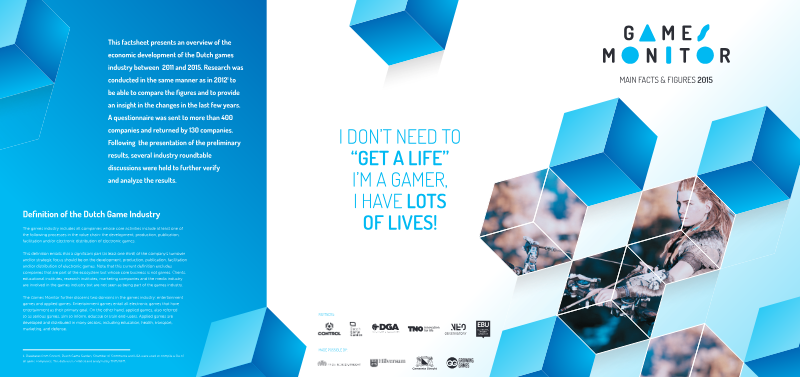
Dutch Games Monitor: Main Facts & Figures 2015
The Dutch games industry experienced significant expansion between 2011 and 2015, characterized by a 42% increase in the number of companies, which grew from 320 to 455.
- The Dutch games industry grew by 42% between 2011 and 2015, increasing from 320 to 455 companies, though the sector remains dominated by micro-enterprises with an average of only seven employees.
- Total industry employment grew from 2,730 to 3,030 professionals, a slower rate of expansion than company formation, highlighting the difficulty studios face in scaling operations.
- Financial performance across the industry is modest, with the majority of companies reporting annual profits of less than €100,000.

Game Developer Index 2014: Sweden
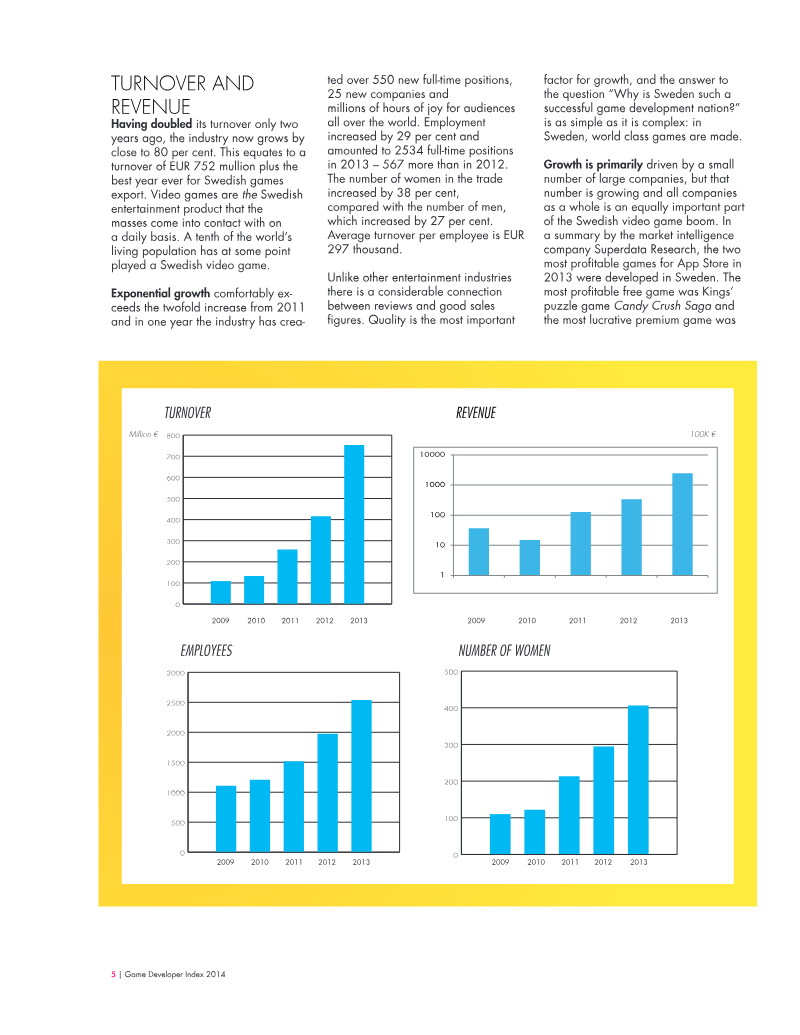
The Swedish gaming industry demonstrated exceptional vitality during the 2013–2014 period, cementing its status as a global powerhouse through rapid revenue expansion and significant job creation.
- The Swedish gaming industry experienced rapid growth between 2013 and 2014, with total revenues surging 76 percent to reach EUR 752 million.
- Industry expansion was driven by a 29 percent increase in full-time employment and a 17 percent rise in the number of active companies, anchored by the international success of King, Mojang, and DICE.
- Swedish firms are increasingly adopting self-publishing and digital-first business models to capture global market share via mobile and digital distribution platforms.
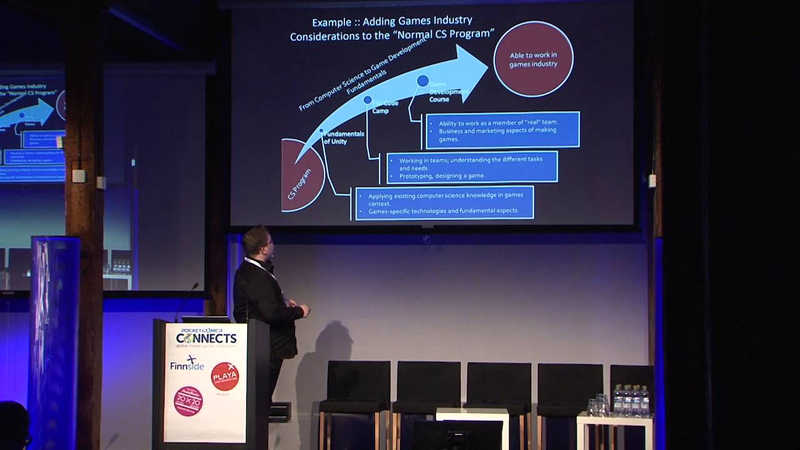
Jussi Kasurinen on the synergies between universities and game start-ups
The integration of regional universities into local game industry clusters serves as a vital catalyst for startup growth, particularly in regions facing economic downturns.
- Regional universities can act as vital economic hubs by providing early-stage game startups with essential infrastructure, including office space, specialized software licenses, and equipment.
- A three-year, 200,000-euro project in the Lappeenranta region successfully launched five new game companies and created 50 sustainable jobs by prioritizing direct industry support over traditional academic research cycles.
- Universities can bridge the resource gap for startups by funding 'game business hatcheries' that lower the barrier to entry for new developers.
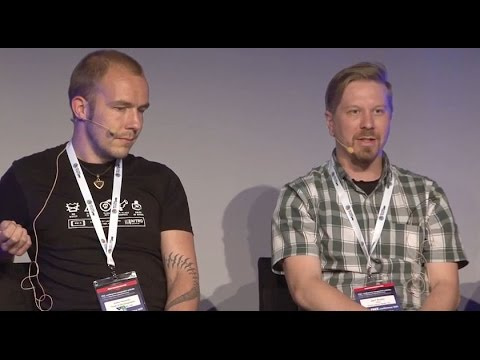
Panel on the Game Executive leadership program at Aalto University
The Aalto University Game Executive program serves as a critical bridge between technical expertise and organizational leadership for the Finnish mobile gaming sector.
- Long-term success in the mobile gaming industry is driven by an executive's ability to align individual creative motivations with broader business objectives rather than relying solely on technical proficiency.
- The Aalto University Game Executive program facilitates this transition for fifteen studio leaders by focusing on the intersection of organizational culture, creative autonomy, and production deadlines.
- Effective leadership in gaming requires high levels of emotional intelligence and self-awareness, specifically regarding the ability to provide constructive feedback to creative talent.

How 200 Finnish game developers generated $1.2 billion in 2013
The Finnish game industry experienced a period of rapid expansion between 2011 and 2014, characterized by high efficiency and significant financial growth.
- In 2013, the Finnish game industry generated €900 million in direct game sales, representing a 260 percent year-over-year increase.
- The total economic impact of the sector, including merchandising and M&A activity, reached €2.2 billion in 2013.
- Between 2011 and 2014, the industry secured $1.8 billion in total investment, fueling growth for both startups and established studios.
Developer Satisfaction Survey 2014: Summary Report
The 2014 Developer Satisfaction Survey establishes a comprehensive benchmark for the global game development industry, capturing the professional experiences and demographic realities of 2,202 practitioners.
- One-quarter of the 2,202 surveyed developers report immediate fear regarding job security, fueling a widespread desire for professional representation and potential unionization.
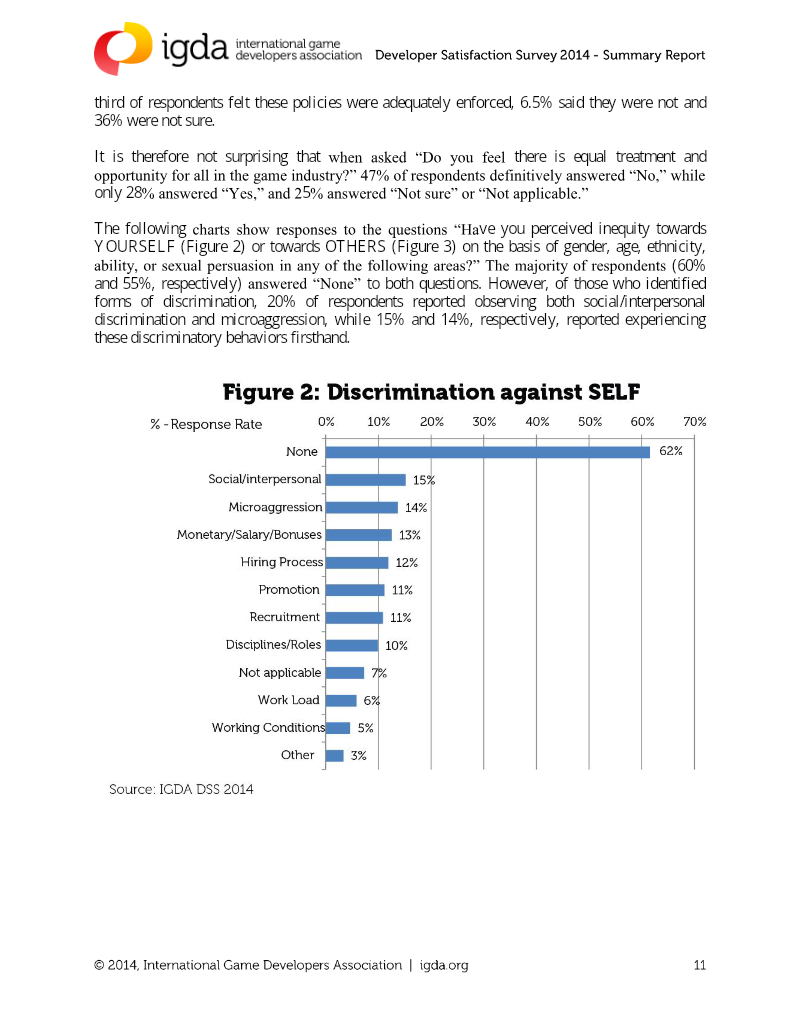
- Nearly 50% of the workforce reports a lack of equal opportunity, citing persistent issues with gender discrimination, ageism, and a lack of formal disciplinary procedures.
- Female participation in the industry has nearly doubled since 2005, though cultural barriers to equity remain a significant challenge.
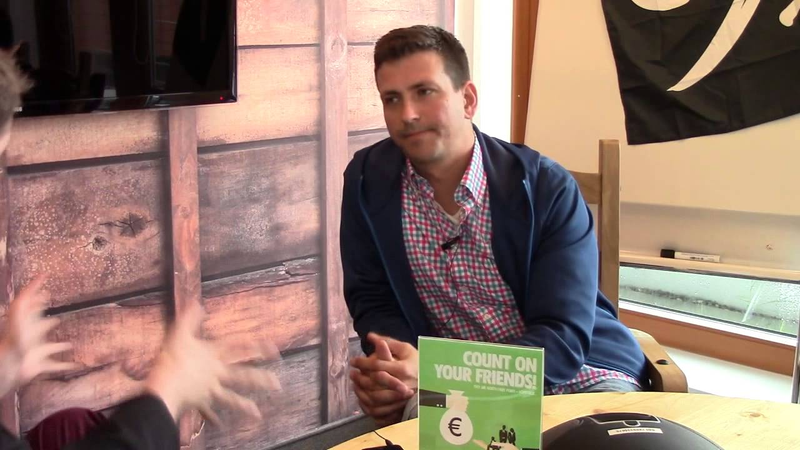
Top recruiter at InnoGames explains its strategy for snatching up talent
InnoGames maintains a sustainable, steady growth strategy, hiring approximately 100 new employees annually to ensure that new personnel align with the company’s culture and technical requirements.
- InnoGames maintains a controlled growth strategy by hiring approximately 100 new employees annually to ensure cultural and technical alignment.
- The company receives roughly 1,000 job applications per month, making demonstrated passion and personal projects the primary differentiators for candidates over standard technical qualifications.
- To overcome the competitive Hamburg labor market, the company utilizes an international recruitment strategy involving global industry events, LinkedIn, and specialized headhunters based in the UK.
Developer Satisfaction Survey 2014: Employment Report
The 2014 game industry employment landscape is defined by a paradox of high creative fulfillment and persistent structural instability.
- The game industry workforce is shifting toward a fragmented model, with freelance employment growing to represent 30 percent of the total sector by 2014.
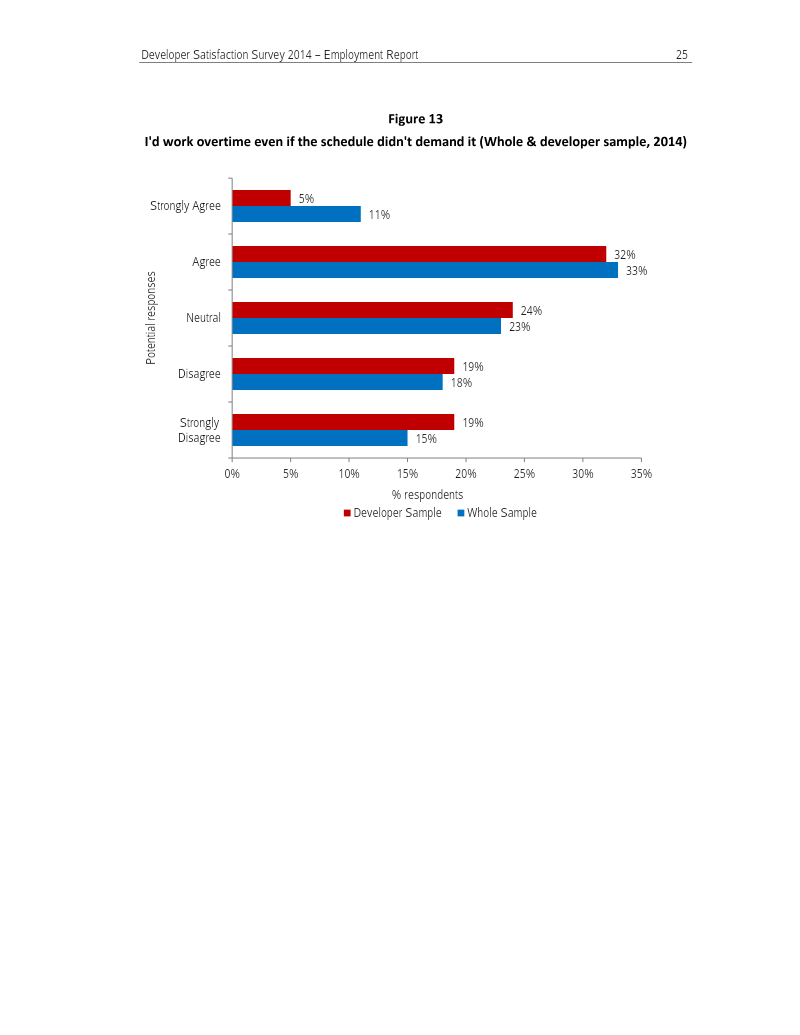
- Although crunch intensity has trended downward since 2009, over 50 percent of developers still consider mandatory overtime a standard requirement due to poor management and feature creep.
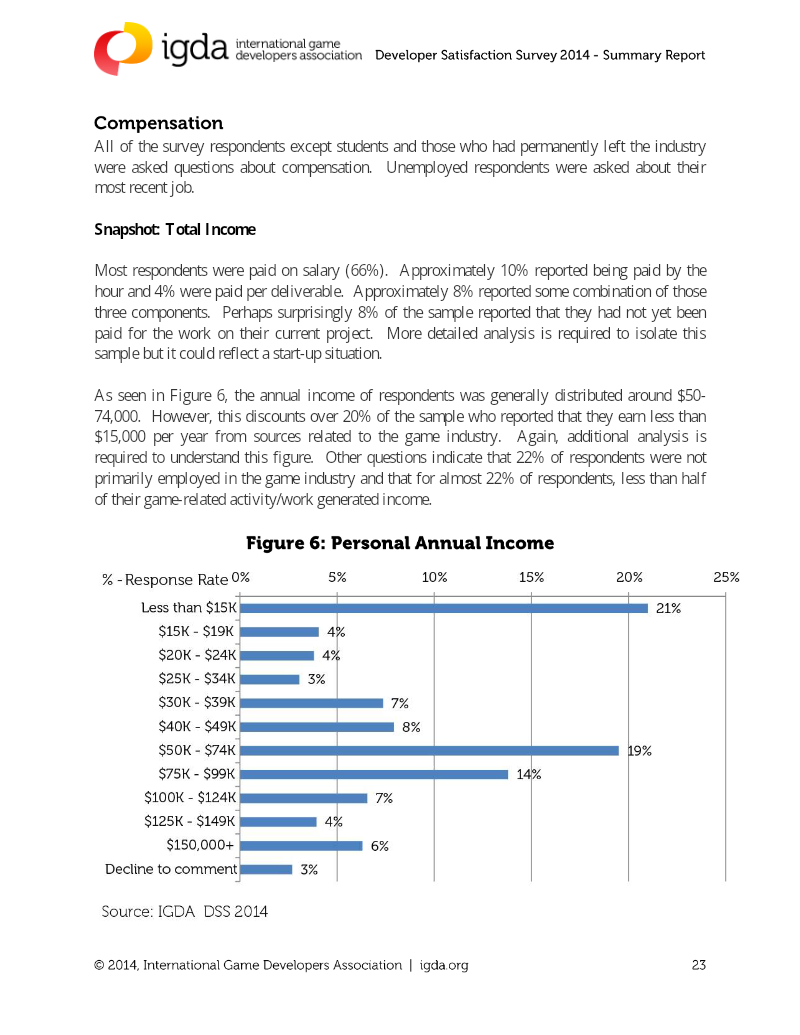
- While most developers earn between $50,000 and $100,000 annually, a significant minority reports low earnings and limited access to long-term financial benefits like retirement plans.

Game Developers' Life and Consciousness Survey: CEDEC 2013
The Computer Entertainment Developers Conference (CEDEC) 2013 initiative aims to establish a comprehensive understanding of the professional landscape for individuals working within the computer entertainment industry.
- The CEDEC 2013 survey was launched to establish a recurring, data-driven baseline for the computer entertainment industry, covering professional development, skill acquisition, and workplace environments.
- The study methodology involved a structured 42-question questionnaire distributed throughout July 2013 to both CESA members and non-members.
- The survey data is categorized into six core areas: personal background, job roles, corporate affiliation, employment transitions, workplace culture, and long-term career aspirations.


Canada's Video Game Industry in 2013: Final Report
Canada’s video game industry serves as a vital economic engine, contributing $2.3 billion to the national GDP and supporting 27,000 total full-time equivalent jobs as of 2013.
- Canadian video-game firms rate tax credits as highly effective, awarding them an average satisfaction score of 4.4/5.
- The tax-credit regime is a primary driver of industry expansion, with 40% of firms projecting revenue growth exceeding 25% in the coming year.
- Tax incentives are most effective at creating project opportunities, which received an impact score of 4.0/5, followed by strong benefits for employee retention and industry visibility.
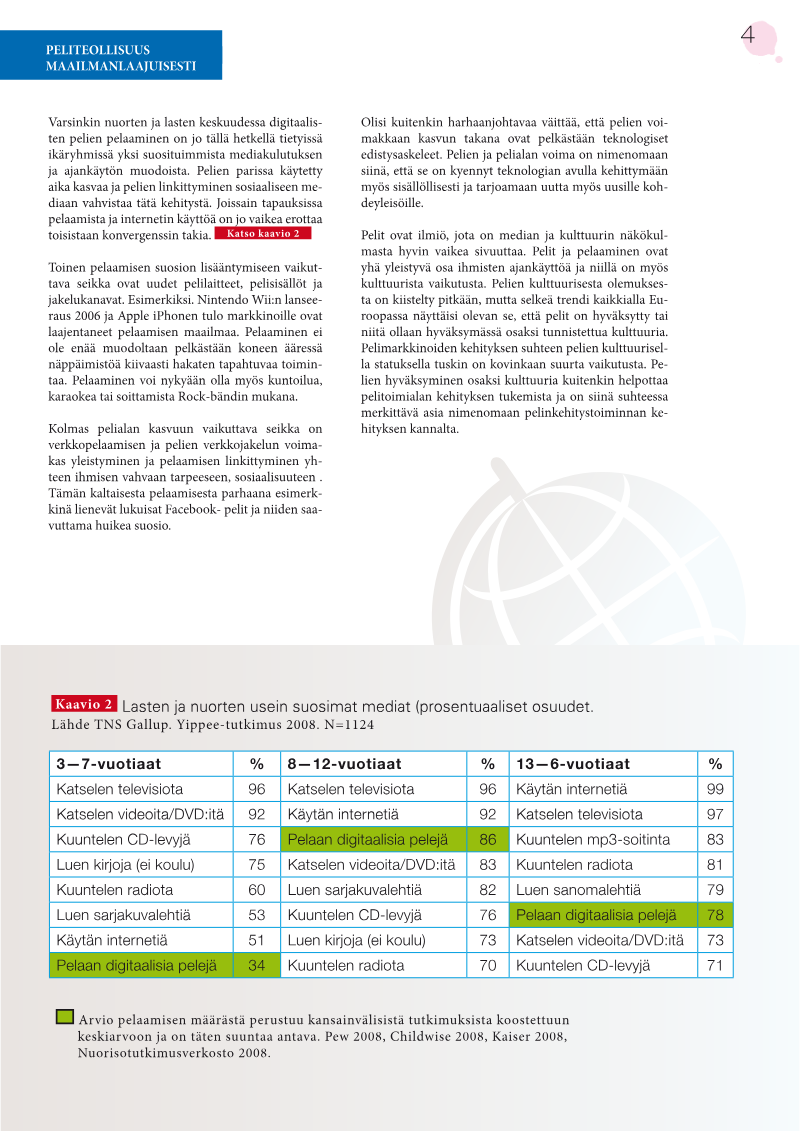
Suomen Pelitoimialan Strategia 2010-2015: Visio 2020
The Finnish gaming industry represents a high-growth cultural export sector that consistently outperformed global market benchmarks between 2004 and 2008.
- The Finnish gaming industry targets a 2020 vision of 6,600 employees and €540 million in annual revenue, with €380 million derived from exports.
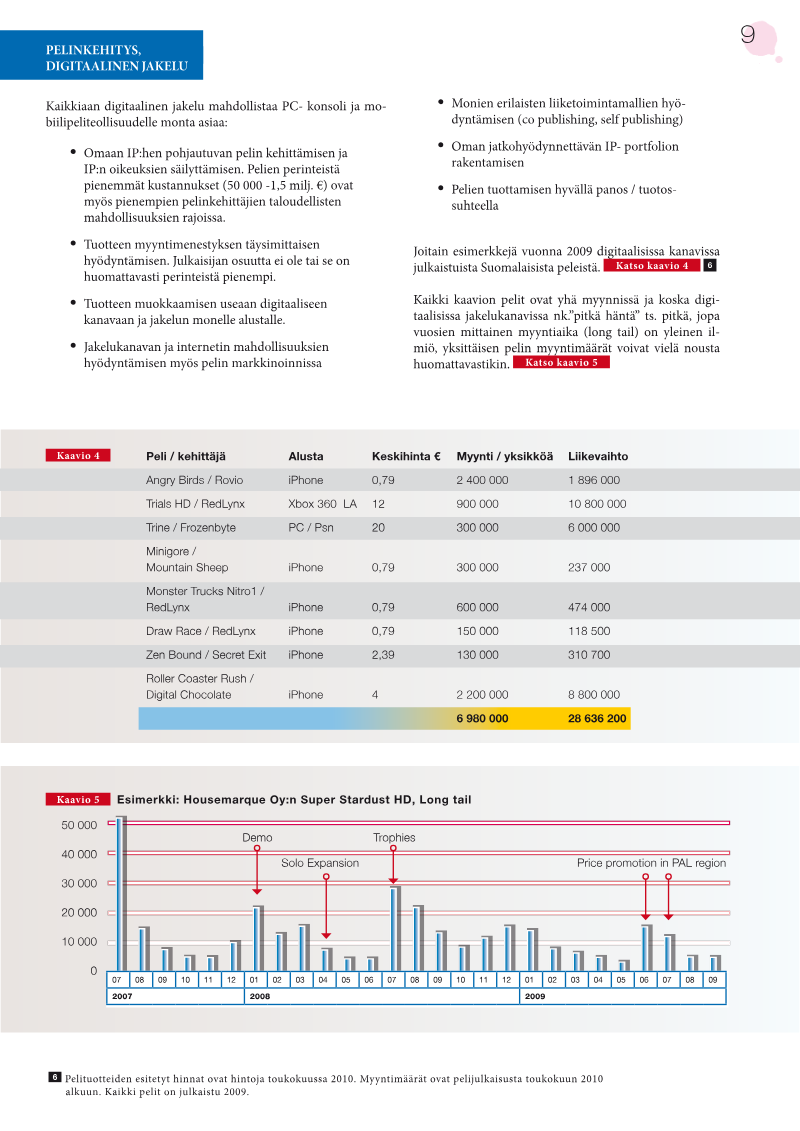
- The sector is shifting away from traditional, publisher-led models toward digital distribution and online services to secure intellectual property rights and independence.
- Digital distribution is identified as the primary catalyst for growth, enabling lower production costs and direct engagement with global consumers.

Suomen pelialan koulutus ja sen kehittämistarpeet
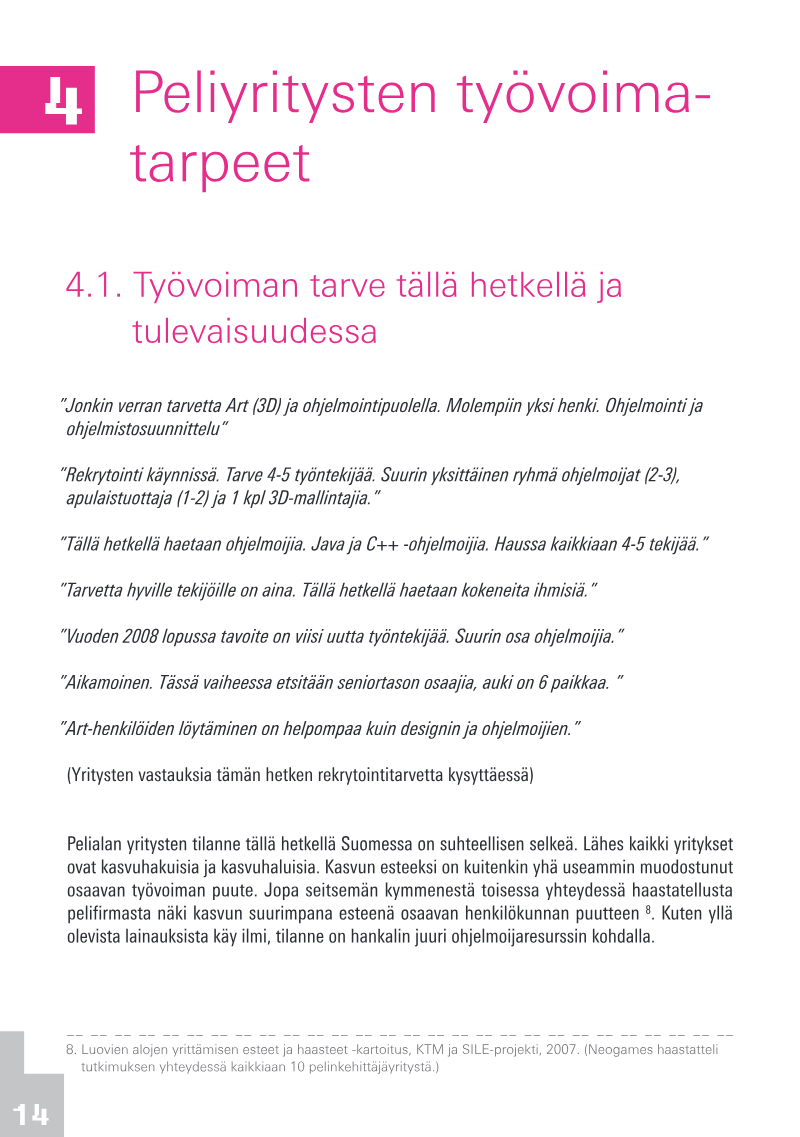
The Finnish game industry stands at a critical juncture where robust growth potential is increasingly constrained by a systemic labor shortage and a misalignment between academic output and professional requirements.
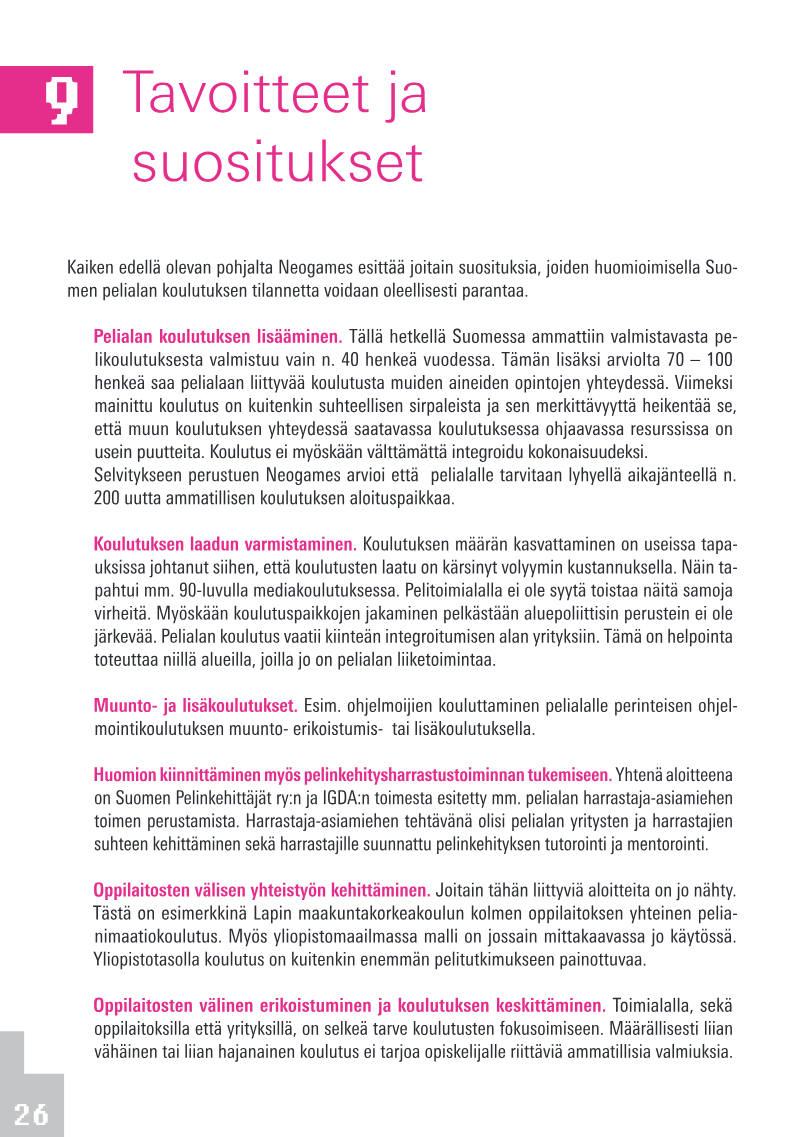
- The Finnish game industry faces an annual labor shortage of 150 to 200 professionals, while academic institutions currently produce only 40 graduates per year.
- A critical misalignment exists between academic output and industry needs, specifically regarding a lack of business and marketing expertise alongside technical programming roles.
- The current educational landscape is too fragmented and geographically dispersed, forcing companies to spend significant resources on internal training to bridge the skill gap.