Updated Mar 17, 2026 by Neogames Finland
Report · March 1, 2015
Published by Neogames Finland
17 | The Founding Years of Studios 29| Financial Outlook ob 40 | Finnish game developer studios assn. Fingersoft • Hill Climb Racing Rovio Entertainment • Angry Birds, Supercell • Clash of Clans, Hay Day Two Men and a Dog • Zombie Catchers THE OLDEST Finnish game companies still in existence are turning 20 this year (2015).
Index | 4 | Introduction | | --- | --- | | 6 | History | | 14 | State of the Industry | | 16 | Industry in Nutshell | | 17 | The Founding Years of Studios | | 18 | Locations | | 20| Platforms | | 24| Developers & Diversity | | 29| Financial Outlook ob | | 30 | Financial Transactions | | 35 | Turnover | Picture: Boomlagoon
38| Industry Support and Networks | 40 | Finnish game developer studios assn. | | --- | --- | | 42 | Tekes | | 44 | Neogames Finland | | 46 | Invest in Finland | | 47 | IGDA Finland | | 48 | Education | | 50 | Regional Support | | 51| Future | | 56| Studio Profiles | Front cover art Fingersoft • Hill Climb Racing Frogmind • BADLAND Rovio Entertainment • Angry Birds, Angry Birds Epic Supercell • Clash of Clans, Hay Day Two Men and a Dog • Zombie Catchers Picture: Supercell Index
Introduction THE OLDEST Finnish game companies still in existence are turning 20 this year (2015). Although the first commercial Finnish digital game was published back in 1979 and the first globally distributed game in 1986, it’s fair to say that from an industry point of view, 2015 is also a 20th anniversary for the whole Finnish game industry. In twenty years, the Finnish game industry has come far from its humble beginnings. However, figures don’t tell the whole story. There are some trends that often go unmentioned, but that are important not just for today, but also for the future. Finland is still a country of game developer enthusiasts. In 2014 for example, the Global Game Jam Finland event attracted almost 700 hobbyists to 15 sites to develop games. Finnish game education has been ramping up nicely, and there are now over 20 educational institutions providing game education at all educational levels. Games are recognized as a form of culture in Finland. This recognition has positive affects not only on the public perception of games, but also on the attitudes of the public sector towards the game industry. The Game community is supported by strong industry networks, namely IGDA Finland, Neogames Finland, and the Finnish game developer studios association (Suomen Pelinkehittäjät). These associations play a crucial role, for instance in community building, information sharing and lobbying.
H20g The main purpose of this publication Pelinkehittäjät Ry (Finnish game is to provide a general overview of the developer studios assn), Invest Finnish game industry landscape. in Finland, Tekes and Ministry of Education and Culture for their The findings presented in this report support. are based on 110 company interviews and an industry database maintained Team Neogames: by Neogames. The database holds KooPee Hiltunen the basic information of 260 Finnish Suvi Latva game developer studios. In total, 53 J-P Kaleva game companies (all members of the Emma Ronkainen Finnish game developers association) are listed and introduced on company profile pages. This study is the latest part of the continuum of Finnish games industry studies, to-date published in 2005, 2009 and 2011. We wish to thank everyone who has helped us develop this report, with special thanks going to Suomen Picture: Grand Cru Introduction
1980’s: The beginning THE ROOTS of the Finnish game industry were planted in the beginning of the 1980’s during the era of the first personal computers. Despite the scope and financial significance of the game development being quite small at the time, it managed to create a base for the Finnish demo scene and game development culture. Early experimentation in technical, commercial and cultural possibilities offered vital experience in the area of game development and the realities of the game market. that began in the 1980’s started to take on new forms at the turn of the decade, when the quick progress of technology enabled technologically and culturally more ambitious games. In turn, this forced hobbyists to specialize in certain areas of game development and to share their expertise with the other hobbyists. The 1990’s with its strong demo scene brought typical corporate elements to the hobbyist culture: teams, objectives, competition and professionalism. It is no coincidence that the oldest Finnish game studios have a strong background in the demo 1990’s: Demo scene and the scene. Even today, many new Finnish game studios are founded by teams first steps of the Finnish who either qualified in the demo scene game industry or elsewhere in the vibrant Finnish hobbyist culture. THE ENTHUSIASTIC hobbyist culture History
History The beginning of 80’s home computers & game development First as a hobby First internatio- First commercial nal game Assembly products Sanxion events events 5000 500350 Supreme Snowboarding First and still existing First game companies world class are founded mobile studios studios 1980 1985 1990 1995 2000 1980 1985 1990 1995 2000 Dot.com & mobile hype hype Picture: Rovio
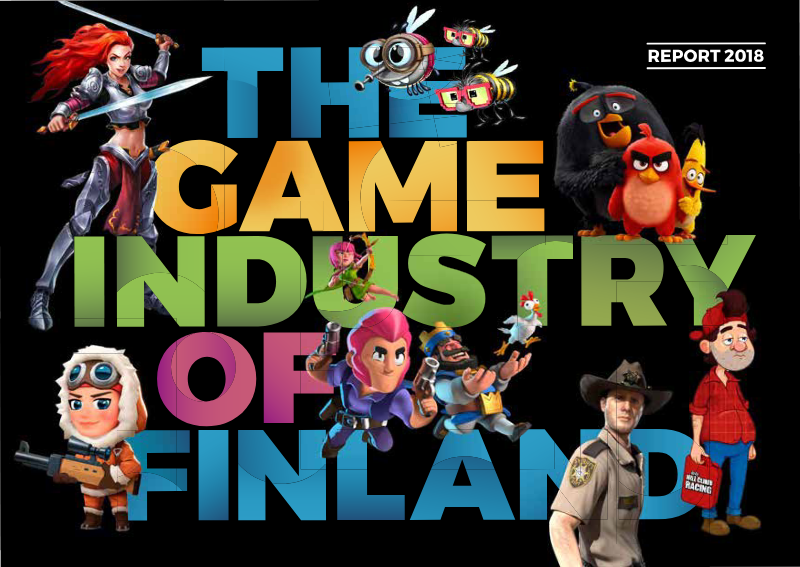
Fingersoft • Ηill Climb Racing 2 Futureplay • Battlelands Royale Next Games • Τhe Walking Dead: Our World Rovio Εntertainment • Angry Birds 2 Small Giant Games • Εmpires & Puzzles Supercell • Brawl Stars, Clash Royale, Clash of Clans and Ηay Day Remedy Εntertainment • Control Rival Games • Τhief of Τhieves: Season One Superplus Games • Ηills of Steel Nitro Games • Ηeroes of Warland Κukouri Mobile Εntertainment • Pixel Worlds Publisher Neogames Finland ry (2019) 2.
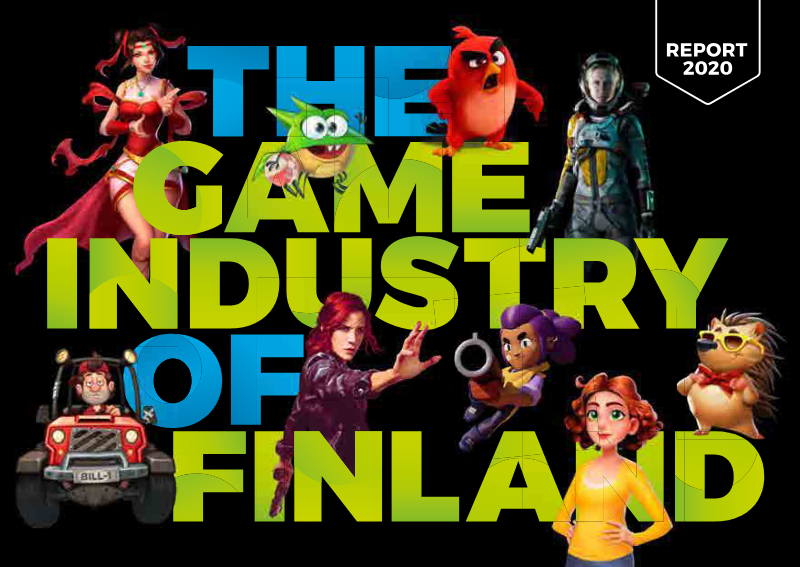
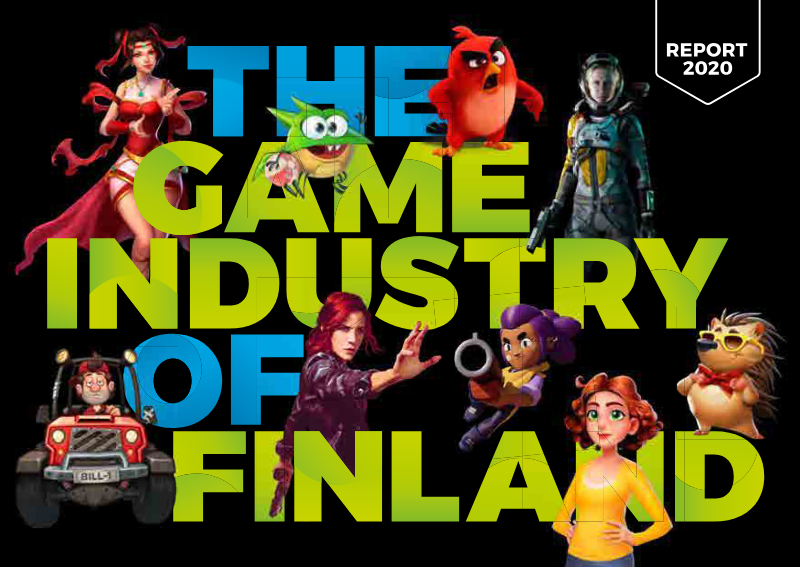
The Finnish game industry has transitioned from a hobbyist niche into the nation’s largest cultural export, maintaining an annual turnover exceeding €2 billion for six consecutive years. By 2020, the sector reached a turnover of €2.4 billion, driven by a maturing "middle class" of 46 studios generating over €1 million in annual revenue. While the total number of active studios decreased to approximately 200 due to global competition and regional funding shifts, employment reached a record 3,600 professionals. The industry demonstrates increased stability through a decreasing reliance on its largest player, Supercell, whose share of total turnover fell to 54% as other studios scaled. Geographically, the industry remains highly concentrated in the Capital Region, which accounts for 96% of turnover and nearly 80% of the workforce. However, vital regional hubs in Tampere, Oulu, and Turku provide specialized support through incubators and university programs. While mobile gaming remains the dominant sector—anchored by global giants like Rovio and Fingersoft—there is a notable shift toward a "post-mobile" era. This evolution is defined by growth in multiplatform console and PC development, led by studios such as Remedy Entertainment and Housemarque, as well as emerging interests in cloud gaming, the metaverse, and AI integration. The ecosystem is supported by a robust infrastructure, including over €150 million in R&D funding from Business Finland and a proactive private investment climate that attracted over €100 million between 2019 and 2020. Despite this strength, the industry faces challenges such as a global shortage of senior talent, increased protectionism in foreign markets, and platform volatility. Future growth is expected to stem from strong intellectual property, significant M&A activity, and a commitment to workforce diversity and social responsibility. The industry remains a resilient economic driver, characterized by high professional organization and a collaborative culture that sustains its status as a premier global hub for game development.
The Finnish game industry solidified its position as a cornerstone of the national economy in 2020, maintaining a turnover exceeding €2 billion for the sixth consecutive year. Despite a slight contraction in the total number of active studios to approximately 200, the sector experienced a maturation phase characterized by increased revenue stability and a rise in high-performing firms. With 46 studios now generating over €1 million annually and a collective net profit surpassing €500 million, the industry demonstrated remarkable resilience against the operational disruptions of the COVID-19 pandemic. This economic strength is supported by a workforce of 3,600 professionals, with a persistent demand for hundreds of additional hires, reflecting a healthy, expanding ecosystem. The industry is currently undergoing a strategic transformation driven by technological shifts toward cloud gaming, artificial intelligence, and Games as a Service models. While developers benefit from a robust network of public funding, private investment, and professional associations, they face mounting pressures from market consolidation, rising user acquisition costs, and regulatory fragmentation. To remain competitive in a saturated global market, Finnish studios are increasingly prioritizing data-driven design, social integration, and the development of strong intellectual property. This shift is accompanied by a positive trend in workforce diversification, with female representation reaching 22 percent. The Finnish landscape remains defined by a diverse array of entities, ranging from global mobile giants like Supercell and Rovio to specialized indie developers and B2B service providers. These companies successfully balance creative autonomy with sustainable business practices, leveraging both original IP and work-for-hire models. By integrating emerging roles such as content creators and streamers into the development lifecycle, the industry continues to evolve, ensuring that Finnish studios maintain their significant footprint in the global digital entertainment market through innovation in mobile, console, and emerging technology platforms.
The 2024 overview of Finland’s game sector presents a comprehensive assessment of an industry that remains a global technology leader while confronting a tightening financing environment. Employment reached roughly 4,300 individuals, equivalent to about 3,800 full‑time positions, underscoring the sector’s significance within the national economy. However, a pronounced drop in private risk capital and publisher backing has pushed many studios toward B2B subcontracting, co‑development agreements, and an expanding reliance on European Union and national public R&D programmes, especially after recent reductions in regional funding streams. Talent depth continues to drive innovation, with Finnish teams at the forefront of AI‑assisted development, proprietary engines, and cloud‑gaming solutions. Persistent shortages of senior developers and specialists in Unreal Engine, together with increasing regulatory complexity and geopolitical uncertainty, pose constraints on future growth. New public R&D instruments and targeted regional SME support aim to mitigate these pressures and sustain the ecosystem’s dynamism. Geographically, the industry is anchored by a network of regional hubs, notably Jyväskylä’s EXPA, which serves as a northern innovation cluster. The ecosystem is highly diversified, ranging from global powerhouses such as Supercell—employing over 800 staff and delivering seven worldwide hit titles—to agile indie studios like Snowhound, which hosts more than 120 employees from over twenty nationalities, and niche ventures such as Soihtu DTx, which secured a $4.2 million seed round for a clinically validated mental‑health game. Across the board, firms are expanding into cross‑platform and co‑development projects, exemplified by collaborations between Ubisoft RedLynx and Zaibatsu Interactive, reflecting a broader trend toward collaborative, multi‑disciplinary production.