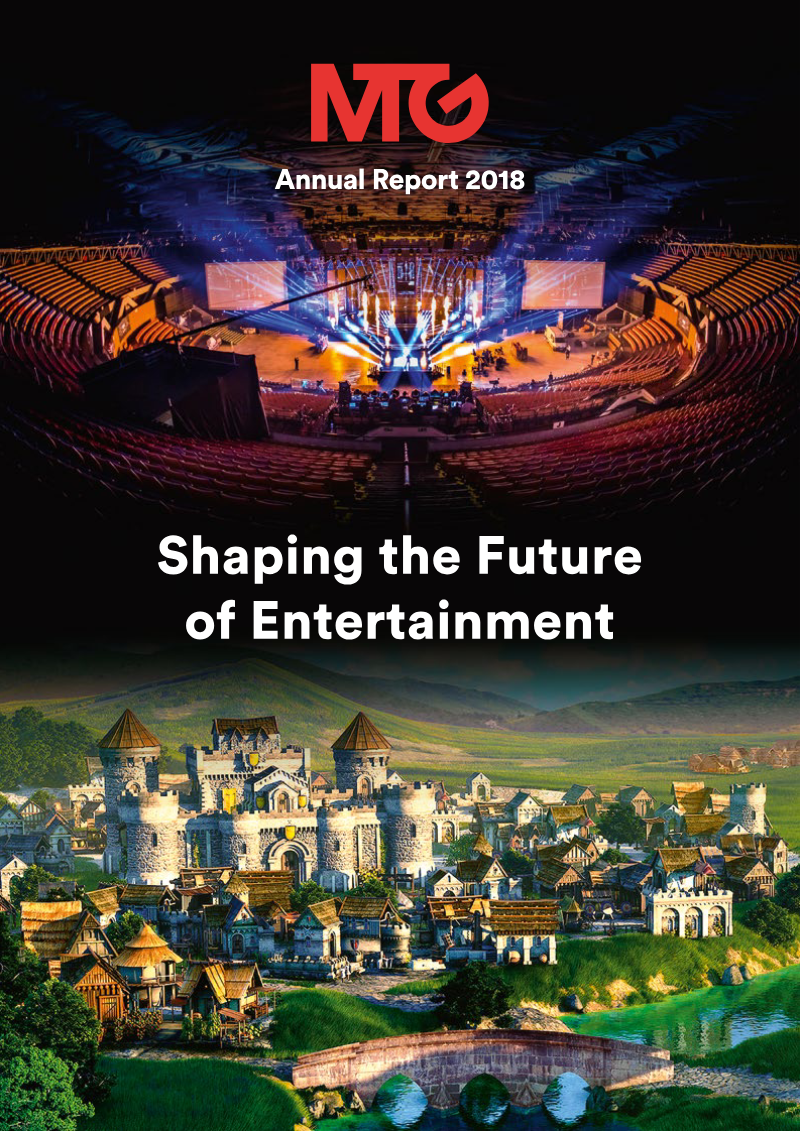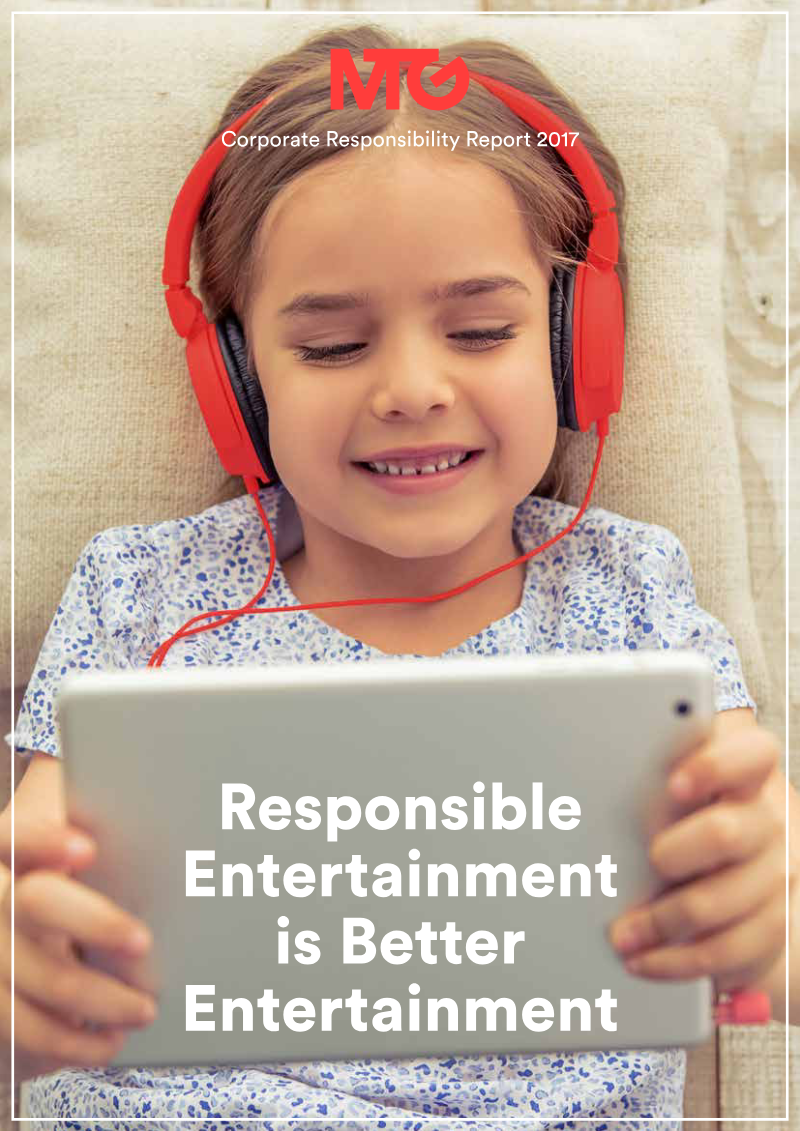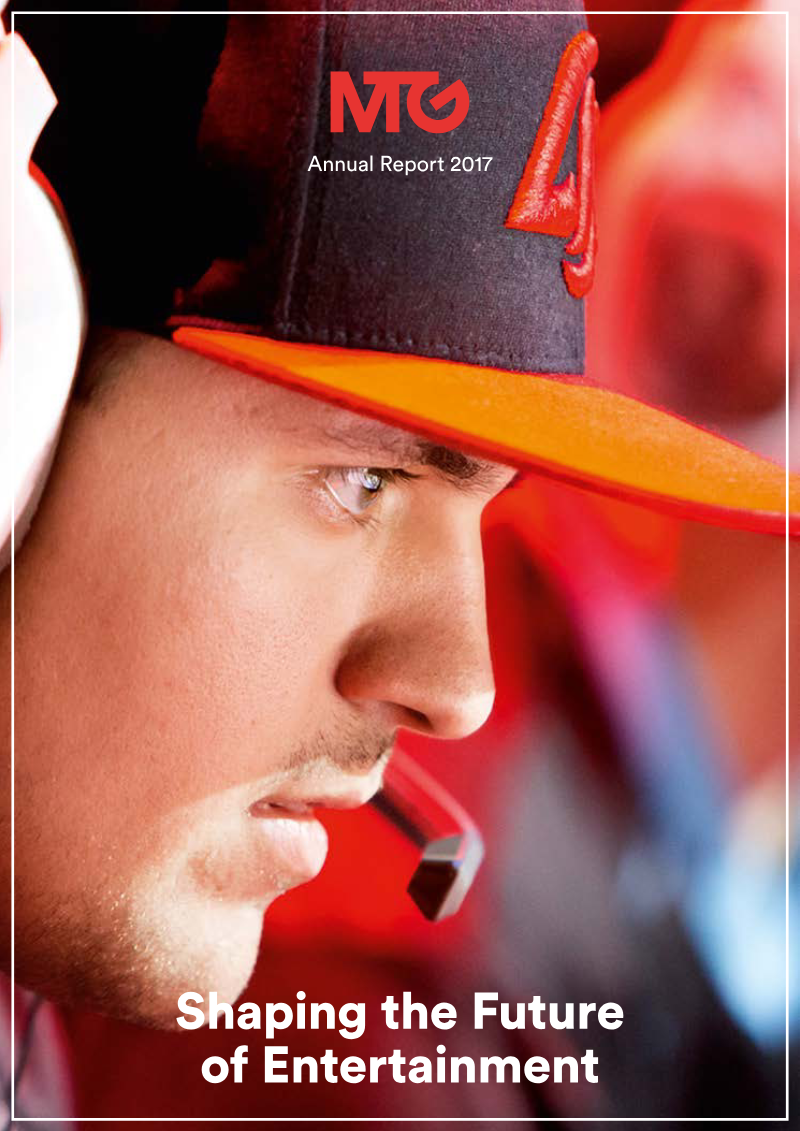
Updated Apr 30, 2026 by Modern Times Group
Report
Published by Modern Times Group
MTG’s 2015 corporate responsibility strategy centers on navigating a strategic transition into a global digital entertainment powerhouse while upholding rigorous ethical standards and sustainability commitments. The company prioritizes transparency, governance, and social impact, aligning its reporting with GRI G4 standards to ensure accountability across its diverse operations. By integrating a zero-tolerance policy toward corruption and enforcing a mandatory supplier code of conduct, the organization seeks to mitigate risks associated with its evolving digital and live-event portfolio, including cyber-resilience and intellectual property protection. Environmental and social performance metrics reveal a complex landscape of progress and ongoing challenges. While total energy consumption and carbon emissions saw a slight uptick, the company successfully reduced emissions per employee by over 2% and improved long-term energy efficiency by 13% since 2010. Air travel remains the primary driver of the company’s carbon footprint, prompting a shift toward virtual collaboration and renewable energy reliance. Socially, the company leverages its media influence to support global causes, donating over €9 million in airtime and fostering social entrepreneurship through initiatives like Reach for Change. Workforce development remains a critical focus, characterized by a diverse staff of nearly 4,000 employees representing 38 nationalities. Despite a 24% turnover rate and a persistent gender gap in leadership, the company has formalized a commitment to achieve gender parity in management by 2020 through targeted mentorship and internal policy adjustments. As the company expands its digital footprint, it continues to refine its risk management and compliance frameworks, ensuring that its growth is balanced by a commitment to ethical content production, child protection, and robust data privacy standards across its European and global markets.
Content Introduction Q&A with CEO 1 Message from Head of Corporate Responsibility 3 2015 highlights 4 This is us 6 Environmental Highlights 9 Voices 11 Social Highlights 15 Responsible entertainment is better entertainment 17 Global goal no. 5: Equality 18 Voices 21 Game changers 23 Governance Our key issues 27 Our stakeholders 28 How we govern 29 Our supply chain 31 Highlights 32 Voices 34 About the report Our goals 40 Workforce data 42 Corporate giving data 48 Environmental data 49 Financial data 51 Compliance data 52 GRI-index 53 Report boundaries 58 Assurance statement 59
Q&A with Jørgen Madsen Lindemann What does corporate responsibility bold and passionate social entrepreneurs in Latvia, (CR) mean to you? Estonia, Bulgaria, Denmark, Norway and Lithuania. MTG’s audiences were engaged again in 2015 Corporate responsibility is a big part of my life successful campaigns in which they were through every day. I have responsibilities in my personal upon to submit their ideas called and professional life, and we at MTG have our world about how to make the corporate responsibility. I live in Copenhagen, one better for children, or asked to vote for their favourite Game Changers. In the meantime, the of the most diverse and social cities in the world. Changers selected in 2014 have Game It is also set to become the world’s first CO2 neu ideas, developed their grown their organisations and, with the tral capital by 2025. Organic food is big here and of support Reach for Change and MTG, increased their so is recycling and composting. And we love our impacts on children’s lives across ten positive bikes in Denmark! There are more bikes than peo was also very proud of a fundraising territories. I ple in Copenhagen and people use them to get Sweden that raised an incredible special aired in to and from work all year round. Only about 30% victims of the European 3.5 million SEK for refugee crisis in of people in Copenhagen have a car. No wonder with the UN Refugee Agency. association Copenhagen has just been voted the happiest city Our inclusion in the Dow Jones Sustainability in the world! as well as a great CDP scores, indicate index, that we have made.
3.5 million SEK for refugee crisis in of people in Copenhagen have a car. No wonder with the UN Refugee Agency. association Copenhagen has just been voted the happiest city Our inclusion in the Dow Jones Sustainability in the world! as well as a great CDP scores, indicate index, that we have made. We the progress also aim to deal with How important is CR for MTG? of our increased carbon emissions in 2015 the issue already started improving our video and have It is vital, and part of everything that we do. Our tools and facilities, in order to conferencing focus on CR also helps us to develop how we of travelling and improve decrease the amount think about long-term value creation. It has to be balance. our employees’ work life simple, strong and sustainable, and enable us to deal with short, medium and long-term risks and What are your goals regarding opportunities. What were your key CR developments employee diversity and gender and failures in 2015? equality? We have achieved a lot of good things during The United Nations launched the global goals in 2015, while the organisation also went through September 2015. These are great and we have major change as we accelerated our strate chosen to work with global goal number 5, be gic transformation from a traditional territorial cause we believe in promoting gender equality at broadcaster into a global digital entertainment all levels. In the spirit of this, we have pledged to company. achieve a 50/50 gender split in management by After a successful first year 2020.
r 5, be gic transformation from a traditional territorial cause we believe in promoting gender equality at broadcaster into a global digital entertainment all levels. In the spirit of this, we have pledged to company. achieve a 50/50 gender split in management by After a successful first year 2020. MTG is a company that operates globally campaign, of the Game Changers and has a diverse workforce, which we welcome during which we launched the initiative ten in and encourage as a key contributing factor to our countries, we have continued our search for smart, success.
Q&A with Jørgen Madsen Lindemann How do you ensure that everyone at MTG does business in a responsible way? MTG is all about doing business honestly and with integrity. We expect all staff to maintain the high standards of behaviour that are set out in MTG’s code of conduct. For example, we have imple mented a supplier code of conduct during 2015, setting out the standards that suppliers who work with, or for, MTG are expected to have. We also have an ongoing due diligence process for higher risk partners and during 2015, 96% of our new em ployees mandatorily signed our code of conduct, whistleblower, and anti-bribery and corruption policies. Additionally to the signing of our policies we invite new employees to our e-learning courses on code of conduct, anti-bribery and corruption and green training. We also rolled out the an ti-bribery and corruption training and updated that policy for all staff, including a video presentation by our corporate counsel. Finally, we are rolling out a new e-learning app within Hive (our social in tranet) from Q2 2016, in order to improve training participation and completion rates.
e an ti-bribery and corruption training and updated that policy for all staff, including a video presentation by our corporate counsel. Finally, we are rolling out a new e-learning app within Hive (our social in tranet) from Q2 2016, in order to improve training participation and completion rates. What challenges and opportunities do you see for MTG in 2016? We are involved in an ongoing transformation from a traditional broadcaster to a digital enter tainer. We want to be the number 1 choice for digital video consumers in all of our markets. We have changed our management and organisa tional structure, bought new companies and sold non-core assets. People are consuming more and more video, and we have more content and more products than ever before, so we have a huge opportunity. It is now about engaging with viewers in as many relevant ways as possible. We still need to bed down the new structures, and still aim to grow our profits at the same time as we accelerate our top line growth, and that is quite an exercise. Our growth and expansion must create sustaina ble value for all of our stakeholders – that is our ambition and our responsibility.
Everplay maintains a zero-tolerance stance toward modern slavery and human trafficking across its global operations and supply chains. As a UK-centered video games developer and publisher, the organization identifies as having a relatively low inherent risk due to the nature of the digital entertainment industry. The operational scope covers the financial year ending December 31, 2025, and encompasses approximately 370 employees working across the United Kingdom, Ireland, Germany, the United States, and Canada. The primary supply chain expenditures involve milestone and royalty payments to third-party development partners, alongside work-for-hire contracts for game development, localization, and quality assurance testing. While the overall risk profile remains low, the organization identifies localization and quality assurance as areas carrying a slightly higher risk. To mitigate these concerns, all new and renewing contracts include mandatory compliance clauses regarding the Modern Slavery Act 2015, granting the company the right to terminate agreements in the event of a breach. Governance is managed through the Audit Committee, which reports to the Board of Directors at least twice annually. Due diligence efforts include a risk-based approach to supplier assessment and the implementation of internal policies such as whistleblowing, anti-bribery, and grievance procedures. Employees and third parties are provided with confidential reporting channels, including an external hotline. The effectiveness of these measures is tracked through an annual risk register assessment, which currently reports zero incidents of modern slavery. Training and awareness initiatives are provided to ensure that employees and stakeholders can identify and report potential risks effectively.
Take-Two Interactive Software establishes a comprehensive framework for maintaining ethical business practices and safeguarding human rights across its global operations as of October 2025. The primary objective is to eliminate modern slavery, forced labor, and human trafficking within the organization and its extensive supply chains. This commitment extends across all major publishing labels, including Rockstar Games, 2K, Private Division, and Zynga, covering the development and distribution of interactive entertainment for console, PC, and mobile platforms. The policy outlines rigorous hiring and employment standards, mandating that all employees be at least 16 years of age and that employment is strictly voluntary. Compensation and benefits are reviewed annually to ensure they meet or exceed legal minimums and market standards. Furthermore, the company enforces a strict non-discrimination policy, ensuring that recruitment and career advancement are based solely on ability and merit rather than protected characteristics. These internal standards are reinforced by a Global Code of Business Conduct and Ethics that applies to all directors, officers, employees, and contractors. To ensure compliance throughout the supply chain, which includes disc replicators, printers, and logistics providers in regions such as North America, Europe, and Japan, the company utilizes a dedicated Supplier Code. This requires third-party partners to represent that they do not utilize child, prison, or slave labor. Oversight is maintained through biennial training for employees and targeted training for consultants. Additionally, the company provides a confidential reporting hotline managed by an independent third party, protecting whistleblowers from retaliation. Key suppliers are also expected to conduct periodic internal or independent audits to verify adherence to labor, health, and safety standards.
The FY 2025 impact analysis presents Electronic Arts’ comprehensive ESG strategy, arguing that responsible stewardship of people, planet, and data is integral to sustainable growth in the interactive‑entertainment sector. By quantifying progress across talent, climate, privacy and security, the report demonstrates how the company translates corporate responsibility into measurable outcomes while maintaining its global market position. Across a workforce of more than 6,000 employees worldwide, 83 % now have access to internal AI tools, and 17 % of new hires are returning staff, contributing to an industry‑leading attrition rate of –0.1 %. Expanded benefits—including paid parental leave and bereavement support—paired with a balanced gender composition, underpin the talent‑focused results. Community engagement generated 18,000 volunteer hours and $5.9 million in investments, reinforcing the social dimension of the strategy. Environmental performance shows a clear downward trajectory: total operational emissions fell to 6.6 Mt CO₂e in FY25, down from 7.3 Mt in FY24 and 10.6 Mt in FY23, with Scope 1 emissions at 2.98 Mt and Scope 2 (market‑based) comprising the remainder, while energy consumption reached 380,859 GJ, fully sourced from office operations. The company’s carbon‑neutral status and renewable‑energy initiatives address identified climate risks such as acute physical events, volatile energy prices, rising carbon costs and emerging reporting regulations. Data‑privacy and security are governed by a privacy‑by‑design framework overseen by the Audit Committee, delivering explicit player notice, consent and control, data‑minimisation, and partner‑risk contracts. The security management system aligns with ISO, NIST and CIS standards, undergoes annual independent validation, operates a 24‑hour SOC and mandates annual training for all staff. An articulated AI governance model completes the governance pillar, ensuring responsible deployment of emerging technologies. Collectively, these initiatives illustrate a holistic, globally scoped commitment to ESG excellence throughout FY 2025.
This research examines the professional landscape of the global gaming industry, drawing on a survey of over 160 professionals conducted during Gamescom 2025. The sample represents a diverse geographic spread, with significant participation from Europe and North America, alongside emerging representation from Latin America, Asia-Pacific, and Africa. Demographically, the industry remains male-dominated (65%), though women (30%) and non-binary individuals (6%) constitute a notable portion of the workforce. The data highlights a mid-career-heavy industry, where nearly half of the respondents possess six to ten years of experience, while newcomers are increasingly rare due to slowed recruitment and a preference for senior talent. The central thesis identifies a stark paradox: while 76% of professionals report high job satisfaction driven by a deep passion for creative expression, trust in the industry as a sustainable career path has collapsed, evidenced by a Net Promoter Score (NPS) of -40. This disillusionment is most pronounced among veterans aged 45 and older. While the "spark of passion" remains the primary motivator for joining and staying in the field, it is increasingly undermined by systemic issues. Key deterrents include low compensation (54%), unstable employment (43%), and burnout (30%). The findings conclude that the industry is at a critical juncture. Professionals envision a future defined by player-centric design, cross-platform development, and increased diversity. However, they warn that the current model—characterized by "suits" maximizing short-term profits and frequent layoffs—is unsustainable. The research suggests that a "Golden Age" of gaming can only be achieved by shifting from profit-driven exploitation of passion toward structural stability, fair compensation, and genuine collaboration. Without these changes, the industry risks a continuous drain of the talent required to sustain its creative output.