Diversity Inclusion

81 documents·42 publishers

Documents

Page 1
Report47 pages

Impact Report 2025

The FY 2025 impact analysis presents Electronic Arts’ comprehensive ESG strategy, arguing that responsible stewardship of people, planet, and data is integral to sustainable growth in the interactive‑entertainment sector. By quantifying progress across talent, climate, privacy and security, the report demonstrates how the company translates corporate responsibility into measurable outcomes while maintaining its global market position.

Across a workforce of more than 6,000 employees worldwide, 83 % now have access to internal AI tools, and 17 % of new hires are returning staff, contributing to an industry‑leading attrition rate of –0.1 %. Expanded benefits—including paid parental leave and bereavement support—paired with a balanced gender composition, underpin the talent‑focused results. Community engagement generated 18,000 volunteer hours and $5.9 million in investments, reinforcing the social dimension of the strategy. Environmental performance shows a clear downward trajectory: total operational emissions fell to 6.6 Mt CO₂e in FY25, down from 7.3 Mt in FY24 and 10.6 Mt in FY23, with Scope 1 emissions at 2.98 Mt and Scope 2 (market‑based) comprising the remainder, while energy consumption reached 380,859 GJ, fully sourced from office operations. The company’s carbon‑neutral status and renewable‑energy initiatives address identified climate risks such as acute physical events, volatile energy prices, rising carbon costs and emerging reporting regulations.

Data‑privacy and security are governed by a privacy‑by‑design framework overseen by the Audit Committee, delivering explicit player notice, consent and control, data‑minimisation, and partner‑risk contracts. The security management system aligns with ISO, NIST and CIS standards, undergoes annual independent validation, operates a 24‑hour SOC and mandates annual training for all staff. An articulated AI governance model completes the governance pillar, ensuring responsible deployment of emerging technologies. Collectively, these initiatives illustrate a holistic, globally scoped commitment to ESG excellence throughout FY 2025.

  • Electronic Arts achieved a net-zero attrition rate of -0.1% in FY2025, supported by a workforce of over 6,000 employees and a 17% rate of returning staff among new hires.
  • Operational carbon emissions decreased to 6.6 Mt CO2e in FY2025, down from 7.3 Mt in FY2024 and 10.6 Mt in FY2023, maintaining the company's carbon-neutral status.
  • 83% of the global workforce now has access to internal AI tools, supported by a formal AI governance model to ensure responsible technology deployment.
  • The company invested $5.9 million and logged 18,000 volunteer hours in community engagement initiatives during the 2025 fiscal year.
  • Total energy consumption reached 380,859 GJ in FY2025, with all office operations fully sourced from renewable energy.
+1
Electronic ArtsJan 2025
Page 1
Report17 pages

Diversity and Inclusion in Gaming: Newzoo & Intel Report

This research, conducted by Newzoo in collaboration with Intel, examines the state of diversity and inclusion within the United States gaming market. The study challenges the misconception that the gaming population is primarily composed of young, white males, noting that there are approximately 2.7 billion gamers globally. By analyzing a representative sample of 1,824 gamers aged 10–65 via Computer Assisted Web Interviewing in early 2020, the findings identify significant gaps in representation, accessibility, and affordability that impact marginalized communities.

The data reveals that gamers of color, particularly Black and Hispanic/Latinx players, tend to be younger and more engaged than their white counterparts. For instance, roughly 75% of Black PC players are under the age of 35, compared to 50% of white players. Furthermore, Black and Asian PC gaming populations skew more female than other groups. Despite this high engagement, 47% of all U.S. gamers report avoiding titles they feel are not made for them, and over half emphasize the importance of diverse character representation—a sentiment strongest among LGBTQIA+ players and those with disabilities.

Economic factors play a critical role in gaming habits and hardware preferences. Due to historical economic disparities and younger average ages, Black and Hispanic/Latinx gamers are more likely to use laptops rather than expensive high-end desktops and show a higher affinity for game library subscriptions like Xbox Game Pass. These services provide a lower barrier to entry for high-quality content. Additionally, the study finds that players of color are more likely to be "Ultimate Gamers" or "Subscribers" compared to white gamers, who have a higher share of "Lapsed Gamers."

The analysis concludes that the industry must move beyond "sitting on the fence" regarding societal issues. Nearly half of U.S. gamers are more likely to support publishers that take active stances on social justice. By prioritizing affordability, accessibility, and authentic representation, hardware and software providers can better serve an evolving, diverse audience and unlock significant untapped revenue and engagement opportunities.

  • Nearly 50% of U.S. gamers are more likely to support publishers that take active stances on social justice issues, signaling a shift in consumer expectations toward corporate responsibility.
  • 47% of U.S. gamers actively avoid titles they perceive as not being designed for them, highlighting a significant barrier to market penetration for non-inclusive content.
  • Black and Hispanic/Latinx gamers are younger and more engaged than white counterparts, with 75% of Black PC players under the age of 35 compared to 50% of white players.
  • Economic disparities drive hardware preferences, as Black and Hispanic/Latinx gamers favor laptops over high-end desktops and show a higher affinity for subscription services like Xbox Game Pass to lower barriers to entry.
  • Over half of the U.S. gaming population prioritizes diverse character representation, a sentiment that is most pronounced among LGBTQIA+ players and those with disabilities.
+1
NewzooJan 2025
Page 1
Report64 pages

Power of Play: Informe Global de Videojuegos 2025

The research surveyed more than 24,000 active gamers from 21 nations on six continents, representing a broad cross‑section of the global gaming population (average age 41, 48 % female). Its central thesis is that video games function as a powerful catalyst for cognitive, social, educational, and mental‑health benefits, extending far beyond entertainment. Across all regions, a majority of players report gaming primarily for fun (56 %), stress relief (55 %) and mental stimulation (46 %). Mobile devices dominate usage (55 % of respondents), followed by PCs/laptops and consoles, while 73 % say gaming reduces feelings of isolation and 81 % view it as mentally stimulating.

Perceived skill development is strong: 77 % associate gaming with enhanced creativity, 74 % with problem‑solving, and substantial portions note improvements in teamwork, resilience and social interaction. The survey highlights a professional impact, with 43 % globally—reaching 76 % in Nigeria and 70 % in India—believing gaming positively shaped their education or career. Mental‑health outcomes are equally pronounced; 70‑90 % report reduced stress, increased happiness and a healthier outlet for daily challenges, with the highest well‑being scores in India, Nigeria and Mexico. Online multiplayer is identified as the primary social connector, cited by up to 96 % of respondents.

Complementary academic research corroborates these findings, showing that digital games boost learning engagement, reading skills and decision‑making, while immersive technologies such as AR/VR enhance performance in high‑stress professional settings, including medical surgery and aerospace training. Collectively, the evidence positions video games as a validated tool for skill development, education, and mental‑health recovery across diverse global markets.

  • Gaming is primarily used for stress relief (55%) and mental stimulation (46%), with 73% of the 24,000 surveyed players reporting that it reduces feelings of isolation.
  • Skill development is a major outcome, as 77% of players associate gaming with enhanced creativity and 74% with improved problem-solving abilities.
  • Mobile devices are the leading platform for 55% of global gamers, followed by PCs/laptops and consoles.
  • 43% of global respondents believe gaming has positively influenced their education or career, with that figure rising to 76% in Nigeria and 70% in India.
  • Online multiplayer serves as the primary social connector for up to 96% of respondents.
+1
AEVIJan 2025
Page 1
Report43 pages

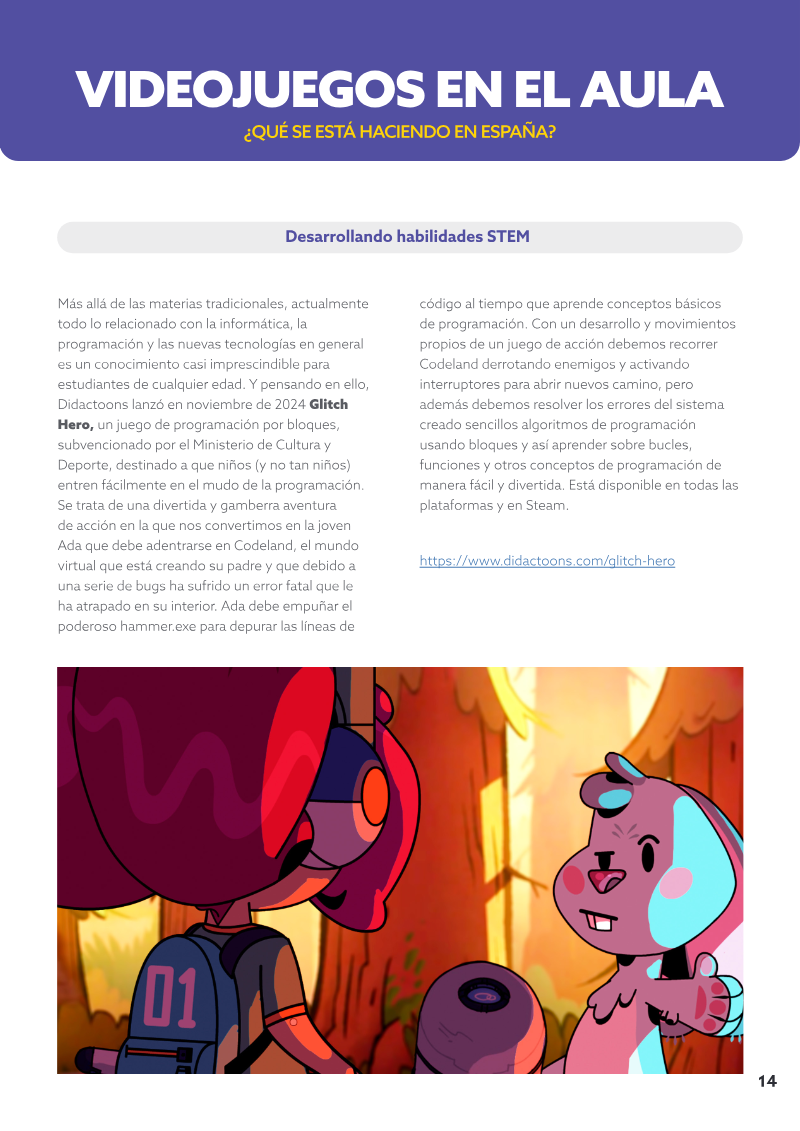
Videojuegos en el Aula: ¿Qué se está haciendo en España? Manual para docentes 2025

Video games have become a central cultural and educational tool in Spain, where more than 22 million people—over half of them women—play an average of 8.2 hours each week. This widespread engagement is leveraged to motivate learning, prompting the development of a coordinated ecosystem that supplies teachers with curated resources, professional training, and ready‑to‑use platforms such as Dok Student, Cokitos, Mundo Primaria, Eutopía and Escapeweb. Publicly funded titles like ABC Dinos, BookyPets and Quijote: Quest for Glory employ RPG, tower‑defense and card mechanics to reinforce early literacy, while historically grounded games such as Dîrok, Plus Ultra Legado and El Enigma de Toledo integrate rigorous research into curricula, supporting both STEM competencies and language development.

A parallel surge in health‑oriented games addresses the mental‑health concerns of Spanish adolescents, with 41 % reporting problems and one‑third never having discussed them. These applications aim to provide preventive support and therapeutic engagement within school settings. Meanwhile, esports and gamified learning are gaining institutional traction; a national competition rewards winning schools with €20 000 in technology, and industry partnerships like GGTech’s site visits illustrate viable career pathways. Complementary initiatives, such as Cruz Roja’s 150‑hour Unity programming course for unemployed youth and the Andalusian “Desafía & Aprende” program, further embed game design skills into broader employment strategies.

Overall, the Spanish educational landscape demonstrates a rapid, multi‑sectoral integration of video games that spans literacy, history, health, and vocational training, reflecting a strategic response to the medium’s pervasive cultural presence and its potential to enhance learning outcomes across the country.

  • Spain’s gaming ecosystem is supported by over 22 million players, with women accounting for more than half of the user base and an average weekly playtime of 8.2 hours.
  • Educational integration is facilitated by a standardized infrastructure of platforms including Dok Student, Cokitos, Mundo Primaria, Eutopía, and Escapeweb.
  • Publicly funded titles like ABC Dinos, BookyPets, and Quijote: Quest for Glory utilize RPG and tower-defense mechanics to improve early literacy, while games like Dîrok and El Enigma de Toledo support STEM and history curricula.
  • To address the 41% of Spanish adolescents reporting mental health concerns, schools are increasingly adopting therapeutic and preventive video game applications.
  • Institutional support for esports and gamification includes a national competition offering €20,000 in technology prizes and industry-led career exposure through partners like GGTech.
+3
AEVIJan 2025
Page 1
Report45 pages

Game Developer Employment: Career Formation of Student Game Creators 2019 Survey 2025

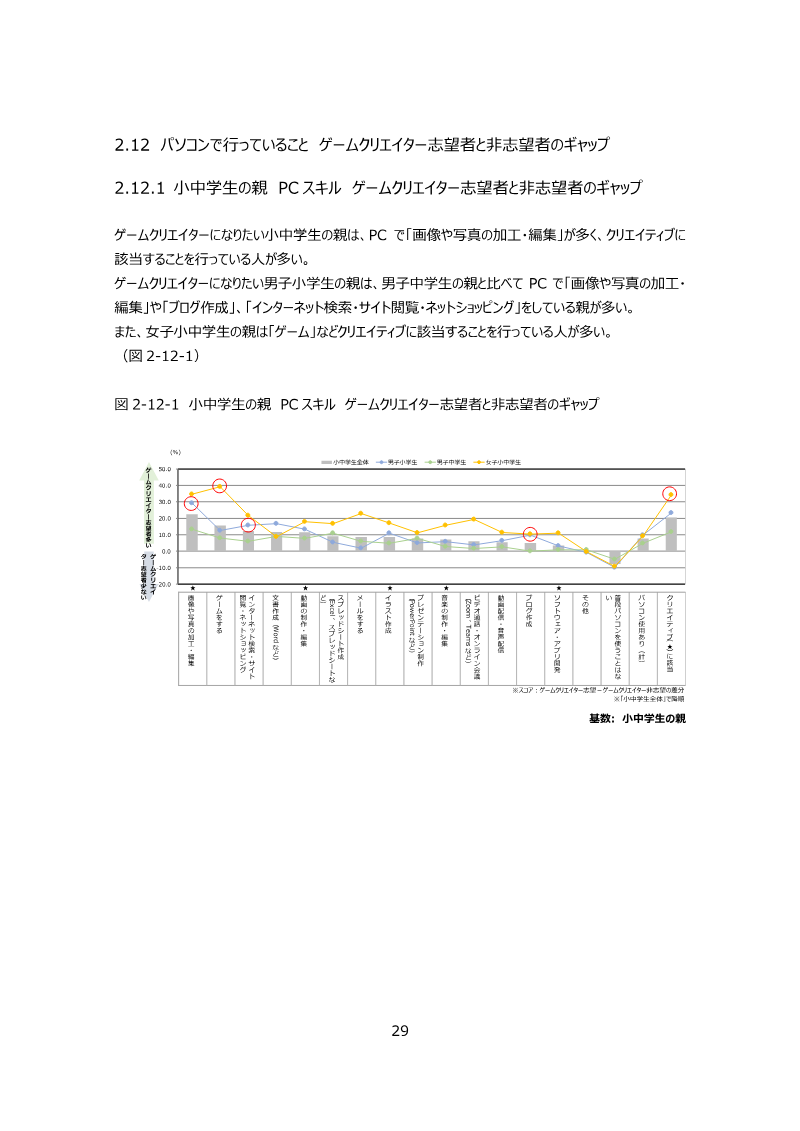
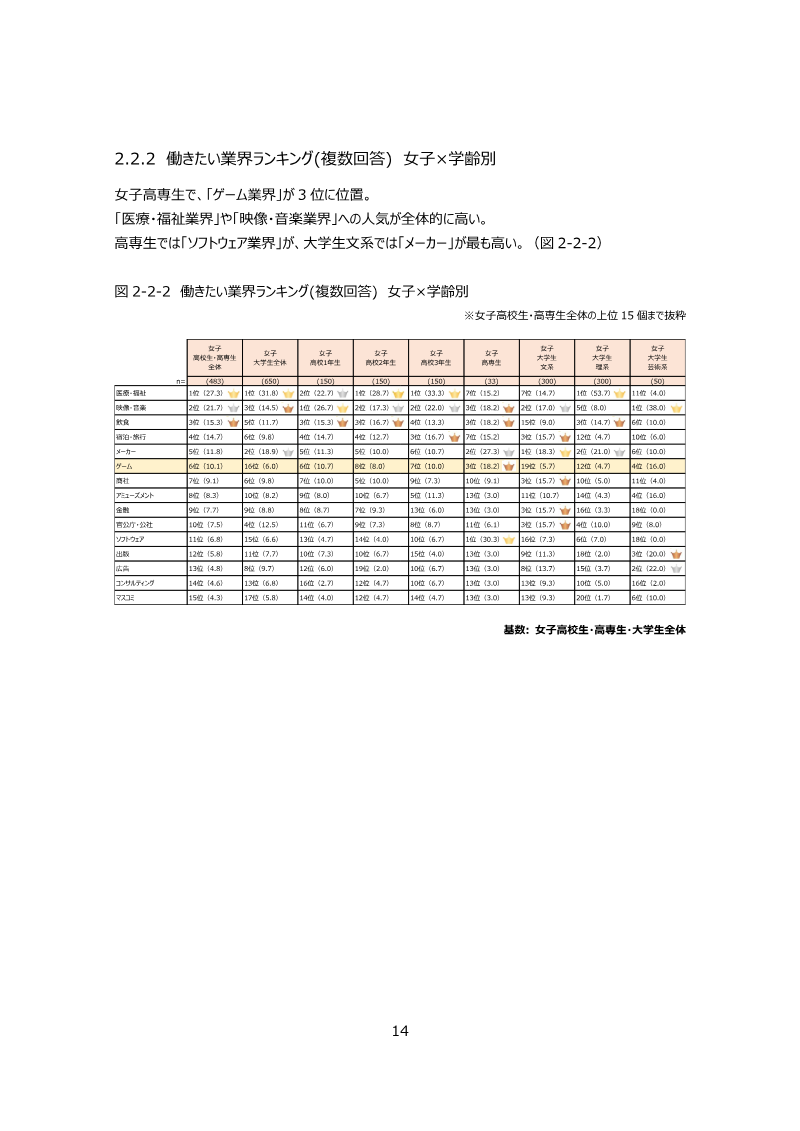
The 2025 Japanese survey of students’ career aspirations investigates how the role of “game creator” is perceived across gender, age, and educational level, aiming to gauge the pipeline of future talent for the domestic game development sector. It encompasses elementary, middle, high‑school, technical‑college and university respondents nationwide, providing a comprehensive snapshot of attitudes toward a profession that remains peripheral in the broader labor market.

Findings reveal a stark gender divide. Among male pupils in elementary and middle school, the game‑creator career ranks first overall and consistently appears within the top two choices for grades three through nine, indicating strong early enthusiasm. In contrast, female students place the same role far lower, with the position falling to nineteenth overall for females and remaining near the bottom of their preference lists at every age level. When respondents reach higher‑education stages, roughly eighty percent of those who still consider the occupation view it primarily as a professional pathway rather than a hobby or ancillary activity.

The data suggest that while the game‑creator profession enjoys robust appeal among young males, it fails to attract comparable interest from females, potentially limiting diversity in the future workforce. The pronounced early‑stage gender gap underscores the need for targeted outreach, curriculum development, and mentorship programs that can broaden awareness and appeal among female students, thereby strengthening the talent base for Japan’s evolving game industry.

  • A significant gender divide exists in career aspirations, with game creator ranking as the top choice for male elementary and middle school students while placing nineteenth for females.
  • The appeal of a game development career for males remains consistently high, appearing in the top two career choices for students from grade three through nine.
  • Approximately 80% of higher-education students interested in game creation view the role as a professional career path rather than a hobby or secondary activity.
  • The persistent lack of interest among female students across all age levels suggests a potential long-term bottleneck for diversity in the Japanese game industry workforce.
  • The 2025 survey data indicates that the game creator profession remains a peripheral career choice within the broader Japanese labor market despite strong early enthusiasm from young males.
+1
CESA – Computer Entertainment Supplier's AssociationJan 2025
Page 1
Report27 pages

Making Games, Making Future: Inside the Realities of Game Careers

This research examines the professional landscape of the global gaming industry, drawing on a survey of over 160 professionals conducted during Gamescom 2025. The sample represents a diverse geographic spread, with significant participation from Europe and North America, alongside emerging representation from Latin America, Asia-Pacific, and Africa. Demographically, the industry remains male-dominated (65%), though women (30%) and non-binary individuals (6%) constitute a notable portion of the workforce. The data highlights a mid-career-heavy industry, where nearly half of the respondents possess six to ten years of experience, while newcomers are increasingly rare due to slowed recruitment and a preference for senior talent.

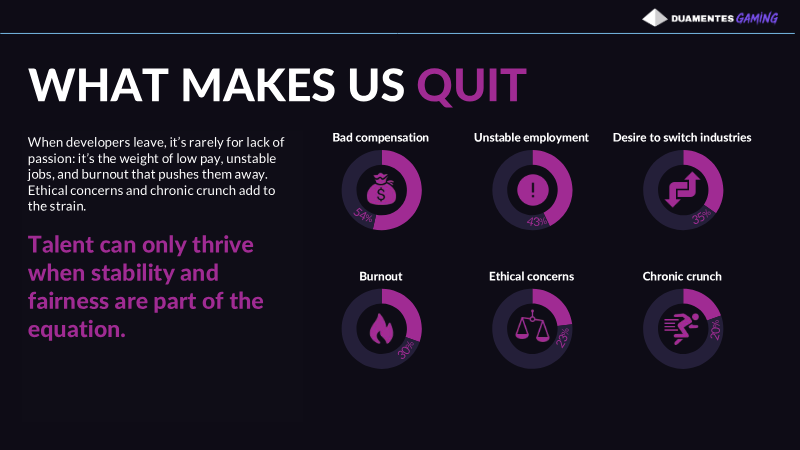
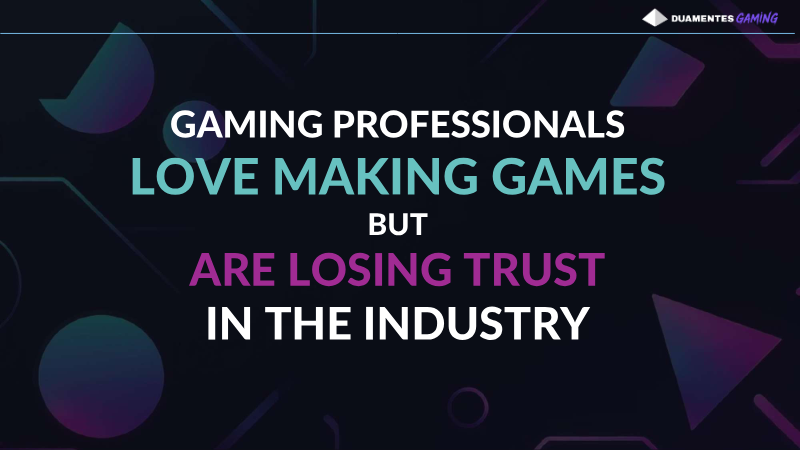
The central thesis identifies a stark paradox: while 76% of professionals report high job satisfaction driven by a deep passion for creative expression, trust in the industry as a sustainable career path has collapsed, evidenced by a Net Promoter Score (NPS) of -40. This disillusionment is most pronounced among veterans aged 45 and older. While the "spark of passion" remains the primary motivator for joining and staying in the field, it is increasingly undermined by systemic issues. Key deterrents include low compensation (54%), unstable employment (43%), and burnout (30%).

The findings conclude that the industry is at a critical juncture. Professionals envision a future defined by player-centric design, cross-platform development, and increased diversity. However, they warn that the current model—characterized by "suits" maximizing short-term profits and frequent layoffs—is unsustainable. The research suggests that a "Golden Age" of gaming can only be achieved by shifting from profit-driven exploitation of passion toward structural stability, fair compensation, and genuine collaboration. Without these changes, the industry risks a continuous drain of the talent required to sustain its creative output.

  • Despite 76% of professionals reporting high job satisfaction, the industry's Net Promoter Score (NPS) has plummeted to -40, signaling a collapse in trust regarding long-term career sustainability.
  • The industry is experiencing a talent bottleneck as recruitment slows and employers prioritize senior staff, leaving nearly half of the workforce concentrated in the 6-to-10-year experience bracket.
  • Systemic instability is driving professional disillusionment, with 54% of respondents citing low compensation, 43% citing job insecurity, and 30% citing burnout as primary deterrents.

  • The workforce remains male-dominated at 65%, with women comprising 30% and non-binary individuals making up 6% of the surveyed population.
  • Industry professionals identify a critical conflict between creative, player-centric goals and a current business model focused on short-term profit maximization and frequent layoffs.
+1
Duamentes GamingJan 2025
Page 1
Report134 pages

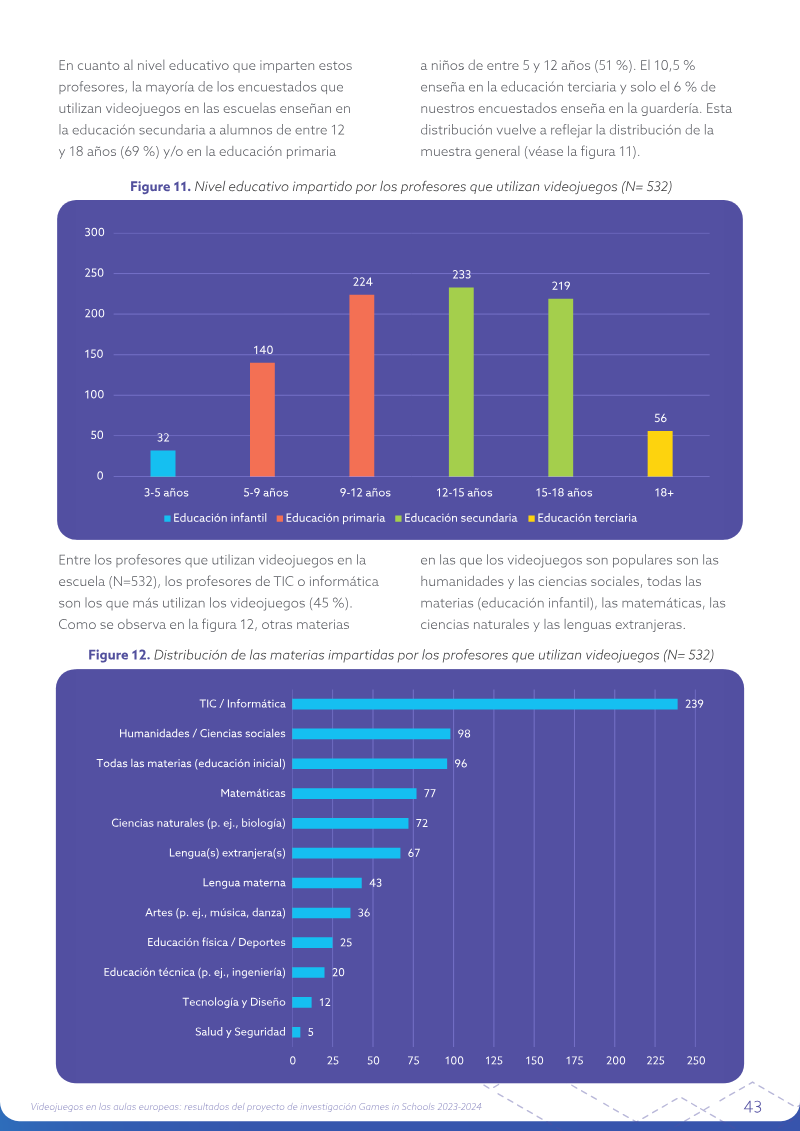
Videojuegos en Aulas Europeas: Resultados del Proyecto de Investigación 'Juegos en las Escuelas 2023-2024'

The study evaluates how video‑games are being integrated into European primary and secondary classrooms and argues that, while games hold clear potential to enhance motivation, cognition and 21st‑century competencies, systematic support is still required to translate research into widespread practice. A 2023‑2024 survey of 1,474 teachers across 26 European nations reveals that 36 % already employ games in lessons, with more than half of those using them regularly and favouring puzzle‑ or narrative‑driven titles. The principal barriers reported are the difficulty of locating age‑appropriate, curriculum‑aligned and GDPR‑compliant games (45 %) and technical constraints such as insufficient hardware or internet access (42 %). Compared with a 2009 baseline, teachers now rate their digital competence higher (7.7 / 10), display more positive attitudes, and receive stronger backing from school leadership, yet further investment in training, infrastructure and coordinated policy is deemed essential.

A comprehensive taxonomy distinguishes action, adventure, RPG, simulation, sport and hybrid genres, and separates commercial‑off‑the‑shelf titles, serious games, gamified tools and game‑based learning approaches. Empirical work from 2009‑2024 consistently shows modest gains in intrinsic motivation, STEM and language achievement, spatial and attentional skills, and collaborative behaviours when games are thoughtfully aligned with learning objectives. Nonetheless, effects on higher‑order cognition remain uneven, and the literature suffers from heterogeneous definitions, limited longitudinal data and a scarcity of rigorous experimental designs.

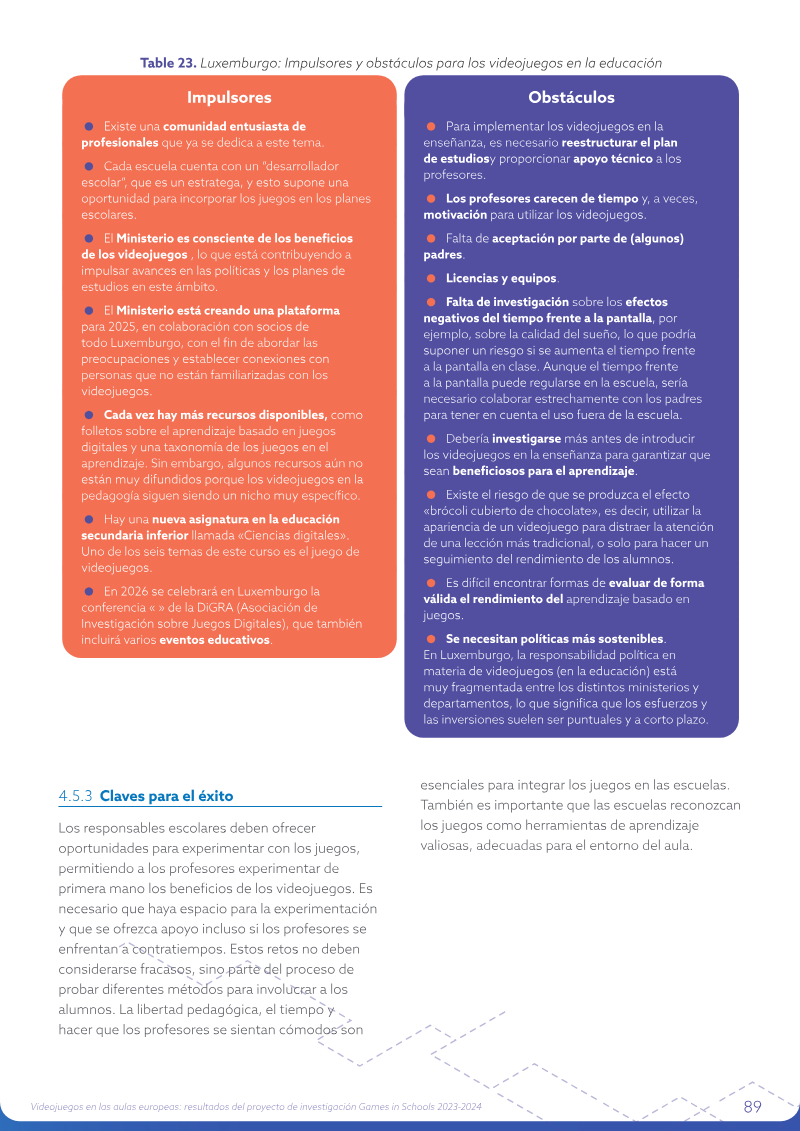
Country‑level case studies illustrate both promise and obstacles. Inclusive esports programmes in Italy, digital‑science curricula in Luxembourg, and language‑focused game pilots in Poland and Romania demonstrate measurable improvements in communication, critical thinking and resilience, while chronic under‑funding, outdated hardware, parental scepticism, gender gaps and rigid curricula impede broader adoption. Across the region, teachers cite insufficient professional development, lack of time and compensation, and uncertainty about content safety as persistent challenges.

The overarching recommendation is a coordinated European framework that provides an ethically vetted, GDPR‑compliant repository of educational games, systematic teacher training, robust infrastructure funding, and longitudinal research to validate cognitive and health outcomes. By aligning industry partnerships, policy incentives and evidence‑based pedagogy, the initiative seeks to close the gap between game research and classroom practice, fostering inclusive, engaging learning environments throughout Europe.

  • 36% of the 1,474 European teachers surveyed currently integrate video games into their lessons, with over half of those users employing them regularly.
  • The primary barriers to adoption are the difficulty of finding age-appropriate, curriculum-aligned, and GDPR-compliant games (45%) and technical limitations such as inadequate hardware or internet access (42%).
  • Teacher digital competence has risen to a self-reported 7.7/10 since the 2009 baseline, supported by more positive attitudes and increased backing from school leadership.
  • Empirical evidence from 2009–2024 confirms that games, when aligned with learning objectives, produce modest gains in intrinsic motivation, STEM and language achievement, and collaborative behaviors.
  • Despite positive trends, the field lacks rigorous longitudinal data and suffers from inconsistent definitions, making the effects of gaming on higher-order cognition remain uneven.
+2
European SchoolnetNov 2024
Page 1
Report4 pages

Manifesto 2024-2029: Più di un (video)gioco

The manifesto articulates a strategic vision for positioning Europe as a leading global hub for video‑game development, emphasizing the sector’s unique blend of technology and creativity. It calls for coordinated EU‑wide actions to strengthen the talent pipeline, ensure transparent content acquisition, and protect the distinctive nature of games while integrating them responsibly into broader cultural and educational contexts. Central to the argument is the need to maintain an open, competitive market; any imposed taxes, fees, or distribution constraints are portrayed as threats to investment, innovation, and the integrity of the single European market.

Key proposals include adapting the Creative Europe programme and extending the General Exemption Regulation to accommodate the specific requirements of video games, thereby aligning funding mechanisms with industry realities. The manifesto underscores the value of the PEGI rating system and co‑regulation, urging continued support for self‑regulatory frameworks that address consumer and business concerns swiftly. It advocates for comprehensive intellectual‑property safeguards, revised NACE codes to capture the sector’s economic contribution, and targeted funding through Horizon initiatives for mapping and skill‑gap analysis.

The scope spans the entire European Union and its member states, covering policy, education, and market regulation for the video‑game industry over the 2024‑2029 horizon. While no quantitative survey data are presented, the text references a network of national associations and industry bodies, indicating broad stakeholder consultation. The overarching aim is to foster diversity, equality, inclusion, climate responsibility, and child‑protection within a thriving European gaming ecosystem.

  • The manifesto advocates for EU-wide policy alignment to establish Europe as a global video-game development hub by 2029, prioritizing the protection of an open, competitive market against new taxes or distribution constraints.
  • Industry stakeholders are lobbying for the adaptation of the Creative Europe programme and the extension of the General Exemption Regulation to better align public funding mechanisms with the specific economic realities of game development.
  • The proposal calls for the revision of NACE codes to accurately measure and report the sector's economic contribution to the European Union.
  • The industry supports the continued use of the PEGI rating system and self-regulatory frameworks as the primary tools for addressing consumer protection and business concerns.
  • Strategic initiatives for 2024–2029 include utilizing Horizon funding to conduct formal mapping and skill-gap analyses to strengthen the European talent pipeline.
Video Games EuropeMar 2024
Page 1
Report56 pages

Fler vägar in i spelbranschen: 2024

The Swedish game industry faces a critical structural challenge as a persistent skills shortage threatens its long-term growth and international competitiveness. While the sector benefits from a robust domestic ecosystem of educational institutions ranging from vocational schools to universities, these traditional pathways are insufficient to meet the rising demand for talent. To sustain expansion, the industry must pivot toward more inclusive recruitment strategies that actively integrate untapped talent pools, including immigrants, professionals from adjacent sectors, and underrepresented groups.

A primary obstacle to this integration is the lack of established mechanisms for validating non-traditional skills and experience. Bureaucratic hurdles, such as complex work permit regulations and rigid migration policies, further complicate the recruitment of international experts. Simultaneously, a lack of industry awareness among public employment agencies and career counselors prevents potential candidates from recognizing game development as a viable career path. Addressing these gaps requires a multifaceted approach, including the implementation of micro-credentials to document specialized competencies, the creation of targeted bridge programs, and the development of flexible, part-time educational models that allow for concurrent employment.

Long-term success depends on deepening the collaboration between private studios, the public sector, and educational providers. By fostering inclusive leadership, promoting diverse role models, and simplifying administrative processes for new arrivals, the industry can effectively lower the barriers to entry. Ultimately, the transition toward a more open and welcoming professional culture is essential to harness the full potential of the available workforce, ensuring that the Swedish gaming sector remains a global leader by successfully bridging the divide between current labor market structures and the evolving needs of the digital economy.

  • The Swedish game industry is facing a critical structural skills shortage that threatens its long-term international competitiveness and growth.
  • Traditional educational pathways are insufficient to meet talent demand, necessitating a shift toward recruiting from untapped pools like immigrants, adjacent sector professionals, and underrepresented groups.
  • Complex work permit regulations and rigid migration policies create significant bureaucratic barriers to hiring international experts.
  • A lack of industry awareness among public employment agencies and career counselors prevents potential candidates from viewing game development as a viable career path.
  • The industry must implement micro-credentials to validate non-traditional skills and develop flexible, part-time educational models that allow for concurrent employment.
+1
DataspelsbranschenJan 2024
Page 1
Report44 pages

Annual Report 2024

Thunderful Group’s 2024 Annual Report documents a decisive pivot toward a pure gaming focus, achieved through divestment of non‑gaming assets and a 20 % workforce reduction. The restructuring tightened the balance sheet, halving interest‑bearing net debt and leaving a modest cash position of SEK 29.6 million, yet it also produced a sharp decline in operating performance: net revenue fell 23.8 % to SEK 292.8 million and adjusted EBITA swung to a loss of SEK 383.9 million, largely due to cost‑cutting and the transition to higher‑margin publishing and co‑development activities.

The global gaming market grew modestly in 2024, reaching USD 187.7 billion with a 5 % rise in the player base to 1.5 billion, projected to reach 1.67 billion by 2027. Thunderful’s strategy targets a 3.1 % CAGR in the PC segment, high‑quality titles priced USD 10–30, and external project investments capped at EUR 2 million. The company has reorganised into Publishing and Co‑development & Services segments to optimise resource allocation, lower fixed costs through third‑party publishing, and balance riskier internal IP development with predictable service revenue.

Governance remains robust: a board‑led risk framework, annual review of a Zero‑tolerance Code of Conduct, and an anonymous whistleblowing function reinforce ethical standards. Executive remuneration is tightly linked to long‑term value, with fixed salaries capped at 30 % variable pay and share‑based incentives that could dilute equity by up to 4.65 % if fully exercised. Despite a net loss of SEK 887.5 million in 2024, the Group’s operating profit rose 57 % to SEK 292.8 million, signalling a turnaround post‑restructuring.

Financially, the Group’s liquidity is constrained; total assets fell from SEK 3.15 billion to SEK 772.9 million, and net cash turned negative. Impairments of over SEK 444 million on goodwill and other intangibles, coupled with significant restructuring costs, underpin the negative operating margin of –46.9 %. The company’s exposure to foreign‑exchange, interest‑rate and liquidity risks remains moderate but requires ongoing monitoring. Overall, the report presents a company in transition, balancing aggressive cost discipline and strategic realignment against a challenging financial backdrop.

  • Thunderful Group reported a net loss of SEK 887.5 million in 2024, driven by SEK 444 million in asset impairments and significant restructuring costs that resulted in an operating margin of -46.9%.
  • The company executed a major strategic pivot toward a pure gaming focus, involving a 20% workforce reduction and the divestment of non-gaming assets to halve interest-bearing net debt.
  • Net revenue declined 23.8% to SEK 292.8 million, while adjusted EBITA fell to a loss of SEK 383.9 million as the firm transitioned toward higher-margin publishing and co-development models.
  • Thunderful has reorganized into two core segments—Publishing and Co-development & Services—to balance high-risk internal IP development with predictable service revenue and lower fixed costs.
  • The company’s financial position remains constrained, with total assets dropping from SEK 3.15 billion to SEK 772.9 million and a modest cash position of SEK 29.6 million.
+1
ThunderfulJan 2024
Page 1
Report12 pages

Inside Gaming: It's Personal!

The report examines how video games increasingly serve as a platform for personal identity and self‑expression, noting that nearly two thirds of gamers feel they can be more authentic while playing. It argues that this trend fuels a 30 % rise in time spent gaming among those who view games as a space for true self‑presentation, compared with previous years. The analysis draws on a global survey of 5,000 entertainment and gaming consumers and proprietary first‑party data from Fandom for 2024. Findings highlight that in‑game customization is the most powerful driver of self‑expression, with 76 % of players citing character personalization as a key tool; gamertags and usernames follow at 48 %, while communication features, signatures, emblems, emotions, and gestures each attract between 30‑35 % of respondents. The study also identifies a disconnect: many gamers believe they can be authentic online yet perceive their in‑person gamer persona as distinct from their real‑life personality. Brands are encouraged to bridge this gap by creating opportunities that translate virtual identity into physical expression—such as cosplay collaborations, cosmetic product lines, or skill‑building experiences that mirror in‑game achievements. The report covers a global audience across all major gaming segments, focusing on the 2024 period and emphasizing actionable insights for marketers seeking to align brand experiences with gamers’ desire for authenticity.

  • Nearly two-thirds of gamers report feeling more authentic while playing than in their daily lives, a sentiment that has driven a 30% increase in time spent gaming among those who view these platforms as spaces for self-presentation.
  • In-game character customization is the primary driver of self-expression for 76% of players, significantly outpacing other features like usernames (48%) and communication tools or emotes (30–35%).
  • Fandom’s 2024 data indicates a psychological disconnect where gamers maintain distinct online personas that they perceive as separate from their real-life identities.
  • Marketers can capitalize on the desire for authenticity by creating physical-world extensions of virtual identities, such as cosplay collaborations, branded cosmetic lines, or skill-building programs that mirror in-game achievements.
  • These insights are based on a 2024 global survey of 5,000 entertainment and gaming consumers, combined with proprietary first-party data from Fandom.
+2
FandomJan 2024
Page 1
Report55 pages

Xsolla Report: State of Play – Winter 2024 Edition

The global gaming industry is currently navigating a period of stabilization following a massive 26% growth surge between 2019 and 2021. While the rapid pandemic-era expansion has moderated, the sector reached $106.8 billion in 2023 and is on a trajectory to hit $205.7 billion by 2026. This growth is underpinned by a global player base expanding to 3.79 billion people, with mobile gaming remaining the dominant force, accounting for nearly half of all consumer spending. Despite a downward revision in year-over-year growth forecasts to 0.6%, mobile spending is expected to reach $111.4 billion in 2024, led by strong performance in the United States and Japan.

The industry is undergoing a significant structural transformation driven by technological shifts and regulatory changes. The transition toward digital-only monetization, cloud-based services, and the metaverse—projected to reach $996 billion by 2030—reflects a broader convergence with the entertainment landscape. Furthermore, the implementation of the Digital Markets Act is opening doors for alternative billing systems and direct-to-consumer web stores. These shifts occur alongside a demographic evolution where women now represent nearly 50% of the player base, though they remain underrepresented in executive and professional roles.

Financial dynamics within the sector show a complex landscape of consolidation and rising costs. While AAA development budgets have tripled over the last five years, the investment market has faced volatility, characterized by a cooling M&A environment and significant layoffs. Despite a drop in deal volume, strategic investment value surged by 577% in mid-2023, reaching $7 billion in a single quarter. To counter high user acquisition costs and stricter privacy regulations, developers are increasingly adopting generative AI for efficiency and pivoting toward community-focused organic reach, early access models, and influencer partnerships to ensure long-term sustainability.

  • The global gaming industry is projected to grow from $106.8 billion in 2023 to $205.7 billion by 2026, supported by a total player base of 3.79 billion people.
  • Mobile gaming remains the industry's primary revenue driver, accounting for nearly 50% of total consumer spending and reaching a projected $111.4 billion in 2024.
  • Strategic investment value saw a massive 577% surge in mid-2023 to reach $7 billion in a single quarter, despite an overall cooling in M&A activity and a volatile investment climate.
  • The metaverse is projected to reach a valuation of $996 billion by 2030 as the industry shifts toward digital-only monetization and cloud-based services.
  • Regulatory changes like the Digital Markets Act are forcing a structural shift toward alternative billing systems and direct-to-consumer web stores to bypass traditional platform constraints.
+1
XsollaJan 2024

Publishers

Related Topics