Diversity Inclusion
Documents
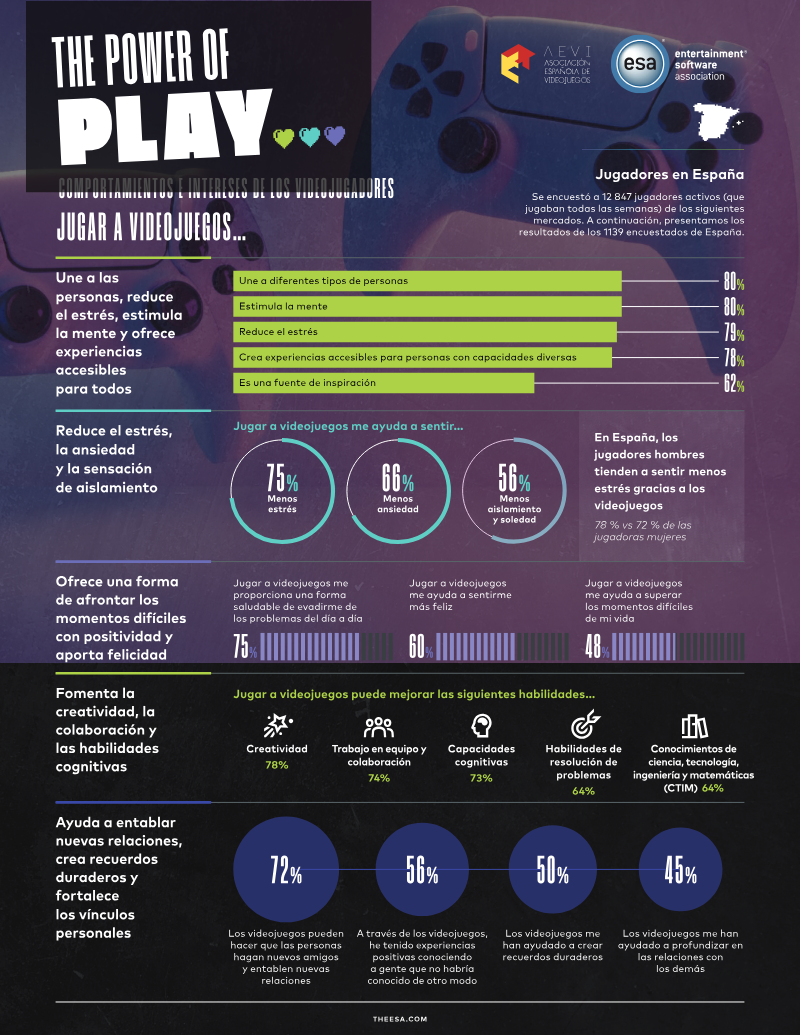
The Power of Play: España
Summary of “The Power of Play: España” (Survey of Spanish Video‑Game Players)
1. Scope & Sample Population surveyed: 12 847 active gamers (play ≥ once a week) across several markets. Spanish subsample: 1 139 respondents (men + women) who answered the questionnaire.
2. Demographic Profile
| Age group (years) | % of Spanish respondents | |-------------------|---------------------------| | 16‑18 | 8 % (men) / 41 % (women) | | 19‑24 | 49 % (men) / 28 % (women) | | 25‑34 | 28 % (men) / 28 % (women) | | 35‑44 | – | | 45‑54 | – | | 55‑64 | – | | 65+ | – |
\The table in the original document mixes gender‑specific percentages; the numbers above reflect the most clearly reported figures.
Gender split (overall): Roughly equal, with a slight male majority in the 19‑24 bracket. Play mode: 8 out of 10 male gamers (≈ 80 %) report playing with other players online. For women, solo play is still the most common, but a sizable minority also play online or in person.
3. Primary Motivations for Playing
| Motivation | % of respondents (overall) | |------------|----------------------------| | Fun / Entertainment | 85 % | | Stress reduction / relaxation | 78 % (men) – 75 % (women) | | Social connection (meeting new people, making friends) | 62 % (men) – 55 % (women) | | Escapism / coping with daily problems | 28 % (men) – 48 % (women) | | Feeling happier / more positive | 75 % (men) – 60 % (women) | | Creating lasting memories | 45 % (men) – 35 % (women) |
Note: The percentages are drawn from multiple overlapping questions (e.g., “Jugar a videojuegos me ayuda a sentir…”, “Reduce el estrés, la ansiedad, el aislamiento”). The highest‑scoring items are fun, stress relief, and social interaction.
4. Perceived Benefits
4.1 Psychological & Emotional Stress & anxiety: 78 % of men and 75 % of women say gaming helps them feel less stressed and less anxious. Isolation: 78 % of men and 72 % of women report a reduction in feelings of loneliness.
- Gaming is primarily used for emotional regulation in Spain, with 78% of men and 75% of women reporting that it effectively reduces stress and anxiety.
- Social connection is a major driver for the Spanish gaming population, with 62% of men and 55% of women citing it as a primary motivation for play.
- Online multiplayer engagement is significantly higher among men, with approximately 80% reporting they play with others online, whereas women show a stronger preference for solo play.
- Gaming serves as a vital tool for combating loneliness, as 78% of men and 72% of women report that playing reduces their feelings of isolation.
- The Spanish gaming demographic is heavily concentrated in younger age brackets, with 49% of male players and 28% of female players falling within the 19–24 age range.
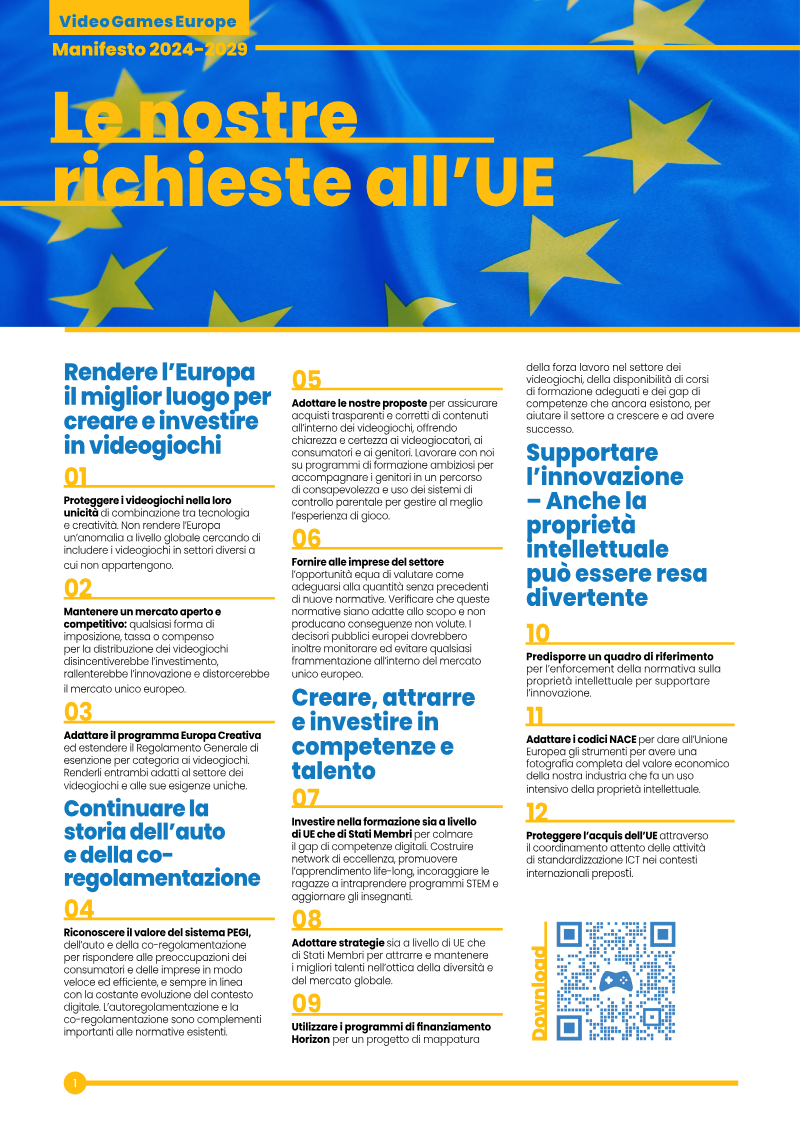
Manifiesto de Video Games Europe 2024-2029
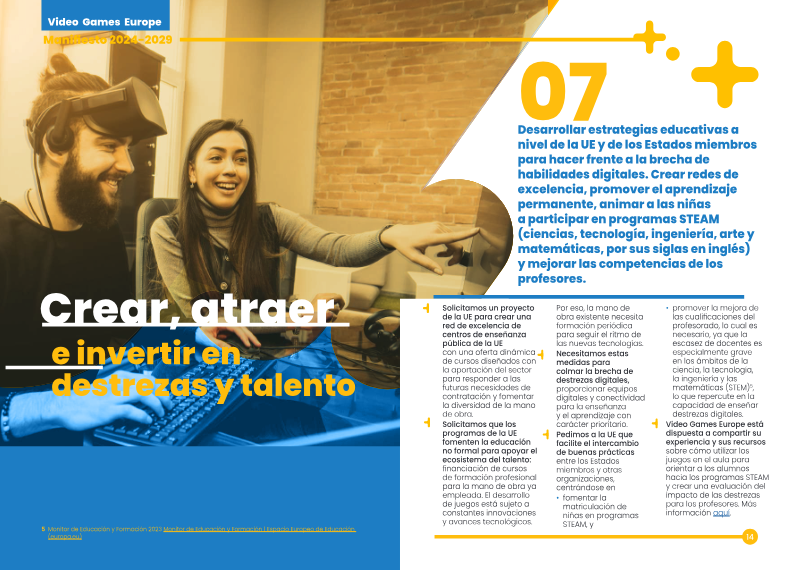
The European video‑game sector seeks recognition as a distinct blend of technology and creative culture and urges policymakers to embed this identity in the EU’s 2024‑2029 strategic framework. By positioning games as a driver of digital innovation, cultural expression, and economic growth, the manifesto argues that tailored legislation, financing, and data‑collection mechanisms are essential to sustain the industry’s momentum and competitiveness.
Between 2019 and 2024 the sector expanded by 16 %, reaching €24 billion in revenue and employing roughly 110 000 highly‑skilled workers across the Union. More than half of Europeans (53 %) now play games, with women accounting for 46.7 % of the audience and the average gamer aged 32. Research indicates that girls who game are three times more likely to pursue STEM studies, underscoring the medium’s educational impact. The self‑regulatory PEGI system, which has labelled over 40 000 titles in 40 countries, has cut non‑compliant sales by up to 50 %, demonstrating effective consumer protection without heavy legislative burden.
Current EU financing tools—tax credits and grants—are deemed insufficient to match the incentives offered by hubs such as Canada, the United Kingdom and France. The manifesto calls for a dedicated funding framework that channels public resources toward innovative, creative projects, alongside flexible talent‑attraction visas and Horizon‑funded labour‑market mapping to close digital‑skills gaps. It also highlights the strain of 850 new obligations introduced between 2017 and 2022, amounting to more than 5 000 pages of regulation, which increase compliance costs for developers and publishers.
To solidify the sector’s contribution, a unified intellectual‑property regime and a revision of NACE classification codes are proposed, enabling accurate economic measurement. Mandatory PEGI‑based age controls, parental‑lock tools and proactive chat moderation address the 53 % of Europeans prioritising child‑friendly environments. Finally, the industry’s low‑carbon digital products and initiatives such as “Playing for the Planet” and “Green Game Jam” are presented as foundations for a climate‑responsible future, aligning gaming with
- The European video game sector generated €24 billion in revenue between 2019 and 2024, representing a 16% growth rate and supporting 110,000 highly-skilled jobs.
- The industry faces a significant regulatory burden, having been subjected to 850 new obligations and over 5,000 pages of legislation between 2017 and 2022.
- Current EU financing tools are insufficient to compete with global hubs like Canada and the UK, prompting calls for a dedicated funding framework and improved tax incentives.
- The PEGI self-regulatory system has successfully labeled over 40,000 titles across 40 countries, reducing non-compliant sales by up to 50%.
- Video games have reached 53% of the European population, with a demographic split of 46.7% women and an average player age of 32.
Video Games Europe Manifesto 2024-2029
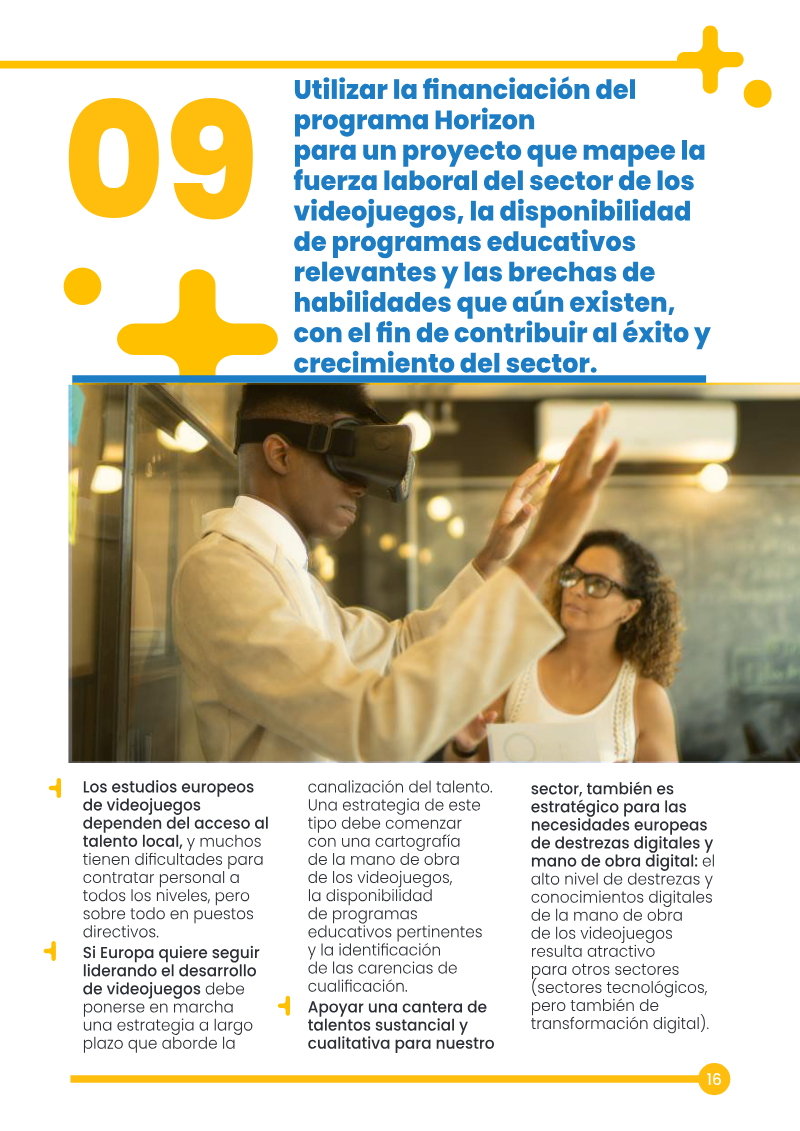
Europe’s video‑game sector has expanded by 16 % between 2019 and 2024, now delivering €24 billion in revenue and employing roughly 110 000 highly‑skilled workers. More than half of the continent’s gamers are under 20 years old, and nearly half of parents rely on the PEGI age‑rating system to ensure safe play. The industry’s dual nature—combining advanced technology with creative content—underpins a call for EU‑level measures that preserve an open, tax‑free single market, extend the Creative Europe programme, apply the General Exemption Regulation to games, and reinforce intellectual‑property protection while investing in digital‑skill education, particularly STEM pathways for girls.
The PEGI framework, supported by co‑regulation, has already classified around 40 000 titles across 40 European countries, halving non‑compliance penalties and cutting energy‑consumption violations by roughly 20 %. Nevertheless, the sector faces a regulatory load of 850 new EU obligations (over 5 000 pages of rules) introduced between 2017 and 2022. A shift toward transparent self‑regulation is advocated, emphasizing clearer in‑game purchase disclosures, stronger parental‑control tools, and EU‑wide educational programmes to close digital‑skills gaps and attract diverse talent.
Safety‑by‑design requirements now obligate all publishers to integrate PEGI‑based age classification, parental‑control portals, chat moderation, purchase limits and time‑spending caps, reflecting the predominance of minors among players. The climate‑and‑inclusion agenda shows progress: women represent 23.7 % of the video‑game workforce, surpassing the 17 % share in the broader ICT sector, and industry members are adopting gender‑equality guidelines and green initiatives such as the Green Game Jam. Coordinated self‑regulation, targeted public funding, and unified online‑safety strategies are presented as essential to sustain economic contribution, foster innovation, and position Europe as the leading hub for socially responsible game development.
- The European video game sector grew by 16% between 2019 and 2024, reaching €24 billion in annual revenue and employing approximately 110,000 highly-skilled workers.
- Between 2017 and 2022, the industry faced a significant regulatory burden consisting of 850 new EU obligations spanning over 5,000 pages of rules.
- The PEGI age-rating system has successfully classified 40,000 titles across 40 countries, contributing to a 50% reduction in non-compliance penalties and a 20% decrease in energy-consumption violations.
- Women currently account for 23.7% of the European video game workforce, outperforming the 17% representation found in the broader ICT sector.
- Industry stakeholders are advocating for EU-level policies that include the application of the General Exemption Regulation to games, the preservation of a tax-free single market, and the expansion of the Creative Europe programme.
The Game Industry of Finland Report 2024
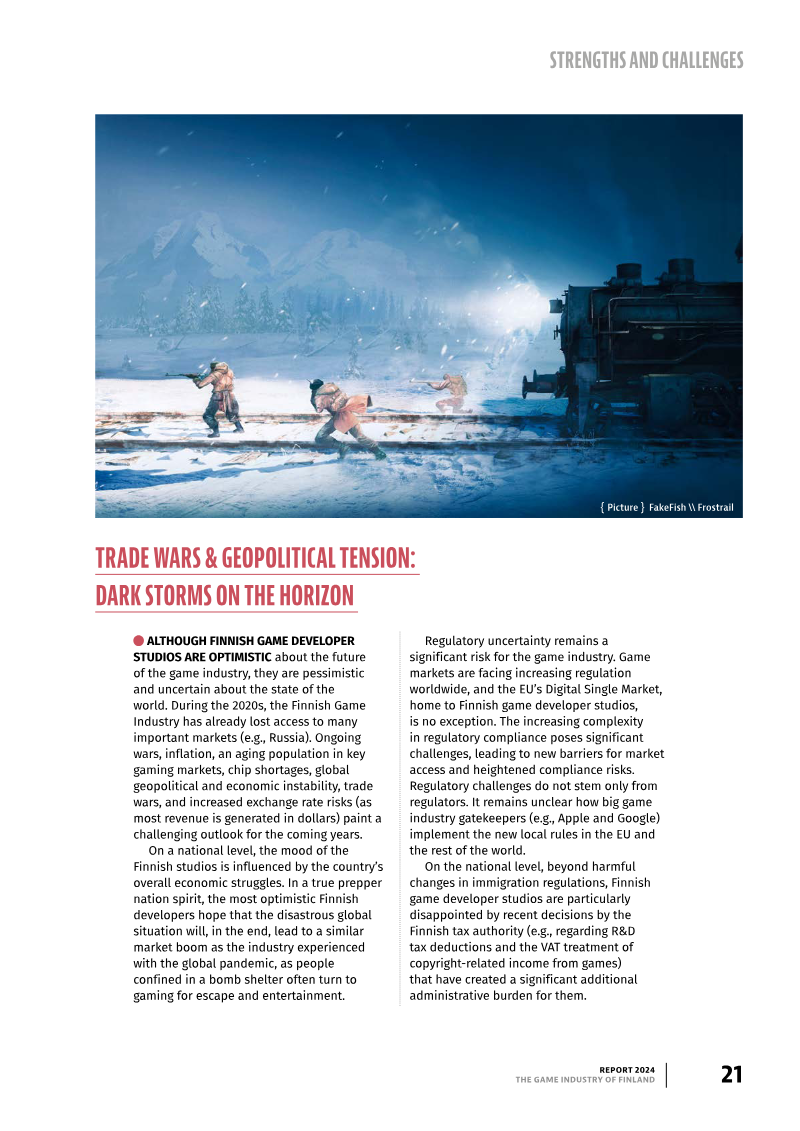
The 2024 overview of Finland’s game sector presents a comprehensive assessment of an industry that remains a global technology leader while confronting a tightening financing environment. Employment reached roughly 4,300 individuals, equivalent to about 3,800 full‑time positions, underscoring the sector’s significance within the national economy. However, a pronounced drop in private risk capital and publisher backing has pushed many studios toward B2B subcontracting, co‑development agreements, and an expanding reliance on European Union and national public R&D programmes, especially after recent reductions in regional funding streams.
Talent depth continues to drive innovation, with Finnish teams at the forefront of AI‑assisted development, proprietary engines, and cloud‑gaming solutions. Persistent shortages of senior developers and specialists in Unreal Engine, together with increasing regulatory complexity and geopolitical uncertainty, pose constraints on future growth. New public R&D instruments and targeted regional SME support aim to mitigate these pressures and sustain the ecosystem’s dynamism.
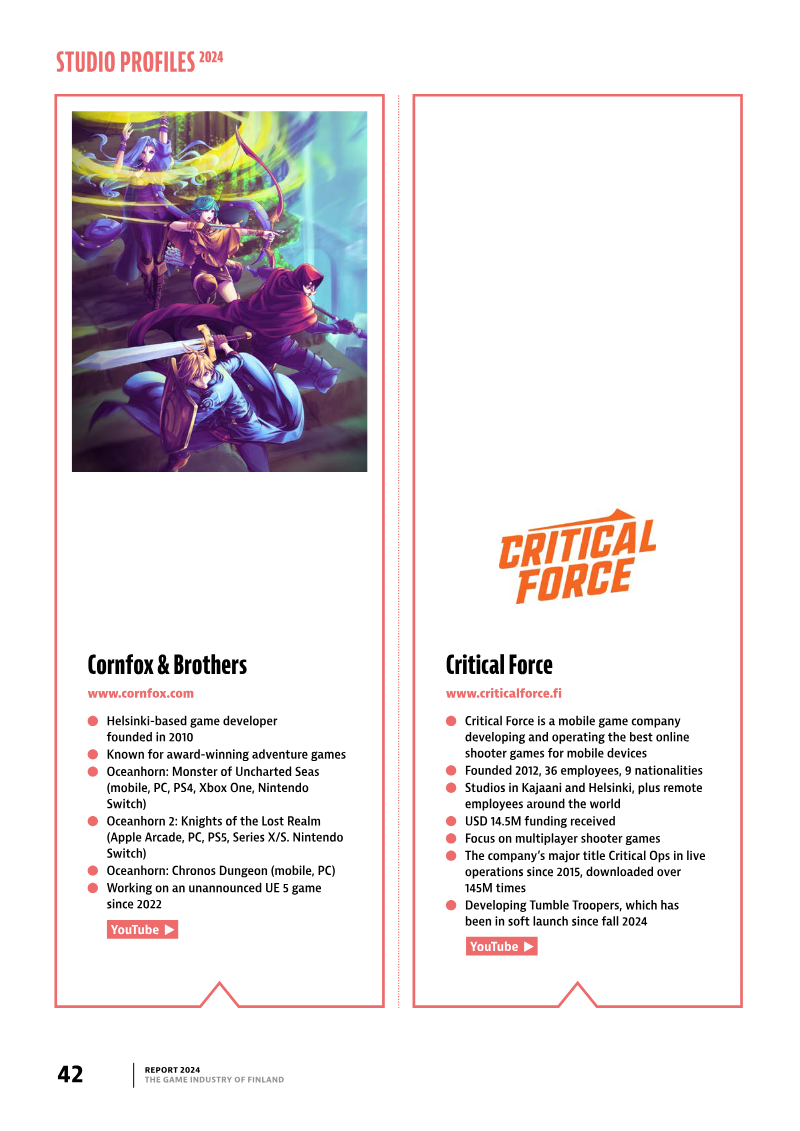
Geographically, the industry is anchored by a network of regional hubs, notably Jyväskylä’s EXPA, which serves as a northern innovation cluster. The ecosystem is highly diversified, ranging from global powerhouses such as Supercell—employing over 800 staff and delivering seven worldwide hit titles—to agile indie studios like Snowhound, which hosts more than 120 employees from over twenty nationalities, and niche ventures such as Soihtu DTx, which secured a $4.2 million seed round for a clinically validated mental‑health game. Across the board, firms are expanding into cross‑platform and co‑development projects, exemplified by collaborations between Ubisoft RedLynx and Zaibatsu Interactive, reflecting a broader trend toward collaborative, multi‑disciplinary production.
- Finland’s game industry currently employs approximately 4,300 individuals, representing about 3,800 full-time positions.
- A significant decline in private risk capital and publisher funding has forced studios to pivot toward B2B subcontracting, co-development agreements, and increased reliance on EU and national public R&D programs.
- The ecosystem remains anchored by major players like Supercell, which employs over 800 staff and has produced seven global hit titles, alongside diverse ventures like the mental-health game developer Soihtu DTx, which recently secured a $4.2 million seed round.
- Finnish studios are increasingly adopting collaborative production models, evidenced by cross-platform partnerships such as the collaboration between Ubisoft RedLynx and Zaibatsu Interactive.
- Despite innovation in AI-assisted development and cloud gaming, the industry faces growth constraints due to a persistent shortage of senior developers and specialists proficient in Unreal Engine.
Association Canadienne du Logiciel de Divertissement Rapport Annuel 2024
The 2024 annual review presents a comprehensive assessment of Canada’s video‑game sector, emphasizing its expanding regulatory influence, economic contribution and strategic diversification. Central to the analysis is the successful negotiation of two key exemptions—removal of the industry from the Streaming Act levy and exclusion from the Online Harms Act—demonstrating the sector’s growing political clout. The accession of major global publishers, notably Epic Games, Roblox and Tencent, further amplifies the association’s reach and underscores Canada’s emergence as a hub for gaming innovation and talent.
A worldwide survey of 13 000 players across twelve nations reveals that 74 % of Canadian gamers prioritize fun, while 43 % cite mental stimulation and 28 % value exploration, highlighting a multifaceted consumer motivation profile that informs product development and marketing strategies. High‑impact initiatives such as exclusive Unreal Engine‑driven studio tours in Montreal, the second Geneva Day of the Global Video Game Coalition securing United Nations‑level recognition, and the Ottawa “Jeux vidéo sur la Colline” summit collectively reinforced the sector’s cultural, social and economic significance, quantified at a $5.5 billion contribution to national GDP.
Financially, the Canadian Entertainment Software Association achieved its first full pre‑pandemic budget while operating virtually, generating cost efficiencies that funded supplemental programs including “Le pouvoir du jeu” and an overhaul of parental‑control video resources. Membership growth, driven by the inclusion of Roblox and Epic Games, propelled revenues beyond forecasts and validated the association’s diversification strategy.
Looking ahead, the organization intends to retain its virtual‑first operating model and continue advocacy for regulatory, economic and security policies that sustain industry expansion, while deepening diversity, equity and inclusion efforts through partnerships such as QueerTech and a cross‑industry equity working group. The report thus positions Canada’s interactive entertainment ecosystem as a resilient, globally connected, and policy‑savvy contributor to the broader digital economy.
- The Canadian video game sector contributed $5.5 billion to the national GDP in 2024, supported by a resilient, virtual-first operational model.
- The industry successfully secured exemptions from the Streaming Act levy and the Online Harms Act, signaling significant growth in its regulatory and political influence.
- Major global publishers including Epic Games, Roblox, and Tencent joined the association, driving revenue beyond forecasts and expanding the sector's reach.
- A global survey of 13,000 players identified that 74% of Canadian gamers prioritize fun, 43% seek mental stimulation, and 28% value exploration.
- The association achieved its first full pre-pandemic budget, allowing for increased investment in initiatives like 'Le pouvoir du jeu' and updated parental-control resources.
Big Games Industry Employment Survey 2024: Salaries, Compensation Trends and State of the Games Sector in Europe
The European games industry in 2024 is characterized by significant volatility and structural transformation, with 15% of the workforce experiencing layoffs and 10% exiting the sector entirely. This instability disproportionately affects junior professionals, nearly a third of whom have left the industry over the past year. While 44% of those who switched jobs secured career gains, a notable 24% accepted lower pay or seniority to remain employed. Job satisfaction and employee loyalty follow a U-shaped trajectory, typically bottoming out between three and five years of experience before rebounding as professionals prioritize stability and mature corporate processes.
Technological integration and workplace culture are central to current industry shifts. AI adoption has surged by 17% year-over-year, with 54% of professionals now utilizing these tools. Despite this modernization, the sector struggles with persistent systemic issues, including a gender pay gap driven by a lack of female representation in leadership and technical roles. Discrimination remains prevalent, as 32% of respondents reported personal experiences with gender-based bias and 26% cited ageism. Furthermore, a significant gap in professional development exists; 55% of workers received no formal training in the past year, forcing 65% of those seeking advancement to self-fund their education.
Operational pressures continue to impact well-being, with 28% of the workforce reporting stagnant career development and 7% working overtime almost daily. High dissatisfaction is closely linked to professional burnout, poor management, and a lack of work-life balance. However, certain segments show resilience; the outsourcing sector saw a significant rise in employee net promoter scores, and hybrid work models remain a primary driver of retention. While free-to-play studios generally offer higher compensation than premium developers, long-term stability perks and profit-sharing remain the most effective tools for maintaining a committed workforce in an increasingly precarious market.
- The European games industry faces significant instability, with 15% of the workforce experiencing layoffs and 10% leaving the sector entirely, disproportionately impacting junior professionals.
- AI adoption has surged by 17% year-over-year, with 54% of industry professionals now integrating these tools into their daily workflows.
- Systemic workplace issues persist, as 32% of respondents reported gender-based bias and 26% cited ageism, contributing to a gender pay gap rooted in a lack of female leadership and technical representation.
- Professional development is stagnating, with 55% of workers receiving no formal training in the past year, forcing 65% of those seeking career advancement to self-fund their education.
- While 44% of job switchers achieved career gains, 24% were forced to accept lower pay or reduced seniority to maintain employment in the current market.
Toxicity and the Bottom Line: The Impact of Hate and Harassment on Player Retention and In-Game Purchases
Toxicity and harassment in online gaming environments significantly impact player retention and monetization, creating a direct financial incentive for studios to prioritize trust and safety. Research based on a representative survey of 2,408 active gamers across various age groups, genders, and ethnicities indicates that three out of four players consider safety from hate and harassment a high priority. Despite this, approximately 10% of players report feeling actively unsafe, with this figure rising to 23% among bisexual players and 18% among Asian players, highlighting the disproportionate impact on marginalized communities.
The data establishes a clear link between toxic behavior and lost revenue. Approximately 19% of players report spending less money in gaming communities to avoid harassment, while 21% have reduced their overall playtime. Engagement is further eroded by defensive player behaviors: 31% of participants have abandoned matches already in progress, 27% have left lobbies before a match began, and 44% have disabled voice chat entirely to mitigate exposure to abuse. These actions not only decrease individual player lifetime value but also degrade the experience for the broader player base.
Demographic analysis reveals that younger players, particularly those aged 18 to 24, are the most sensitive to these issues. This cohort is the most likely to feel unsafe and the most prone to disengaging or reducing spending in response to toxicity. Because these players represent a core demographic with long-term growth potential, their tendency to "vote with their wallets" suggests that safer gaming environments are fundamentally more profitable. The findings conclude that traditional moderation is currently insufficient, necessitating more robust community guidelines and integrated safety tools to protect both players and the industry's bottom line.
- Toxicity directly suppresses revenue, as 19% of players spend less money and 21% reduce their overall playtime to avoid harassment.
- Safety is a critical player priority, with 75% of the 2,408 surveyed gamers identifying protection from hate and harassment as a high priority.
- Harassment causes significant engagement loss, with 44% of players disabling voice chat, 31% abandoning active matches, and 27% leaving lobbies to avoid abuse.
- Marginalized groups face disproportionate risks, with 23% of bisexual players and 18% of Asian players reporting that they feel actively unsafe in gaming environments.
- The 18-to-24 age demographic is the most sensitive to toxicity, showing the highest propensity to disengage or reduce spending, which threatens long-term industry growth.
State of the Game Industry 2024
The global game industry entered 2024 in a state of profound volatility, defined by a painful market correction following post-pandemic overexpansion. This period of instability is marked by widespread layoffs affecting one-third of the workforce and a surge in studio closures linked to rapid corporate conglomeration. While North America remains the primary hub for development and PC continues to be the dominant platform, the workforce is increasingly preoccupied with job security and the ethical implications of emerging technologies. Generative AI has seen rapid adoption, with nearly half of developers utilizing these tools, yet 84% express deep concern regarding copyright infringement and the potential for further job displacement.
Labor dynamics are shifting as developers react to economic pressures and perceived corporate mismanagement. Support for unionization has climbed to 57%, with particularly high enthusiasm among younger professionals aged 18 to 24 who are grappling with inflation and precarious employment. This desire for collective bargaining coincides with a growing rejection of mandatory return-to-office policies and a decline in confidence regarding corporate diversity and sustainability initiatives. Furthermore, the technical landscape is fracturing; significant dissatisfaction with Unity’s recent policy changes has led one-third of developers to consider switching engines, often favoring open-source alternatives like Godot.
Business models remain centered on digital premium downloads, favored by 51% of the industry, even as marketing strategies face disruption due to overwhelming negative sentiment toward major social media platforms like Twitter/X. Despite the internal turmoil, there is a measurable increase in the implementation of accessibility features, which now appear in nearly half of all projects. However, the industry’s demographic makeup remains largely stagnant, continuing to be predominantly White and male. Ultimately, the current landscape reflects a workforce caught between the necessity of financial stability through consolidation and a growing demand for systemic reform to address ethical, technical, and labor-related grievances.
- The industry is undergoing a severe market correction characterized by widespread layoffs affecting one-third of the global workforce and a surge in studio closures.
- Support for unionization has reached 57%, driven largely by younger professionals (ages 18–24) facing economic instability and dissatisfaction with corporate management.
- While 49% of developers have adopted generative AI, 84% of the workforce reports significant concerns regarding copyright infringement and potential job displacement.
- Technical infrastructure is shifting, with one-third of developers considering engine migrations—often toward open-source options like Godot—following recent policy changes at Unity.
- Digital premium downloads remain the primary business model for 51% of the industry, even as marketing strategies struggle with declining sentiment toward major social media platforms.
Llibre Blanc d’Accessibilitat per al Desenvolupament de Videojocs
The central thesis is that video‑game accessibility must be embedded from the earliest design stages, using a standardized, non‑subjective evaluation framework, to achieve universal inclusion while avoiding the steep costs of retro‑fitting. Drawing on the European EN 301 549 ICT‑accessibility standard and the Ga11y portal launched in July 2022, the analysis provides a comprehensive catalogue of functional measures that map directly to specific disability profiles.
The market context is global, with more than three billion gamers worldwide, roughly 400 million of whom have a disability, and an estimated 18 million regular players in Spain. Despite growing awareness since 2014 and heightened industry focus from 2018, major publishers often omit disclosure of the accessibility features they implement. The work outlines 28 “star‑rated” guidelines, ranging from simple one‑star options such as clear iconography, customizable audio mixes, and control‑swap mechanisms, to complex five‑star solutions like sign‑language interpretation and AI‑driven navigation assistance. Each measure is linked to visual, auditory, motor, speech or cognitive impairments, and the guidance stresses that low‑complexity features can be integrated early with minimal technical effort, delivering broad, cost‑effective support.
A parallel emphasis is placed on the expanding hardware ecosystem. Commercial adaptive controllers—from the modular Sony Access Controller to eye‑tracking solutions like Tobii Eye Tracker 5—are complemented by low‑cost 3‑D‑printed accessories that enable bespoke adaptations. Collaboration between industry bodies such as AEVI and the Fundación ONCE underpins the push for mandatory, inclusive design practices across the European development landscape, positioning accessibility as a strategic imperative rather than an optional add‑on.
- Accessibility must be integrated during early design phases to avoid the high costs of retrofitting, utilizing the European EN 301 549 ICT-accessibility standard as a foundational framework.
- The global gaming market includes over three billion players, with approximately 400 million individuals living with a disability and 18 million regular players in Spain.
- The Ga11y portal, launched in July 2022, provides a catalogue of 28 star-rated accessibility guidelines that map specific technical solutions to visual, auditory, motor, speech, and cognitive impairments.
- Low-complexity features, such as customizable audio mixes and control-swap mechanisms, can be implemented with minimal technical effort to provide broad, cost-effective support.
- Hardware accessibility is expanding through a combination of commercial adaptive controllers like the Sony Access Controller and Tobii Eye Tracker 5, alongside low-cost, 3D-printed bespoke accessories.
Libro Blanco de Accesibilidad para Desarrolladores
The core thesis emphasizes that video‑game accessibility must be embedded from the earliest design stages, rather than added later, because retro‑fitting dramatically inflates development time and cost. Drawing on the European EN 301 549 standard and the Ga11y catalogue, the work presents a systematic methodology for evaluating both closed platforms (consoles) and open platforms (PC and mobile) and supplies developers with a practical reference for implementing auditory, visual, motor and cognitive options.
Globally, roughly three billion people play video games, of whom about four hundred million experience some form of disability. Within the Spanish ecosystem, industry bodies such as AEVI and Fundación ONCE have positioned universal accessibility as a strategic priority, encouraging adoption of the outlined standards across the period 2018‑2023, when systematic measures began to emerge after an initial appearance in 2014.
A tiered catalogue of more than thirty accessibility measures is detailed, ranging from basic 1‑star options—identifiable icons, joystick swapping, sound‑mix controls and puzzle‑skip functions—to advanced 5‑star features such as sign‑language interpretation, voice‑to‑text and text‑to‑voice for multiplayer. Each measure is mapped to specific disability profiles (partial or total vision loss, colour‑vision deficiency, hearing loss, motor impairments and cognitive challenges) and is recommended for early integration with configurable settings. A self‑assessment matrix forces developers to verify compliance for every mandatory feature, underscoring that true inclusivity also depends on compatible adaptive peripherals.
The analysis of hardware solutions lists the principal adaptive controllers and accessories available for major consoles, including the Xbox Adaptive Controller, Hori Flex, PlayStation Access Controller, QuadStick, Tobii Eye Tracker 5, the Ford Adapta racing simulator and the OWO haptic jacket, together with their price ranges. It concludes that while commercial peripherals are expanding, gaps remain, making coordinated software‑hardware strategies essential for delivering fully inclusive gameplay across the global market.
- Accessibility must be integrated during the earliest design stages to avoid the significant cost and time inflation associated with retrofitting features.
- Approximately 400 million of the 3 billion global gamers live with some form of disability, making inclusive design a critical market consideration.
- The framework categorizes over 30 accessibility measures into a 5-star system, ranging from basic joystick swapping and puzzle-skipping to advanced sign-language interpretation and text-to-voice features.
- Developers should utilize the European EN 301 549 standard and the Ga11y catalogue to systematically map accessibility features to specific visual, auditory, motor, and cognitive disability profiles.
- Industry bodies like AEVI and Fundación ONCE have established universal accessibility as a strategic priority within the Spanish ecosystem since 2018.
Annual Report 2023: Canada
The 2023 annual review underscores a year of extraordinary expansion for Canada’s video‑game industry, positioning the nation as a pre‑eminent global hub for development talent and creative output. Canadian studios not only captured a record share of international awards and critical praise, but also deepened export revenues, reinforcing the sector’s contribution to the broader digital economy. Concurrently, the industry association intensified its advocacy agenda, securing more favourable regulatory frameworks and advancing diversity, equity and inclusion initiatives that aim to broaden participation across the workforce.
Financial analysis reveals that the Canadian Entertainment Software Association (ALD) concluded the fiscal year with a substantial surplus, reflecting both robust membership growth and effective cost management. The surplus enabled the organization to maintain flat membership fees for existing constituents while expanding its full‑time staff, thereby enhancing service delivery and policy‑making capacity. This fiscal stability signals confidence among stakeholders and provides a solid foundation for future strategic investments.
Geographically, the findings pertain to the Canadian market, encompassing all provinces and territories, and cover the calendar year 2023. The scope spans development studios, publishing entities, and ancillary service providers within the interactive entertainment ecosystem, as well as the association’s governance and advocacy functions.
Overall, the data illustrate a thriving, financially sound industry that is both internationally competitive and increasingly inclusive, supported by an association that leverages its surplus to reinforce member value and influence public policy.
- Canada’s video game industry experienced extraordinary expansion in 2023, solidifying its status as a global hub for development talent and creative output.
- Canadian studios achieved record-breaking international award recognition and critical acclaim throughout the 2023 calendar year.
- The sector deepened its export revenues in 2023, significantly increasing its contribution to the national digital economy.
- The Canadian Entertainment Software Association (ALD) ended the 2023 fiscal year with a substantial financial surplus resulting from robust membership growth and cost management.
- The ALD utilized its fiscal surplus to increase full-time staffing and enhance policy-making capacity while maintaining flat membership fees for existing constituents.
State of the Game Development Industry 2023: Workplace Health & HR Culture, Mental Trends
The global game development industry entered a period of profound instability throughout 2023, characterized by widespread layoffs affecting 28% of the workforce and a pervasive crisis of employee loyalty. This volatility is reflected in a negative Employee Net Promoter Score of -19%, signaling deep-seated dissatisfaction across the sector. While economic recalibration and management failures are the primary drivers of this distress, only 3% of job losses are currently attributed to AI automation. Instead, the workplace is increasingly defined by "quiet hiring" practices, where 37% of employees take on expanded responsibilities without additional compensation, often coupled with unpaid overtime and insufficient severance packages.
Despite these hardships, remote and hybrid work models have become the industry standard, with 80% of professionals operating outside traditional office environments. Job seekers now prioritize salary, remote flexibility, and skill development above all else. However, a significant disconnect exists between employer expectations and worker reality. While 88% of firms prioritize industry expertise and portfolios over formal education, they simultaneously struggle to fill high-level specialist roles. This talent gap is exacerbated by a competitive market where 50% of professionals find suitable opportunities scarce, particularly entry-level candidates and marginalized groups who face heightened barriers to entry.
The most critical factor for improving retention and workplace culture is managerial mindfulness, specifically ethical leadership and empathy. Despite its statistical importance to employee satisfaction, only 13% of companies provide leadership training in these areas. As 70% of professionals report general dissatisfaction and 34% of companies have scaled back hiring, the industry faces a structural imbalance. Success in the current landscape requires a shift away from traditional recruitment and toward fostering supportive environments that address the mental health and professional growth of a demoralized workforce.
- The game industry experienced significant instability in 2023, with 28% of the workforce affected by layoffs and an Employee Net Promoter Score of -19% indicating widespread dissatisfaction.
- Economic recalibration and management failures are the primary drivers of industry distress, while AI automation currently accounts for only 3% of total job losses.
- Workplace culture is suffering from 'quiet hiring' practices, where 37% of employees are absorbing expanded responsibilities without corresponding increases in compensation.
- Remote and hybrid work models have become the industry standard, with 80% of professionals now operating outside of traditional office environments.
- A structural talent gap persists as 50% of professionals report a scarcity of suitable opportunities, despite 88% of firms prioritizing portfolios and expertise over formal education.