Console reports and market data
Documents
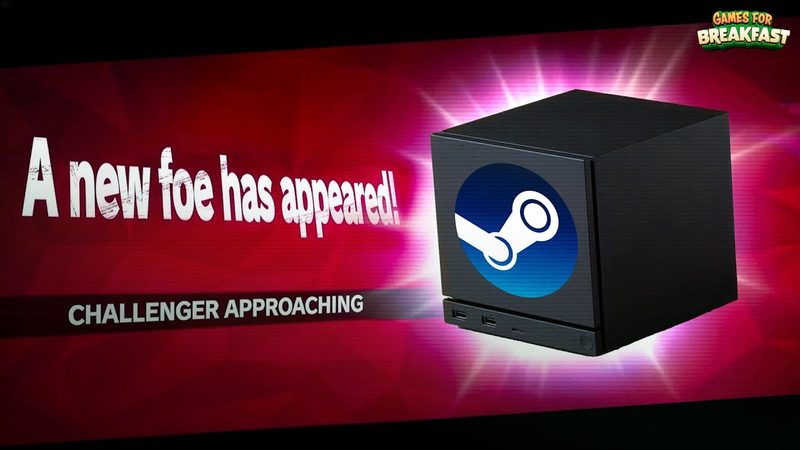
Consoles Get Steamed, Black Ops AI Refunds, and Krafton's Voluntary Layoffs | Games For Breakfast
Valve is positioning itself to disrupt the traditional console market by launching three new hardware devices in 2026, including a modular living room PC, a specialized controller, and a wireless VR headset known as the Steam Frame.
- Valve has announced plans to release three new pieces of hardware in 2026, signaling a major expansion of their Steam-branded ecosystem.
- Activision's 'Black Ops 7' is facing significant consumer backlash due to mandatory online connectivity for its single-player campaign, leading to widespread refund requests.
- Krafton has initiated a shift toward voluntary layoffs as part of a broader corporate restructuring that emphasizes an 'AI-first' strategy for productivity and growth.
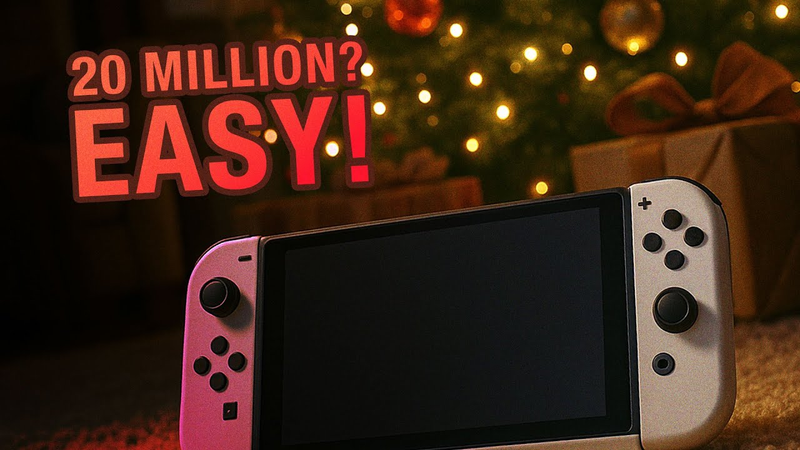
Switch 2 Is Breaking Records — The Console Wars Aren’t Dead Yet
The gaming industry is currently defined by two distinct narratives: the resilient performance of traditional console hardware and the complex, high-growth, yet margin-pressured trajectory of platform-based digital ecosystems.
- Nintendo’s next-generation console is outperforming its predecessor with 10 million units sold pre-holiday, positioning it to potentially exceed 20 million units by year-end.
- Roblox reported 151 million daily active users in Q3 2025, representing a 70% year-over-year increase and a 47% surge in engagement hours across the U.S. and Canada.
- Despite record-breaking user metrics and rising free cash flow, Roblox stock declined as investors prioritized margin expansion over raw user acquisition.

Unreal Engine Development Update | Develop Brighton 2024
Unreal Engine is undergoing a strategic evolution focused on maximizing graphical fidelity, streamlining large-scale world building, and enhancing overall developer productivity.
- Unreal Engine 5.5 will introduce experimental support for skeletal mesh Nanite, enabling internal hierarchies, animation, and displacement on skinned meshes.
- Epic is optimizing Nanite for dense foliage rendering to improve performance on Gen 9 consoles, addressing current limitations with small-scale geometry aggregation.
- The engine is shifting toward a 'Mega Worlds' initiative, utilizing smart assets with embedded Procedural Content Generation (PCG) graphs to allow environment artists to build complex biomes without manual placement.

Pokemon BDSP: Play Like A Designer Episode 5, Eterna City Showdown!
Pokémon Brilliant Diamond and Shining Pearl serve as a case study in the friction between historical design fidelity and modern player expectations.
- In Pokémon, base stat totals and specific natures significantly dictate performance, as evidenced by a level 9 Star-Lord outperforming a level 14 Psyduck in special attack, attack, and speed.
- Strategic team building involves managing 'sandbag' slots, where lower-level Pokémon are carried through battles to gain experience for future utility.
- Abilities like 'Storm Drain' provide tactical advantages by granting immunity to specific move types while simultaneously boosting the user's stats, effectively turning a defensive switch into an offensive setup.

Battlefield 6 Goes Free-to-Play
Battlefield 6 is undergoing a strategic pivot by adopting a free-to-play model for its new RedSec mode, a move designed to compete directly with Call of Duty’s Warzone.
- Battlefield 6 is adopting a free-to-play model for its new 'RedSec' mode, featuring a 100-player battle royale format to compete directly with Call of Duty: Warzone.
- Monetization for the new mode will center on a 'Battlefield Pro' pass and a weapon blueprint system, both designed to increase average revenue per user (ARPU) and improve long-term player retention.
- Modern shooter success is increasingly dependent on rapid content pipelines, with studios turning to machine learning and AI to meet the high production demands of live-service models.

What will stop the Steam Machine failing again? And how did Helldivers 2's Xbox launch go?
The current landscape of the video game industry is defined by a tension between aggressive corporate consolidation and the necessity for studios to maintain distinct creative identities.
- The video game industry is shifting away from aggressive consolidation toward sustainable growth, evidenced by Square Enix’s divestment from Western studios as firms refocus on core competencies.
- Creative vision remains a viable market strategy, as demonstrated by the success of multiplayer-focused titles like Helldivers 2 despite a crowded and risk-averse landscape.
- High-profile release delays have created a temporary market reprieve, providing a strategic window for smaller developers to capture market share from major publishers.
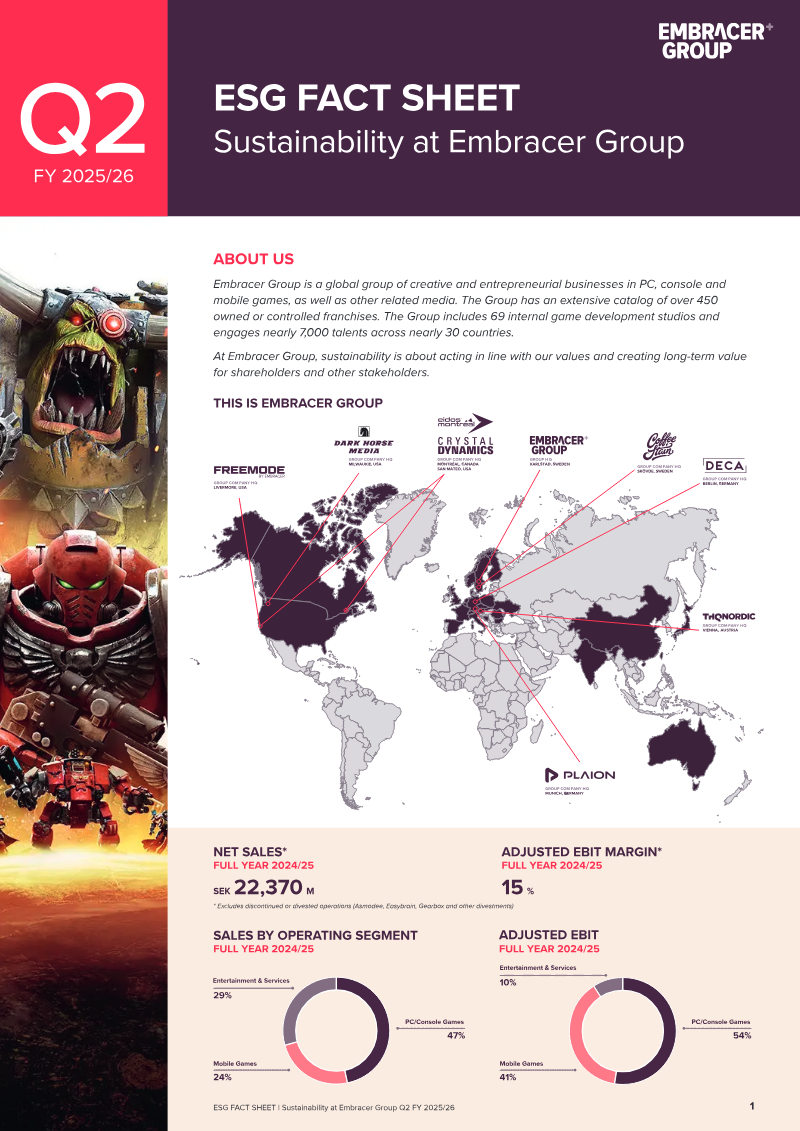
Sustainability at Embracer Group: FY 2025/26 ESG Fact Sheet
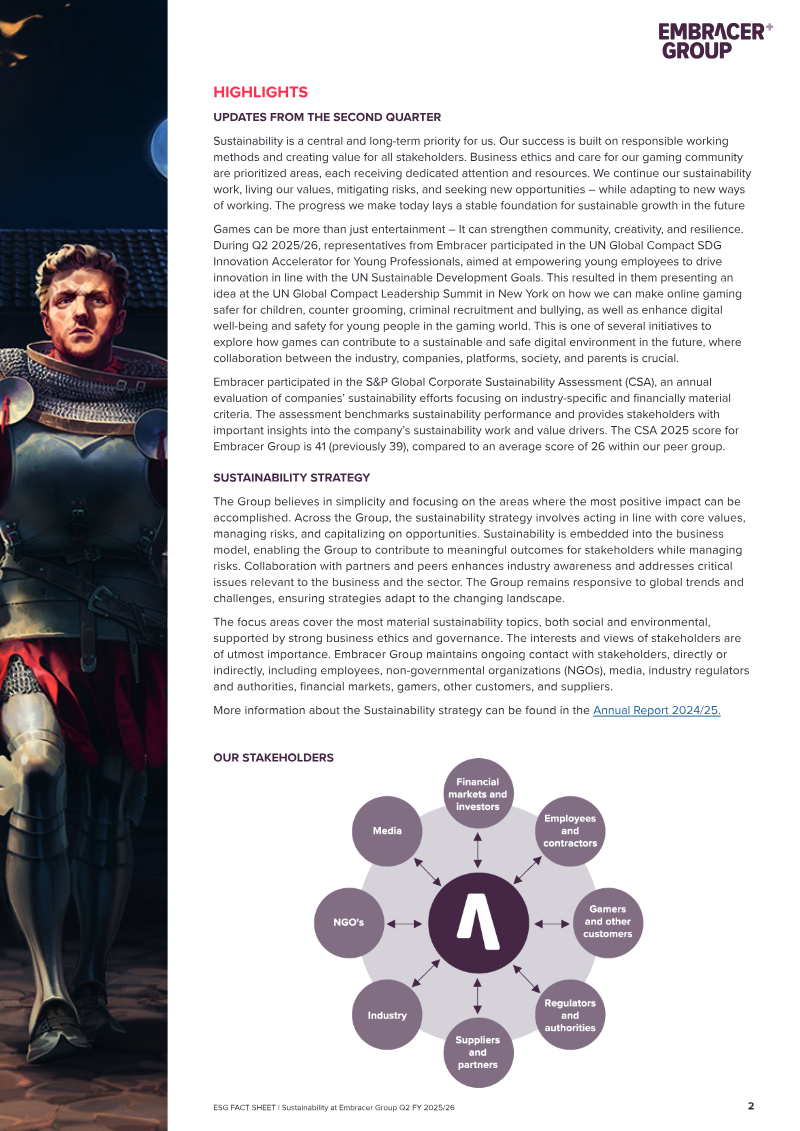
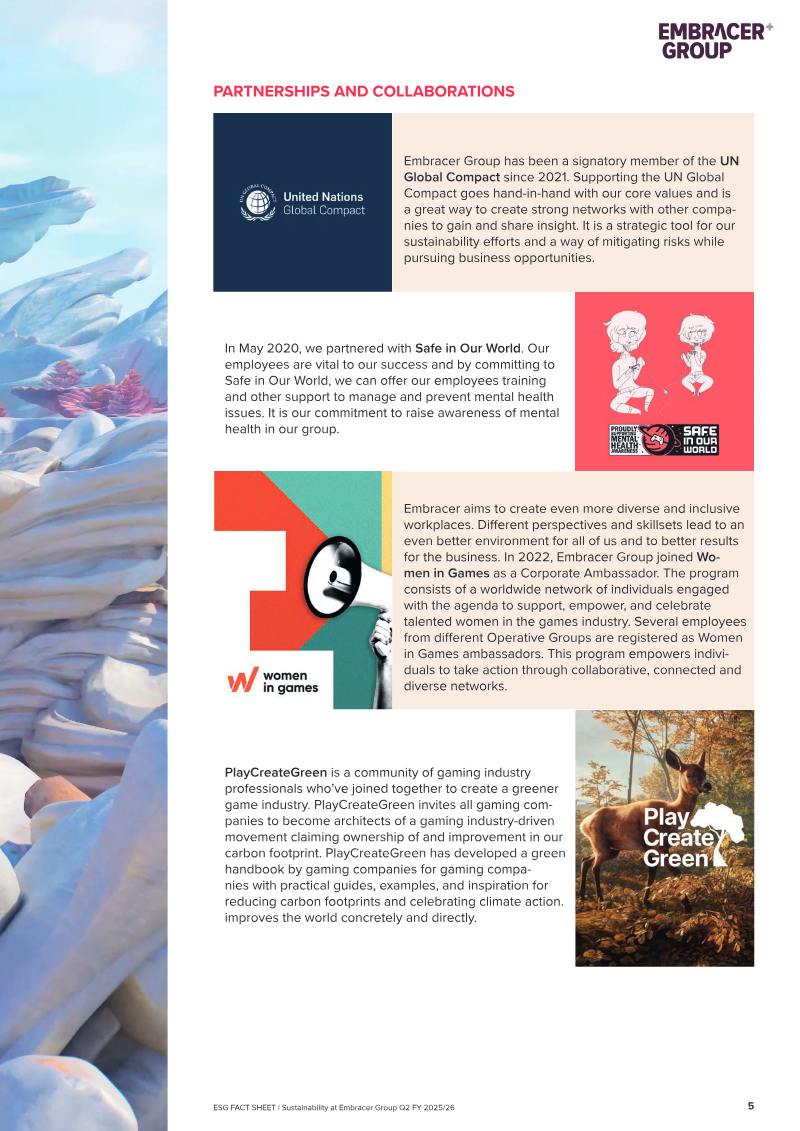
The Embracer Group’s FY 2025/26 ESG Fact Sheet outlines the organization’s commitment to integrating sustainability into its core business model, which spans PC, console, and mobile gaming, as well as media and retail operations.
- Embracer Group achieved a score of 41 in the 2025 S&P Global Corporate Sustainability Assessment, significantly outperforming the industry peer average of 26.
- The organization maintains a workforce of nearly 7,000 employees across 69 internal studios, with a geographic distribution of 64% in Europe, 31% in North America, and 5% in other regions.
- Internal governance is supported by 17 group policies, featuring high compliance implementation rates of 99% for codes of conduct and 96% for anti-corruption measures.

Interview with Reggie Fils-Aime on Nintendo Switch 2, leadership and the console war
The gaming industry is currently undergoing a structural transformation as the traditional console war model fades in favor of platform-agnostic strategies.
- The gaming industry is shifting from a hardware-exclusive console war model toward a platform-agnostic strategy, evidenced by Xbox’s move into third-party publishing and Sony’s expansion onto PC.
- Future hardware success, including for the upcoming Nintendo Switch 2, now depends heavily on robust third-party support and efficient development tools rather than relying solely on proprietary exclusivity.
- To avoid market stagnation, hardware manufacturers must leverage unique brand identities to deliver innovative, distinct experiences that justify their continued relevance in a less hardware-centric landscape.
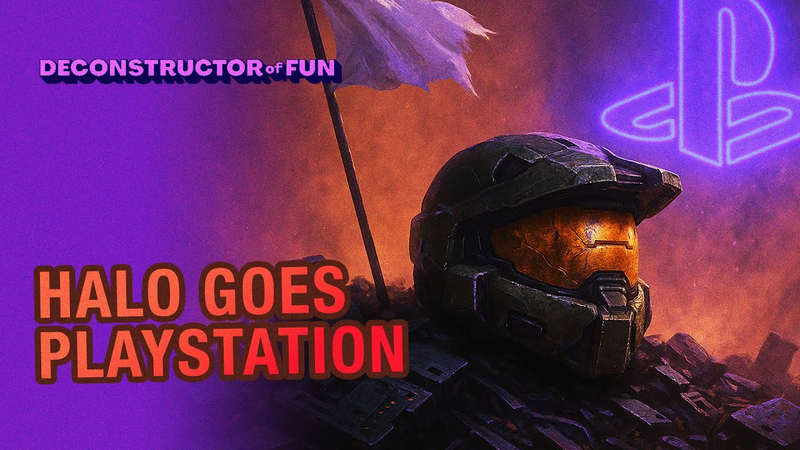
HALO JUMPS TO PLAYSTATION! Has Xbox Officially Lost the Console War?
The gaming industry is currently witnessing a significant strategic shift as Microsoft transitions its flagship Halo franchise to a multiplatform model.
- Starting in 2026, the Halo: Combat Evolved remake will launch on PlayStation 5, Xbox Series X, and PC, ending 25 years of Xbox franchise exclusivity.
- Microsoft is shifting its gaming strategy from a hardware-centric console model to a global publishing approach that prioritizes distribution across consoles, PC, mobile, and cloud platforms.
- The transition to a multiplatform model is driven by a corporate mandate to achieve 30% profit margins within the gaming division.
Nintendo’s Box Office Bet, Rockstar’s Bad Week, & Playstation Portal Ponies Up | Games For Breakfast
Nintendo is aggressively expanding its intellectual property into the cinematic space, moving beyond the success of its initial film ventures to establish a long-term release cadence.
- Rockstar Games has delayed the release of Grand Theft Auto VI to November 2026, citing a need for technical polish while simultaneously facing allegations of international union busting.
- Nintendo is formalizing a long-term cinematic strategy with a new Mario film slated for 2025 and a live-action Legend of Zelda adaptation scheduled for 2027.
- Funko is experiencing a 20% year-over-year sales decline, reflecting broader market saturation issues affecting established entertainment brands.
Shooter Monthly #1: Battlefield Revolution, Arc Raiders Evolution, and the ABI Mystery
The tactical shooter market is currently undergoing a significant evolution, characterized by a widening strategic divide between Western premium models and Eastern free-to-play approaches.
- The extraction shooter genre is shifting away from hardcore, punishing mechanics toward accessible, PvE-focused gameplay and forgiving progression systems to attract a broader audience.
- Eastern free-to-play models, exemplified by Arena Breakout: Infinite, are successfully challenging Western premium shooters by offering more accessible entry points.
- Arc Raiders demonstrated significant market demand for extraction-adventure hybrids by attracting over 115,000 concurrent players during its initial testing phase.
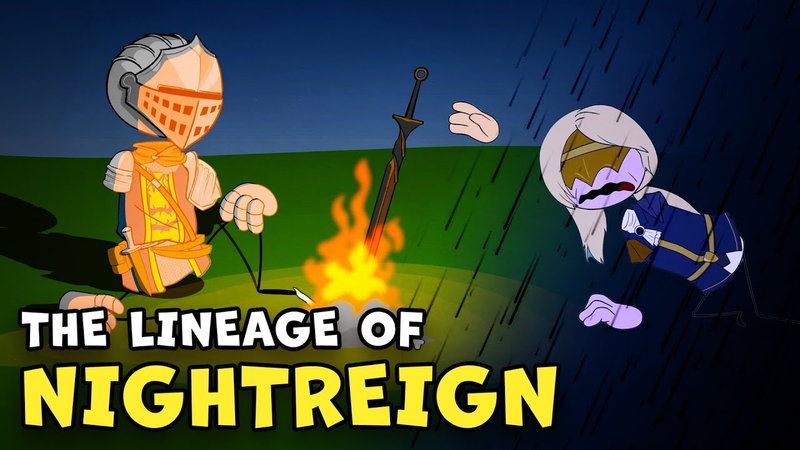
Dark Souls to Nightreign: Never Ever Alone | Extra Credits Gaming
The Soulsborne genre, traditionally characterized by its brutal difficulty and solitary, oppressive atmosphere, possesses an underlying, often overlooked emphasis on social connection and cooperative play.
- FromSoftware's Soulsborne titles, traditionally viewed as solitary and brutal experiences, are underpinned by a strong, inherent culture of community and 'jolly cooperation' that has been present since the series' inception.
- The transition to the co-op-focused roguelite Elden Ring: Nightreign represents a natural evolution of the multiplayer elements already embedded in the franchise's design, rather than a radical departure from its core identity.
- The success of Elden Ring: Nightreign in adopting a multiplayer-first model is attributed to its retention of the original game's combat mechanics, whereas other studios like Remedy Entertainment struggled with FBC: Firebreak by failing to translate the core appeal of their single-player titles into a multiplayer format.