VideoThe Game Business
Interview with Reggie Fils-Aime on Nintendo Switch 2, leadership and the console war
11 Nov 202545 min video
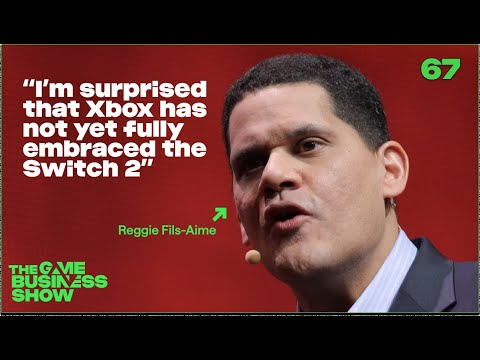
I'm surprised that Xbox has not yet fully embraced the Switch 2 platform from a software perspective. Whether it's Resident Evil, whether it's Assassin's [music] Creed, I think as long as those games play well and look good on a Switch 2 system, [music] I believe there's a fan base that'll buy it. Hello and welcome to the Game Business Show with me, Christopher D. Today we're speaking to a video game legend, someone who played a pivotal and very public role in the console game world for two decades before retiring in 2019. He continues to be actively involved in the game industry, advising companies and supporting various different organizations and events. He released a best-selling book about his career back in 2022, and the release of Nintendo Switch 2 this year marks the first Nintendo console in 20 years he wasn't involved with launching. So, I'm excited to hear his thoughts all about that and his views on the current video game industry as well. I've also never
actually interviewed him before, not face to face anyway. So, I am pretty excited to be doing this. I am of course talking about former Nintendo of America president Reggie Phils and me. Check this out. Hello, Reggie. Welcome to the show.
Christopher, so good to see you. I think uh I think this is the first time we've seen each other uh in person. I think we've done uh written interviews in the way pass machine.
Yeah. Yes. Well, yeah, exactly. I've read your book. I've followed your memes for for years. So, it's a real pleasure to actually chat to you. I did actually see your book, Disrupting the Game. Um, uh, is now it's available on Spotify now and it came out on Perback earlier in the year as well.
That That's correct. So, you know, published in 2022 was a Wall Street Journal bestseller, which uh, you know, I'm just so proud of. You know, a lot of times executives, you know, they they're so focused on wanting to write a book and they use ghostriters and all this stuff. You know, this was a bit of serendipity. It was my co project that I
did every morning to get up and write the book.
Oh, no.
It was all my words and and my wisdom and uh the fact that it's done well has been uh has been, you know, truly a blessing for me. It's been it's been wonderful to see. So yes, you know, uh, recently we published the softbound version of the book. You know, the publisher told me that typically it would be launched in softbound in about a year after the main publishing.
Uh, they held on to it for two years because the hardbound book was doing so well. And uh, the audio version is doing quite well. A friend of ours, mutual friend of ours, helped me out with the audio book. So Jeff Keelley and I did uh did an hour's worth of bonus content on the audio book
and uh yeah, now it's available on Spotify, which I found shocking. I I I just stumbled upon it in in Spotify. They didn't even tell me in advance that it was going to be available.
I did not know the audio book had bonus content. I'm going to have to I'm going have to seek that out.
It has some has some very fun bonus content. We touch on a few behind the scenes Nintendo stories. We we touch on Mother Three for all of the fans. If you haven't picked that up yet, you should.
Oh, you also you've been involved in the New York um I always get the Critics's Choice Awards. Is that right? Is that the Have I got that right?
You you do have it right. Yeah.
And that is the uh the awards we put on the overall organization is the New York Critic Circle. and they not only put on the awards, but they also do mentoring in the metro New York City area, which is really what drew me to that organization. They do wonderful work
for underserved communities. They actually use the foundation of video games
to teach young people how to write,
how to think critically. It's a wonderful program. It's an indepth program for a limited number of young people across New York City. You know, we're constantly thinking about how do we expand it into other areas. So, it's um it's a passion for me to be involved in that group.
It's a festival format this year. It's two days. I saw
we're we're celebrating a big anniversary. So, we decided to do a two-day festival. The first day will be uh panels uh ending with a concert event and then the second day will be the more traditional awards program. We have a wonderful Legend Award winner this year and that's the Pokemon Company.
Oh wow.
Uh we'll be we'll be honoring them. So it's uh it should be a fantastic program. Uh, if anyone of your listeners are going to be in the New York metropolitan area, they should definitely pick up tickets because tickets will go fast.
Yeah, I've never been. I've heard a lot
about it though and I've been follow I've followed it, but I've never um I've never been myself. I should It's been a long time since I've been to New York. I think I should use it as an excuse to
You should [clears throat] use it as an excuse to come to the city and see what we're up to.
Okay. So, the book you've been working with the New York Critic Circle. I think you're doing some stuff with Cornell University. You've been keeping yourself busy in retirement, haven't you?
I I have. You know, I as I tell people, my retirement is perfect. And I say that because I get to do all of the things that I enjoyed as an executive. So I I get to share my learnings and wisdom. That's what the book was all about. Uh I do a limit limited number of public speaking events. Um, so that's more opportunities to share my learning. Uh, you know, Cornell University really was a key uh touch point for me. I I'm I'm confident that I I would not be here doing this video with you if I had
attended Cornell and had some uh some wonderful opportunities open up to me. So, I go back on campus uh twice a year, spend time with faculty, with the administrators, with students. I'm actually going to be on a they have a New York City uh tech campus that I'll be giving a a talk to uh in early December. So they they uh I'm able to spend quite a bit of time uh if you will giving back to that community and engaging um and then you know two public company boards which you know helps stimulate my brain and keep me challenged from a business standpoint.
Yeah. Wow. Well, we'll talk about um some of your learnings can apply to what's going on in video games at the moment. But has it been weird not being involved in a new Nintendo console for the first time in 20 years? Yeah, it it
I I wouldn't say weird. What what I would say is certainly I've been observing the launch like a fan
though, [clears throat] you know, at times I I look at things critically and and wonder, you know, how they're thinking about different opportunities. You know, I I'll share one with you just right now. They just published their their recent u financial performance. Uh, the original Switch is on the cusp of outselling the Nintendo DS
to be the bestselling system of all time for Nintendo. And so, you know, I I'm I'm a very competitive type of person. Uh, I I like to win. And so, if I were still with the company, I would be thinking about, so how do we make that happen? uh you know uh Black Friday is a big opportunity for um you know valueoriented uh programs. During my time with Nintendo, we use Black Friday to sell through remaining inventory of Game Boy Advance, of Game Boy SP, of of Nintendo
DS, of the original Wii. And so could they be thinking through how to, you know, maximize that selling opportunity to put Nintendo Switch over the top?
Yeah,
I don't know, but I'd be thinking about it.
It's so close. I wouldn't be surprised in that in like the month since the because I think it's the financials up to end of September that in October because Pokémon came out in October, which is also on the original Switch. So I imagine it's it must be there now. It must be um it's going to be interesting. I I I it could be there now. I I would think through the end of this calendar year might be their last opportunity. Um I don't know if you noticed but buried in their announcements they did say that moving forward all of their development is going to be focused on switch too. So
yeah,
you know this uh the opportunity to reach that milestone is uh is essentially here and over the next few months.
Yeah, they've got they do have Tomodachi life. I think I I remember I remember
that game from the VDS one. That's that's got a couple of games, but yeah, they've stopped making games for it according to their their report. I did see I'm the same as you. I go through the whole report of every every utterance trying to read between the lines and and uh and have you got a Switch, too. Have you been
I I do have a Switch, too. And you know, I have to say for the fans who may be wondering, I had to go buy my own. You know, I had to uh to find my own way of getting my hands on a Switch 2. The company did not send me one for free.
Oh, outrageous. But uh but yeah, I've I have a Switch, too. I've I've enjoyed it. Uh like like the vast majority of folks, it seems based on their announcements, uh I did the bundle with Mario Kart, so I also have Mario Kart. I've been playing a lot of um Tears of the Kingdom, uh you know, updated for the Switch, too. I'm looking forward to Metroid. So,
yeah,
I have the Donkey Kong game, but I actually have not uh started playing it yet. I wanted to I've been traveling the last few weeks. I wanted to be home in my home setup to uh to begin playing
that game.
I've just finished Donkey Kong actually. I think it's a it's um Donkey Kong Bonanza. It's a very moorish game. It's very difficult to put down um as you would expect from that team, I think. But I mean, so it's it's a good machine and I've played a lot of it. The environment it's launched into, the the economics of it, the political landscape, trying to navigate all of that while trying to get people excited for Mario Kart and and Donkey Kong. I mean, I don't know. I wouldn't want to be involved in any of that. That feels like a feels like just an awful lot of headaches to try and work through.
I'm sure it was. You know, it's it's interesting. I I think back on my six years of retirement and so I wasn't there for the pandemic and you know all of the challenges that that represented and obviously the tariff situation uh has has to have been quite challenging. So, you know, that the the team has done yman's work as they've navigated through all these challenges.
Yeah. I was going to ask you what you think is the best thing they've done, but I don't we they must must be terrifying for you to be reviewing them. You can't help it though, can you? Because it's it's been part of your blood for so long.
Yes. You know, and and uh I you know, very good friends uh there in the organization, you know, including the teams in Kyoto. You know, I look the the launch of Switch 2 really was a huge success for the global team. And again, ju just to think about this and put it in perspective, when you look at video game history, you know, arguably with the exception of the original PlayStation being followed up by the PS2, the incumbent with, you know, strong momentum has always been challenged in following up with the next system. M
PS3 had challenges as they look to follow up uh PS2. Uh obviously Nintendo had challenges with the Wii U following up the Wii. So being able to successfully launch a new system after you've had historical success with the prior system is quite a challenging.
Yeah.
And you know the the the team has done a masterful job. uh you know the as I would be telling the team it's still early early in the game right there's a lot more to be done but certainly as you look at how they've performed over the past let's call it six months it's been quite strong
yeah I I guess I remember the Switch one launch and you know in that year was it Zelda Mario Kart Splatoon Mario Odyssey just absolute mega hits and this year this lineup's been well it's a it's good it's good stuff. I'm Mario Kart. You don't get bigger than that. And there's Pokemon as well, but it's Donkey Kong
and Hyrule and Metroid and Kirby Air Riders, you know, and I it's um I don't really have a question there, but I find I when I saw that lineup, I thought, well, that's that's different. It doesn't seem to, but I I think perhaps because it's a continuation of that Switch, I think it probably makes sense. But, um it's it's it's the thing that surprised me the most is the software lineup. There's a lot of good games, but it's it's a lot of different ones in there. Yes,
I think that's a very fair observation and you know I I I wouldn't be completely honest if like you from a business perspective when I first saw that lineup you know I I scratched my head a little bit but I I think certainly what I underestimated was the uh the enhanced Nintendo Switch one content I think has been compelling you know the stuff that you get uh for free as part of uh the Nintendo Switch online subscription. I think that has
helped drive some of the momentum and then certainly uh uh Bonanza was uh was a key driver for that.
Yeah. Yeah. I won't ask too much about Switch. I appreciate you didn't work on it, but there was a big question around the value of it. And I actually felt the value of the Switch 2 was really good cuz you went the console, I don't know, I can't remember the price in the US now, but the console with Mario Kart, if you've got a Switch One, which I think 80%, no, more than 80% of people did, which means they've got controllers. They're probably Nintendo Switch Online customers, they got those upgrades to Zelda as part of their subscription service. They got those GameCube games for existing fans. Actually, I felt the value was very good. It was very, you know, selling, but of course, a lot of the headlines were around the the top end pricing and and what it would cost if you're a new customer, which I guess made for good headlines, but I felt was a bit was a bit unfair. Anyway, um that was my one observation that I felt was a bit tough for them at the launch, but it hasn't stopped the sales.
It hasn't. And you know, I I agree with you. I I think the hardware was
appropriately priced. Uh, I think it was very smart of them to launch the bundle with Mario Kart and offering that at a significant value. I think that took the edge off of some of the complaints around the standalone price for Mario Kart.
Yeah. But moving forward really the challenge is going to be how they keep a pace of great software coming that is going to keep that audience engaged and get the you know that that next customer who's you know thinking about the hardware thinking about whether it makes sense getting that person into the ecosystem uh that's that has to be what they're thinking about.
Yeah. Well, let's talk a bit more broadly. Um, what do you think of the console space generally right now? But it's quite interesting with with Microsoft. I think Xbox is stopping doing exclusive games. Sarah Bond called exclusive games antiquated and PlayStation, even PlayStation's putting
more of its games on PC. It certainly seems like a sector's going through quite a big uh change. What do you make of all that?
Yeah, I I think you're absolutely right. Um, and and I I think between Sony and uh Xbox, I think there's different things going on. You know, I I think from Sony's perspective, they have to be quite pleased with, you know, how they've launched their hardware. You know, the games that they've had for their system have been fantastic. And so now, you know, they're thinking, you know, how do we best monetize our software and bringing that onto PC? Uh, and and PC gaming has had a bit of a of a resurgence these last number of years. It makes strong business sense for them.
Yeah.
You know, the the team at at Xbox and you know, I'm I'm very good friends with Phil. U you know, I know the team there, they've I think tried to redefine what success looks like for them. It's no longer selling physical boxes. It is
about getting their software out to as many players as possible. And so it was somewhat inevitable that, you know, they would have games that would be on on a Sony system.
Yeah.
What I find surprising, I'm surprised that Xbox has not yet fully embraced the Switch 2 platform from a software perspective.
Right.
That's the one that surprises me because certainly some games could easily be ported over to Switch 2. And uh and I have to say I'm surprised that we haven't seen more of that. I I I thought there would be much more especially during this time frame leading up into the holiday.
Yeah. But we Minecraft I think is the most successful. I know it's a third party game on the first Switch. I I I believe and I know they've done Tony Hawks which is an Activision game and they've got Indiana Jones coming up. But I'm also surprised by this. I'm a big
fan of Rare. They're one of my favorite game developers in the UK. Of course they have a history of Nintendo. release any of your HD games or any your Xbox era games on Nintendo, you will find there's an audience. There's a Nintendo website I go on quite a lot, a fan site called Nintendo Life and they're still covering Rare. They've not been part of the Nintendo ecosystem in in over in 20 years, but um it feels like there's an opportunity that I did. I kept wondering if there was some strategic reason if maybe they were saving up for an announcement or something, but then they dropped. Yeah, it does. It surprises me as well. I bring it up when they made the Halo announcement and everyone was talking about Halo on PlayStation. My immediate thought was why not Nintendo? is that
I agree with you. You know, I in uh all through the fall, I I was fully expecting some sort of dedicated announcement. Um and so I'm I'm surprised that it hasn't happened
because Xbox are sort of pulling away a little bit. They're still making consoles. They're still making hardware to be clear, but because they're pulling away a little bit more into a third party space. I do know that I speak to a lot of third party developers and publishers that are looking at Nintendo
Switch 2 and wondering if that can be the competitor in that space if that can offer an alternative for them. I don't think they were expecting it to do um you know with Call of Duty and Assassin's Creed those games haven't historically done quite so well on Nintendo formats but you know we're seeing that Resident Evil there was a big Capcom announcement around Resident Evil Recreum coming to Nintendo. Do you I mean you've had this experience before with Wii U I guess GameCube in the early when you started as well where Nintendo wasn't the right audience for those sort of things. Do you think it could be?
I absolutely believe it could be but but let's be clear Chris Nintendo in my opinion will never position themselves as a direct competitor to uh PlayStation. It's it's not in their DNA. It's not how they think about the business opportunity. However, you know, would they welcome some of the, you know, latest, you know,
uh, core gamer type of content, whether it's the latest in Assassin's Creed, whether it is the latest uh, Call of Duty, whatever the case may be, would they welcome that onto their platform? Absolutely. Do I think that there's a player base there for those games? Absolutely. The key, you know, and this is something that uh I know uh you know, the team there thinks about every day is making sure that the third party developers have the tool sets so that they have the full capability to bring the best of their games onto a system like Switch 2. Nintendo as it thinks about its hardware, it it's it doesn't think through, you know, how I'm gonna get the the absolute latest graphics chip, how the, you know, the latest processing chip. That's not how they think about it. But the chipset of Switch 2 can do quite a lot. And so it's in the
middleware. It's in the education to the third party. It's it's helping it's helping those developers uh create the content in a way that's going to work best for the Switch. You know, one of the things that always amazed me, Nintendo developers are so efficient with their games. I mean, you know, big games like, you know, Tears of the Kingdom, when you look at the size of the game compared to, you know, a comparable game made by any other third-party developer, the actual file size is about half of what, you know, another developer would do. And it's just
in the efficiency that Nintendo is able to get out of its systems. And that efficiency is what they need to share with third-party developers so that their best content, their, you know, maybe not the latest, you know, version, but, you know, half a step behind could make its way onto Switch 2 and be quite
successful.
I'm of an age I'm I consider myself a core gamer, but I've I've got two young children. I don't get as much TV time as I used to, and the Bit Switch was a revolution for me in 2017 when it came out. Suddenly I was gaming as much as I was maybe not as a teenager but certainly than I was in my 20ies because now I can I had a device that just fit around my life. It wasn't one I had to you know take up the TV to do. And so a game like Resident Evil Recquum, I'm a massive Resident Evil fan. I look at that I think I'm probably going to get the Switch 2 version. I know it will probably not be as high quality, not be as beautiful as the PlayStation 5 version, but I will take the convenience and and the chance of me actually finishing the game over a better visual experience any day. As long as it runs okay, you know, it has to it has, you know, as long as it's not it's not, you know, it's I'm not unplayable. They have to imagine I'm not alone in that assessment.
I don't think you're alone at all. And I, you know, again, whether it's Resident Evil, whether it's Assassin's Creed, as long as those games play well
and uh and look good on a Switch 2 system, I believe there's a fan base that'll buy it. And um and so I I like you, I look forward to seeing if u if the uh that ecosystem develops and and both Nintendo and third party uh developers take advantage of that opportunity.
GameStop, who I know you had a brief um dealings with, they declared the console war is over on social media. Um do do you agree?
Yeah, it it it was a good gimmick for them to do. Um they look I do think that the years of direct competition I I think those times are done. Um, and part of it is that, you know, with a large part now of, you know, the Xbox business being publishing, you know, by
definition, they're a big third party publisher that also makes some hardware.
Yeah.
And so from that standpoint, you know, they are no longer directly competing with Sony PlayStation business. And in fact, they need support from Sony, I think, for their software, for Microsoft software to reach the largest audience.
And as I said earlier, I think it would be in their best interest to find ways for Xbox software be, you know, beyond Minecraft to make its way onto the Nintendo platform.
Yeah.
So, from that standpoint, you know, direct warfare is over. But but you know on the other hand you know gamers out there have limited budgets whether they're you know older gamers like us or younger gamers like our kids and and uh and so from that standpoint for every dollar spent, you
need to win for every minute spent playing. And so from that standpoint, there's always going to be uh a war going on. It may be uh may be below the surface, but there's always going to be a battle for attention and and for mind share.
Yeah. Well, yes, we are battling with everything. Um but I what worries me a little bit, Reggie, I love the console market. I love the living room experience. I think it's I think it's unique. I know that the PC is doing very well and mobile's obviously most the industry now. But um when I think back to the Wii era and the 360 era and the PS3 era and what they were all trying to do, PlayStation with its you know narrative games and the Wii Xbox with his online gaming and we motion controls and they're all trying to compete with each other and do each other's things in their own ways. The innovation that was going on in that time was off the charts, right? And and everyone was benefiting from it. You know, even PlayStation by the end of it, everyone was benefiting from that competition. The the the consumer was, the businesses
business was. But now when Xbox is sort of fading away a little bit, Nintendo have always, you know, been different in their own way. I do worry about whether that lack of competition might result in a bit of a stale market. That's my that's my fear. I think
I think it's a prudent fear. I I do believe that competition results in innovation and benefits for the consumer. I've seen it across too many industries uh to not believe that it's true. And so, you know, I I I do hope that this industry doesn't stagnate. You know, there are at times signs that, you know, the innovation isn't there. the breakthrough new type of content seems to be a little bit further and far between. So, you know, that concerns me and I I hope that doesn't stop.
Yeah, I will say, you know, again, I I'm not going to spend all the time talking about consoles, but I do think the Switch 2, the hardware itself may not
have been too innovative outside of some mouse controls here, but actually, we talked about I talked about the games earlier being not the biggest things, but actually Kirby Air Riders, Donkey Kong Bonanza, they're quite different. you know, you haven't played it. But when I did Donkey Kong Bonanza, I can't believe how bonkers that game. My assumption it was going to be Mario with Donkey Kong, it's so fresh for me. It feels so different and um I guess it doesn't always have to be in the form of the uh it doesn't have to be the hardware itself where the innovation comes from, I guess. Um there was no point to that bit. But you've been I guess I'll change conversation. You've been advising companies and you've been advising investments and then you're on boards. You can now look across the entire industry. You're working with developers. Are there any games or companies that are sort of really impressing you at the moment?
Yeah, that's a that's a great question. Um, and you know, for me, I have to be fair and say that you know, I I don't spend as much time playing games these days. So, you know, for me to point out,
you know, one particular game or one particular developer or publisher is a bit more challenging. What I would say is that the converse of of your question, I do think that as I look at games, um there are fewer and fewer examples of content that is dramatically new, dramatically fresh, uh things that um are breaking through on a different level versus, you know, simply more of the same. Uh and that's a bit disappointing. Um and so you know as as I council companies you know the the conversation I have is first you know what's your DNA? What is it that you know has created the value and the company thus far? And then how do we find ways to innovate out from that core
DNA to bring uh initiatives and ideas that fit with what you do, which makes it more difficult for your competitors to copy, but bring truly new experiences and um and address, you know, challenges that uh exist, you know, in the broader category. And let me let me drive this home by giving a a real example. So one of my passions is I love to be on the water in the water.
Oh yes.
I I I rejuvenate by being close to water and I sit on the board of the largest recreational marine uh boating company by the name of Brunswick. If you're a boater, one of the things that cause you extreme dread is when it's time to dock your boat. And you know, whether it's a little dingy or whether it's a, you
know, 45 foot, you know, day cruiser, you're scared to death, no matter how much experience you have because you've got wind, you've got currents, you've got all these different things going on. So Brunswick just launched an automatic docking system. I mean literally it's it's like the Tesla technology on your boat.
Oh wow.
Where you touch where you want to dock it. Uh the engines take over and it docks your boat for you. That's innovation, right? That's how you know a company understands its face, understands the barriers, understands what they can do to be unique. And it's uh, you know, it's that type of innovation that gets me excited. And and that's a type of of innovation that I want to see more broadly within the video game space.
I do I do kind of agree. I I I made quite a aggressive comment on a podcast
recently where I said um I think I want a lot of the problems we talk about challenges in the video game space. Some of it, you know, pandemic decline and some of it um you know, large service games sucking up all the time out of the market. All the challenges the analysts will pull out. But a part of me just can't think the games haven't been good enough. And by good enough, I don't mean quality. I mean interesting enough or innovative enough. There hasn't been enough things that makes that makes people go, you've got to play this. you've got to put down. Now, there's been there were moments and I think it's quite interesting the games that are doing that are often games that are either completely new or doing something that hasn't been done for a while. And there's Expedition 33 this year, Peak, Arc Raiders, Hell Divers 2. These games are from companies that they Okay, some of them have big publishers, some of them don't. Some of them are super indie and it feels like the big organizations can learn from that. I don't quite know what they can learn from it, but I feel like there's they should be looking at what's going on there and going, "Hey, how do we what does our version of that look like?"
I agree. I I do think it's been more
than the last 5 years. I would argue it's been, you know, the last 10 years or so. A lot of the innovation has come from the the smaller independent developer. And as I've spoken with uh some of these companies and I continue to speak with a number of these companies, you know, what drives them is creating something new and different, something that hasn't been done before, something that they themselves find interesting, something they themselves find uh a positive challenge, and they bring that to the game. So they're not having to worry about, you know, the the legacy of a a prior version of the game and what that did and how do we jump off from there. They're just starting with a clean sheet of paper and figuring out what it is that they themselves would like to play and how they bring that type of experience to to a broader market. And
and I I do think that is where a large part of the innovation is coming from.
I was going to my next question was going to be where do you see the disruption happening in video games? But is is the answer the smaller developers and creators?
I I think certainly in the software space it's going to come from the smaller developers in my opinion. I I do think there are other types of disruption, right? Where's there going to be more disruption in the distribution space? Meaning, you know, how am I going to be able to access my gaming content in a way that's new and different? Um, does things that to date have been impossible to do. You know, this is where I'll I'll give Microsoft some credit. You know, the their ability to, you know, for you to play a game on your mobile device, then get back home, be
able to play it on your dedicated uh gaming device or your PC and have that all be seamless. You know, very interesting. How does Yeah. How does that get pushed out even more aggressively so that truly your game is always with you no matter what electronic device you have? I think that could be very interesting from a uh distribution disruption standpoint.
Yeah.
So, yeah, I think you have to consider disruption from more places versus just the the software development stuff.
Yeah.
Well, that's the thing I I always say it's about Microsoft. They're almost always living 10 years ahead. They're always thinking how how can we change how people are paying for games? And that's where Game Pass came from. How can we pay how can we change or how can we not just change for the sake of change but how can we um invigorate how people are accessing our games you know and this is an Xbox campaign gets a bit of derision online but I actually think it's if you're using an Xbox controller and you're playing an Xbox game on an Xbox service with an Xbox UI isn't that
an Xbox just because is the hardware is different I I think that's I think that's you know interesting but we're not there yet but it's it's yeah that's way I agree um are you bullish about the future of the games industry in general? Because as I say, it's this time of tremendous upheaval.
I I am bullish,
you know, and you know, I I preface this by saying it's been a a difficult market for uh the game development community. I read a stat and I'm not going to remember it, but it was a staggering amount of people who are out of work in this games industry.
And you know, that's incredibly sad. It is symptomatic of uh companies that were much too aggressive in their hiring, much too aggressive in you know thinking that the industry itself was going to grow at uh at large compounding rates
forever. And so as the the growth rate has slowed, you know, unfortunately these companies have uh have taken it out on their people and it's um it's really tough to see. That said, you know, this is an industry that has some three billion people playing games. You know, this is an industry that's going to be, you know, back above, you know, $200 billion in total revenue, you know, quite shortly. Uh I do believe this is an industry that could get back on a healthy growth path. And so long-term, I'm incredibly bullish about the industry uh as long as it continues to innovate, as long as it continues to find ways to bring experiences to players so that they would rather spend, you know, time playing a game versus, you know, on Instagram or Tik Tok or or
some other uh time suck that they that they are exposed to. H I'm interested your views on this because you've done your your book's a leadership book in many ways and you do so many talks about leadership and I actually worry a little bit about leadership in the game space because we've had a lot of experienced leaders retire such as yourself but we've also had a lot of new companies start up um particularly during the pandemic and they're being led by people who maybe they were the creative director on a game at AAA studio before maybe they've never had to be a CEO of a company before. They never had to worry about HR and and all the different components that come into running a business. I I don't really have a question for this other than do do you are are you noticing much there? Are you getting a lot of people coming to you for advice and um I I don't know maybe never thought about it. I have thought about it and on one hand I agree with you but I've I've got some additional thoughts you know [clears throat] are we at a point where a new crop of leaders are taking over whether it's for the large established companies or smaller
companies we are in that phase of leadership turnover and from that standpoint am I worried that this next generation has the skills and the capabilities in order to be successful. Yes, I'm worried about it. That said, I I do believe someone who in their past has been uh you know a great creative director can become the leader of uh of you know their company and you know understand the HR and finance and all of those different issues. I I believe that can be done. It needs to be done thoughtfully. It needs to be done where the executive is open to the things they don't know and seeks out help and support in the things they don't know uh in order for them to be successful. I mean I I look at my own background and
you know by by development I was someone focused on the commercial space, sales, marketing but I had to learn the finance side of the business. Uh and I had great mentors who helped me understand it. I had to learn in in the gaming space I had to have a better understanding for the development process and how that played out. And so leaders always have capacity to learn and pick up those skills, but they themselves need to want to do that work. Um, and they need to have the right support system around them to help them gain all of those experiences.
Have you been giving any advice to is it Devon Pritches taking over from Doug now? I mean, I guess I guess she probably doesn't need it. [laughter]
Yeah, Devon Devon is a dear friend. Um, and uh, she and I texted as the announcement uh, was happening. She's going to be a fantastic leader for
Nintendo of America. You know, she knows where to find me. Uh, and uh, you know, I stand willing to help her in any way that I can, but she is a fantastic executive. She, you know, she has been exposed to, you know, all of the different facets not only of Nintendo of America, but she has strong relationships with the the Nintendo team and Kyoto. I think she's going to do just fine. I'll ask I'll ask one more question, maybe another one will come out afterwards, but as someone who has experienced the biggest highs and the lowest lows that the games industry has offered, what advice would you give to those trying to navigate the business today? Early in my tenure at Nintendo, uh someone shared a statement that was uh attributed to Mr. Yamchi and the the the statement was something like this. you know, in this business, you know, never dwell on the moments
that are too high or the moments that are too low. You know, you need to focus on driving the business every day. And I I think that is uh I think that is fantastic advice for any fastm moving industry where yeah on on one day you're going to be a hero on the next day you know something has is gone dramatically wrong. You have to be even keeled and you you have to constantly be thinking about you know what's next? How do we move forward in a positive way next? and to be relentless of that because if you if you get stuck in the moment daytoday it can be debilitating whether it is a high or a low and so I counel people all the time that you know you need to be thinking about what's next versus just what's now in order to be successful for
the long term. Well, I'm wary of quoting Kipling these days, but the uh uh if you can meet uh uh with trial and disaster and treat those two imposters just the same is is I think probably universal advice that's that's just and you're right, you know, and yeah, it's good advice. It's very good advice. Um ready, is there anything else that is going on in your world before I wrap up that uh you wanted to talk about, you wanted to reference?
I think you've you've touched on it all. I was a gamer before I joined the industry. I I continue to be a gamer and play a variety of of different games when I have time. Uh I want this industry to uh to continue to be successful for the long term to to to have that next trunch of players come in, that next trunch of fantastic games. So, you know, I'm I'm here as a as a cheerleader looking for things to continue to grow and to uh to be positive out there.
Brilliant. Thank you, Reggie. Thank you
for your time.
Absolutely. Thank you.
That's it for today's episode of the Game Business Show. Thank you for tuning in. Thank you to Reggie for joining us today. We'll be back on Thursday with our news show featuring Hell Divers 2 CEO Shamas Georgiani. If you are new to the game business, if you've discovered us on YouTube or somewhere like that for the first time, you should subscribe to us. Go to the gamebus.com. It's completely free and you will get our newsletter. If you put your email in, you'll get an update every time we release a new episode. Sometimes we do textonly pieces as well that you can get in your inbox. Do subscribe to us on there. Alternatively, you can subscribe to us on YouTube or on Spotify as well. Until next time, thank you for tuning in. What is in your mind the greatest album of all time?
Uh, Springsteen: Born to Run. Oh, what a choice. What is your favorite non- Nintendo video game?
I've said it uh publicly. Halo, the first Halo.
Oh, you excited about it coming back? I am excited. Hopefully what they add works and doesn't change the formula,
but yeah, I'm looking forward to seeing what they do.
Do you think Nintendo Switch 2 will outsell Nintendo Switch One? That is a difficult question because, you know, as we started, the original Switch might be the best selling Nintendo system of all time, you know, in the next few months. So, it's a tall order. I hope they do. [music] I hope for my friends. I hope they do.
Do you think game streaming will become a mainstream proposition? I actually do.
If you could have been the CEO of any other video game company, what would it have been?
No other choice. It it it to be Nintendo.
And outside of your own, which I do recommend people read, uh what would you recommend for [music] leaders in video games to be reading? What book?
I gravitate to classics. Jim Collins from good to great that talks about how great companies are built, how companies might initially stumble and then [music] put on the afterburner and grow. I would encourage people to go back and read that one.
Auto-generated captions from YouTube — names and numbers may be misheard.
The gaming industry is currently undergoing a structural transformation as the traditional console war model fades in favor of platform-agnostic strategies. With major players like Xbox shifting toward third-party publishing and Sony expanding its software footprint to PC, the competitive landscape has moved away from hardware exclusivity. Despite this shift, the battle for consumer mindshare remains intense, necessitating that hardware manufacturers like Nintendo prioritize robust third-party support and efficient development tools to ensure the success of future platforms like the Switch 2. The primary challenge for these companies is to avoid market stagnation by leveraging their unique brand identities to deliver distinct, innovative experiences that justify their continued relevance.
While the industry has faced significant volatility, including widespread layoffs following the unsustainable growth of the pandemic era, the long-term outlook remains positive. The sector continues to represent a massive, multi-billion dollar market with significant potential for evolution. Future growth will likely be driven by smaller, independent developers who are better positioned to create original, clean-sheet concepts that challenge established norms. Furthermore, the advancement of seamless cross-platform distribution will play a critical role in expanding the reach and accessibility of gaming content.
To navigate this period of upheaval, leadership must prioritize long-term strategic stability over short-term market fluctuations. Maintaining an even-keeled approach is essential for weathering the industry's cyclical nature. By focusing on sustainable growth and fostering environments that encourage creative risk-taking, companies can successfully adapt to the changing demands of the global gaming audience. The ability to balance legacy strengths with forward-looking innovation will ultimately determine which organizations thrive in this new, less hardware-centric era.

The Game Business · 2026

The Game Business · 2026

The Game Business · 2026

The Game Business · 2026

The Game Business · 2026

The Game Business · 2026

The Game Business · 2026

The Game Business · 2026

The Game Business · 2026

The Game Business · 2026

The Game Business · 2026

The Game Business · 2026

Deconstructor of Fun · 2026

CD Projekt · 2026

CD Projekt · 2026
The Game Business · 2026

Deconstructor of Fun · 2026

The Game Business · 2026

The Game Business · 2026

Deconstructor of Fun · 2026
The Game Business · 2026
The Game Business · 2026

Deconstructor of Fun · 2026
The Game Business · 2026
Comments