VideoThe Game Business
What will stop the Steam Machine failing again? And how did Helldivers 2's Xbox launch go?
13 Nov 202553 min video
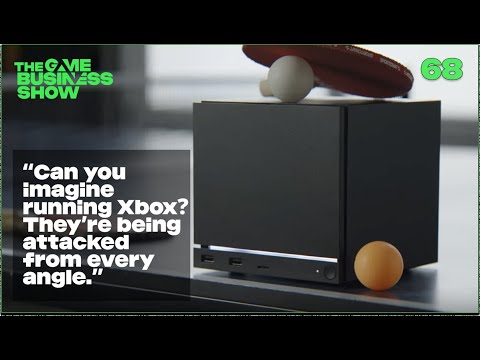
This week on the Game Business Show, we look back at the GTA 6 delay. Square Enix makes huge cuts to its Western business. A fresh AI debate around Arc Vaders rages on. And Netis continues to cut back its Western investment. But our big story of the week, of course, is the return of Steam Machines. Hello and welcome to the Game Business Show. Lots of big interesting topics to dive into and to help me to do all that is our very special guest host for the week. It's the CEO of Hell Divers 2 developer Arrowhead. It's Sams Giani. Hello Sams. Welcome to the show.
Hello Chris. Thank you for having me back. I'm very very honored. It's it's a privilege to be here with you again.
You were technically the fourth show that we had,
but I think you're the first person I actually interviewed for the game business. I
I was I was It's recording order is not uh broadcast order, but the history books will remember me as the first. Well, when we spoke last time, you'd had this real up and down journey with Hell Divers 2. Has it been a bit more stable
this year? I know there's been some stories in the news, but has it been a bit more stable this year?
You know, it we have a meme in the in the Hell Divers community where they vacasillate between it's so over and we're so back
and it has kind of caught its own life at this point. Then I'm I'll definitely admit that there are definitely ups and downs. But in this black and white outrage culture that we see online where everything is just either one ends of the spectrum and no shades of gray, we kind of perpetuate this uh narrative I think. And uh uh success has continued which has meant that we've had more madness. But I think that overall the the business has stabilized and going more at a steady pace, but there's still always exciting drama. Uh, it's just the nature of the beast, I think.
Were you surprised when you got the green light to do an Xbox version?
Uh, yes. I would I would admit so. Uh, I'm super happy PlayStation wanted to do it ultimately was their it's their
strategy. It's their thing. We're just along for the ride, but we're so excited to be a part of it. Um,
and it's it's always fun to be part of uh gaming history. Uh, yeah, you know, so that that was a real, you know, privilege and honor. It was really fun. For me, it was playing Wipeout on the N64 with my I couldn't believe it. It's like a PlayStation game. Um,
so the console wars had already ended at one time.
Yeah. Well,
and they would begin a new
I was told. So I I if you a couple of shows ago, we did we had we did one on the 30th anniversary of PlayStation. We had Snosis people there and I brought that up just randomly. I like tell me why there was a Wipeout game. There wasn't one on the Sega Saturn.
Yeah. and he went cuz Snosis wanted to do it and apparently at E3 Snosis turned up with the N64 version of Wipeout on the PlayStation booth and PlayStation were furious. There was a big incident around it. So this is obviously the '90s long time ago.
Imagine
it looks like the the Xbox thing went down well. The reception's been good. I I don't know how I mean it feels like the the game feels like a good fit for
the Xbox player.
Yes, I I think so. And I I don't pretend to know all the ins and outs of the PlayStation strategy
portfolio, but I think the feeling is that with a it's a multiplayer game, it's already out on multiple platforms. Uh you know, being able to kind of go across I think is a is a is a sensible thing to do. I have no idea what the um what that means for the future. But for us, it made a lot of sense. Uh right. and and players have been clamoring for Xbox from from from day one and it just felt like the natural thing to do and it it made a lot of sense and it's gone really well as well. Um we timed it with the release of some Halo ODST content which was another one of those very highly requested fan uh features. Uh and it turns out if you give the players what they want uh they'll be happy. There we are. Wow. Who knew?
Who knew? Exactly.
I'm always interested when a game like that launches into because I guess
you're competing with all those games in Game Pass, right? So, but yeah, it seems to have done really well.
Yes, it absolutely did well and I well I can't go into numbers. Uh I think from the latest PlayStation uh kind of quarterly financial report they kind of lauded the success of uh Hell Divers on the platform and and it was it was a good driver and it was wellreceived and uh people have been really happy and it's been interesting. We've been so focused on trying to level up quickly and become good at the live service which has been new for us, right? So we kind of forgot about the fact that well we'll have a ton of new players coming in that'll have so much hell divers to enjoy from the beginning and what what was the most magical part of it is that you know sometimes in online games we see some toxicity in the community and and people are not uh helpful but this was the opposite where people came in oh nice
and we really saw the whole kind of the narrative thing of of in Halo Master Chief uh is this mythical figure because
he comes in and just helps out regular soldiers and just, you know, pulls them up and just uh is a hero. And this the same thing happened organically in the community with other veteran hell divers coming in helping new Xbox joiners. So, it resonated on multiple levels and there was a lot of momentum.
So, I think that really carried us. It was a positive story almost across the board, I would say.
Excellent. I'm not really here to talk about hellovers. Is the Xbox is is the Xbox just Oh god, I'm interested now. Is the Xbox player audience different to the PlayStation P? Do you find they're asking for different things? You had this thing before. I remember being when we spoke last time,
you had that issue where you had a load of Call of Duty players that wanted different things.
Yeah. Yeah.
Do you find that the same or they very similar?
No, I think they're largely similar. They're obviously on a different uh place in the player journey.
So, they're coming in early and they are having a different experience because there's so much more to it. And I think one of the things that we've always tried to do with held libraries is and we we do this in the monetization and just about everything. We don't we try
to avoid a certain type of FOMO as in you can only buy this at this particular time or it'll go away and never will come back. That type of FOMO we don't like. We don't we don't have that. But what we do have which is not deliberate necessarily as a as a as a FOMO thing but it is you had to be there. So because we have an ongoing story and a narrative that is shaped by the players, sometimes organically what happens is that certain fronts in the war end up being these bitter battles. And if you were at the planet of Malevolent Creek in, you know, March 24,
that's etched into people's memories, right? So people come in 3, four months after these historical events and they hear about them and they're referenced in Reddit threads and places and people are like, I don't know what it is. and I'm too afraid to ask what is Malevolent Creek and then somebody's like sit down by the fire sun. I'm going to tell you what actually happened. And it turns out it's per people's like own personal Vietnams or whatever it is. And we've
had a number of these events in the game that we've ended up commemorating in different ways through capes and stuff, but these have been truly historic moments in Hell Divers history. And I think the Xbox Hell Divers are coming in and they've kind of missed some of these, but they're creating new ones uh together
and they'll have a different attitude towards things. Uh I oddly there some some reason this made me think of the fact that I joined MCV magazine in the UK.
Yeah.
Um after uh games industry.biz and Eurogamer had poached a load of staff for MCV. Right. So there was a hatred towards Eurogamer and G MCB really hated and I didn't I came in because I didn't see any of that. I was I was told about the history but I didn't feel it. I wasn't there. And so it was less of a thing when I ended up working at games. for me, but it was um I think some other people would be like a footballer going to the rival club as the scenario. I don't know why it made me think of that, but I guess it's similar.
Yeah. So, that's that's been definitely it. I would say one more thing is that, you know, to come back to the Call of Duty thing I spoke about last time is
that our company slogan is a game for everyone is a game for no one. Yeah.
Which means that we try to uh stick to our design guns and design what we think makes sense for us rather than try to go for the widest audience possible. That doesn't mean that what our hope and intent isn't that the game will resonate with a very wide audience, but kind of like how From Software does it as well. They don't compromise. They go for the connoisseurs, but a lot of people can be attracted to that. I don't know if you've been pay if you listen to the game business very often, but you get quoted and that interview gets quoted a lot back at me and by me in terms of like your strategy of like creating a niche that can reach a broader audience if you if you do it well and you focus in on an audience, you make a game for someone, it can reach from software did it, arrowhead did it. I heard you're used as an example at the moment of how to do things in the industry. Honestly, people longtime listeners will will be commenting going, "Yeah, yeah, he's right."
Yeah. One of my mandates as a CEO is to be a force of good for the for the industry. And I think if we can inspire a few more studios to stick to their
guns and show that you know uh giving more power to the creators and believing their vision can actually go all the way I think is a strong thing uh rather than uh going the opposite direction. I had Patrick Sodland on the show um a couple of weeks ago and okay he didn't quote you directly but his whole thing was like you know extraction shooters may not be the biggest genre in the world but maybe they could be right and it was like and look at what hell divers did you know it's it's the uh it was um anyway um I guess I'm just going to wait for the Switch 2 version now I think because that's my uh that's my uh
we'll see we'll see that's again above my pay grade by a couple of tiers. Let's dive into the industry news because I've just spent 10 minutes not talking about it what we're supposed to talk about. Um, but the first story and this is a story that we've covered actually on I interviewed Take CEO Strauss Selnick last week about it and we did featured it on the Game Business Micro on Monday as well. So, I'm not going to spend too long on it, but GTA 6 has been delayed. Um, this is about a week ago now. It was coming out May 26th. It's now coming out November 19th. Uh, the game had already
been delayed out of 2025. Um, I won't spend too much long on it, but but Shams, has it what does that do to your planning? It uh it gives us a stay of execution, does it? Us and as everyone else, GTA like on the one hand we're like surely can't be that big. But on the other hand, it is that big, right? It is going to blot out the sun in a way unimaginable for everyone else. And if it's, you know, releasing 6 months later, then it means that's another 6 months of uninterrupted work without GTA looming over us. I can't imagine I like like we try to do our planning and not look too much at what else is happening around the time we're releasing stuff. Uh but GTA has obviously been very hard to kind of avoid, but it's also I think this time around I don't think generally you don't go out and delay stuff until you're very sure that the new date is going to stick. And I think this new date's going to stick. So ask me again in May of next year if
if what we're doing then because right now I don't think we're doing anything different from November whenever it is.
Yeah. November 19th.
N just sit there. I worry about games that are
if you if you sat there and if you if you were the publisher because the thing is if you set a date you have to believe they're relatively confident in it. They actually set an actual date. So I was I was thinking if I was I don't know Microsoft and let's say I was planning to launch Fable that in May or June suddenly Xbox you know and suddenly GTA goes in there so they've just told the playground team you've got an extra six months don't worry go nuts do the things you want you got an extra six months and now they're going about that extra six months and it was and do you and what do you do if you've had a game plan for November do you I don't
no
I think this is what you have to deal with when you are in the same space as GTA and this is why you know when I was at Paradox Uh, releasing grand strategy games in Q4 was the best thing ever because it was crowded as hell for everyone else, but who else is releasing a grand strategy? Like there's releasing stuff in December was great for Paradox and I think it
still is. And they have always a heavy quarter in in Q4 and never have to contend with like who who cares about GTA if you're uh Paradox. So my suggestion to anyone who's afraid of GTA is change your line of business. It's very simple. I guess it depends if you've got if you are a game that targets influencers for instance and and you're relying or maybe even maybe you're reliant on media, heaven forbid, um you you might want to move.
Yeah. And again, this is where Paradox is superpower. They don't target the same media. They don't target the same influencers. They just they just fly between these raindrops for all the rest of us. We're we're it's going to be terrible.
Yeah. Well, um where you've got you've got another six months to work out what to do.
Figure it out. Exactly. Pivot.
Yeah. Um well, I think story it's not a happy story. Final Fantasy publisher Square Annex is reorganizing its overseas business. Hundreds of redundancies is expected at its US and European offices have actually told almost the entire London office as is at
risk except for the Final Fantasy 14 team. Um this includes the Square and its collective publishing label if you if you follow that. Um the company is centralizing sales and marketing of focusing its development efforts in Japan. Uh Dave, have you followed it? Shams, have you been?
Not terribly close, but it feels like it's we're reaching the tail end of a longer period of consolidations. I'm kind of surprised why we haven't seen, you know, some of the bigger ones pull the rug a little bit uh pull the rope a little bit sooner, but everyone's focusing back on core business uh and focusing on what works and taking less risks on things that external and square collective was their label for indie and wider titles, right?
Yeah.
Yeah. And it's been running for a few years.
It's been running for a while and it's gone for a few identity changes, but it had a hit in the form of Power Simulator. So um that game has had like 13 million players according to Newsy. So Square obviously I mean Square would love Final Fantasy to have anything near those numbers. Um now that game isn't
entirely owned by Square. It's 50/50 split between Square Square and Future Lab according to people that I know. Um but it's still obviously pretty favorable. The amount of money that made would probably have funded their entire western operation. But they have lost Power Simulators. Power Simulator 2 which has just come out is um that was self-published by Future Lab. So, and also it's worth noting that they have cut stuff. You know, this they have been cutting back on their western organization. They've sold Crystal Dynamics. They sold Square Montreal and Idos Montreal and Tomb Raider and DSX to Embracer. Go back a little bit further. They let Hitman and I interactive go as well.
Basically, that entire Idos business they bought in the early naughties has been scattered to the winds. Um,
yeah.
So, yeah, they are focusing in. Um, as you say, Jacob Navoc, he's got a lot, he's always got opinions. He's the Gen Vid CEO. who used to be the head of business at Square Enix Holdings. He's got a load of opinions about um
yeah,
Square Enix had a big long thread. He's quite critical of them. He think he points to Genchin Impact. He thinks there's no reason Square Enix shouldn't have been the ones to have made Genchin Impact. He talks a lot about community
and management and they're not reacting
to the way games are monetized and sold today. Um he doesn't actually think the Western closures are enough. He he says it only saves $20 million, so it needs to go deeper, perhaps even in Japan. Um, Evil's dev teams of over 100 probably need to be dead teams of 30. He sites clear obscure. Look, I here's my thing with this. I kind I understand where he's coming from. He's sort of throwing all the industry trends and what seems to be working and saying Square need to adapt to this. He cites Roblox a lot as well. Grow a garden, steal a brain rot. Um, he says graphics no longer matter to younger people. And I understand that there's loads of evidence for that, but I do think they matter to Final Fantasy players. I I don't think Final Fantasy players are going, "Yeah, yeah, we we'll be happy with Roblox style visuals."
Yeah. Yeah. Okay. So, my take on this is that there are kind of two trains of thought here. One is you either roll back and focus heavily on your core business. What works, what works and just cut everything else and just be the money printing machine. And maybe in Square's case, it is Final Fantasy. In in Paradox's case, it was kind of pulling
back and focusing on on grand strategy games. And it's been working really well for them. The other way is to kind of recognize that the world is changing. We are not good at making the right calls to keep up with the world that is changing. And the only way to kind of survive that is to change your model so you're able to make more decisions more rapidly
effectively because you're just assuming that the more decisions we get to make the faster we learn and the better we are. And I I don't pretend to know too much about Square Enix but Japanese companies haste is is generally not uh one of the traits we see from some of these companies. They work on very long cycles, very retail kind of focused. So you either go very bold and become a much faster company by making uh faster decisions and I would say that the square collective was perhaps a push towards this smaller faster uh make stuff if it works it doesn't but maybe the success of um uh power simulator was exactly that it was such an odd fluke it kind of proved that the general
portfolio strategy didn't work is that we can we can if we're lucky we can sign a game that sells 13 million. But really what matters is to look at the median or average for the rest of the portfolio and realize, you know what, we can't just rely on luck. We and we certainly can't pick them. And therefore, at some point, conservative powers take over and say, you know what, we just pull back to the core business. We don't this is not the time to to to make bets.
Yeah. And actually I think you know yes sure square like all of us we should be looking at the trends and where the market's heading but apply that to who you are rather than ch you know and the audience you have some sometimes that might mean following that trend and sometimes it might mean adapting the you know the trend to your business and sometimes it might be completely ignoring the trend and you know you should you should do what you need to do for them. I I kind of I agree with Jacob. I Jacob's analysis of the market. I kind of understood, but I wasn't entirely sure it all applied to Square Enix. I know that he he knows the
business better than me. Square Enix as well. He does talk about AI quite a bit. He doesn't think Square Enix um says they want 70% of its QA work will be managed by AI, but Jacob feels that's not going to deliver much of a saving. Their Final Fantasy games have underperformed and obviously they sold off a lot of their Western businesses. But I think it's hard it's also worth know you talk about how slow it is to move into Japanese companies don't move very fast. It's also really hard to lay stuff off. They have to be considered. I I always think it's interesting when um you know in in the US you can you can try that thing and if it doesn't work fine fire the whole team try something else right you just cut it do another thing in the Japan you can't do that which makes it a lovely a more stable perhaps environment but it it also makes it less ability to adapt that quickly
yeah no we have the same thing in Sweden of course uh we have strong labor laws and 100 years of tradition of uh labor movement so there's rigidity built into the system and then You have to kind of adapt around that for sure.
Yeah. Um, sticking with closures, I realize this probably didn't uh the fixture of of of this show um lately.
Um, Bad Brain Game, which was a new developer formed in 2003 by former Ubisoft folk uh says it will shut down after failing to find a publisher. The studio had initially been funded by Netty's. There is similar stories at other new Netis back studios including Fantastic Pixel Castle and T-minus Zero. Earlier this year, we saw Netti split from the studio Jar Sparks at the end of last year from Worlds Untold. Several Western studios all based in the US or Europe. Um Netis has denied denied a report from Gamef File that said the film is looking to divest the majority of its non-Chinese operations, but it certainly seems that there was some truth to this story. Um uh I don't know. I do do you guess not just Netis 10cent have also been not let's say pulling back but scaling back you know their their their global investments. uh you know I I don't know a lot of people from net nettis but definitely through the grapevine what I'm hearing and what I'm seeing is most of the non-Chinese uh investments are being scaled back I I
see the opposite from from Tencent actually there is some uh changes there but uh but neti is a completely different uh ball game and story
well even in tens so you've got um in the UK sumo scaled back and made load of layoffs so I'm not saying they've scaled back their investments in the same way netis have which pulled out, but they fun just made some layoffs.
I get the the feeling it's one is more operational driven by business results and the other one is more strategic.
Yeah. Well, it's interesting because we had George Osborne on the show last week who's a political journalist is specialized in this thing. And China's actually interesting because China, you know, this is the thing. They like to maintain a level of control over its population. It often does that in a softer way. It's not quite so overt. And it likes to make sure it has a strong economy to make sure people are broadly happy. And George Osborne said on the show last week um he was telling us that basically games grew rapidly in China to the point where the Chinese government started to try and and did exert rules and control over it. Um censor it. Basically the the games were getting around those rules. It did this by freezing the approval of new games in
the country.
Um this caused companies like Tencent like Netties didn't necessarily directly cause it but it's one of the things that helped encourage tenses to expand outside of China.
Now however the economic situation has slowed in China. this economic growth is slower in China than it was. The Chinese government now want that investment back. So they're loosening the control that they put on games. They're encouraging inward investment via various different measures. They want net 10 cent. They want netties to be thinking about China. So obviously Tencent Netis aren't immune to the wider situation we're all facing in video games and the challenges and that may be one of the main reasons that they're cutting back or scaling back because of what you said about what Tencent's doing. But I think there is an ele as George was saying last week that it sounds like there might be an element of they're being encouraged to spend the money their investment money locally um by their government. So that's part of it.
There might be I think it's parsing the inter politics and nationalist policies of the Chinese government and Tensen is is quite hard but I will say that there's there's kind of different read to this which might give an inkling of where things be headed in the future. I
think that there's also been a challenge maybe on some of the domestic development to be able to create glo products that really appeal on a global scale. Whereas Chinese developers are really good at making games for Chinese audiences. But if you want to be a global developer or publisher of games, you need to be able to appeal to Western audiences. But in the last few years, we've actually seen quite a few Chinese-made games really hit big in the west, right? So Delta Force from Genshin or Genchin Impact or even Blackmith Wukong.
So what does that tell us? If suddenly Tencent is and then the netizes are very good at creating games for global audiences and they don't really don't need
Yeah. And they're being encoura and they're being financially encouraged by their government to keep investing in their territory.
No. Who knows? Maybe that's what we're seeing right now. uh the result of that success is uh you know with with the political instability that's you know uh the very fabric of democratic society coming unraveled here in the west can
you really rely on any business holdings in the US right now I think that's a it's a bold bet if you're a Chinese company
yeah well that well and we'll see what happens with some of those other net studios and tens studios um I'm going to throw this convers this is not really a story this is more of an industry moment um because a bit of industry track this uh around a video game review on a media website. It's like the 20 like the year 2000. Um maybe critical reviews didn't matter after all. The new game Arc Raiders has received lots of positive reviews from critics. It sits on very positive rating on Steam. People seem to love it. However, Eurogame has written a pretty negative review because of the game's use of AI voice generation, which it does in collaboration with real actors. I'm not going to go into the deep the ins and outs of all that. Um, it prompted some industry leaders to weigh in this this most most them somewhat critical view of gamer execs like Tim Sweeney believes a political view shouldn't inform a critical view. I mean, it's interesting because obviously I used to work at Gamer Network, so I
know you're a gamer very well. Um, I think your game has played a slight blinder here, but I'm being a bit cynical about it. The media isn't really moving the needle. Um, it's being it's being dragged by industry trends. It's following hit games. It's not making hit games. We talk about E3 going away because of the waning importance of retail, but it also went away because the waning importance of the traditional media and here we are, you know, on this show and on to debating a games media review, but you again have made, you know, courage com I I don't necessarily whether I agree with the opinion or not, it's relevant. Um um and because the review does relate the it's not just we don't like AI, we're giving this a bad review. They do relate it to the game that they're playing. It's not I I was kind of disagree I did disagree with my peers um who didn't cover Hogwarts legacy because of JK Rrowling's trans. I I felt that was people just not doing their jobs because he disagreed with someone. But um um uh I they really does relate to it. Um I do think they probably set themselves up for future strife because you know what if another
game does has a on it? You're going to have to mark that down. I think that's going to be difficult for them um for the future. And I and I do have to wonder if outside of some vocal people on social media if the wider Euro game audience would rather Euro gamer just told them if the game was worth playing or not. But regardless, people are talking about it and the worst thing than being talked about is not being talked about. It's prompting confrontation. I think that's part of the job. Um there's probably some naivity going on. I don't know if you saw the review Sham. Did you see the conversation?
I I I so followed up this morning. I especially saw Tim Sweeny's thread and he said that basically political opinions should belong in the oped piece, not in a review. Uh, on the one hand, I can't believe that we're still talking about numbers for a review that is, you know, objectively subjective. It is what it is. And if I was going to review this as a three, I and if I was an editor and somebody put a three on this, I would push it down to two because it would generate way more headlines. And that's, you know, your gamer has a business to run as well. Uh but really, and this is such a trigger point for so big parts of the games
industry today, uh we're we're waiting for the courts to decide what is fair use and not. Um and again, there may be some similarities to the whole kind of it's so over, we're so back, black and white takes of everything. And I find that anything that is AI related debate in the games industry ends up being on both ends of the spectrum. Either we have Square Enix uh executives talking about 77% being automated through QA.
Yeah. Or we have developers who feel that their livelihood is completely on the very fabric of their being is being threatened and therefore all AI is bad AI. Uh maybe could it be that reality is somewhere in the middle? Could it be? uh you know uh and I'm not you know fair use is fair use and we need to make sure that we're not stealing uh people's intellectual property and rights but beyond that almost every single game today you know a big game is used making
used with middleware that automates like loading and other assets that are used to be made by hand before right
we don't load by hand anymore uh but we do pay Simplygon a license to use their uh software in order in able to do it. And when that was being rolled out, it wasn't the big outcry about the you know those jobs being lost and it wasn't happening at the the massive scale that we're seeing with AI. Um so but I I I find that people jump to extreme takes. My my thing with our creators is I think it's it's an interesting uh use case that actually makes gaming better. like let's figure out the right side of it. But I don't do voice in games because they're just like it's I'm, you know, Swedish. Communicating directly with people I don't know is very very scary. I don't want to put my voice out there with my accent or whatever it is. I think this allows more people to connect with each other, which is ultimately a
good gaming thing.
Let's just make sure that people are paid for their work. Like it's we surely there's a middle ground here. Come on.
Yeah, it's a few there's a few bits. It's obviously it wasn't all just um um uh that kind of stuff. But you see there is a you what you talk about is there is a room for a nuance conversation on this because one of the things one of the debate I was being quite pragmatic with somebody online that said Embark didn't need to do this and I sort of said a few things but we need to work remember although Embark has a parent company and has money they're not a massively lucrative they're not EA they're not making Battlefield they're making a new IP in a competitive genre they're not profitable as a stat as as an individual studio at this point this idea that they were um um uh some super I mean they are now they just had a hit but the fact they have all this money and they they can and it they can just take longer and spend time we're in that's not the reality of it but also one of the people who weighed in they're completely you know understand what they're talking about they're concerned about the human cost of AI you know the jobs that are under threat that we're talking about but also we're seeing the human cost of
the games industry business of the games industry now and I and there's a I actually asked the question it was like it's a good question um would AI make the human cost worse or better than we are in now and I don't know the answer to that and that's where the nuance I think comes into it where it's not yeah it is
yeah would it would it have been better if our creators failed and it didn't use AI like I don't know it's it's I mean that's maybe a false comparison but on some level like it's progress is what progress is as well and I think we sometimes conflate these things again as as if they're completely opposed to each other I think that the trick with AI it's happening very rapidly and I also would oppose this dichotomy that some say like just you know developers don't want to use AI like anyone who wants looks is in any level of production you're always looking at ways to to to create more efficiency reduce the stuff you don't want to do so you can do more of the stuff you want to do right and I
I would say also at the end of the day if you have a 200 person project making a giant ass project you have different goals and objectives compared to a fiveman indie team that is more art focused like it's very very different.
It's it's I mean it's interesting because I I trying to think about AI. We use AI at the game business and it's most of it is to get the audio levels relatively good. It actually works so well. It would we wouldn't have been able to pull that off if we didn't have by hand. And then but we also I I didn't I never used to I've avoided it for ages. This isn't new technology but I'm starting to use AI transcription because it helps speed up that process for me and I've got so much stuff to put out and
I'm not I'm not suggest I'm not using AI to write anything. I'd never do that. like that you'd lose my voice effectively. I don't care if they think they can match it. But um also what's the point? That's the fun bit. Well, why would I give the machine the bit to do that's actually enjoyable that's entertaining
and that nuance is lost, right? Sometimes we don't end up with let's remove the stuff that nobody wants to do and instead it's like you know what let's actually never all AI is bad AI
and and we we have a very similar
approach like we we don't put any AI in the games or uh but if if it can allow me to do my receipts faster then that's more hell divers for everyone. Okay. Not hell divers specifically but
you get the point.
Yeah I do. The only thing that I will say that I'm that makes me and I've mentioned this before so people on the show know this is that a lot of the jobs that we're talking about here even QA right so talking about oh we can do a lot of automation QA side of things but how many creative directors do we know that started off as games testers
and I think when I started off on in games journalism I was doing the release schedule and I was calling and I was just doing very stuff that half the job I was doing on my first job in games media was stuff you could automate you could definitely get AI to do even transcription which I which I now use automate you know that's how you taught people how to do interviews was listening back to someone else's interview and you transcribe it that kind of learning pro and I guess that that changes how people need to
education and all that kind of thing and
that's why I'm
it absolutely and you're completely right that there is something is lost right for sure as as a part of this but you know we don't write shorthand either
like we we barely hold a pen anymore is there something lost there absolutely but you know society life changes I don't know like I'm I'm I'm
you know I consider myself progressive change is inherently good and then we'll figure out how to shape it hopefully in in a way that suits us more and more and
roll with the punches
let's move on to our main story um actually when we're recording this it hasn't been announced yet so um but um Steam has announced new hardware headlined by the return of the Steam machines rather a steam machine. If you don't remember the Steam machines, if you have to go back 10 years, uh these were small form factor computers designed to sit under the TV. They use the Steam OS operating system. They had their own dedicated Steam controller. Uh they were designed to be console-like
products that did Steam. Steam didn't make Valve didn't make them themselves. It was made by people like Origin, Alienware, Cyberpand. They did their own uh products. Um Valve did make the controller. That was the thing they did. Um they did not do well. Um the pricing was wrong. Perhaps it didn't connect with the cons. It just didn't connect with console players. PC owners didn't see the point really. I think into well, they already had a PC. Uh they I think estimates are around 300,000 to 400,000 units of Steam Machines were sold and in 2018 they were fully discontinued. They just didn't exist anymore. But now they return. Well, one of them returns uh this time by Valve. It's made by Valve. It's a cube shape. It's um uh uh it's a cube that plays games. It connect rings a bell. Um, it's a it's a uh there's two I think there's a 512 GB model, there's a two TB model. Uh, it's pretty powerful. Has a fancy LED bar on the front that can be used to sort of highlight things like how quickly stuff's been downloading. It comes with a new Steam controller that has been uh described as similar to the Steam Deck controller without the screen. So, it's a bit more like a 360 and PS5 pad but
with trackpads. There's Grip Sense technology so it knows how tight you're holding things. Gyro controls. It connects to the Steam machines. It can connect to PCs and other devices via a dongle. Um that's so there's a controller, there is a uh a new machine and there's a new VR headset called the Steam Frame. It's basically their MetaQuest. Uh they um you have a new frame verified service on Steam to highlight games that will run it uh that will run on it. Um it's a bit yeah bit like the deck verified Steam Deck verified stuff. It's apparently quite light. I've not played it myself. Uh, a new VR controller is with it and you can even unhook apparently you can unhook the PC part of the Steam frame and connect the TV for a low-spec theme machine. No pricing has been revealed. I'm told early next year. Shams, you buying one?
Uh, no. I have a high-end PC, so you're fine.
I'm fine. And uh but I will say I'm pretty excited about this because like um you know first off it's it's great to see Steam spending that uh 30% cut uh on
something that uh advances the games industry. Uh and and they've done this for a while now. So I think this time might be the charm hopefully. It's interesting to see Steam's kind of less aair approach to like no we don't tell the market what to do. the market tells us to try to launch products because it's it's kind of can you tell um they have to do PR even though they don't believe in PR. Um but like this looks good. It depends on the price point. Um but it's
what what I'm trying to wrestle with in my head a little bit with it. And I'm not just using the original Steam machines as an example because maybe they weren't executed right. You could argue that. But I I'm like I'm trying to work out who is this who's this for? I'm trying to think of the customer this is for. So obviously um C machines were not successful in the first place cuz I don't really think they delivered the simplicity of console cuz we talk about this. It's not just consoles aren't just plug and play. The games work, right? If you get a game, it will work on your machine. You know it will. Um it might
have some bugs in it but you know it will work. Um and um PC that's just not the case as part of the complication of it. It's part of the
So people who just want the plug-andplay, the easy experience, the easest possible experience, it's easier than ever PC. But I still don't think the Steam machines I don't think this Steam machine is going to necessarily appeal to the people that just want to sit in front of the sit on the couch and play BA Sports FC or Call of Duty or whatever.
Yeah.
Now, if it's more like the Steam Deck, cuz the Steam Deck was from the very beginning and has been targeting Steam users. I think like 90 plus% of users of Steam Deck are Steam users already. Um, so this basically this is an alternative device for Steam users to take on the go so they can play Steam in different locations whether it's around the house or out and about. According to Ampair, as of the start of this year, it was on four million sales, which I know is a low figure, but when you think about who those four million customers are, they're the most highest spending users, the most lucrative group of people. That's a good 4 million to have. Um, I'm not sure who the if that's the audience for the Steam Machine. I'm not sure
are there Steam users that
I agree with you because I felt the same way about the Steam Deck. I was like, why am I, if I'm a PC gamer, if I'm playing, I don't know, Civilization, do I want to play it on a 5 in screen? Never. Why would I want to play this on this substandard screen? I I have my giant screens in home. I'm a PC master race guy, right? So, who is this for really? Is it for people who don't like I don't know what the cost of this is, but I'm assuming I can't replace the hardware in it. I is it feels like it's going for the console people
and that's where and that's where I I don't know if what I the only audience I could think this might be a bit disruptive with are people who are PC gamers and console games and if you're sitting you know with PlayStation games increasingly like hell divers increasingly on um PC and all the Xbox games on PC um I did wonder if perhaps someone you might have some people that have a PlayStation and have a PC might
just go maybe one ecosystem by one. But I don't know. I think this is probably a very specialist targeted device for a very unique person that maybe is somebody who is a console player that's interested in PC but have been I can't be bothered with it and it's an easy way.
Well, I agree that this should have a a more narrow appeal than a Steam Deck. Uh
it it doesn't have that functional thing. So, it's you're choosing between effectively a console or a proper PC.
Yeah. It's sort of a middle groundish
unless they go very very low on the price and undercut by like $200, which I don't see them doing.
Maybe launch it as Halfife 3 as an exclusive for the uh
Sure, but that's going to be great for some older PC players.
Do you think really the Fortnite kids care about Halfife 3?
I I one of the things I thought was interesting is what's this mean for Xbox? Because this is Xbox's play. Like
their next devices are going to be PCs. That's a bit like the wrong Ally. They just did,
man. Can you imagine being charge of Xbox and you know they're being attacked from every angle, man.
Shall we Phil, if you're listening, and he does listen. Um, tell us how you feel.
I'm I'm sorry, Phil. It's tough. But I got to say, I got a lot of respect for Phil. uh like uh some of those leaked emails when he talks very frankly about like recognizing that that they're coming in third in a race and we can't come in and we need to do something different than that kind of pushed game pass. Uh but it's it's really tough business like uh
yeah I'll give I'll give Xbox credit you know one of the things about that I like they're trying to do is they're trying to disrupt in a market where you know they're trying to say hey how can we how can we reach more players not a lot of g not a lot of people are doing you talked about earlier about Square Enix sort of focusing in on their core audience who is actually trying to grow you know there's three ways to grow an industry that's that's stagnating right one is
find new players two is make more money out of existing players and three is cut costs people. Well, we've got loads of people cutting costs and we've got loads of people raising prices. We don't have a lot of people, you know, maybe Netflix is doing some things and Amazon's doing some things, but we don't have a lot of people going, "How can we widen the audience for games?" Xbox is trying to do that. And not just mobile games and casual games. They're trying to do that with core games, trying to do that through mobile. They're trying to do that through subscription. They're trying to do that through streaming. Will it work? Well, at the moment it kind of isn't, but I mean subscription is definitely being successful, but I think it's being successful with existing core users. Streaming similar. Um, but I have to give credit to a company that's actually trying to do that, you know.
It's a huge swing. It who it's a huge swing like you got to and I completely understand it like something's got to give and and that was one of the approaches that that was available. Uh, and you know, maybe you can then talk about the cannibalization of the internal studios. How many how many studios do you want that are world class
at making first person X? At some point it's like okay.
Yeah. I remember I remember when they bought I I did this piece. This is on games in shop business. It was a really it's probably the last time I did something quite this huge with Xbox and I interviewed a load of the new studios they just bought. They bought you know interviewed Double Fine and and um um I interviewed uh uh Obsidian Obsidian. I interviewed um No, what's the other one? um
in Excel.
Yes, in Excel. And I interviewed I also interviewed Minecraft cuz they taught us Minecraft taught them how to acquire studios basically leave them alone. Um and um and then also I spoke to Matt Booty. I spoke to Phil Spencer. It's a big piece multiple multiple feature piece and the whole thing was I remember the Phil's interview in particular where he talked about what they were looking for next and they're looking for things that complemented things that were different. He mentioned a Japanese studio and then the next thing that happened about I don't know six seven weeks later if they announced they were buying Bethesda and my brain went like I mean of course who's going to say no to Elder Scrolls who's going to say no to Fallout who's going to say no to Doom or ASO games but you didn't they didn't
they had shooters and they had our shooters and RPGs were the two areas they didn't need anything in they were like they were covered for shooters and RPGs that's our that's our strong and then they bought a company and I understood why but it was just it felt like it wasn't in keeping with what action strategy was um
and now they've got a situation where they bought Obsidian that make perfectly good fine RPGs and they also have one of the greatest RPG game makers in the world and and they they they have Halo at one point was the king of that in in that of um of of Xbox and now where is it on the ranking list?
Yeah. Yeah.
Yeah. Um,
no, but it's interesting and I thought I think maybe a small small aside, but we saw the same almost same thing repeated now with EA uh with the the sale to the Saudis. I remember thinking about the Bethesda thing is that I remember going to Fred Wester at Paradox and saying, "Okay, so Bethesda, they're at the top of their game, much better than we are at what they do." And they decided that
the best course of action for their business was to sell. They saw they looked at their business plan the next 5 to 10 years and said, "No, you know what? this is as good as it gets. Let's take the money. That's what the owners effectively said and they were looking at the business plan that was that that Bethesda had. Now EA has done the same thing. They look at their business plan and then they look at the pile of money from the Saudis and they say, you know what, let's actually take the money because there's a lack of belief that they can make more money themselves with the business plan they have. So that's that's from the sellers perspective. But I think how how many shooter studios can you have in a lineup? Yeah. Well, it's interesting we talk about because I actually think Microsoft had a really good year for games. We thought of going off a little bit here, but um they've had low Doom, the Dark Ages is great. Uh um uh Oblivion remaster, there was the South of But you look at games like South of Midnight, which is a cool game and a even The Outer Worlds 2, which they put some real effort behind marketing that they don't seem to have done very well. And you look at the but
then you've considered the fact they've also got in their in their in their library Call of Duty. You know, we talk people worry. I'm not. They got Call of Duty and they've got Minecraft, but all these mega games and you have to ask what role does
South of Midnight or or all those sort of things play in that lineup. I don't know. We've gone off, we've gone entirely different thing about Xbox coming under attack from different angles and Steam doing but I don't know cuz I think if you're Xbox as well, I think if you're going to try and be positive about this,
the Steam machines will this new Steam machine will be the Game Pass thing. Sure. They're not they're not launching into Windows. It's
no I mean if they're smart they'll you know somehow you know hell frozen over they've partnered up with Valve and they bundle game pass things with this thing.
This is an Xbox as well. That's
I mean it should be because Xbox is saying that they're kind of platform agnostic. It's they're a software company. They just want games on all platforms. This is very clear across the board. So this is more machines for them to play Halo on?
Yeah,
in theory.
Yeah.
Okay. Are they selling more game pass thanks to this? Maybe. Um, for sure. But on the uh Can we just comment on the the the VR headset?
Yes, of course.
I mean, it I'm I'm very very skeptical about this and I know that they're just sticking with it, but like Meta it there. I'm technically still doing it. They kind of pivoted to, you know, multiverse this and then VR that and now it's all AI and PlayStation doesn't seem to be doubling down or tripling down on VR. I don't know where VR is going. I think 435 g sounds good, but unless it also has amazing battery time at the end of the day, you're still have something super sweaty and strapped to your face.
Yeah, it's interesting about this cuz I'm like you. I just there are studio studios out there that make VR games and they're profitable and they make money out of it because there isn't there is this really sort of I don't know maybe it's a maybe call it a cottage industry
within games. There is this small group of players uh one of the guys in the UK that I do a lot of events with Jamie Septum loves VR. He loves VR games obsessed with it. Gets out all the time. It's like it's a platform he always goes to but there and there are so there are people like that that exist. Um, but it feels like the one of the tiniest niches. Um, and one that requires an awful lot. It's like I go to when I used to go to PAX and they had an entire room dedicated to the game. You remember the game Steel Battalion with the massive
tank? There is an audience for that. There's an audience for all sorts of things. But yeah, I I
But this entire industry is propped up by meta money.
Like there it's artificial kind of just compression to get the blood flowing from the dead body. like it's I'm sure there are some games that organically are, you know, recouping and and making, but this isn't growing by itself.
No, it is. It's certainly um I I remember when I played the Batman game, which I thought was very good in VR, and not the new one, the one they did
before, and it was it was only about an hour long, and I felt it my my face was just a mess.
No, it was, you know, was I went to an E3, sat down in a hotel lobby, and they're like, "We got a VR game for you." And I was like, "Sure, I'll try it." They're like, "First, put on this face condom." I was like, "What?" Well, the headset has been put on so many faces, it's really disgusting, so please put it on your face. I was like, "Yeah, this is going to totally work."
And you know, onethird of the population just naturally become nauseous. Like, this is an unavoidable part of it, and you can improve the locomotion as much as you want to. I'm very, very, very, very bearish on VR.
Yeah. Well, maybe just get more people playing HalfLife Alex really. I think that's the uh
um that's got to be the the goal. Um
uh I'll be interested to see the controller, the Steam Controller. The last one I wasn't that much of a fan of the original Steam Machine controller. I've got um Andy Robinson of VGC uses it a lot. Um but I used to use it a lot, but I
But is it is Revolutionary much better than an Xbox or or a PlayStation controller? I mean, this design is is
it's pretty good.
The Dual Sense is the greatest games controller. And I'm I'm I'm talk, you know, and I'm talking to somebody who will argue to the cows go home about how great the GameCube controller is, but I think the dual sense controller is is a masterpiece. Um and um yeah. Yeah. I don't know. Grip control. I'm interested to know what that means, what that does to gameplay.
Yeah. But I will say I will say that I really hope that Steam succeeds, Valve succeeds because the best thing for the industry is to have more players who are succeeding and keeping each other on their toes because boy, do we need it. We do not want an industry that has like two players that are taking turns screwing us over. That's that's just not where we want to be.
Well, the the the more competition is good and I think that's the thing that I had um Reggie Fields of me on the show early in the I said my big concern about Xbox effectively tapping out in a way of that console battle is not that Sony it's it's not good for you know when
Xbox and I just think back to that you know I said this on the show on Tuesday so I'm sorry for repeating myself but that battle between PlayStation Xbox and Nintendo during the during the sort of mid naughties when it was Wii 360 and PS3 and PlayStation was doing all of its narrative games and Xbox was doing its online games and Nintendo was doing all its motion controls and social games. the innovation and the ideas and the it was so good. Um I you know I could think we could do a bit do a bit.
We all we all stand on the shoulder of giants, right? Half of the stuff we're playing today wouldn't exist if it wasn't for the excellent work that everyone is doing. And the more we're doing the better. Like it's it's one of the core tenants of you know just more is good for competition. Like it's it's good and it makes and it's more enjoyable. Like it's I'm so I really hope they succeed and I hope I'm proven wrong on the the VR stuff. I it VR is amazing, but it's got some really big hurdles to clear and hope maybe this is the one, but it's um we'll see. I'm I'm probably not going to get the
controller, probably not going to get the VR thing. I'll consider the machine if I need a backup machine somewhere.
Well, that's and that's it. I think that's kind of it. I think this is interesting. It could it could extend PC gaming out to for some people. It could bring in a couple of new people into that ecosystem. It's a growing sector of the industry obviously.
Yeah.
I think it's interesting. I don't think it's going to be significant, but you know, lot you know it does not everything has to be.
No.
Uh you going to say anything? Right. No. All right. I'll stop there. Um Shams I'm conscious the time I got. Um uh um thank you for going through all the news with us and such. I I thought to myself when I started this, oh I've got a lot to get through.
We managed almost on the minute. No, this was really interesting and it's uh big big swings in the industry happening alto together. Exciting times and they they don't get less exciting. I can tell you either.
No, I guess it's obviously quite
exciting if you're arrowhead and you have a real hit by a service game on your
It is. I've been to a lot of investment events this this this last couple of weeks doing some talks or hosting some panels and um every time I ask them so how's it going and they go oh well it's really tough. It's like it's the almost the default response I get from people now but um everyone's plugging away. It's all we can do.
Yeah, we're one of the lucky few.
Thank you Shams for joining us. Um I think that's it for today's episode of the game business show. Um, if you're new, if this is your first episode, do subscribe to us at thegamebusiness.com or alternatively via YouTube or Spotify or your podcasting platform of choice. If you like charts, check out the gamebus.com tomorrow for the latest European market data. We will have our next edition of the game business micro paid subscribers on Monday. And of course, join us on Tuesday for our next feature show, which will star the CEO of Bandai Namco Entertainment, Neo Urugawa. Shams, thank you for joining us. Um, and for everyone else, until next time, thank you for tuning in.
Take care. Bye-bye.
Auto-generated captions from YouTube — names and numbers may be misheard.
The current landscape of the video game industry is defined by a tension between aggressive corporate consolidation and the necessity for studios to maintain distinct creative identities. Recent successes, such as the expansion of multiplayer-focused titles like Helldivers 2, demonstrate that adhering to a specific creative vision remains a viable strategy for capturing market share, even in a crowded environment. This approach stands in contrast to the broader industry trend of large-scale restructuring, exemplified by Square Enix’s divestment from Western studios and a general move toward risk mitigation. As major publishers navigate economic headwinds and shifting consumer expectations, the industry is experiencing a temporary reprieve from market dominance due to high-profile release delays, providing smaller developers a window to establish their presence.
Technological integration, particularly regarding artificial intelligence, remains a contentious focal point. While AI offers clear benefits for technical efficiency in audio and transcription, its application in creative roles faces significant backlash, raising ethical concerns about the erosion of human nuance and the future of entry-level career paths. This skepticism extends to the hardware sector, where the potential re-emergence of Steam-branded devices is viewed as a critical opportunity to challenge the existing console duopoly and expand the PC ecosystem. Conversely, the virtual reality market continues to struggle with fundamental issues regarding user comfort and a heavy reliance on artificial financial support, leading to a largely bearish outlook on its near-term viability.
Ultimately, the industry is at a crossroads where the success of future hardware and software initiatives depends on balancing innovation with clear market differentiation. Whether through the potential integration of subscription services into new hardware platforms or the careful navigation of AI implementation, companies must reconcile their vast, often unwieldy portfolios with the need for a coherent strategic direction. As Chinese publishers scale back international investments and Western firms refocus on core competencies, the coming years will likely be defined by a shift toward sustainable growth and a renewed emphasis on the value of human-led creative development.

The Game Business · 2026

The Game Business · 2026

The Game Business · 2026

The Game Business · 2026

The Game Business · 2026

The Game Business · 2026

The Game Business · 2026

The Game Business · 2026

The Game Business · 2026

The Game Business · 2026

The Game Business · 2026

The Game Business · 2026

Deconstructor of Fun · 2026

Deconstructor of Fun · 2026
Deconstructor of Fun · 2026
Deconstructor of Fun · 2025
Naavik · 2024

Deconstructor of Fun · 2026

The Game Business · 2026

Deconstructor of Fun · 2026

The Game Business · 2026

Deconstructor of Fun · 2026
Deconstructor of Fun · 2026

The Game Business · 2026
Comments