ReportNewzoo
China's & Southeast Asia's Mobile Games Market: Every Piece of the Puzzle
41 pages~14 min full read
Key insights
7 slides
Market Overview
Mobile gaming is the fastest-growing segment of the global games market.
The global games industry is projected to reach $91.5 billion in 2015 and exceed $113 billion by 2018.
Page 6 of the report$44.2 billion
Projected mobile gaming revenue by 2018.
- Compound Annual Growth Rate
- 15.9%
Revenue Model
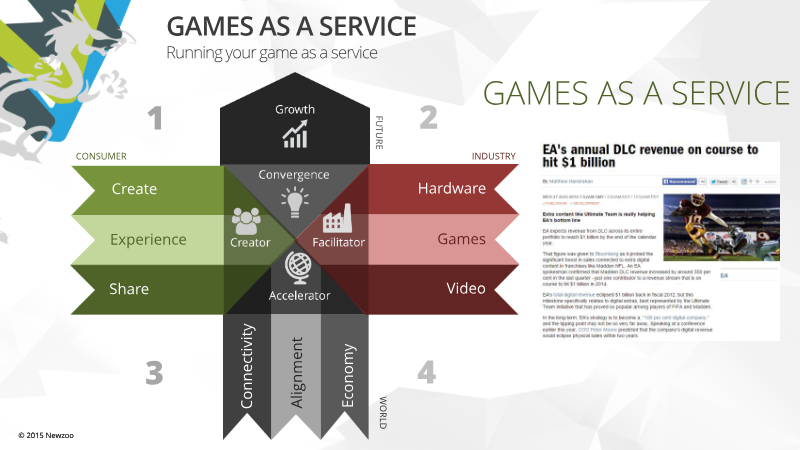
The 'Games as a Service' model is increasingly critical for revenue generation.
This model, featuring free-to-play and continuous digital content updates, drives long-term revenue. Electronic Arts exemplifies this strategy.
Like a subscription service, continuous updates keep players engaged and spending.
Market Size
China is the world's largest mobile games market by revenue.
In 2015, China's mobile games market generated $6.5 billion in revenue.
Page 26 of the report$6.5 billion
China's mobile games revenue in 2015.
- Projected by 2018
- $11 billion
Growth Rate
Southeast Asia is the fastest-growing region for gaming revenue.
The region is projected to double its total market value from $1.6 billion to $3.4 billion.
Page 18 of the report30.2%
Projected revenue growth rate for Southeast Asia (2014-2018).
- 2014 Market Value
- $1.6 billion
- 2018 Projected Market Value
- $3.4 billion
Market Concentration
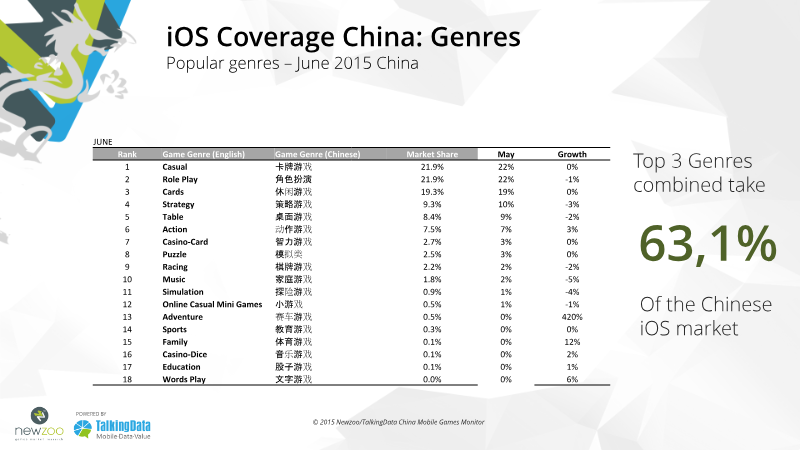
The Chinese mobile market is heavily concentrated in specific game genres.
Casual, Role Play, and Cards accounted for 63.1% of the iOS market share in June 2015.
Market Accessibility
Southeast Asia offers a lower barrier to entry for international publishers.
High English proficiency in countries like Singapore, the Philippines, and Malaysia contributes to this accessibility.
Page 31 of the report80%
English proficiency in Singapore.
- Philippines
- 57%
- Malaysia
- 32%
Demographic Differences
Demographic profiles of 'big spenders' differ significantly between regions.
74% of big-spending mobile gamers in Southeast Asia live in family situations.
Page 38 of the report74%
Big-spending mobile gamers in Southeast Asia living in family situations.
- China
- 31%
1 / 7
Ask AI about this report