China reports and market data
Documents
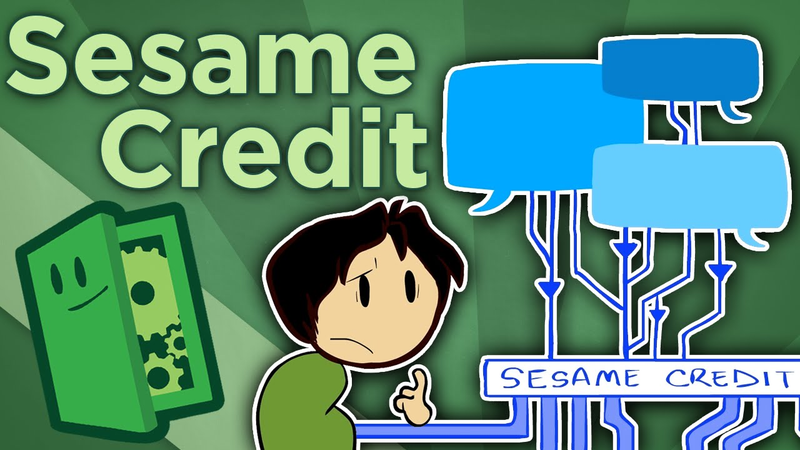
Propaganda Games: Sesame Credit - The True Danger of Gamification - Extra Credits
Sesame Credit represents a sophisticated application of gamification techniques by the Chinese government, in partnership with major technology firms like Tencent and Alibaba, to incentivize political obedience.
- Sesame Credit, developed by the Chinese government in partnership with firms like Alibaba and Tencent, uses gamification to incentivize political obedience through a social scoring system.
- The system assigns scores based on purchasing habits, online behavior, and social associations, granting rewards like easier loan access or travel documentation to high scorers.
- Low scores result in tangible penalties, including restricted internet speeds and limited employment opportunities, as the system transitions from an opt-in model to mandatory state-sanctioned social engineering.

With a $330M fund, Youzu is going global
Youzu Interactive is positioning itself as a strategic gateway for Western developers seeking to penetrate the complex Chinese gaming market.
- Youzu Interactive has launched a $330 million investment fund to provide capital, R&D support, and distribution to foreign developers seeking entry into the Chinese market.
- The company serves as a strategic gateway to China’s fragmented Android ecosystem, which requires navigating over 60 distinct distribution channels and various social platforms in the absence of Google Play.
- Youzu’s operational model focuses on data-driven localization, exemplified by the title 'Three Kingdoms,' which generated over $100 million in revenue within its first 20 days.

China's Regulatory Environment for Games
China’s gaming industry operates under a highly structured and rigorous regulatory framework designed to align digital entertainment with national cultural standards and social stability.
- Foreign companies are strictly prohibited from directly operating or controlling online games in China, necessitating complex contractual arrangements to manage intellectual property and profit settlement.
- All gaming titles must undergo a rigorous, multi-agency approval process to obtain mandatory telecommunication and online publishing permits, as well as individual copyright registrations.
- Operators are legally required to implement mandatory anti-addiction systems for minors and ensure all content strictly adheres to national cultural standards and censorship guidelines.
China's Mobile Game Industry's Possibilities for Finnish Game Developers
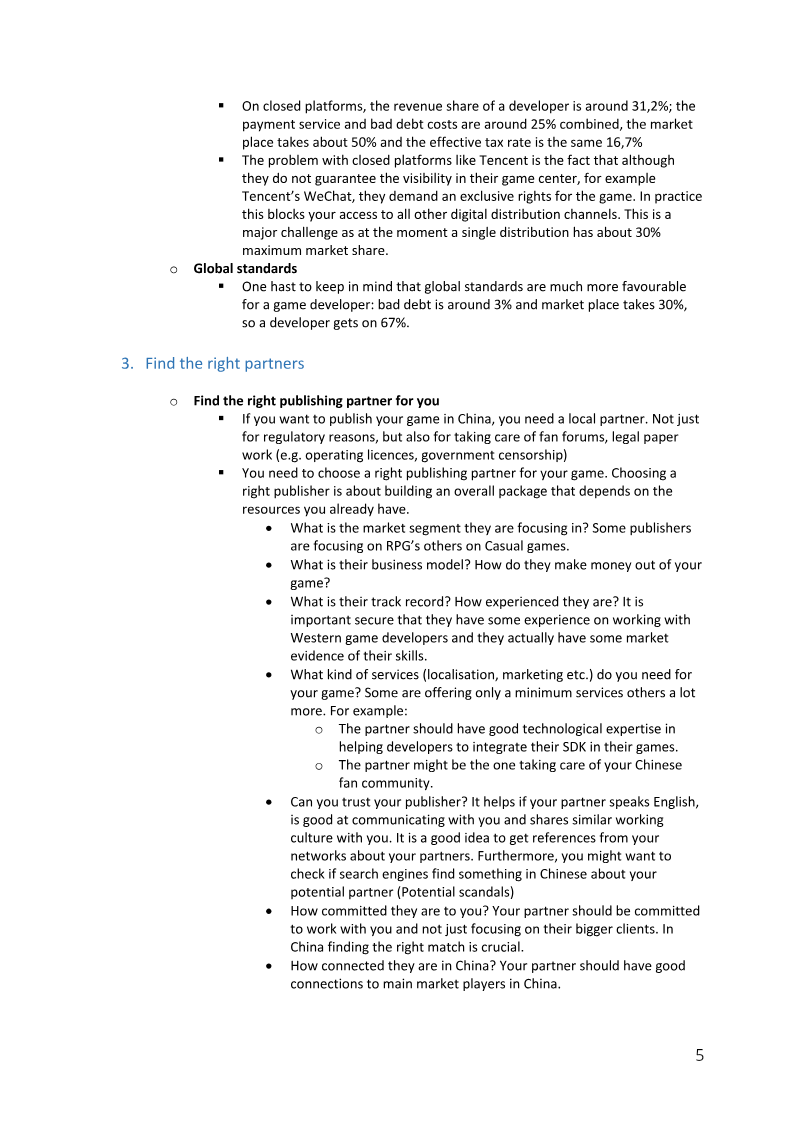
The Chinese mobile game market represents a significant growth opportunity for Finnish developers, having surpassed the United States in total downloads and approaching it in revenue.
- The Chinese mobile game market is a high-priority target that has surpassed the U.S. in total downloads and is approaching parity in total revenue.
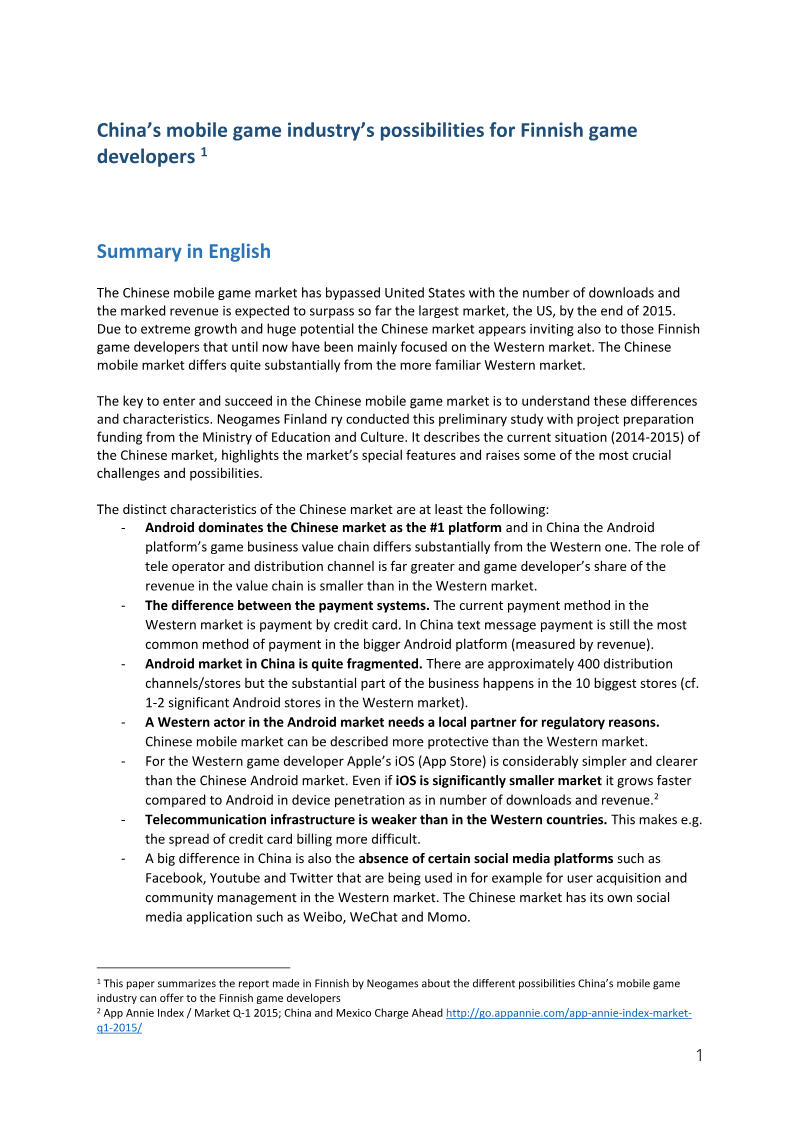
- Market entry requires a local partner to navigate strict government censorship, licensing requirements, and the technical integration of disparate software development kits.
- The Android ecosystem is highly fragmented, necessitating distribution across approximately 400 different channels rather than a centralized store model.

Youzu's successful transition from PC to mobile games
Youzu has successfully transitioned from a dominant PC and browser-based publisher to a major force in the mobile gaming sector.
- Youzu successfully pivoted from a $135 million annual PC and browser-based business in 2014 to a mobile-first strategy, anchored by the success of 'Youth of Three Kingdoms'.
- The mobile title 'Youth of Three Kingdoms' achieved 9.5 million total players and generated over $16 million in gross revenue within its first 20 days of launch.
- Youzu’s monetization model demonstrates high efficiency, with per-user revenue reaching $5.30 after 30 days and $11.00 after 60 days.
How Kabam is looking to crack China
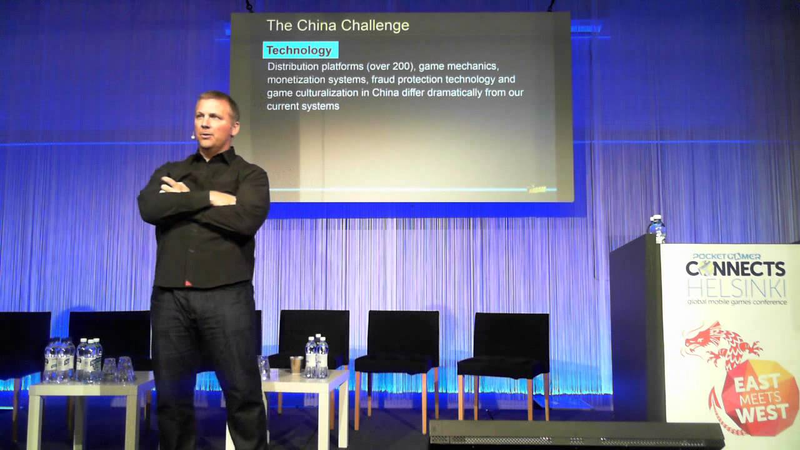
Kabam’s strategy for navigating the global mobile gaming market centers on the necessity of "culturalization"—the deep adaptation of game systems to fit local preferences—rather than simple localization.
- Asian markets including China, Japan, and Korea now account for over 50% of global mobile gaming revenue, yet remain dominated by local developers due to high barriers to entry.
- Kabam’s strategy for market penetration relies on 'culturalization'—deeply adapting game systems like VIP features to local preferences—rather than simple translation.
- To succeed in China, Kabam leverages local partnerships for distribution and regulatory compliance while utilizing its Beijing studio to maintain internal control over code and IP.

Biz Daily: How China's economic woes will impact mobile games
The Chinese mobile gaming market, once viewed as a primary engine for global industry growth, faces significant headwinds due to broader economic instability.
- The Chinese mobile gaming market is transitioning from a period of explosive growth to a more mature, challenging environment, ending the era of relying on sheer market momentum.
- Despite broader economic volatility, China remains a substantial $45 billion mobile gaming industry that requires more sophisticated, localized strategies for success.
- Western developers can no longer treat China as a guaranteed growth engine and must now prioritize increased marketing investment and nuanced cultural adaptation to compete.

Biz Daily: Why iDreamSky invested $10M into Rumble
The Chinese mobile publisher iDreamSky has expanded its global footprint through a 10 million dollar investment in the United States-based developer Rumble Entertainment.
- iDreamSky has invested $10 million for a majority stake in U.S.-based developer Rumble Entertainment to expand its global footprint beyond the Chinese Android market.
- The investment grants iDreamSky exclusive rights to publish Rumble’s titles within China, securing a pipeline of high-fidelity Western content for a market that demands premium graphical quality.
- Rumble Entertainment, which has previously raised over $30 million in seed and Series A funding, required the $10 million infusion to provide the marketing liquidity necessary to scale its current soft-launch projects.

Biz Daily: Why Vainglory dev Super Evil raised $26 million
Super Evil Megacorp has secured $26 million in new funding to pivot its mobile MOBA, Vainglory, toward an eSports-centric business model.
- Super Evil Megacorp raised $26 million to pivot its mobile MOBA, Vainglory, toward an eSports-centric business model.
- The company is prioritizing long-term ecosystem growth and user acquisition over immediate monetization to establish a spectator-driven experience similar to League of Legends.
- The strategy focuses on the Asian market, specifically South Korea and China, to leverage established eSports cultures.

Biz Daily: Why Chinese publishers are delisting from NASDAQ
A growing trend of Chinese gaming companies, including KongZhong, iDreamSky, Perfect World, and Shanda Games, are moving to delist from the NASDAQ to transition into privately held entities.
- Chinese gaming companies including KongZhong, iDreamSky, Perfect World, and Shanda Games are delisting from the NASDAQ to transition into privately held entities.
- The primary driver for these management buyouts (MBOs) is a perceived undervaluation of gaming stocks by Western investors, who have historically remained skeptical of the sector.
- Management teams are seeking to escape the burden of rigorous US quarterly reporting and transparency requirements to regain operational flexibility and avoid public market volatility.

Perfect World CEO on a strategy for global F2P success
Perfect World maintains a global growth strategy centered on the free-to-play model across PC, console, and mobile platforms.
- Perfect World operates a cross-platform strategy, developing and publishing free-to-play titles across PC, console, and mobile, with a current pipeline of approximately 20 mobile games.
- The company successfully launched three top-10 mobile games in China in 2014 and is expanding its portfolio to include more casual and strategic genres to capture non-traditional mobile gamers.
- Perfect World is diversifying its development footprint, with roughly one-third of its current mobile pipeline projects being developed by studios outside of China.
How Goodgame Studios bought Empire: Four Kingdoms to China
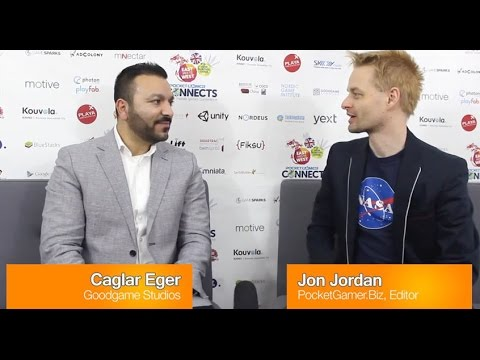
Goodgame Studios, a German developer, has pursued a strategic expansion into the Chinese mobile gaming market to leverage its global success in the free-to-play strategy genre.
- Goodgame Studios entered the Chinese market with a low-risk, iterative strategy for 'Empire: Four Kingdoms,' beginning with a localized iOS launch in October 2014 to test viability before committing to infrastructure changes.
- The studio identified the fragmented Chinese Android ecosystem as a primary challenge, noting that low-end device prevalence complicates monetization compared to the iOS segment.
- To scale distribution, the company is actively collaborating with local publishers and third-party Android app stores, specifically targeting platforms like 360, Xiaomi, and 91.