1 free read left. Create a free account for unlimited reading + AI research.
Create free account
Perfect World CEO on a strategy for global F2P success
Key insights
6 takeaways- 01Perfect World operates a cross-platform strategy, developing and publishing free-to-play titles across PC, console, and mobile, with a current pipeline of approximately 20 mobile games.
- 02The company successfully launched three top-10 mobile games in China in 2014 and is expanding its portfolio to include more casual and strategic genres to capture non-traditional mobile gamers.
- 03Perfect World is diversifying its development footprint, with roughly one-third of its current mobile pipeline projects being developed by studios outside of China.
- 04The company successfully leveraged the free-to-play model for PC titles in Western markets, citing the 2013 release of 'Neverwinter' as a successful example in both the US and UK.
- 05Mobile game design must account for fragmented user time and simplified touch controls, which differ significantly from the design requirements of PC or browser-based titles.
- 06Western and Eastern markets require distinct monetization strategies; while Asian players often accept 'pay-to-advance' models, Western players prefer free-to-play designs that avoid paying for competitive advantages.
Ask AI about this video
Transcript
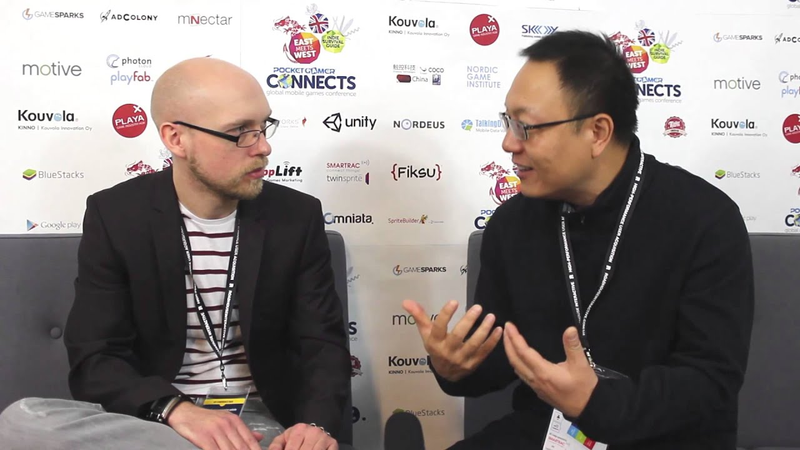
great to be here James my name is Robert Robert shell I'm the CEO of a Chinese company in perfect world and what is it that you guys do we do games actually we do development of games we do publishing of games and we partner with other people in the world to do games and we do games on the console platform we do games on the pc platform we also do games on mobile which is our particular sector is there anything that you were publishing last year or developing last year that our viewers my apparel oh yeah well basically from china so we did three top 10 mobile games in china published last year we plan to do more this year is it a free-to-play spin that your company has that we focus on that's exactly the the two statement basically we are started as a free-to-play model
type of company on games and now we're doing all our games free to play on all three platforms so the most successful ones that you saw in 2014 where they have the free-to-play variety and is that something that you see kind of continuing into 2015 it well I especially from Asia you know in China in Korea in Southeast Asia you know free-to-play is the core model for gaining society but we do see the trend in the USS wat not only on free-to-play mobo but also on the free-to-play pc we published not last year of the year before last year in 2013 of free-to-play model of the pc game called never return it is available here in UK as well it was a very successful game not only in the US but also in europe and is that the kind of thing that you're going to be making in the future are you sticking with that particular sort of genre that never went to genre for example or are you expanding we are definitely want to spend and we're not
only doing the hot core for you to play kind of a you know fighting game we are having more of a strategic game or a mobile game or even some casual type of game down the road especially on the mobile because we understand that mobile grows our feud by a lot of new players non-traditional game players we caught it so eventually we need to lighten up our games a little bit to satisfy this part of the new gamer and being as you span all different platforms you say consoles and key threaten mobile we have a mobile focus what do you have to do differently to make a successful game on mobile versus maybe a browser-based free-to-play game right well the different i think the the core of the gameplay would be different because mobile players are definitely using your time differently as on the pc impossible you have more scattered time during the day so that the design has to cope with your behavior on the mobile and you're
on the move so the design of the game has to be cope with you know the way you move and then the control has to be simply because you don't have a controller you don't have a keeper you don't have a mouse so but but but then during the interface the control simplified control you have to have certain kind of fun so that design challenge is always there so design a mobile game is not that simple because you have all the element of the other gameplay but eventually how do you design it into a simple touch but then still have that kind of fun of controlling that is tricky thing you know the thing to get right laughs lightly and is there anything that you're working on currently they are particularly excited about or can talk about or we are having about 20 different games in the pipeline on the mobile platform talking a vast amount of you know cross different Gerald's we were hoping that you know half of them oh I wouldn't say have
maybe three-quarters of them are basically Eastern kind of style and then of course still that one-third of the games are developed outside of China your Studios around the world we hope that you know we can bring them together to have a complete portfolio for all the gamers around not everybody can have a selection that to say I want to play this particular style and particular juror of game so that as a game company will provide you know a portfolio of different games for gamers around the world so that you know that would be our success so what are the challenges that you find bringing the game perhaps it was intended initially for the eastern market to the west what are the differences between those markets and gamers say behavior a completely different gamers understanding of the culture will define that how they being attracted initially into the game right but eventually if you have a very beautiful graphics everybody loves that
but when you design a gameplay western gamers are used on gamers are very different the initial totally different perspective free to play a lot of us gamers are you know when they hear feet away they hate to play because they think you are paying for the ability it can kill more people show that is not fair but eventually there is a design trips that we divine free to play for us market not to pay for any of the capabilities you can enhance but rather to pay something to satisfy you in different ways the u.s. do you find that the Chinese market is something that prepared to pay for those karate tournament in the China and Korean market that people are more willing to pay to advance themselves because one of the things to show off in the game especially big will kind of gamers they want to show off and naturally it becomes a community of particular game that different people
are playing different roles in the game in the eastern part of marking it is it is normal but in the US is not so even though it's the same game when we localize to different languages for different regions we have to pick the device to make sure that it fit into gamers perspective to make sure they're comfortable and they like the game itself companies
Summary
Perfect World maintains a global growth strategy centered on the free-to-play model across PC, console, and mobile platforms. Having established a strong foothold in China with three top-ten mobile titles in 2014, the company is actively expanding its international presence. The core thesis posits that while free-to-play is a mature, dominant model in Asian markets like China and Korea, it is increasingly viable in Western markets provided that monetization strategies are carefully localized to respect regional player preferences and cultural nuances.
The company’s development pipeline includes approximately 20 mobile titles, reflecting a shift toward diversifying its portfolio beyond hardcore fighting games into strategic and casual genres. This expansion aims to capture non-traditional gamers who require more accessible, "lighter" gameplay experiences. Development methodology emphasizes platform-specific design, noting that mobile titles must accommodate fragmented play sessions and simplified touch-based controls compared to the more immersive, long-form sessions typical of PC and console gaming.
A critical challenge in global expansion is reconciling Eastern and Western monetization philosophies. In Eastern markets, players often accept paying for power or status-based advantages to facilitate social competition. Conversely, Western players frequently resist pay-to-win mechanics, viewing them as inherently unfair. Consequently, the company adapts its design for the U.S. and European markets by focusing on non-power-enhancing purchases that satisfy player needs without compromising competitive integrity. By balancing a portfolio that is roughly three-quarters Eastern-influenced and one-quarter Western-developed, the company seeks to provide a comprehensive, culturally resonant experience for a diverse global audience.