AI reports and market data
Documents

Practical Use Cases of AI in Marketing Communication - Peter Fodor, CEO & Founder, AppAgent
The integration of artificial intelligence into marketing communication serves as a powerful catalyst for operational efficiency and creative output within the mobile gaming industry.
- AI integration in mobile marketing enables teams to reduce production timelines from days to hours by automating the creation of high-volume creative assets.
- Midjourney and DALL-E are used to generate initial design concepts, icons, and backgrounds, which are then refined by human designers to ensure brand and technical standards.
- Stable Diffusion is applied to sharpen low-resolution gameplay footage and adjust character portrait realism, allowing for high-quality visuals even when source assets are limited.

A New Way to Think About AI in Games - Wayne Lee, CEO & Founder, Bloxmith
The integration of artificial intelligence into game development represents a transformative shift, impacting nearly every facet of the production lifecycle.
- AI is fundamentally reshaping the game production lifecycle by automating 3D modeling, animation, UI/UX design, and functional code prototyping, which significantly lowers the barrier to entry for independent creators.
- NPC interactions are evolving from static, scripted dialogue to dynamic, personality-driven conversations that respond to player input in real-time to increase immersion.
- Current AI models lack true innovation and high-level decision-making capabilities, as they primarily rely on permutations of existing data rather than generating original gameplay concepts.
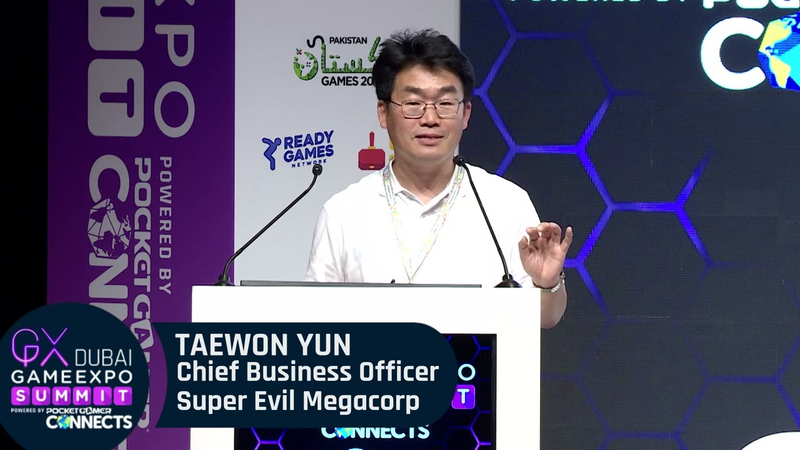
Building a Living, Breathing MMO With Gen AI & Web3 - Taewon Yun, Super Evil Megacorp
The integration of generative AI and Web3 technologies offers a transformative approach to solving long-standing design and monetization challenges in massively multiplayer online (MMO) games.
- Generative AI enables the creation of dynamic, evolving NPC behaviors and infinite, personalized content to solve the industry-wide problem of rapid player content consumption.
- Web3 technology provides the necessary infrastructure to manage complex, persistent in-game economies and monetization models that were previously difficult to scale.
- Developers should adopt an agnostic approach to Large Language Models (LLMs) to prevent vendor lock-in and mitigate risks associated with the rapid evolution of AI technology.
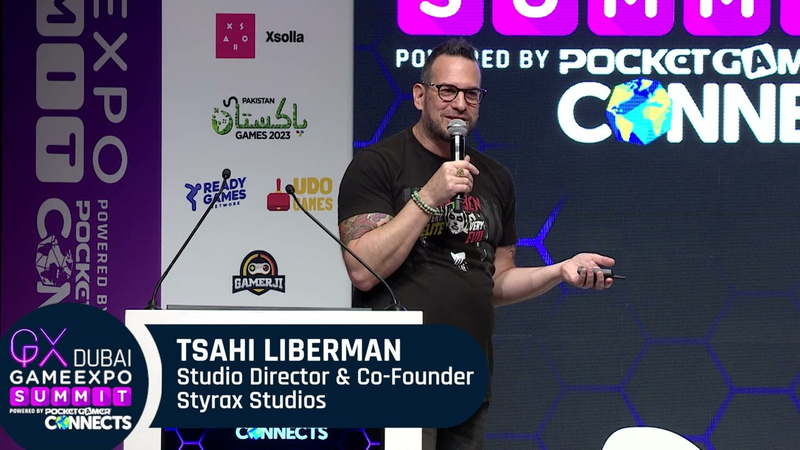
The Intersection of Metaverse, AI & Mental Health - Tsahi Liberman, Styrax Studios Inc
The intersection of artificial intelligence, the metaverse, and mental health represents a critical frontier for game design, as developers increasingly grapple with the industry's role in addressing rising global trends of loneliness, social isolation, and stress.
- Social isolation is a critical public health issue, with risks comparable to smoking 15 cigarettes daily, necessitating the integration of psychological support structures into digital game ecosystems.
- Developers should leverage AI to evolve NPCs from static, transactional entities into empathetic agents capable of providing genuine social support.
- Game designers can mitigate toxicity and improve community health by implementing reward systems that incentivize prosocial behavior, such as the honor-based skin initiatives utilized by Riot Games.

Microsoft Unblocked / FF16 Sales / Classic Game Archive Issues
The gaming industry is currently navigating a period of significant structural transition, marked by the consolidation of major publishers and the ongoing evolution of digital distribution models.
- The judicial clearance of Microsoft’s acquisition of Activision Blizzard is expected to trigger a new wave of large-scale industry consolidation.
- 87% of classic games released before 2010 are currently commercially unavailable, driven by poor internal asset management and the technical barriers of live-service infrastructure.
- Subscription services like Xbox Game Pass risk capping financial upside and altering game design incentives, likely pushing the industry toward a hybrid model of subscription and traditional retail.

Niantic Layoffs / Square Enix’s Future / FTC Lawsuit Revelations
The global gaming industry is currently navigating a period of intense structural realignment, characterized by aggressive consolidation, technological pivots, and significant regulatory scrutiny.
- The FTC’s challenge to Microsoft’s acquisition of Activision Blizzard threatens the long-term viability of the Game Pass strategy, which depends on consistent IP acquisition to compete with Sony and Nintendo.
- Niantic has implemented a 25% workforce reduction and closed its Los Angeles office, signaling a cooling of market expectations for mainstream consumer augmented reality adoption.
- Square Enix is facing declining profitability and long production cycles, leading to pressure to refocus on core franchises like Final Fantasy and divest from speculative blockchain investments.

Sony’s Showcase / Capcom’s Resurgence / NVIDIA’s AI Demo
The modern gaming industry is undergoing a fundamental transition as major publishers pivot from traditional, high-cost annual sequel cycles toward long-term, live-service ecosystems and transmedia expansions.
- The gaming industry is shifting from discrete, high-cost annual sequels toward 'always-on' live-service ecosystems to secure recurring revenue and sustained player engagement.
- Capcom has achieved a tenfold increase in stock value over the last decade by modernizing legacy franchises through proprietary technology and in-house development.
- Studios specializing in single-player experiences, such as Naughty Dog, face high operational risks and frequent project cancellations when attempting to pivot toward multiplayer-focused development.

Steel Media’s Dave Bradley On Hot Topics, Hot Takes, And Surprising Statistics At PGC Seattle
Pocket Gamer Connects Seattle serves as a critical barometer for the current state of the global games industry, highlighting a strategic pivot toward quality-focused development and professional resilience.
- The mobile gaming sector is experiencing a significant contraction in new iOS game releases, driven by the erosion of IDFA-based user acquisition strategies.
- Developers are shifting away from high-frequency, low-retention business models toward sustainable, high-quality gaming experiences.
- Blockchain integration in gaming is transitioning from speculative hype toward a model of cautious utility that prioritizes core gameplay mechanics over secondary features.
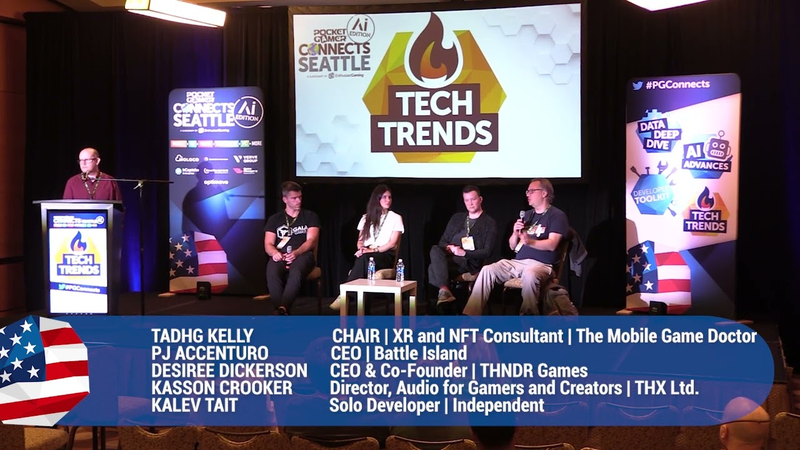
Panel: Skynet is here: What tech advancements should we be watching out for?
Generative artificial intelligence is fundamentally reshaping the video game industry by serving as a powerful engine for workforce augmentation rather than a wholesale replacement for human creativity.
- Generative AI is primarily functioning as a workforce augmentation tool that enables small teams to bridge staffing gaps and increase productivity rather than replacing human creativity.
- The industry is shifting toward the use of proprietary, ethically sourced datasets to mitigate the legal and ethical risks associated with training AI models on non-consensual creator content.
- The gaming market is expected to bifurcate into two tiers: premium, human-crafted experiences and a high-volume sector driven by personalized, user-generated content.
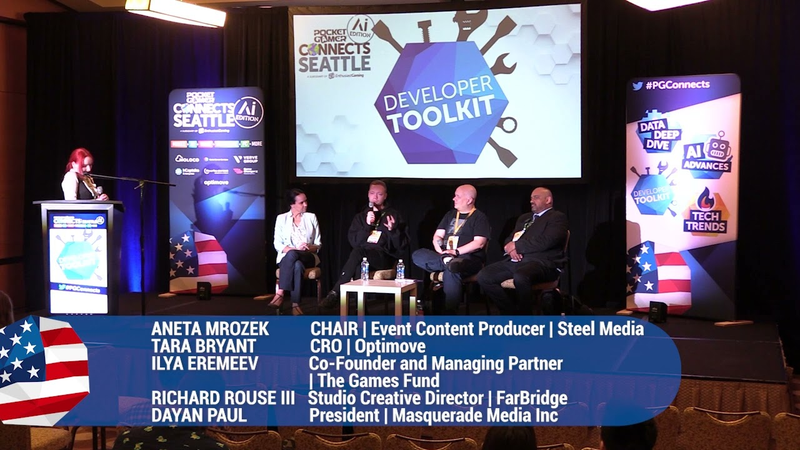
Panel: Living the moment: Leveraging technology to create a more personalized gaming experience.
Artificial intelligence, virtual reality, and augmented reality are fundamentally reshaping game development by enabling unprecedented levels of player personalization and operational efficiency.
- AI-driven personalization allows developers to automate A/B testing and implement genetic algorithms to optimize engagement, storytelling, and tutorials in ways that were previously impossible through manual design.
- While AI can accelerate production, high-quality, human-led creative work remains the primary driver of player retention, as players prioritize quality over the speed of content generation.
- The proliferation of AI-generated content will create a massive surplus of low-quality media, making content curation and discoverability the most critical challenges for the future of the gaming industry.
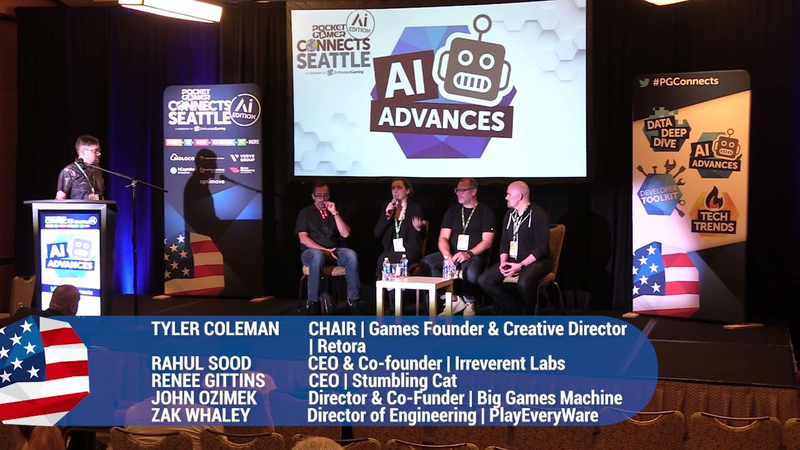
Panel: Transform and roll out: Is generative AI the future of games?
Generative AI is poised to fundamentally transform game development by functioning as a sophisticated assistant that accelerates production and enhances creative iteration.
- Generative AI is shifting from experimental adoption to the integration of specialized, additive tools within existing game production pipelines.
- The primary value of AI in development is accelerating repetitive tasks and asset creation, which allows human teams to focus on higher-level design and innovation.
- Industry adoption is currently hindered by significant legal and ethical challenges, specifically regarding copyright ownership of AI-generated assets and the lack of clear regulatory frameworks.
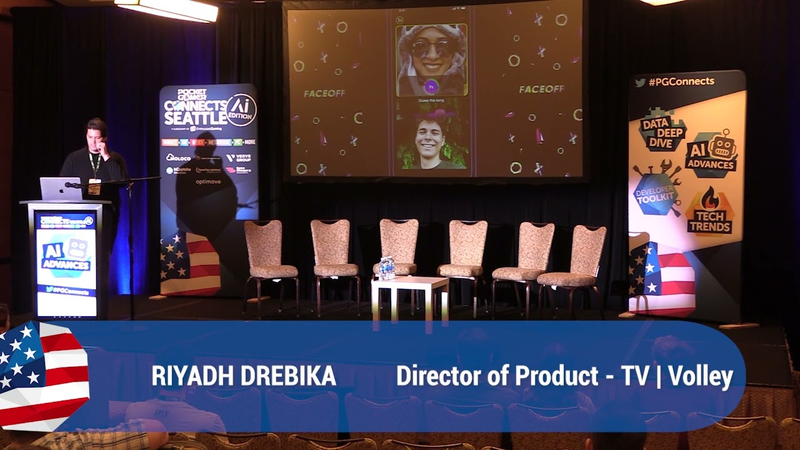
Session: Re-imagining Gaming Using Voice AI, Riyadh Drebika, Volley
Voice AI gaming represents a specialized sector of the industry focused on creating interactive experiences that rely on vocal input as a primary control mechanism.
- Voice AI gaming shifts the primary control mechanism from traditional inputs to vocal interaction, requiring machine learning to interpret intent and facilitate hands-free, immersive experiences.
- The ecosystem has evolved from smart speakers to a device-agnostic landscape spanning mobile phones, televisions, and automotive interfaces.
- Advancements in generative AI and high-fidelity voice synthesis, such as those from 11Labs, have eliminated the robotic quality of synthetic speech to enable more realistic character interactions.