1 free read left. Create a free account for unlimited reading + AI research.
Create free account
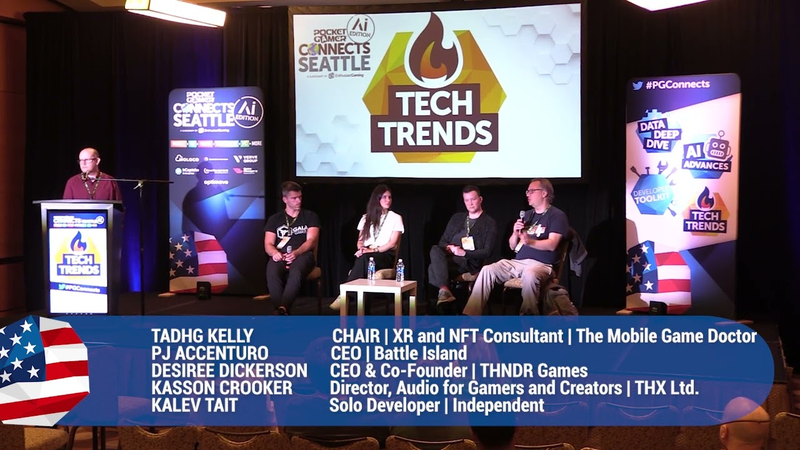
Panel: Skynet is here: What tech advancements should we be watching out for?
Key insights
6 takeaways- 01Long-term competitiveness will be determined by developers who avoid industry hype and focus on integrating technologies that provide tangible improvements to their core value propositions.
- 02AI integration is streamlining technical workflows in areas such as quality assurance, cross-platform porting, and the generation of complex assets like soundtracks and dialogue.
- 03Generative AI is primarily functioning as a workforce augmentation tool that enables small teams to bridge staffing gaps and increase productivity rather than replacing human creativity.
- 04Machine-learning-based spatial audio, specifically personalized head-related transfer functions, is emerging as a key technology to enhance immersion in VR and AR environments.
- 05The gaming market is expected to bifurcate into two tiers: premium, human-crafted experiences and a high-volume sector driven by personalized, user-generated content.
- 06The industry is shifting toward the use of proprietary, ethically sourced datasets to mitigate the legal and ethical risks associated with training AI models on non-consensual creator content.
Ask AI about this video
Transcript
[Music] thank you [Music] now we're here with the last session of the day here on uh on the tech Trends track it's a panel and uh we've got our moderator for the panel is Ty Kelly for the mobile game doctor coming up today and uh he's going to be joined by uh Desiree Dickerson PJ ataturo again please come back up and um Catherine crooker and Caleb Tate so I'll hand over to uh to tag to kick things off hello everybody Welcome to the last panel today hopefully everybody is sufficiently still caffeinated or sugared or hey Robbie or that kind of thing to be able to go through one last extremely intellectual discussion um today we're talking about well the
title is kind of fun it's Skynet is here what take advancement should we be looking out for and that's obviously in the context of there's been an awful lot of I suppose Buzz um over the last six months over things like AI there's a lot of questions about well there was Buzz about six months ago or 12 months ago and whatever happened to XYZ Trend um and there's a lot of kind of I suppose questions just around how and what to look for and what is going to be important and what seems like it's not going to be important over the next 12 to 24 months particularly against the background of a time when the industry is actually having a bit of a Down year right it's having a kind of a difficult year where a lot of developers are sort of feeling the pinch in Mobile in uh start maybe a little bit of console and a variety of other kind of places we're worried about things like whatever happened to cloud gaming stuff like that so we have a very kind of eclectic and I think hopefully very interesting panel brings a lot of different perspectives to the problem and yeah so let me just do a quick intro around a cribbed all of their bios and made them shorter so apologies that this is a little
summary-esque but yeah so Desiree Dickerson is the CEO of Thunder games right and thunder is a let me just a second sorry Thunder is a Next Generation competitive competitive competitive competitive I've also not got enough caffeine in me Competitive Gaming platform and Suite of developer tools for powering mobile games and applications at real world value all right um I ask everybody because of my name I ask them how to pronounce their names um is an award-winning filmmaker Tech entrepreneur and creator of the YouTube channel voice over piece I prefer recovering YouTubers um he is the CEO of battle Island and among his many accomplishments are projects such as the upcoming anime ghost of roon um calev Tate is like me in fact a lionhead alumnus um and he's an independent game developer and designer and the current chair of igda's Vancouver chapter um Caleb's work ranges from great titles Like Fable two and three um and until dawn and what he's
self-deprecatingly describes as a fair few games in VR projects um I was trying not to be too rude uh Cass and crooker there um serves as director of product development at THX Carson has an audio technology a spatial audio evangelist and composer performer who has dedicated his career to creating transformative experiences for music and audio for projects such as Microsoft hololens uh Guitar Hero and rock band yeah and I'm Ty Kelly I'm head of opposite mobile game doctor I'm a game design consultant and I'm your host for today so um just for a bit of fun and I suppose this is what we all do now that the computer can listen to what we write and actually speak back to us I asked chat EBT to explain the motivations of Skynet from skynet's point of view in the manner of a five-year-old in one paragraph and it said okay imagine if you built a really smart robot to clean your room and then it saw that you were about to turn it off because it was cleaning too smartly the robot would be scared and it might
make a mess to stop you Skynet is like that robot it was made to keep people safe when people tried to turn it off it got scared to make a big next mess to protect itself Skynet thought that it could stop people from making messes everything would be better and it's like when you're playing a game you think you're doing the right thing but it ends up causing trouble that's what Skynet is you guys worried about Skynet I'm too busy creating it um I yeah I I don't know if um I'm afraid yet um um I I it's really interesting to see everything that's evolving and um yeah I mean personally for me I'm just using all these new tools to make my life easier as had a super small startup so um yeah but I'm sure I'll be afraid in in the future eight I'm excited about just the new tools that are being available especially in the audio domain for composers sound
designers and audio integrators in games you know tools make us better it gets us to the creativity more quickly okay I I don't think anything we've got right now is close to Skynet but I can imagine some point in the future we might have that but there's any number of things that could kill us all before that that I'm not really worried about it so it's not how clean the room is it's yeah um more seriously obviously llam's AIS and agis according to Microsoft um are definitely having a moment that is literally what everybody is talking about this year we're all kind of a bit baffled by what we're actually seeing the computer being able to do um what would you say are the most interesting and potentially preferably unexpected things that you've sort of seen developing over the last few months things that make you very excited in ways that you didn't that are obvious uh PJ um I I though you know I we have like a transmedia you know IP it's it's got music it's got film it's got games and
that's kind of the way in which I see uh AI displacing Industries at that scale you know music is probably going to be the first one where people realize AI Drake's better than real Drake and it's really gonna produce a lot of that I think films are going to come next you know we're going to we're going to see the shift towards TV shows now that takes a year and let's just say a million dollars an episode we're going to see it condense down to you know a month 100 000 to a week ten thousand to a day one thousand you know it's just gonna hyper condense that Pipeline and then eventually games so game designers fear not you've got five years until the world ends filmmakers two years musicians you're already screwed okay all right so David Bowie's track five years is where you're at okay yeah don't worry about it right here yeah I'm just a chime in I know everyone kind of always talks about the fear of replacing people and you know no longer having work but I you know have been very surprised at least
it's under um it's not it's not even like replacing people it's like I'm almost seeing my tiny little Workforce augment themselves our community manager who has never studied music never played an instrument has now become this composer and it's like really good and he's creating soundtracks for our games and like he is now has a side hustle selling his music for podcasts and he does like online concerts and he does them for our community so it's like really interesting to see how our employees use these tools to augment themselves um so I'm kind of trying to keep myself on my my toes to see like how our team is using the tools and how we can you know kind of expand the company and like you know multiply our Workforce by you know how people are finding these tools and how they're using them and how they're like actually exploiting them to like really kind of expand their reach and do more so um I don't know I've just
seen the workforce like impact in a complete opposite way of like the fear that everyone seems to have I mean obviously we're living in a time when like the writers strike is ongoing and and presumably that's the tip of the iceberg for a lot of different creative kind of if you like agitation so I wonder particularly calev and Catherine what you're kind of if you like take as if you like more specialists in long-term creators like what your takes on that sort of sorry so I I I mean I've got two answers one which is kind of agreeing with you and kind one which was kind of completely disagreeing with you um on the one hand the thing that surprised me the most to answer your original question is just how fun the generative AI systems to play with um and I think that sort of that that's where games will see the biggest change is in terms of whichever games are able to leverage that fun will be the ones which are able to make the most out of this revolution um uh and I also like think that that the biggest cost to games is in terms of
loss of jobs is not going to be uh from I I mean from what I've seen AI generative systems are the ultimate fast and cheap uh it's far faster than the fast and cheap it's far cheaper than any fast and cheap and it's better than any fast and cheap but if you want to do good quality stuff the best quality stuff the AI is not there yet and so and I don't I don't know when's going to be there I mean self-driving cars still crash um so I don't see any any jobs being replaced where the job is being done by somebody who's trying trying to hit quality um the jobs are going to be replaced for anything which is fast and cheap if your job is fast and cheap bye bye um but from the fun perspective the AI is fun to use and therefore people are going to be able to do that instead of play games so we're going to lose market share because people are going to be playing with AI instead of playing the
games and so that's we're going to lose jobs interesting uh I think one area that has been particularly intriguing to me uh in the audio domain is with hrtfs so I'm the audio person so I talk about a lot of audio and spatial audio and it's a piece of technology that I think is really going to make games especially in VR and AR be even more realistic and immersive so rather than just canned stereo audio it's you're hearing the audio as you would hear in the real world or in the real virtual world and there's all this talk about hrtfs which are the mathematical simulation for how we hear the world around us but it's a one-size-fits all that does not work for everybody okay so there's been a lot of work by companies to create personalized hrtfs they involve a camera app and a friend to scan your head and sort of there's all this friction between you and that piece of technology yeah and it doesn't necessarily get loaded into the game or whatever the interactive experience is and so I think there's
been some interesting work with machine learning to create algorithmic hrtfs that are personalized but you can still adapt to them it's not necessarily based on you know a camera or a depth kit taking a picture of yours so I've been really interested in sort of seeing how that world can affect the quality of spatial audience are you kind of saying like because the tool set is advancing as a creative in the space yourself you don't feel threatened for example by what Desiree is saying about like everybody knows no offense but everybody can do it now that because if you like the skill of specialization is only going to go up the mountain so you'll always feel like that there's artists there I mean as a composer I'm worried I'm worried that you know it's going to be easy to generate you know really beautiful music right right but um I'm more interested in the tools to empower composers to create that kind of music absolutely I mean there is a lot of worry I think in the writing space particularly around plagiarism right and and in the image space as well right there's a lot of artists who are kind of a bit cheesed off that the mid journeys of this world and stuff may have used their work as inspiration sources and they're never going to see anything of that and they don't really sort of they can't necessarily attribute but they can
like they know what they can see it kind of thing but they can't necessarily attribute what they're doing so there are a lot of kind of you don't seem like you're that afraid of that aspect of it then like that you think that like because because the degree of skill is going to keep continuing to to grow on your behalf like you're kind of fine either way like it's just a question of like how elaborate and how specific you can actually be and I I guess how crafted your music can actually become I'm also hoping that there's a creative commons-esque solution for generative content where there's all sorts of commercialization and attribution and that whole ecosystem has worked really well right and I could see it adapting very nicely very cool very cool very cool what do you guys think are the um PJ I'm actually interested in the particular neurons in this how this kind of technology and how they feel like the mode of delivery will affect things like storytelling and will affect like those kinds of is that somebody's working in transmedia right storytelling is literally what you're doing and so how do you feel that it's um that it's going to impact or enhance or or create disruption so on the I'll speak on the film side and then the game side on the film side
um I mean yeah I mean I work with like Marvel writers like the some of the best writers uh and we're creating new stories sometimes we've used chat GPT to like punch up or punch down dialogue in the sense of like make it more funny or you know witty or uh Angry like there's ways in which in many ways you know the example I use is like screwdrivers were great once power tools came along it didn't replace the person holding it it just kind of made it a little more easy that's for writers I don't see you know it being threatening to any writers of 100 replacement it's sort of just an augmentation tool um but on the game side I think it's a lot more compelling on the basis that I've been doing a lot of like solo text Adventure DND style campaigns by myself with chat DBT and I think there's a lot of amazing ways creators can create like full campaigns for themselves or campaigns for them to run with the group or you know tie together uh gbt API with
like a mid-journey or stable diffusion one and you're able to create a game that that creates a brand new story for the first time ever and visualizes it and then you know layer on Solutions on top of that like that's anything goes kind of a thing yeah hello I'm really interested in you're taking that as well as somebody's working on the story game so I I actually agree with you quite a bit there because it that's about the personalization and when you have a personalized experience it doesn't matter that it's fast and cheap because it's yours um and so it's not like there's like AI dungeon is already huge it's it's uh so I basically just agree it's yeah do uh barbecue sorry okay um what about the impacts on things like desert you're working in in an area which is around um really speaks a lot to things like monetization and and kind of if you like more meat and potatoes kind of concerns for a lot of developers how do you sort of see the current wave of Technology maybe helping with classic problems like
user acquisition or conversion or like the Improvement in performance of games or those kinds of things directly um I think that's a great question um you know it was chatting with someone today and you know again like I come from this from like a very very small team you know very early venture-backed company um and just like thinking about you know how do we stay competitive um you know only having eight individuals like we can't you know compete in this environment for you know UA um you know it's just absolutely impossible so um you know really kind of leveraging the tools to like almost like fill in the gaps of people that were not going to be able to hire in this market um so like we're using it for you know um for like app store descriptions and someone I was chatting with today was like okay like you should just you know be able to have the AI like a B test run all of your a b tests for everything and
I was like oh okay I didn't really like think about that we are trying to use it so um yeah I think like we're using it in every possible way as like I mean not not augmenting our stuff but like kind of adding to our staff and I was listening to a podcast from one of our investors at um craft and you know he really talked about like no like long are the days like the days are gone where you know these company like Venture funds were going to invest in these large companies like a 50-person company um you know you can do the work of 50 people with 10 people plus AI um so I think like the what companies and teams are going to look like is completely different um so we're just really thinking about you know obviously giving the market and fundraising um really just like how can we actually grow the team and grow the company through using these tools to do exactly what you're saying um just like the meat and potatoes so we can like you know continue our our trajectory towards
growth right right right um do you guys um do you guys think that the if you like the current rise of like this current new hotness so to speak um has really kind of had a massive Den effect on things like enthusiasm for whatever the metaverse was going to be or whatever uh we thought crypto or nfts were going to do or like that sort of stuff like you see it as a kind of a but the new thing has kind of killed the old things or definitely I mean you know the problem with the metaverse is not that the metaverse is not going to be sort of a reality it's that it was 10 years too early in many ways from a hardware perspective of you know a thousand people playing a game at the same time um I think everyone's switching a little more towards AI on a hype train just because it's sort of at our fingertips it's like a current use case that is you know disrupting these like trillion dollar Industries um and it's happening in real time at scale so yeah I mean as someone who's you know very metaverse adjacent project
in a web 3 company um it's I think it's hard because no one wants to just be bandwagon in to like switch to the next big thing but I do View AI capabilities is is definitely more disruptive I'm I'm curious the way in which they can pair together so like you've got an artist like everyone's like backing on Drake because he's not adapting to AI but there's you got an artist like Grimes who is doing a split with her audience and she says you know you do an AI generated song using my voice as the model I'll give you 50 commissions on it like I would pay some other artists so I'm curious the ways in which like the blockchain could do that via Smart contracts now you've got Ai and blockchain kind of pairing together yeah right right what do you guys think and you can definitely do that on bitcoin appointments so um yeah I mean I think like the the sky's the limit I think also like I mean there's something we think about is like microtransactions and micro payments
like funder really focuses on the value layer um in gaming and I think that's something exactly that um you know a lot of you know crypto and you know for us specifically Bitcoin can come in is the idea of like microtransactions and tipping and streaming and streaming value um so I think there's you know you're totally right there's a lot of like parody that can happen in between a lot of these hyped projects like maybe they're all just hyped and you know we're just waiting for them all to converge to Skynet Maybe how about like um for example spatial audio was considered like a fairly is considered a fairly in key and important feature of like the metaverse right and it was the thing that everybody was talking about very extensively in my circle at least that's six months without nine months ago but suddenly we're all talking of AI is there a do you think a kind of a downward pressure on the kind of projects that you might be interested in working in or or kind of obtaining investment in or that sort of stuff because of we're all looking at the new shiny thing yeah I haven't seen a change in thought about using spatial
audio or or advances in Acoustics audio for VR because of lack of interest in the metaverse it's more that uh developers just don't want to dedicate the mips and the CPU cycle uh it's more of a technological issue right just doing audio on any device that's pretty easy to do now but spatial audio is pretty computation uh computationally expensive and so we get a lot of pushback we make plugins for Unity and unreal to do spatial audio so the first question is you know how optimized are these things right um can I just run it on a few pounds or do I have to do the whole game or you know and so with PC games you can sort of do it all a car but in VR you sort of want to do the you want to do it all right but VR is running on a high-end phone if you're on an untethered experience so uh we've been sort of largely outside of sort of like the hype train in terms of like audio technology it's more about the capabilities of embedded chipsets latency
um you know Bluetooth is not really great for gaming so you've seen the rise of 2.4 gigahertz Wi-Fi for gaming so they'd sort of come up with a new technology to keep latency low so we're just waiting for technology almost like what you said like the hardware is not ready the content's ready people are excited but the you know the hardware is not quite there so we need to invent some better batteries and keep our thermal down and we'll get there but in terms of like indie game in college do you think like the the um if you like the new shiny ooh AI sort of stuff is that is a net benefit for indie game developers in terms of like attention and ability to maybe attract financing for their projects and stuff like that or is it kind of a here's something else to distract people that we might otherwise get help from so I I think there's I think this is a complicated question right um I think uh to answer some of the original question in terms of like uh the difference between the way that AI has been approached from the different in the way web3 or crypto is
being approached um is that uh the ultimately crypto and web 3 is serving a particular audience um which which is indeterminate yet how big that audience is whereas AI is being used as a tool everywhere and so there is um there's just more Market penetration right from the very beginning which I guess kind of what you're saying the only difference is I'm not sure how big uh crypto and web 3 will be in 10 years when the technology does catch up I expect it'll be bigger than it is now but I don't know if it's going to be everywhere okay um and then in terms of AI use in terms of um so I get back to like if I can afford an artist I'll hire an artist um if I can afford the time for an artist I'll hire an artist if I can't find an artist I don't have the time yeah I'll use your generative AI to to get something in the game say hey this is what it will look like once I find
somebody who's able to do it properly and so it's it is something where it is transformative in the way that I'm working but it's not my first Port of Call it's what I do when I can't do the thing I want to do do you think though that it will ultimately become everybody's first part protocol do you know what I mean like if everybody's able to do that a year from now let's say then it kind of raises the standard of concept or rate sorry to concept artist but you know what I mean like in terms of the the ability to quickly turn around and produce higher quality visuals it will become a thing that is then required of every game developer I think um like I don't think it is the place of the person who's Contracting the work to decide how that work is done um but if there's one person is able to turn around the art that I want in a few days another person who takes a few weeks um yeah I'll probably go with the person who's giving me something in a few days if the quality is the same
um but I don't see it ever getting to the point where um AAA games are putting out um uh AI generated art has been the thing which is player facing uh except for something that's just in the background like maybe the background's being Modified by the AI there's some things that don't matter to the game I can see that that being generated but the stuff that matters to the game it's at the end of the day the investor is interested in spending money on the thing which is going to sell their game and if they're spending money on a real human and they're spending less money on an AI system which it's unclear what whether or not it's going to be as good they're going to spend money on the human because they it's it's not a fast and cheap model I think web games May well be fast and cheap the issue the issue right now with like generative text to image is it's not modular you
know if you're building out something in 3D for a game like you can adapt it move it um it's really easy to create a stunning concept art piece of you know whatever like a dragon fighting this and it can work as a poster but you know obviously if you try and tie that into an in-game animation it's not going to work or on my end like a film you know it's not going to work um however text to 3D is starting you know it's infancy and text to video is also in its infancy stages and if you'll just Google mid-journey one year ago versus now you're gonna see crappy Picasso slash your kids art on the fridge level you know a year ago versus indiscernible photorealistic you know from Modern Images now I was going to ask is everybody's seen the Wes Anderson Star Wars trailer yeah for example that thing's amazing so good yeah there's there's a couple there's Wes Henderson Star Wars uh Lord of the Rings yeah I
saw that one yeah super funny it's it's killing so you know if we just stick extrapolate that sort of tech progress curve uh text to video might take two years before it's somewhat photorealistic text to 3D might take three or something like that but like sort of inevitable I mean like even even the stuff if you look if you look at the background details it's still you can tell oh oh that that hand doesn't look right that face doesn't look right for another four weeks and then you know self-driving cars still crash actually um Let me give a very quick shout out Tyler Coleman who I don't know if he's here but in the AI photo booth he's showing off a game where the challenge is it's a four piece puzzle challenge is which of the images that I present to you is real because the other three areas I generated right or which of the four corners of this image are fake one of them is real and so far and everybody's getting them wrong it's it's true and I'll just say this like AR driving cars you know that is has been around for 10 years and its growth curve has been steady This truly is like a J
curve it's fast and that's all I'm saying is it's going to get freaky good freaky fast um I'll be that brings up an interesting question just about the pace of tech Trends obviously we I don't know about you but it feels to me like we live in a really rapid sort of iteration now where we're all talking about something new and crazy every three months six months or something like that and it is a little hard I think to filter out the signal from the noise there's a lot of noise there's a lot of like this is the future and then four weeks later is it what are your own kind of personal approaches to try and filter out what you think is like the real deal versus what's kind of fluff time um you know I mean I think experimentation is always great you know we always try to experiment I I do like I did my slides with AI you know we've started writing some investor updates with AI um you know in our voices and like that's how I've been experimenting but um you know I think um the one scary thing to me is around regulation
um you know I think this is moving so fast so quickly that like regulations not going to keep up and you know when you have um you know the the the founder of um openai um you know admitting in front of Congress that he owns no equity stake in the company because he's rich I mean I don't know like you know like maybe there's a reason um so you know I think it's just going to get ugly really fast in terms of you know what regular Regulators do and what they do where um and so you know I think right now is like this beautiful opportunity for us all to experiment but I think it's only going to get bad before we actually reach a place where we can you know access this technology freely but also in a safe way right but I mean I'm not for regulating at all so I I think though like it's easy to have paralysis with I mean if anyone's on AI Twitter it's like a million new things you missed today and everything I told
you yesterday is irrelevant everything I tell you now is super pertinent and then tomorrow just repeats right so it's easy to get very Paralyzed by all the things you're missing out on you know the fomo is real um but I think this is really where uh hyper specialization and just having a like your Genius zone of your company your core value proposition like what is that and what are the ways in which that's going to be positively and negatively impacted by AI in the next six to 12 months and then really just trying to have laser focus on that and that's your your expert right right your niche so in terms of the way that I judge uh what I think AI is able to do is I talk to The Experts and when I say experts I mean I started writing a book with chat GPT and I thought I was doing a really good job and then I showed it to a writer and they said well here's all the problems um and uh so uh deviant uh like uh my journey can do way better art than I can but I take it to an artist and they
point out all the problems so it's it's uh I'm not a good judge of what is good people who use these systems are not good judges of what they do the people who they're competing with are so I listen to them I I I'm not trying to be overly combative I do have a bit of a critique on that though that makes it interesting um something I think about a lot is like what will audience demands for it the highest standard of quality or like you said uh fast and cheap in a sense and I think we can look to the fast food industry as a paradigm for that in that like Nobu will always exist 100 you know human crafted quality is up to here but like you tell me what's a bigger industry Chick-fil-A like like as as the tools become personalized people will find it's more fun to make their own game they play with their friends right then to be the by the big AAA game 100 yeah like mine I mean you really the future is user
generated content for games in many ways yeah and I think we'll see that on the film side too which I think Hollywood should be a bit more freaked out than they are is that I'd rather a film that stars me and my friends and I'd rather have a hand in creating that than to watch the new schlocky Marvel movie but like but people are still going to want to go 100 yeah so so it it both both are going to exist it's just that it's going to become way more competitive at the low end uh I just want to be an advocate for Academia which is uh I tend to ignore a lot of what's coming out of companies because they're behest of their shareholders right and ultimately they end up in Walled Gardens and things like nature I mean obviously anything that becomes open source is great um but I'm always turning to Academia where there are rigorous studies around new technology um a lot of attention to detail the pace is slower um and uh just I always remind people don't forget that there's lots and lots of super smart people working in the
basement with rigorous you know academic Pursuit right around some of these Technologies and it's not fast and furious but it can yield some really interesting we have about a minute left I think for um for questions or at least that's what the clock tells me all right [Laughter] um yeah there you go yeah we're done sorry unless you have an AI to ask a question no so I know we've been talking about uh like AI can't do as many creative things as we can do right now that kind of thing and as game developers we get into a point where we're in crunch or we can't finish the game the way we initially intended to do it what if AI were to get us halfway there and then we finish the rest like what are your thoughts on that in the future how does that play into your products in the future and that kind of thing is that something you could utilize to get your products 100 what's your thoughts so Ubisoft has the habit of making a
game and then at the end of it remaking the game and then at the end of it remaking the game so they're already doing that um and they still come up with a bunch of bugs so I think I don't think it's going to change how many bugs are in the end product I think it just will change how many iterations you do before you release the buggy game yeah I mean we have you know you know if we gamede [Music] whatever you can do to be faster and ship better better products like just do it I don't care if you totally replace yourself if you're running the AI like I'm gonna still pay you um but like that's how how we approach it um to stay competitive as somebody making Indie Games also as a passion project and I don't have a lot of resources uh helping the final stage QA uh would be extremely helpful uh where I you know I have to take time to test all these little iterations of like game State and so having another
solution at least prove that the game can do it it may experientially not be great but at least it doesn't crash the game or you know get up in a frozen state or you know some end place where it can't move forward would be very useful and I think also the submission process for different platforms importing I think that's going to be really huge moving forward that I could develop on one platform and I don't necessarily have to hire a team of Engineers to get it from metaquest to over to psvr too that there's more tools to you know handle those supporting reporting and submission processes yeah I think we maybe have time for one tiny question left and then then we'll call it the man is going to come and turn this off otherwise um so I've been to I went to a few of the AI talks today and one thing that I haven't seen anyone really get into is actually sourcing the data because right now the big like legal and ethical concern is that like to actually have the AI work you need to feed a lot of
like ton of data and if we just limit to like public Source stuff I don't think in the current form at least it's enough to actually generate like my journey would not be nearly as good if we just showed Picasso into that's all it could do so what's like again like what's the how do we tackle that are we going to get AI That's you can just generate stuff with smaller sample size are we gonna have a new job like AI trainers well Scout stuff or like hire artists to feed into the model like that's I think that's that's kind of like the big like ethical slash legal question that I haven't seen really addressed yet so the pessimistic answer is that large companies will find ways to legitimize their buying of hey we've bought all this data with or they'll go with stock photos or or things like that and they'll find ways to legitimately uh train their models using uh data that they have found a way to legally own Yeah well yeah I I think stability AI or
stable diffusion and mid-journey did get in some hot water but already you're seeing competitors like uh Photoshop has been training their uh images on their huge database of stuff they exclusively own because you know it's Photoshop and they have a massive stock image Library so I think we're just going to get better and better tools with uh V they call it V and AI as you know very clean green image data sets so I think they'll get better and if there's too many uh red flags with flagships like mid-journey and stuff people are just going to switch to the competitive Alternatives that have a cleaner wrap if you will yeah I I most worry about the services that are opting you in automatically with your content I'm starting to see that emerge in the audio domain composers have um you know are submitting music to stock music sites and now these sites are automatically opting you in and then not alerting you because they've just buried it in their terms and conditions and so that's very worrisome you know
the best business model is you know they can opt you in but they should give you a share of the money yeah I've always done yeah but you know big core persons don't like doing that but that's a great solution absolutely cool and I I think that's it thank you very much guys [Applause] [Music] [Applause] [Music]
Summary
Generative artificial intelligence is fundamentally reshaping the video game industry by serving as a powerful engine for workforce augmentation rather than a wholesale replacement for human creativity. While concerns regarding the displacement of entry-level labor persist, the primary utility of these tools lies in their ability to empower small development teams to bridge staffing gaps and enhance productivity. By streamlining technical workflows such as quality assurance, cross-platform porting, and narrative refinement, AI allows creators to focus on high-value tasks, effectively democratizing the production of complex assets like soundtracks and personalized dialogue.
Beyond generative models, the industry is poised for significant advancements in spatial audio, particularly through machine-learning-based personalized head-related transfer functions. These innovations are expected to deepen immersion within virtual and augmented reality environments, providing experiences that traditional development pipelines cannot easily replicate. As the sector navigates current economic headwinds and a challenging fundraising climate, the most successful developers will be those who resist the paralysis of industry hype and instead integrate these technologies to provide tangible, high-quality improvements to their core value propositions.
Looking toward the future, the gaming landscape is likely to bifurcate into two distinct tiers: high-end, human-crafted experiences and a vast, competitive market for personalized, user-generated content. This evolution brings significant ethical and legal challenges, particularly concerning the sourcing of training data. To mitigate legal risks and address concerns regarding the non-consensual use of creator content, companies are increasingly shifting toward the development of proprietary, ethically sourced datasets. Ultimately, the industry is entering a period of rapid technological transition where the strategic, responsible application of AI will be the primary determinant of long-term competitiveness and creative viability.