AI reports and market data
Documents
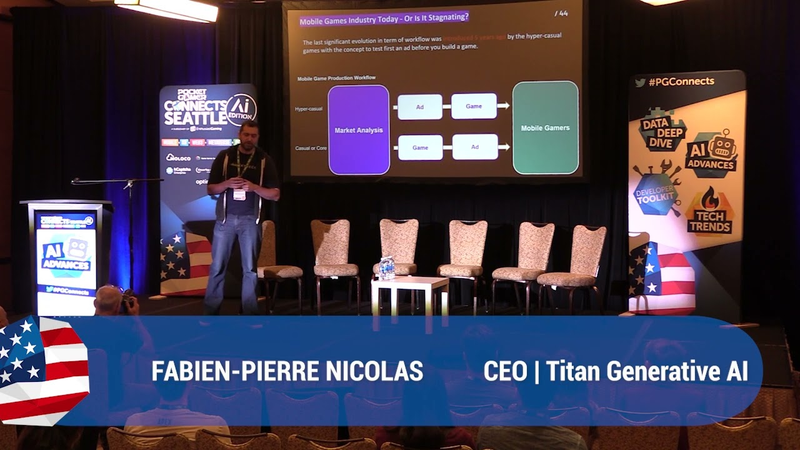
Session: From Handcrafted To AI Generated Mobile Games, Fabien Pier, Titan Generative AI
The mobile gaming industry is currently undergoing a significant transition from traditional, handcrafted development to a model increasingly augmented by generative artificial intelligence.
- Mobile gaming accounts for approximately 62% of global gaming revenue, yet the sector faces stagnation due to a reliance on low-risk licensed IP and repetitive mechanics.
- Generative AI can compress production cycles significantly, enabling smaller teams to develop functional game prototypes in as little as one to three days.
- Current AI capabilities are best suited for 2D assets, textures, basic client-side code, and core loops, limiting immediate adoption to the hyper-casual and puzzle segments which comprise 10% to 15% of the market.
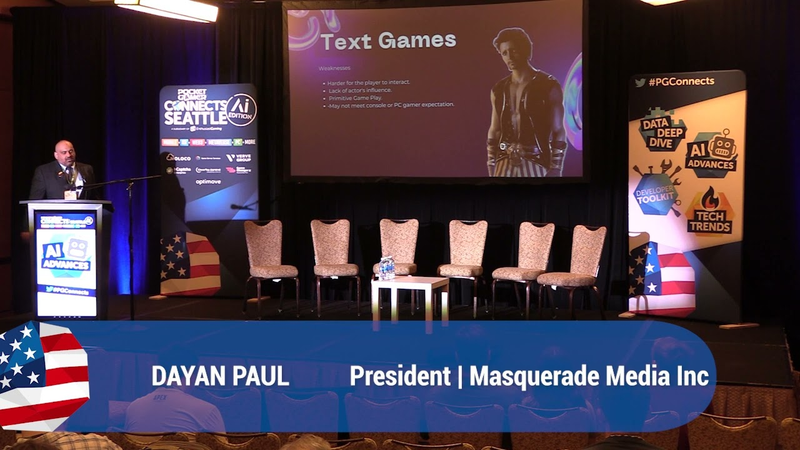
Session: AI Characters in Video Games, Dayan Paul, Masquerade Media Inc
The integration of artificial intelligence into video game character development represents a shift from traditional pre-programmed responses toward dynamic, machine-learning-driven interactions.
- Generative AI in game development must function as an assistive tool under strict designer control to maintain narrative consistency and creative quality.
- Effective AI implementation requires limiting training data to specific game worlds to ensure NPC behavior remains believable and contextually accurate.
- The industry is shifting toward integrating large language models with voice synthesis to enable real-time, immersive interactions between players and NPCs.
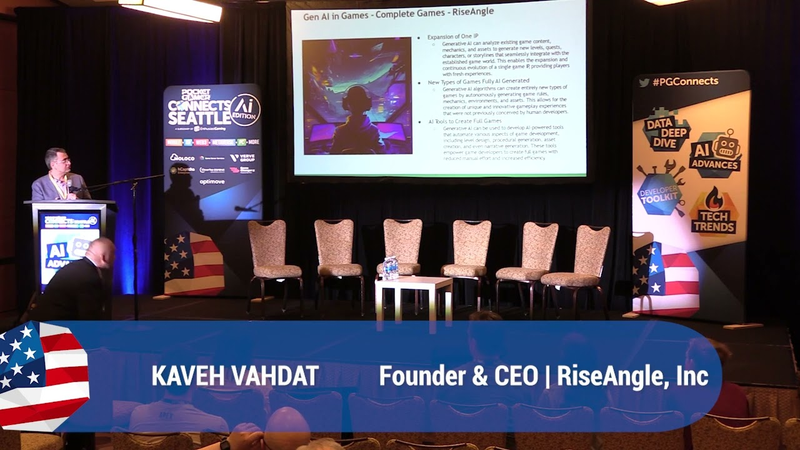
Session: Generative AI & Democratization of Game Development, Kaveh Vahdat, RiseAngle, Inc
Generative AI represents a transformative shift in the game industry, moving development from a technical, labor-intensive process toward a more accessible, creative endeavor.
- Generative AI is shifting the game industry from a labor-intensive technical model to a creative-focused one, enabling the three billion global gamers to transition from consumers to creators.
- The integration of AI tools is expected to significantly reduce development costs and production timelines, allowing smaller teams to compete with AAA studios in producing complex, high-quality titles.
- Generative AI enables dynamic, personalized gameplay experiences through procedural level design, adaptive music, and NPCs that adjust to a player's skill level or persona, effectively extending the lifespan of intellectual properties.
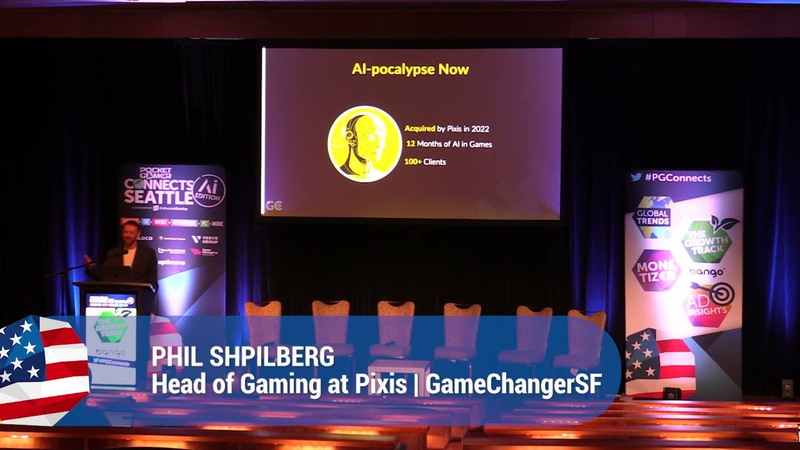
Keynote: AI Trends in Performance Marketing - Phil Shpilberg from GamechangersSF
The integration of artificial intelligence into mobile game user acquisition (UA) represents a significant shift from traditional, human-managed marketing toward automated, data-driven optimization.
- AI integration in mobile user acquisition is shifting performance marketing from manual, rules-based management to autonomous systems for bidding, budget allocation, and audience targeting.
- Current AI implementations in the gaming sector deliver a 10% to 20% improvement in return on ad spend (ROAS) while saving hundreds of hours of manual labor per project.
- AI tools currently optimize performance across major platforms including Facebook, Google, Apple Search, and TikTok, though they remain limited by an inability to execute strategies on non-API channels.

Where is the Game Industry Today? M&A and Public Game Companies | Pixels & Profits #1
The global gaming industry has transitioned from an era of unchecked expansion fueled by low interest rates to a disciplined period defined by operational efficiency, cost-cutting, and a strategic pivot toward live-service models.
- The gaming industry has shifted from an era of unchecked expansion to a disciplined focus on operational efficiency and live-service models due to rising capital costs and difficult user acquisition.
- A competitive bifurcation is occurring where top-tier titles dominate market share, while Western incumbents face increasing pressure from Chinese competitors scaling live-service expertise across console and PC.
- M&A activity has slowed significantly since the 2022 peak, driven by a valuation impasse between private companies holding historical funding valuations and public entities facing tighter capital constraints.

Amazon's New MMO / Google Shows Off AI / Cross Platform Gaming Data
The gaming industry is currently undergoing a structural transformation defined by aggressive consolidation, the prioritization of established intellectual property, and a decisive shift toward cross-platform accessibility.
- Over 72 percent of gamers now engage across multiple platforms, forcing developers to prioritize cross-platform accessibility to reach broader audiences and bypass platform-specific revenue fees.
- Major publishers like Amazon Games and Embracer Group are shifting toward an IP-led strategy, focusing on established franchises to mitigate the high risks and user acquisition costs of launching new products.
- Service providers such as Keywords Studios are scaling into comprehensive development hubs to support the industry's structural consolidation and the demand for multi-media IP ecosystems.

The Complexities of Game Development and Market Reception | 317
The modern video game industry faces a critical inflection point defined by the tension between ambitious production goals and the realities of technical execution.
- High-profile game releases are increasingly failing due to the unsustainable reliance on post-launch patches to address fundamental technical flaws and organizational fragmentation.
- The industry is shifting toward platform-agnostic subscription models that prioritize long-term ecosystem retention over traditional hardware-based market competition.
- Generative AI is being adopted as an assistive tool to accelerate creative workflows and productivity, though it is viewed as a permanent fixture requiring proactive legal and ethical navigation.
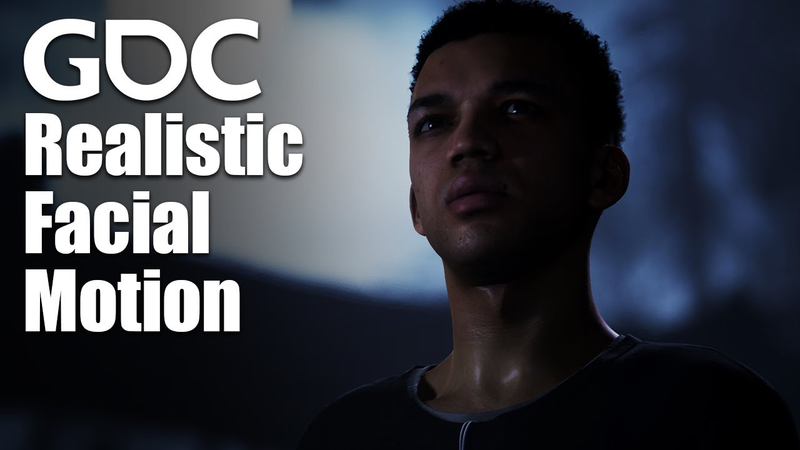
Case Study: Creating Realistic Facial Motion for 'The Quarry'
The production of The Quarry represents a significant advancement in high-fidelity facial animation, demonstrating that cinematic-quality performance capture can be achieved at scale through machine learning and automated pipelines.
- Digital Domain processed 32 hours of facial performance capture for 15 characters in 'The Quarry,' resulting in 8,700 final shots from 4,500 initial takes.
- The pipeline achieved high automation, with only 26 out of 4,500 takes requiring manual intervention by animators.
- The team utilized 'Bullseye' software for markerless tracking, which uses a greedy-based algorithm to automatically produce 90% to 95% of tracking data per day.

How AI is Taking Over the Gaming Industry and What It Means for You with Adnan Chaumette | 315
The gaming industry is currently undergoing a fundamental transformation driven by the rapid integration of generative artificial intelligence.
- Generative AI is fundamentally shifting AAA production models by automating technical tasks and documentation, forcing creative professionals to transition from manual laborers to directors.
- The traditional free-to-play economic model is becoming unsustainable, driving the industry to adopt AI-driven production to reduce labor requirements and operational costs.
- Major gaming corporations are avoiding aggressive copyright litigation regarding AI data usage to prevent legal precedents that could jeopardize their own search engine indexing and data practices.

Sega Acquires Rovio for $776M / Niantic’s New Games / New AI Upgrades
The video game industry is currently navigating a period of significant structural transition, marked by cooling hardware sales, shifting monetization models, and the rapid integration of generative artificial intelligence.
- Sega acquired Rovio for $776 million, representing a 63% premium, to strengthen its mobile market presence and revitalize the Angry Birds intellectual property.
- The gaming industry is experiencing a structural transition characterized by cooling hardware sales and a shift toward diversified portfolios to mitigate risk.
- Niantic is pivoting its business model from a mobile-first developer to a software infrastructure provider, focusing on utilizing its location-based AR expertise for 3D mapping technology.

New Episodes Return May 2, 2023
The Game Dev Unchained podcast is resuming production on May 2, 2023, following an unannounced sabbatical.
- The Game Dev Unchained podcast will resume production on May 2, 2023, following an unannounced sabbatical.
- The upcoming season will prioritize actionable strategies for integrating artificial intelligence into game development and navigating the evolving professional landscape.
- New content will focus on game localization strategies designed to help developers reach broader international markets and expand global audiences.

Mario Movie / Dream Games / Phillip La / Scopely acquisition / Sony’s Cloud / AI
The video game industry is currently undergoing a period of significant structural and technological transformation, characterized by the successful expansion of gaming intellectual property into mainstream media and a massive influx of capital into mobile development.
- Savvy Games Group’s $4.9 billion acquisition of Scopely represents its largest investment to date, though it accounts for less than half of the $13 billion the firm has dedicated to publisher acquisitions.
- The Super Mario Bros. Movie set records for the largest animated movie opening and the largest video game adaptation opening, with expectations to exceed $1 billion in total box office revenue.
- Dream Games is leveraging its success with Royal Match to launch a sequel, Royal Kingdom, as part of a strategy to mitigate rising user acquisition costs and market saturation.