1 free read left. Create a free account for unlimited reading + AI research.
Create free account
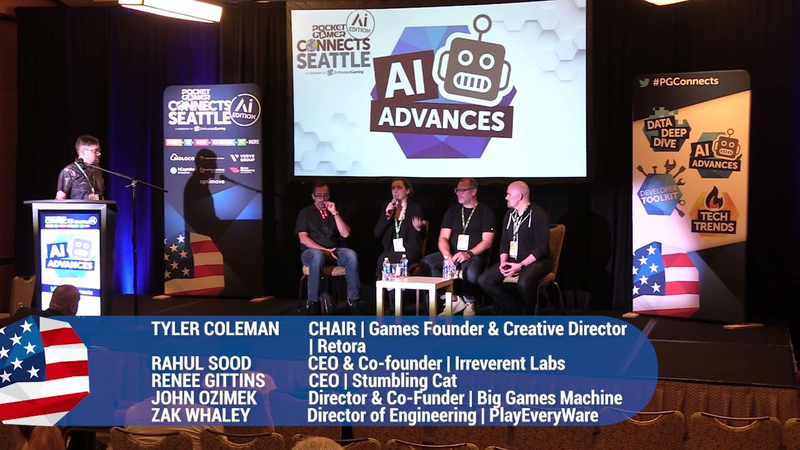
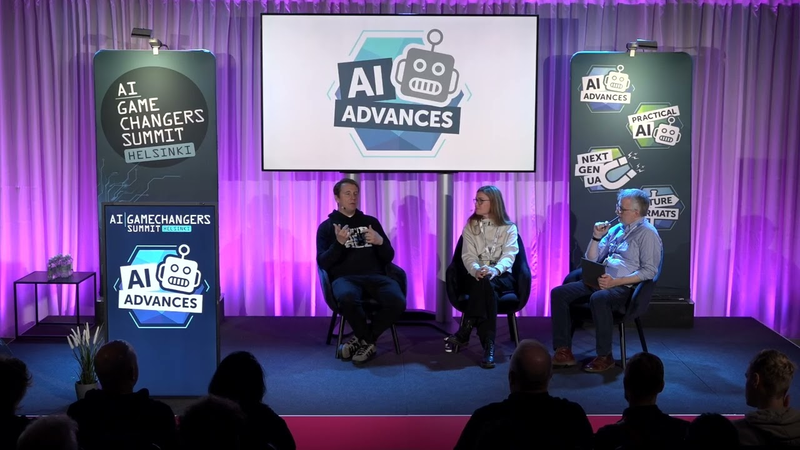
Panel: Transform and roll out: Is generative AI the future of games?
Key insights
5 takeaways- 01Generative AI is shifting from experimental adoption to the integration of specialized, additive tools within existing game production pipelines.
- 02Industry adoption is currently hindered by significant legal and ethical challenges, specifically regarding copyright ownership of AI-generated assets and the lack of clear regulatory frameworks.
- 03The primary value of AI in development is accelerating repetitive tasks and asset creation, which allows human teams to focus on higher-level design and innovation.
- 04To maintain high-quality gaming experiences, developers must mitigate risks such as generic output and inherent model biases by ensuring human context remains central to the creative process.
- 05Future industry success depends on the ability to adapt to rapid advancements in open-source foundation models while treating AI as a creative partner rather than a replacement for human expertise.
Ask AI about this video
Transcript
[Music] thank you [Music] and we get to the last panel from this track so I want to invite Tyler and all the panelists on stage so we can and it's a really good way to close the trackers to discuss where are we going how is it going influence the future of game development it's a good point to end the track today so give a warm welcome to our panelists please [Applause] please we'll uh we'll start off with quick intros I think we're we're gonna make a expedient amount of time for this one
um so I'm Tyler I need to do some other stuff I teach as well I've taught some classes on AI I'm showing the AI photo booth out there after this if you want to check it out as well uh Rahul you want to start us off sure I'm Raul sood and I'm the CEO and co-founder of irreverent Labs we're a seattle-based AI Entertainment Company hi my name is Renee gittins I'm the CEO and creative director of stumbling cat an indie Studio based in the area I've previously been the general manager of Phoenix Labs Vancouver the head of the igda and I worked for a while with Spirit AI which did moderation based AI tools as well as AI based text input for dialogue creation hi everyone I'm John John zimek I'm the co-founder of a UK agency called big games machine we help companies with PR marketing for game Tech and also Indie
Games I've been doing it for 24 years and we've been working with AI companies in this space for the last two howdy I'm Zach Whaley I'm the director of engineering at play everywhere code of element Studio based in Georgetown and Seattle here previously I've worked at Microsoft on a game called Project Spark working on the content Pipeline and animation engine there and also at uh Magic leap working on uh XR platform middleware for computer vision Engineers uh making apis for end user Developers for perception and awareness and space I am also on as the treasurer which was recently appointed worker directors and also help run the igd engineering seg fascinating all right we're going to start off with a nice soft ball here I want to hear from each of you what you're most excited for in the future of AIML and it should also be known I'm going to try to say AIML as much as
possible because that's really what we're talking about so who wants to start us off with what is the the next thing you're most excited for uh I think that uh probably the kind of just general empowerment of a lot of people to be able to uh create a lot of the different types of content for ideation uh I think it's the most immediate thing that's available uh I think that being able to uh query and generate numerous ideas to like really uh guide AI to be able to like develop things it's something that is is being used right now and can can continue to be used going forward um I think that we are going to see some gameplay that we've never seen before I think that's the most interesting thing um that's my main optimistic point and then I'll probably be English and cynical for the rest of this panel but
um I you know my I'm the least qualified member of this panel to say how that might work but I definitely think that we're going to have some amazing tools in the hands of very creative people um yeah so I have two things that I'm excited about um first of all um my company was building a game uh where every character it's a fighting game where every character in the game is an artificially intelligent NPC and uh and so the player input is really more about learning about your character sort of like a pet um and uh and the you get emotionally connected to those characters and you own those characters um I was excited about that uh but but also super excited about the uh we recently had a breakthrough on the creation of this game using uh machine learning building Our Own Foundation model where we can create sort of short films using images and uh I I guess where I'm going with this is the the idea of having characters that are
artificially intelligent and ownership requires some sort of ownership uh token um and unfortunately in the US it's very difficult to sort of navigate that space right now with the crypto industry the way it is and the SEC and that sort of thing so we're kind of putting that on pause and we're really focusing on this Foundation model that we're building and it'll be available in about three months so yeah yeah I agree with Zach I'm really excited about ideation um the ability to quickly prototype and draft through things I've used AI because I'm bad at writing good poems so I've written like a poem draft and thrown it through chat GPT and gotten something that sounds far better than I have the writing skill to do I also think what's really interesting about AI is it's empowering ability to take away uh work that is not always fun to do like I don't want to figure out all of my marketing
materials for a an indie game by myself so I can ask chat GPT or another tool be like okay write me a bunch of paragraphs about why parents should encourage their children to play a game that's going to teach them about all these things and it'll send me nice marketing copy that I could then use for something else it's also really good for helping with education you know as you're learning new things instead of trying to go through a bunch of documentation and uh you know posts on different forums you can just ask it questions and then you can teach yourself it's actually really really helpful not only for people who are breaking into the industry but even who are veterans within the industry and trying to learn new things like how to write Unity shaders fascinating all right so it's not all sunshine and rainbows here the obvious next question what are you most concerned or anxious about in this kind of future of AIML
I'm really concerned about Regulators getting in the space and not knowing how to regulate it today I was watching you know open AI talked with Regulators about regulation and you know the the fact is we we really are dealing with an old school generation of people that don't quite understand technology and um and and and really try to to dumb it down to the bare minimum and then try and build regulation around that the problem is uh you know these these decisions have have huge um Global effects I'm concerned about that I'm also concerned about the use of uh open source with uh AI Foundation models um I think it's insane to have any sort of Open Source out there you know it's being used by other countries now and uh with the US wanting to go in and regulate other countries are just going to go and build whatever the hell they want so we should all be very concerned
about that um yeah I'll Echo some of that I I think I've got two big concerns really um one is to the regulation Point um it's a wild west right now it's it's first mere Advantage everyone's rushing around it needs regulation but the question is how is that regulation done uh there's there's absolutely no idea how you're going to copyright an asset you create using an AI at the moment how how are we going to publish games if we don't own the assets that we're trying to monetize right so there's a whole world to be worked out here the second thing is we we are in an uh Tech environment where disrupt disruption is generally seen as good okay no it's not um I respectfully disagree with quite a few of the the thoughts of the previous speaker rise angle right because you can't just assume that an entire ecosystem is going to get disrupted and work itself out and it'll all be fine
because we're all going to become creators it doesn't work like that markets don't work like that so I think at the moment it's really exciting good will come from it but My worry is that we're just going to just we're going to over correct we're gonna do something it's going to go very badly and then we're going to have to sort ourselves out yeah I I definitely concur with that I certainly think that we've all seen uh and participated in a lot of the conversations about the complexity of of everything involved and obviously with the no AI art movement and and whatnot people uh critiquing a lot of the data models and whatnot uh I think one of one of the challenges and I don't have an answer for this but this is what's kind of troubling for me is like how we might come to a conclusion on this is that uh advocating for opt-in versus opt out uh entries in the data model like one of the one of the value adds that these data models be able to provide is massive
amounts of data sets and so if we you know kind of go the ex exclusively opt-in uh method or don't come with a nuanced reasonable answer it's just kind of neutering the ability of the models to be extremely effective so we need to like figure out how to navigate that I mean socially we've also like over time uh kind of navigated a a large number of other large-scale copyright infringement uses such as memes and let's plays and whatnot those are not answered either so it's like it's just a very complicated topic for sure and so different you know uh answers in the court could resolve different ways and to have large scale effects for sure I want to say this is my largest concern I think everyone else on this panel has had a lot of points um I think that AI is very useful for Content generation
but I think that it still requires a critical eye it requires creativity to be input and unfortunately a lot of times when people get excited about a new tool like it's like a hammer and then they see everything as a nail not everything's a nail you can't sell everything with AI and uh if it is poorly applied I think it's going to get a lot more criticism because it's going to not have the like interesting new creativity in it that helps it Advance someone's creativity it on their own so I think that perhaps poor implementations of AI and content generation through AI models is actually going to receive a lot of criticism and perhaps hurt the advancement great answers all around so I'm going to follow up with a question that Renee provided us so our current industry perception of AI is a little bit all over the place seems like a lot of companies are deciding on the Fly how they're going to handle it so I'd love
to hear from each of you where you see that being in a year or two kind of projecting for it again AI advances in 2025 what is going to be are we going to have a governing faction are we going to have a sort of ESRB rating of AI use where where do you imagine the future of specifically the game industry being so I think what we're going to see is initially of course exploration of these more generalized AI tools but uh in the short term I think we're going to see the most amount of use and iteration and success is going to be on focused tools so we've already seen a lot of these tools implemented such as AI moderation or machine learning and AI based vocal generation and other really like focused and nuanced use of AI because I feel like that is a lot easier to control the the inputs and the outputs to get
something desirable I think there's going to be a lot of people looking at larger Solutions but when it comes to something that's going to happen the next few years I think it's actually these specialized tools that are really going to take off and really have already been a part of game development for the last Almost decade already yeah I I think that what we what we're going to say is at the moment you know we're watching a a fight between Microsoft open AI which yeah um and uh meta really um and there'll probably be some other players that come along and that that's a headline dominating thing I think the uh what we'll see is a lot of failure um I have from speaking to VCS a lot of people after FTX collapsed moved moved out of crypto incredibly quickly and put their money into AI startups that that cycle has only just started that's gotta that's got to go around that's got you're going to have a lot of uh m a lot
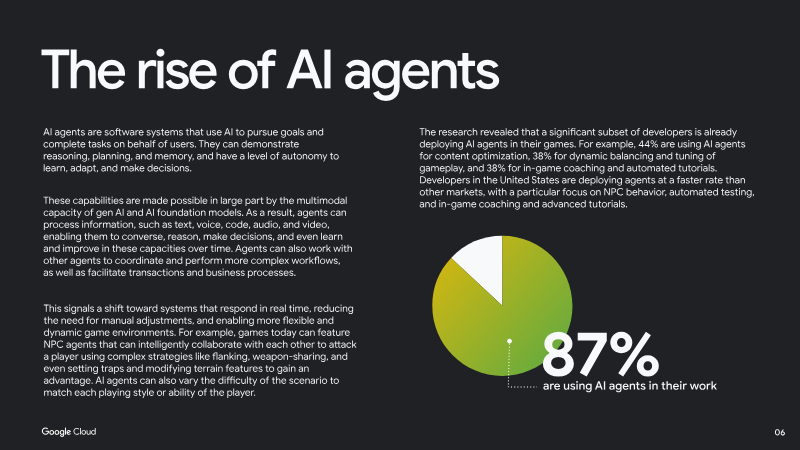
of failure as people do the kind of the initial land grab and the first mover Advantage I think where we'll be next year is is will be we'll have some examples of AI working really really well and we'll start getting a sense of what it can do and what it can't do um the stuff that I'm most involved with at the moment is in World AI so that's nap that's a generative chat and speech within games so that's going to be a storytelling tool but it's very very much just at all and a lot of the work that's going on there is is to look at how it can fit into existing processes existing pipelines this is not disruptive it's an additive technology and I think they're the things that will get adopted more quickly I absolutely agree I think we can save lots of time and effort um I think AI will take away the grunt work but we must be careful that that we still enable the creativity which is the human aspect of everything we do
yeah I think that uh uh a large a large way that it'll certainly uh help like the people who are best primed to take advantage of the tools are people who are already experts uh I think that you know people you know someone creating a scene a lot of instances of people creating art and professional artists coming in like oh this is compositionally wrong and this doesn't make sense and historically inaccurate well you have that expertise you can see that you it's a faster Aviation tool it's like uh photobashing when it first came on the on the scene uh which uh is a concept uh artist ideation tool of leveraging a bunch of existing images and warping them together and kind of making an image to kind of idiot and throw people throw things down on the page like critiqued a lot at first but It sped up a lot of uh being able to do a lot of vis-dev and whatnot see this is a another tool in that way from a visual standpoint and similarly from uh being able to to help shape learning like I've
used it in mentorship situations to kind of help uh come up with here's a bunch of resources like I was able to know that a bunch of them were accurate and then learned about a few others in that process and being able to like yes facts are a hard hard thing that you should always question and as an expert you can actually question those things and be able to like help broaden your own ability like effort is a gas that will fill the vacuum of the time right like render Farms a frame of a render is always going to take 45 minutes computers get faster throw more things so I'll just quickly say that um you know I I see this changing game development forever uh not in five years but like this year you're going to start to see some super interesting tools come out where you can you know take a a 2D image and create a full 3d environment with uh with object recognition you know being
able to move items around like full 3d meshes that you can dump into blender and manipulate um you'll be able to take characters and put them into a world where you can do animation prediction and visualize what your game might look like basically hallucinate what a game might look like and and go create it so um so developers should be really excited about this and embrace it use the tools use it as a way to enhance your workflow and not worry about it replacing your job that's not what it's intended to do I mean at the end of the day if you can use it to sort of like create World build and stuff like that and do most of the grunt work and ideate and that sort of thing it's it's fantastic awesome this is a great lead-in to a question that John gave us um where is AI going to make the biggest impact first kind of where do you expect the the first Major Impact these AI tools next year you know we just it's now commonplace what what area do you most see that coming
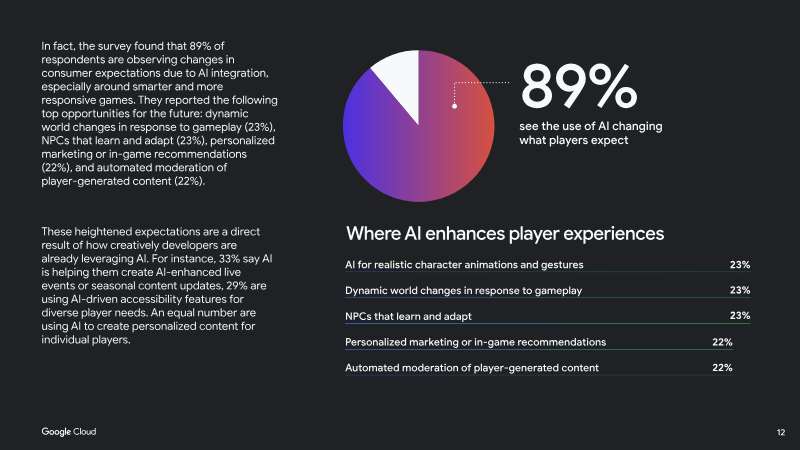
Zach referred to this earlier but I think it gets dealing with the creation of more content or games um because we can ideate faster because we can get assistance with editing because we can get assistance with texture creation Etc I think that that is going to empower smaller teams and even larger teams to just create more content ideate on that content quicker and so we will either see games which have more content to play through or games which have a higher uh detail and quality of that content they'll be richer and and have more things because if you give a game developer 10 million dollars they will use every penny of that if you give them a they'll use 15 million right right they're never going to ask for less money so it's it's just going to fill up more buckets with that 10 million dollars because they're able to create more and express more of what
they would like to have the player experience um I think uh I just want to just quickly remind everyone that AI is not new right there's quite a lot of AI tools out there I think what's happened is is uh you know two years ago if if I said to a journalist oh we're working with an AI company they grumply go back and they go we hate the word AI we're not writing about that it's machine learning but now we're okay call it AI it's good um I I think that the immediate thing will be what's what plugs in fastest to people's existing workflows right so I mean you guys know far better than me but how's Unity going to be approaching this stuff um level generation testing these tools are already there they're already got big data sets they already do some really really great work um so what I see through the companies we work with it's going to be that kind
of immediacy um I think there's an interesting crossover as well with uh entertainment and movies pre-vis previous stuff animated pre-vises much much easier to do there's lots of really interesting stuff going on that's come out with the visual effects world that I think we'll see more commonality between game development and other forms of entertainment because the tools are going to be looking at the same quality and the same as their outcome yeah absolutely uh I I think that uh again even just bootstrapping uh your own uh ability and development like I've used it to help me uh refine and develop um a script in a language that I'm not super familiar with and was able to like then uh learn about things that would like what's wrong with it iterate on it and kind of like do some things and you're like okay yeah I know I can help I can help shape that and I think that from both the language model itself is informed on all of the docs of all the
doxygens of all the band pages of like everything around so it also has you know vmability from anything from code bases uh to all the way uh to understanding about a story and Narrative of a lot of different uh cultures around the world being able to like inform yourself and edit what I like I think from a text-based uh basis like writing is kind of the foundation of an excessive amount of creative processes and it just has such a broad uh effect uh like many content creators uh constantly talking Paul Jarvis uh I can't remember his name from better ideas and uh abdal like the the most important thing that they talk about is their writing because that informs all of their contemplation a video editing podcast everything all stems for writing writing so uh well okay so so I I think um what's
what we're seeing just broadly um we're seeing companies like Nvidia becoming very powerful um GPU Computing is is uh is here to stay and you know people often complain about Bitcoin mining being bad for the environment wait until you see AI um and uh and and so that's like sort of one area it's going to affect you know broadly speaking um how we think about you know using green energy in these data centers and that sort of thing uh we're also going to see more creativity with just consumers so you know being able I think the big the biggest area that's going to get disrupted is like short films being able to create short films using you know pictures um and uh and small amounts of video uh and then um what that means for rights holders like if you look at what's happening with universal and other sort of Music companies and you know Disney uh that sort of thing right soldiers for for movies um they're starting to freak out
um they're freaking out because AI Drake actually sounds better than the real Drake's in some cases and uh and uh they they want to shut it down it's actually a really bad approach um it's sort of like the old Napster days where they just if they're afraid of something they want to go and use their lawyers to shut it down they're not going to be able to because it's all open source so what do you do and I think the industry needs to come around and find ways to partner with uh companies that are in the space and and work with them because this is the future and um quite honestly you know they're not going to be able to compete with Google meta Microsoft on building Foundation models they need to find companies that are that are in the weeds working on this stuff and partner with them now awesome all right I'm going to end with one last question for you all and then I'm going to open it to the audience um so we're going to give our audience some homework as an academic this is part of my job if you have one you know AI tool one article one thing that you
would say like go watch this go read this what would you recommend what is the thing that you would like send people to to check out after okay uh I happen to come across this recently I I believe it's an uh an article from a leaked Memo from Google uh called uh we have no remote uh and it basically is uh discussing about how uh you know all the AI researchers in Google are doing all this work to develop all these models and deal with the data sets and Google has had a massive mode like almost all of their other resources from their momentum and just everything that's available and basically the researchers talking about how uh if they aren't trying to engage with the public like Google has no moat in this space because of things like meta's leaked model and other kinds of data sets they're open source is able to pursue this kind of just freely there is nothing that is like a barrier uh uh like besides you
know massive amounts of tensor processing and and whatnot for for certain models obviously but as far as like continuing to develop these things they can be done on a broad and minor scale so I have that source uh I'm not remotely academic so I can't come up with anything as clever as that um I I would uh say to people to go and check out some of the presentations who are at GDC recently there are some really really good ones on AI there was a really interesting one about just pointing out the inherent bias in the uh in the data models um there was a great example where they put some prompts in to come up with uh characters um and the characters were all sort of generic white uh you know Western character models despite the prompts have having no no indication of that in and it was just a great very blunt illustration that that you know we're
dealing with a large data model that's not particularly well understood yet and and the outcomes from that need to be worked through so I I'd just go and look at what people in the industry are talking about GDC is a great result resource for that there's a really good Roundup of that stuff in Forbes I think recently uh I think sort of another aspect that you can do and I recommend investigating so the game I'm working on right now is based on fairy tales and folklore from around the world really actually very hard to research fairy tales and folklore from around the world so I would recommend just like using chat Chief D or whatever your favorite generic language interaction AI is and ask it about a culture or area that you're not even very familiar with and about like lore or history or something else there and use that as a seed to then take into your own exploration of materials because that's something I've found
really really enlightening it's enabled me to do research that I've never been able to do effectively before because it gives me a lots of great ideas for these amazing folklore and Fairy Tales stories that I would spend days at a library to even like try to find a sentence about so I guess uh I I I I I don't like to come up and sort of promote you know what I'm doing but but in this case I think it's kind of important um again a few months you're going to see a uh if you haven't heard of a reverend Labs today you will um probably like July August time frame we're releasing a New Foundation model that lets you create short films using pictures and uh it's it's a beautiful interface and we're also going to create an API to let any developer develop on it um and I think what we're building is going to change game development for forever so yeah I'll finish this off on this one um I have a million and I can throw at you uh the short story Mana is amazing
but what I would actually recommend uh I think if you just Google donkey space uh Frank Lance recently started a Blog and he's you know I've done a lot of great GDC talks and stuff in the past and he's dealing with specifically the issue of AI and then there's also another one Robin Sloan writing on a genre which is a great one because Robin started working with GPT back in the 2 era and was really much promoting the idea that the weird the kind of bad stuff is the good stuff like that's what we want like to Renee's example the times that it probably goes off script on the folklore can be the most interesting places to explore so we solve the problems and get it perfectly accurate and then it's not as fun for us as game devs so all right so we're going to open up the questions we can have one okay because otherwise we're not gonna have time for lunch sorry yeah I guess I better make it good um so um I come from a theater and film background and one of the things I've
noticed is the more formulaic and committee written something gets the more generic and unexciting the show or movie gets um with the what you meant with the learning models with AI and everything are you concerned about the quality of the content that will come out of it because I mean uh to speak to you mentioned you tried to write a poem and then gave it to chat GPT to improve upon but my opinion as a Creator would be like your poem was going to be better than Chachi BT ever could have been so I guess are you seeing the quality curve going to start to flatten maybe go down a little bit without the risks or do you think the learning is going like how do you see that happening Rahul you mind if I open for this one I just have a quick another read suggestion on that someone did a great article on Star Trek food synthesizers and why everybody complained about them because they're essentially MREs right they're the average synthesized version of any recipe so I just want to say the foundation models are only getting smarter um so like they're not going to get Dumber um they're they're only improving uh like for us it takes 29 days to do one
round of training every 29 days this thing gets smarter and better um and there's no cap to it so I I think over time it's just going to be insanely good I think that if you said hey Chachi t write me a poem you get something generic if you say hey I need an improvement of this poem with these interesting qualities based on these characters some from folklore some that I'm going to provide you a background on it does a really good job of taking that interesting seed and working with that without making it generic like the more generic your prompt is the more generic the information you have is and you know as as noted this is why you need to have like experts interacting with it because we know like what uh what a good art piece looks like or we know what a good story and interesting characters are and then it is a tool that helps enhance and improve uh iteration versus being the
thing that's being creative like like yes AI right now is not particularly good at being creative but if you give it creative seeds then it can help you grow and improve those quickly I I agree with you because I this is what I most struggle with personally I mean you know I'm in a profession which is 99 writing and communication and everyone's telling me that ai's gonna sort of fundamentally change the way I work and every every time I see a piece of uh chat GPT writing I think it's terrible so I I have an arts background myself um for me art is the is the moment of creation of something original it's not iteration uh and I think at the moment we're obsessed with iteration um so I don't I I personally I and I could be completely wrong okay but I I see this stuff bedding down into becoming usable and useful and have utility and that is not the essence of
creation right because because if we if we were thinking about AI in that sense you could go to any art gallery and most of that stuff would never happen because lots of it is brilliant in the thought process and terrible in the in the application you know there's a difference between creatively inspiring and technically brilliant so you know I I don't see it changing now I think the human context will always be key my job is really easy to do if you know how to do it but I you know you can either do it or you can't you either get context and communication and everything that goes with it or you don't so I I think that the two things will remain separate but it will become an integral tool to be able to use it well uh I briefly I would uh uh maybe push back a little bit myself that iteration isn't a part of creativity Leonard Cohen worked on hallelujah hallelujah for decades and couldn't get it right until
someone covered it and became the the Hallelujah so I think it's an integral part myself but I can understand uh to to more directly uh uh talk about like what impacting the creative process a few months ago uh people would have thought like using AI uh uh for for a text generation it was like a little a little a little laughable like there were some certainly like good promising results but not as soon as like what like one week after the that open usage for for chat GPD popped out uh Hank Green from the vlogbrothers released a video where it's just immediately everyone's mind was blown and this is wow you know like they're just really like this is this is nuts and then immediately it was like oh well it's not that good and you know but it's Leaps and Bounds from everything that had been even prior to that point and suddenly it's just now in the Zeitgeist and the kinds of rapid iterations and
improvements that were that we're seeing it's like well but it's it's just kind of a boring story whereas before it's like the Eliza chat bot where it's just like this thing doesn't understand anything and so what is it going to be the next rapid cool thank you all for joining us thanks our panelists for for hanging out with us and uh hope to see you all around thank you very much [Music] [Applause] foreign
Summary
Generative AI is poised to fundamentally transform game development by functioning as a sophisticated assistant that accelerates production and enhances creative iteration. By automating repetitive tasks such as marketing copy generation and streamlining the creation of complex assets, these tools allow developers to focus on higher-level design and innovation. Rather than replacing human originality, the technology serves as a catalyst for richer, more detailed content, enabling teams to iterate rapidly and explore new gameplay mechanics, such as the implementation of more intelligent, responsive non-player characters.
The industry is currently transitioning from broad, experimental adoption toward the integration of specialized, additive tools within existing production pipelines. While the potential for efficiency gains is significant, this shift is tempered by critical challenges, including the lack of clear regulatory frameworks, ongoing debates surrounding copyright ownership of AI-generated assets, and the risk of producing generic output. Furthermore, developers must navigate issues related to inherent model biases and the necessity of maintaining human context to ensure that AI-driven processes do not stifle the creative essence that defines high-quality gaming experiences.
Looking ahead, the successful implementation of generative AI depends on the industry’s ability to adapt to rapid advancements in open-source foundation models. The consensus among experts is that human expertise remains the essential anchor for the creative process. As these technologies evolve, they will likely become standard utilities for professionals, provided that developers prioritize thoughtful integration over wholesale disruption. By viewing AI as a partner in the creative workflow, the industry can leverage these advancements to push the boundaries of content creation while maintaining the integrity and unique vision of human-led game design.

















Comments