Advertising reports and market data
Documents
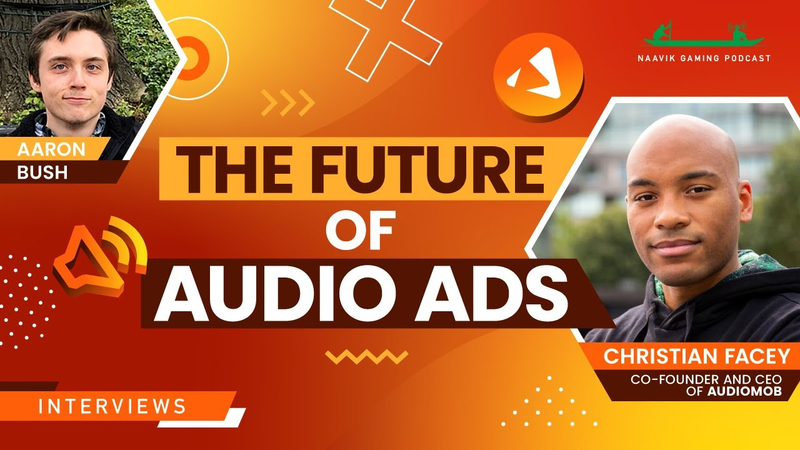
Christian Facey: The Future of In-Game Audio Ads - Naavik Gaming Podcast
In-game audio advertising represents a transformative shift in mobile monetization, offering a non-intrusive alternative to traditional video formats that frequently disrupt player immersion.
- In-game audio advertising serves as a non-intrusive monetization alternative that preserves player immersion by embedding ads into natural game environments like virtual car radios.
- The model utilizes proprietary verification systems to monitor device audio states, ensuring ads are only delivered when volume levels are sufficient for listener engagement.
- Audio advertising is resilient to privacy regulations like Apple’s App Tracking Transparency because it relies on contextual targeting rather than personal data collection.

From Hyper to Hybrid: 2023 Follow-up
The mobile gaming landscape experienced a notable shift in monetization and user acquisition patterns between 2022 and the first half of 2023.
- In-app purchase (IAP) activity grew significantly between 2022 and H1 2023, with revenue increasing by 23% on Android and 24% on Apple platforms.
- On iOS, the United Kingdom, Canada, and Germany have displaced China and Saudi Arabia in the top five markets for installs, signaling a pivot toward Western regions.
- Google Ads became the top-performing network for Android installs in H1 2023, while AppLovin reclaimed the leading position for iOS installs.
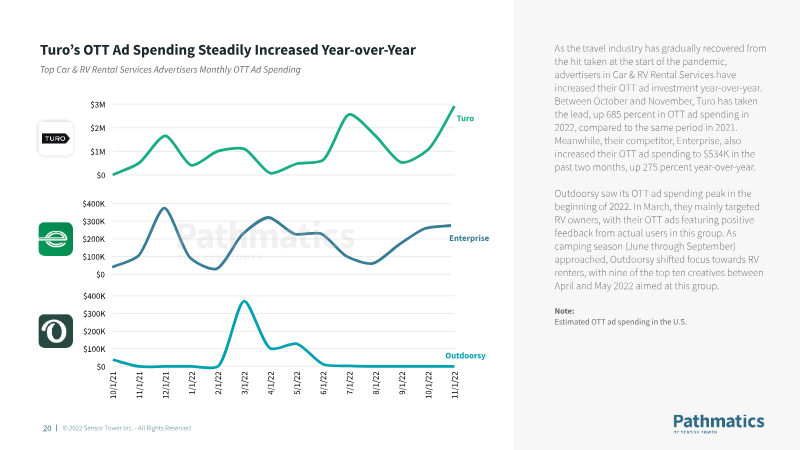

The State of OTT Advertising in the U.S.: An Analysis of OTT Ad Spending Trends and Top Advertisers
Over the course of late 2021 through 2022, the United States Over-the-Top (OTT) advertising market solidified its position as a critical component of the digital landscape, averaging $3.26 billion in quarterly expenditures.
- The U.S. OTT advertising market reached a mature state between late 2021 and 2022, averaging $3.26 billion in quarterly spend and accounting for nearly 15% of total digital advertising investment.
- Consumer Packaged Goods replaced Financial Services as the leading spending category by mid-2022, while the automotive industry increased its OTT ad spend by 74% year-over-year.
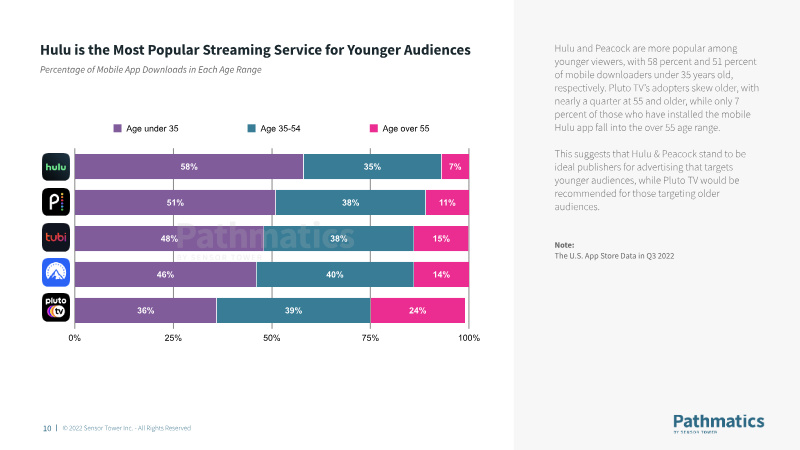
- Tubi emerged as the fastest-growing publisher with a 37% increase in ad revenue, while Hulu and Peacock remain the dominant platforms for reaching viewers under the age of 35.

Mobile Ad Creative Index
The mobile advertising landscape in 2023 is defined by a strategic shift toward high-performing creative formats as advertisers navigate macroeconomic pressures and evolving privacy regulations.
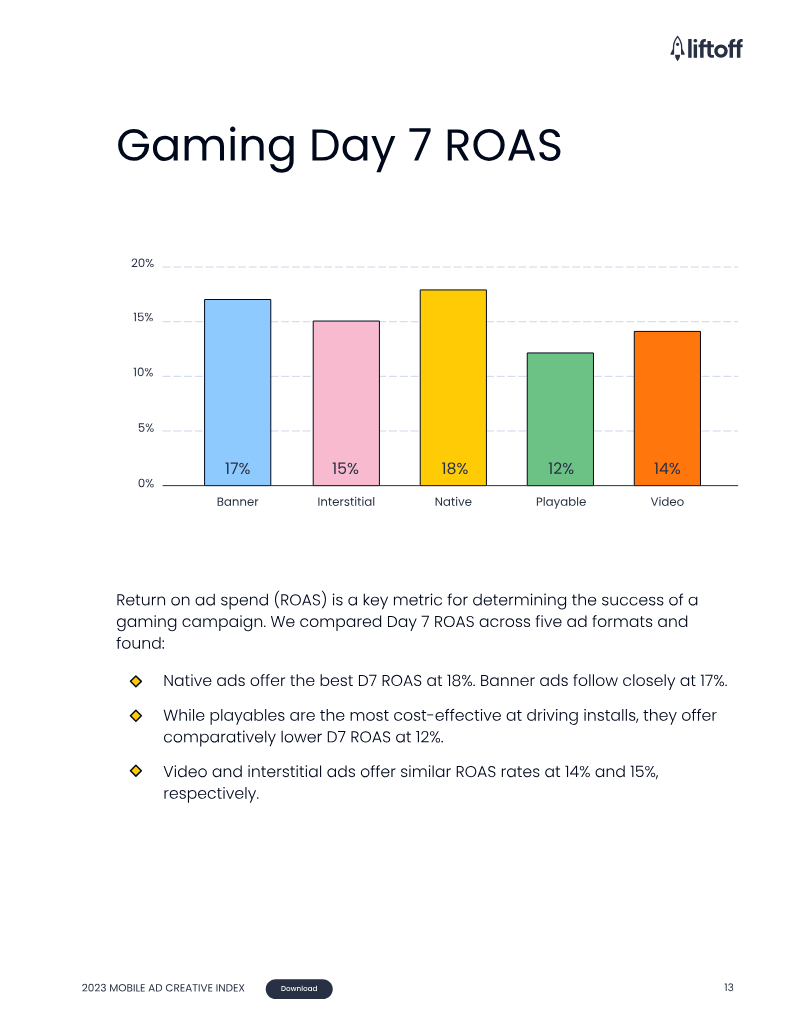
- Native ads are the most cost-effective format for gaming, achieving a $1.01 cost-per-install and an 18% Day 7 return on ad spend.
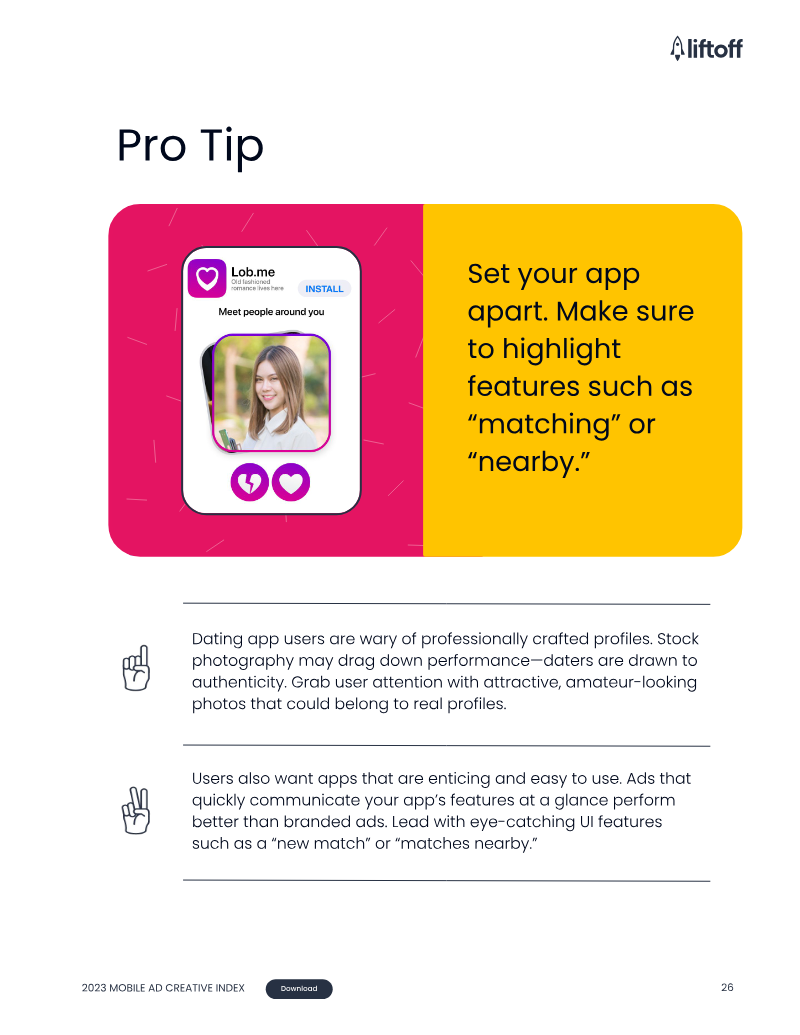
- Interstitial and video formats drive superior short-term performance for social and dating apps, yielding up to 44% Day 7 return on ad spend.
- Video ad segments ranging from 31 to 60 seconds drive 50% higher conversions compared to shorter formats by effectively showcasing complex mechanics.

In-Game Advertising Report 2023
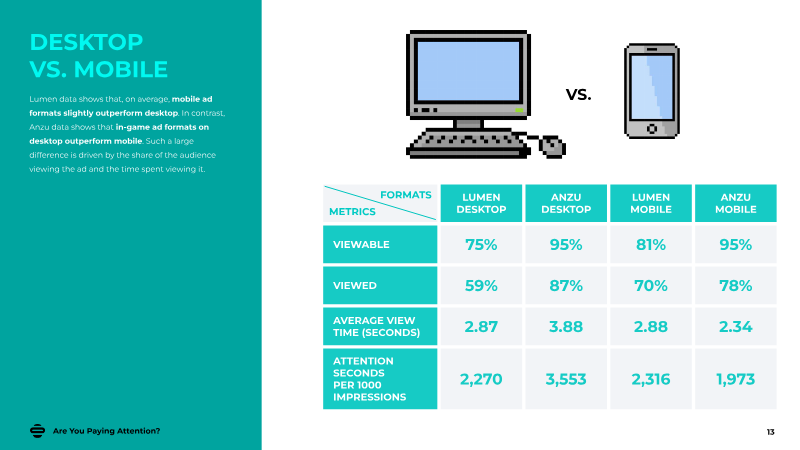
This analysis examines the efficacy of intrinsic in-game advertising as a high-engagement medium compared to traditional digital channels.
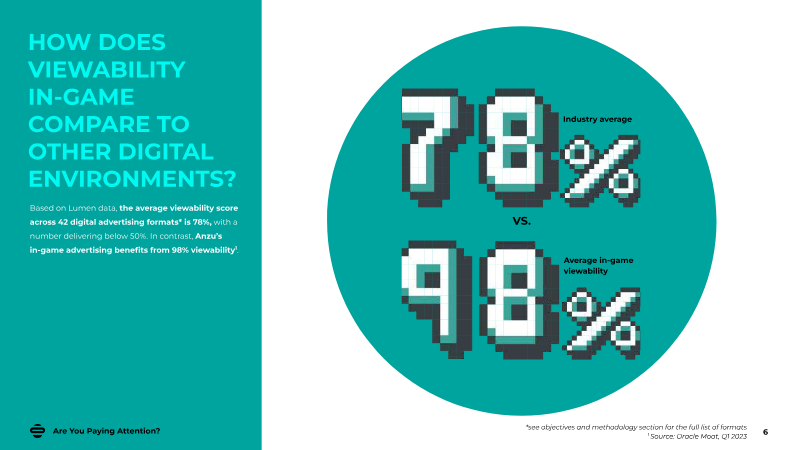
- In-game advertising achieves a 98% viewability rate, significantly outperforming the 78% average observed across standard digital advertising formats.
- Gaming environments generate 2,795 attentive seconds per 1,000 impressions, representing a 22% higher attention level than the average for other digital media.
- 85% of in-game ad impressions are actively viewed by players, compared to a 65% norm for traditional digital channels.

Q1 2023 Insights into Global Mobile Game Marketing Trends
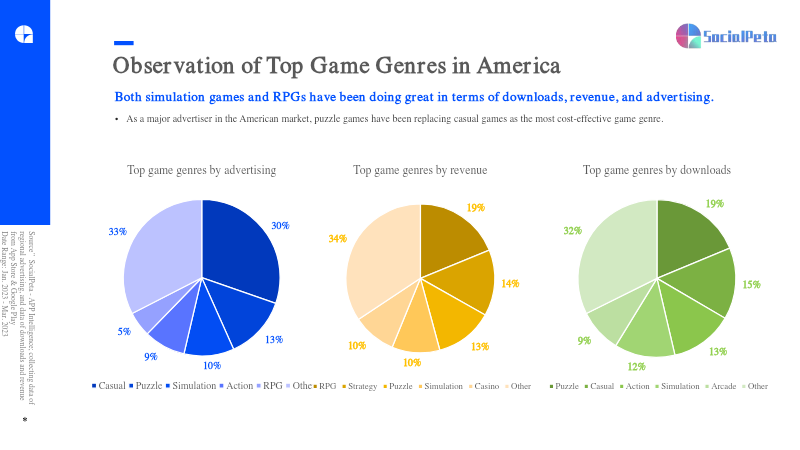
The global mobile game marketing landscape in early 2023 is characterized by a strategic pivot toward high-quality video content and localized engagement strategies.
- Mobile game advertisers are shifting from quantity to quality, evidenced by a 15% increase in active advertisers to over 160,000 alongside a 16% decline in new creative asset volume.
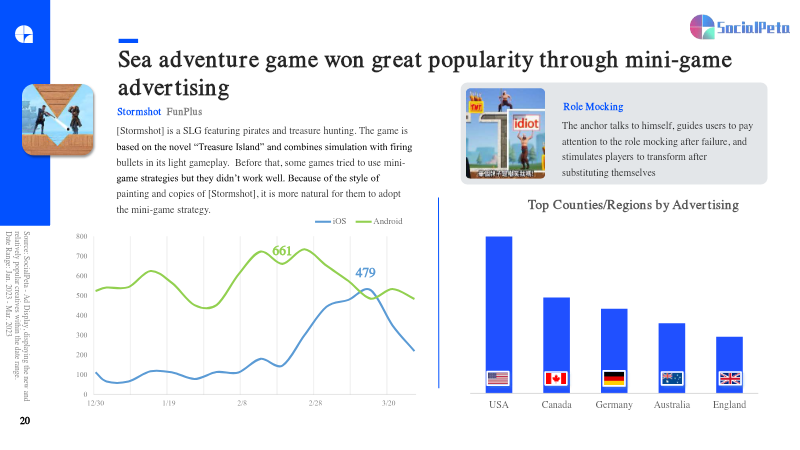
- Video content now dominates the advertising landscape, accounting for over 80% of all ad creatives and frequently utilizing playable mechanics or 'deliberate failure' tropes to improve engagement.
- Android remains the dominant advertising platform, capturing nearly 70% of total global ad volume.

Insights into Marketing Trends of Global Mobile Apps
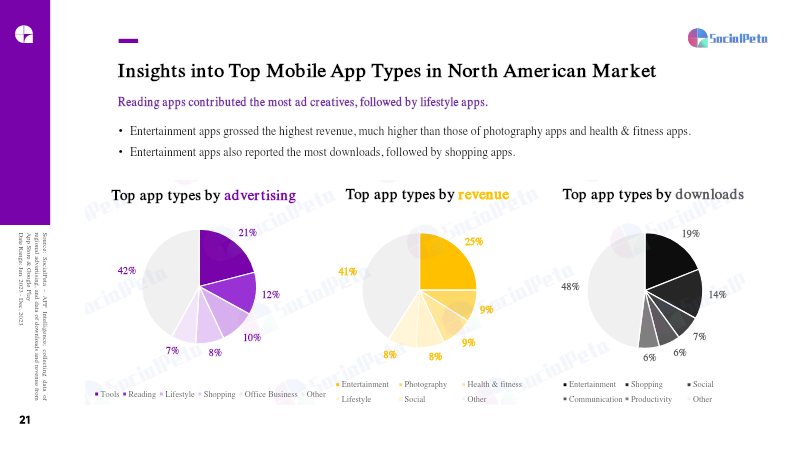
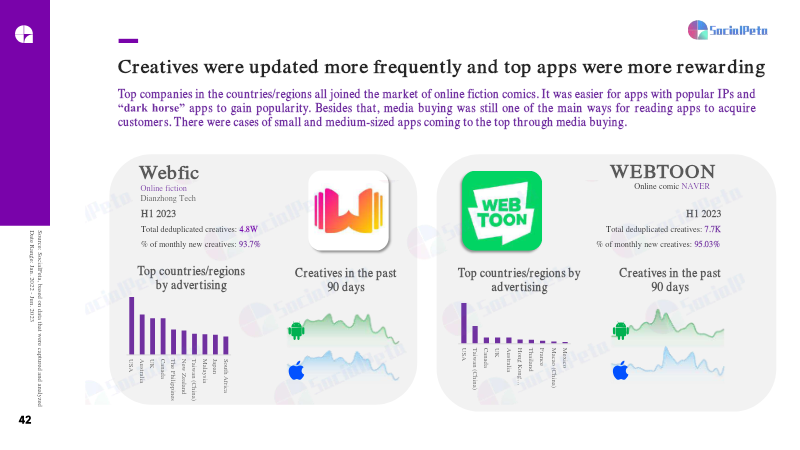
The global mobile app marketing landscape in the first half of 2023 was defined by intense competition and a decisive shift toward dynamic content.
- Video content now accounts for 45% of global ad impressions, reaching up to 72% in the Middle East, as traditional static image performance continues to decline.
- AI-integrated tool apps experienced over 100% year-over-year advertiser growth across all tracked regions in the first half of 2023.
- Android remains the dominant marketing platform, accounting for over 70% of the total creatives launched by the 170,000 active advertisers.

Rapporto sugli Esports in Italia 2022
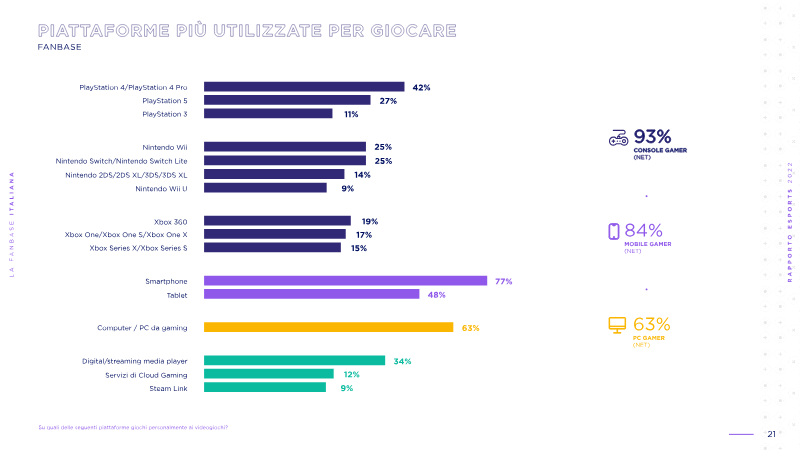
The Italian esports landscape is undergoing a period of structural consolidation, characterized by a dedicated fanbase of 1.62 million individuals aged 16 to 40.
- The Italian esports market comprises 1.62 million fans aged 16 to 40, with an average age of 27 and a socio-economic profile higher than the national average.
- Twitch is the dominant consumption platform, having recorded a 60 percent year-over-year increase in hours watched.
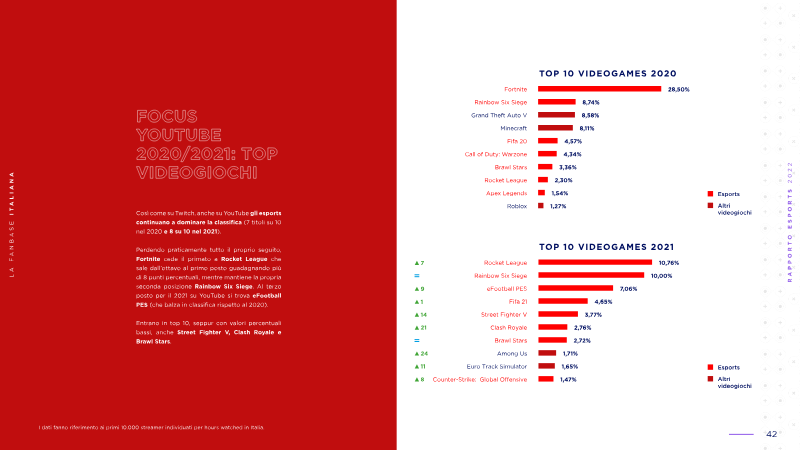
- The market has shifted from the dominance of single titles like Fortnite toward a more fragmented landscape led by competitive games such as Call of Duty: Warzone and Rocket League.
How does SKAdNetwork 4.0 work? Q&A with Tenjin’s product manager
SKAdNetwork 4.0 represents a significant evolution in Apple’s privacy-centric mobile attribution framework, introducing several structural changes designed to provide advertisers with more granular data while maintaining user anonymity.
- SKAdNetwork 4.0 introduces three distinct postback windows at two, seven, and 35 days post-install to enable measurement of long-term user engagement.
- The framework utilizes a hierarchical crowd anonymity system with four tiers that determine the level of data granularity provided based on install volume.
- Advertisers now receive both fine-grained and coarse-grained conversion values, with the latter providing low, medium, or high signals for campaigns with lower install volumes.
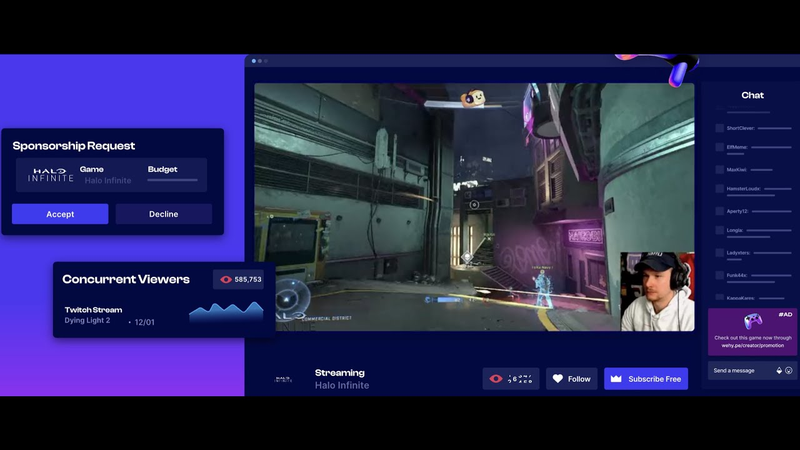
Kress’s Corner #1 Is influencer marketing hype or reality?
Influencer marketing has transitioned from a peripheral awareness tactic into a core pillar of game industry user acquisition.
- Influencer marketing has shifted from a brand awareness tactic to a core performance channel, necessitated by the decline of traditional performance marketing effectiveness following Apple’s IDFA privacy changes.
- Publishers can now treat creator partnerships as measurable performance channels by integrating mobile measurement partners to correlate social share of voice with active player counts, ROAS, and CPI.
- Niche clusters of smaller creators often outperform high-profile influencers in conversion rates and cost-efficiency due to their deeper audience intimacy and engagement.

Panel: Ad Creative Testing for UA – A Look Into the Future
The evolution of user acquisition strategy centers on a transition from speculative creative production to a rigorous, data-driven methodology.
- Authentic content, such as genuine gameplay footage, failed-level scenarios, and voiceovers, consistently outperforms traditional tactics like exaggerated claims or human reaction shots.
- Privacy constraints on iOS have shifted the industry standard toward using Android-based campaigns as the primary foundation for cross-platform user acquisition strategies.
- Teams must move away from manual, fragmented tracking by adopting automated A/B testing tools and standardized data reporting across mobile measurement partners and ad networks.
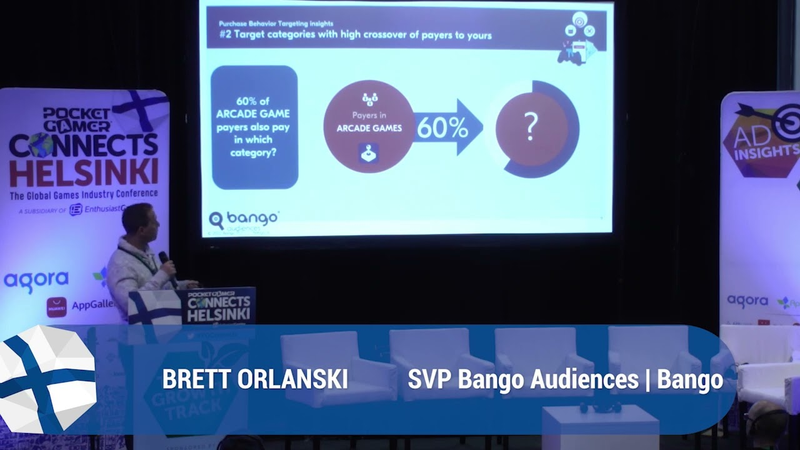
Keynote: Purchase Behaviour Targeting Insights To Scale IAPs in the Age of the App-ocalypse.
The mobile app industry faces significant challenges in user acquisition and monetization due to privacy-centric changes, such as the deprecation of IDFA and increased regulatory scrutiny.
- Purchase behavior targeting serves as a privacy-compliant alternative to IDFA-based tracking by using anonymized transaction data to identify high-value payers without individual user identification.
- Developers can achieve high-precision targeting by moving beyond broad genres to focus on granular sub-niches, such as specific types of casino or blockchain games.
- Cross-category targeting is highly effective, evidenced by a 72% correlation between payers in interactive story games and those in puzzle games.