Advertising reports and market data
Documents

Targeting isn't being used enough in gaming | Ofir Pasternak from Persona.ly
The mobile gaming user acquisition landscape is currently defined by a shift toward contextual targeting and retargeting as the industry adapts to privacy-centric changes like Apple’s App Tracking Transparency (ATT).
- Retargeting is significantly underutilized in gaming compared to e-commerce, offering a cost-effective way to improve return on ad spend (ROAS) by segmenting users based on purchase frequency and activity history.
- Demand-side platforms (DSPs) are compensating for the loss of user-level signals post-ATT by utilizing machine learning models that process millions of auctions per second across 60 distinct data dimensions.
- The current privacy-centric landscape has lowered market prices for ad inventory, creating a strategic opportunity for advertisers who effectively leverage contextual targeting features.
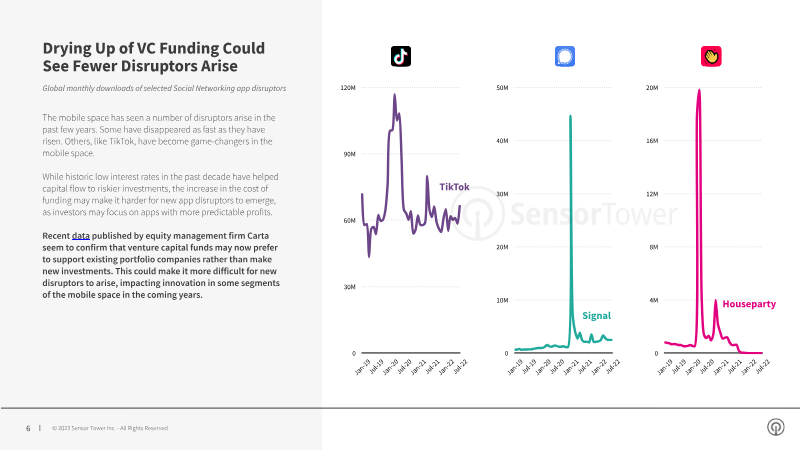

The Mobile Economy and Digital Ad Space in 2022 and Beyond: An Analysis of the Global Trends Shaping the Mobile and Digital Advertising Industry
This analysis examines the global mobile economy and digital advertising landscape throughout 2022 and into early 2023, utilizing proprietary market intelligence data from the App Store and Google Play.
- Global consumer spending on mobile games declined for the first time in 2022, falling to $79 billion, with Android devices experiencing a 7 percent revenue drop.
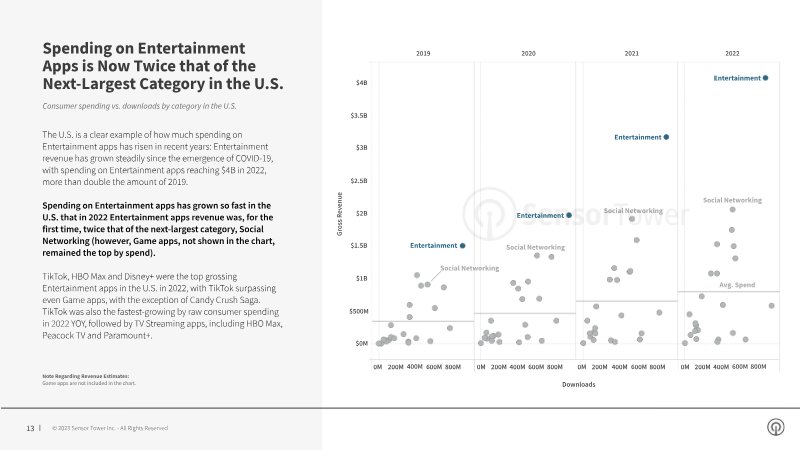
- Entertainment apps have overtaken gaming as a primary revenue engine, with U.S. spending on entertainment doubling since 2019 and apps like TikTok, HBO Max, and Disney+ reaching record highs.
- Digital advertising reached $28 billion in North America and major European markets in Q4 2022, with TikTok emerging as the fastest-growing channel via a 60 percent quarterly increase in U.S. ad spend.

Serving ads that users want | Hajar Noreddine from Adjoe
Adjoe specializes in innovative ad tech solutions, focusing on user acquisition and monetization through time-based rewarded advertising.
- Integrating rewarded ad units can generate over 50% in incremental revenue for mobile developers, reducing reliance on in-app purchases alone.
- Demand-side partners utilizing machine learning-driven targeting through the Playtime platform have achieved a 30% increase in return on ad spend (ROAS).
- User sentiment toward rewarded advertising is highly positive, with 76% of UK users and 56% of US users expressing satisfaction with relevant ads in mobile games.

Why Trust & Transparency are Crucial to Your Ad Monetisation Strategy - Maggie Mesa, Chartboost.
The current mobile advertising landscape is characterized by a lack of transparency within mediation platforms, which often function as opaque "black boxes."
- Developers must prioritize neutral mediation platforms that eliminate 'black box' auction mechanics to ensure fair competition among all demand sources.
- Adopting a unified auction model with in-app bidding and open real-time bidding (RTB) signals is essential for maximizing eCPM and ARPU.
- Transparency in the supply path is a critical performance driver, as evidenced by successful migrations of major titles like Empires and Puzzles and Words with Friends to neutral platforms.

Keynote: WTF Is AQI Ad Quality Index - Kim Grewal, Digital Turbine.
The Ad Quality Index (AQI) serves as a critical metric for mobile game developers to evaluate how advertising experiences influence player retention and long-term revenue.
- The Ad Quality Index (AQI) is calculated by dividing the number of users who exit a game during or immediately after an ad by the total number of users exposed to that ad.
- Developers can isolate financial losses caused by poor ad quality by comparing the ARPDAU of user cohorts before and after exposure to specific ad networks.
- High fill rates and eCPMs often mask hidden revenue losses caused by user attrition, making AQI a necessary metric to balance short-term gains with long-term retention.

Keynote: The Sound of Incremental Revenue: Why Audio ads are What’s Next in Ad Mon,
The integration of in-game audio advertising represents a significant shift in mobile game monetization, offering developers a method to generate incremental revenue without disrupting the user experience.
- In-game audio advertising provides a non-intrusive revenue stream that complements existing ad stacks, directly increasing lifetime value and average revenue per daily active user (ARPDAU).
- Mobile gaming captures high-engagement audiences during the 5:00 PM to 9:00 PM window, a period when traditional audio channels like radio and streaming experience a decline in activity.
- Over 600 global brands across sectors including retail, telecommunications, and consumer goods have already deployed campaigns using in-game audio formats.

Power Up Performance – How To Maximise Performance in a Privacy-First Advertising Landscape.
In a landscape defined by privacy-first regulations and the decline of user-level data, mobile game developers must shift their strategies to maintain growth and performance.
- Creative diversification is a critical performance driver, with data showing a 32 percent performance lift when assets are effectively differentiated and iterated to prevent fatigue.
- Developers must shift from granular, user-level attribution to a holistic framework that integrates automation, measurement accuracy, conversion schema optimization, and creative diversification.
- Automation tools like Meta’s Advantage Plus app campaigns are essential for optimizing ad placement across platforms while reducing manual operational effort.
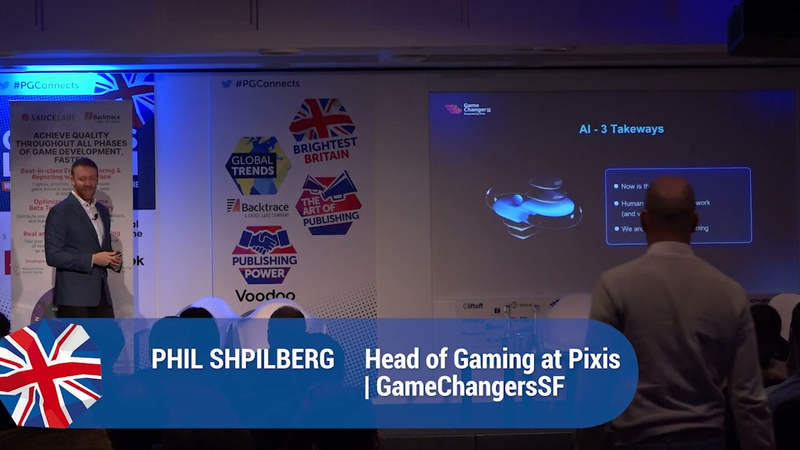
User Acquisition AI, Past, Present, & Future - PHIL SHPILBER of GameChangersSF
The integration of artificial intelligence into user acquisition (UA) represents a fundamental shift in the gaming industry, moving from human-led, rules-based management to automated, data-driven optimization.
- AI-driven user acquisition systems consistently deliver a 20% to 80% improvement in return on ad spend (ROAS) compared to traditional human-managed campaigns.
- Automated systems can process 1.5 million data points and execute 2,000 actions per month, replacing approximately 400 hours of manual human labor.
- The current UA landscape is divided into three modules: mature governance AI for bid and budget management, behavioral-based targeting AI, and evolving creative AI for automated ad testing.

Panel: The Ultimate Growth Hack: The Smart Approach to Paid & Organic User Acquisition Campaigns
Sustainable user acquisition in the modern mobile landscape requires a strategic shift away from reliance on traditional, high-cost platform advertising toward diversified, ecosystem-based growth models.
- Diversifying beyond traditional platform advertising is necessary to combat rising acquisition costs and privacy-driven data limitations.
- Carrier-led acquisition during device activation can achieve conversion rates of 6–8% by capturing users at the point of hardware setup.
- Peer-to-peer sharing and organic user-to-user recommendations account for up to one-third of daily application installs in emerging markets.

What’s in store for hyper-casual games in 2023? Live reaction to benchmark report from Q4 2022
This analysis examines the hyper-casual gaming landscape in the fourth quarter of 2022, focusing on shifts in advertising spend, cost-per-install (CPI) metrics, and user retention.
- The hyper-casual market is shifting toward a hybrid-casual model, where the primary value for new developers is mastering the full development and monetization cycle rather than achieving immediate commercial success.
- Only a small percentage of hyper-casual prototypes currently meet the Day 1 and Day 7 retention thresholds required to scale profitably.
- While global CPIs trended upward in Q4 2022 due to seasonal competition, the United States market saw a counterintuitive decrease in median CPI, with tier-one European markets driving the global increase.

Position Paper: Public Consultation for the Fitness Check of EU Consumer Law on Digital Fairness
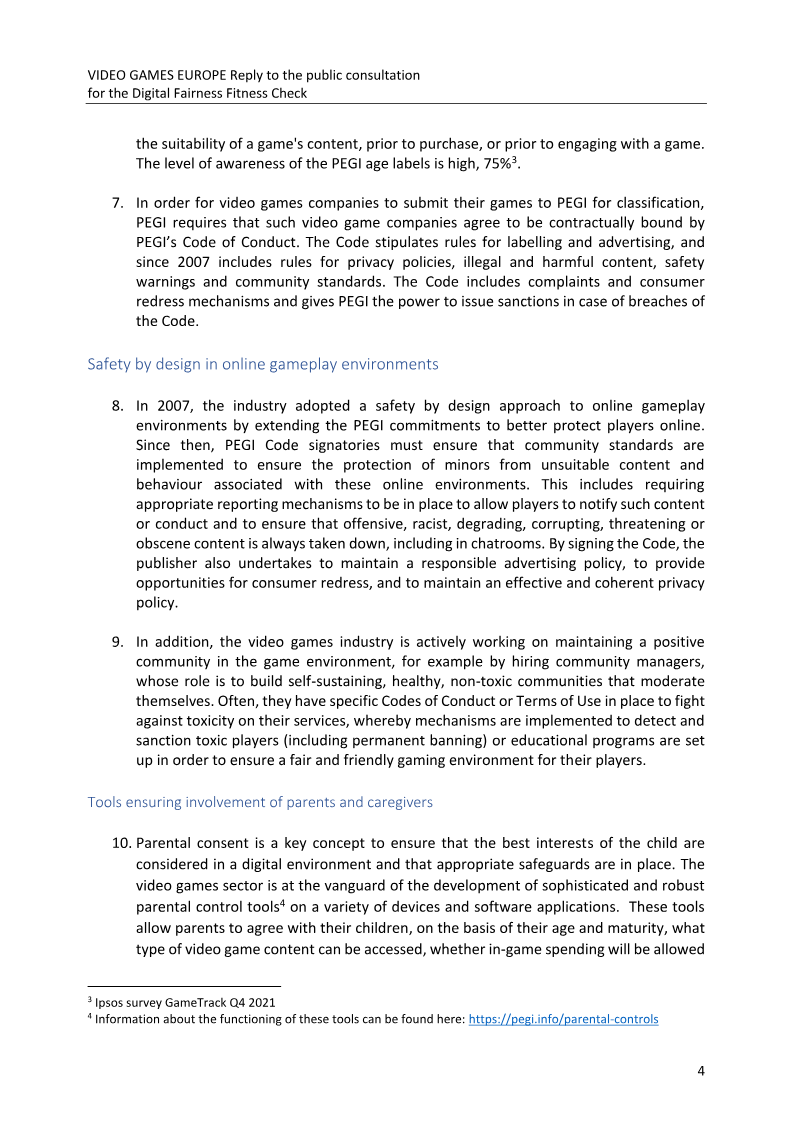
The analysis contends that the existing EU consumer-protection framework is already adequate for ensuring digital fairness in the video-game sector and should be fully deployed before any new legislation is considered.
- The existing EU consumer-protection framework is sufficient for ensuring digital fairness in the video-game sector, and no new legislation should be introduced until current powers are fully utilized.
- The industry’s self-regulatory PEGI system is a core component of the current framework, currently maintaining approximately 75% consumer awareness regarding age-appropriate ratings.
- Existing EU regulations already effectively prohibit manipulative commercial practices such as bait-and-switch tactics and false testimonials within the gaming market.

Trailmix’s Philippa Layburn on Identifying Winning Creatives
The modern landscape of mobile game user acquisition necessitates a departure from traditional performance metrics like cost-per-install and installs-per-mille in favor of granular attention-based data.
- Prioritize the 'hook rate'—the ratio of three-second video views to total impressions—as the primary metric to objectively evaluate the effectiveness of an advertisement’s opening moments.
- Move away from traditional performance metrics like cost-per-install (CPI) and installs-per-mille (IPM) in favor of granular, attention-based data to break through stagnant testing cycles.
- Integrate user acquisition as a fundamental pillar of the game development lifecycle rather than treating it as a siloed marketing function to ensure marketing efforts align with the core player experience.