Advertising reports and market data
Documents
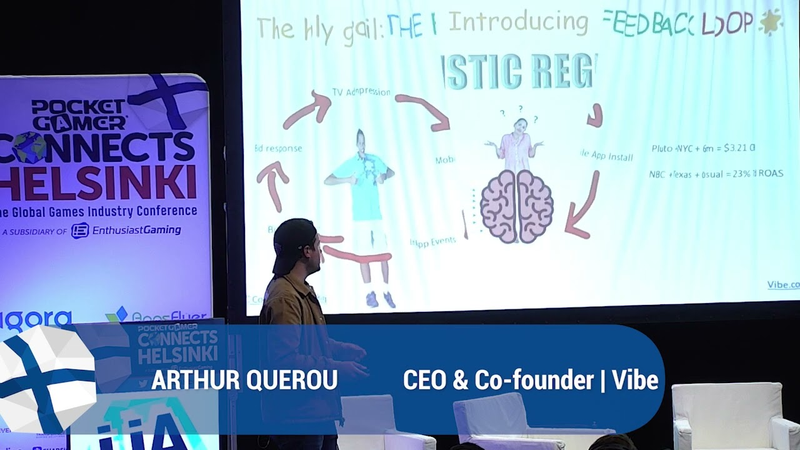
CTV…the Next Big Thing in UA - ARTHUR QUEROU, Vibe
Connected Television (CTV) is emerging as a significant channel for user acquisition (UA), shifting the paradigm of TV advertising from a branding-only tool to a measurable, performance-driven medium.
- Connected Television (CTV) has transitioned from a branding-only tool to a measurable, performance-driven user acquisition channel by utilizing deterministic measurement and household-level targeting.
- Advertisers can link ad exposure to app installs by using static IP addresses to track users on home Wi-Fi networks, allowing for precise audience profiling and re-engagement.
- Attribution is primarily driven by organic search behavior following ad exposure, with Mobile Measurement Partners (MMPs) tracking the user journey from the initial impression to the app store install.

Panel: Are We Over IDFA Tips & Methods To Rebuild Your Data
The mobile gaming industry has undergone a fundamental transformation following the 2021 deprecation of the Identifier for Advertisers (IDFA), necessitating a departure from granular, user-level tracking toward more sophisticated, privacy-centric methodologies.
- The 2021 deprecation of IDFA has forced a shift from deterministic, user-level tracking to privacy-centric methodologies like predictive modeling and cohort-based analysis.
- Developers must prioritize first-party in-app event data to project lifetime value and return on ad spend while remaining compliant with regulations like the UK’s Age-Appropriate Design Code.
- Successful growth strategies now require a cross-functional alignment between data science, product development, and user acquisition teams to interpret anonymized telemetry.
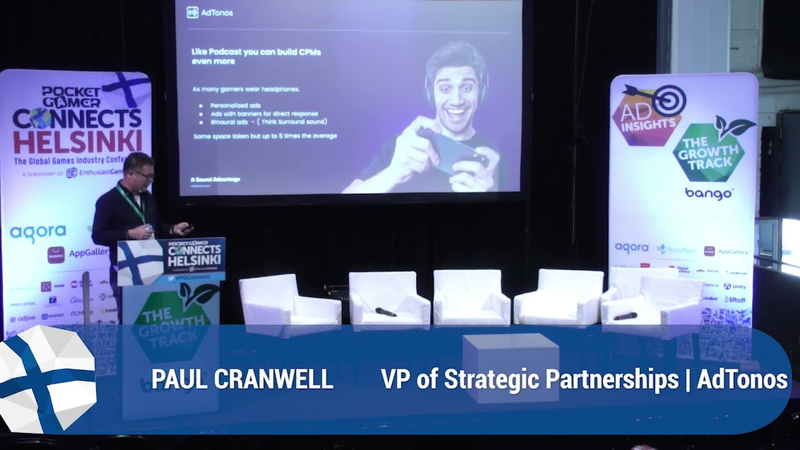
How Can Publishers & Developers Maximise Audio Ad Revenues - PAUL CRANWELL
Audio advertising represents a significant, underutilized revenue stream for mobile game developers and publishers, offering a non-intrusive alternative to traditional video and display formats.
- Audio ads offer a non-intrusive monetization alternative that improves retention, with research showing gamers have 36% to 39% higher memory recall for audio compared to video ads.
- Approximately 61% of mobile gamers listen to music while playing, creating a natural, high-engagement environment for audio-based advertising.
- Developers can increase CPM rates by shifting from internal reward-based ad loops to high-quality, third-party brand integrations.

Audio is the New Video - MUNIB TAHIR, AudioMob
Audio advertising is emerging as a non-intrusive, user-centric alternative to traditional video interstitials in mobile gaming.
- Audio advertising serves as a non-intrusive revenue stream that allows mobile gamers to continue playing while ads run in the background.
- 61% of players aged 18 to 24 listen to external audio while gaming, providing a significant target demographic for this format.
- Rewarded audio, which offers in-game benefits for listening, consistently generates the highest listen-through rates and user engagement.
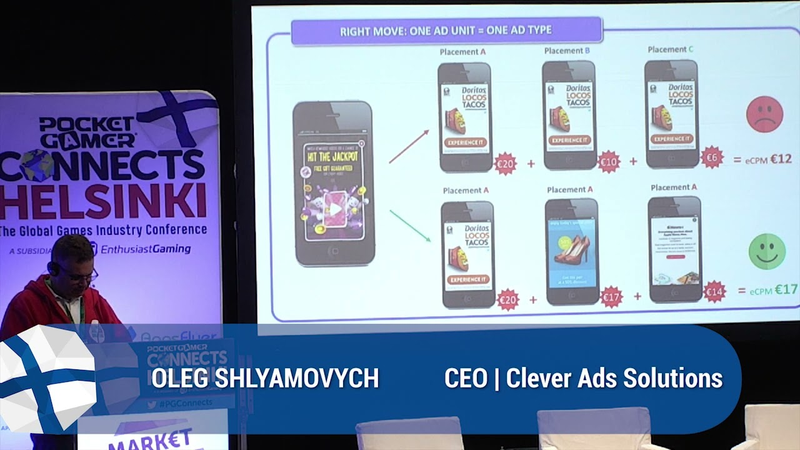
Mobile Ads Monetisation: Stop Shooting Yourself in the Foot
Effective mobile ad monetization requires a strategic balance between internal game design and external revenue management.
- Prioritize Average Daily Revenue per Active User (ADRPU) over isolated metrics like eCPM or fill rates to ensure a holistic view of monetization performance.
- Mitigate eCPM decay by limiting daily impressions per user and diversifying ad networks to prevent revenue drop-offs after consecutive ad views.
- Conduct A/B testing on monetization changes using staged rollouts of at least 2,000 users, focusing on long-term Lifetime Value (LTV) rather than short-term gains.



Mobile Game Marketing: Insights & Trends of Popular Game Genres Q3 2022
The analysis examines mobile-game marketing dynamics during the third quarter of 2022, concentrating on the performance of leading genres and the geographic distribution of traffic and revenue.
- The United States remains the dominant revenue driver for casual games, generating over $250 million in Q3 2022, which represents 46% of total revenue and an 11% year-on-year increase.
- Southeast Asia is the fastest-growing market for mobile game downloads, recording 11% year-on-year and 12% quarter-on-quarter growth.
- Casual games experienced stagnant download growth of less than 1% year-on-year, yet generated a 7% year-on-year revenue increase, totaling approximately $30 million in additional earnings.

SKAdNetwork Reporting in Tenjin (Dashboard Included)
Apple’s SKAdNetwork serves as a critical privacy-centric attribution framework for mobile user acquisition following recent industry-wide shifts in data tracking.
- Tenjin provides a centralized dashboard to ingest and analyze privacy-centric SKAdNetwork data for iOS 15 attribution.
- The platform enables side-by-side comparison of install data reported directly by ad networks via API versus data reported by Apple to verify data integrity.
- Integrated reporting supports major ad networks including AppLovin, Facebook, Google Ads, and IronSource.
SKAdNetwork 4.0: Everything mobile advertisers need to know
The introduction of SKAdNetwork 4.0 represents a significant evolution in Apple’s privacy-centric mobile attribution framework.
- SKAdNetwork 4.0 replaces single conversion values with a tiered system that provides fine-grained data in the first 48 hours and coarse-grained data (high, medium, or low) for subsequent time windows.
- The update introduces cohorted reporting and support for multiple conversions, designed to improve the measurement of user lifetime value (LTV) while adhering to Apple's privacy standards.
- SKAdNetwork 4.0 expands measurement capabilities by introducing potential support for web-to-app attribution, facilitating cross-platform tracking.

Panel: Two Years On From Major IDFA Updates, Have We Recovered?
The mobile advertising landscape has undergone a fundamental transformation following Apple’s IDFA updates, shifting away from granular, data-driven tracking toward more sustainable, privacy-centric engagement models.
- The mobile advertising industry has shifted from granular, user-level tracking to privacy-centric models, effectively avoiding the catastrophic revenue collapse initially predicted following Apple’s IDFA updates.
- Performance marketing strategies have been replaced by a holistic approach that prioritizes contextual signals, cohort-based analysis, and the strategic optimization of creative quality.
- Publishers are mitigating reduced targeting precision and rising acquisition costs by integrating monetization and growth teams to foster trust-based user relationships.

two & a half gamers session #26 - Unpacking Google ads "disaster", ASA Today's new ad, Google & MAX
Google’s recent implementation of stricter guidelines regarding full-screen interstitial ads marks a pivotal shift for the mobile gaming industry, particularly within the hyper-casual sector.
- The integration of Google AdMob bidding with AppLovin MAX removes the previous three-ad-placement limit, which is expected to increase fill rates and overall ad revenue for publishers.
- Google’s new, stricter guidelines on full-screen interstitial ads are forcing a shift in the hyper-casual sector toward rewarded ad formats to maintain monetization viability.
- Apple’s expansion of advertising into the App Store’s 'Today' tab is viewed with skepticism, as historical data indicates search-based placements often fail to scale complex gaming titles effectively.

Drawing the Ethical Line for Misleading UA Ads - The Metacast by Naavik
The gaming industry currently faces a critical juncture regarding the balance between aggressive commercial tactics and consumer protection.
- The gaming industry is prioritizing self-regulation regarding loot boxes and in-game spending—including transparent odds disclosure and parental controls—to preempt restrictive government legislation.
- Developers are facing a critical tension between using misleading user acquisition ads to lower acquisition costs and the resulting erosion of long-term player trust.
- Industry consensus favors platform-enforced standards for ad accuracy as a preferred alternative to broad, government-mandated advertising regulations.

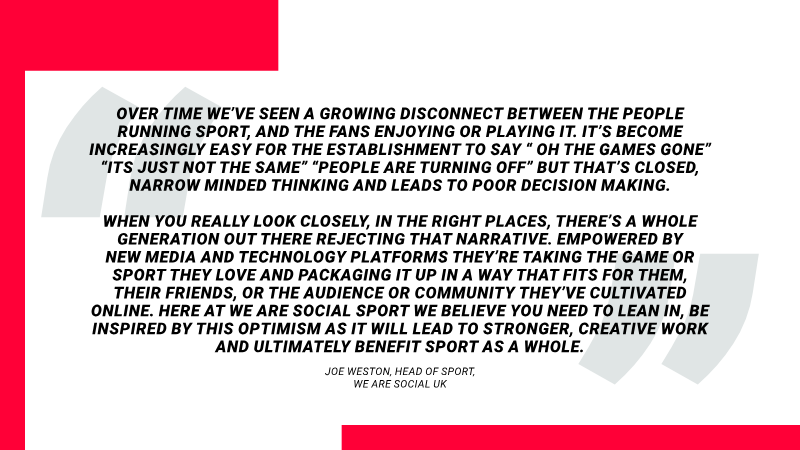

The Future of Sports Fandom: How Brands Can Engage Sports Fans in 2022 and Beyond
The sports industry currently faces a critical inflection point as traditional viewership metrics decline and younger demographics, particularly Gen Z, demonstrate lower levels of avid sports fandom compared to previous generations.
- Sports organizations must shift from passive, top-down broadcasting to active, digital-first engagement to combat declining viewership among younger demographics.
- Formula 1’s focus on emotional, plot-driven storytelling via docuseries successfully attracted 200 million new fans, with nearly 50% of that audience under the age of 34.
- Digital collectibles have proven to be a significant revenue driver, evidenced by NBA Top Shot generating nearly $1 billion in transaction volume.