
Report134 pages
Videojuegos en Aulas Europeas: Resultados del Proyecto de Investigación 'Juegos en las Escuelas 2023-2024'
The study evaluates how video‑games are being integrated into European primary and secondary classrooms and argues that, while games hold clear potential to enhance motivation, cognition and 21st‑century competencies, systematic support is still required to translate research into widespread practice. A 2023‑2024 survey of 1,474 teachers across 26 European nations reveals that 36 % already employ games in lessons, with more than half of those using them regularly and favouring puzzle‑ or narrative‑driven titles. The principal barriers reported are the difficulty of locating age‑appropriate, curriculum‑aligned and GDPR‑compliant games (45 %) and technical constraints such as insufficient hardware or internet access (42 %). Compared with a 2009 baseline, teachers now rate their digital competence higher (7.7 / 10), display more positive attitudes, and receive stronger backing from school leadership, yet further investment in training, infrastructure and coordinated policy is deemed essential.
A comprehensive taxonomy distinguishes action, adventure, RPG, simulation, sport and hybrid genres, and separates commercial‑off‑the‑shelf titles, serious games, gamified tools and game‑based learning approaches. Empirical work from 2009‑2024 consistently shows modest gains in intrinsic motivation, STEM and language achievement, spatial and attentional skills, and collaborative behaviours when games are thoughtfully aligned with learning objectives. Nonetheless, effects on higher‑order cognition remain uneven, and the literature suffers from heterogeneous definitions, limited longitudinal data and a scarcity of rigorous experimental designs.
Country‑level case studies illustrate both promise and obstacles. Inclusive esports programmes in Italy, digital‑science curricula in Luxembourg, and language‑focused game pilots in Poland and Romania demonstrate measurable improvements in communication, critical thinking and resilience, while chronic under‑funding, outdated hardware, parental scepticism, gender gaps and rigid curricula impede broader adoption. Across the region, teachers cite insufficient professional development, lack of time and compensation, and uncertainty about content safety as persistent challenges.
The overarching recommendation is a coordinated European framework that provides an ethically vetted, GDPR‑compliant repository of educational games, systematic teacher training, robust infrastructure funding, and longitudinal research to validate cognitive and health outcomes. By aligning industry partnerships, policy incentives and evidence‑based pedagogy, the initiative seeks to close the gap between game research and classroom practice, fostering inclusive, engaging learning environments throughout Europe.
- 36% of the 1,474 European teachers surveyed currently integrate video games into their lessons, with over half of those users employing them regularly.
- The primary barriers to adoption are the difficulty of finding age-appropriate, curriculum-aligned, and GDPR-compliant games (45%) and technical limitations such as inadequate hardware or internet access (42%).
- Teacher digital competence has risen to a self-reported 7.7/10 since the 2009 baseline, supported by more positive attitudes and increased backing from school leadership.
- Empirical evidence from 2009–2024 confirms that games, when aligned with learning objectives, produce modest gains in intrinsic motivation, STEM and language achievement, and collaborative behaviors.
- Despite positive trends, the field lacks rigorous longitudinal data and suffers from inconsistent definitions, making the effects of gaming on higher-order cognition remain uneven.
+2
European SchoolnetNov 2024
Report20 pages
Live Streaming Trend Report: Q3 2024
The analysis of live‑streaming activity in the third quarter of 2024 demonstrates a robust rebound in overall viewership, with total hours watched rising 12 percent year‑over‑year to reach 8.5 billion. Growth is concentrated on emerging services, most notably Kick, which expanded its audience by 103 percent, delivering 534 million hours of content and securing a 6.3 percent share of the market. Its peak week recorded 45 million hours watched, positioning Kick as the third‑largest platform despite Twitch’s modest 4 percent decline in the same period. The surge extends to Spanish‑language streams on Kick, where viewership accelerated sharply, underscoring the platform’s expanding appeal in non‑English markets.
Subscriber dynamics also reached new heights. VTuber ironmouse achieved an all‑time high of roughly 320 thousand followers on Twitch during the “SUBtember” marathon, while FaZe Clan’s 30‑day joint subathon generated 99.5 thousand and 73.7 thousand new subscribers for members jasontheween and plaqueboymax respectively. These figures illustrate a growing willingness among audiences to convert viewership into direct financial support for creators.
Esports viewership contributed a historic peak, with the LCK Grand Final between T1 and GEN drawing an estimated two million concurrent viewers, reinforcing the continued draw of high‑stakes competitive events. Collectively, the data reveal a diversifying ecosystem in which emerging platforms and regional language streams are reshaping audience distribution, while monetization through subscriptions and esports remains a powerful driver of engagement across the global live‑streaming landscape.
- Total live-streaming viewership reached 8.5 billion hours in Q3 2024, marking a 12 percent year-over-year increase.
- Kick emerged as the third-largest streaming platform with 534 million hours watched, representing a 103 percent growth rate and a 6.3 percent market share.
- Twitch experienced a 4 percent decline in viewership during Q3 2024, even as it hosted record-breaking subscriber events like ironmouse’s 320,000-follower marathon.
- Esports remains a primary engagement driver, evidenced by the LCK Grand Final between T1 and GEN drawing a peak of two million concurrent viewers.
- The live-streaming ecosystem is diversifying through the rapid expansion of non-English markets, particularly Spanish-language streams on the Kick platform.
+1
Stream HatchetSept 2024

Report23 pages
U.S. Gamer Segmentation 2024 Edition
This analysis of the 2024 U.S. video gaming market identifies a resilient landscape where 71% of the population, or approximately 236.4 million people, engage with games. While this reflects a slight decline from the 74% peak seen in 2020, it remains significantly higher than the 67% recorded in 2018. The study utilizes a survey of 5,100 active gamers aged two and older, conducted between May and June 2024, to categorize the audience into six distinct behavioral segments: Super Gamers, Console Warriors, Transitionals, Easy Accessors, Daily Dabblers, and Incidental Players.
A primary finding is that while the total player count has dipped slightly, engagement and monetization are increasing. Gamers now spend an average of 14.5 hours per week playing, an increase of 1.8 hours since 2022. Spending has also risen to an average of $56.20 over a six-month period. Mobile remains the most pervasive platform, used by 65% of the total population, while console gaming has seen the most significant growth in weekly time investment. Conversely, PC gaming saw a 4% decline in reach since 2022.
The market is shifting toward more dedicated segments. There has been a notable decrease in casual "Incidental Players" and "Daily Dabblers," with a corresponding migration toward "Super Gamers" and "Transitionals." Super Gamers represent the most valuable demographic, typically consisting of males aged 18 to 34 who play across multiple platforms and engage deeply with gaming culture, including streaming and esports. Although teens and young adults remain the most valuable segments in terms of time and spend, the report notes that player investment is rising across nearly all age groups despite the overall contraction in the total number of gamers.
- The U.S. gaming population stands at 236.4 million people, representing 71% of the population, which is a slight decline from the 2020 peak of 74% but remains above 2018 levels.
- Average weekly engagement has increased to 14.5 hours, up 1.8 hours since 2022, while average spending over a six-month period has risen to $56.20.
- The market is shifting toward more dedicated segments, with a migration away from casual 'Incidental Players' and 'Daily Dabblers' toward 'Super Gamers' and 'Transitionals'.
- Mobile remains the dominant platform with 65% reach, while console gaming has experienced the most significant growth in weekly time investment.
- PC gaming reach has declined by 4% since 2022.
+1
CircanaAug 2024

Report20 pages
Live Streaming Trends Report: Q2 2024
The global live streaming industry experienced a significant resurgence in the second quarter of 2024, with total viewership reaching 8.5 billion hours. This 10% year-over-year increase represents the first substantial growth period since the pandemic-era peak. While Twitch maintains its position as the primary market leader, its dominance has softened from 70% to 60% of total hours watched. This shift reflects a diversifying landscape where YouTube Gaming and Kick have captured 23.4% and 5.5% of the market, respectively, and Rumble has established itself as a top-ten platform by leveraging political content and debate-related viewership.
Content trends during this period were heavily influenced by major software releases and political events. The launch of downloadable content for Elden Ring triggered a 331% surge in viewership for the title, driving a 30% increase in the broader Action genre. Conversely, traditional pillars such as First-Person Shooters and MOBAs saw slight declines in market share. The VTuber segment remains a high-growth area, particularly within the Grand Theft Auto V category, where individual creators saw viewership spikes exceeding 300%. Esports also reached new heights, evidenced by the LCK Grand Final achieving a record 2.7 million concurrent viewers.
A critical structural shift is occurring in creator demographics, characterized by the decentralization of viewership. The market share held by the top 5% of streamers fell to 86% from a 2019 high of 98%, while the share held by the top 0.01% of channels dropped from 45% to 33%. This trend suggests a maturing ecosystem where visibility is increasingly distributed among a broader range of mid-tier creators rather than being concentrated exclusively at the top. These findings indicate a healthy, diversifying industry that is successfully transitioning from pandemic-driven volatility to sustainable, multi-platform growth.
- The live streaming industry saw a 10% year-over-year growth in Q2 2024, reaching 8.5 billion total hours watched.
- Twitch's market share dropped from 70% to 60%, while YouTube Gaming and Kick captured 23.4% and 5.5% of the market, respectively.
- Viewership is decentralizing, with the top 5% of streamers now holding 86% of the market share, down from 98% in 2019.
- The top 0.01% of channels saw their market share decline from 45% to 33%, indicating a shift toward mid-tier creator visibility.
- Major software releases significantly impact genre performance, evidenced by Elden Ring's DLC launch driving a 331% surge in its viewership and a 30% increase in the broader Action genre.
+1
Stream HatchetJul 2024

Report30 pages
Global Gamer Study 2024: How Consumers Engage with Games Today
This analysis examines global consumer engagement with video games, drawing on data from over 73,000 surveyed individuals across 36 markets. The findings reveal that gaming has become a dominant pillar of modern entertainment, with 80% of the total online population playing games and 85% engaging with the medium through playing, viewing content, or participating in social communities. Engagement is highest among younger demographics; over 90% of Gen Alpha and Gen Z consumers are game enthusiasts, with Gen Alpha notably spending more time on gaming (5.2 hours per week) than on social media.
The data highlights a significant shift in how different generations and genders interact with the medium. While Adventure is the top genre for Gen Alpha, Gen Z, and Millennials, younger female players are increasingly likely to invest in pay-to-play titles, challenging traditional industry stereotypes. On PC and console platforms, players are motivated primarily by vast open worlds and deep storytelling. These platforms also attract higher-spending audiences compared to mobile; 22% of console players spend more than $25 per month, and over half are classified as medium-to-high spenders.
Despite a market where a small number of established franchises capture the majority of playtime, a vital segment of "new game seekers" remains. Approximately 31% of PC and console players actively hunt for trending titles. This cohort is highly valuable, as 80% of them spend money on games monthly and they are 50% more engaged than the average player. Geographically, this appetite for new experiences is strongest in emerging markets like China, India, and Saudi Arabia, while more mature markets like Japan and Western Europe show more conservative play patterns. The findings suggest that success in a competitive landscape requires moving beyond playable experiences to engage consumers across multiple dimensions, including social media, creator content, and transmedia brands.
- Gaming is a primary entertainment pillar, with 80% of the global online population playing games and 85% engaging through play, viewing, or social communities.
- Gen Alpha and Gen Z are the most active demographics, with over 90% engagement and Gen Alpha spending 5.2 hours per week on gaming, surpassing their time spent on social media.
- A high-value segment of 'new game seekers' makes up 31% of PC and console players; these users are 50% more engaged than average players and 80% of them spend money on games monthly.
- PC and console platforms command higher spending than mobile, with 22% of console players spending over $25 per month and more than half classified as medium-to-high spenders.
- Emerging markets including China, India, and Saudi Arabia show the strongest appetite for new titles, contrasting with more conservative play patterns in Japan and Western Europe.
+1
NewzooJul 2024

Report9 pages
How Gamers Discover What to Play
Video game marketing remains a vital component of the industry, though consumer preferences have shifted toward authentic, multi-channel discovery rather than traditional overt sales tactics. Research conducted in May 2024 among 1,009 PC and console gamers in the United States reveals that the average player utilizes four to five different information sources before committing to a new title. This behavior underscores a move away from single-channel reliance toward a diverse marketing mix where authenticity and peer-led insights are prioritized over corporate messaging.
YouTube stands as the dominant platform for game discovery, used by 52% of respondents and cited as the most trusted source of information. However, discovery habits vary significantly by demographic. Younger gamers aged 18–24 are twice as likely to use TikTok and Instagram for news compared to those aged 34–44. Gender also influences platform choice, with men favoring YouTube and Twitch, while women are 13% more likely than men to utilize TikTok for discovery. Despite the prevalence of these platforms, trust remains fragmented; while YouTube is the most trusted, social media platforms like TikTok and X are frequently viewed with skepticism, suggesting that trust resides more in specific creators than the platforms themselves.
Purchasing decisions are primarily driven by familiarity and risk mitigation. Forty percent of gamers prioritize established franchises they already enjoy, and 25% favor games from respected developers. While reviews and influencer endorsements remain influential, cost-related factors such as subscription services and price promotions also play a significant role in the decision-making process. Ultimately, the data suggests that successful game discovery relies on building a presence across multiple social and video platforms while leveraging established brand equity and influencer relationships to overcome consumer distrust.
- Gamers utilize an average of four to five distinct information sources before purchasing a new title, reflecting a shift away from single-channel marketing reliance.
- YouTube is the primary discovery platform for 52% of gamers and is ranked as the most trusted source of information.
- Purchasing decisions are driven by risk mitigation, with 40% of players prioritizing established franchises and 25% favoring games from respected developers.
- Demographic discovery habits vary significantly, as gamers aged 18–24 are twice as likely to use TikTok and Instagram for news compared to those aged 34–44.
- Gender influences platform preference, with women being 13% more likely than men to use TikTok for game discovery.
+1
Big Games MachineMay 2024

Report72 pages
Africa Games Industry Report
The African video games industry represents a rapidly expanding mobile-first frontier, characterized by a player population that surged from 77 million in 2015 to 186 million in 2021. With annual revenues projected to surpass $1 billion by 2024, the continent is positioning itself to replicate the success of other emerging markets like Brazil and India. Growth is currently concentrated in regional hubs across South Africa, Nigeria, Ghana, and Kenya, where a young demographic is increasingly integrating local cultural themes into digital entertainment. This evolution is supported by a complex value chain where mobile gaming accounts for the vast majority of engagement, mirroring global trends where mobile platforms generate over $92 billion in annual revenue.
Despite this potential, the ecosystem remains in a nascent stage, with 63% of studios operating for five years or less and 59% of developers never having secured external investment. While high-profile deals such as Carry1st’s $27 million funding round and GBarena’s $15 million acquisition of Galactech signal growing investor confidence, the broader market is still dominated by hobbyists. Only 36% of developers currently earn a living from their work, and over half of those rely exclusively on domestic revenue. Technical development is heavily centralized around the Unity engine, which is utilized by 64% of the market, reflecting the industry's focus on accessible mobile content.
Significant structural barriers continue to impede the transition from a hobbyist community to a professionalized global competitor. Infrastructure deficits are the primary concern, with 60% of industry participants citing poor power supply and high internet costs as critical obstacles. Furthermore, government support is nearly non-existent, currently reaching only 3% of the sector. To achieve sustainable maturity, the industry requires a coordinated effort to stabilize infrastructure, formalize talent pipelines, and attract informed investors who understand the unique dynamics of the African market. Addressing these catalysts is essential for transforming local creative potential into a robust, revenue-generating economic sector.
- The African gaming market is a high-growth mobile-first sector, with the player base expanding from 77 million in 2015 to 186 million in 2021 and annual revenues projected to exceed $1 billion by 2024.
- Infrastructure instability remains the primary barrier to professionalization, with 60% of industry participants identifying poor power supply and high internet costs as critical obstacles to growth.
- The industry is currently in a nascent, hobbyist-dominated state where 59% of developers have never secured external investment and only 36% earn a full-time living from their work.
- Development is heavily centralized around the Unity engine, which is used by 64% of the market to produce mobile-focused content, mirroring global trends in mobile gaming.
- While the market is largely fragmented, high-profile activity such as Carry1st’s $27 million funding round and GBarena’s $15 million acquisition of Galactech indicates emerging investor confidence.
+1
Games Industry AfricaMar 2024

Report26 pages
Level Up – Harnessing the Power of Gaming Audiences
The 2024 Level Up report, a collaborative analysis by Comscore and Anzu, examines the evolving landscape of the U.S. gaming market and the expanding opportunities for brand integration. The study defines gamers as adults aged 18 to 65 who play multiple times a week, revealing that 62% of the U.S. adult population fits this criteria. A significant finding is the high level of cross-platform engagement; 77% of gamers utilize more than one device, while 40% play across all platforms, including PC, console, and mobile.
The data highlights distinct consumer behaviors based on platform preference. Console gamers demonstrate the highest willingness to pay for content, with 37% prepared to spend over $60 on a single title. In contrast, 32% of mobile-only gamers prefer free-to-play models. Genre preferences also vary by hardware, with PC players favoring first-person shooters and RPGs, while console players show a strong affinity for action-adventure and sports titles.
From an advertising perspective, the report concludes that gaming is no longer a niche silo but a mainstream medium with high receptivity to marketing. Approximately two-thirds of gamers view in-game advertisements as having a positive or neutral impact on their experience. Specifically, 34% of respondents believe product placement enhances realism, and 45% express a preference for rewarded ad formats. Case studies, such as Tommy Hilfiger’s campaign, demonstrate the efficacy of these strategies, showing a 20-point lift in brand favorability and a 23-point increase in purchase intent. The report emphasizes that the partnership between Comscore and Anzu now allows for more precise measurement of the incremental reach provided by intrinsic in-game advertising.
- Gaming is a mainstream U.S. medium, with 62% of adults aged 18–65 playing games multiple times per week.
- Cross-platform engagement is high, as 77% of gamers use more than one device and 40% play across PC, console, and mobile platforms.
- Two-thirds of gamers view in-game advertisements as having a neutral or positive impact on their experience, with 34% noting that product placement enhances realism.
- Rewarded ad formats are preferred by 45% of gamers, and campaigns like Tommy Hilfiger’s have demonstrated significant performance gains, including a 20-point lift in brand favorability and a 23-point increase in purchase intent.
- Monetization preferences are platform-dependent: 37% of console gamers are willing to spend over $60 on a single title, whereas 32% of mobile-only gamers prefer free-to-play models.
+1
ComscoreMar 2024

Report40 pages
European Key Facts 2024: Video Games
The European video games industry represents a high-growth strategic sector that generated €26.8 billion in revenue in 2024, with digital channels accounting for 90% of all sales. This robust economic activity supports over 116,000 skilled professionals across 6,000 studios and serves a diverse player base comprising 54% of the European population. Mobile gaming remains the dominant platform, utilized by 71% of the region's 127 million players. To manage this vast ecosystem, the industry relies on the PEGI age-rating system across 40 countries, ensuring a standardized approach to consumer protection and responsible gameplay.
Central to the industry’s operational integrity is a rigorous regulatory framework focused on monetization transparency and online safety. Updated standards mandate the disclosure of loot box probabilities and strictly prohibit the exchange of virtual items for real-world currency. Safety protocols are reinforced by comprehensive parental controls, currently adopted by 67% of parents, alongside mandatory age-verification tools and reporting mechanisms for harmful content. Compliance is maintained through a tiered enforcement system, where severe violations of age-rating or safety standards can result in financial penalties of up to €500,000.
Beyond economic and regulatory concerns, the sector is increasingly defined by its commitment to social and environmental responsibility. Major regional initiatives across Spain, the United Kingdom, and Germany are driving diversity and inclusion through measurable policy changes and scholarships aimed at increasing female participation. Simultaneously, the industry is pursuing aggressive decarbonization through the Playing for the Planet Alliance and voluntary agreements that have already yielded significant energy savings in hardware manufacturing. These efforts are complemented by the integration of environmental themes into gameplay and the development of carbon calculators to assist studios in achieving long-term sustainability goals.
- The European video games industry generated €26.8 billion in 2024, with digital channels accounting for 90% of total sales.
- The sector supports 116,000 professionals across 6,000 studios and serves 127 million players, representing 54% of the European population.
- Mobile gaming is the primary platform in the region, utilized by 71% of the total player base.
- Regulatory frameworks now mandate the disclosure of loot box probabilities and prohibit the exchange of virtual items for real-world currency, with non-compliance penalties reaching up to €500,000.
- Consumer safety is supported by parental controls adopted by 67% of parents and the standardized PEGI age-rating system operating across 40 countries.
+1
Video Games EuropeMar 2024

Report19 pages
European Key Facts 2023: Video Games Industry
The European video games industry is a significant cultural and economic driver, characterized by steady growth and a commitment to responsible gameplay. In 2023, the European market reached €25.7 billion in revenue, a 5% year-on-year increase. The sector employs approximately 115,000 people across Europe, with 90,000 based in the EU. This growth is supported by a diverse player base; 53% of the European population aged 6-64 plays video games, with an average player age of 31.4 years. Notably, 75% of players are adults, and women make up 43.5% of the total gaming population.
The industry emphasizes a robust framework for minor protection and consumer transparency through the Pan European Game Information (PEGI) system. Celebrating its 20th anniversary, PEGI has issued nearly 40,000 age rating licenses across 40 countries. Awareness of these labels is high, with 79% of parents whose children play games recognizing the system. Furthermore, the industry actively promotes diversity and inclusion through various regional initiatives and addresses environmental sustainability via the Games Consoles Voluntary Agreement and the Playing for the Planet Alliance.
To maintain global competitiveness, the industry advocates for a strategic EU policy framework. Key priorities include recognizing video games as unique creative works distinct from the audiovisual sector, addressing the digital skills gap through education and STEAM programs, and maintaining a fair regulatory environment that supports small and medium-sized enterprises. The data for these findings is derived from GameTrack and Games Sales Data (GSD) surveys conducted by Ipsos, involving a sample of 60,000 individuals across major European markets to ensure national representation.
- The European video games industry generated €25.7 billion in revenue in 2023, representing a 5% year-on-year growth.
- The sector employs 115,000 people across Europe, with 90,000 of those roles based within the EU.
- Video games reach 53% of the European population aged 6–64, with an average player age of 31.4 years, 75% adult representation, and 43.5% female participation.
- The PEGI age-rating system has issued nearly 40,000 licenses over 20 years, with 79% of parents recognizing the labels.
- Industry advocacy focuses on securing a policy framework that classifies video games as unique creative works distinct from the audiovisual sector.
+1
Video Games EuropeMar 2024

Report171 pages
Brazilian Gaming Industry Report 2023
The Brazilian gaming industry represents a rapidly maturing ecosystem that defied global trends in 2022, growing by 3% to reach 103 million players while the international market experienced its first contraction. With 1,042 active studios as of 2023—a 177% increase over five years—the sector is primarily composed of micro and small enterprises concentrated in the Southeast and South regions. Despite this expansion, local studio revenue accounts for only 10% of domestic consumption, highlighting a significant gap between local production and the country’s status as the world’s fifth-largest online gaming population.
Development trends show a shift toward multi-platform strategies, with computers and mobile devices serving as the primary targets for the 1,009 games produced in 2022. While 93% of studios develop proprietary intellectual property, there is a burgeoning reliance on international markets; 65% of studios active abroad derive more than half of their revenue from exports. Furthermore, the industry has seen a 62% surge in outsourcing services, particularly in 3D art and animation, signaling a transition toward high-value service provision for the global entertainment sector.
The workforce expanded to over 13,000 professionals in 2022, characterized by a 70% remote work rate and an increasing focus on administrative roles that suggest greater corporate maturity. However, the industry faces persistent structural and social challenges. The lack of a specific national economic classification complicates data collection, while diversity remains a critical area for improvement. Women represent only 24.3% of the workforce, and minority groups remain underrepresented. While external initiatives and diversity councils aim to foster inclusivity, 82% of companies still lack formal internal inclusion policies, indicating that the sector’s social evolution has yet to match its rapid economic and technical acceleration.
- Brazil’s gaming market grew 3% in 2022 to 103 million players, even as the global market contracted, yet local studios capture only 10% of domestic consumption.
- The number of active gaming studios in Brazil reached 1,042 in 2023, representing a 177% increase over the previous five years.
- The industry is increasingly export-oriented, with 65% of studios operating abroad generating more than half of their revenue from international markets.
- Outsourcing services, particularly in 3D art and animation, surged by 62% in 2022, marking a shift toward providing high-value services to the global entertainment sector.
- The workforce grew to over 13,000 professionals in 2022, with a 70% remote work rate and a growing emphasis on administrative roles indicating increased corporate maturity.
+1
AbragamesMar 2024
Report351 pages
Turkey Game Market 2023 Report
The Turkish gaming market demonstrated significant resilience and maturation throughout 2023, maintaining its status as a premier hub within the Europe and MENA regions despite economic volatility and regional challenges. Generating $580 million in revenue from a robust base of 47 million gamers, the industry is characterized by a dominant mobile sector that mirrors global trends. While total revenue in USD saw a slight decline due to currency fluctuations and platform policy changes, the market grew in local currency terms, fueled by high internet penetration and a population that views gaming as a primary social ritual.
Mobile gaming remains the cornerstone of the ecosystem, with Turkish developers achieving international acclaim. Notably, Dream Games’ Royal Match became the world’s highest-grossing mobile title in late 2023, underscoring the global competitiveness of domestic studios. Beyond entertainment, the industry is expanding into "serious games" and gamification, with major brands in finance, aviation, and retail integrating game mechanics to drive customer loyalty. This diversification extends to the defense and health sectors, where simulation technologies are increasingly utilized.
The investment landscape transitioned into a maturation phase in 2023, with $33.27 million across 35 deals. While this represents a decrease from pandemic-era peaks, the infrastructure continues to strengthen through the rise of digital entrepreneurship centers and structured esports regulations. The esports sector is professionalizing rapidly, supported by 188 licensed teams and significant international victories in titles like Valorant. However, a critical talent gap remains; while academic programs in game design are proliferating, there is an urgent need for better synchronization between university curricula and practical industry requirements to sustain long-term growth.
Looking toward 2024, the market is poised for further expansion driven by AI-driven content, AR/VR advancements, and a shift toward direct-to-consumer business models. Success for international and local players alike depends on deep localization and cultural sensitivity, ensuring engagement with a diverse demographic that increasingly prioritizes price-performance ratios and local payment solutions.
- The Turkish gaming market generated $580 million in 2023 from a base of 47 million gamers, maintaining its status as a key regional hub despite currency-related revenue fluctuations.
- Mobile gaming remains the industry cornerstone, highlighted by the domestic studio Dream Games, whose title 'Royal Match' became the highest-grossing mobile game globally in late 2023.
- The investment landscape matured in 2023 with $33.27 million deployed across 35 deals, reflecting a shift toward sustainable growth following pandemic-era peaks.
- Turkish industries are increasingly adopting gamification and simulation technologies, integrating game mechanics into sectors such as finance, aviation, retail, defense, and health.
- The esports ecosystem is professionalizing rapidly, currently supported by 188 licensed teams and bolstered by international competitive success in titles like 'Valorant'.
Gaming in TurkeyMar 2024

Report26 pages
US Gaming Audience in 2023
The gaming landscape in 2024 has solidified as a mainstream entertainment pillar, with 62% of U.S. adults aged 18 to 65 identifying as active gamers. This audience is characterized by high engagement across multiple devices, as 77% of players utilize more than one platform and 40% play across PC, console, and mobile combined. While mobile-only gamers typically prefer free-to-play titles, console and PC players demonstrate a high willingness to invest in premium content, with 45% of all gamers spending over $40 on their most recent purchase.
The demographic profile of the U.S. gaming audience skews toward Millennials and spans a wide range of household income levels. Genre preferences vary by platform; PC gamers favor first-person shooters, action, and role-playing games, while console players show a strong preference for action-adventure, sports, and racing titles. This broad reach is further amplified by the success of video game intellectual property in other media, evidenced by significant box office performance for game-inspired films.
Advertising within the gaming ecosystem presents significant opportunities for brand growth through formats such as intrinsic in-game ads, rewarded video, and sponsorships. Approximately two-thirds of gamers view advertisements as having a positive or neutral impact on their experience, with 34% noting that product placements can enhance realism. Case studies, such as campaigns by Tommy Hilfiger, demonstrate that non-intrusive in-game ads can drive substantial lifts in brand favorability, recommendation, and purchase intent. Through partnerships between measurement firms like Comscore and ad-tech providers like Anzu, advertisers can now better quantify the incremental reach provided by these specialized digital environments.
- 62% of U.S. adults aged 18 to 65 are active gamers, with 77% of players utilizing multiple platforms and 40% playing across PC, console, and mobile combined.
- 45% of all gamers spent over $40 on their most recent purchase, indicating a strong willingness to invest in premium content among PC and console users.
- Approximately two-thirds of gamers view advertisements as having a positive or neutral impact on their gaming experience, with 34% stating that product placements can enhance realism.
- Non-intrusive in-game advertising, such as campaigns by Tommy Hilfiger, has been shown to drive measurable lifts in brand favorability, recommendation, and purchase intent.
- Genre preferences are platform-specific, with PC gamers favoring first-person shooters, action, and RPGs, while console players prefer action-adventure, sports, and racing titles.
ComscoreMar 2024

Report44 pages
Global Games Market Report 2024
The Global Games Market Report 2024 projects a modest 2.1 % year‑over‑year growth, bringing worldwide revenues to $187.7 billion in 2024 and reaching $213.3 billion by 2027 at a 3.1 % compound annual growth rate. PC gaming remains the largest segment, generating $43.2 billion in 2024 and accounting for roughly 22 % of total revenue by 2027, while consoles are expected to rise to a 30 % share as cross‑platform releases become more common. Mobile revenue growth has slowed after the pandemic, and its market share is projected to decline further, underscoring a shift toward PC‑centric titles.
Player numbers are set to climb to 3.42 billion, a 4.5 % increase driven largely by PC adoption; mobile and console growth are more modest at 3.5 % and 2.3 %, respectively. The report’s methodology blends primary consumer research, macro‑economic data, app‑store feeds, and public company financials to estimate players, payers, and revenue streams. It also highlights the rising influence of user‑generated content (UGC) and cross‑generational appeal, noting that Gen Alpha and Gen Z together represent 94 % and 86 % of online gamers, respectively. UGC is emerging as a significant revenue source for both studios and creators, demanding strategies that balance older and younger player habits.
Key insights emphasize the growing importance of IP‑driven franchises, licensing, and transmedia ventures for revenue generation. Detailed breakdowns cover game delivery models, monetization tactics, genre performance, and regional revenues—including VR and cloud gaming metrics. The report promotes tailored consulting services such as TAM sizing, genre teardowns, audience analysis, campaign measurement, and live‑service strategy to help studios optimize development, marketing, and monetization in an increasingly competitive landscape.
- The global games market is projected to reach $187.7 billion in 2024, growing at a 3.1% CAGR to hit $213.3 billion by 2027.
- PC gaming is the leading segment with $43.2 billion in 2024 revenue, while console market share is expected to rise to 30% due to the prevalence of cross-platform releases.
- Total player count is forecast to reach 3.42 billion, a 4.5% year-over-year increase primarily driven by growth in PC adoption.
- Mobile gaming revenue growth has slowed post-pandemic, leading to a projected decline in its overall market share as the industry shifts toward PC-centric titles.
- Gen Alpha and Gen Z represent 94% and 86% of online gamers respectively, highlighting the critical need for strategies that balance the habits of younger demographics.
+1
NewzooJan 2024

Report72 pages
Africa Games Industry Report 2024
The Africa Games Industry Report 2024 presents a data‑driven assessment of the continent’s gaming ecosystem, targeting investors, policymakers, developers and the broader public. It argues that Africa’s youthful demographics, rapid mobile penetration and cultural diversity create a fertile environment for game development and monetisation. The report identifies fre‑to‑play with in‑app purchases as the dominant revenue model, while premium titles, ad‑based income, subscriptions and licensing remain viable alternatives for developers willing to overcome higher entry barriers.
Key findings show that the Sub‑Saharan gamer base has more than doubled from 77 million in 2015 to 186 million in 2021, with mobile gaming accounting for 95 % of players and nearly 90 % of the region’s $778.6 million revenue in 2022. Approximately one‑third of players make in‑app purchases, underscoring significant monetisation potential. The industry is largely composed of small to medium studios and solo developers, with Unity the preferred engine and mobile/PC platforms dominating. Yet only 36 % of respondents earn income from games, and infrastructure challenges—unreliable power (71 %) and costly internet (57 %)—continue to impede growth.
The report calls for coordinated action from investors, studios, policymakers and the public. It highlights mobile network operators and alternative payment systems as critical partners for expanding reach, while outlining a five‑factor ecosystem—reliable infrastructure, talent pathways, informed investors, connected industry and evidence of success—to unlock high‑value jobs, cultural exports and foreign investment. The overarching thesis is that Africa’s gaming sector is poised for rapid expansion, offering substantial economic and creative opportunities if these systemic barriers are addressed.
- The Sub-Saharan gamer base grew from 77 million in 2015 to 186 million in 2021, with mobile gaming driving 95% of the player base and nearly 90% of the region's $778.6 million revenue in 2022.
- Free-to-play with in-app purchases is the dominant revenue model, with approximately one-third of players currently making in-app purchases.
- Infrastructure remains the primary barrier to growth, with 71% of developers citing unreliable power and 57% citing high internet costs as significant impediments.
- Despite the sector's scale, only 36% of surveyed developers currently earn income from their games.
- The industry is primarily composed of small-to-medium studios and solo developers who predominantly utilize the Unity engine for mobile and PC platforms.
Maliyo GamesJan 2024
Report52 pages
Global Games Market Report
The global games market is entering a period of stabilization and renewed growth, with 2023 revenues projected to reach $184.0 billion. This recovery follows a post-pandemic correction and is supported by a massive player base of 3.31 billion people worldwide. While the industry faces macroeconomic pressures and shifting privacy regulations, long-term forecasts remain positive, with total revenues expected to climb to $205.4 billion by 2026. This trajectory is fueled by the maturation of the current console generation, the expansion of the middle class in emerging markets, and the increasing influence of transmedia strategies that drive engagement across multiple entertainment formats.
Market dynamics are shifting significantly across different platforms and regions. Mobile gaming remains the largest revenue segment at $89.7 billion, yet it is currently experiencing a 1.4% decline as privacy policies complicate user acquisition and monetization, particularly within the RPG genre. In contrast, the PC and console segments are the primary growth engines for 2023, benefiting from a steady supply of hardware and a robust slate of high-profile releases. Geographically, the Asia-Pacific region maintains its dominance, accounting for 46% of global revenue, even as regulatory hurdles in China slow its immediate growth. Meanwhile, significant capital infusions, such as Saudi Arabia’s $38 billion investment through Savvy Games Group, are reshaping the competitive landscape.
Technological and structural transformations are further defining the industry's future. Generative AI is emerging as a pivotal tool for managing the rising costs of AAA development, though its adoption is tempered by concerns over copyright and workforce impact. Revenue models have transitioned almost entirely to digital formats, with physical sales becoming negligible in the PC market and live-service models dominating console engagement. As the industry evolves, the rise of cloud gaming and handheld "complementary devices" like the Steam Deck are expanding how and where players interact with content, ensuring the market remains resilient despite shifting regulatory and economic conditions.
- The global games market is projected to reach $184.0 billion in 2023, with a forecast to grow to $205.4 billion by 2026 supported by a 3.31 billion-person player base.
- Mobile gaming remains the largest revenue segment at $89.7 billion, though it is currently experiencing a 1.4% decline due to privacy-related challenges in user acquisition and monetization.
- PC and console gaming are the primary industry growth engines for 2023, driven by improved hardware supply and a strong pipeline of high-profile software releases.
- The Asia-Pacific region continues to dominate the global market with 46% of total revenue, despite regulatory headwinds currently impacting growth in China.
- Large-scale capital investments, such as the $38 billion commitment from Saudi Arabia’s Savvy Games Group, are actively reshaping the competitive landscape.
+1
NewzooJan 2024

Report27 pages
Games Market Trends to Watch in 2024
The global games market in 2024 is characterized by a period of stabilization and strategic restructuring following the post-pandemic correction. While the industry saw a revenue decline in 2022, recovery began in 2023 and is expected to continue through 2024, driven largely by the expanding install base of current-generation consoles like the PlayStation 5 and Xbox Series X|S. Despite this growth, the year is defined as a lean period for many companies as they navigate high interest rates, reduced investment capital, and a highly competitive landscape where a small number of titles dominate the majority of player engagement.
Key findings indicate a significant shift in business models and platform strategies. While live-service games remain the primary revenue drivers, the market is experiencing oversaturation, leading many developers to return to premium, finite gaming experiences. Growth in multi-game subscription services is expected to slow as they face competition from free-to-play social platforms like Fortnite and Roblox. Additionally, mobile developers are increasingly diversifying by bringing their titles to PC to combat rising user acquisition costs and stricter privacy regulations. Major hardware and distribution shifts are also anticipated, including the launch of a new Nintendo console and the introduction of an Xbox mobile store on Android.
The scope of this analysis covers global market trends across PC, console, and mobile segments, with revenue forecasting extending through 2026. The methodology combines internal market data and analyst perspectives with a survey of gaming executives and industry experts from companies such as Ubisoft, Iron Galaxy Studios, and Savvy Games Group. Emerging technologies like generative AI are identified as tools for increasing production efficiency, though they are not expected to transform game development at scale within the immediate calendar year. Overall, the industry is moving toward risk-reduction strategies, focusing on established intellectual properties and cross-platform accessibility to maintain stability.
- The global games market is in a period of stabilization and recovery throughout 2024, supported by the growing install base of current-generation consoles like the PlayStation 5 and Xbox Series X|S.
- Developers are increasingly pivoting back to premium, finite gaming experiences to counter the oversaturation of the live-service market.
- Mobile developers are expanding to PC platforms to mitigate the impact of rising user acquisition costs and stricter privacy regulations.
- Growth in multi-game subscription services is expected to decelerate as they face direct competition from free-to-play social platforms such as Fortnite and Roblox.
- The industry is preparing for significant infrastructure shifts, including the anticipated launch of a new Nintendo console and the introduction of an Xbox mobile store on Android.
+1
NewzooJan 2024

Report55 pages
Xsolla Report: State of Play – Winter 2024 Edition
The global gaming industry is currently navigating a period of stabilization following a massive 26% growth surge between 2019 and 2021. While the rapid pandemic-era expansion has moderated, the sector reached $106.8 billion in 2023 and is on a trajectory to hit $205.7 billion by 2026. This growth is underpinned by a global player base expanding to 3.79 billion people, with mobile gaming remaining the dominant force, accounting for nearly half of all consumer spending. Despite a downward revision in year-over-year growth forecasts to 0.6%, mobile spending is expected to reach $111.4 billion in 2024, led by strong performance in the United States and Japan.
The industry is undergoing a significant structural transformation driven by technological shifts and regulatory changes. The transition toward digital-only monetization, cloud-based services, and the metaverse—projected to reach $996 billion by 2030—reflects a broader convergence with the entertainment landscape. Furthermore, the implementation of the Digital Markets Act is opening doors for alternative billing systems and direct-to-consumer web stores. These shifts occur alongside a demographic evolution where women now represent nearly 50% of the player base, though they remain underrepresented in executive and professional roles.
Financial dynamics within the sector show a complex landscape of consolidation and rising costs. While AAA development budgets have tripled over the last five years, the investment market has faced volatility, characterized by a cooling M&A environment and significant layoffs. Despite a drop in deal volume, strategic investment value surged by 577% in mid-2023, reaching $7 billion in a single quarter. To counter high user acquisition costs and stricter privacy regulations, developers are increasingly adopting generative AI for efficiency and pivoting toward community-focused organic reach, early access models, and influencer partnerships to ensure long-term sustainability.
- The global gaming industry is projected to grow from $106.8 billion in 2023 to $205.7 billion by 2026, supported by a total player base of 3.79 billion people.
- Mobile gaming remains the industry's primary revenue driver, accounting for nearly 50% of total consumer spending and reaching a projected $111.4 billion in 2024.
- Strategic investment value saw a massive 577% surge in mid-2023 to reach $7 billion in a single quarter, despite an overall cooling in M&A activity and a volatile investment climate.
- The metaverse is projected to reach a valuation of $996 billion by 2030 as the industry shifts toward digital-only monetization and cloud-based services.
- Regulatory changes like the Digital Markets Act are forcing a structural shift toward alternative billing systems and direct-to-consumer web stores to bypass traditional platform constraints.
+1
XsollaJan 2024
Report9 pages
Longitudinal Survey Report on Gaming Disorder: Japan
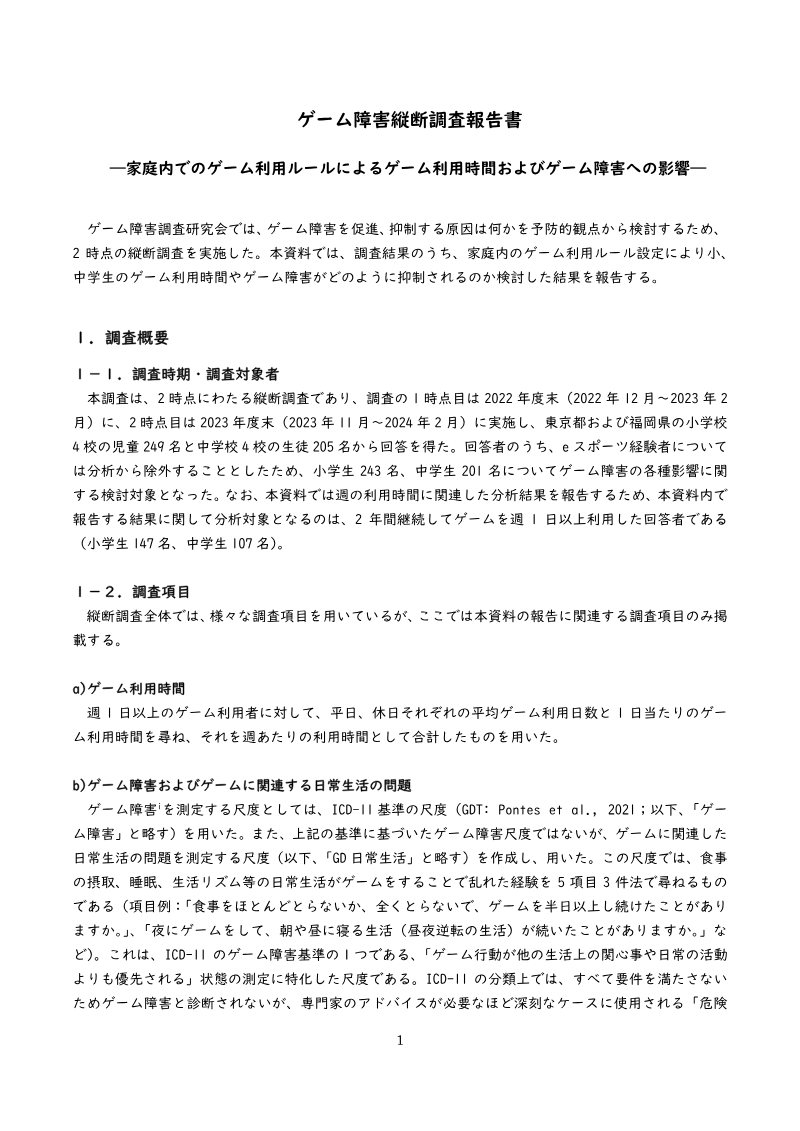
The study investigates how household rules governing video‑game use influence weekly play time and the emergence of gaming disorder among Japanese elementary and middle‑school students. By tracking participants over two survey waves—late 2022 to early 2023 and late 2023 to early 2024—the research tests whether specifying permissible gaming periods or prohibiting certain times can curb excessive play and related daily‑life problems.
A longitudinal sample was drawn from four elementary schools and four middle schools in Tokyo and Fukuoka, yielding 243 elementary and 201 middle‑school respondents after excluding esports players. Analyses focused on the 147 elementary and 107 middle‑school students who reported gaming at least once per week across both waves. Weekly gaming hours were calculated from weekday and weekend use, while gaming disorder was measured with the ICD‑11‑based Gaming Disorder Test and a custom scale assessing disruptions to sleep, meals, and routine. The presence of two rule types—“allowed‑time” (e.g., one hour per day) and “prohibited‑time” (e.g., no gaming after midnight)—was recorded at each wave and examined using cross‑lagged models and mixed‑design ANOVAs.
Results show that higher weekly gaming hours predict later increases in gaming‑disorder scores for both age groups (standardized coefficients .12 for elementary and .11 for middle‑school students), while disorder does not feed back into later play time. Gaming hours and daily‑life problems mutually reinforce each other, forming a negative feedback
- Increased weekly gaming hours serve as a significant predictor for higher gaming disorder scores, with standardized coefficients of .12 for elementary students and .11 for middle-school students.
- Gaming hours and daily-life problems, such as disruptions to sleep and meals, create a negative feedback loop where each factor mutually reinforces the other.
- Gaming disorder symptoms do not appear to influence or increase future weekly play time, suggesting that excessive play is the primary driver of disorder rather than a consequence of it.
- The study tracked 254 total students—147 elementary and 107 middle-schoolers—who played games at least once per week across two survey waves between late 2022 and early 2024.
- Research methodology utilized the ICD-11-based Gaming Disorder Test and a custom scale to measure the impact of household rules, specifically 'allowed-time' limits and 'prohibited-time' restrictions.
+1
CESA – Computer Entertainment Supplier's AssociationJan 2024
Report2 pages
Comportamientos e Intereses de los Videojugadores: Spain
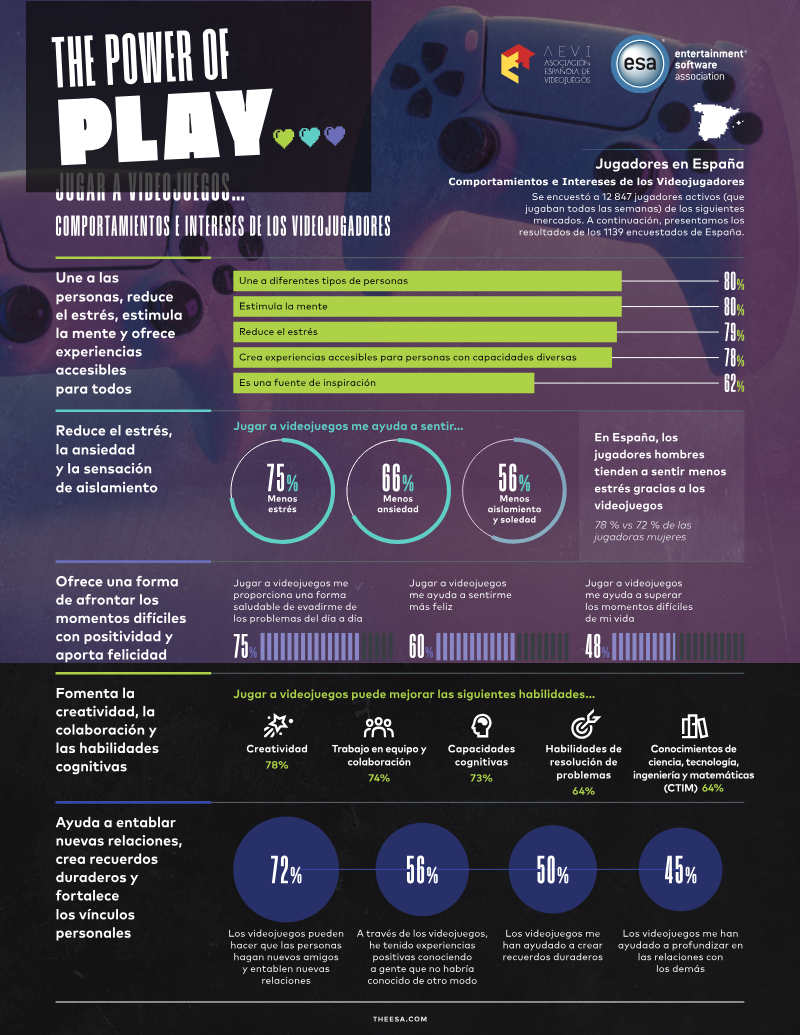
The study investigates how Spanish video‑game players experience play, what motivates them, and which social and cognitive benefits they perceive. It situates Spain within a broader cross‑national analysis that also includes Poland, South Korea and Australia, focusing on active gamers who play at least once a week.
Data were collected through an online questionnaire administered to 12,847 weekly players across the four markets, of which 1,139 respondents were from Spain. The sample spans ages 16 to 65 plus and includes both genders, allowing comparison of habits and attitudes between men and women and across age brackets.
Among Spanish gamers, 80 % cite “meeting different people” and “stimulating the mind” as primary reasons for playing, while 78 % report that games help reduce stress and anxiety. Men are slightly more likely than women to feel less isolated (78 % vs 72 %) and to use gaming as a healthy outlet for daily pressures (75 % of men versus 60 % of women). Solo play remains the most common mode, yet eight out of ten men regularly play with others online, and roughly half of all respondents combine solo and online sessions.
Social interaction is linked to perceived skill gains: 78 % associate multiplayer play with enhanced creativity, 74 % with teamwork, and 64 % with improved cognitive and STEM‑related abilities. Integrated communication tools are used frequently by 29 % of younger male players, while 55 % of all participants view playing with others—whether online or in person—as a positive experience that fosters lasting friendships and shared memories.
Overall, Spanish gamers view video games as a versatile medium that delivers entertainment, mental‑health relief, social connection and transferable competencies, underscoring the sector’s relevance for both consumer satisfaction and broader wellbeing initiatives.
- 80% of Spanish gamers play primarily to meet new people and stimulate their minds, while 78% use gaming as a tool to reduce stress and anxiety.
- Multiplayer gaming is perceived as a driver for skill development, with 78% of players associating it with creativity, 74% with teamwork, and 64% with improved cognitive and STEM-related abilities.
- Social gaming is a core habit, as 55% of all participants view playing with others as a positive experience that fosters lasting friendships and shared memories.
- While solo play remains the most common mode, 80% of male gamers play online with others regularly, and roughly 50% of all respondents combine solo and online sessions.
- Gender differences exist in perceived benefits, with men more likely than women to report feeling less isolated (78% vs 72%) and using gaming as a healthy outlet for daily pressure (75% vs 60%).
+1
AEVIJan 2024