
The European video games industry represents a high-growth strategic sector that generated €26.8 billion in revenue in 2024, with digital channels accounting for 90% of all sales. This robust economic activity supports over 116,000 skilled professionals across 6,000 studios and serves a diverse player base comprising 54% of the European population. Mobile gaming remains the dominant platform, utilized by 71% of the region's 127 million players. To manage this vast ecosystem, the industry relies on the PEGI age-rating system across 40 countries, ensuring a standardized approach to consumer protection and responsible gameplay.
Central to the industry’s operational integrity is a rigorous regulatory framework focused on monetization transparency and online safety. Updated standards mandate the disclosure of loot box probabilities and strictly prohibit the exchange of virtual items for real-world currency. Safety protocols are reinforced by comprehensive parental controls, currently adopted by 67% of parents, alongside mandatory age-verification tools and reporting mechanisms for harmful content. Compliance is maintained through a tiered enforcement system, where severe violations of age-rating or safety standards can result in financial penalties of up to €500,000.
Beyond economic and regulatory concerns, the sector is increasingly defined by its commitment to social and environmental responsibility. Major regional initiatives across Spain, the United Kingdom, and Germany are driving diversity and inclusion through measurable policy changes and scholarships aimed at increasing female participation. Simultaneously, the industry is pursuing aggressive decarbonization through the Playing for the Planet Alliance and voluntary agreements that have already yielded significant energy savings in hardware manufacturing. These efforts are complemented by the integration of environmental themes into gameplay and the development of carbon calculators to assist studios in achieving long-term sustainability goals.
Video Games Europe · 2026

Video Games Europe · 2026

Video Games Europe · 2026

Video Games Europe · 2026

Video Games Europe · 2026

Video Games Europe · 2026
Video Games Europe · 2025
Video Games Europe · 2025
Video Games Europe · 2025
Video Games Europe · 2025
Video Games Europe · 2025
Video Games Europe · 2025

Video Games Europe · 2024

Video Games Europe · 2023

European Games Developer Federation · 2022
AEVI · 2022
8Bit · 2026
Values Value · 2026

Ukie · 2025

Direcció General d’Innovació i Cultura Digital · 2025
Polish Agency for Enterprise Development · 2025
InGameJob & Values Value · 2025
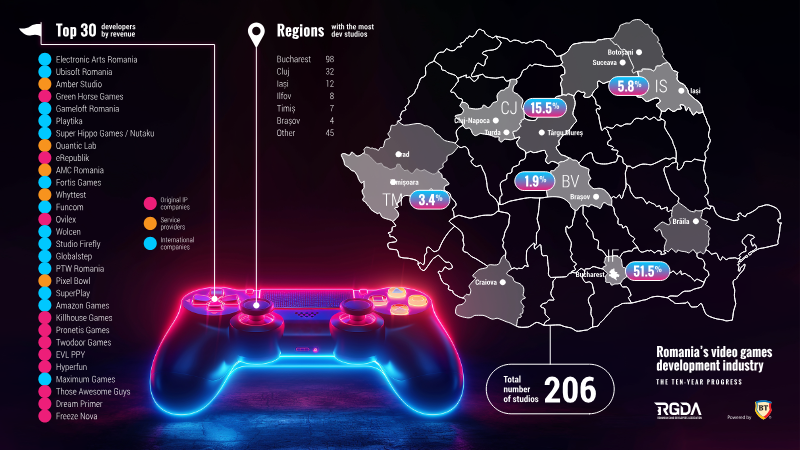
RGDA – Romanian Game Developers Association · 2025

game · 2025