
Report15 pages
Association Canadienne du Logiciel de Divertissement Rapport Annuel 2024
The 2024 annual review presents a comprehensive assessment of Canada’s video‑game sector, emphasizing its expanding regulatory influence, economic contribution and strategic diversification. Central to the analysis is the successful negotiation of two key exemptions—removal of the industry from the Streaming Act levy and exclusion from the Online Harms Act—demonstrating the sector’s growing political clout. The accession of major global publishers, notably Epic Games, Roblox and Tencent, further amplifies the association’s reach and underscores Canada’s emergence as a hub for gaming innovation and talent.
A worldwide survey of 13 000 players across twelve nations reveals that 74 % of Canadian gamers prioritize fun, while 43 % cite mental stimulation and 28 % value exploration, highlighting a multifaceted consumer motivation profile that informs product development and marketing strategies. High‑impact initiatives such as exclusive Unreal Engine‑driven studio tours in Montreal, the second Geneva Day of the Global Video Game Coalition securing United Nations‑level recognition, and the Ottawa “Jeux vidéo sur la Colline” summit collectively reinforced the sector’s cultural, social and economic significance, quantified at a $5.5 billion contribution to national GDP.
Financially, the Canadian Entertainment Software Association achieved its first full pre‑pandemic budget while operating virtually, generating cost efficiencies that funded supplemental programs including “Le pouvoir du jeu” and an overhaul of parental‑control video resources. Membership growth, driven by the inclusion of Roblox and Epic Games, propelled revenues beyond forecasts and validated the association’s diversification strategy.
Looking ahead, the organization intends to retain its virtual‑first operating model and continue advocacy for regulatory, economic and security policies that sustain industry expansion, while deepening diversity, equity and inclusion efforts through partnerships such as QueerTech and a cross‑industry equity working group. The report thus positions Canada’s interactive entertainment ecosystem as a resilient, globally connected, and policy‑savvy contributor to the broader digital economy.
- The Canadian video game sector contributed $5.5 billion to the national GDP in 2024, supported by a resilient, virtual-first operational model.
- The industry successfully secured exemptions from the Streaming Act levy and the Online Harms Act, signaling significant growth in its regulatory and political influence.
- Major global publishers including Epic Games, Roblox, and Tencent joined the association, driving revenue beyond forecasts and expanding the sector's reach.
- A global survey of 13,000 players identified that 74% of Canadian gamers prioritize fun, 43% seek mental stimulation, and 28% value exploration.
- The association achieved its first full pre-pandemic budget, allowing for increased investment in initiatives like 'Le pouvoir du jeu' and updated parental-control resources.
ESAC – Entertainment Software Association of CanadaJan 2024

Report41 pages
L'Industrie du Jeu Vidéo au Canada
The 2024 Canadian video‑game sector is presented as a mature, high‑value industry that contributes $5.1 billion to national GDP and sustains 34 010 full‑time‑equivalent positions, with an average compensation of $102 000. The analysis underscores a pronounced geographic concentration, as 83 % of the 821 operating studios are located in Ontario, British Columbia and Québec, reflecting the continued clustering of talent and infrastructure in these provinces.
Compared with 2021, the total number of firms declined by 9 %, a contraction driven largely by the disappearance of micro‑enterprises, while larger studios either remained stable or expanded. Ownership patterns have shifted markedly, with foreign‑owned companies now accounting for 88 % of total employment, indicating deepening international integration and reliance on external capital.
Industry spending reached $4.8 billion in 2024, an 11 % increase over the 2021 level, and labour costs now represent 72 % of total expenditures, up from roughly 66 % three years earlier. This rising labour share highlights the sector’s intensifying dependence on skilled human capital.
The study classifies studios into eight size categories—from solo developers to firms with more than 200 employees—using survey‑derived averages to estimate spending, revenue and wage structures across each segment. By scaling these averages to the number of firms in each tier, the analysis provides a nuanced picture of economic activity across the full spectrum of the industry.
Overall, the findings portray a Canadian video‑game ecosystem that is consolidating around a few large, often foreign‑owned players, expanding its overall financial outlays, and increasingly reliant on a highly paid workforce, all within a geographically limited core that dominates national output.
- The Canadian video game industry contributes $5.1 billion to the national GDP and employs 34,010 full-time equivalent workers with an average annual compensation of $102,000.
- Industry spending reached $4.8 billion in 2024, an 11% increase since 2021, with labour costs now accounting for 72% of total expenditures.
- The sector is increasingly dominated by foreign-owned companies, which now account for 88% of total industry employment.
- While the total number of studios declined by 9% since 2021 due to the contraction of micro-enterprises, larger studios have remained stable or expanded.
- The industry is highly concentrated geographically, with 83% of the 821 operating studios located in Ontario, British Columbia, and Québec.
+1
ESAC – Entertainment Software Association of CanadaJan 2024

Report33 pages
Italian Esports Report 2024: Market & Streaming Trends
The analysis evaluates Italy’s esports ecosystem in 2024, aiming to map its audience composition, revenue structure, and strategic priorities for industry participants. Findings reveal a core fan base of 7.3 million individuals, of whom 3.3 million regularly watch esports content. This audience skews younger, resides in urban centres, is predominantly male, and is more likely to hold full‑time employment than the broader gaming population, indicating a segment with disposable income and commercial appeal.
Revenue streams are heavily weighted toward advertising and sponsorship, with 80 % of organisations citing these as primary income sources and accounting for roughly one‑third of total market revenue. This concentration underscores the sector’s dependence on brand partnerships and suggests that monetisation beyond traditional media rights remains limited.
The study draws on a balanced consumer survey of approximately 1,000 Italian internet users aged 16‑65, conducted in September‑October 2024, and a complementary questionnaire administered to an equal number of esports‑industry stakeholders in partnership with IIDEA. All quantitative data are rounded, sourced from publicly available information, and have not undergone independent verification.
Overall, the Italian esports market emerges as a youthful, urban‑centric niche with significant advertising potential, yet its financial model remains narrowly focused. Stakeholders are likely to continue prioritising sponsorship acquisition and related promotional activities to capitalise on the identified demographic strengths.
- Italy’s esports ecosystem comprises 7.3 million fans, with 3.3 million identified as regular viewers of esports content.
- The Italian esports audience is characterized by a younger, urban-centric demographic that is predominantly male and more likely to be employed full-time than the general gaming population.
- Revenue generation is heavily concentrated, with 80% of organizations relying on advertising and sponsorship as their primary income source.
- Advertising and sponsorships account for approximately one-third of the total Italian esports market revenue.
- Monetization strategies in the Italian market remain limited, showing a significant reliance on brand partnerships rather than diversified income streams like media rights.
+1
IIDEA – Italian Interactive Digital Entertainment AssociationJan 2024

Report41 pages
Essential Facts About Video Games in Italy 2024
1. Italian Video Games Market...............................10 2. Italian Players ..................................................16 3. Italian Video Games Industry ............................23 4. Responsible Gameplay ......................................32 5. IIDEA ...............................................................38 • Total turnover of the sector.
- There are 14 million video gamers in Italy, an 8% increase from 2023, representing 1 in 3 Italians aged 6-64.
- The growth in Italian video gamers is primarily driven by women, with a 14% increase compared to a 3% increase among men in 2023.
- Mobile devices are the most popular gaming platform, used by 74% of gamers, followed by consoles (44%) and PC (34%).
- Purchases of new video games generated €562 million in 2023 (a 3% decrease from 2023), while in-game purchases and subscription services generated €354 million (a 24% increase from 2023).
- Digital downloads for consoles and PCs saw a 15% increase in sales, reaching €362 million, while physical packaged video games decreased by 24% to €201 million.
+1
IIDEA – Italian Interactive Digital Entertainment AssociationJan 2024
Report54 pages
Save Point 2024: Recapping the Year’s Biggest Trends on Live Streaming
The live‑streaming landscape in 2024 was defined by rapid platform diversification and the rise of cross‑platform broadcasting, which together reshaped how audiences consume both gaming and non‑gaming content. Kick surged by 176 % to deliver 1.7 billion hours of viewership, propelled by marquee events such as the 1.4 million‑viewer “Stream Fighters 3.” New entrants from Korea, including Chzzk and SOOP Korea, contributed tens of millions of hours and helped elevate titles like League of Legends and Minecraft to the top of platform charts. Simulcasting became the dominant distribution model, generating concurrent‑viewer gains ranging from 148 % to 491 % for leading creators, while the majority of top streamers now broadcast on multiple services simultaneously.
Co‑streaming emerged as the primary driver of esports engagement, accounting for 44.4 % of all esports viewership and roughly 1.2 billion hours watched. Signature events such as the Twitch Rivals “Hunt & Run” derived nearly all of their watch time from co‑streams, prompting organizers and brands to allocate substantial budgets toward high‑profile personalities who add commentary and community interaction. This collaborative format has become a cornerstone of audience growth and monetisation strategies across the sector.
Creator influence extended beyond traditional gaming, with Kai Cenat’s 185 million‑hour IRL marathon on Kick and IShowSpeed’s 47 million‑hour output highlighting the power of individual personalities. The year also saw a surge in VTuber viewership, exemplified by Usada Pekora, and strong performance from legacy titles such as Dragon’s Dogma 2, which amassed
- Simulcasting has become the industry-standard distribution model, with top creators achieving concurrent-viewer gains between 148% and 491% by broadcasting across multiple platforms simultaneously.
- Co-streaming is now the primary driver of esports engagement, accounting for 44.4% of total viewership and 1.2 billion hours watched.
- Kick experienced significant growth in 2024, surging 176% to reach 1.7 billion hours of viewership, bolstered by major events like the 1.4 million-viewer 'Stream Fighters 3'.
- The rise of new Korean platforms Chzzk and SOOP Korea has successfully driven viewership for major titles like League of Legends and Minecraft.
- Individual creator influence remains a dominant force, evidenced by Kai Cenat’s 185 million-hour IRL marathon on Kick and IShowSpeed’s 47 million-hour output.
+1
Stream HatchetJan 2024

Report47 pages
The Xsolla Report: State of Play (Autumn 2024 Edition)
Mobile gaming is now the dominant segment of the global video‑games market, generating $98.7 billion in 2024, of which roughly two‑thirds ($65 billion) originates from Asian economies. The rapid expansion of smartphones, high‑speed connectivity, and localized content have driven this growth, positioning mobile titles as the primary source of interactive entertainment worldwide.
A pivotal shift is the emergence of direct‑to‑consumer (D2C) web shops as essential revenue channels for mobile developers. Awareness of these storefronts is extremely high, with 81 % of players recognizing them and 77 % having completed at least one purchase. Although only a small “whale” cohort—between two and six percent of the player base—accounts for 95 % of in‑app spending, this segment also delivers superior retention and lifetime value, underscoring its strategic importance for monetisation strategies.
Empirical case studies illustrate the financial upside of integrating D2C web shops. Titles such as Tilting Point’s Warhammer: Chaos and Conquest and Star Trek Timelines achieved revenue lifts of up to 50 % after adding web‑shop functionality, leveraging exclusive content, personalised offers and frictionless payment methods to stimulate repeat purchases. These findings suggest that developers who adopt low‑friction, web‑based commerce can capture a larger share of the whale segment while also expanding overall player spend.
Overall, the data indicate that the mobile gaming ecosystem is maturing into a highly concentrated market where a minority of high‑spending users drive the majority of revenue. Strategic investment in D2C web‑shop infrastructure and targeted offers for whales presents a clear pathway for developers to enhance monetisation, improve player retention, and sustain growth in an increasingly competitive global landscape.
- Mobile gaming is the dominant global segment, generating $98.7 billion in 2024, with $65 billion of that revenue originating from Asian markets.
- A small 'whale' cohort comprising 2% to 6% of the player base accounts for 95% of all in-app spending.
- Direct-to-consumer (D2C) web shops are highly effective, with 81% of players aware of them and 77% having completed at least one purchase.
- Integrating D2C web shops can drive revenue increases of up to 50%, as demonstrated by titles like Tilting Point’s 'Warhammer: Chaos and Conquest' and 'Star Trek Timelines'.
- High-spending 'whale' segments provide superior player retention and lifetime value, making them the primary focus for sustainable monetization strategies.
+1
XsollaJan 2024

Report55 pages
State of Play: Winter 2024
The analysis projects global gaming revenue to reach approximately $205.7 billion by 2026, up from $106.8 billion in 2023, reflecting an average annual growth rate of 3.9 percent. Mobile and cloud gaming are identified as the primary engines of this expansion, with the mobile sector alone expected to generate $111.4 billion in spend and to be bolstered by record app‑download volumes—76.8 billion downloads across iOS and Google Play in the first half of 2023. Consumer spending surged by as much as 60 percent in early 2023 before stabilising within a –10 percent to +20 percent range for the remainder of the year, underscoring the volatility of post‑pandemic demand.
In the United States, women now comprise roughly half of the gaming audience and represent a significant portion of spending power, yet only 26 percent of studios report inclusive hiring practices and 18 percent provide diversity training. This disparity highlights a persistent gap between audience demographics and industry representation, even as iOS‑based role‑playing games alone generated about $1.33 billion in revenue during Q3 2023.
Growth is further driven by financial realignments, the emergence of metaverse, AR/VR, and cloud‑based experiences, and evolving consumer habits that favour direct‑to‑consumer commerce. A mobile‑gaming platform that enables web‑store sales has become a major revenue source, positioning service providers as essential partners for developers seeking funding, marketing, launch, and monetisation across multiple regions. Concurrently, a cultural shift toward greater gender diversity in executive, design, and development roles is expanding the industry’s creative talent pool, reinforcing the sector’s long‑term resilience and innovation potential.
- Global gaming revenue is projected to reach $205.7 billion by 2026, growing at an average annual rate of 3.9 percent from its 2023 baseline of $106.8 billion.
- Mobile gaming serves as the primary industry engine, with the sector expected to generate $111.4 billion in spend following 76.8 billion app downloads across iOS and Google Play in the first half of 2023.
- Consumer spending experienced high volatility in 2023, surging by 60 percent early in the year before stabilizing within a range of –10 percent to +20 percent.
- A significant demographic gap persists as women comprise roughly half of the U.S. gaming audience, yet only 26 percent of studios report inclusive hiring practices and 18 percent provide diversity training.
- Direct-to-consumer commerce and web-store sales on mobile platforms have emerged as critical revenue sources, making service providers essential partners for developer funding, marketing, and monetization.
+2
XsollaJan 2024
Report59 pages
The State of Web3 Gaming 2024
The Web3 gaming market entered a phase of maturation in 2024, marked by a strategic pivot from rapid expansion to ecosystem stability. While new game announcements decreased by 36%, project discontinuations plummeted by 84%, signaling a more resilient landscape. Indie developers currently drive over 90% of new launches, though technical integration remains a significant hurdle, with only 34% of titles successfully incorporating blockchain infrastructure. To combat the inflationary failures of earlier economic models, the industry is shifting toward "Play-to-Airdrop" mechanics to foster more sustainable player engagement.
Geographically, the APAC region and the United States remain the primary hubs for development, collectively hosting the majority of active teams. Genre dominance continues to favor RPG, Casual, and Action titles, which also attract the bulk of stabilized venture capital funding. A notable shift in distribution is underway as Telegram emerged as a powerhouse platform, capturing 21% of new game launches, while the Epic Games Store expanded its Web3 portfolio to nearly 100 titles. This evolution in accessibility is mirrored by a technical migration toward Layer 2 and Layer 3 solutions, which now account for 57% of new game launches.
Infrastructure is becoming increasingly specialized, with 64% of new blockchains designed specifically for gaming. Although the Ethereum Virtual Machine ecosystem maintains its dominance, high-growth frameworks like Arbitrum Orbit and Immutable are driving a record number of migrations as developers seek more efficient environments. Despite a 200% surge in token launches, investors maintain a conservative outlook, prioritizing high-quality game content over foundational infrastructure. This growth occurs against a fragmented regulatory backdrop, where developers must navigate the rigorous enforcement of the U.S. SEC alongside more structured frameworks in Asia and the European Union.
- The Web3 gaming sector is maturing, evidenced by a 36% decrease in new game announcements alongside an 84% reduction in project discontinuations.
- Indie developers now account for over 90% of new launches, though technical integration remains a challenge with only 34% of titles successfully implementing blockchain infrastructure.
- Telegram has emerged as a major distribution channel, capturing 21% of new game launches, while the Epic Games Store has expanded its Web3 portfolio to nearly 100 titles.
- Infrastructure is shifting toward efficiency, with 57% of new games utilizing Layer 2 or Layer 3 solutions and 64% of new blockchains being purpose-built for gaming.
- Despite a 200% surge in token launches, venture capital remains conservative, prioritizing high-quality content in RPG, Casual, and Action genres over foundational infrastructure.
+1
Game7 ResearchJan 2024
Report64 pages
Blockchain Game Alliance: State of the Industry 2024
The blockchain gaming sector is entering a phase of maturation characterized by a strategic pivot from speculative financial models toward high-quality, "fun-first" development. Player asset ownership remains the industry’s primary value proposition, cited by over 71% of professionals for four consecutive years. This shift is bolstered by the entry of traditional gaming giants such as Sony and Ubisoft, which provides necessary credibility to a field where 66.3% of practitioners still identify public misconceptions of scams as a major hurdle. While the industry faces a 42.7% decline in new hiring due to market uncertainty, professional sentiment remains resilient, with over 82% of workers intending to remain in the sector long-term.
Geographically, the industry is expanding its footprint into the Middle East and South America, while Asia and Latin America lead in the adoption of player-reward mechanics. Despite this global reach, the sector continues to struggle with demographic challenges, including a lack of gender diversity and a decline in younger talent entering the workforce. Operationally, the most significant barriers to mainstream adoption are onboarding complexities and poor user experience, though the severity of these concerns has decreased significantly since 2023. Companies currently identify lack of funding and high user acquisition costs as their most pressing internal obstacles.
Looking toward 2025, the industry is moving toward "invisible" Web3 infrastructure to prioritize seamless gameplay over technical complexity. Emerging trends include the rise of fully onchain games, the integration of artificial intelligence for personalized experiences, and the use of social platforms like Telegram to simplify user acquisition. As environmental concerns continue to fade, the focus has shifted toward sustainable "play-and-earn" economies and the consolidation of fragmented infrastructure. This evolution suggests a transition toward a more integrated gaming ecosystem where blockchain serves as a foundational layer for digital property rights rather than a standalone marketing feature.
- The blockchain gaming industry is shifting from speculative models to 'fun-first' development, with 71% of professionals identifying player asset ownership as the primary value proposition.
- Mainstream adoption is being driven by the entry of traditional giants like Sony and Ubisoft, though 66.3% of practitioners still cite public perceptions of scams as a significant barrier.
- Operational barriers like onboarding complexity and poor user experience remain the top hurdles to mainstream growth, despite a notable decrease in the severity of these concerns since 2023.
- Industry hiring has declined by 42.7% due to market uncertainty, yet 82% of current workers intend to remain in the sector long-term.
- Companies are currently prioritizing funding and high user acquisition costs as their most pressing internal obstacles.
+1
Blockchain Game AllianceJan 2024

Report44 pages
State of Performance Marketing for Videogames
The 2024 performance marketing landscape for PC and console gaming is defined by a strategic shift toward high-engagement platforms and the integration of first-party data to combat rising acquisition costs. Meta and YouTube remain the dominant forces in media planning, appearing in 75% and 44% of campaigns respectively, while Twitch has emerged as the conversion leader with a 12% success rate. This recovery period is marked by a rebound in free-to-play retention to 46% and a significant evolution in platform utility. Notably, Reddit has transformed into a high-value retention hub following an overhaul of its advertising infrastructure, and Twitter (X) continues to serve as the primary conduit for reaching the PlayStation demographic.
The industry is increasingly moving toward automation and data-driven targeting to optimize creative assets and audience reach. AI-driven tools such as Google’s Performance Max and TikTok’s Performance Automation are becoming standard, while the utilization of first-party data has proven critical, yielding conversion lifts of up to 63% in Meta-based campaigns. These technological advancements are complemented by the continued growth of influencer marketing, which currently outperforms traditional ad networks with a 4.25% conversion rate and a robust 38.95% Day 7 retention rate.
Despite the effectiveness of creator-led activations, the sector faces logistical hurdles regarding contracting, key distribution, and return-on-investment analysis. To mitigate these complexities, marketers are adopting sophisticated attribution tools to unify performance metrics across paid media and influencer channels. This holistic approach allows for a more precise understanding of player behavior and engagement across the global PC and console segments, ensuring that marketing spend is directed toward the most authentic and high-retention audience segments.
- First-party data integration is essential for efficiency, yielding conversion lifts of up to 63% in Meta-based campaigns.
- Influencer marketing currently outperforms traditional ad networks, achieving a 4.25% conversion rate and a 38.95% Day 7 retention rate.
- Meta and YouTube remain the primary media planning channels, utilized in 75% and 44% of campaigns respectively, while Twitch leads in conversion efficiency at 12%.
- Free-to-play retention has rebounded to 46% as the industry shifts toward AI-driven automation tools like Google’s Performance Max and TikTok’s Performance Automation.
- Reddit has evolved into a high-value retention hub following advertising infrastructure updates, while Twitter (X) remains the primary channel for reaching the PlayStation demographic.
+2
GamesightJan 2024
Report16 pages
The State of Games Media Buying United States Spotlight
The United States mobile gaming market maintained its position as a global leader in advertising activity during the first half of 2024. While the region ranks first globally in the total volume of app advertisers, it holds the second position for ad impressions, trailing only Southeast Asia. Despite this high ranking, the market shows signs of maturation and consolidation. The number of active advertisers grew by a marginal 0.25% year-over-year, while the proportion of new advertisers entering the space saw a significant decline of 29%. Similarly, while total ad purchases increased slightly by 0.46%, the volume of new ad creatives decreased by 12%, suggesting a shift toward established players and proven assets.
Shifts in genre performance and creative strategy define the current landscape. Puzzle games have overtaken Match games to claim the top spot in ad impression rankings, while the Sports and Shooting genres experienced the most rapid growth, rising six and four places respectively. Conversely, Hypercasual games saw a decline in impression share. Video ads remain the dominant creative format across all major genres, particularly in the Match category where they account for 87% of the ad mix. Playable ads remain a niche but specialized tool, utilized in 13% of Hypercasual campaigns compared to just 1% for Role-Playing Games.
Campaign longevity varies significantly by genre, reflecting different monetization and retention strategies. Sports games feature the most enduring campaigns, averaging 47 days, whereas Role-Playing Game campaigns typically run for only 23.6 days. To navigate this competitive environment, publishers are increasingly moving away from pure Hypercasual models toward Hybrid-casual structures, utilizing intelligent bidding and Target ROAS strategies to balance user acquisition costs with long-term profitability. This data, collected between the second half of 2023 and the first half of 2024, indicates that success in the U.S. market now requires a data-driven approach focused on retention and optimized media buying across both major platforms and programmatic SDK networks.
- The U.S. mobile gaming ad market is maturing, evidenced by a marginal 0.25% growth in active advertisers and a 29% decline in new market entrants during the first half of 2024.
- Publishers are prioritizing established assets over experimentation, as total ad purchases grew by only 0.46% while the volume of new ad creatives dropped by 12%.
- Genre dominance is shifting, with Puzzle games now leading in ad impressions, while Sports and Shooting genres saw the fastest growth, rising six and four places respectively.
- Video ads remain the primary creative format, accounting for 87% of the ad mix in the Match genre, while playable ads remain a niche strategy used in only 13% of Hypercasual campaigns.
- Campaign longevity is highly genre-dependent, ranging from an average of 47 days for Sports games to just 23.6 days for Role-Playing Games.
+2
MintegralJan 2024
Report36 pages
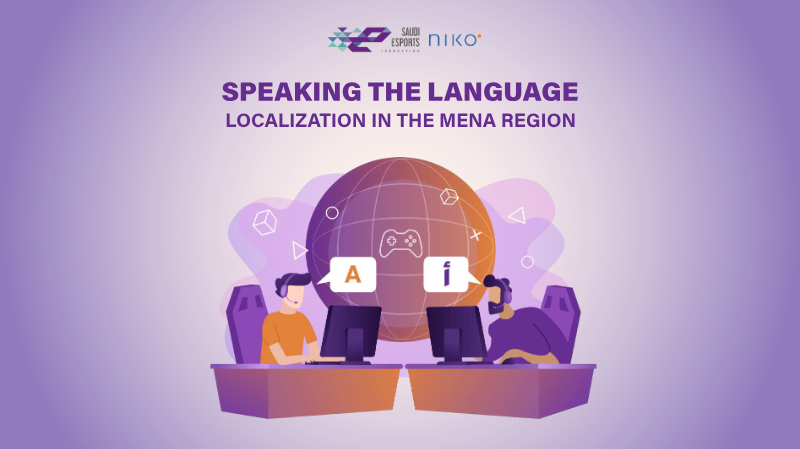
Localization in the MENA Region
The Middle East and North Africa (MENA) gaming market, specifically within the Gulf Cooperation Council (GCC), represents a high-growth frontier projected to reach $3.24 billion in player spending and 38.9 million gamers by 2028. This expansion is fueled by 96% internet penetration, high per capita income, and substantial government investment. Despite Arabic being the fifth most spoken language globally, a significant supply gap persists, as only 3.5% of Steam titles are currently localized for the region. This disparity exists even though 41% of regional gamers prioritize localized titles and over 50% highly value content tailored to their linguistic and cultural background.
Successful market entry demands a sophisticated approach to localization that transcends literal translation. Technical execution must account for right-to-left user interface formatting and complex cursive script rendering to avoid the legibility errors that have plagued previous major releases. Strategically, developers should utilize Modern Standard Arabic for text while employing regional dialects for voice-overs to enhance immersion. Culturalization is equally critical, as 40% of players are more likely to recommend games that include accurate religious considerations and regional festivals. Conversely, 27% of players will abandon a title if it relies on inaccurate stereotypes or disrespectful portrayals, highlighting the reputational risks of superficial localization.
Case studies indicate that deep culturalization can lead to exponential growth, with some titles seeing their MENA-based revenue and daily active users jump from 3% to 80% of their global total within months. Achieving these results requires integrating regional voice talent, ensuring historical accuracy, and leveraging local influencers for community engagement. To navigate these sensitivities and technical requirements effectively, international developers benefit most from partnering with regional experts. Such collaborations ensure that games resonate authentically with Arabic-speaking audiences, transforming a title from a foreign product into a culturally relevant experience.
- The MENA gaming market is a high-growth frontier projected to reach $3.24 billion in player spending and 38.9 million gamers by 2028.
- There is a significant supply gap in the region, as only 3.5% of Steam titles are currently localized despite 41% of regional gamers prioritizing localized content.
- Deep culturalization can drive exponential growth, with some titles increasing their MENA-based revenue and daily active users from 3% to 80% of their global total.
- Technical localization must account for right-to-left UI formatting and complex cursive script rendering to avoid legibility errors.
- Developers should use Modern Standard Arabic for text while employing regional dialects for voice-overs to enhance immersion and authenticity.
+1
Saudi Esports FederationJan 2024
Report13 pages
FY2024 Report: Australian Game Development Survey
The Australian game development industry demonstrated resilience and stability during the 2024 financial year despite significant global economic headwinds. Total income generated by local studios reached $339.1 million, representing a minor 1.9% decrease from the previous year. Employment remained steady with 2,465 full-time equivalent workers, a marginal 0.3% increase. The sector is heavily export-oriented, with 93% of all revenue generated from outside Australia. Furthermore, 85% of studios focus on developing their own original intellectual property rather than work-for-hire projects.
The industry landscape is characterized by a mix of emerging and established entities. While 56% of studios were formed within the last five years, a quarter of the sector consists of mature studios operating for a decade or more. Small businesses dominate the ecosystem, with 47% of studios employing five or fewer staff members. Geographically, Victoria serves as the primary hub, hosting 52% of head offices and 36% of the national workforce, followed by Queensland and New South Wales.
Government support remains a critical pillar for the industry. The Digital Games Tax Offset, which passed in mid-2023, is already being utilized by 25% of respondents to fund new projects or expand existing ones. Despite this support, developers identified securing international and local publishing deals and attracting early-stage development funding as their primary challenges.
The findings are based on a voluntary survey of 137 Australian game development studios conducted by Bond University on behalf of the Interactive Games & Entertainment Association. The data covers the period from July 1, 2023, to June 30, 2024. Looking ahead, the sector maintains a cautiously optimistic outlook, with 81% of studios predicting stable or increased revenue and 61% planning to hire new staff in the coming year.
- The Australian game development industry generated $339.1 million in revenue during FY2024, reflecting a minor 1.9% year-over-year decline despite global economic headwinds.
- The sector is highly export-focused, with 93% of total revenue derived from international markets and 85% of studios prioritizing the development of original intellectual property.
- Employment remains stable at 2,465 full-time equivalent workers, with 61% of studios planning to increase their headcount in the coming year.
- Victoria is the industry's primary hub, hosting 52% of all studio head offices and 36% of the national workforce.
- The Digital Games Tax Offset, introduced in mid-2023, is already being utilized by 25% of studios to support project funding and expansion.
+1
Interactive Games & Entertainment AssociationJan 2024

Report30 pages
State of Mobile Games in Japan
The analysis provides a comprehensive overview of Japan’s mobile‑gaming ecosystem in 2024, measuring the market’s size, growth dynamics, and competitive landscape. Total in‑app purchase (IAP) revenue reached roughly ¥2.5 trillion, marking a modest increase over 2023, while the combined share of the Apple App Store and Google Play stabilized at about 55 % and 45 % respectively. Advertising‑derived income expanded by 35 % year‑on‑year, now accounting for roughly 8 % of overall mobile‑gaming revenue, driven largely by user acquisition through YouTube, TikTok and Instagram.
Top‑grossing publishers dominate the market, with Mixi, Bandai Namco, CyberAgent, miHoYo, Square Enix and GungHo each securing multiple titles in the upper echelon of revenue. Flagship games such as Fate/Grand Order, eFootball, Pokémon GO, and the One Piece franchise collectively generated more than ¥1 trillion, underscoring the continued strength of established IPs. Genre analysis shows 3D titles now represent roughly half of the top‑performing apps, reflecting a shift toward richer visual experiences, while 2D and casual games retain a sizable user base.
The study covers the period January through July
- Japan’s mobile gaming market generated approximately ¥2.5 trillion in total in-app purchase (IAP) revenue during the first seven months of 2024.
- Established intellectual properties remain the primary revenue drivers, with titles like Fate/Grand Order, eFootball, Pokémon GO, and the One Piece franchise collectively accounting for over ¥1 trillion in earnings.
- Advertising-derived income grew by 35% year-on-year, now representing 8% of total mobile gaming revenue, fueled by user acquisition campaigns on YouTube, TikTok, and Instagram.
- The market is highly concentrated among top-tier publishers, including Mixi, Bandai Namco, CyberAgent, miHoYo, Square Enix, and GungHo.
- 3D titles have become the dominant visual format, now accounting for roughly 50% of the top-performing mobile applications.
Sensor TowerJan 2024
Report372 pages
Türkiye Game Market Report: 2024
The Turkish gaming market has emerged as a global powerhouse, reaching a valuation of approximately $810 million in 2024 with a trajectory toward $1 billion by 2029. This growth is supported by a massive domestic audience of over 48 million players and a population characterized by high digital engagement, with 76 million internet users spending nearly seven hours online daily. While mobile gaming remains the dominant segment—accounting for $490 million in revenue—the industry is currently undergoing a strategic pivot. Developers are shifting focus from hyper-casual mobile titles toward more complex PC and console projects, exemplified by the global success of titles like Supermarket Simulator and Liars Bar.
The ecosystem is bolstered by a sophisticated infrastructure of over 1,400 active studios, 26 incubation centers, and a robust financial network of 60 regulated payment institutions. Despite economic headwinds, such as high interest rates affecting hardware sales and the removal of local pricing on major platforms, investment remains resilient. In the first half of 2024, the sector saw over $120 million in deal flow across 20+ transactions. Furthermore, Türkiye has solidified its status as an esports leader, ranking second globally at the World Esports Championship and maintaining a licensed athlete base of nearly 100,000.
However, the market faces significant regulatory and technical challenges. New legal frameworks mandate that foreign platforms appoint local representatives, while recent bans on platforms like Discord and Instagram have disrupted community engagement. Additionally, with Türkiye ranking 65th globally in English proficiency, professional localization—including Turkish characters and voiceovers—is identified as a critical factor for market penetration. Moving toward 2025, the industry is expected to integrate AI-driven development tools and 5G technology more deeply, leveraging its position as a top European gaming hub to attract further international investment and expand its influence across the MENA region.
- The Turkish gaming market is valued at $810 million in 2024, with a projected growth to $1 billion by 2029 supported by a domestic player base of over 48 million.
- Mobile gaming currently leads the market with $490 million in revenue, though developers are strategically pivoting toward more complex PC and console titles like Supermarket Simulator and Liars Bar.
- Investment remains resilient despite economic headwinds, recording over $120 million in deal flow across more than 20 transactions in the first half of 2024.
- The industry ecosystem is supported by over 1,400 active studios, 26 incubation centers, and a network of 60 regulated payment institutions.
- Türkiye maintains a strong position in esports, ranking second globally at the World Esports Championship with a licensed athlete base of nearly 100,000.
+1
Gaming in TurkeyJan 2024
Report40 pages
Casual Gaming Apps Report 2024
The mobile gaming landscape is currently defined by a strategic shift toward casual and hybrid-casual experiences, which serve as the primary engine for industry growth and user acquisition. While the market faces significant headwinds in the form of rising acquisition costs—particularly on iOS, where the $4.83 cost-per-install is nearly eight times higher than on Android—high-performing regions like North America continue to deliver a sustainable Day 7 return on ad spend of 5.9%. This economic environment has triggered a transition away from hyper-casual titles toward puzzle games, which now command 37% of installs, and hybrid-casual models that integrate complex meta-layers and sophisticated LiveOps into accessible core mechanics.
Monetization strategies are becoming increasingly diversified as developers move beyond traditional advertising. The rise of "progressive offers" and "engagement offers" has transformed in-app purchases by tying discounts and rewards directly to active gameplay milestones. Furthermore, the industry is seeing a surge in collaborative "partner events" and social mechanics, such as win streaks and digging minigames, to stabilize and boost baseline revenues. These engagement-driven tactics are often paired with the emergence of external web stores, allowing developers to bypass platform fees and foster direct-to-consumer relationships through exclusive loyalty rewards and daily gifts.
The casualization of the market extends even to mid-core titles, which now rely on casual mechanics for 74% of their installs. Emerging subgenres like 3D match and Mahjong Solitaire are gaining significant traction, reflecting a broader trend of deepening gameplay depth within the casual category. By combining simple core loops with complex monetization structures and social event formats, developers are successfully navigating the high-cost acquisition environment to maintain long-term player retention and revenue growth across global markets.
- Puzzle games now account for 37% of all mobile gaming installs as the industry shifts away from hyper-casual titles.
- Casual mechanics are increasingly vital for mid-core titles, currently driving 74% of their total installs.
- User acquisition costs on iOS remain significantly higher than Android, with a cost-per-install of $4.83 that is nearly eight times the rate on Android.
- North American markets remain a key growth driver, delivering a sustainable Day 7 return on ad spend of 5.9%.
- Developers are increasingly utilizing external web stores to bypass platform fees and establish direct-to-consumer relationships through loyalty rewards.
GameRefineryJan 2024

Report29 pages
Mobile Ad Creative Index 2024
The Mobile Ad Creative Index provides a comprehensive analysis of performance benchmarks and emerging trends within the mobile advertising ecosystem. Covering the period from January 2023 to January 2024, the data is derived from a massive sample of 602 billion impressions, 49.4 billion clicks, and 144 million installs across the gaming, e-commerce, finance, and entertainment sectors. The primary thesis asserts that while traditional formats like banners remain cost-effective for driving specific actions, high-engagement formats such as video, playables, and interstitials are significantly more effective at converting impressions into installs.
Key findings highlight a stark contrast in performance across formats. In gaming, video and playable ads are over 20 times more likely to result in an install than banners, while interstitial ads in the finance sector are 18 times more likely to convert. However, cost-per-install (CPI) varies greatly by platform; for instance, native ads are the most cost-effective on iOS for gaming, whereas playables offer the best value on Android. In e-commerce, native and banner ads excel at driving post-install purchases, achieving install-to-action rates exceeding 30%.
The analysis identifies several pivotal trends for 2024, most notably the integration of generative AI to enhance the speed and scale of creative production, such as automated localization and voice-overs. User-generated content (UGC) remains a dominant force, with optimized UGC ads showing 20% lower CPIs than standard video. Furthermore, there is a measurable shift toward longer, more immersive ad experiences. Spend on long-form video grew by 245% year-over-year, and "triple-page" ads—combining video, playables, and end cards—saw a 355% increase in spend, suggesting that users increasingly prefer transparent, high-quality engagement over short, deceptive creative tactics.
- High-engagement formats like video and playables outperform banners by 20 times in gaming installs, while finance sector interstitials are 18 times more effective at conversion.
- Long-form video ad spend grew by 245% year-over-year, and 'triple-page' ads combining video, playables, and end cards saw a 355% increase in investment.
- Optimized user-generated content (UGC) ads achieve a 20% lower cost-per-install (CPI) compared to standard video creative.
- Native ads are the most cost-effective format for gaming on iOS, whereas playables provide the best value for gaming on Android.
- In the e-commerce sector, native and banner ads remain highly effective for driving post-install activity, maintaining install-to-action rates above 30%.
+3
LiftoffJan 2024

Report48 pages
Mobile App Trends: 2024 Edition
The mobile app industry demonstrated significant resilience throughout 2023, characterized by a global advertising spend of $362 billion and a late-year surge in installations. While the landscape faced challenges such as rising acquisition costs and evolving privacy regulations, the fintech and e-commerce sectors emerged as primary growth engines. Fintech experienced a 42% increase in installs and a 118% surge in in-app revenue, while e-commerce saw a 43% year-over-year rise in installs alongside a 34% increase in revenue. These sectors successfully optimized their acquisition strategies, with banking eCPIs falling from $2.33 to $1.37, allowing marketers to achieve rapid returns on investment within the first week of user acquisition.
The gaming sector navigated a more complex trajectory, ending the year with a 2% annual decline in installs despite a notable recovery in the fourth quarter. This rebound was driven by a 7% year-over-year growth in installs and the emergence of the hybrid casual genre. Although overall gaming sessions dipped, specific subverticals like racing and simulation saw dramatic install spikes of 61% and 53%, respectively. Global gaming stickiness remained stable at 20%, and high-engagement genres like RPG and adventure continued to command strong lifetime value, even as broader retention rates across the mobile ecosystem faced downward pressure.
Future industry success depends on the strategic integration of artificial intelligence and predictive analytics to enhance personalization and automate complex workflows. To achieve sustained growth in 2024 and beyond, developers must diversify their media mixes by expanding into emerging channels like Connected TV and adopting holistic measurement frameworks. By combining incrementality testing with media mix modeling, stakeholders can better navigate the shift toward privacy-centric marketing while capitalizing on the high-potential returns offered by the global mobile marketplace.
- Fintech and e-commerce drove significant market growth in 2023, with fintech seeing a 42% increase in installs and a 118% surge in in-app revenue.
- E-commerce performance remained strong with a 43% year-over-year rise in installs and a 34% increase in revenue.
- Banking sector efficiency improved significantly as eCPIs dropped from $2.33 to $1.37, enabling faster return on investment for marketers.
- The gaming sector experienced a 2% annual decline in total installs, though it saw a Q4 recovery led by a 7% year-over-year growth in installs and the rise of the hybrid casual genre.
- Specific gaming subverticals outperformed the broader market, with racing and simulation genres recording install spikes of 61% and 53%, respectively.
+2
AdjustJan 2024

Report33 pages
Mobile Gaming Spender Report: Decoding Today’s Mobile IAP Spenders to Understand Motivations, Engagement
The 2024 Mobile Gaming Spender Report by Mistplay examines the evolving motivations, behaviors, and shifting financial priorities of mobile in-app purchase (IAP) spenders. The analysis is based on a survey of approximately 2,000 active spenders in the United States and Canada conducted between December 2023 and January 2024, supplemented by behavioral data from millions of users on the Mistplay platform from Q2 2023 through Q1 2024. The report segments players into high-value ($100+), mid-value ($10–$99), and low-value (<$10) cohorts to provide granular insights into the current market maturity.
A primary thesis of the research is that mobile spenders are becoming increasingly discerning due to economic headwinds. Findings indicate that 32% of all spenders—and 41% of high-value spenders—plan to reduce their in-game expenditures in 2024. To combat this, the data suggests a shift toward hyper-personalization and loyalty-driven retention. Approximately 40% of spenders are influenced by personalized offers, and 79% engage with loyalty programs. Furthermore, 51% of respondents indicate they would spend more if they earned tangible rewards or points for their purchases, highlighting a demand for value-driven discretionary spending.
The report also identifies distinct genre-based personas: "Casual Candace" (Puzzle/Simulation), "Midcore Mike" (RPG/Strategy), and "Lucky Lucy" (Social Casino). While social factors and referrals are effective for top-of-funnel discovery—with 73% of spenders installing a game via referral in the past year—they rarely drive actual spending, as 69% of respondents claim social influence does not affect their financial decisions. Ultimately, the findings conclude that sustainable growth in 2024 will require publishers to move beyond traditional user acquisition toward sophisticated lifecycle marketing, direct-to-consumer web stores, and transparent ad creative that accurately reflects gameplay.
- Economic headwinds are driving a contraction in spending, with 32% of all mobile spenders and 41% of high-value spenders planning to reduce their in-game expenditures in 2024.
- Value-driven incentives are critical for retention, as 51% of spenders would increase their spending if they earned tangible rewards or points for their purchases.
- Loyalty programs and hyper-personalization are essential engagement tools, with 79% of spenders engaging with loyalty programs and 40% influenced by personalized offers.
- While social factors and referrals are effective for user acquisition—driving 73% of installs—69% of spenders report that social influence does not affect their actual financial decisions.
- Sustainable growth in 2024 requires a strategic shift toward direct-to-consumer web stores, sophisticated lifecycle marketing, and ad creatives that accurately reflect actual gameplay.
+2
MistplayJan 2024

Report46 pages
The State of Gaming 2024
The global mobile gaming market underwent a significant correction in 2023, characterized by a 10% decline in downloads and a 2% dip in overall revenue. This downturn was primarily driven by escalating user acquisition costs and a post-pandemic stabilization of consumer habits. A distinct shift in player preference emerged as mid-core revenue fell by 9%, while casual and hybrid-casual segments grew by 8% and 30%, respectively. Despite these macro challenges, breakout successes like Monopoly Go! and Royal Match proved that innovative monetization and robust live operations can still yield massive returns in a tightening market.
Marketing strategies have evolved to prioritize high-impact collaborations and mobile advertising, which now commands 67% of global gaming ad spend. The industry is seeing a move toward gender parity in mid-core gaming, while platform-specific engagement has become more specialized, with TikTok attracting core gamers and Facebook remaining a stronghold for the female-skewing casual demographic. To mitigate rising costs, developers are increasingly leveraging intellectual property and transmedia expansions to drive organic discovery and long-term player retention.
Geographically, the industry focus is shifting toward emerging markets such as Latin America and the Middle East, where lower costs per install in countries like Brazil and Saudi Arabia offer new avenues for growth. While external subscription models, such as Netflix Games, experienced a 194% surge in downloads, they currently represent a small and largely unprofitable portion of the total ecosystem. Consequently, the prevailing industry strategy emphasizes the optimization of existing titles through aggressive live operations and brand partnerships rather than relying solely on new user acquisition in saturated Western markets.
- The global mobile gaming market contracted in 2023, with a 10% decline in downloads and a 2% dip in revenue due to rising user acquisition costs and post-pandemic habit stabilization.
- Market segment preferences shifted significantly in 2023, as mid-core revenue fell by 9% while casual and hybrid-casual segments grew by 8% and 30%, respectively.
- Mobile advertising now accounts for 67% of global gaming ad spend, with marketing strategies increasingly relying on high-impact collaborations and transmedia IP to drive organic discovery.
- Developers are pivoting toward emerging markets like Brazil and Saudi Arabia to capitalize on lower costs per install compared to saturated Western regions.
- While Netflix Games saw a 194% surge in downloads, subscription models remain a small and largely unprofitable segment of the overall gaming ecosystem.
+1
Sensor TowerJan 2024