ReportAdaverse
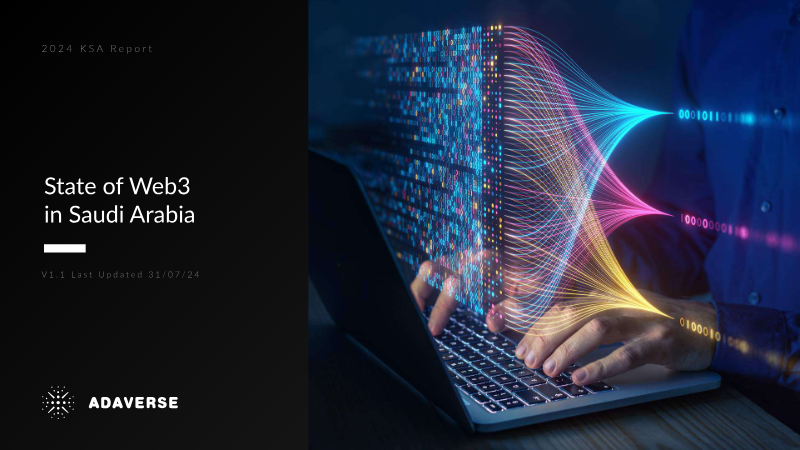
State of Web3 in Saudi Arabia: 2024 KSA Report
1 Jan 2024145 pages~145 min full read
Saudi Arabia captured over 50 percent of all regional venture capital funding in the MENA region during early 2024.
See it on page 14Vision 2030 and a young, digitally native population are the primary drivers establishing the Kingdom as a premier regional hub for Web3 innovation.
See it on page 120The Saudi Web3 sector is currently focused on applying blockchain technology to fintech, environmental sustainability, and secure ticketing, alongside significant investments in gaming and esports.
See it on page 3Primary barriers to sustainable growth include regulatory uncertainty, market volatility, and a persistent shortage of specialized talent.
See it on page 72Mass-market adoption is currently hindered by the technical complexity of decentralized applications, necessitating a shift toward intuitive, value-driven user interfaces.
See it on page 28Long-term success depends on fostering collaboration between government regulators, academic institutions, and private industry to create a stable, business-friendly environment.
See it on page 72Saudi Arabia is rapidly establishing itself as a premier regional hub for Web3 innovation, propelled by the strategic objectives of Vision 2030 and a demographic profile characterized by a young, digitally native population. The Kingdom has secured a dominant position in the MENA venture capital landscape, capturing over 50 percent of regional funding in early 2024. This financial momentum is bolstered by robust government support, significant investments in gaming and esports, and a burgeoning startup ecosystem that is increasingly applying blockchain technology to sectors such as fintech, environmental sustainability, and secure ticketing.
Despite this rapid expansion, the ecosystem faces structural challenges that must be addressed to achieve mass-market adoption. Industry stakeholders identify regulatory uncertainty, market volatility, and a persistent shortage of specialized talent as primary barriers to sustainable growth. Furthermore, the current technical complexity of decentralized applications remains a significant hurdle for the average user. Experts emphasize that for Web3 to integrate successfully into the broader economy, developers must prioritize the creation of intuitive, value-driven user interfaces that abstract away technical complexities, shifting the focus from decentralization for its own sake to practical, real-world utility.
The long-term success of the Saudi Web3 sector depends on the continued alignment of technological development with national economic diversification goals. By fostering deeper collaboration between government regulators, academic institutions, and private industry, the Kingdom aims to create a stable and business-friendly environment. As the ecosystem matures, the transition from foundational infrastructure to sophisticated, user-centric applications will be critical in cementing Saudi Arabia’s status as a global leader in blockchain innovation and digital transformation.