
Warcraft III: Reign of Chaos
GameBy Blizzard Entertainment · Released Jul 3, 2002
Warcraft III: Reign of Chaos is a real-time strategy game set in the high fantasy world of Azeroth. Players control one of four factions, the Human Alliance, Orcish Horde, Night Elves, or Undead Scourge, each with unique units, structures, and hero characters that gain experience and abilities through combat.
Connections
Each row is a game or company named alongside Warcraft III: Reign of Chaos, each column a document, oldest first. A mark means that document names it. Select a row to see those documents.
About the game
- Released
- Jul 3, 2002
- Developer
- Blizzard Entertainment
- Publishers
- Sierra Entertainment, Capcom
- Genres
- Real Time Strategy (RTS), Strategy
- Platforms
- PC (Microsoft Windows), Mac
- Links
- Wikipedia
Game data from IGDB.com
Documents about Warcraft III: Reign of Chaos
Extremists Play Games Too: Gaming References in Extremist Discourse
This analysis explores the intersection of video games and violent extremism by examining how radicalized individuals incorporate gaming into their personal narratives and operational planning.
- Extremist actors utilize video games as a strategic alibi to justify social isolation and clandestine activities, as demonstrated by Anders Behring Breivik’s use of World of Warcraft to explain away his withdrawal from society while planning attacks.
- Some extremists frame video games as tactical training tools, with Breivik explicitly citing Modern Warfare 2 as a 'military simulator' that allowed him to simulate operational scenarios.
- Video games serve as a 'sanctuary' for individuals experiencing social alienation, providing a space for identity formation and escapism before radicalization, as seen in the case of Elliot Rodger.
Valorant x Esports World Cup 2026: Peak Concurrent Viewership Analysis
Valorant at the Esports World Cup 2026 recorded a sharp decline in audience, peaking at 247,996 concurrent viewers during the Grand Final, in which 100 Thieves defeated NRG 3:1.
- Valorant peak concurrent viewership for the 2026 Esports World Cup declined by 45.8% compared to the 2025 event.
- The tournament’s $2 million prize pool failed to drive engagement, demonstrating that financial incentives are less effective than team-based appeal for viewer retention.
- The primary cause of the viewership downturn was the absence of top-tier rosters and the early elimination of fan-favorite organizations.
Esports Sponsorship Benchmark H1 2026: Media Value Delivery
Esports Charts' H1 2026 sponsorship benchmark, published July 9, 2026, ranks esports events by Media Value, an estimate of what a 1% on-screen banner placement would cost rather than actual sponsor spend.
- The top ten esports events in H1 2026 generated a collective $203 million in media value.
- Sponsorship efficacy is currently driven by media value delivery rather than raw audience size.
- Counter-Strike and League of Legends remain the primary drivers of financial value for corporate partners.
MLBB Championship Tour AMER 2026: Debut Season Viewership
The MLBB Championship Tour AMER 2026 delivered a strong debut season in viewership, outperforming several established tier-2 regional leagues and positioning the Americas as a notable new market for Mobile Legends: Bang Bang esports.
- The 2026 debut of the MLBB Championship Tour Americas (AMER) outperformed established tier-2 leagues like the LCS, LPL, and EMEA Masters in average concurrent viewership and total watch hours.
- TikTok served as the primary driver of engagement, accounting for nearly 75% of total watch time and hosting peak concurrent viewership exceeding 60,000.
- The tournament reached a peak of 62,345 concurrent viewers during the Swiss Stage Week 1 match between Alpha7 Esports and 9z Team.
Esports Charts Updates: Dashboard, Favorites, Records & More
Esports Charts announced a broad set of platform updates on June 16, 2026, aimed at making esports audience data easier to explore, personalize, and contextualize.
- Esports Charts has launched a centralized dashboard featuring a media-value calculator, multi-stream viewer, and expanded records section to track live viewership, prize money, and team watch-time.
- IEM Cologne Major 2026 achieved a peak of over two million live viewers, while EMEA Masters Spring experienced a 65% decline in viewership, highlighting significant shifts in audience engagement.
- New 'Additional Reach' and non-standard viewership labels have been implemented to distinguish organic audience figures from those inflated by promotional, embedded, or external streams.
Esports Charts Flags Non-Standard Viewership for Context
On June 16, 2026, Esports Charts introduced a "non-standard viewership" label designed to give context to event audience figures that may not reflect deliberate viewing choices.
- Esports Charts has introduced a 'non-standard viewership' label to identify event metrics potentially inflated by autoplay, embedded streams, bots, or promotional distribution.
- The new labeling system aims to help stakeholders distinguish between genuine audience engagement and anomalous traffic to prevent the overestimation of reach.
- Legitimate viewership data remains counted, and the platform’s existing policy regarding view-botting remains unchanged by this update.
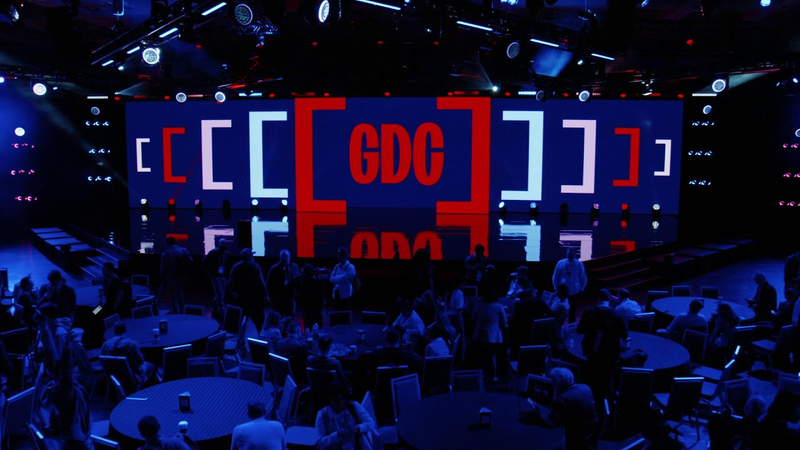
GDC 2026 Keynote - An Odyssey in Building Games That Last
Enduring success in the modern gaming industry is not a product of rigid top-down mandates or formulaic pitch decks, but rather the result of an iterative, non-linear odyssey.
- The most reliable indicator of a game's potential for success is when the development team becomes so obsessed with the core experience that they must be forced to stop playing to return to work.
- Game development is rarely a linear process; teams must be prepared to pivot, cancel, or fundamentally restructure projects—such as the transition from the failed 'Titan' project to the development of 'Overwatch'—when the core vision fails to resonate.
- At Bonfire Studios, the team identifies viable projects by having staff from all disciplines pitch 'seeds' (early concepts), which are then evaluated through mood boards and stack-ranked by the entire team to ensure collective buy-in.
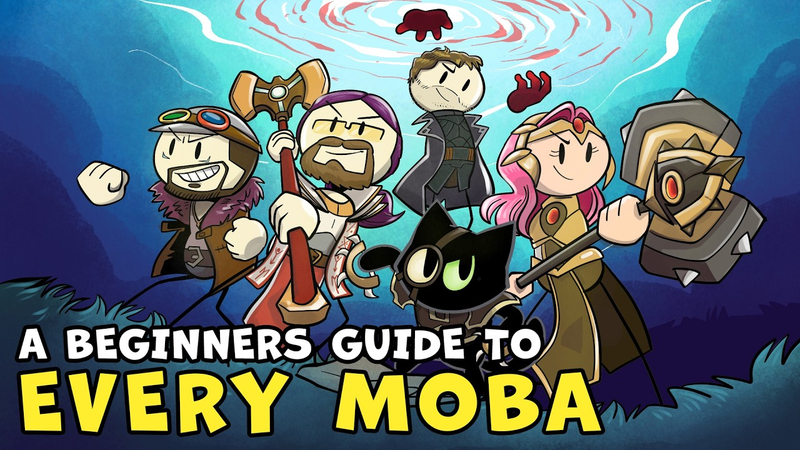
From League of Legends to Deadlock: Understanding MOBAs | Extra Credits
Multiplayer Online Battle Arenas (MOBAs) represent a complex, team-oriented genre that evolved from early real-time strategy (RTS) mods like Aeon of Strife and Defense of the Ancients.
- MOBAs are defined by a two-tiered economy of experience and gold, where experience upgrades character stats and abilities while gold is used to purchase items that provide significant power spikes.
- Minion farming is a critical strategic priority because gold and experience are lost if a player does not land the final hit on a minion, and sharing lanes reduces the total resources available to the team.
- Unlike hero shooters where character power remains relatively static, MOBA characters can become 'fed' by accumulating a disproportionate amount of resources, leading to massive power imbalances that are driven by the underlying economy.
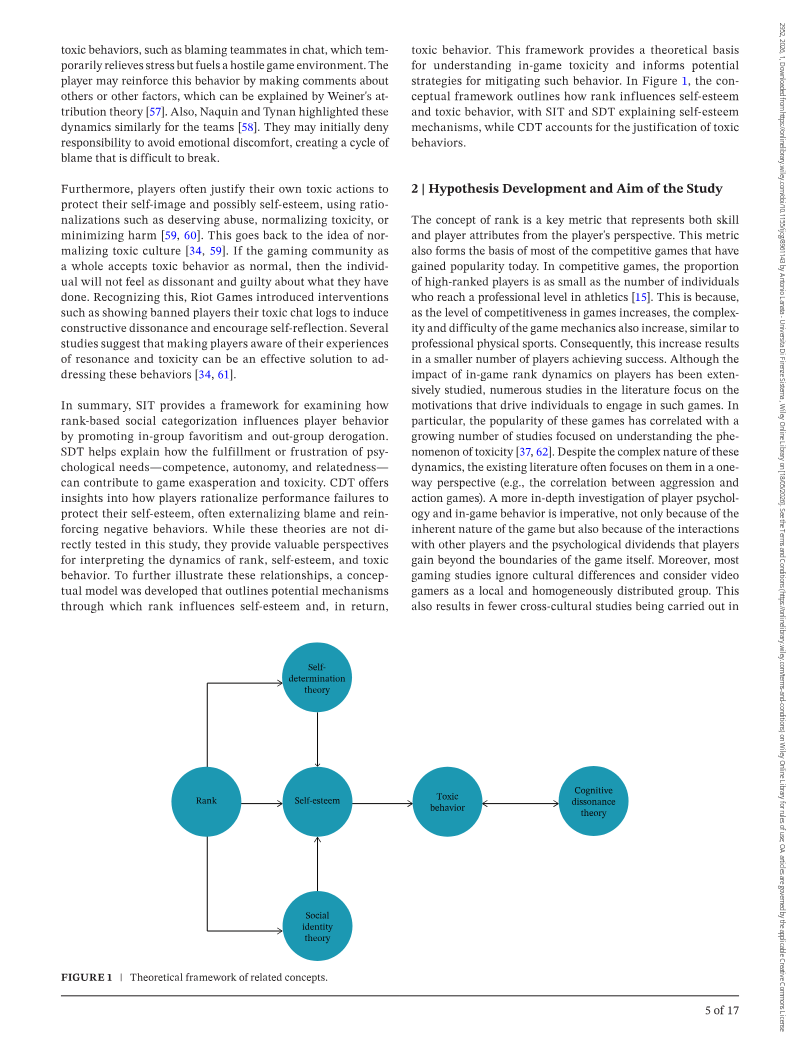
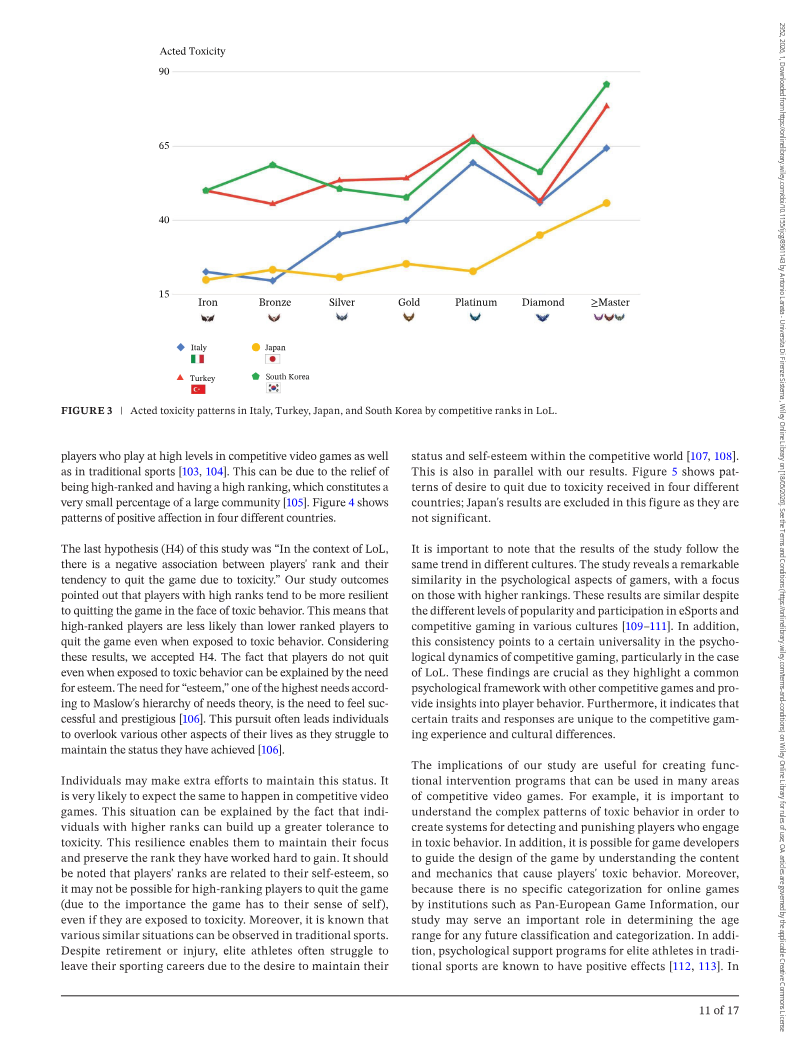
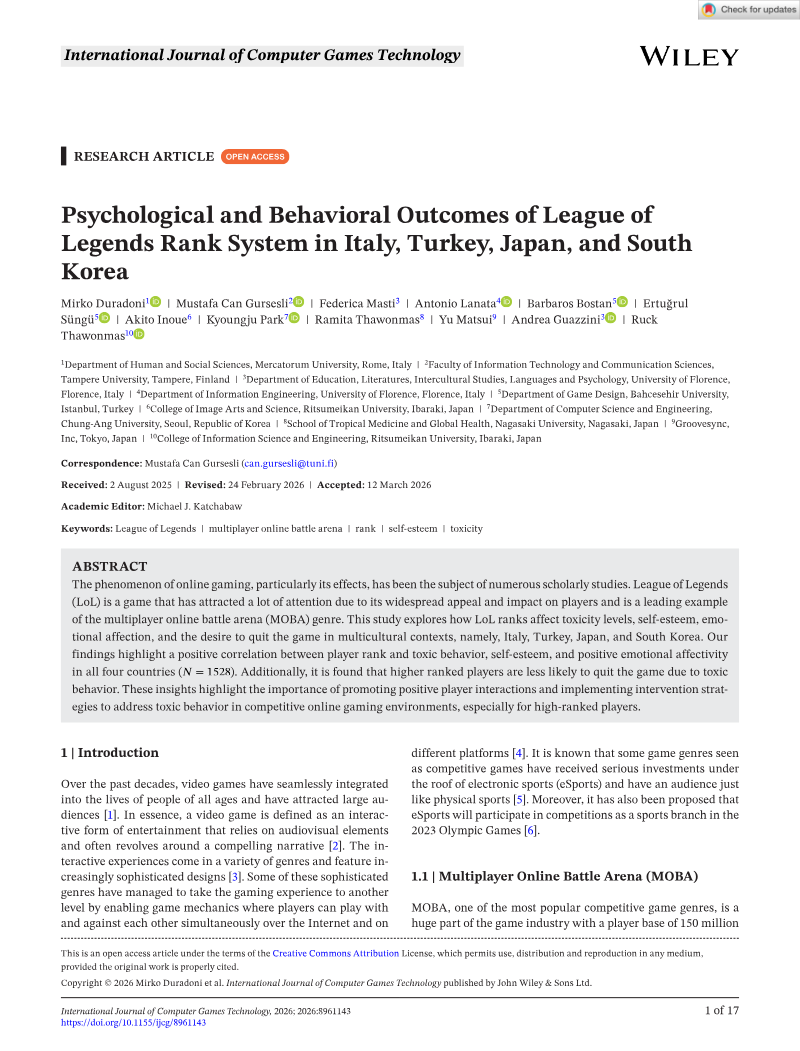
Psychological and Behavioral Outcomes of League of Legends Rank System in Italy, Turkey, Japan, and South Korea
Competitive success in League of Legends serves as a primary driver for both psychological fulfillment and behavioral volatility among elite players.
- Competitive rank is the most robust predictor of toxic behavior in League of Legends, with high-ranking players utilizing hostility as a defensive mechanism to protect their status.
- A study of 1,528 participants across Italy, Turkey, Japan, and South Korea confirms that behavioral patterns in competitive gaming are universal rather than culturally contingent.
- Players at the Master tier and above demonstrate high psychological resilience, maintaining a deep commitment to the game despite persistent exposure to toxic environments.
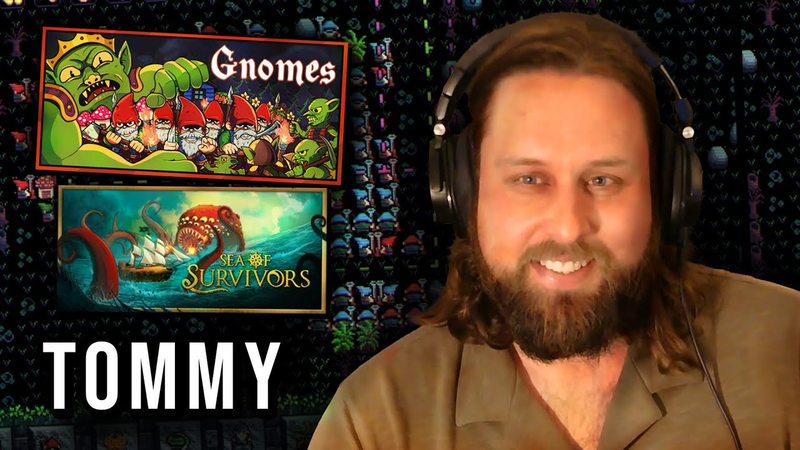
Steam Demos Are the New Early Access
Modern indie game development prioritizes a marketing-first philosophy where high-quality, polished demos serve as the primary vehicle for market validation and wishlist acquisition.
- Game developers should prioritize the 'ugabooga' solution—the lowest-investment, simplest implementation—to test core mechanics before building complex systems.
- Steam's 'New and Trending' tab remains a critical discovery metric, with an estimated threshold of approximately $8,000 in sales required to gain visibility.
- The quality of a game is validated when playtesters continue playing for hours after a scheduled session ends, indicating the presence of 'secret sauce' beyond just a compelling trailer.
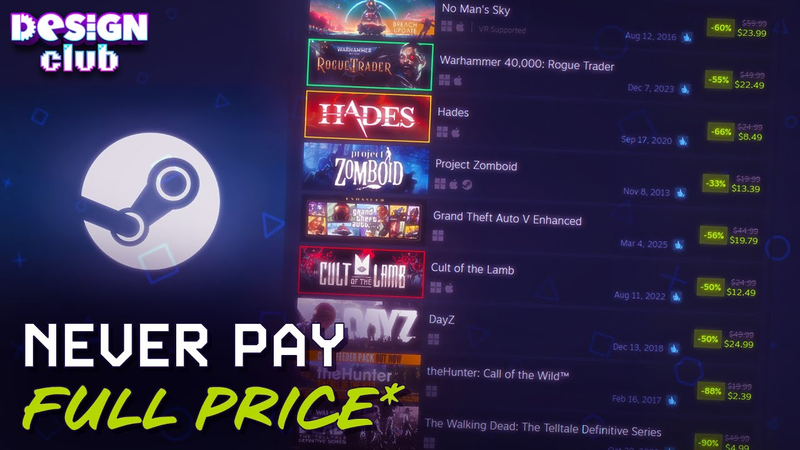
How Valve (And Apple) Broke Game Sales | Design Club
The digital distribution landscape has undergone a profound transformation, shifting from a model defined by physical retail to one dominated by centralized storefronts like Steam.
- Steam has fundamentally altered consumer price anchoring by normalizing frequent, deep discounts, training players to wait for sales rather than purchasing games at full price.
- Developers are now forced to build 'sale-proof' pricing models, ensuring that even after significant discounts, the revenue per unit remains profitable after platform fees.
- The frequency and depth of Steam discounts have increased significantly over time, with standard promotions moving from 10–20% to 30–60% or higher to capture consumer attention.
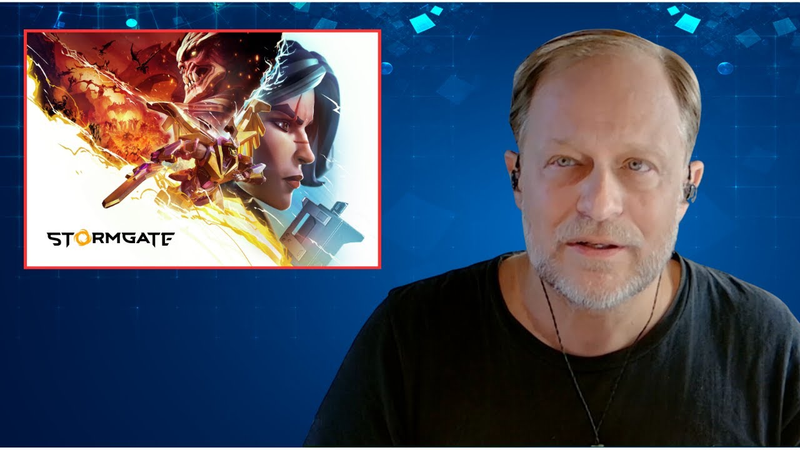
Is RTS Really Dead? How It Comes Back (Tim Morten StarCraft 2, StormGate)
The real-time strategy (RTS) genre maintains a dedicated and stable core audience, though it has been eclipsed in total market share by genres such as multiplayer online battle arenas (MOBAs) and battle royales.
- The core audience for the real-time strategy (RTS) genre remains passionate and has not diminished, but the genre has been eclipsed in total player count by massive genres like MOBA and Battle Royale.
- Achieving growth for the RTS genre beyond its current niche requires significant innovation, with social play identified as a primary, yet difficult-to-execute, growth strategy.
- Frost Giant’s development of Stormgate faced scope challenges that forced the team to prioritize core gameplay modes over the intended social and co-op experiences.