VideoGameMakers
Is RTS Really Dead? How It Comes Back (Tim Morten StarCraft 2, StormGate)
16 Oct 20255 min video
Transcript
is an older guy who who loved Warcraft 3 and the Starcraft games. I still believe in RTS, but there there are some folks who say MOA is a new RTS. What is your general feeling about the genre overall?
Having had the benefit of seeing the backend numbers both at uh Blizzard when I was there, also EDA for Command and Conquer when I was there. there there is a very passionate core audience for RTS and that passionate core audience hasn't diminished in any way. What's actually happened is that other genres have eclipsed it. Um and so the size of the MOA audience is orders of magnitude bigger than the RTS audience ever was. Um battle royale like in insert genre here. there there are all of these genres that have far eclipsed the size of the RTS genre. So I I think can the RTS genre still succeed? Is there an audience for it? Absolutely. Can the RTS
genre be as big as MOA or Battle Royale? That will require some kind of innovation, some kind of change that draws a bigger audience to the genre. At Frost Giant, we believed that innovation could be social play. Um, unfortunately, where we got to with development was still just trying to get the fundamentals right. Like, we didn't get to the point that we could deliver a great co-op experience, a great team mayhem experience. Um, because of that scope challenge that I talked about before, like we had to pull back and just focus on the core modes. But I believe that well done um making RTS more social is still a good recipe to grow the genre and and there may be other gameplay innovations um that contribute to that.
Right. Let me let me ask you about one of those. So I I know I think I was at dinner a year or two ago. I I I I think
I talked to you about my theory the the micro versus macro complexity theory. And I'd love to see if you have a more current take on it. But for for the audience, the the theory that I had pitched uh Tim is that I I felt like RTS has a lot of micro complexity, meaning the specific unit control as well as macro complexity in terms of like the kind of buildings and you know where you're going to go on the map and like collection of resources and how you direct resources. And so RTS has a lot of micro and micro and macro complexity. And I felt like what MOA did is it reduced the macro and lean more into the micro. And so one theory I had is well what if you did the opposite where you launched a game that was less micro, heavier macro. Do you think an RTS that did that? I don't know if you have any more more recent thoughts on on on my complexity theory, but what what
do you think, Tim?
So, I think different audiences um attach differently to macro and micro. Um and I guess I would argue tower defense, auto battlers, I mean those those are kind of
kind of like that. Yeah, true.
Well, yeah, they're kind of the inverse. So where to a great extent MOA deleted the macro, those to a great extent delete the micro. Um, and I I think all of these genres have been successful. So I think there's just something about player segmentation there is is my bet. Um, I do think that uh a great game could be made. I think Adelaces um was an example of simplified uh macro in a more traditional RTS with micro. I think it was a great game. Um and so I think there is promise in that
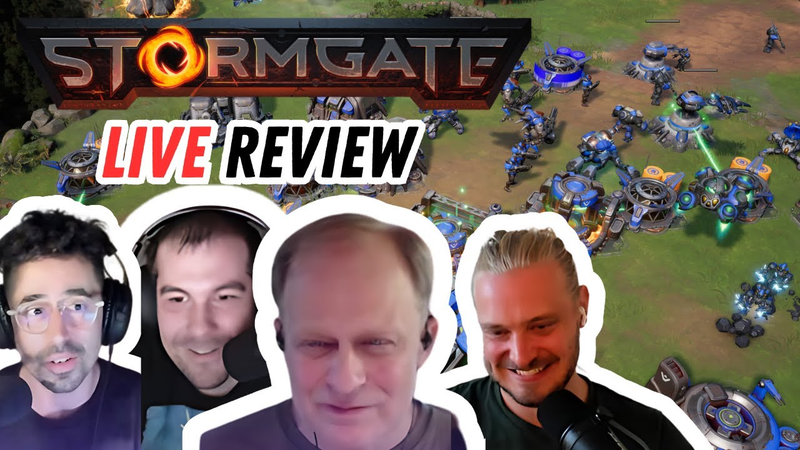
direction, but I I don't necessarily think that's the the one path. Hey folks, thanks so much for tuning in. Tim Morton from Starcraft 2 and Tim Campbell from Warcraft 3 created Frost Giant and really took their best shot at making a brand new RTS. If you want to hear the full story behind the starting of Frost Giant and their lessons learned from launching Stormgate, we have a fulllength discussion with Tim right here. So, tune in, check it out. It's a dope discussion with Tim Morton. Lots of lessons to be learned
Auto-generated captions from YouTube — names and numbers may be misheard.
Key insights
5 takeaways · ~2 min read- 01The core audience for the real-time strategy (RTS) genre remains passionate and has not diminished, but the genre has been eclipsed in total player count by massive genres like MOBA and Battle Royale.
- 02Achieving growth for the RTS genre beyond its current niche requires significant innovation, with social play identified as a primary, yet difficult-to-execute, growth strategy.
- 03Frost Giant’s development of Stormgate faced scope challenges that forced the team to prioritize core gameplay modes over the intended social and co-op experiences.
- 04The complexity of RTS games is split between micro (unit control) and macro (resource and base management), with successful adjacent genres like MOBA and Tower Defense often choosing to eliminate one of these pillars entirely.
- 05Player segmentation suggests there is no single path to success, as audiences attach differently to micro and macro mechanics, allowing for potential success in games that lean heavily into either side of the complexity spectrum.
Ask AI about this video
Cite this video
Citation
Generating citation…






















Comments