
Warcraft III: Reign of Chaos
GameBy Blizzard Entertainment · Released Jul 3, 2002
Documents about Warcraft III: Reign of Chaos

GDC 2026 Keynote - An Odyssey in Building Games That Last
Enduring success in the modern gaming industry is not a product of rigid top-down mandates or formulaic pitch decks, but rather the result of an iterative, non-linear odyssey.
- The most reliable indicator of a game's potential for success is when the development team becomes so obsessed with the core experience that they must be forced to stop playing to return to work.
- Game development is rarely a linear process; teams must be prepared to pivot, cancel, or fundamentally restructure projects—such as the transition from the failed 'Titan' project to the development of 'Overwatch'—when the core vision fails to resonate.
- At Bonfire Studios, the team identifies viable projects by having staff from all disciplines pitch 'seeds' (early concepts), which are then evaluated through mood boards and stack-ranked by the entire team to ensure collective buy-in.
From League of Legends to Deadlock: Understanding MOBAs | Extra Credits
Multiplayer Online Battle Arenas (MOBAs) represent a complex, team-oriented genre that evolved from early real-time strategy (RTS) mods like Aeon of Strife and Defense of the Ancients.
- MOBAs are defined by a two-tiered economy of experience and gold, where experience upgrades character stats and abilities while gold is used to purchase items that provide significant power spikes.
- Minion farming is a critical strategic priority because gold and experience are lost if a player does not land the final hit on a minion, and sharing lanes reduces the total resources available to the team.
- Unlike hero shooters where character power remains relatively static, MOBA characters can become 'fed' by accumulating a disproportionate amount of resources, leading to massive power imbalances that are driven by the underlying economy.

Steam Demos Are the New Early Access
Modern indie game development prioritizes a marketing-first philosophy where high-quality, polished demos serve as the primary vehicle for market validation and wishlist acquisition.
- Game developers should prioritize the 'ugabooga' solution—the lowest-investment, simplest implementation—to test core mechanics before building complex systems.
- Steam's 'New and Trending' tab remains a critical discovery metric, with an estimated threshold of approximately $8,000 in sales required to gain visibility.
- The quality of a game is validated when playtesters continue playing for hours after a scheduled session ends, indicating the presence of 'secret sauce' beyond just a compelling trailer.

How Valve (And Apple) Broke Game Sales | Design Club
The digital distribution landscape has undergone a profound transformation, shifting from a model defined by physical retail to one dominated by centralized storefronts like Steam.
- Steam has fundamentally altered consumer price anchoring by normalizing frequent, deep discounts, training players to wait for sales rather than purchasing games at full price.
- Developers are now forced to build 'sale-proof' pricing models, ensuring that even after significant discounts, the revenue per unit remains profitable after platform fees.
- The frequency and depth of Steam discounts have increased significantly over time, with standard promotions moving from 10–20% to 30–60% or higher to capture consumer attention.
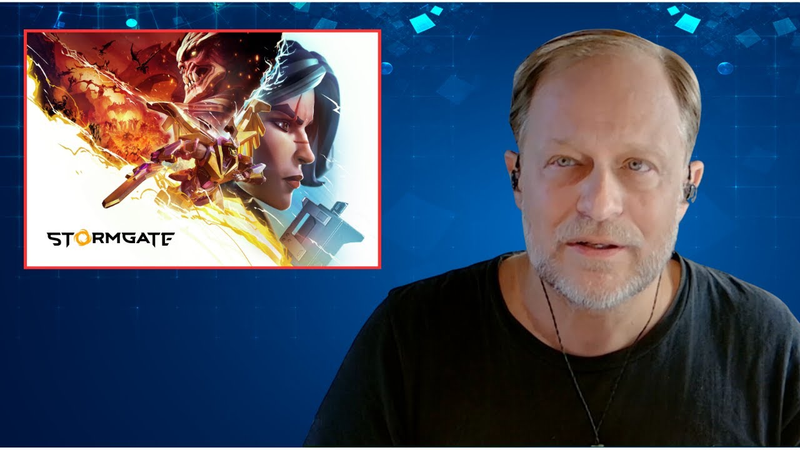
Is RTS Really Dead? How It Comes Back (Tim Morten StarCraft 2, StormGate)
The real-time strategy (RTS) genre maintains a dedicated and stable core audience, though it has been eclipsed in total market share by genres such as multiplayer online battle arenas (MOBAs) and battle royales.
- The core audience for the real-time strategy (RTS) genre remains passionate and has not diminished, but the genre has been eclipsed in total player count by massive genres like MOBA and Battle Royale.
- Achieving growth for the RTS genre beyond its current niche requires significant innovation, with social play identified as a primary, yet difficult-to-execute, growth strategy.
- Frost Giant’s development of Stormgate faced scope challenges that forced the team to prioritize core gameplay modes over the intended social and co-op experiences.

Week in Mobile Games E66 - UGC platform revenue share and app store competition
The mobile gaming landscape is currently defined by shifting revenue models and the persistent resilience of developers operating under extreme geopolitical instability.
- Epic Games has launched a creator payout model for Fortnite UGC that offers a 74 percent revenue share, with a planned reduction to 37 percent by 2027.
- The 37 percent long-term revenue share for Fortnite creators raises questions about Epic Games' ongoing legal and public advocacy against the standard 30 percent platform fees charged by Apple and Google.
- Mobile platform holders are updating their storefronts to enhance game discovery and social integration in response to rising regulatory pressure and the growth of alternative distribution marketplaces.