International Journal of Computer Games Technology
Fully open-access Hindawi/Wiley journal on game technology, design and development.
Documents
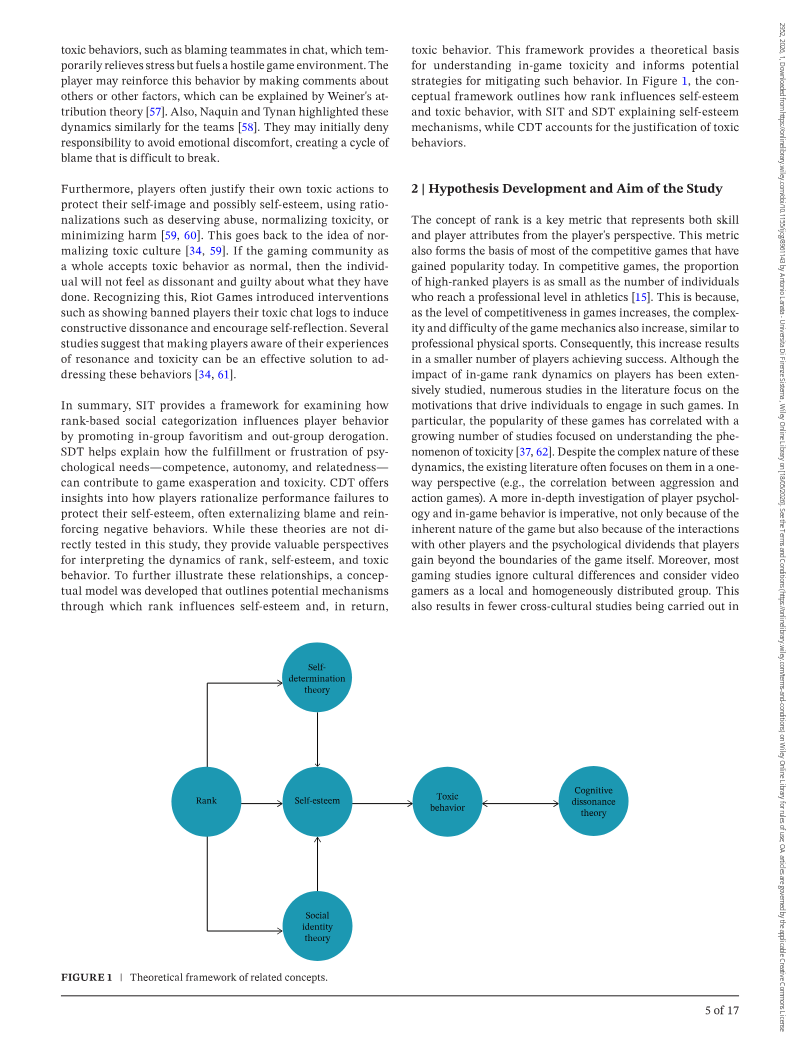
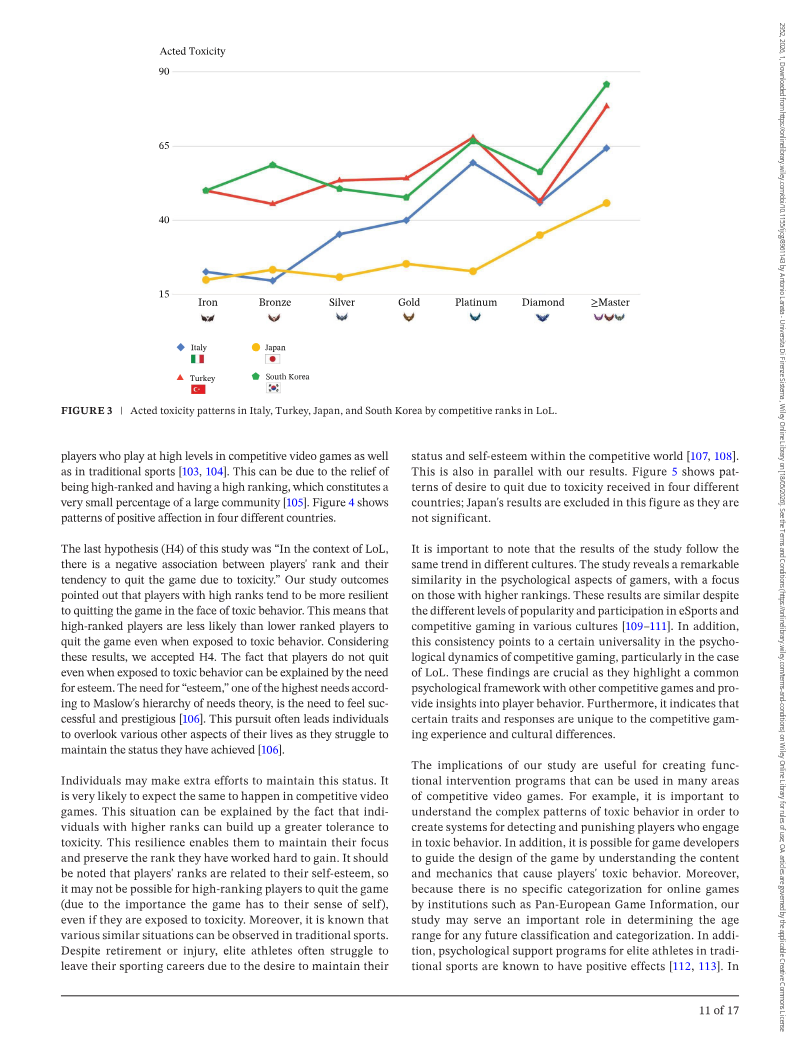
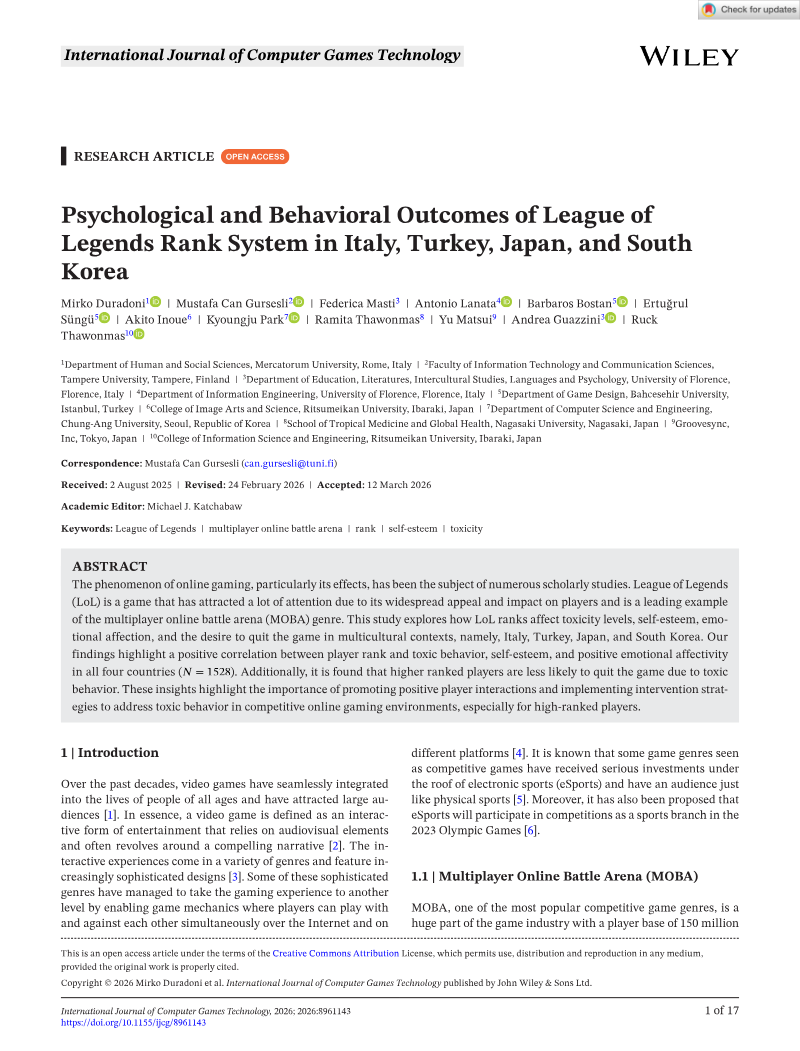
Psychological and Behavioral Outcomes of League of Legends Rank System in Italy, Turkey, Japan, and South Korea
Competitive success in League of Legends serves as a primary driver for both psychological fulfillment and behavioral volatility among elite players.
- Competitive rank is the most robust predictor of toxic behavior in League of Legends, with high-ranking players utilizing hostility as a defensive mechanism to protect their status.
- A study of 1,528 participants across Italy, Turkey, Japan, and South Korea confirms that behavioral patterns in competitive gaming are universal rather than culturally contingent.
- Players at the Master tier and above demonstrate high psychological resilience, maintaining a deep commitment to the game despite persistent exposure to toxic environments.
Team Sports for Game AI Benchmarking Revisited
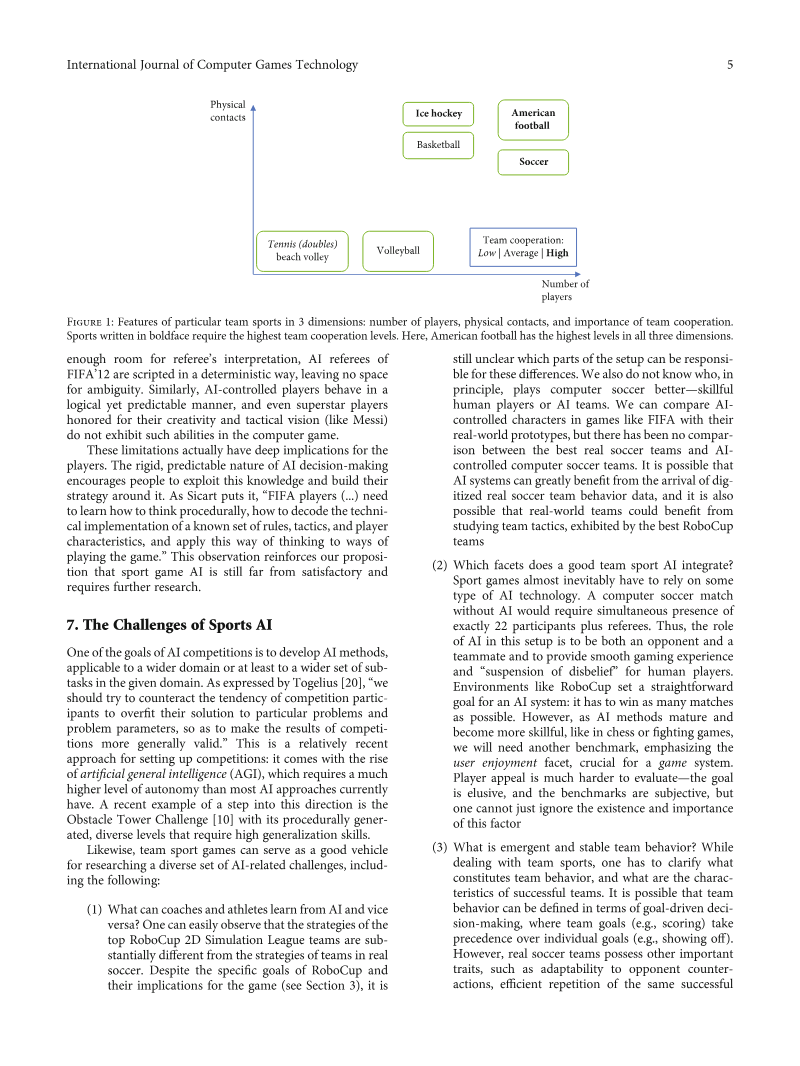
Team sports games represent a critical, underutilized frontier for advancing artificial intelligence research, offering a distinct environment that prioritizes cooperative coordination and human-like behavior over the resource-heavy mechanics found in real-time strategy or multiplayer online battle arena titles.
- Team sports simulations offer a superior testbed for AI research compared to RTS or MOBA titles by prioritizing cooperative coordination and human-like behavior over resource-heavy mechanics.
- Future AI benchmarking should shift from narrow, win-at-all-costs optimization toward environments that balance rule-based constraints with creative, tactical expression.
- Sports games provide unique, parameterized action spaces where AI must manage movement restrictions, specific player roles, and frequent replanning.
Using the Revised Bloom Taxonomy to Analyze Psychotherapeutic Games
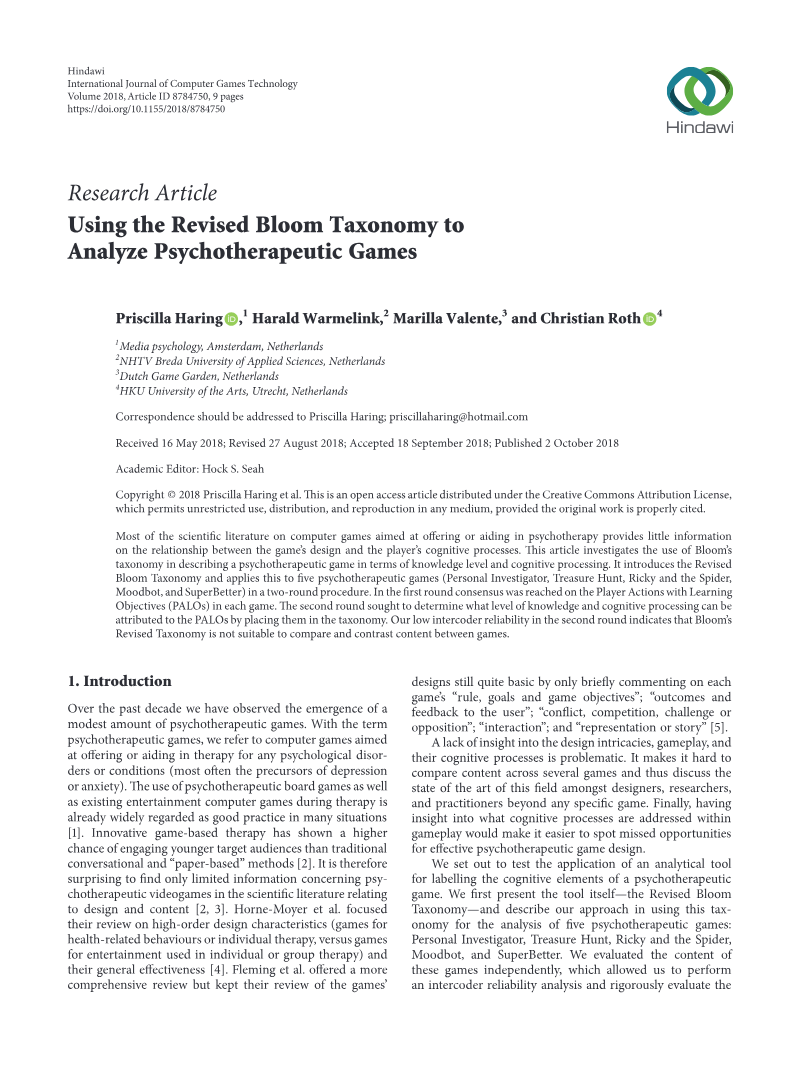
Applying Bloom's Revised Taxonomy, with its four-level Knowledge dimension and six-level Cognitive Process dimension, to psychotherapeutic games proves too subjective to support objective comparison of game content.
- The Revised Bloom Taxonomy showed extremely low intercoder reliability when applied to five psychotherapeutic games, with Krippendorff's alpha of about .075 overall, .131 for the knowledge level, and .174 for cognitive processing, far below the 0.60 to 0.80 acceptable range.
- Only one of the 39 Player Actions with Learning Objectives (PALOs) received exact placement agreement from all four coders, even though coders reached consensus on the PALOs themselves in the first round.
- Collapsing the taxonomy into three broader tiers raised agreement to 81.8 percent, but reliability remained unacceptable, and excluding any single coder did not change the result.
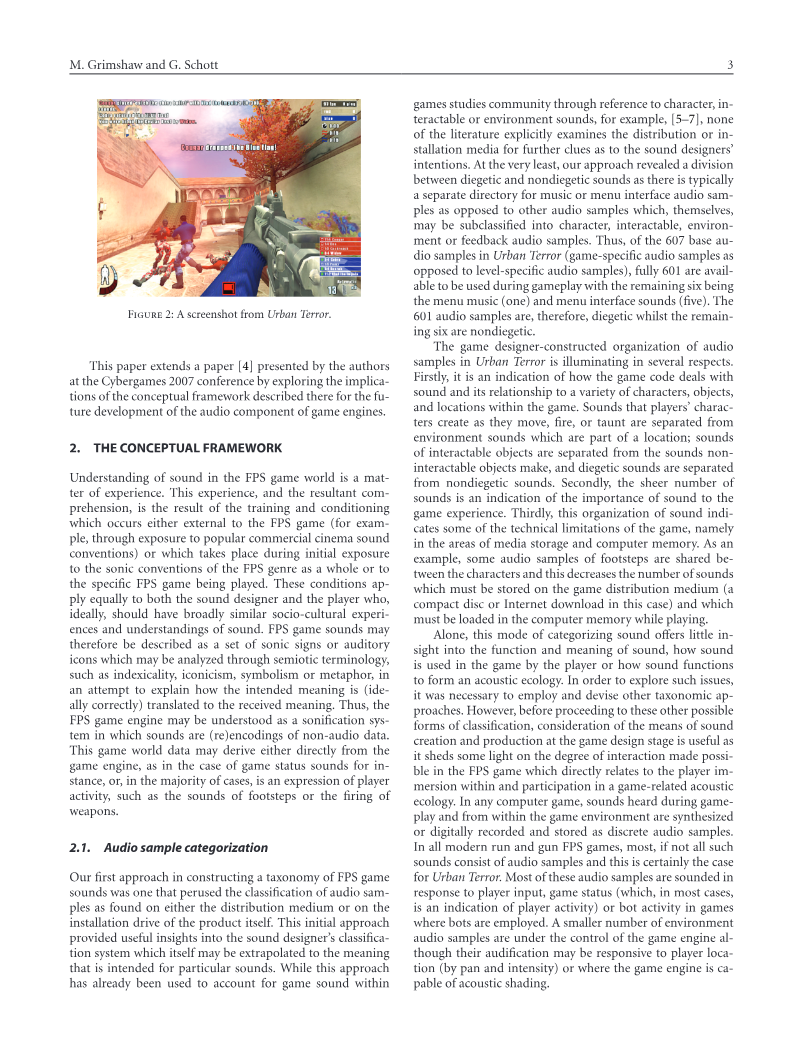
A Conceptual Framework for the Design and Analysis of First-Person Shooter Audio
First-person shooter audio functions as a complex acoustic ecology that fundamentally shapes player immersion, spatial awareness, and team coordination.
- Effective FPS audio design prioritizes 'strategic caricature' over acoustic realism, leveraging established player conventions and psychological cues to enhance gameplay.
- Audio in FPS titles functions as a critical functional tool for navigation and tactical decision-making, rather than serving solely as a narrative or atmospheric element.
- Developers should categorize sound into diegetic, ideodiegetic, and telediegetic modes to better manage the non-linear nature of virtual environments.
Do you work at International Journal of Computer Games Technology? Get a free report of how these documents are read and cited here.