VideoExtra Credits
From League of Legends to Deadlock: Understanding MOBAs | Extra Credits
7 Mar 202625 min video
Transcript
Remember last year when Valve surprised the internet with a super secret invite-only playtest for a game called Deadlock that also somehow became the most played game on Steam overnight? Well, I sure do, but I also remember sucking at it. Then, when I was chatting with Will and Jeff about it, we quickly figured out why. Deadlock is a MOBA-style game, but a lot of people, myself included, were playing it like a hero shooter. And that's probably because Deadlock looked a lot like a hero shooter, right? Especially if you, like me, had played a lot of Overwatch, Marvel Rivals, or Apex Legends in the past. But, these genres have some major differences, and it quickly became pretty clear that players familiar with games like League of Legends and Dota were cleaning house in Deadlock because they fundamentally understood what the game was asking them to do in a way that players unfamiliar with MOBAs simply did not. Because, let's face it, MOBAs can be overwhelming to the uninitiated. 10 players darting around, abilities exploding everywhere, minions crashing together, and towers vaporizing anyone who wanders too close. But, if you get
to know what's actually happening, you'll find you'll be ganking the enemy carry with your jungler in no time. A phrase Will tells me means something positive, right? Okay. So, with that spirit in mind, we are going to try something a little different today. Through a combo of Extra Credits art and game footage, we are going to take a look at the MOBA genre as a whole, breaking down what they are, how they work, pinpointing why strategy in MOBAs feel so different from other games, and trying to answer the question that I have long asked myself, "Why do I bounce off them so hard?" I'm freaking pumped. Let's dive in.
[music]
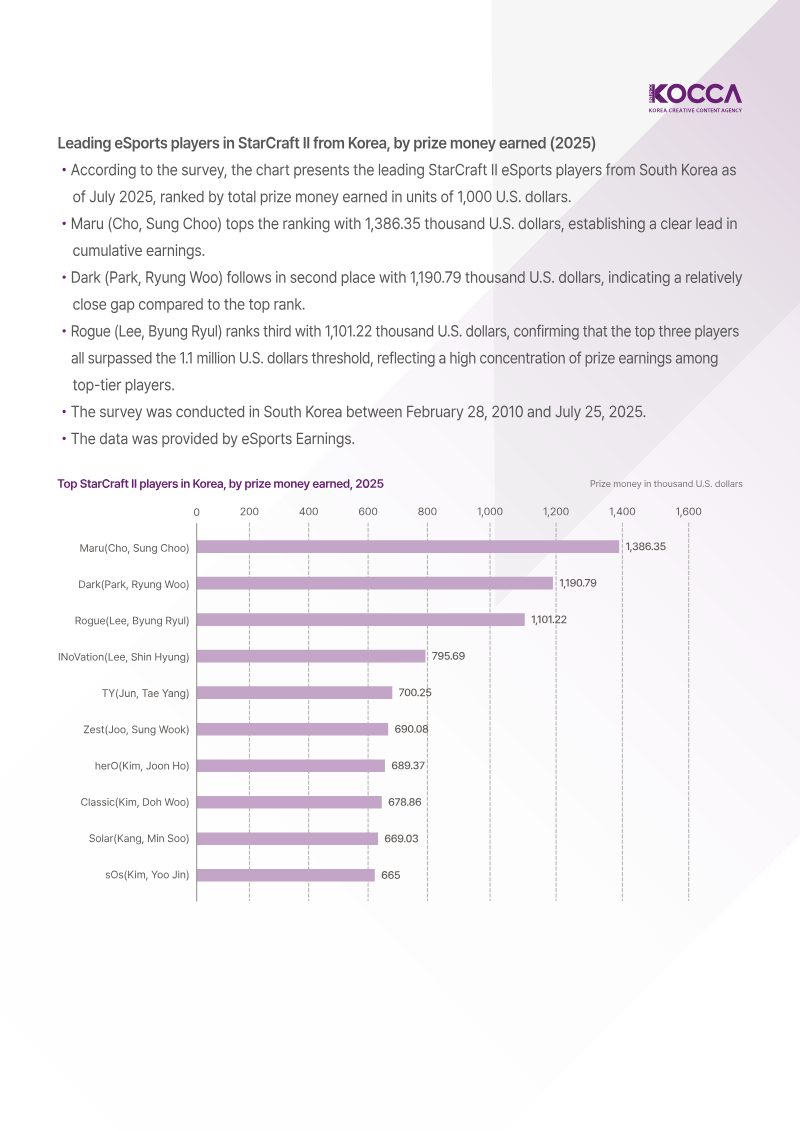
On that note, thank you so much to season 2 of Abolish Everything for having me back on stage and supporting this episode. But, more on me gaming that specific system after we talk about some MOBAs. MOBAs, or multiplayer online battle arenas, are a genre of game that began life as a mod. First came Aeon of Strife, a fan-made StarCraft map from
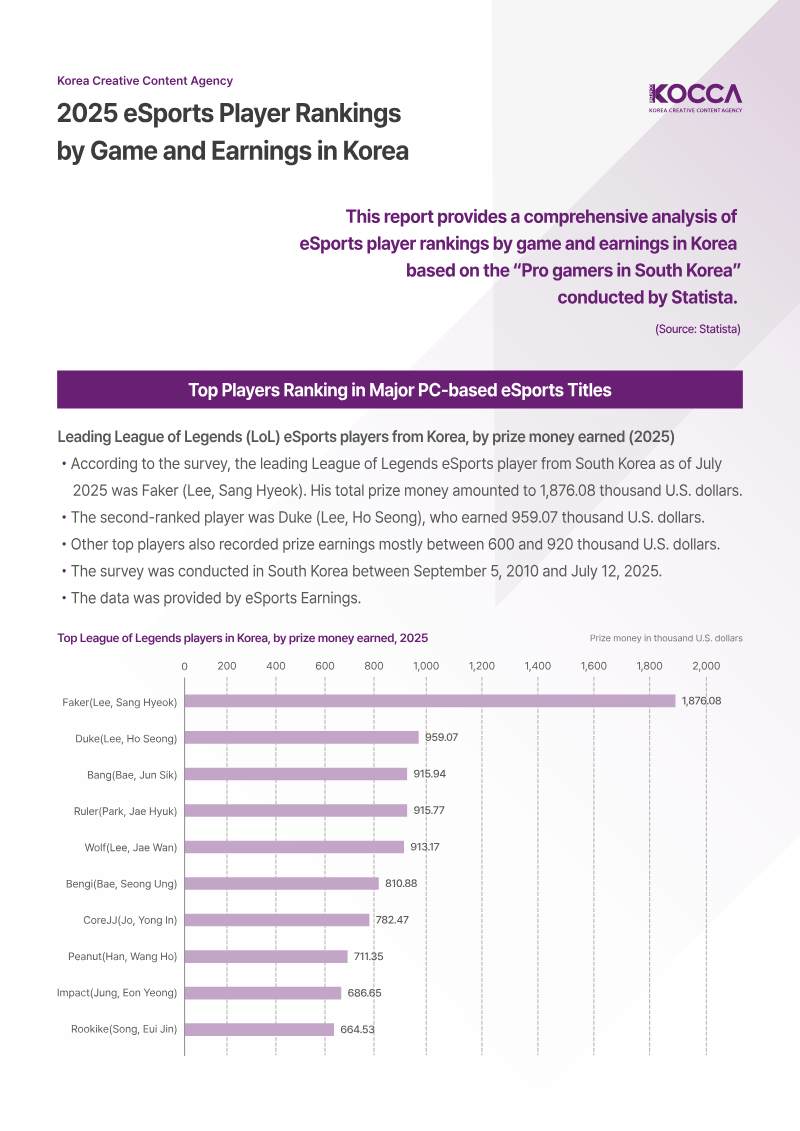
2002 shout-out, and a year later, the Warcraft 3 mod Defense of the Ancients, or Dota, expanded on the idea and laid the groundwork for what MOBAs would eventually become. And as those mods exploded in popularity, a few dev studios took note and made standalone games of their own. The most popular of which were League of Legends in 2009 and Dota 2 in 2013. Smash cut to now, and MOBAs have grown into a global phenomenon, topping Twitch, filling IRL arenas, and often audiences bigger than major televised sporting events to see which teams will come out on top. But, victory in a MOBA can seem like a complex thing. Actually, you know what? Let's defusify that notion a little bit. Underneath all the abilities, flash, and chaos, MOBAs are actually built around one very simple goal: destroying the enemy team's key structure before they destroy yours. That's it. That's the entire win condition. Everything else in the game, minions, gold, towers, items,
and side objectives exist to help my team achieve that goal or to stop the other team from achieving it first. And yes, this means that even if my team has begun losing duels and objectives or getting absolutely stomped in team fights all game, if we take down the enemy structure first, we still win. Now, that's not going to be easy as these win condition structures sit deep inside each team's base placed at opposite ends of the map. Also, it should be noted that MOBA maps use fields of play similar to sports, meaning mirrored or nearly symmetrical arenas where no one side gets an inherent terrain advantage. Most of the time, you're playing on the same map every match. You'll always begin your match in your team's base, and whenever your character is defeated, that is where you will respawn. Now, these little lines running between the bases here, you can see, those are known as lanes, which act as paths straight through the battlefield. Each team also has automated defenses like towers,
which work alongside minions, units we will talk about soon, to protect your territory. And while the terrain is always visible on my map, the combatants are not. You see, MOBAs inherited a lot of design DNA from RTS games, and nowhere is that more clear than how they use fog of war, which is the opposite of clarity now that I'm thinking about it. At a high level, fog of war means that enemy players and neutral creatures are only visible if they fall inside the vision range of my character, my team, our minions, and our structures. Anything outside that, completely hidden. Each team fields the same number of players, five is the most common, and each player controls one character picked from a large roster at the beginning of the match. And in most MOBAs, those characters, aka champions, heroes, gods, Pokémon, etc., are unique picks, meaning that if I lock in Ezreal, Sniper, or Abrams, and Zoe locks in Rengar, Bounty Hunter, or whatever chaos agent she prefers, then no one else can pick those characters in that match.
And, unlike most hero shooters, once the match starts, I'm committed. I can't just swap heroes mid-game. But, then just like hero shooters, MOBA characters are visually distinct, have robust lore, and come with different strats and unique abilities. And because of this, games actually begin with teams taking turns drafting these characters. Now, drafting isn't just about picking your favorite hero. It's actually a strategic process that allows for counterpicks, favorable lane matchups, and team composition planning. And honestly, one of the biggest challenges for new players is simply learning what every character does. Some have straightforward abilities, others less so. So, if you've ever been obliterated by a hero you didn't know could do whatever that just was, WELL, HEY, WELCOME TO YOUR first MOBA. I promise you it gets easier from here. And on that note, some words of wisdom. MOBAs tend to reward players who get familiar with the entire character pool, but only specialize in playing a handful of characters. Sure, it's easy to fall into the "Oh, so many shiny characters to try
out" trap, or treat it like a fighting game and only focus your time on one main. But, especially early on, you'll do a lot better in MOBAs picking a handful of characters, roughly between three and five, to get good with. That will ensure you're ready for most any drafting situation. Then, once both teams have locked in characters, the match begins. Teams spawn their characters at their base at level one right next to their structure they're trying to protect, and the game clock begins ticking down. So, what's next? Why, getting strong enough to storm the enemy base and destroy their structure, of course. Because these games are balanced as such that your opponent's defenses and automated minion defenders can simply shred level one heroes pretty quickly. To gain any traction towards victory, you are going to have to level up, and fast. This highlights one of the defining features of MOBAs, which is how quickly characters power up. If all goes well, in a single match, you'll go from a level one champion with a basic ability and a starter item, and end near
or at max level raining down ultimates with an inventory just full of legendary gear. Put simply, MOBAs are tracking who is growing fastest, and that growth is the engine that drives everything else in the game. Honestly, until I understood that, this was a major friction point for me in the genre. So, now you might be asking, "What is the fuel that drives this engine?" Well, that would be the two-tiered MOBA economy of experience and gold. Experience levels up your character, increasing core stats, upgrading abilities and ultimates, while gold lets you buy items or gear that provide huge bonuses to your power. Both experience points and currency are commonly gained by eliminating opposing players, destroying enemy defenses, and defeating the other team's automated defenders, often called minions or creeps. At the beginning of each match, these little critters right here start spawning from each team's base. Minions appear in groups called waves, and they spawn at set intervals on the game clock. Each
wave isn't just a line of identical units, though. Minions have archetypes like mini tank, mini DPS, and so on. But, the wave composition for both teams is the same. These waves march down the lanes heading straight towards the enemy base. Left alone, minions meet in the middle of the map and immediately start fighting each other. They'll pretty much keep doing this forever, and if a wave happens to push too far forward, each team's automated defenses help clear them out, keeping everything in a state of equilibrium. That is until the players get there. At the beginning of the game, players split up and head to lanes to collect resources by defeating minions, a game concept colloquially known as farming. All right, Zoe, let's do this.
[screaming]
OOH, NICE WORK. YOU GOT LAST HIT, BUD. Last hitting, a mechanic fundamental to MOBAs, refers to landing the killing blow. Each MOBA rewards last hitting a little differently, but it always involves some combination of currency and experience points. And, real talk here, getting good at last hitting is
one of the things new players need to prioritize way more than you'd think. Because if a minion dies without being last hit by a player, well, I mean, that's lost income, gold, or XP that vanishes into the ether. Minion farming is also why players split up across lanes. Here's a quick example of why. Let's say Zoe and I are playing League of Legends, right? Minion waves spawn in that game every 30 seconds, so over 5 minutes, that's 10 waves per lane. Now, if Zoe and I farm in separate lanes, our team collects the full 20 waves worth of XP and gold that cross our paths. But, if we lane together and share, then we've only collected 10 waves total. That's half of the resources, which, as we'll see, translates into weaker characters, slower power spikes, and having a much harder time winning the match. So, as you can imagine, high-ranked players aren't just good at fighting. They've also developed a game sense to be in the right place at the right time to maximize their farm. Of
course, farming enemy minions would be pretty easy if the other team weren't trying to do the exact same thing. Every lane most likely having an opposing player who's interested in your team's minions. But last hitting, luckily, isn't limited to minions. Eliminating an enemy player gives a substantial reward, usually the equivalent to several waves of minions worth of gold and XP. So, there is good incentive for me to fight against my lane opponent in addition to farming. But the real value here isn't just in the whole number go up scenario. It's also what my opponent loses if I win. If I can eliminate my lane opponent, they miss the next wave or two of minions while they're waiting to respawn, they miss more time returning to lane, and they give me a bunch of quality time to farm uninterrupted. Even forcing an opponent to retreat back to base for heals makes them miss waves, which also means missed resources. That being said, it is all a balance. If I get so focused on trading hits with my opponent that I miss my own last hits,
well, there I'm just sabotaging myself. Players who farm efficiently often become far more powerful than players who fight at the expense of the farm. And the really good players, well, I mean, they do both. Okay, so, now that Zoe and I have got this gold from all these sweet sweet murder, my friend, I believe it is time to shop till we drop. Because gold, unlike XP, is not power. It's potential power. Until you leave lane to cash it in, gold is just a number. But once it is shop, gold lets us buy powerful stuff, like an Infinity Edge, Aghanim's Scepter, Shifter's Shield, or a variety of fancy named items that make us stronger. There are always shops in your base, and some MOBAs even place them around the map to reduce travel time. Oh, and another item fundamental MOBA thing is that powerful items are usually bought piecemeal, with early game low and mid-tier acting as components for stronger end game items. As components, items are usually
flexible, most of which can be shaped into a variety of end game gear, letting players adjust their builds to how a particular match is going, which is pretty neat. Though, choosing the right items in the right order is strategic, because character inventory space is limited. And because items drastically change your character's strength, trips to the shop are a consistent way to get a power spike and try to get your character fed. Oh, sorry. In a MOBA, a fed character is someone who earned a disproportionate amount of XP and gold, who seems to be dealing like double, triple, or even quadruple the damage you'd expect. Yeah, that mismatch, like facing, say, a fed Yasuo, can definitely feel wildly unfair if you're not thinking about the underlying economy behind it. And this right here is something that is very different from hero shooters, where character power stays mostly static. I mean, you know what you're getting when you're fighting, say, like a Tracer. While getting absolutely destroyed by a player who's accrued an advantage definitely
does feel bad, in MOBAs there are always mechanics to help you catch up to, say, that Phantom Lancer who just showed up and wrecked your entire day. Bonuses, like bounties on rampaging players and increased minion XP, ensure that the game stays competitive, even if a player or team makes a mistake early on. These don't erase the advantage that players have accrued, but a good MOBA can always lean on a few ways to help prevent the game from being decided in the first 5 minutes of it. Okay, so far, we've talked about MOBAs as battles in lanes between players, and how this affects gameplay and the game economy, but there is a whole other layer happening as well. AKA neutral minions and objectives hidden away between the lanes in an area collectively called the jungle. Unlike lane minions, which can only be farmed by the opposing team, jungle minions are neutral and can be farmed by either team. Most neutral camps reward the players who get the last hit, but some are powerful enough that eliminating
them rewards your entire team. Rewards might include gold, experience, items, buffs, summons. Actually, there's a lot here, so I'm just going to stick with some high-level concepts on this. For instance, some MOBAs emphasize the jungle so much that teams dedicate a player to farming it full-time, the jungler, as part of a team's farm maximization strategy we talked about earlier. Other games use the jungle more situationally, as something players dip into between waves or during rotations. Most neutral camps respawn after a short delay once they're cleared, but the really important ones, the big neutral monsters, spawn on specific timers and get announced to everyone in the game to make sure that nobody misses them. League's Baron Nashor, spawning precisely at the 20-minute mark, is a classic example of this. Ah, there he goes, old faithful. But what if you want to know if the opposing team is already at an objective in the jungle or closing in for a gank? Well, that, my friends, is where wards come in. Wards are
limited use items that players can place on the map to reveal small areas, removing your team's fog of war there. Placed well, and they can prevent an ambush, save a teammate, or help your team safely secure an objective. Teams with better vision get to farm more safely, rotate between lanes more efficiently, and choose when fights start. While teams with lesser vision are guessing more. And guessing in a MOBA leads you right to gank town. Sorry, we've said that word gank like three times already. But what does that actually mean when we say it in terms of MOBAs? Well, when two players collapse on one, or when a jungler like Zoe suddenly appears from the fog, that right there, DiCaprio meme, that is a gank. Ooh, good job, bud. A successful gank that eliminates an opponent or chases them out of a lane does two things at the same time. Denies your opponent the farm and gives you a major economic boost. Ganks can also open up space to clear out enemy minions and damage their tower, or give you time to go secure a jungle objective. An
unsuccessful gank, on the other hand, well, that costs us precious time. Time that we could have used farming, leaves us vulnerable to counter ganks, and opens us up for the opposing team to push towers and secure jungle objectives themselves. Yikes. So, in MOBAs with a dedicated jungler role, part of their job is roaming and ganking with purpose. A wonderful phrase that was also the name of my college indie prog rock band. I digress. Showing up in the right lane at the right time to tilt the balance in their team's favor. By mid game, players have leveled up some, earned items, overpowered a few defenses, and are starting to roam more. And this is the point where we transition from the more solo experience of laning to when teams band together and go looking for fights. Team fights matter because they create massive swings. Instead of eliminating a single player with a gank, a team fight might wipe the entire enemy team. And since dead opponents can't contest my towers or objectives, a single one team fight can result in major gains, such as
taking resources on my opponent's side of the map, or giving my team a clear shot at powerful neutral objectives. And many of these objectives are designed to help close out games, awarding epic buffs, enhanced minions, or temporary effects that let a team finally break through enemy's defenses and into their base. Though, on the flip side, losing a team fight can have major repercussions. So, one of the core fundamentals of MOBAs is never go into a fight on even terms. Experienced players look for advantages, like a level spike, a completed item, a numbers advantage, anything, really, to make sure their bunch is the strongest going into that battle, instead of picking a fight when the enemy just happens to walk by. That's because, fundamentally, MOBAs are team-focused games. They're designed so that coordinated teams amplify each other's strengths and cover each other's weaknesses. Five players acting together will almost always slaughter one lone hero or a team that insists on fighting them piecemeal. Because of this, players
who treat MOBAs as solo experiences, like I did when I was starting out, often get frustrated, like I did when I was starting out. These games simply reward coordinated play and teamwork way more than individual gameplay, no matter how skilled you might be. Now, while it is possible for a team to get strong enough in the later stages of the game to brute force their way into the enemy base, most MOBAs include other mechanics to help turn the tides of battle and not have the game grind to a mid-level stalemate. Such as scaling death timers. At the start of a match, getting eliminated might only cost you a few seconds, but by the late game, you could be waiting a half minute or longer. Also, many MOBAs have objectives which can overcharge a team's minions. These stronger minions push harder and help assault the enemy base. Then, there's certain characters who also scale better the longer a game goes, meaning they start weaker and have less impact early on, but by the late game, they are terrifying. And finally, most
MOBAs also feature late game mega bosses. Defeating these grant epic team-wide buffs, so securing one can be the tipping point that decides the match. However, often times, the fight around these bosses matters just as much as the boss itself. It's common for a team to lose the mega boss objective, but still win the game because they wiped out the enemy team while they were trying to take it. Meaning, all of these things affect all of the concepts we talked about earlier. Farming, vision, objectives, team fights, etc., they all come together to define the victor in the final moments of the match, and hot dang, it is awesome to see it all come together. Ooh, so let's take it home. While there are a lot of MOBA fundamentals, remember, at the end of the day, matches are about getting your team strong enough to destroy the enemy base. Everything else in the design and gameplay flows from that. But also keep in mind to perpetuate that action, it's also the planning, teamwork, and
strategy that really matter. Heck, I would posit that is why MOBAs can be thrilling to watch, rewarding to learn, and endlessly deep to master. So, I hope that this like MOBA 101 course we just gave you inspires you to maybe give this genre a second try if you bounced off it like I originally did. Because there really is nothing more fun than getting a full team of your friends together and having it all click. And bonus, after watching this, you now know way more about MOBAs than I did starting out, which means you probably won't just Leeroy Jenkins straight into the enemy team and DEADLOCK YELLING, "TIME'S UP, LET'S DO THIS." YEAH, sorry about that. At least I had chicken. But now that we do have a higher than a 32.33, uh, repeating of course, percentage chance of survival when I'm on your MOBA team, I think I'll be alive long enough to tell you about our next slate of Extra Credits episodes that we have on deck. Well, our Commander deck to be specific, because next month we'll be dropping our
exposé on Magic the Gathering's increasing reliance on their Universes Beyond brand. While it has definitely been helping Hasbro shareholders turn cardboard into gold in the short term, it's also causing some negative effects to this game that I have loved for 30-plus years. But, you know, who knows? Maybe there's a redemption arc in there somewhere. And you know, on that note, I've been thinking about the concept of redemption a lot lately. Because, actually, after all of you voted for this, and thank you so much, I was invited back for Abolish Everything's Redemption episode. That's right, my season 2 debut on the no-holds-barred comedy debate game show, where comedians argue in front of a live New York City audience to abolish an annoying thing from existence, is out right now, and you can go watch it, and you should. I, of course, treated this invitation to redeem myself with the utmost respect and humility. After the last time I was up here, when I, [music] you know, lost. Um, I focused up.
I did the work. Which is why I would like to ABOLISH THE VERY CONCEPT OF REDEMPTION.
[cheering]
AND LET ME TELL YOU, MY usual level of restraint and decorum was not appreciated by the opposing comedians on the political establishment. If you win tonight, we enter a timeline that isn't possible. Because if we abolish redemption, then you are redeemed. Do you understand what kind of you JUST OPENED? WORK.
[laughter]
AND YOU'LL BE ABLE TO SEE HOW I STACKED UP against my fellow returning abolitionists and their hilarious arguments exclusively over on Nebula. Now, if you're already a Nebula subscriber, you can just check it out for yourself right over here. But if you're not yet familiar with our creator-owned and operated streaming service, Nebula is a place where you can watch thousands of thoughtful, human-made [music] shows from over 200 of your favorite creators early and ad-free. For instance, not only can you
see our next Extra Credits episode on the state of Magic the Gathering early right now over on Nebula, but also both of our weekly long-form talk shows, Design Club, which deep dives into specific design topics each week, and Games for Breakfast, which covers the week's gaming news, are both now on Nebula completely ad-free. So, if you would like to watch those shows, my return to Abolish Everything, and an absolute ton of other amazing Nebula shows from your favorite creators that you cannot see anywhere else, you can get access to it all for 50% off the annual price by clicking our link below or scanning the QR code right over there. Plus, when you do, that support will directly help our channel make more videos, so thank you so much for that in advance. Again, to see me back on Abolish Everything, click or scan here, or stay on the YouTube machine and check out our next video here, where I was sadly unable to abolish ads. Say, Ziliatus Architectures, Pyro Vermelho, Lotus Wolf, Joseph Blame, Hunter Z, Firzo van Santen, Dominic Valenciana, and Angela Valenciana, can I
just say that you are the best legendary [music] patrons? I'm going to say it. You're the best legendary patrons. I said it. It's recorded for all time.
Auto-generated captions from YouTube — names and numbers may be misheard.
Key insights
7 takeaways · ~3 min read- 01MOBAs are defined by a two-tiered economy of experience and gold, where experience upgrades character stats and abilities while gold is used to purchase items that provide significant power spikes.
- 02Minion farming is a critical strategic priority because gold and experience are lost if a player does not land the final hit on a minion, and sharing lanes reduces the total resources available to the team.
- 03Unlike hero shooters where character power remains relatively static, MOBA characters can become 'fed' by accumulating a disproportionate amount of resources, leading to massive power imbalances that are driven by the underlying economy.
- 04Winning a MOBA match requires destroying the enemy's base structures, meaning teams can secure victory through objective control even if they are losing in individual duels or total kills.
- 05Drafting is a strategic phase at the start of a match where teams select characters to create favorable matchups, counter enemy picks, and build a cohesive team composition.
- 06The jungle serves as a resource-rich area that teams often dedicate a specific 'jungler' role to manage, using it to maximize farm and create opportunities for ganks to tilt the balance of power in lanes.
- 07Late-game mechanics, such as scaling death timers and objectives that empower minions, are designed to prevent stalemates and ensure that matches eventually conclude.
Ask AI about this video
Cite this video
Citation
Generating citation…










Comments