Video Game
Game
Documents about Video Game

Classic Game Postmortem: Oregon Trail
The Oregon Trail originated in 1971 as a classroom simulation designed to transform history education through interactive technology.
- The Oregon Trail was created in 1971 by student teachers Don Rawitsch, Bill Heinman, and Paul Dillenberger to shift educational computing away from math-centric applications toward interactive history simulations.
- The game achieved significant commercial success after moving to the Minnesota Educational Computing Corporation (MECC), eventually accounting for one-third of the company's annual revenue.
- Developers enhanced the game's historical authenticity by integrating primary source materials from historical diaries, which helped facilitate its widespread adoption in schools.

How to qualify for the Video Game Tax Relief scheme's Cultural Test
The Video Game Tax Relief (VGTR) scheme in the United Kingdom provides a significant financial incentive for game developers, offering a tax credit of 25 percent on qualifying core expenditure, effectively resulting in a 20 percent return on investment.
- The UK Video Game Tax Relief (VGTR) scheme provides a 25 percent tax credit on qualifying core expenditure, yielding an effective 20 percent return on investment.
- To qualify, a company must be UK-registered, the game must be intended for public supply, and the project must pass a 31-point Cultural Test administered by the British Film Institute.
- Applicants must reach a minimum threshold of 16 points on the Cultural Test, which evaluates cultural content, creative hubs, and the residency of key personnel.

Why Are There No Good Video Game Movies? - Extra Credits
The lack of high-quality film adaptations of video games is primarily attributed to a cultural and generational gap between the film industry’s decision-makers and the gaming medium.
- The primary barrier to high-quality video game adaptations is a generational and cultural gap, as current film studio executives lack firsthand experience with the gaming medium.
- Hollywood historically prioritizes short-lived fads over established franchises because decision-making is driven by superficial sales data rather than a deep understanding of the source material.
- The trajectory of video game films mirrors early comic book adaptations, which only reached a creative and commercial peak once a generation raised on the medium ascended to leadership roles.

Destiny is Gaming's "Law & Order" - Video Game Comfort Food - Extra Credits
The primary thesis of this analysis is that Destiny functions as the "Law & Order" of the video game industry, succeeding not through singular moments of brilliance, but by providing a consistently reliable, accessible, and high-quality "comfort food" experience.
- Destiny succeeds as a 'comfort food' title by prioritizing a consistent, high-quality experience across all activities rather than attempting to master a single niche.
- The game functions as a unifying platform for diverse friend groups by integrating PvE and PvP progression, allowing players with different preferences to engage in the same ecosystem.
- Destiny offers a low-friction, evergreen model that provides long-term investment value, contrasting with the finite nature of single-player games or annual franchise releases.

Video Game Rating Systems - A Better Approach to Content Ratings - Extra Credits
The current landscape of digital game distribution has rendered traditional, centralized rating systems like the ESRB increasingly obsolete.
- Traditional, centralized rating systems like the ESRB are becoming obsolete due to the high costs and manual review processes that create barriers for small-scale developers.
- A proposed decentralized, developer-led framework requires creators to complete a standardized content checklist regarding violence, nudity, and substance use before launch.
- Digital storefronts, including Steam, mobile app stores, and console platforms, would act as the enforcement mechanism by mandating these self-reported ratings as a prerequisite for distribution.
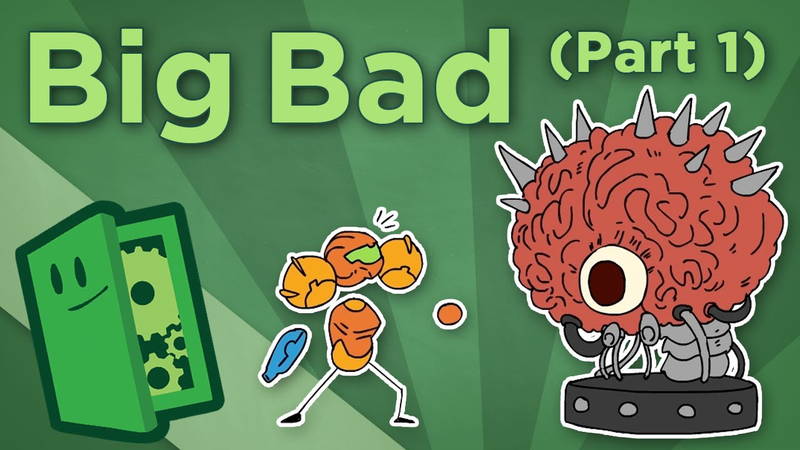
Big Bad - I: The Basics of Villains in Video Game Design - Extra Credits
Effective video game design requires a clear distinction between two primary categories of antagonists: mechanics villains and narrative villains.
- Effective game design requires distinguishing between mechanics villains, which facilitate gameplay, and narrative villains, which drive drama and immersion.
- Mechanics villains exist primarily to validate player skill through challenge and do not require psychological complexity.
- The design of a mechanics villain must align with the game's overall tone to prevent distracting dissonance, such as using comical foils in light-hearted games or supernatural threats in serious titles.

Our Oscars - Why Games Deserve Better than the Spike Video Game Awards - Extra Credits
The gaming industry lacks a prestigious, culturally significant awards ceremony comparable to the Academy Awards, which hinders the medium’s artistic growth and public legitimacy.
- The gaming industry lacks a prestigious, culturally significant awards ceremony, which prevents the medium from gaining the same public legitimacy and artistic recognition as film.
- Current mainstream awards, such as the Spike Video Game Awards, prioritize marketing, trailers, and celebrity appearances over the actual craft and merit of game development.
- Industry-led events like the Game Developers’ Choice Awards and the Interactive Achievement Awards successfully focus on peer-reviewed technical excellence but lack the mainstream visibility required to influence consumer trends.

Video Game Music - How to Create a Timeless Theme - Extra Credits
The evolution of video game music from the 8-bit era to the modern age reflects a shift from technical limitation to sophisticated, multi-layered production.
- The memorability of 8-bit era game music stems from hardware constraints that forced composers to prioritize simple, hummable, single-line melodies.
- Modern game music successfully integrates complex symphonic arrangements and dynamic, adaptive audio with the foundational principle of melodic simplicity.
- Effective musical identity for new franchises relies on a strong, central theme that remains recognizable while utilizing modern production depth for immersion.