Unreal
Game
Documents about Unreal

Epic Games Lawsuit vs. Apple Court Hearing | Lawyers Explain! (Fortnite Mobile Killed)
The legal challenge initiated by Epic Games against Apple and Google represents a fundamental assault on the prevailing 30% commission structure and restrictive payment policies governing mobile app ecosystems.
- The Epic Games litigation challenges the industry-standard 30% commission structure and restrictive payment policies enforced by Apple and Google on mobile app ecosystems.
- Epic Games aims to dismantle the closed-loop nature of mobile platforms by legally classifying app stores as essential facilities, though this remains a high-burden antitrust argument.
- A judicial intervention prevented Apple from terminating Epic’s developer accounts and restricting access to the Unreal Engine, citing disproportionate harm to third-party developers.
The 5 Types of People That You Are Not Marketing to but Should Be
The primary purpose of this analysis is to guide game developers beyond traditional marketing channels by identifying five key stakeholder groups that can significantly amplify a game's reach.
- Build direct relationships with platform holders like Steam, Xbox, and Nintendo, as they often use human curation for store features, newsletters, and social media promotion rather than relying solely on algorithms.
- Leverage game engine companies like Unity, Unreal, and GameMaker by documenting technical innovations in your game, as these companies actively seek to showcase high-quality titles to highlight their technology's capabilities.
- Partner with third-party hardware and software providers like SteelSeries or Intel, who often have dedicated departments to promote games that integrate their specific APIs or hardware features.

GDC Summer Dev Speedrun - Star Wars: Republic Commando With Harley Baldwin
The development of Star Wars: Republic Commando, released in 2005, serves as a case study in balancing ambitious squad-based mechanics with the severe hardware constraints of the original Xbox.
- To address player feedback that the game did not feel like a squad-based experience, the development team implemented a simple code change that defaulted the squad to 'search and destroy' behavior whenever the player entered a new area, ensuring the AI remained visible and active.
- Technical limitations in Unreal Engine 2 and the hardware of the era forced level designers to use short hallways to connect large arenas, as the engine struggled to render expansive environments alongside the necessary connective geometry.
- Early prototypes for vehicle-based or moving-platform gameplay were abandoned because the physics simulation costs were prohibitively expensive for the hardware available at the time of development.

How Film, Games & Social Media are Merging Using AR PG Connects Digital #2
The convergence of film, gaming, and social media is being driven by the rapid advancement of augmented reality (AR) and real-time rendering technologies.
- The convergence of film, gaming, and social media is driven by the adoption of shared real-time rendering tools like Unreal Engine and Unity, which enable high-fidelity interactive experiences across all three sectors.
- Virtual production is replacing traditional green-screen workflows by using LED walls and real-time ray tracing to allow filmmakers to manipulate environments instantaneously.
- The democratization of mobile computing power has enabled social media users to create professional-grade visual effects, while digital twins provide the high-resolution scanning necessary to bridge physical and virtual worlds.

The Evolution of Dynasty Games PG Connects Digital #2
Toplitz Productions is redefining the simulation genre by integrating deep narrative and life-management mechanics into traditional functional gameplay.
- Toplitz Productions is evolving the simulation genre by blending traditional functional tasks like farming and logging with deep narrative, social interaction, and decision-tree mechanics.
- The 'Dynasty' series, specifically 'Medieval Dynasty' built on the Unreal 4 engine, serves as the primary example of combining open-world sandbox structures with survival and village-building progression.
- The studio utilizes an incremental development philosophy, breaking complex projects into manageable layers to refine foundational mechanics based on direct community feedback.
T1000’s, Trex’s & Eyebrow Mites PG Connects Digital #2
Steve Williams, a veteran computer graphics pioneer and former chief animator at Industrial Light & Magic (ILM), provided an analytical retrospective on the evolution of computer-generated imagery (CGI) during his session at Pocket Gamer Connects Digital #2 in June 2020.
- The transition from stop-motion to digital assets in films like Jurassic Park proved that CGI could replicate physical realism—such as breathing and weight—that was previously deemed impossible by industry experts.
- Technological breakthroughs in visual effects are driven by a synergy between creative curiosity and the inevitable progression of hardware capabilities.
- Modern real-time rendering, exemplified by Unreal Engine and productions like The Mandalorian, represents the next phase of visual evolution where any imagery is theoretically possible given sufficient computational power.
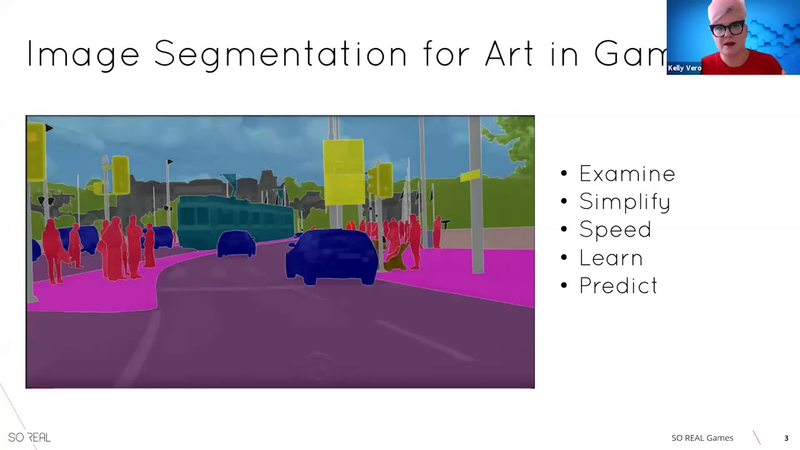
Working Smart - Machine Learning in Art Asset Creation for the Games Industry PG Connects Digital #2
The integration of machine learning into art asset creation offers a transformative approach to game development, primarily by accelerating production timelines and automating complex workflows.
- Digital twinning utilizes CT scanning and automated platforms to convert physical objects into game-ready assets, bypassing traditional manual modeling and CAD-based workflows.
- Machine learning algorithms use image segmentation techniques—including thresholding, histogram analysis, and the Otsu method—to automate the reconstruction of complex objects by clustering vertices and structural data.
- Automating the art pipeline through algorithmic checks for vertex counts and file storage significantly reduces the need for human intervention in quality assurance and project management.


Half-Year Report of 11 Bit Studios S.A. for the First Half of 2020
11 bit studios S.A. achieved the second-best half-year financial performance in its history during the first half of 2020, characterized by a 63.2% year-on-year revenue increase to PLN 50.2 million and a 237% surge in net profit to over PLN 25.0 million.
- 11 bit studios achieved its second-best half-year performance in H1 2020, with revenue rising 63.2% year-on-year to PLN 50.2 million and net profit surging 237% to over PLN 25.0 million.
- The company holds a strong liquidity position with PLN 114.2 million in total financial assets and over PLN 95 million in cash reserves, which are being used to self-finance three major internal projects: 'Project 8', 'Dolly', and 'Eleanor'.
- The publisher is strategically shifting away from the indie segment toward higher-budget productions, highlighted by the migration of 'Project 8' to Unreal Engine 5.
The Holy Grail of Multiplayer Level Design: Casual and Competitive Maps
The design of multiplayer maps requires balancing the distinct needs of casual and competitive players, a challenge often referred to as the pursuit of a "holy grail" map.
- Successful multiplayer map design requires balancing the needs of casual players, who seek recreational play, with competitive esports players who prioritize strategic depth and tournament viability.
- Designers should categorize player skill progression into layers: basic mechanical movement and shooting, map-specific tactical knowledge, and high-level meta-game strategy such as character bans and team compositions.
- Casual-friendly maps often rely on 'single-scan' layouts that allow players to process the entire environment quickly, whereas competitive maps require complex, multi-option layouts that prevent stale gameplay.

Epic's $18B Valuation: Too High or Too Low?
The analysis evaluates the $18 billion valuation of Epic Games following a 2020 investment by Sony.
- Epic Games' valuation reached approximately $17.86B to $18B following a $250M investment from Sony and a planned $750M funding round.
- When compared to public game companies using 2019 EBITDA multiples, Epic Games appears to be fairly valued or potentially undervalued.
- The majority of Epic's valuation is currently driven by the Fortnite business, creating a significant risk if the title experiences a material decline in performance.
ILMxLAB: Pioneering Immersive Entertainment
Immersive entertainment is undergoing a fundamental transformation, moving away from isolated virtual reality experiences toward a model of persistent, interconnected digital worlds.
- Location-based VR experiences can serve as a primary retail anchor, as evidenced by a Westfield London location where 71.6% of visitors reported the VR attraction was their sole reason for visiting the mall.
- The future of immersive entertainment lies in a multi-platform ecosystem where a single identity and narrative persist across devices, ranging from mobile AR and tablet-based crafting to console gaming and full-immersion VR.
- Hyper-reality experiences like 'The Void' successfully leverage untethered headsets, motion capture, and multi-user networking to create social environments where strangers often leave feeling like close friends.

Your Virtual Game Arts Studio PG Connects Digital #2
The presentation outlines the expansion of Creadits, a creative services firm, into the game art production sector.
- Creadits has expanded from performance marketing into a virtual game art studio, providing on-demand access to a global network of talent for concept art, 3D modeling, animation, rigging, texturing, and lighting.
- The service operates as a scalable extension of internal teams, utilizing centralized management hubs in the US, UK, Japan, and Singapore to maintain quality control while developers retain creative direction.
- Typical project-based outsourcing engagements range from $1,000 to $10,000, with $5,000 serving as the common baseline cost.