Unreal
Game
Documents about Unreal
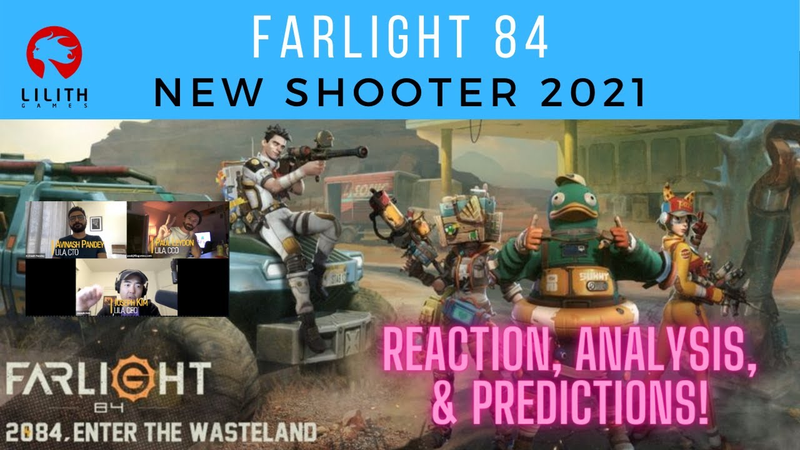
Farlight 84 - New FPS Shooter in 2021 | Reaction & Analysis
Farlight 84 represents a strategic entry into the competitive battle royale market, aiming to capture the mobile and cross-platform audience through a blend of high-fidelity aesthetics and fast-paced, class-based combat.
- Farlight 84 targets the mobile and cross-platform battle royale market by combining class-based combat with unique movement mechanics like jetpacks and legged vehicles.
- The game utilizes Unreal Engine to support a 40-player map structure, specifically optimized for mobile hardware performance.
- The core gameplay loop integrates squad-based tactical objectives with a persistent social hub model similar to Fortnite to drive player engagement.
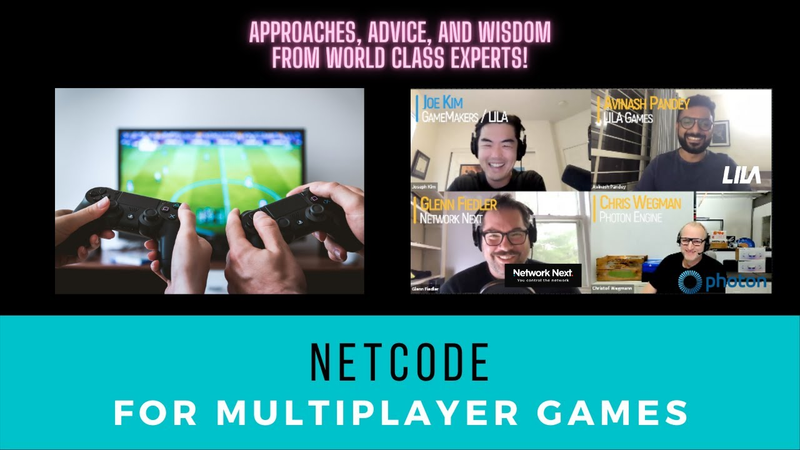
Netcode for Multiplayer Games | Glenn Fiedler, Avinash Pandey, and Chris Wegman
Successful multiplayer game development hinges on the strategic selection of networking architectures that align with specific genre requirements and technical constraints.
- Multiplayer architecture must be chosen based on genre needs: deterministic lockstep is efficient for low player counts, while server-authoritative models are required for large-scale environments like battle royales to ensure state integrity.
- Developers should avoid building custom networking solutions from scratch, as it is a high-risk, multi-year endeavor that should only be pursued if networking is a core pillar of the studio's long-term engine strategy.
- Industry standards are shifting toward modular frameworks and genre-specific templates within engines like Unity and Unreal to allow teams to prioritize gameplay over commodity infrastructure.
Superstar Session: Azure PlayFab Party Showcase
Azure PlayFab Party serves as a comprehensive networking and communication solution designed to enhance multiplayer gaming experiences by fostering social connectivity, inclusivity, and cross-platform interaction.
- Azure PlayFab Party provides a cross-platform networking and communication solution for Windows, Xbox, PlayStation, Nintendo Switch, iOS, Android, and Google Stadia.
- The service secures multiplayer traffic against DDoS attacks by routing data through geo-distributed cloud relays instead of peer-to-peer connections.
- Integration includes built-in accessibility and communication features such as real-time voice-to-text and translation across more than 70 languages via Azure Cognitive Services.

Embracer Group M&A Medley: 13 Acquisitions
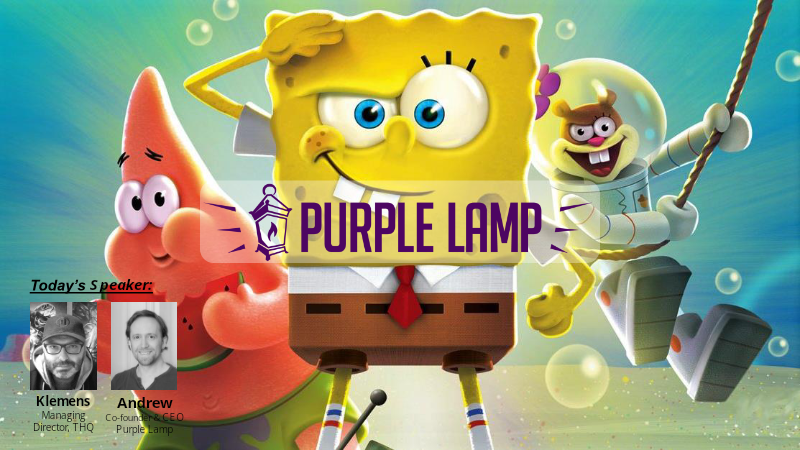
This collection of acquisition summaries details the strategic expansion of Embracer Group through the purchase of 13 distinct entities across the global gaming industry.
- Embracer Group has executed a strategic expansion through the acquisition of 13 distinct entities to diversify its portfolio across mobile, premium PC/console development, and specialized technical services.
- The acquisitions span a broad geographic footprint including Canada, Hungary, Serbia, Poland, Romania, the United States, and Argentina, incorporating studios established between the early 2000s and 2018.
- Transaction structures utilize a mix of cash and share-based payments, frequently incorporating multi-year earnout provisions tied to EBIT or financial performance targets to align founder incentives.

IL Gigante: Michelangelo's David in VR
This presentation details the technical development of a virtual reality experience featuring Michelangelo’s David, utilizing a high-fidelity, billion-polygon laser scan dataset originally captured by Stanford University in 1998.
- The project successfully converted a 1998 Stanford University billion-polygon laser scan of Michelangelo’s David into a real-time, interactive VR experience within Unreal Engine 4.
- Engineers achieved quarter-millimeter resolution, allowing users to inspect fine historical details like chisel marks and structural repairs from a virtual scaffold.
- The development team overcame the lack of UV mapping and non-aligned scans in the raw dataset by using a multi-stage workflow involving ZBrush, Instant Meshes, and Wrap3 for non-rigid mesh alignment.


Quarterly Report of 11 Bit Studios S.A. for Nine Months Ended September 30th 2020
11 bit studios S.A. achieved record-breaking financial performance during the first nine months of 2020, characterized by a 37.89% year-on-year revenue increase to PLN 68.16 million and a net profit surge of 277.49% to PLN 32.12 million.
- 11 bit studios S.A. reported record financial results for the first nine months of 2020, with revenue increasing 37.89% year-on-year to PLN 68.16 million and net profit surging 277.49% to PLN 32.12 million.
- Operating margins reached 51.5%, driven by a 12% reduction in operating expenses following the end of a previous employee incentive scheme and the application of a 5% preferential corporate tax rate via IP Box relief.
- The Frostpunk portfolio, supported by expansions like The Last Autumn and On The Edge, remained the primary revenue driver, while Children of Morta and Moonlighter contributed approximately 28% to 30% of total revenue.
GDC Plays Ghostrunner with One More Level
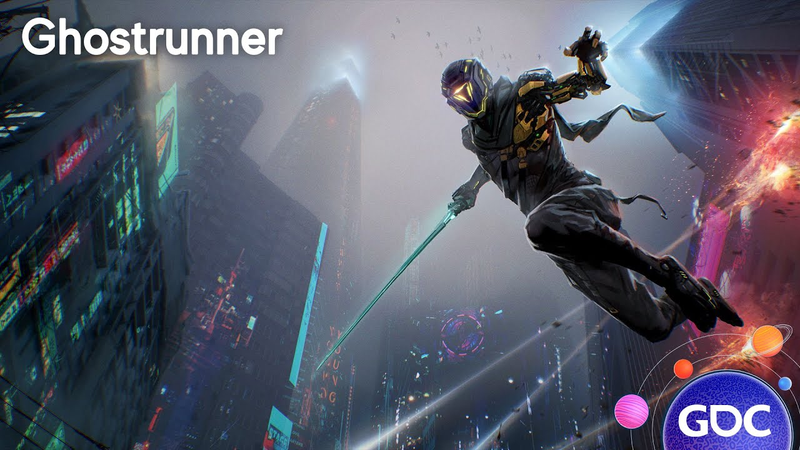
The development of Ghostrunner represents a strategic shift toward high-fidelity, first-person action, moving away from the studio’s previous top-down design roots.
- Ghostrunner centers on a 'one-hit, one-kill' mechanic, which the developers adapted into a first-person perspective to differentiate the title from traditional action games.
- To maintain gameplay momentum, the developers designed levels to be 'waterproofed'—ensuring fluid movement and navigation while allowing for multiple player-chosen routes without stopping the action.
- Narrative exposition is delivered primarily through in-game dialogue rather than face-to-face interactions, utilizing quieter, non-combat platforming sections to ensure players can absorb the story without interrupting the game's pace.

Workshop : How to Implement Video Chat into Unreal Engine
Integrating real-time video communication into Unreal Engine projects requires a structured technical workflow centered on the Agora SDK.
- Integrating real-time video into Unreal Engine projects is primarily achieved by utilizing the Agora SDK, which provides the framework for managing communication channels.
- The implementation requires initializing the Agora engine with a unique App ID and creating custom actor blueprints and UI widgets to render local and remote video feeds.
- Developers must configure specific callback events to manage connection states and bind video streams to dedicated video holder blueprints within the game environment.
Panel: New Ad Formats - The Next Generation
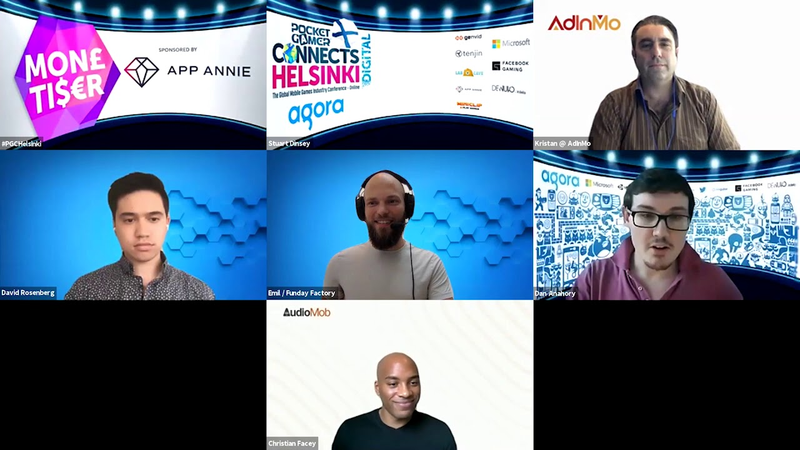
The modern gaming industry is undergoing a fundamental shift toward non-intrusive, context-aware monetization strategies that prioritize player retention alongside revenue generation.
- The gaming industry is shifting from disruptive interstitial ads to non-intrusive, context-aware formats like rewarded videos, audio ads, and dynamic in-game product placements to prioritize player retention.
- The deprecation of traditional tracking identifiers like IDFA has forced a transition toward privacy-compliant, contextual advertising models that do not rely on deep individual behavioral tracking.
- Developers are utilizing cross-platform SDKs for Unity and Unreal to maintain consistent monetization strategies across mobile, PC, and web environments.

State of the Industry 2020 & Beyond with Brad Hart and Johan Karlsson | Episode 234
The global game development industry underwent a fundamental transformation in 2020, characterized by a permanent shift toward remote and distributed work models.
- Investment success is increasingly tied to leadership quality and business execution plans rather than product concepts, as 41 percent of studios currently struggle to secure capital.
- The industry has permanently shifted toward remote and distributed work models, proving that high-fidelity development is sustainable outside of centralized offices.
- Technological advancements in 5G, cloud streaming, and mobile hardware are positioning mobile platforms as primary destinations for AAA-quality gaming.
Unity: Analysing the First Game Engine IPO
Unity occupies a dominant position in the global software market, commanding a 50 percent share of the game engine industry through a vertically integrated business model.
- Unity’s revenue is split between 'Create Solutions' (subscription-based) and 'Operate Solutions' (usage/revenue-share based), with the latter now accounting for approximately 60% of total revenue as of Q2 2020.
- High-value customers contributing over $100,000 in trailing 12-month revenue saw their average revenue per customer grow nearly 50% over the 2.5 years leading up to September 2020, reaching $191,000.
- Despite holding a dominant market share, Unity reported consistent annual losses, including -$120M in 2018 and -$95M in 2019, though these losses are shrinking as a percentage of total revenue.
Tencent's Imminent Spending Spree: Possible Contenders for Acquisition
This analysis explores the strategic implications of Tencent’s move to secure a $6 billion loan, suggesting the Chinese conglomerate is preparing for a transformative acquisition valued between $20 billion and $30 billion.
- Tencent is positioning itself for a $20 billion to $30 billion acquisition by securing a $6 billion loan to supplement its existing cash reserves.
- Potential acquisition targets include Ubisoft ($13B EV) and CD Projekt Red ($7.1B EV), which are viewed as strategically attractive due to their European headquarters and lower regulatory hurdles compared to North American firms.
- Epic Games is a primary candidate for a high-value infrastructure play, with a valuation of $17.3 billion centered on the Unreal Engine.