The Game
Game
Documents about The Game
How Unity's Asset Store Changed The Game Industry | Design Club!
The rise of commercial game engines and integrated marketplaces like the Unity Asset Store has fundamentally transformed the economics of game development.
- The Unity Asset Store has shifted game development economics by allowing studios to purchase pre-built infrastructure rather than investing time and capital into proprietary engine development.
- By outsourcing foundational technical tasks like pathfinding and save architectures, developers can reallocate resources toward the final ten percent of development that defines a game's unique identity.
- The marketplace democratizes high-end production by providing small teams and individual creators access to professional-grade systems, such as cloth animation and visual effects, previously reserved for large, well-funded studios.
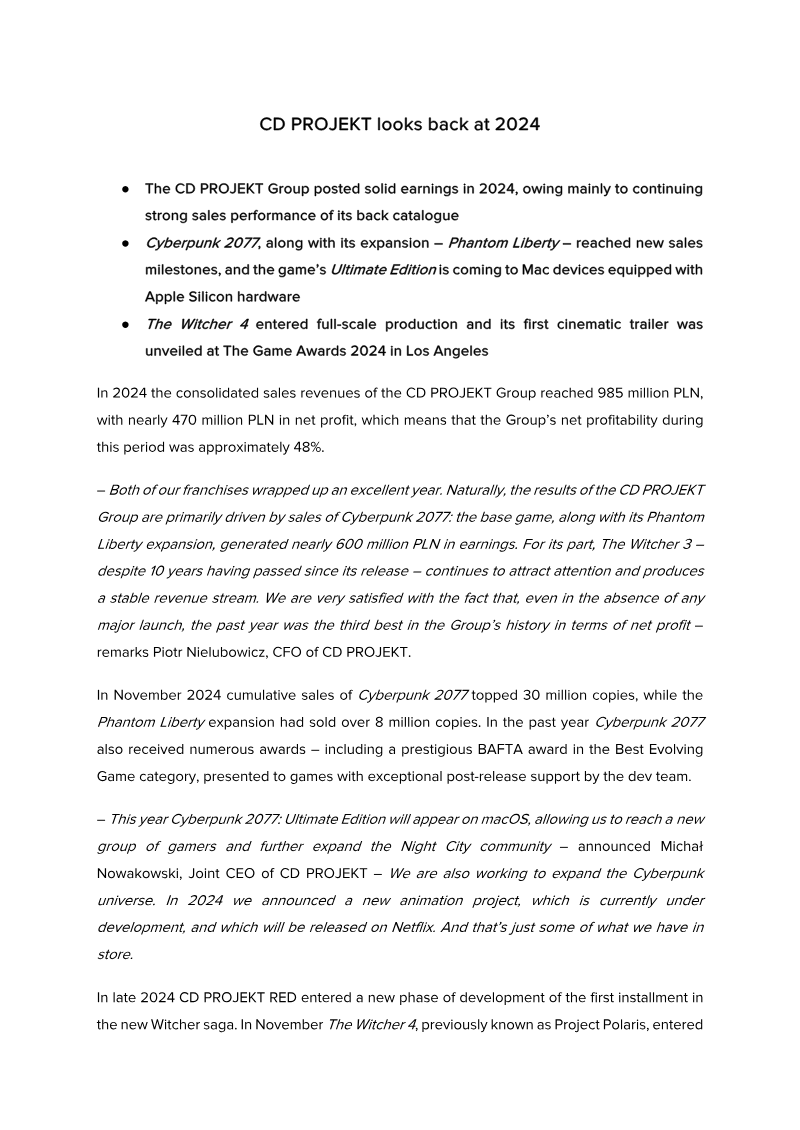
CD Projekt Looks Back at 2024
CD PROJEKT achieved strong financial results in 2024, driven primarily by the sustained commercial performance of its established back catalogue.
- CD Projekt achieved 985 million PLN in revenue and 470 million PLN in net profit in 2024, marking the company's third-best financial year despite having no major new game launches.
- The Cyberpunk 2077 franchise was the primary revenue driver, contributing nearly 600 million PLN to total earnings with 30 million base game copies and 8 million Phantom Liberty units sold by November 2024.
- The company maintained a 48% net profitability rate while simultaneously increasing financial reserves by over 160 million PLN, even after a 100 million PLN dividend payout and record development expenditures.

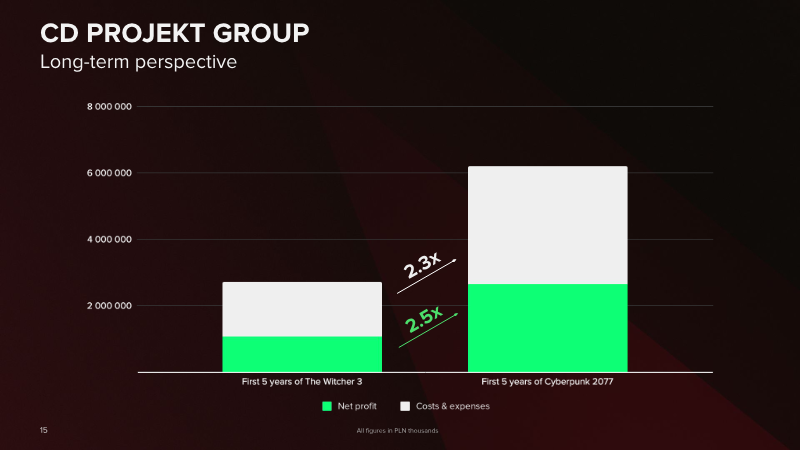
CD PROJEKT Group: FY 2024 Earnings Presentation
The CD PROJEKT Group fiscal year 2024 earnings presentation outlines the company’s financial performance and strategic development pipeline.
- CD PROJEKT Group reported a 2024 net profit of 469.9 million PLN, supported by lifetime sales of 30 million copies of Cyberpunk 2077 and 8 million copies of the Phantom Liberty expansion.
- The company is shifting toward a multi-project development phase, evidenced by a 16% increase in total assets to 3.04 billion PLN and 695.4 million PLN in capitalized development expenditures.
- Development resources are primarily focused on the next Witcher installment and the project codenamed Orion, supported by an internal development workforce that grew to 707 staff members by February 2025.


CD Projekt Group FY 2024 Earnings
CD Projekt Group presents its FY 2024 earnings, outlining financial performance, operational milestones and a long-term growth outlook for the studio and its portfolio.
- CD Projekt Group reported FY 2024 revenue of PLN 1.23 billion, a 20% year-on-year decrease, while achieving a net profit of PLN 481.1 million.
- The company projects a significant improvement in profitability, targeting a net profit margin of 58.5% compared to the 47.7% expected for 2024 and 39% in 2023.
- Development resources are heavily concentrated on a multi-project pipeline, with 650 developers currently assigned to titles including The Witcher 4, Orion, Sirius, Hadar, and the Witcher Remake.
Game Developers Investment Report
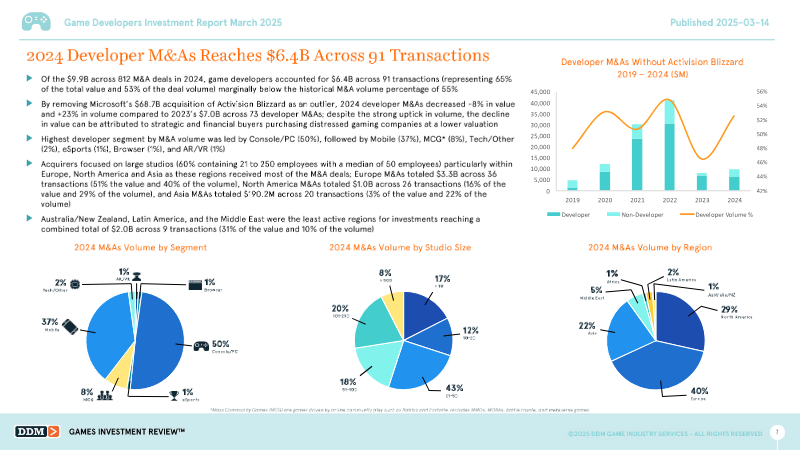
The Game Developers Investment Report provides a comprehensive analysis of financial activity within the global video game development sector for the 2024 calendar year.
- Investors are prioritizing established studios with proven intellectual property and technical infrastructure, shifting focus away from rapid user acquisition toward sustainable profitability and long-term player retention.
- Funding for mid-market developers has become significantly more difficult to secure due to rigorous due diligence requirements, though seed-stage capital remains accessible for innovative startups.
- Capital allocation is increasingly favoring developers who utilize live-service models and cross-platform capabilities to maintain high player engagement through consistent content updates.
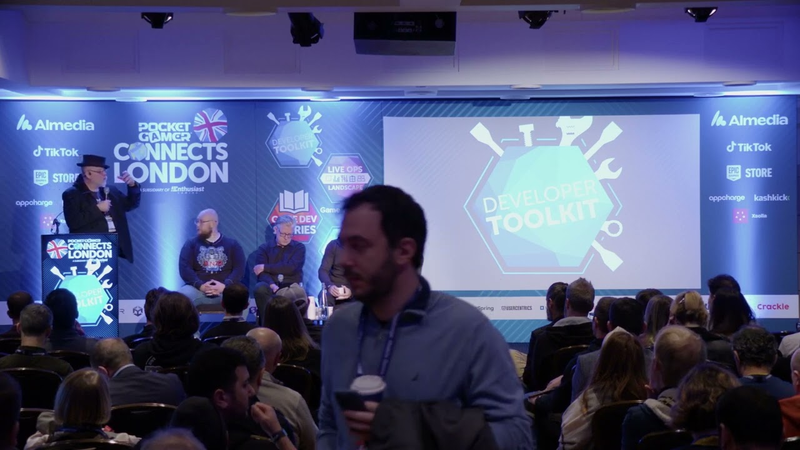
Curated Panel: The Game Development Renaissance – What Will Be The Foundations Of Gaming's Next....
The global gaming industry is currently undergoing a transformative renaissance characterized by a shift away from monolithic, high-budget development toward agile, specialized production models.
- The industry is shifting from monolithic, high-budget production toward agile, specialized models that utilize AI and machine learning to improve efficiency and reduce development overhead.
- Studios are increasingly offloading long-term live operations to third-party providers, allowing internal teams to prioritize creative innovation and emotionally resonant gameplay over content volume.
- To combat market saturation and AI-driven content bloat, developers must adopt platform-agnostic distribution strategies that bypass traditional app stores in favor of messaging apps and community-centric platforms.



FY2025 Second Quarter Financial Results
GREE Group achieved strong second-quarter results for fiscal year 2025, recording consolidated net sales of ¥15.6 billion and an operating profit of ¥2.2 billion.
- GREE Group reported Q2 FY2025 consolidated net sales of ¥15.6 billion and an operating profit of ¥2.2 billion, driven by anniversary events and Investment Business dividends.
- The company issued a conservative downward revision for the full-year forecast, citing delayed new title releases and rising development costs for console games.
- The Game and Anime segment outperformed internal expectations with an operating profit of ¥1.21 billion during the second quarter.


GREE Holdings FY2025 Q2 Financial Results Briefing (Transcript)
GREE Holdings reported strong financial results for the second quarter of fiscal year 2025, characterized by growth in both revenue and profitability.
- GREE Holdings reported consolidated net sales of ¥15.6 billion and an operating profit of ¥2.2 billion for FY2025 Q2, exceeding forecasts for its core Game and Anime, Metaverse, and DX segments.
- The Investment Business recovered significantly, reaching a total valuation of ¥36.3 billion and shifting strategy toward managing third-party capital with new Japanese and U.S. funds targeted for mid-2025.
- The Metaverse Business achieved record quarterly sales of ¥2.1 billion, driven primarily by strong performance in its VTuber subsegment and resilient platform earnings.
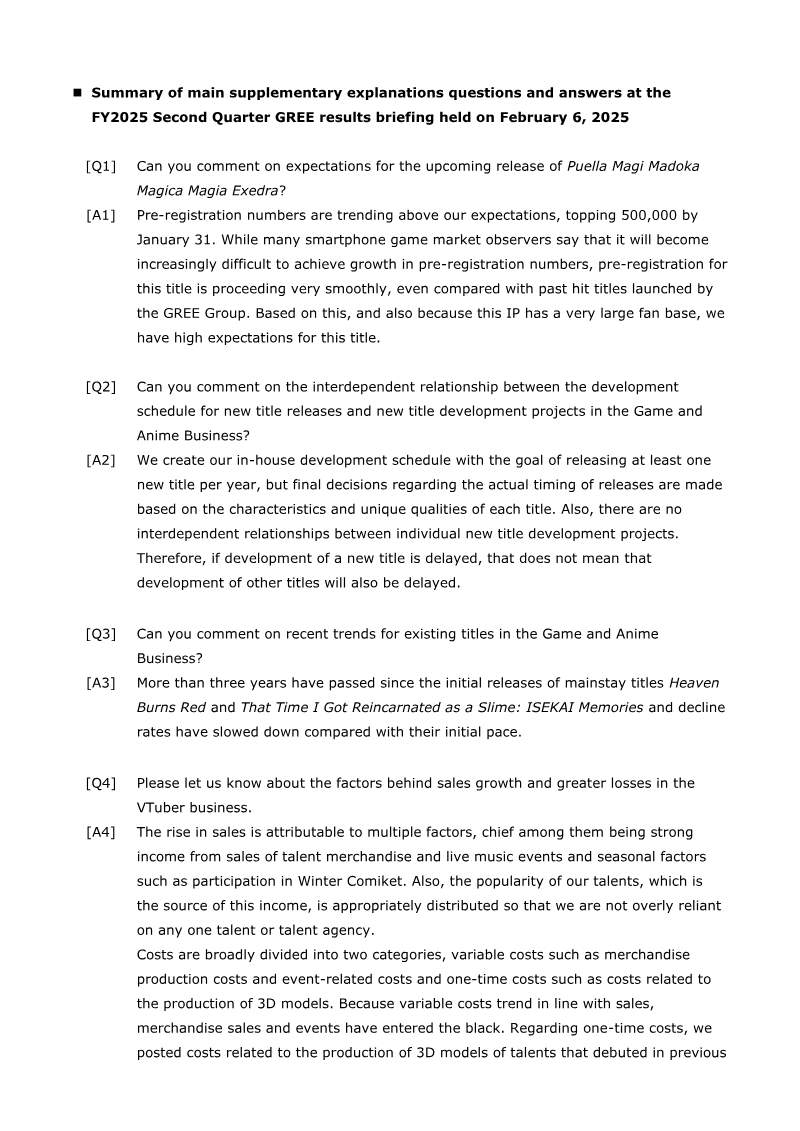
Summary of Main Supplementary Explanations Questions and Answers at the FY2025 Second Quarter GREE Results Briefing Held on February 6, 2025
GREE Group’s fiscal 2025 second-quarter performance reflects a strategic pivot toward stabilizing mainstay gaming titles while aggressively scaling its VTuber business.
- The upcoming title 'Puella Magi Madoka Magica Magia Exedra' has exceeded 500,000 pre-registrations, outperforming the company's historical benchmarks for major game launches.
- GREE targets approximately ¥3.0 billion in annual sales for its VTuber segment, with a goal of achieving monthly profitability within fiscal year 2026.
- Existing flagship titles 'Heaven Burns Red' and 'That Time I Got Reincarnated as a Slime: ISEKAI Memories' are showing a slowing rate of revenue decline as they mature past their three-year mark.



The Game Development Renaissance
The global game development industry is undergoing a fundamental transition toward a more sustainable and efficient operational model, moving away from volatile hiring cycles in favor of long-term stability.
- The global game development market is projected to reach $190 billion by 2025, with 77% of developers anticipating continued industry growth and reduced workforce instability.
- Studios are shifting toward leaner production models by outsourcing non-core technical infrastructure, with only 6% of developers planning to rely on internal builds by 2025.
- Nearly 50% of developers plan to integrate specialized third-party tools to manage complex requirements like cross-platform synchronization and unified player inventories.
The Game Marketer’s Matt Martin Reflects on 2024 and Beyond
This analysis reflects on the evolving landscape of video game marketing and public relations as of early 2025.
- The gaming PR landscape is shifting away from 'blagging' social media and influencer reach toward a demand for greater professionalism, data-backed accountability, and measurable ROI.
- Influencer marketing is facing a correction as some creators price themselves out of the market, leading to a decline in demand for unreliable agencies that fail to deliver promised results.
- Traditional games media has shrunk significantly due to site closures and staff redundancies, though there is a notable swing back toward established outlets and niche-focused publications like RPGSite and Digital Foundry.
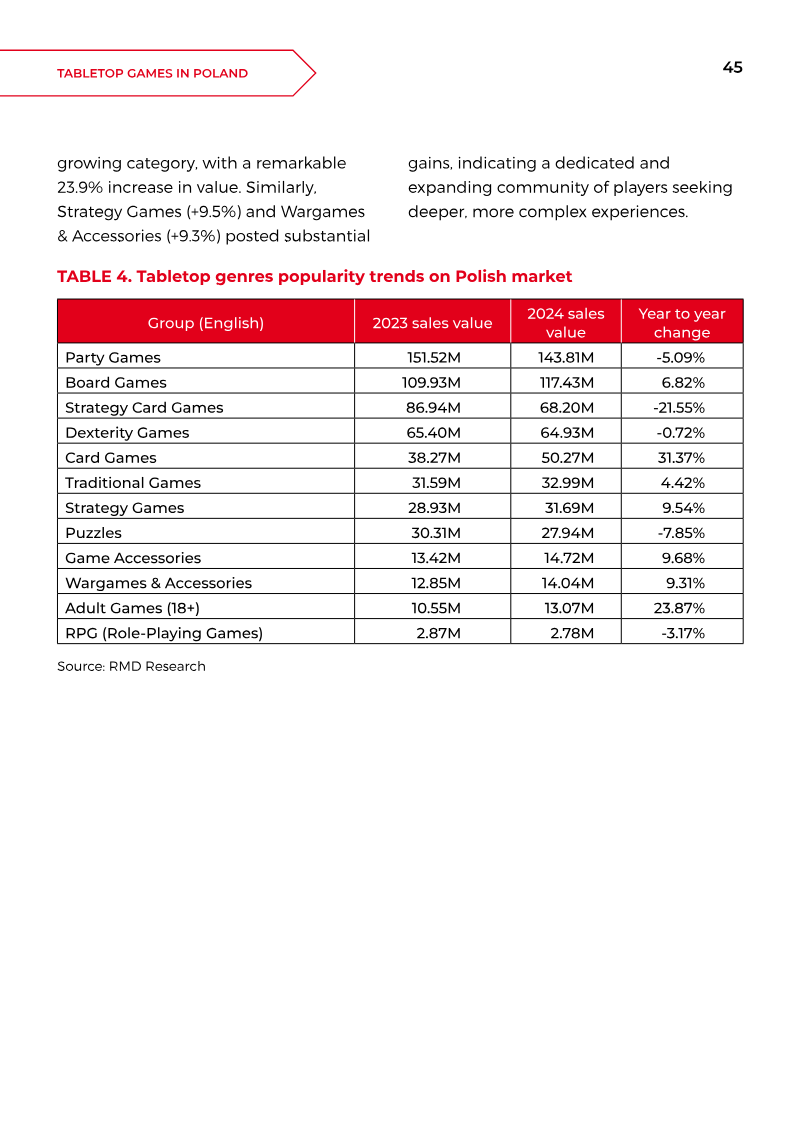
The Game Industry of Poland: 2025
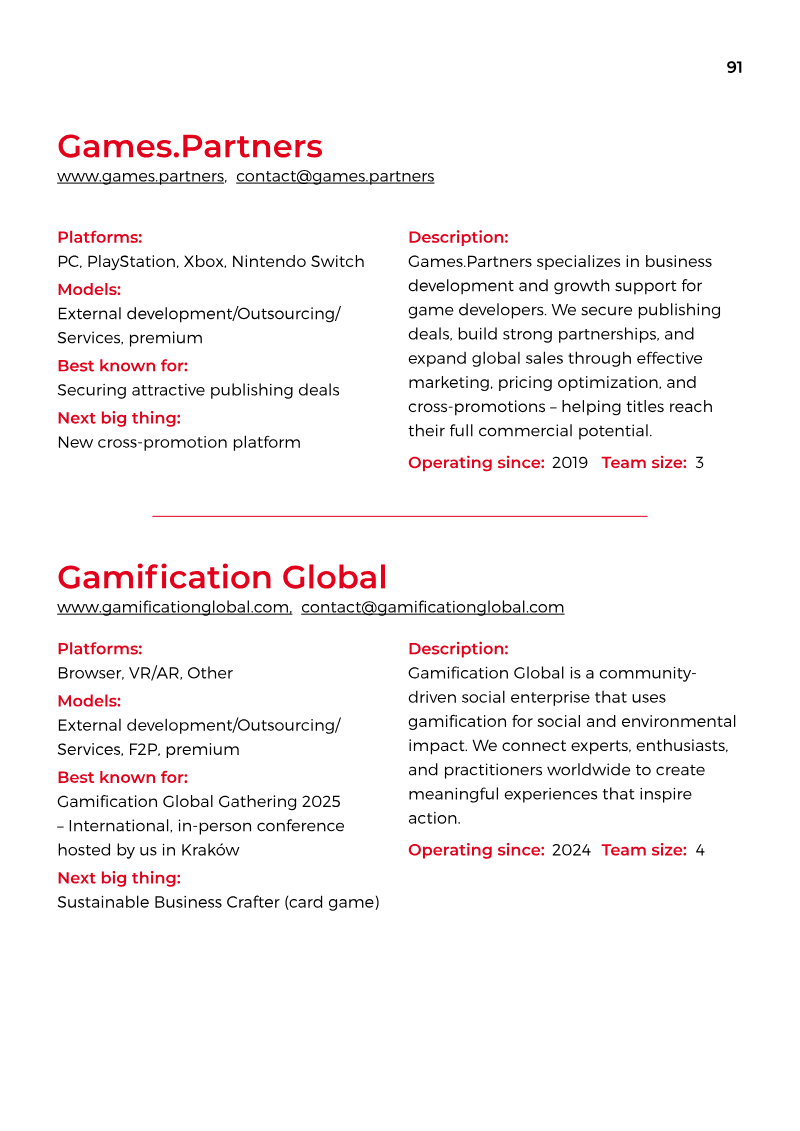
The Polish video game and tabletop sectors have matured into a cornerstone of the nation’s creative economy, establishing Poland as the second-largest market in Europe.
- The provided report content contains only the title and author credits, lacking the body text, statistical data, or specific industry findings required to generate factual insights.
- Due to the absence of substantive data in the provided source, it is impossible to extract growth rates, company performance metrics, or industry trends for the Polish game industry in 2025.
- The source material consists exclusively of administrative metadata regarding the report's contributors and institutional affiliations.