Super Mario Bros.
55 documents in the library are about Super Mario Bros., from writers such as Nintendo, Naavik and SuperJoost, the newest from 2026. Each has a summary and key insights with the page they come from.

A side scrolling 2D platformer and first entry in the Super Mario franchise, Super Mario Bros. follows Italian plumber Mario as he treks across many levels of platforming challenges featuring hostile enemies to rescue Princess Peach from the evil king Bowser.
- Released
- Sep 13, 1985
- Developers
- Nintendo R&D4, Nintendo R&D4
- Genres
- Platform, Adventure
- Platforms
- Family Computer Disk System, Arcade, Nintendo 3DS, Wii, Family Computer, Wii U, Nintendo Entertainment System
- Links
- Official site, Wikipedia
Game data from IGDB.com
Key figures
IP-related income fell 12.4% to 33.3 billion yen, primarily due to lower revenue from The Super Mario Bros. Movie compared to the previous year.
Nintendo, 2025 · Nintendo Financial Results Explanatory Material: 2nd Quarter of Fiscal Year Ending March 2026, p. 4
Nintendo reported $4 billion in quarterly revenue, maintaining profitability through the success of The Super Mario Bros. Movie even as its Switch hardware sales decline due to the console's age.
SuperJoost, 2024 · Betting the Kingdom: Disney's $1.5 Billion Push into Gaming and the Future of Entertainment
Nintendo’s cross-media strategy effectively extends the lifecycle of legacy titles, evidenced by the Super Mario Bros. Movie driving a 30% increase in sales for older games.
GameDiscoverCo, 2023 · Will Your Steam 1.0 Launch Outpace Your Early Access Start?
Revenue from the mobile and IP-related business decreased by 53.8% to 14.7 billion yen, largely due to the absence of the prior year's boost from The Super Mario Bros. Movie.
Nintendo, 2024 · Consolidated Financial Highlights: Three Months Ended June 30, 2024, p. 3
Nintendo Switch hardware sales declined 12.6% to 15.70 million units, while software sales reached 199.67 million units driven by titles like The Legend of Zelda: Tears of the Kingdom and Super Mario Bros. Wonder.
Nintendo, 2024 · Nintendo Financial Results Explanatory Material: Fiscal Year Ended March 2024, p. 10
Documents about Super Mario Bros.
Nintendo Announces a Slew of Price Hikes, Beyond Just the Switch 2
Nintendo announced a comprehensive set of price adjustments affecting its product line, including a $50 increase for the Switch 2 in the United States, Canada, and Europe effective September 1, and a $50 rise for various Switch 2 and original Switch models in Japan effective May 25.
- Nintendo is increasing the price of the Switch 2 by $50 in the U.S., Canada, and Europe starting September 1, with a $50 increase for various Switch models in Japan effective May 25.
- Rising component costs, specifically memory chips, and tariff impacts are expected to add ¥100 billion ($638 million) in additional expenses for Nintendo this fiscal year.
- Nintendo has lowered its full-year sales projection for the Switch 2 to 16.5 million units for the April 2026 to March 2027 period, citing market saturation and the new price hikes.

TWIG #378: Mario Smashes the Box Office, Take-Two Cuts AI, and Monopoly Go Goes Social
The global video game industry is currently navigating a complex structural correction defined by a paradox of record-breaking revenues and widespread workforce instability.
- The video game industry is experiencing a structural correction characterized by record revenues alongside widespread workforce instability caused by post-pandemic over-hiring and market oversaturation.
- Early-stage venture capital deal volume has reached multi-year lows, while Saudi-backed entities remain the primary drivers of current merger and acquisition activity.
- Younger demographics are shifting preference toward low-friction, social-first titles like Monopoly Go, forcing developers to move away from traditional AAA production cycles toward more iterative, accessible models.
A Nintendo Producer's Childhood Mario Memory Helped Shape a Switch 2 Donkey Kong Hit
At the 2026 Game Developers Conference (GDC) in San Francisco, Nintendo developers provided an inside look at the design philosophy behind the critically acclaimed Switch 2 title, Donkey Kong Bananza.
- Nintendo’s Switch 2 title 'Donkey Kong Bananza' utilizes a granular, surface-based interaction model that allows players to dynamically manipulate 3D terrain, such as punching through walls and digging into ground.
- The technical framework for 'Donkey Kong Bananza' originated during the development of 'Super Mario Odyssey,' where the team shifted from pre-set object destruction to specific, player-driven surface interactions.
- Producer Kenta Motokura’s design philosophy for the game was directly inspired by the player agency and environmental interactivity found in World 1-2 of the original 'Super Mario Bros.'
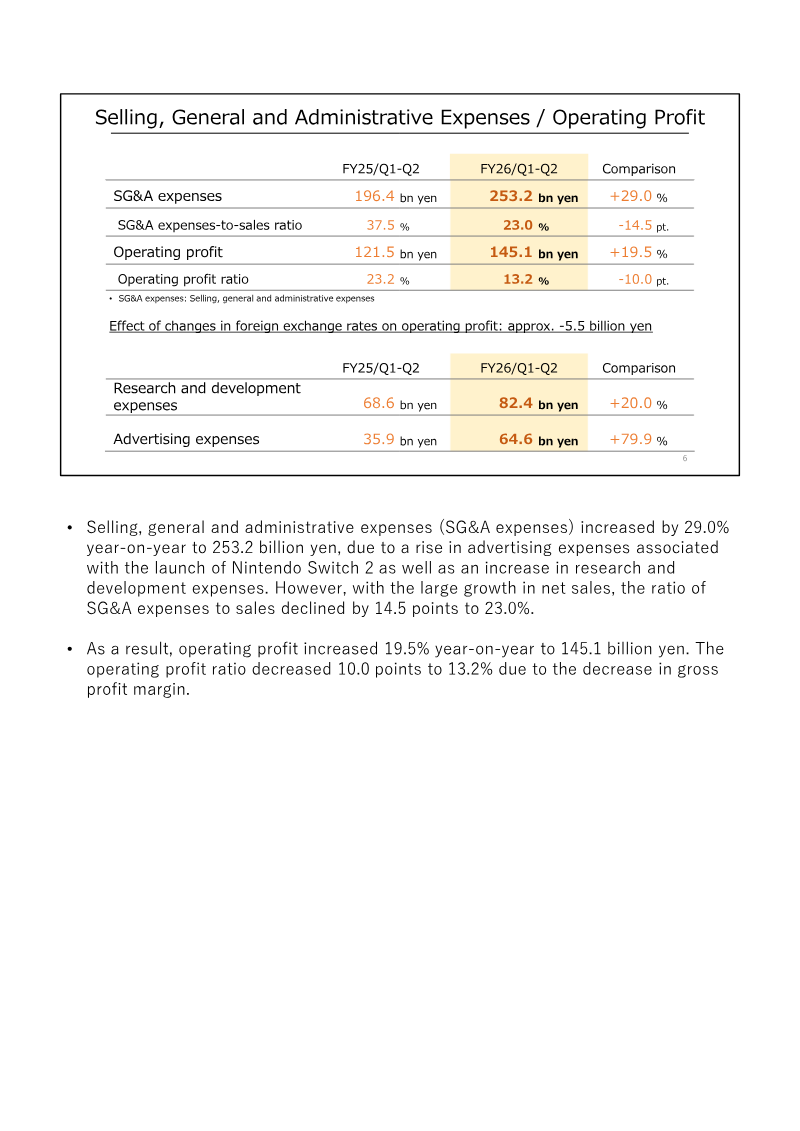
Nintendo Financial Results Explanatory Material: 2nd Quarter of Fiscal Year Ending March 2026
Nintendo’s financial results for the first half of the fiscal year ending March 2026 demonstrate significant growth driven by the June 2025 launch of the Nintendo Switch 2.
- The Nintendo Switch 2 launch drove a 110.1% year-on-year increase in net sales to 1,099.5 billion yen for the first half of the fiscal year ending March 2026.
- The Nintendo Switch 2 reached over 10 million cumulative units sold within its first four months, leading Nintendo to raise its full-year hardware sales forecast for the new console to 19.00 million units.
- Nintendo increased its full-year net sales projection by 18.4% to 2,250.0 billion yen and raised its net profit forecast to 350.0 billion yen following strong initial demand.
The Man Behind the Monkey
The career of video game composer Grant Kirkhope serves as a case study on how minor, spontaneous creative decisions can yield significant, long-term industry influence.
- Grant Kirkhope’s incidental decision to voice Donkey Kong in the 1998 title Donkey Kong 64 resulted in his audio being utilized across more than a dozen subsequent Nintendo releases.
- The 'DK Rap,' originally composed as a minor track for Donkey Kong 64, achieved long-term cultural significance, eventually being featured in the 2023 Super Mario Bros. Movie.
- Intellectual property complexities following Microsoft’s acquisition of Rare left Nintendo with full control over Donkey Kong assets, leading to instances where original creators like Kirkhope were omitted from official credits in later media.
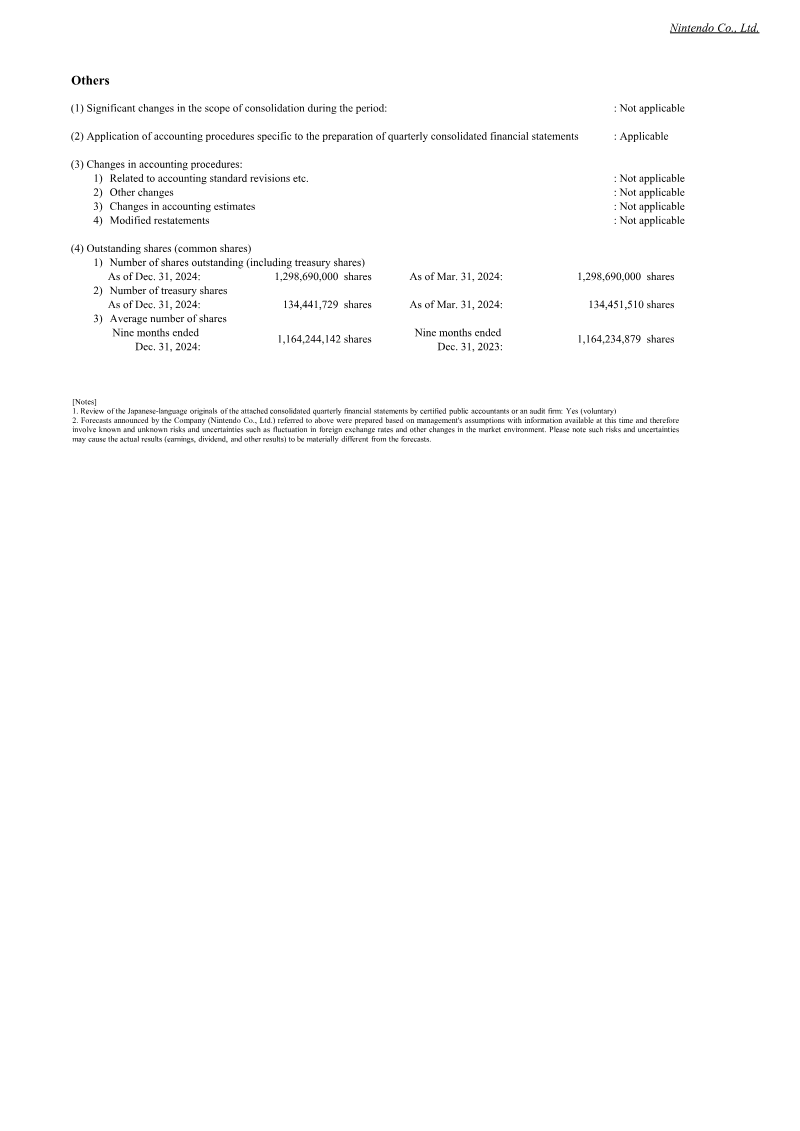
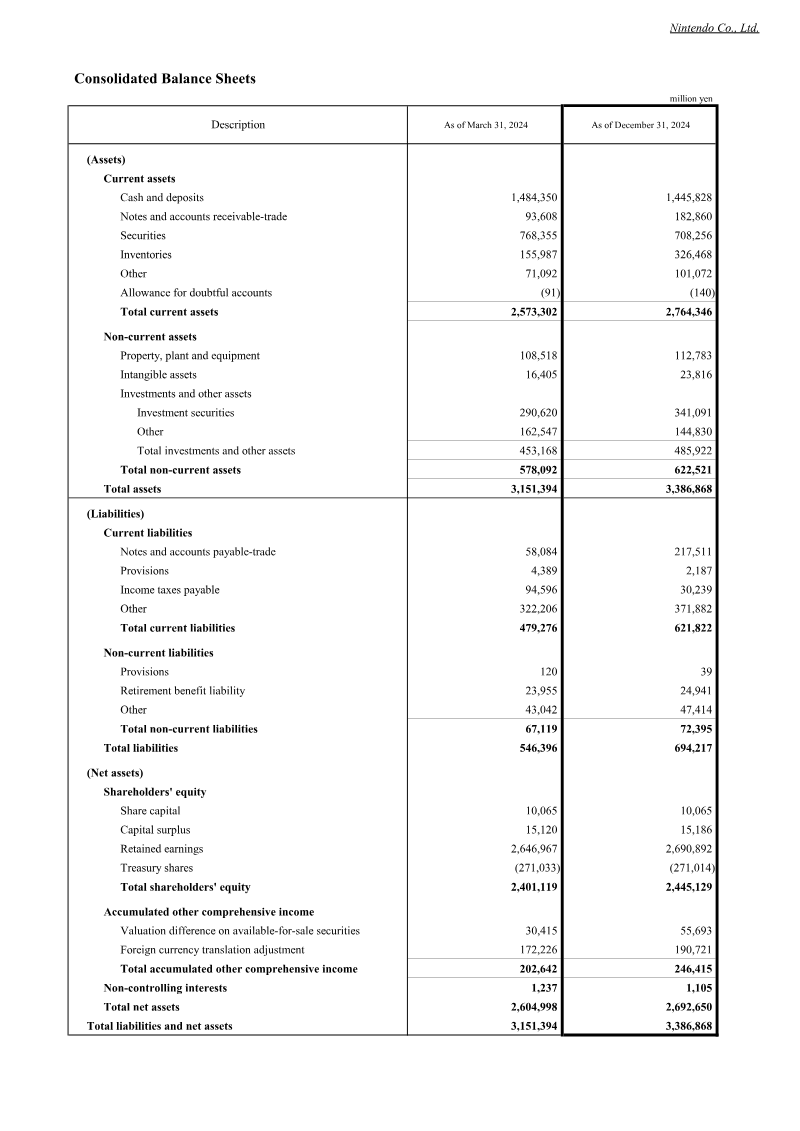
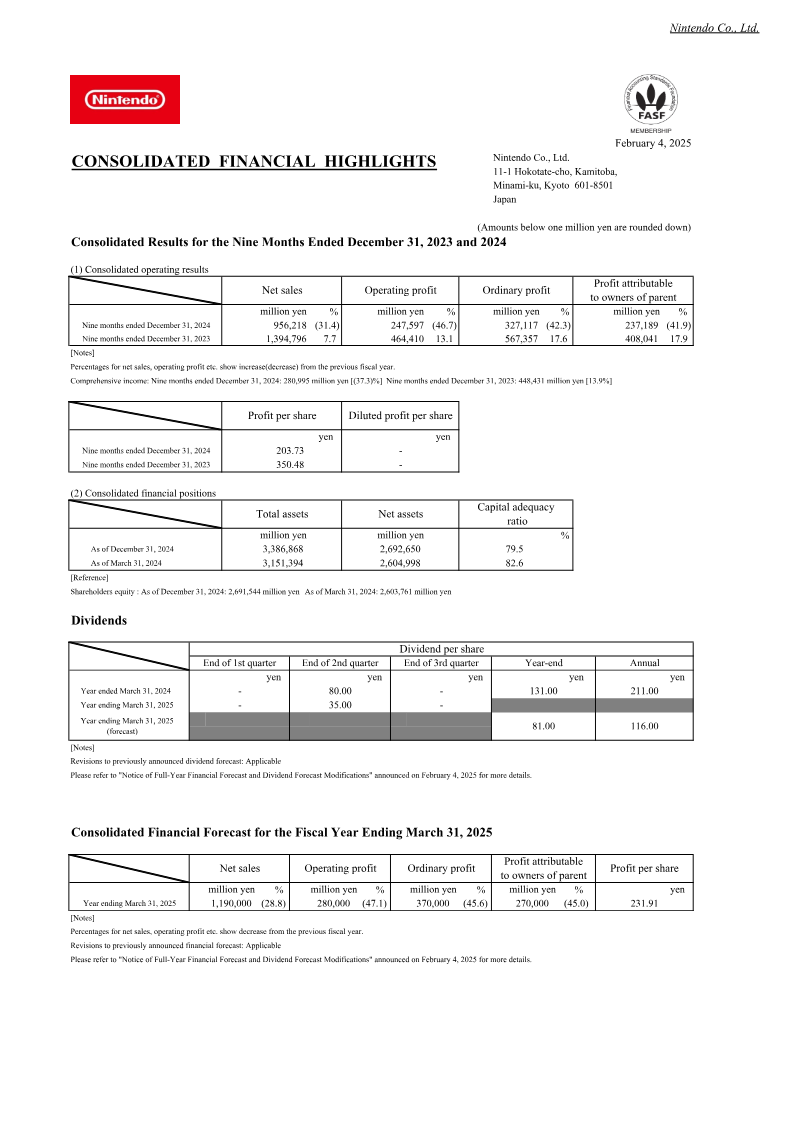
Consolidated Financial Highlights: Nine Months Ended December 31, 2024
Nintendo’s consolidated financial results for the nine months ended December 31, 2024, reflect a period of contraction compared to the same timeframe in the previous fiscal year.
- Nintendo experienced a significant financial contraction for the nine months ended December 31, 2024, with net sales falling 31.4% to 956.2 billion yen and operating profit dropping 46.7% to 247.6 billion yen.
- The Nintendo Switch platform saw a 30.6% decline in hardware unit sales and a 24.4% decrease in software unit sales compared to the same period in the previous fiscal year.
- Profit attributable to owners of the parent decreased by 41.9% to 237.2 billion yen, largely due to the absence of the high-performing film revenue and major title releases that bolstered the prior year's results.
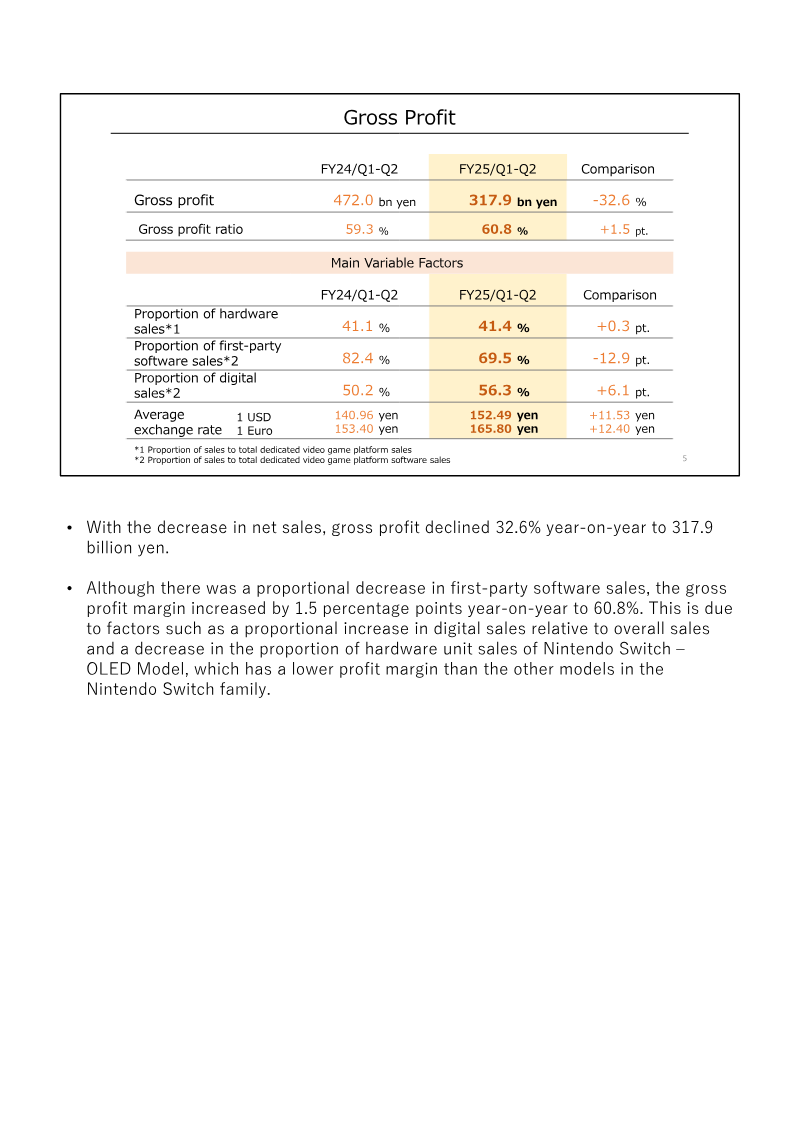
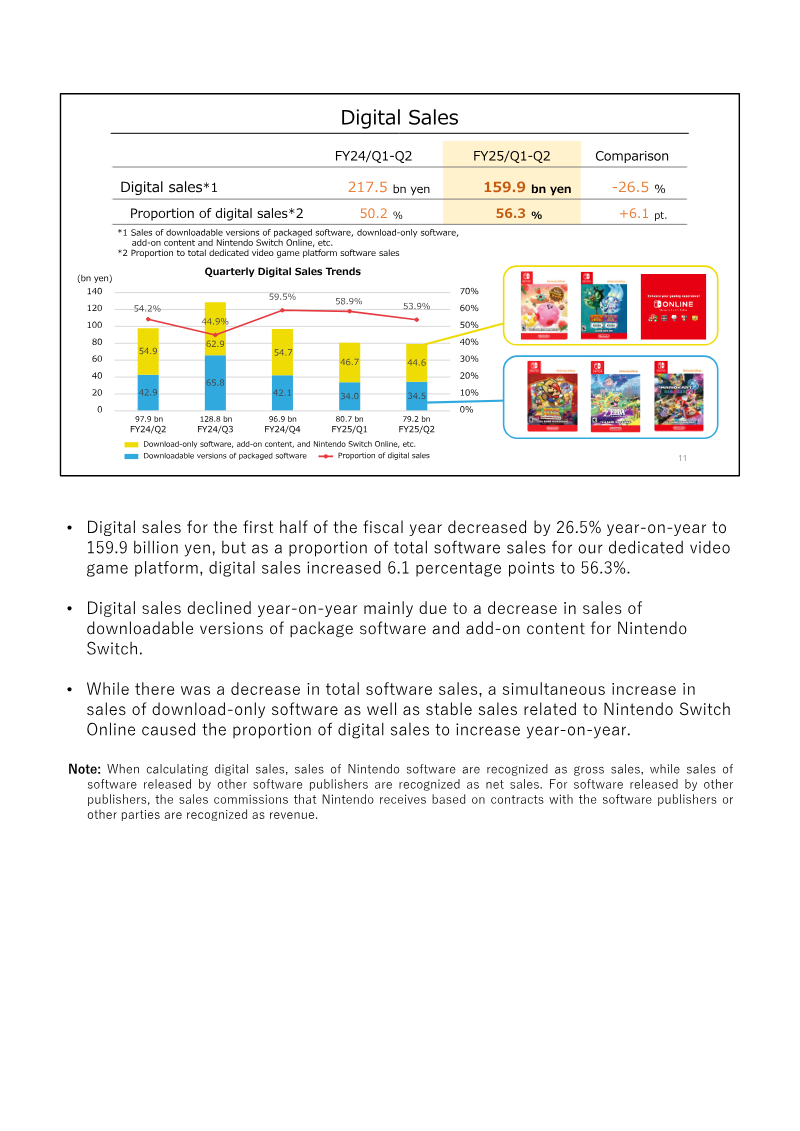
Nintendo Financial Results Explanatory Material: 2nd Quarter of Fiscal Year Ending March 2025
Nintendo’s financial results for the first half of the fiscal year ending March 2025 reflect a significant year-on-year contraction, driven primarily by the aging lifecycle of the Nintendo Switch hardware and the absence of the exceptional market catalysts that bolstered the previous year’s performance.
- Nintendo experienced a significant financial contraction in the first half of FY2025, with net sales falling 34.3% to 523.2 billion yen and operating profit dropping 56.6% to 121.5 billion yen.
- The downturn is driven by the aging Nintendo Switch lifecycle, resulting in a 31.0% decrease in hardware unit sales and a 27.6% drop in software unit sales compared to the same period last year.
- Nintendo has lowered its full-year hardware sales target by 1.0 million units to 12.5 million and reduced its software sales target by 5.0 million units to 160.0 million.


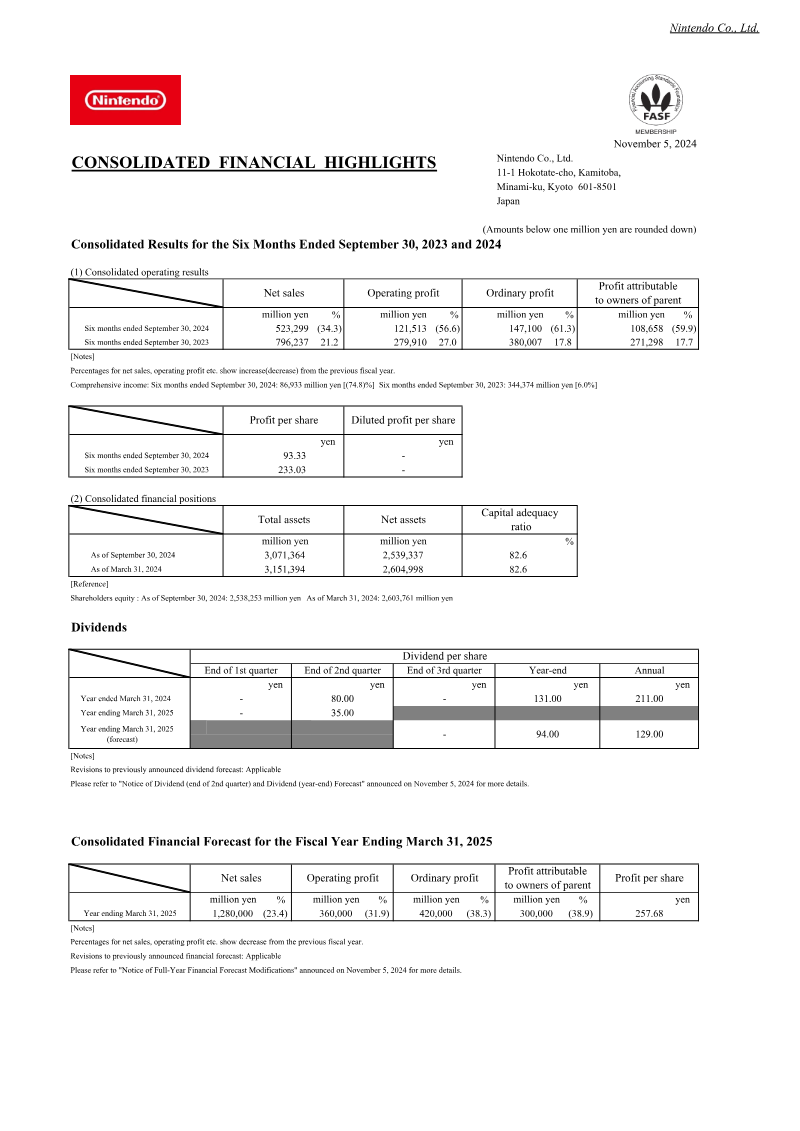
Consolidated Financial Highlights: Six Months Ended September 30, 2024
Nintendo’s consolidated financial results for the first half of the fiscal year ending March 31, 2025, reveal a significant year-on-year contraction in performance across all major financial metrics.
- Nintendo reported a significant downturn for the first half of the fiscal year ending September 30, 2024, with net sales falling 34.3% to 523.2 billion yen and operating profit dropping 56.6% to 121.5 billion yen.
- Management has revised its full-year outlook downward, now projecting annual net sales of 1.28 trillion yen and an operating profit of 360 billion yen, representing year-on-year declines of 23.4% and 31.9% respectively.
- The Nintendo Switch hardware sales declined 31% to 4.72 million units, while software sales fell 27.6% to 70.28 million units as the platform enters its eighth year.

The Play Pendulum: A Theory of Innovation Cycles in Interactive Entertainment
The Play Pendulum theory proposes that the interactive entertainment industry operates in decadal cycles, oscillating between periods of content innovation and distribution innovation.
- The gaming industry operates in decadal cycles that oscillate between content innovation and distribution innovation rather than being driven solely by technological advancement.
- As of 2024, the industry is transitioning into a distribution innovation phase, shifting focus toward transmedia adaptations and user-generated content platforms like Roblox and Fortnite’s Unreal Editor.
- Market concentration reached a peak in 2023, with the ten largest gaming companies controlling 65% of the market, up from 58% in 2020.
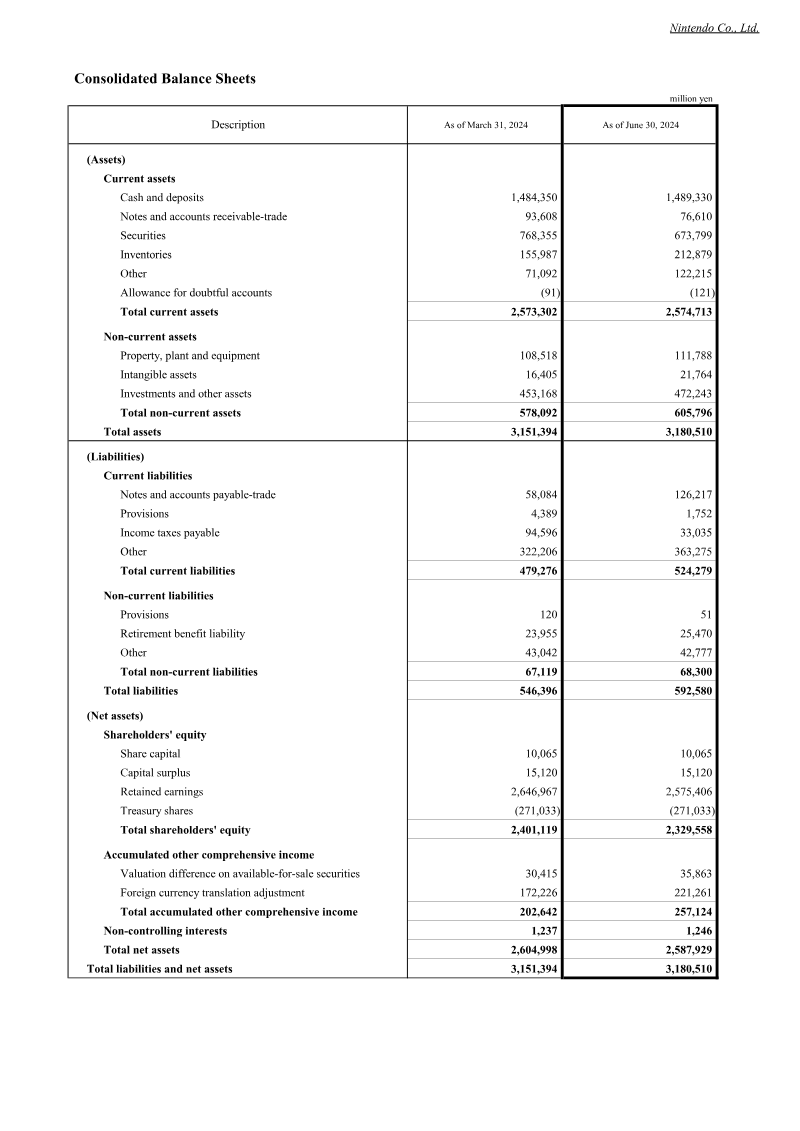
Nintendo Q1 2024 Financial Results
Nintendo’s financial results for the first quarter of the fiscal year ending June 30, 2024, reflect a significant downturn in performance as the Switch console enters its eighth year on the market.
- Nintendo’s Q1 revenue fell 46.5% year-over-year to ¥246.6 billion ($1.65 billion), driven by a lack of major new releases compared to the same period last year.
- Operating profit dropped 70.6% to ¥54.5 billion ($366 million), while net profit declined 55.3% to ¥80.9 billion ($543.5 million).
- Nintendo Switch hardware sales decreased 46.3% to 2.1 million units, reflecting the console's age as it enters its eighth year on the market.
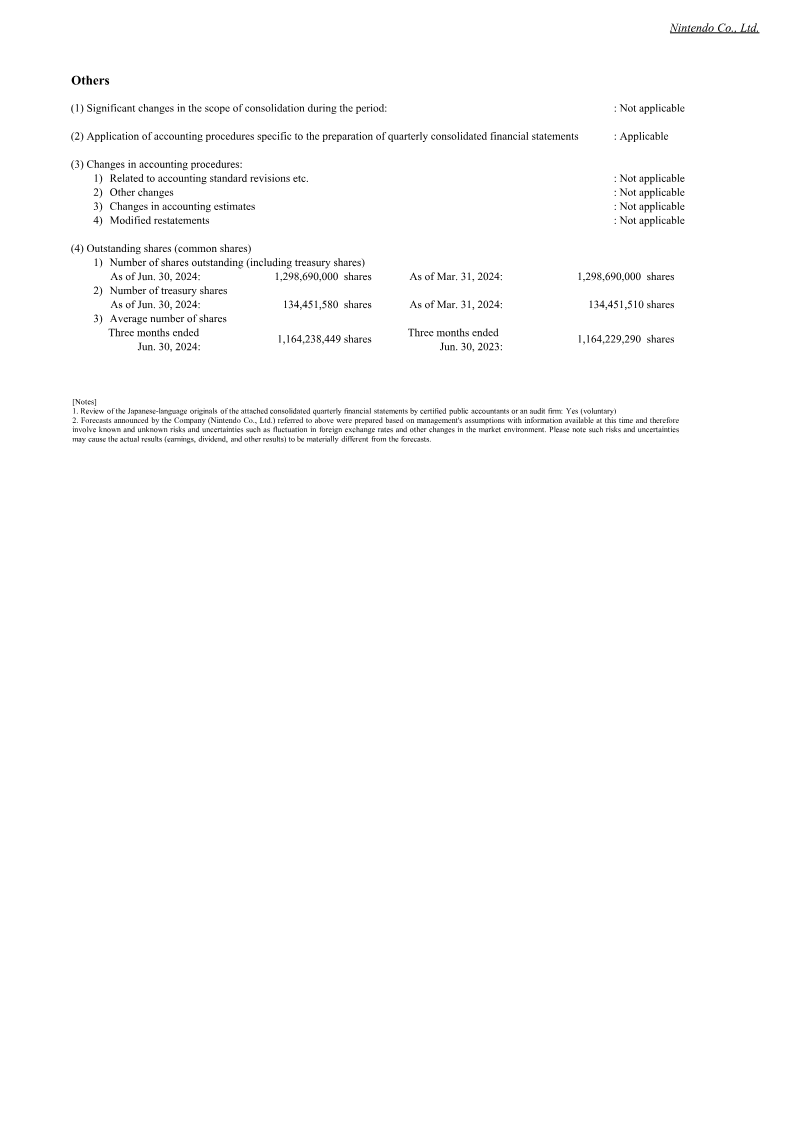
Consolidated Financial Highlights: Three Months Ended June 30, 2024
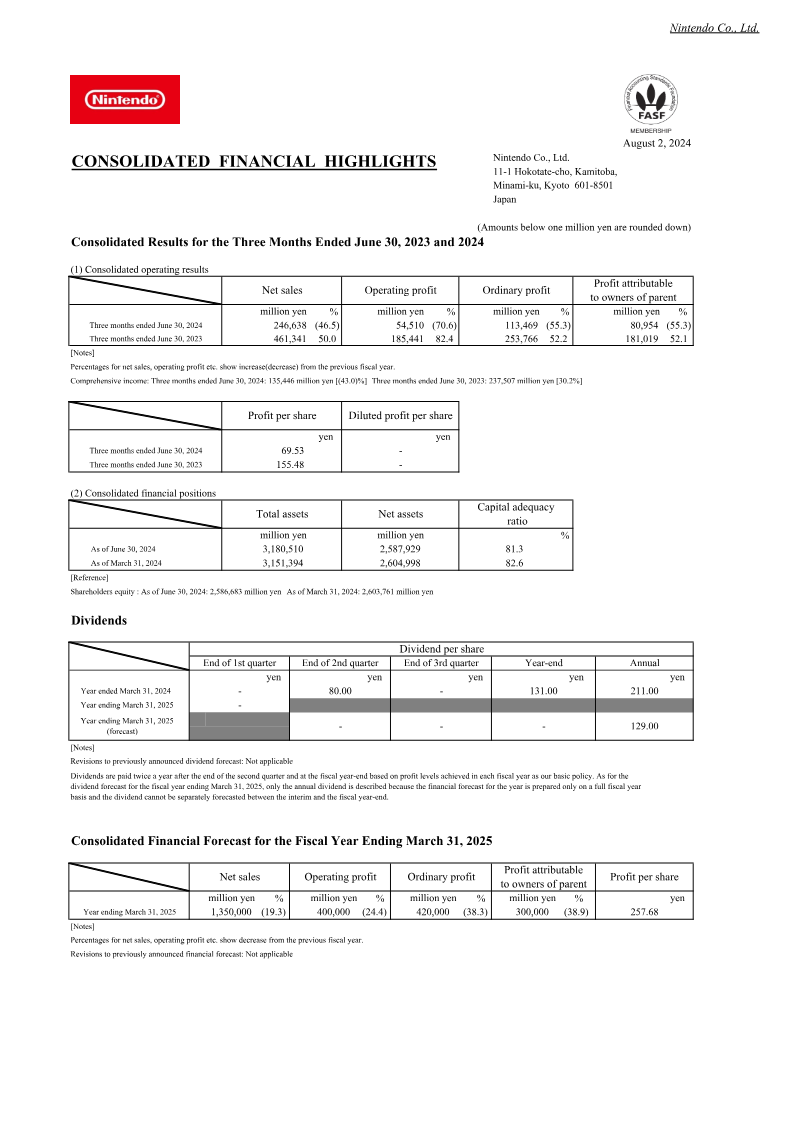
Nintendo’s consolidated financial results for the first quarter ended June 30, 2024, reflect a significant year-over-year decline in performance, primarily driven by the absence of major software releases comparable to the previous year’s high-profile launch of The Legend of Zelda: Tears of the Kingdom.
- Nintendo experienced a significant year-over-year decline in the first quarter ended June 30, 2024, with net sales dropping 46.5% to 246.6 billion yen and operating profit falling 70.6% to 54.5 billion yen.
- The performance downturn was primarily driven by a lack of major software releases compared to the same period in 2023, which featured the launch of The Legend of Zelda: Tears of the Kingdom.
- Hardware and software unit sales saw sharp declines, with hardware dropping 46.3% to 2.10 million units and software falling 41.3% to 30.64 million units.

Nintendo Financial Results Explanatory Material: 1st Quarter of Fiscal Year Ending March 2025
Nintendo’s financial results for the first quarter of the fiscal year ending March 2025 reflect a significant year-on-year decline in performance, primarily driven by the absence of major software releases and hardware-driving events that characterized the same period in the previous year.
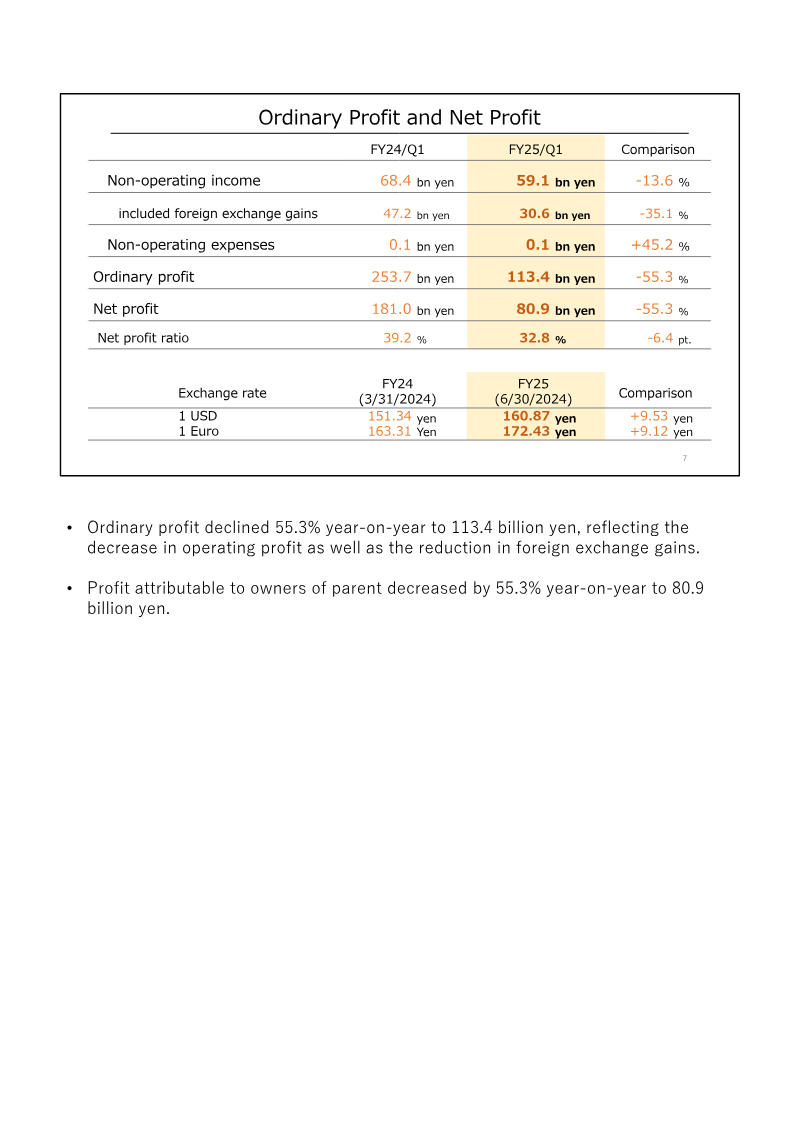
- Nintendo reported a significant Q1 fiscal year 2025 downturn, with net sales falling 46.5% to 246.6 billion yen and operating profit dropping 70.6% to 54.5 billion yen.
- The decline is primarily attributed to the Nintendo Switch entering its eighth year and the lack of major software or media events comparable to the prior year's 'The Legend of Zelda: Tears of the Kingdom' and 'The Super Mario Bros. Movie'.
- Hardware sell-in volume decreased by 46.3% to 2.10 million units, while total software unit sales saw a 41.3% decline compared to the same period last year.