VideoDeconstructor of Fun
TWIG #378: Mario Smashes the Box Office, Take-Two Cuts AI, and Monopoly Go Goes Social
9 Apr 202672 min video
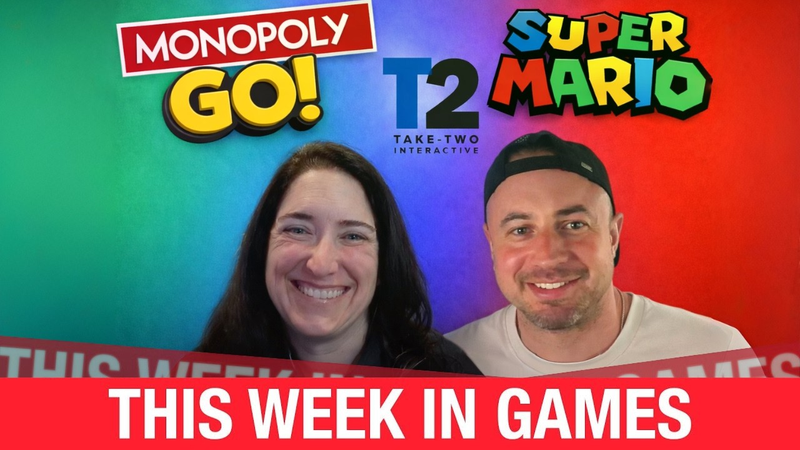
Hello everyone and welcome to Deconstructor of Fun this week in games number 378. Hi everyone, I'm Jen Donahoe. I play the marketing and publishing role on today's podcast. And today we have literally the one, the only Mishka Katkoff, friend of the founders and friend of the investors as well. I believe so. Well, today you will be. It is just us today. It's Twig light. It's Twig with two two the two Twigs. Where's everybody? We have a deep bench. We have six people on this podcast and all like four others are just decapitated, unable, not willing, don't want to. Well, Chris almost never miss. He was going to jump on, but he's like he doesn't have a mic with him. I think he's traveling and and so I was like don't worry about that. But and then this will be fun. A little lawless to have a little bit of a banter. All right. So, here's what we
have on today's episode. Don't ever put Mario in the corner. He crushed it at the box office. We'll go over the results. Reim and Invest Game have a report. Chris will be sorry he missed this one. This is like his Super Bowl of reports. Traditional versus new games like Roblox and Friend Slop. Is there a changing of the guard? Take two takes an AI Oh, Take Two takes an axe to its AI team. And lets them go in advance of GTA 6. There's actually a little bit of I wouldn't say misreporting, but I don't think people got the story right and so we're going to cover what happened there. And of course, we wait for both Chris and Phil to miss an episode to give kudos to Netflix. They have a new kids app launching and then Jackbox games launch. I guess we should start getting our royalty check soon. Mishka, I mean we're giving them all the good ideas. Monopoly Go launches a chat app and it wasn't an April Fool's Day joke as it
hits number two in the top social downloads in the US. That and some quality time with you and I. First though, let's do a little shilling. Talk about your latest Roblox podcast. Good job. Yeah, yeah, yeah. So, this was like polarizing episode. Criticism from people who are not that familiar with Roblox and it was positive about Roblox, but some people who are less familiar about it feel like everything positive about about Roblox is is just trying to fool them. Like the revenue share and this and that. They point right things and I accept the criticism. It could have been more pressing. And then I got a lot of kudos from the episode in the DMs. Like thank you so much. We've been looking at this. This really opens up cuz we would go deep into for example, what the algorithm is and how do you develop your game to get those qualified play through. So, a mixed bag of feedback. Take a listen. You'll hear more about the other business and and yeah, it's I think Roblox is in early stages as a platform. You can't expect the same KPIs
that you would be seeing on mobile at this point. But like think about it pre-CSR racing mobile.
[laughter]
Like what what type of numbers were seeing then? That's that's how I view it. Well, that's old school. I thought it was First of all, you had great guests and examples. You had somebody from Roblox who leads the team, been there a long time and then a developer who's got successful games, SpongeBob Tower Defense being one of them. I like the transparency aspect of what Roblox is doing with the algorithm. I mean, he goes through like, "Hey, here's all the factors." And none of them are by the way like life changing or shocking. But I thought that was helpful. I also thought it was helpful to to hear about basically the new world of game development, the small team sizes, the quick iterations, sometimes daily, sometimes twice a day. They're doing iterations on their game and almost just throwing it out there and how players really have come to expect that. And we'll cover this a little bit more and
I'm sure Chris will come back and yell at you. Listen, I think in in an interview you can't I do think that the topics about Roblox that weren't covered, discoveries a super challenge. The revenue share is really rough for developers, you know, what between the Roblox fee and the platform fee. You know, it's a lower monetizing platform. The the audience is younger, although they you know, they're they're trying to say that they are experiencing an older audience. Remember all the kids lie when they put their numbers in like how old they are. So, but listen, I think that I had heard from some people that know Roblox people that said that this was one of the best pieces on Roblox in in quite some time. So, good job on that. Like I actually
And I think that's tough to do when you're doing it with somebody from the company as well cuz we all know coms people are scrutinizing every word. They are all listening on these podcasts. Like when we're talking about public
companies, it's it's it's a different ball game. But again, I I hope it was valuable. We're doing more stuff with Roblox, more interviews. So, we'll dive deep into the brand stuff and to safety stuff. I really want to talk about that part.
yeah, yeah. And those will be much harder questions. So, Yeah, and then maybe I didn't put this in the shill, but I I just remembered I was invited to speak at this thing called the World Builders Summit. It's in LA on April 23rd. A lot of the topics are Roblox and UGC. So, you know, I'll I'll I'll be there if you want to come to some of those events. All right. So, um we thought what we would do is a is actually have a banter section.
[laughter]
Although I think we just did that. Cuz Phil is not here. He would be like, "Okay, no banter. Let's go. Let's talk about game economy. I want to talk about this Japanese game that is launching and that I think is going to be big."
[laughter]
And so because you're stuck with the two of us, I wanted to put Mishka in the hot seat. He's always the one doing all these interviews. No one ever asks him about
his life. So, I wanted to do that. And I I wanted to just ask you a couple questions cuz I'm a little bit curious. So,
Okay. All right. So, hang with us for a little banter section and getting to know, you know, in a sense us a little bit and then we'll get into some of the news that we talked about, right?
Ooh, intimate. Intimate.
[laughter]
So, I think both of us have a really similar background in that we worked at all the big companies. You a little bit more in Europe, me a little bit more in the US. And now we've been consultants. For me, it's been almost four years. Next month is my four-year anniversary on the podcast and as a consultant. It's crazy, right? Um So, what is the pro and the con of being a consultant versus working at the bigger companies? And do you think you would ever go back? Yeah, that's a it's a great question. This is how you buy more time.
[laughter]
I mean, I've done interviews, many many interviews. You compliment the person
that asked you a question when you think about it. Um like I would break it down into what the benefits are and what the cons are working with a big company and what are the cons and the pros when you're a consultant. And anybody who's who's working at the big company can probably agree that the whole longevity, the colleagues, the RSUs, the steady check, like those are very positive things and it allows you to focus on other elements in your life and just kind of like build that compounding you know, year over year career. And then the cons also I think everybody agrees. There's when you're working in a big company, it's politics. You have to kind of choose your alliances, choose the boss who's going to give you the air cover. And then through that overall, I feel personally that there's a lack of control over your destiny and I think now people have felt it even more when the power have shifted to employers. And
that means like the layoffs and so forth. Like you suddenly your boss leaves, your life changes. You have a new boss and and it goes from amazing job to like, "Damn, I'm I'm suffering." Or the company misses some kind of a performance metrics or whatever quarterly targets and and there's layoffs. Or there's macro level things and then again, there's layoffs. And there's nothing you can do about it and you're you're one of the 10% of being laid off and it's incredibly unfair. And that's what I mean. It's like there's there's lack of control of your destiny. And then as a consultant, you get you're basically the adult that gets hired to tell everybody in the room what they already know. That's what consultants do. And the the pros is that of course, the fact that you're seeing these patterns, these ways of working across multiple different studios. I know people who work in publishing or who go to publishing like game publishing, they always say like, "I'm able to see so many companies do products and learn so fast." No, you don't. As a consultant, you do because you're
really in and you're trying to solve. Like publishers just look at the numbers and every studio does whatever they tell them to do. But in this one, you have to kind of, you know, operate on multiple companies. The good part also is like you're not emotionally attached to the companies you're working with. And so, I know that when I was at a big company and if I felt that there was a decision that we're going or direction that we're going is so wrong, like, you know, I'm I'm I'm part of this company and so it's like stresses me out and I'm trying to influence the decision making. Oh my god, I hope we don't. And it affects your studio that etc. etc. In this one, it's like, "Oh, you you want to go this direction? Okay. Oh, I mean, these are pros and cons, but like it's Sure. You want to make kids games? Then you make kids games. Anyway, [laughter] that's more of the topic probably for for later. And then and then also part of that is you got the permission to say the quiet part out loud. And you know, there's no politics for you. You can say that this is this and this
is that and you know that your contract is going to end at some point and so you can be like you have to be cordial, but you're expected to be quite blunt as well. Um so so that's that's awesome. And then um finally, like this may be me, but I get to be me and you get to be you all the time. There's not like like if you did work at let's say, you know, Google or TikTok, I would say, "Oh, I know this marketing director at TikTok. Her name is Jen." Like your title then that comes first and then it's the person. And so then that's how you'd be at the TikTok. You'd be marketing director at you know, TikTok and your name is Jen. And so you know how it is. Uh so so that's reversed. The cons is the reset every time. New client resets and and everything starts from the beginning. So there's that compounding is missing. Uh then there's this whole sort of a thing you've been as consultant for 4 years. I think I've been like 2 and 1/2 or maybe
I don't know. And like there's this sort of anxiety that you don't have enough engagements, enough deals in your deal flow. So every time you have you take too many and so you become burdened with like just too many projects happening at the same time and you know, you're holding these engagements and then you know, that type of stuff. It takes a moment to understand that that there's not a lot of quiet months. I think I've had one quiet month throughout this whole time. And I still fear that this check is my last check. Just like I know. [laughter] I feel it too. Yeah. It's so weird and that's what I talk about the pros of being in a company is like the check keeps coming and coming. Here every check is the last check in my mind. Um um you don't see the results of of your work through long time. Like you give them the playbook, you work with them on on it. They start executing and they move you away and you don't see what the effects truly were. And so that could be a risk when you're going in and kind of putting the same playbook to another
place. You said this worked at this company. Did it though for 2 years? For 3 years? Was it a good start? So so that's that's a challenging one. And then you don't get to have colleagues and that's uh that like often times I know we work together on some projects. We have our sub teams doing it, but it's not the same. Like you're coming in you don't have these these coffees and so forth. Um so and then finally, if you were able to achieve something, especially me like I work with a lot of post-Series A companies like 100 people or so that are scaling with a product market fit. There's no the upside. Like I don't have the shares of that company and so I help them out and and finally that. And then um and finally like pro and con, either or, probably both is that you are in charge of everything. That's good, but that's also bad. Like when you wake up, there's nobody saying that here's the things you have to do. Everything comes on you. Like from taxes to like you have to open up an account, you have to do this, you
have to do that down to the actual work that you're doing. So you have to be I don't know like self-motivated is a weird word, but you just have to be you know, you just have to do You have to have brain surgery and take a month off and you know, you got to you got to like make sure you have pick a pick your business up. Just for example that may have happened to You've been consulting longer than me. Tell me how how it has been on your side. So I mean you covered almost all of it. I think the piece I want to um hit on is that because we're on the podcast, I think people want to hear our advice and our experience and they get a little try before you buy because they hear us talk on the podcast. And you know, when you're on the inside many people want you to kind of shut up and just do what you're told. And so what what I love and especially and I don't want to make it about being a woman, but there is a little bit of that sometimes that plays into some of the cultures
where you you know, depending on who your management team is or the people around you, it's like, "No, no, just just please go do what I tell you to do." versus, you know, "Challenge me. Tell me the hard things." Um I love working on so many different things and so many different clients at the same time. I always tell clients I'm more valuable to you on the outside than on the inside because I get to work with so many different people. Obviously I don't share NDA information, but it's in my head and I can guide you in the right way. Um I I also personally do not play the political work game of Thrones well. So it's really helpful for me to be able to be, you know, blunt and direct, but respectful Jen. And I think a lot of people appreciate that. Um I I the con for me, I mean you hit it, is just the security. Like I can't tell you what my paycheck is going to be at the end of the year. Um it always works out. I always get more offers and I'm juggling almost way too many things, but it is that long-term security that I I
struggle. Um I I wanted to ask you if you do want to go back inside. So here's my answer.
Yeah. Um it would I I've turned down a lot. I've turned down a lot, but I would go back inside for a near perfect fit. It has to be number one, great people um cuz I do miss working with peers and to your point is I've got some people on my team. I've got you guys, but I do miss a little bit of that camaraderie that many of us had like old school being in the office and like rolling up our sleeves and doing stuff. Um so it has to be great people doing something probably I've not really done before, a product or a service that is also positively impactful. Um you know, I I I've seen a lot of people go do like gambling apps or that and I'm like, "Ah, that's that's not me." So it's a very it's a very small, you know, it's got to be perfect, but I I would I think as I get older a little bit of that security starts kicking in and you know, like honestly when I had
the brain surgery I was freaked out. I'm like, "What God, what happens if and it was going to be great and you know, they said it's like, you know, it was baby's first brain surgery, you know, you're going to be fine." But I was like, "What happens if I'm not? Like where do we get income from our family?" Um you know, I have life insurance, but I don't have like you know, big company like I used to. So anyway, I think those are mine. Would you go back in for anything or start another company, Mr. I started a company? 100% I would I would I would go back. For me it's not about the security, but it would be more about you're building something like I'd be truly excited of what is being built. I couldn't go to a corporation. I would go to something something that is run by founders. I would never go to anything that is pre-product market fit. I've done that too many times. I I'm I'm not going to do that, but it's something that is scaling. The founders are amazing. They've worked together.
They've cleaned up the founders team. They've they've gelled together. Uh you're working super well with them and and it's and you really really believe in what is being built. Then I would join that mission. So for me it's it's it's not the security. I think I've I've proven the security part to myself, but it's it's it's the mission. That makes sense. All right. Should we jump to the news? Uh that this question was fun with this one though. Like what is what's the pro and con of DoS? Like I I have to tell you my con though. My con My con is the splash damage I get from all the we talk on the we talk on the podcast and getting uh Have you lost work from from podcast? I I I think I have. I think [laughter] I have. Have I lost work for being on the podcast? Maybe. Most likely, but not in the sense the client would have canceled the uh the engagement, but probably some of the clients just didn't engage because of that. Uh it's [snorts] it's it's a super
double-edged sword. I've been like in deep due to the things that are being said with corporations getting angry, but what I've learned is is that it is truly a double-edged sword. So when some of us gives a negative criticism about certain company, then uh the other companies tend to rally behind us cuz they're like, "Oh, like they're negative towards Apple. We like that." And and so that kind of that kind of stuff. And then the only thing that I wish we would do less and then we're trying to do less is like never get personal. Like it's not about the people, it's always about the companies, but sometimes people are so tied to the company, maybe they're founders, that they take that personally. And and if you criticize their company, they feel like you're criticizing them. And so that's that's the difference between between those, but it is what it is. Like net net it's positive. Um you know, not individuals.
Like that's not fun. But [laughter] uh we wish that wouldn't happen. Yeah. No, the splash damage is real unfortunately, but the positives are also I think we you know, the the one thing I'll I know before we we continue on is that when people come up to us and we're out in public and they say your podcast really helps me understand the industry. I got a job because of the podcast. I mean it means a lot and and I think that's a lot of why I think we do this is you know, we don't get paid a lot. I don't think people understand yes, we have sponsors, but it's not like this this is a big source of our income. We do it because we love it. I think it's a great service. I think it's a great way for us to stay connected with our industry and that's the part that I love about what we do.
And it's like I I I I have started with I just I look forward to this every single week. It is so much fun. It's hours and hours of work. People don't realize that we actually prep and
actually think about what we're going to say before we come on and talk but Some of us. Some [laughter] of us do. Not everyone does. Every single person preps. Your competitors just tripled their meta spend, launched 12 new creatives in a day, shifted budget from TikTok to YouTube overnight. Would you know? Well, with Pathmatics from Sensor Tower, you can get access to ad spend and impression estimates across all the key platforms from Facebook to Instagram to YouTube to Snapchat to Pinterest to Reddit, everywhere your rivals are buying attention. You see their creatives, their seasonality, their share of voice. That makes you stop guessing what's working in your category and starts planning against what actually is. Pathmatics by Sensor Tower. Go to sensortower.com and sign up. Want to hear an uncomfortable truth? If Apple owns your checkout, Apple owns your player. Every receipt, every retry, every win back moment, theirs, not yours.
AppCharge flips that. Full-stack direct-to-consumer infrastructure built by monetization veterans, backed by Supercell and Playrix, trusted by studios that have pushed over a billion dollars through owning the relationship with your highest value players, that's the actual unlock. To get your unlock, go to appcharge.com. Um but all right. So, All right. Let's continue on, right? So, this is a correction, but not really a correction, but it's a bit as predicted. The Super Mario Galaxy movie opened at 373 million globally. It was the biggest worldwide opening of the year so far, and uh this positions the film among the top five animated debuts in cinematic history. So, and it was likely going to be the first billion-dollar game this year. So, um number one was Zootopia 2, and then a Chinese animated film called Ne- Ne- Ne-ja. It was a great great movie. Great movie.
seen it. I'm just kidding.
what is this movie? Uh then Super Mario Brothers was number four, and so Super Mario Galaxy right now is coming in number five as a as a top debut animated film. So, the key message is critics uh don't get the magic of Mario. They're dumbasses. Mario 1 was a 59% Rotten Tomatoes. Mario Galaxy is 42%. Shut up if you're old and you don't get the magic of video game movies. That's it. Transmedia. Uplift. What's your other correction? Yeah, my other correction was so last last week I talked about Eidos Eidos. How do you say it? I thought it was I dos. I dos. Eidos Eidos Montreal. So, I said that it was being fully closed because that's what I read, but the CFO is now the new head of studio. They work on Grounded 2 as well as work on the new Fable game. Did not know that. Uh they only canceled the open-world game and laid off that team and some collateral damage, but they're very very much still open, and that is
good to hear. That's awesome. All right, let's get into our top story, which is the new Areem investment game report. So, take take this one. Yeah, so Areem, I'm just going to go through the highlights. Uh everybody should uh subscribe to this new to to their newsletter, but to their report. It comes in every quarter. Uh it's A R E E M. Areem, it's an investment bank, a boutique investment bank in gaming and interactive media. So, just the highlights from this report. Um Saudis are picking up assets. So, M&A value reached to 7.7 billion across 52 transactions. If you're looking this on Spotify or YouTube or actually everything has offers now video, you can see that 6 billion out of those 7.7 billion acquisitions were made by Saudi or the extensions of Saudi. So, Moonton was acquired by Scopely, and then Scopely also picked up um No, Savvy
acquired Moonton, and then Scopely picked up the Lilith Games, but Sav- Savvy owns Scopely. So, come on. Like, this is these are Saudi pickups. Uh so, $6 billion gone. Uh who else is gone is the VCs. Private investments totaled at at less than 1 billion, so 0.8 billion across 101 deals. And the early-stage activity. So, this is where the VCs are investing into the new startups. That sank to just 43 deals, which is deepest level in recent years. So, uh the investors are just not viewing gaming as a VC business. They're not looking at as a bad business. It's just not the business that brings the multiples, and I'm sure many founders have noticed it. Again, unless you live in the area code of Istanbul. Yeah. In specifically Istanbul, probably. Uh PC gaming on Steam, new all-time high again. Quarterly revenue near 6 billion. Peak concurrent users at 43 million
sustaining double-digit growth year over year. So, Steam is doing phenomenally well. Console revenue also hit a record. 22 almost 22 billion powered by Nintendo Switch hardware cycle. And then on mobile, we are on cruise control. In-app purchase spend, steady. 20 billion a year for third consecutive quarter. And downloads now hit like the multi-year low. So, it's just focused purely on existing titles. And I put in just a couple of graphs here that I wanted your take on. Uh the first one was Look at uh this graph is showing streaming engagement, but what was interesting is Look at Kick. Kick is not adding to streaming engagement. I mean, I guess it is a little bit, but it's taken away from Twitch. Jen, how do you read this? Yeah, it does I I've been hearing that Kick has been coming on. It's it's also a little bit of like the darker side of streaming, uh the the less content moderation side of streaming. Uh I wish
I could say it was additive. It does look like it is taking some share from what Twitch is up to. Um but, you know, again, streaming is if you're not thinking of influencer and streaming as an acquisition channel, then you know, you're just not in today's kind of marketing world. So, it's it is so crucial to to have these folks coming in on it. Uh I hope, you know, remember Twitch had all those layoffs like you know, the the challenge is that these platforms are find, you know, even they they support our industry, they themselves have problems kind of surviving. Um but what what do you have in top titles here? Um you know, all the usual suspects, right? Yeah. Yeah, pretty much the same. Marathon went went to the uh the top. Paribus. But yeah, it is Arc Raider, Resident Evil, FC 26, Yeah, that's what I see.
Duty. So, pretty much the same, but it is interesting how that skews and and how almost like Kick is the new
raunchier version, and there's a lot of people who got kicked out. Oh, maybe that's where that that it comes in. They got kicked out of from Twitch, and now they are on Kick, and people are looking for that, you know, that almost like an only fans version of streaming. Like, I need it raw. And so, they go on Kick, and then of course that that platform monetizes from all kinds of crypto casinos and and then stuff like that. So, I think it's a it's not looking good good for Twitch. Let's be honest.
Yeah, that's that's super super challenging. Yeah. Uh what do you have this next one here? Hit titles remain the primary driver of UGC platform engagement. Yeah, what I have it here is I I've been showing the graph of how popular Roblox is in terms of CCUs, which is, you know, a vanity metric in many ways, but look how much Roblox have come down. What it's now on the same parity with Steam, and how Steam has been growing. So, Steam is this sort of a like uh steady steady quarter over quarter 10%
growth, and Roblox really shot up with uh with, you know, some of the brain flop titles and grow gardens and and and um brain rot and that kind of stuff. And now they're cleaning up the platform. They've been doing a lot of things that focuses more on specif- I mean, you can just listen to the episode, but they are focusing on on clearly on a on a little bit more um constructive titles. Yeah. And they I think I think it was publicly the Dave has been speaking about the the founder um has been talking about that they want like AAA experiences on Roblox. They want deeper engagement. They want co-play. They don't want this, you know, brain rot grow garden type of experience. Again, I'm not putting words in their mouth. I'm sure they want all sorts of experiences, but they are definitely uh wanting more of these um How do I want to put it? More sustainable titles. Yeah, yeah. And I think this is he's This chart CCU, and so it was really, you know, um driven by
the massive updates for the brain rot games at a at a specific time. And so, I I think this is a recalibration towards uh more longer-term engagement, not necessarily, you know, trying to spike everyone at once. So, I wouldn't read too much into that. Yeah. That decline. But you're right that, you know, Steam Steam has been growing over time, and every month it seems like it hits its next kind of record. So,
Yeah. Well, Fortnite is in pretty much in you know, um Fortnite's struggling. Yeah, one of the top battle royale games. That's pretty much it. It's not even a platform. Yeah. Unfortunately. Anything else on Areem or are we going to No, let's let's leave the bankers alone. Get the report and let's talk about some of the news. Yeah, I'm sure Chris will come in next week with thoughts on the arena report. I mean, that's his Super Bowl. I mean, we just missed it. No, it's it's four times it's four times a
year. What happens four times a year? That's like a Super Bowl. It's more like like NCAA tournament. Exactly.
It's the NCAA basketball. That's what he loves.
[laughter]
All right, let's do this next story from what was this? IGN had this story.
Yeah, mobile, web, CTV, PC, a dozen channels, a hundred creatives a week. Now that AI writes them for you. And somewhere in that mess, the signal that tells you where to double down and where to cut. Good luck finding it in a spreadsheet. AppsFlyer gives you growth teams one source of truth across every platform and every channel. So you stop debating whose dashboard is right and start making the call. In an AI-first user acquisition world, the winners aren't the ones with more data. They're the ones who trust theirs. AppsFlyer.com for the single source of truth. IGN had an interesting story. So I wanted to just talk about this one. It's it's not per per se news, but it was
called the rise of Roblox live service game and AI disaster. Sorry, AI distraction poses a huge question. Is the world failing? Let me They they added a long of a title. Is the world falling out of love with traditional video games? Is the title from the IGN article? And in short, it's the article asked, how is it possible that an industry beating its previous peak year-on-year record is also one where 1/3 of its workers were laid off in the last 2 years. And it poses this sort of a thesis that the industry is deeply It says deeply unwell. With no singular cause to identify, but a myriad of symptoms creating a slow, spreading, but severe threat. So a lot of hard words.
Da da da. Da da da. Jen, what do you think? You you've you've kind of read
that, right? Or do you want me to go through like what it argues? Like what are the other points?
don't you hit a couple of the key points because they they actually do a nice job of amalgamating all of that. I felt like they used AI to go and scrape industry resource and and put it all together to paint the picture of a patient that you know, has got some undiagnosable disease but a and a lot of symptoms. But go through a couple of them.
Yeah, yeah. So again, not disagreeing with the other symptoms. Maybe they the diagnosis is is not what we're going to agree on. But one is the sort of paradox of growth and layoffs. So nearly $200 billion in sale year 5% year-over-year, which is not a lot. 5% It's not you know. And then 30% of the workforce is being cut. And you know, many studios shuttered. The other one is that that's number one. So the paradox of growth. The second one is the attention drain. And it talks about things like AI assistants, OnlyFans, like polymarkets and these prediction
markets, Kahlúa, etc. And how smartphones are eating 18 to 35 male core games time budgets. Again, probably true. Not probably true. It is definitely true.
And then the third part is the console crisis. So the Xbox how their hardware is down, how the Game Pass Ultimate hike to 50%, how the Spencer is out, how PlayStation is is, you know, racking up $400 million in service losses, how PS5 is trailing sales compared to PS4 lifetime sales, and how PS6 is possibly delayed. Again, very much all the facts. Then it mentions Roblox problem. And and they they say Roblox problem is the fact that it's 40% of net net industry growth excluding China, how many hours it eats up, the the grow garden hitting 25 million CCU, which we just showed is is not any more that
much, not nearly. And how specific problem is shown that young players are uninterested in AAA. How dare they? How dare they, these kids?
[laughter]
So there's a revenue squeeze and again, that comes from the the subscription pricing going up and no new players. And so gamers are according to this article like as boiling frogs because they look at this, you know, no new downloads and less sales, but at the same time prices go up. So it's almost like they're being boiled cuz like the price are just increasing and we're just taking away one cent at a time and they're not even noticing it. Then there's the very very actual fact of RAMageddon. So these AI data centers consuming DRAMs and SSDs, the supply is lower, that makes consoles structurally more expensive to build. Again, very much true. And then finally, it's the live service trap. Because the the top charts are now frozen with these
decade-old titles. How dare League of Legends make so much money year after year? And Counter-Strike and Dota. And they say basically what Newzoo's reports have been saying is that the other biggest live service games are are holding on the players and that a lot of the AAA studios kind of looked at it and wanted to enter the fray and and in many ways could not. But but you know, basically they're making the case that the market is stale. There are the winners and it's very hard to break through even though our creators did, but you know. Yeah, yeah. But they're also saying that, you know, those live service games lost 70% of players. But the AAA studios are still building more. The pendulum swung, you know, when everyone was like, oh my god, we have to build a live service game. And then forward and then you know, people and so there you know, as with everything, people the pendulum swings very much to one side or
the other and you know, no one just like with life in general right now, no one's sitting in the middle on on anything. So I think you know, again, like it did a great The article did a great job of like pulling everything together, but I have a few issues with the article and it definitely comes from a point of view of a AAA game journalist or somebody who's AAA who is not in touch with some of the non-AAA things and the non-hardcore gamer things or the non-global things. And so, you know, because of that I just wanted to call out a few things. One is I was highly annoyed at the first part of the article only speaks about men. Oh, well, men are doing this in a hardcore gamer that and it doesn't acknowledge that over half of the game industry revenue, especially on mobile, comes from women, non-binary folks, non-men. So it just is like, okay, there there is a world outside of an 18 to 35-year-old dude.
And I'm not trying to be that angry woman. I'm just trying to point out a data point that is crucial for many of us. Ask Love & Deep Space how much they love their audience on their, you know, hundreds of millions of dollars product that target women or that the entire puzzle genre has half of women to thank for the revenue that they're making on those like the number one genre in in all of mobile outside of social casino. So we talk a lot about this a lot on the podcast, which is like how do we find these underserved audiences or underserved genres or play patterns that can help fill the hole of the leaky bucket that comes from people's attention being pulled in other other cases. So I I do absolutely We talked about the attention war, you know, before, but here's a couple of the other um topics that I think we're going to get into that I don't think they picked up on, but is also something to consider. Macroeconomic impacts, dare I say affordability. I know I'm US-based, but you know, I
work with a a lot of younger folks and and you know, they their disposable income is less to be able to spend on games. I I think the biggest one, and I'll talk about this a lot later, is the change in Gen Alpha's play patterns and expectations coming out of their COVID you know, youth experience. They did not have the same experience growing up that you and I had. They see gaming as a social hangout. Where they go and they hang out with their friends cuz they couldn't do that in person over COVID. And because of that, less fidelity of a game equals less friction. So these really really pretty games like an Arc Raiders or a Marathon makes me think that I have to try hard to learn how to play and I don't want to invest in something that I'm not sure I'm going to like. Whether we like it or not, this is how Gen Alpha has grown up is they just want to try a bunch of different things and they don't want to spend a lot of time on something if they don't know they're going to like it. And I think this is something we're all going to
have to contend with as we think about what is AAA, what are high-fidelity experiences. The rise of successful game studios from China and Turkey like you said, like they just completely missed that. And then you know, we'll get into the the attention war a little bit. I think this is the point you wanted to get into is you know, the most amount of non-gaming things at our full attention, short-form video, gambling prediction, Mishka fans, I mean, OnlyFans, sorry. They are taking time and share unlike any other time I think in history and you know, does this help combat against the largest supply of games ever made. I don't know, but you know, there's there's just so much choice, more than you know, I grew I grew up, we had like five TV channels and now there's like thousands. Anyway, so I'll I'll let you go. Take a couple of these. You you covered pretty much this you know, what I what I thought as well. It's like I I broke it
down kind of like looking for different counter arguments. Like the first one is as you said, the IGN's business model is to cover games that people pay to buy and so it's really what they're looking for like the the 60 to what now games cost like 80 bucks a game. So that's their business model and if those games are not doing that well, their business is not doing that well and to them then the industry is not doing that well. So it's totally understandable, but it is a perspective of a publication. Um the layoffs like they people like layoffs are without a doubt always really sad thing, especially on a personal level. Often times when we look at these these graph where there's the a mirror saw what publishes them and they were also on the Matthew Ball's presentation. The thing is like we don't zoom enough out of it, so we don't see how it ran ramped up especially during those COVID years when everybody got hired and and we really had the sort of
a over funding which led to over hiring which led to over supply and we're many ways in a typical hangover phase where the demand I don't know if it has collapsed, but it just there's just too many things that came out and so you know, unfortunately individuals pay for it, but we have to take it into account like embracers of the world spent 10 billion dollars on acquisitions and and it's you know, that that has an effect. Then the the sort of a thing that totally missed its mark which is kind of surprising for IGN is they didn't talk about the Steam's mid market. So the you know, the 10 to I don't know what's what's our greatest hits.
30 40 30 yeah, maybe 40 max. Like that has been really booming whether it started with hell hell divers to balatros to arc raiders to peak to schedule to man awards to power awards to repo to lethal company you name it. Like those have been doing really well and we just talked about the on the Steam charts and the concurrent users on that platform and the revenue records.
They they're doing really well. I IGN should be covering more of those and those are paid games. So yeah. Let me let me channel my Eric Kress who'd be yelling at [clears throat] you right now which is well, it's not mice nuts. It's that there's going to always be a role for triple A games. They are the ones that make the most money. When you look at the top charts and you see FC there every year, you see the Battlefields, the Call of Duty's. Like there is no denying that triple A is going to be amazing. Now I
[clears throat]
I I think that the the thing that we do have to realize is that there there are becoming other opportunities and so um you know, I I actually wanted to talk a little bit about this idea of friend slop. I think I mentioned it on our GDC podcast. I actually did a LinkedIn post on this. It got a lot of traction and so basically friend slop, if you haven't heard of this, you probably unless you have a Gen Alpha living in your house, you probably haven't heard of this or me
talking about a couple weeks ago. So four of Steam's top 10 best sellers in 2025 were designed to be abandoned after a weekend. This is like Friday night play. Mhm. Nearly 50 million copies sold, hundreds of millions in revenue and their 30-day retention is around 3% because these are in a sense almost disposable games, but still offering a lot of value. So they're cheap, chaotic co-op games. They own a weekend and nothing more. They're quietly becoming one of the most interesting business models in gaming. So they're they're typically priced $10 or under. Nobody buys one copy cuz you go and get all your buddies to play. So a $10 game becomes 40 buck for for a weekend if you you know, you and three of your friends go in. You are building these for clips, not for the hours in the game. So Tik Tok, Twitch, Kick, they do the marketing for you. So you have very quick click shareable content that goes into it. The challenge is that
this friend slop idea, these these co-op games have not cracked mobile yet which is weird because Gen Alpha lives on mobile. They grew up on Discord. They grew up on short form video. And so this friend slop formula which is low cost, social first, clip worthy chaos, this fits how they play. So I think that this might be a way to break through the clutter of your next point which is you know, that supply point that we talked about. I actually had to go in and edit your numbers because 2025 had over 20,000 games released on Steam. Wow.
Like just massive and it you know, that's like double from just five years ago, right? 2020 was 10,000 games. It's like holy What they have to choose from. Yeah and and think about the business models that have been introduced in a couple of years. Like there's not only that. There's not only the triple A games. There's not only these cheaper games on Steam, the humble bundles, like all these sales running all the time. Uh there's also the subscription um
model. There's the games as a service model. There's the half you know, half ass model as so I like to call [laughter] it. The the arc raiders, the hell divers where you like I'm going to take a little bit of money, but I'm going to also also going to upsell you some while you're playing through micro transactions. Like all of these models exist at the same time and as a result, you have insane backlog. I remember you know, a few years ago where where Tom Tom was at Newzoo. Uh he he was on a podcast and we were discussing this this backlog coming through and and the data showing that despite like a record year of PC and console launches. I think it was 23 where like the best possible like the best metacritic scores. It was like every month we'd had like two bangers come out and the industry barely grew. So it felt like we hit the saturation point and that's the thing. So it's not like that you know, surely men are spending money on only I would assume that that's like 99% men are spending
money on only fans and polymarkets. Again, nobody else. Percentage. I don't I think you're not wrong.
90s. High 90s. So So yeah, men are not doing well at the moment. We need to take care of men if they're spending money on polymarket and only fans. Uh but you know, and it's it's not that. It's not only that that they're spending there, but it's it's the fact that the backlog is insane. It's it's over supply. It will take years to get through it. It is. All right. And the the other part that we're just missing just make it missing on a high level is China. Not a word on China despite like massive successes and global successes and and and then Ram again on you know, it's real, but um you know, they they kind of treated as evidence of gaming being in trouble versus very console centric slice that is being in trouble. The piece about Ram again that it that is interesting is that we're really close to getting our
first $1,000 console. I mean the new Sony price hikes have the PS5 Pro landing at $899 US and I think euros. Um you know, in the next couple of years it's you know, a console is going to be crazy and I think you know, nobody wants this to happen, especially Take-Two which kind of leads us into our next story which isn't a GTA story, but it is a a bit of an AI story. So do you want to take us through this one? Heroic Labs has spent over a decade quietly building the back end that powers some of the largest games on the planet right now across every single platform. Their products Nakama for multiplayer and social, Hero for meta game systems, Satori for live ops and experimentation and Heroic Cloud to scale the whole thing. The pitch is simple. Stop burning senior engineers on infrastructure problems that were solved years ago. Build your game. Let Heroic handle the rest. Go to heroiclabs.com. This was circulating a lot. This was the
the Take-Two. Take-Two has seemingly laid off unspecified portion of its AI team including its head of AI. And so this is like the blasphemy level type of an action depending who you ask. Some people were reading this is like finally AI bubble is dead. These are horrible people. It's good that they got you know, fired and the other ones are are creating different narratives. So what happened was is that Luke Dickin who was head of AI Take-Two Interactive announced on LinkedIn that he and his team has been laid off. Dickin spent a decade at Zynga building applied AI tools for a game developer before coming becoming Take-Two's AI lead in early 2025 when Take-Two acquired Zynga. We're not going to talk about that acquisition. Come [clears throat] on. The dates don't line up on that, but that's fine. It is what it is. So the timing of the story is the same week CEO Strauss Zelnick told investors that Take-Two is actively embracing
generative AI with hundreds of pilots and implementations across our company. Uh and then one month prior president Karl Slatoff publicly distanced the company from tools like Google's Genie saying they cannot be compared to mature game engines. And I actually listened to the podcast on game game game industry biz. No, not game industry biz, but
Game business. Game business. Yeah, it's a good good site with with Strauss and he was made a great point. He was saying like it's not the fact that you can build something. It's the fact that is it world class entertainment and can you you know, essentially distribute it which Take-Two can. So so made a clear difference between Google Genies, you know, demo and that. So, um the clearest case study of what's observed of um of of GDC, my experience is that every conversation turned to AI, but nobody could really point out to shipped results when it comes to game development. There were plenty of
results when it comes to uh different support functions and how AI has helped there. And um it's interesting because it came at the same time with the news of Unity's report, a game development report that said that 95% of the developers are using different AI tools in development. So, that was um that was that was basically what happened. Jen, how did you read this article? And then overall like this this chatter about Yeah, yeah, poor Luke like set off a a firestorm. So, I wanted to help get some corrections out there um because the reporting on the story I think I didn't quite get it right. Uh there's so much AI hate in our industry, which I I hate. It's like um it's like the Luddites come have come back and are trying to take over. But anyway, okay. So, there's a um like a podcast newsletter uh a YouTube video called AI and Games. And so, those folks actually know Luke for many many years and so, they did an
article that I was able to read and it and uh they covered the situation and so, they noted that everyone kind of had this surface level analysis and they just they really didn't dig into it. So, let me just read a quote from his article. So, first up, this team isn't some generative generative AI startup. They're a central AI team that previously at Zynga that folded into Take-Two when they were acquired. The bulk of their work is not generative AI based. They're a team that has been focused on procedural content generation tooling and machine learning. Remember old school machine learning ML?
that's what AI was until they rebranded into AI.
yeah. Crypto and then they rebranded to AI. So, continuing on uh supporting deployment of ML and broader DevOps and aspects of automation and tooling for developers. What they've been doing in generative AI is relatively minimal and also more recent given that they've been a team that's been focused on supporting game projects. So, I think that's
important and and I have a couple of takes and I'm struggling to know which one is is the right one. Um and so, I'll go to your first point that you just made. It's lots of tech lots of tests, but no transformational wins. And so, I I think that you know, everyone that I'm sure you and I talked to uh I bet that they have a lot of general improvements. They were able to do a lot of different things uh and you know, for this team it sounds like that wasn't their goal. Their goal wasn't like let's do something amazing by
Puzzle levels probably.
Yeah, this is this is like you know, if they started at Zynga, guess what they were doing? They were doing mobile. Yeah, they were trying to make you know, uh live ops better with machine learning. Probably more personalization. So, that goes to my second point, which is Zynga mobile versus AAA HD development for like a GTA the others, you know, you've got a central team that uh would be meaning has been working more on mobile and then so, you know, it it probably doesn't necessarily apply to
some of the AAA stuff and I'm totally guessing on this uh who knows. But I think this this point this last point is probably one of the bigger ones. I mean, you you and I both work in the big companies central versus distributed org structures. Having worked at all these companies, it is very I always tell people don't be on a central team. I always like whisper to them and like get on a game team. So, central um it's difficult for them to understand the nuances of all of the distributed teams, which are by the way all around the world, different genres, different platforms, um different workflows, different leaders. So, my guess is that, you know, um overall Take-Two's not going to give up on a AI. They're they're likely giving up on central AI for what this specifically is and they're likely having this generative AI these tests in in distributed teams. So, I I I think this is not a signal to gamers like hey, Take-Two is agreeing with you
generative AI. Like I I don't think it's that at all. I think we're just not seeing a central team anymore. Is that kind of your read on it? That's exactly. This is we are two dinosaurs. We've seen it all. Like if we go back to like 2018 and 202022, there were dozens of these Fortune 500 companies that had centralized their data science teams, which is, you know, ML as well. And this same pattern went through as well. Because central team is a cost center. It is the one thing that gets That's why you don't want to be on central. I know it sounds so awesome. You can do all kinds of cool without, you know, clear deliverables or maybe you just show that you've have a lot of action. But the fact is you're always on red. There's never the time when you're on green. The game teams have to say you're valuable. If they say you're invaluable, you're causing them problems with all these things that you're doing or maybe you don't use it that much, you're dead. And so, central teams, they build prototypes. Then the studios might if if they resist
adoption, then leadership can see the ROI, the team gets cut. And with AI, I think it's even harder because the technology is shifting every 6 months. And I think you can reach the sort of a nightmare level difficulty if you're especially if you're new to the company. This is what I've been seeing is like they have a company This is not Luke's case, but this is the case where somebody new gets hired to a company to be the head of AI of company X and they are essentially on a clock and it's very hard to beat that because you're trying to build relationships often with multiple different studios in different geographies. Um you're trying to build out your AI team, your SWAT team, your strike force. You're trying to evaluate these tools and build some of these tools and understand the needs of the studios and then uh get the studios to use these tools that you've been building and the time is running out and at some point if there's any kind of a decrease in the
hype of AI, you and your team are gone. Yeah, it's not impossible for there to be a successful central team in different things. Um it also, you know, sometimes be if you have executive support and you can go and be in a blue sky group, um usually you'll get um a certain window of time. Uh but but at that window, you know, don't take don't leave at 4:00 every day and grab your coffee, you better be delivering something.
It's it's like
And I'm not saying this is what happened in this case. You'd have to be at Supercell central team where the company's just printing money at insane profitability at EBITDA and you'll be like, you know what? Yeah, just let's do AI labs. Like why not?
the use case I was thinking of.
[laughter]
I That's Well, that's what all of us are thinking. But the moment the profitability becomes a question, then there's no labs anymore. That's actually where we need to deliver something. So, so yeah, in those And then again, I'm not on Supercell or AI labs. I think those are amazing that they're
spending uh effort and funding, you know, these um frontier projects without clear um connection to the uh the core business, but that's a luxury. That's not the life of a normal company.
Yeah. Yeah, and it it's kind of I it's like how Meta kept VR alive, right? Like without those kinds of investments and somebody taking the risk. Like, you know, I I'm glad that somebody is taking the risk
Correct. and doing that. And so, we'll see something out of them soon. Let's talk about the risk of making kids games. Yes. So, [laughter] uh let me just share my screen so we can see the lovely Peppa the Pig and talk about what has happened. So, um Loyalty is the rare user acquisition channel where the audience is actually high quality. But the platform you pick matters more than the channel itself. Vibes is built by game industry veterans. It runs on AI-powered targeting and optimizes for ROAS instead
of just impression or specific retention number. It's the fastest growing loyalty platform in mobile games for a reason. Go to v y b s.co and get yourself the best loyalty platform in mobile gaming. Next Netflix finally listened to me and us on the kids strategy years ago. I was saying Netflix uh should be spending their time building out their kids portfolio because this will be the Joe Camel. If you don't know what Joe Camel is, it's like a tobacco company back in the day used a cartoon character to try to get kids addicted to cigarettes. Smart.
So, yes, I'm making a gross analogy. But if you can get them young and you can get uh brand adoption at a young a young age, then you will have fans for life. So, on April 6th, they announced that uh the playground, uh which is their uh their new dedicated app for kids eight and under, it features interactive games with icons like Peppa the Pig and Sesame
Street. There's also Dr. Seuss, StoryBots, Bad Dinosaurs, some really really solid brands that parents trust, kids love. So, I was shocked that um ironically it was Peppa leading this and not Cookie Monster and crew were the first brand picker. Sesame Street is new to Netflix. Maybe that's why. Um so, this is available US, Canada, UK, Australia, and Philippines, and New Zealand, and it's coming to the rest of world on April 28th. So, this is a a safe space strategy. The app is purely subscription only, you know, similar to Apple Arcade. By that, I mean that it's included in the Netflix subscription. This is not an additional one. No ads, no hidden fees, no IAP. Uh they're positioning it as a safe alternative to the, you know, obviously cluttered game market. Um so, this is finally a strategy that makes sense for the broader Netflix because the kid content, I don't know if you know this, is actually surged to be the number two most watched genre on the platform. So, again, it is going to bolster what is
already being done on Netflix. The number two most watched platform is kids content. This is marketing magic when you can build build brand loyalty so young. And um you know, if Netflix future growth needs to come from winning over this next generation of viewers, I I think this is smart for that. There's going to be very, you know, there's going to likely be some metrics that they're going to have to tie. I I jumped into the app and you know, obviously I'm uh not a huge fan of
[laughter]
I know kids games and it was basic. It wasn't the best possible thing, but you know, like it was a good start. Give me Give me an honest assessment in terms of uh figure skating score. Give me a figure skating Figure skating. I'm I'm very clear. Give me a figure skating score on the execution of this app. Um let's see. One out of I don't know what Figure skating is like 10 is impossible. It's zero to 10 and then nobody gets a 10. If it's nine, nine point something is like
Arc Raiders. It's like a god. It's like League of Legends level. I don't know. It's like a six. I I would say but they're also starting, right? So, you know, the the biggest thing you you want to do the the biggest miss that I think they have is when you have a wrapper app. So, Playground is their wrapper. On the app icon and on some of the branding, they weren't utilizing all of the brands that live inside of this. Like I said, you have to scroll like five slots before you even see Cookie Monster and Sesame Street. Which by the way, there's there's parents and what parents know of nostalgia, kids brands and what kids know and what kids are interested. So, kids likely are asking for Peppa, parents are likely like, "Oh, look there's Sesame Street." cuz I I know and I understand that brand. So, one of the challenges they're just going to have is how do they uh how do they highlight the the collection of brands that they have because for kids, it is all about brands. If I mean, you have kids, you know that if you're
your girls are into something, they are into it and they want to wear it, they want to play it, they want to have it for that period of time that they're into it. So, um I I I think they have a lot of room to grow and hopefully they'll go get better IP and keep filling that out and figure out how to market it better. Uh but but it's a good start. Yeah, I I wasn't able to download it. It's probably not out in Europe or something. It's not yet, yeah. It's coming.
I'll try. I asked about the execution because Netflix is Netflix Games' biggest problem is not signing projects or kicking off projects. They've been excellent at doing a lot of things at the same time. What they have struggled is execution and they some of the apps that have come out is like really poorly done or the ports have been just poorly ported and the experience has been not good and that was that was my question. Overall, I think um I think I agree with you. Like as a strategy, it make it's a good strategy. I'm just wondering, do they really have
this luxury of time to build out gaming for kids? I feel like Netflix Games is not going to be around for for much longer because I don't know what the value out of this is in terms of Netflix's business. It's outside the the platform. It's It's maybe promoting these these IPs that they have. But I have, you know, my my four-year-old and my my eight-year-old, they love YouTube Kids, first of all. Mhm. And I feel like you putting Peppa or whatnot, it will drive them even searching through YouTube Kids if they're giving like I've actually uninstalled YouTube Kids cuz it's like crack for them. I'm like, "Do you want Netflix rather?" Like, "No, YouTube Kids." I'm like, "Hm." Jesus Christ. Uh so, they they like actually watching those a lot. Um it seems like in terms of brands, like I saw just from the images, I couldn't get into this app. I saw that they're using a lot of these cartoons. But the thing is like even if I look at our four-year-old, like she's she's already moving towards Team Cali, uh Monster
Academy. Of course, she has a older sister of nine, but she also moved quite quickly to these sort of like uh teenager shows. Maybe that's a girl's thing, but the the they said this is for up to eight eight-year-old. Eight-year-olds ain't watching any cartoons. Peppa Pig, like like get out of here. It's like a three-year-old thing or four-year-old thing. And so, when I put in these numbers, I'm like, "How far off are you trying to get these these kids?" And um again, I I think like with with all due respect towards Netflix Games, they have the best possible talent. We've said this all the time. They have amazing platform, amazing culture, amazing IPs. Everything is great. I just don't understand this this business that they're doing. I don't understand how this ties to anything that makes sense. Uh I don't think they're they're worth the real estate on that top carousel when you open up Netflix. Ain't nobody trying to play your games
that are honestly poorly executed because you're not a studio, you're a publisher. Unfortunately, the games are ported poorly. The quality is not good. And now they're coming out with these, you know, kids games that you again say it's like uh six out of 6.1, 6.2 execution. It's like it doesn't play in this in in this world. Like either you do it well or you don't don't do it at all. And then I'm I'm I I think they are moving towards licensing model. Like at some point, this organization that has cost it already close to four billion dollars probably by now, just doesn't make sense for the business if I'm looking at from Netflix's perspective. What makes sense is Ronda Rousey fighting Gina Carano. Like that is the business. It's roasting uh what's-his-face, Tom Tom Brady. That is Netflix's business. Real sports, real live entertainment, you know, the B-level movies with with uh with Ryan Reynolds and The Rock and whatnot. Like that is the business. And and games is
just not your business. And at some point, they will most likely realize that that, you know, why are we doing? Like this doesn't YouTube doesn't make games. Uh YouTube doesn't make kid games. YouTube is is testing playables which um again, yeah, I think I think people are going after how do I keep people's attention? And so, just like we were talking about how games is competing with short-form entertainment, with gambling apps, uh you know, OnlyFans, all the other things, you know, the the platforms that make content or short-form content, they're also trying to think how do I keep think people how how do I keep people from going to play games? And so, for this specific case, this is the right execution because this is a one-for-one kind of play pattern where a kid can actually continue and maybe have some educational experiences inside the app. I also agree that eight-year-olds uh that is high. Um you know, there is age compression, you know, as many of you know, I used to
work in in the toy industry, so I know a lot about kids psychology and kids play patterns and
[clears throat]
age compression is the idea that um you know, what an eight-year-old used to do five or 10 years ago is now like they they max out of that really quickly. So, in any event, like this is something for them. The one other thing I wanted to mention maybe a kudos for is uh and another we told you so moment was that Phil and is going to squeal and glee and glee over this. Netflix launched uh Jackbox Party Essentials games. So, Jackbox is finally coming to like the live environment at Netflix. You know, again, like you're right that I don't think there's a huge opportunity for a ton of games, but what they're now picking makes sense for what Netflix is and what they offer. They don't talk about TV games by the way anymore. Again, I don't know how to play those. I have a TV with Netflix. I have no idea. They came out with that like this is the next thing. They even made video with their co-CEO is like playing some Chucky I [laughter] know.
big game. I'm like, "What the is going on?" I think they have a tech challenge. They they want you to play with your mobile device and connect. I I didn't look too much into the Jackbox game skew. Go home, give it a try, see what happens. So, six years in, throwing spaghetti at the wall again. Now with kids games. Again, great thing to make kids games, but just license it out. There are plenty of good kids game developers. I'm I'm maybe they did it the same thing, but you don't need the type of organization they have to do this. It's true. Like the organization they have is Real Madrid. It's the Patriots, the Dallas Cowboys of of game development. You don't need that for this. For this, no. Not at all. Yeah. Well, the one thing I wanted to end on Last Week was April Fools' Day and apparently this wasn't a joke. The Monopoly Go Chat app we saw in testing a few months ago. It was testing in France. And I just want to give some kudos to my old boss, Jamie. Jamie Burger from Scopely. He did a LinkedIn
post that I saw and it was like, "Wow, the Monopoly Go team launched our own social chat app this week. It's called Monopoly Go Chat. It hit the number two social app in the US App Store today with no marketing. Wow." Also, I run the Monopoly Go marketing team. And now I'm wondering if I should have admitted that. I'm like, "Well played, Jamie." Like that is where I get his sense of humor uh right on track. So, but this is just interesting. It It's like think about how you maintain your engagement and allow for all of that. Last week I talked a lot about like the sticker trading card collection mechanics. Um, and this is a way to kind of facilitate that behavior and have it happen inside of the Scopely universe. Maybe they can get some data out of this. So, uh, again in a world of like us talking about interesting things, I wanted to to bring that up and also give that team a a kudos. Amazing idea. Fun.
Fun. Good for them. Good for Scopely. For Scopely. We love Scopely. We do. Love their GDC parties. All right. Um, well done. Mishka, you and I made made
it through a tag team of Twig. Uh, anything before we sign off? Catch us next week. I'll be out, so it'll be somebody else. It'll probably be Chris is back, Phil is back, the crew is back. So, thank you for listening to this intimate session between Jen and myself on this week in games. See you next week. You did it. You made it to the end of the episode. As a fan of the show, it would help us out if [music] you'd subscribe and leave us a review on the podcast service of your choice. Those stars and likes, while a small action on your part, mean a lot to us and help to grow the show. More importantly, are you a member of the Deconstructor of Fun Slack group? If you have five years or more of games industry experience, go to deconstructoroffun.com/slack [music] and apply to join. Join the games industry's best professional community filled with peers always willing to lend a hand. Or, subscribe to our newsletter to get all the latest insights
[music]
from the Deconstructor of Fun content creators. Thanks for listening.
[music]
Auto-generated captions from YouTube — names and numbers may be misheard.
The global video game industry is currently navigating a complex structural correction defined by a paradox of record-breaking revenues and widespread workforce instability. While high-profile successes like The Super Mario Bros. Movie and the sustained dominance of platforms like Steam demonstrate robust consumer demand, the sector is grappling with the aftermath of post-pandemic over-hiring and an oversaturated market. This environment has led to a cooling of venture capital interest, with early-stage deal volume reaching multi-year lows, even as Saudi-backed entities continue to drive the majority of merger and acquisition activity.
A fundamental shift in player behavior is reshaping the competitive landscape, as younger demographics increasingly favor low-friction, highly social experiences over traditional AAA titles. This "attention war" against non-gaming platforms has forced developers to pivot toward accessible, iterative models, exemplified by the rise of social-first titles like Monopoly Go and the emergence of disposable, co-op "friend slop." Simultaneously, major players are recalibrating their internal strategies; Take-Two Interactive’s recent restructuring of its centralized AI team underscores the difficulty of justifying high-cost, centralized research and development units that fail to deliver immediate, studio-embedded returns.
Strategic expansion efforts by non-gaming giants remain inconsistent, as evidenced by Netflix’s ongoing struggle to integrate gaming into its subscription ecosystem. Despite leveraging established children’s IP, the company faces criticism for poor execution and a lack of clear business value, with analysts suggesting a shift toward licensing models rather than internal development. Ultimately, the industry is moving away from the unsustainable growth patterns of the recent past, favoring leaner, more agile development structures that prioritize social engagement and platform-driven retention over the high-risk, high-cost production cycles that have historically defined the AAA market.

Deconstructor of Fun · 2026

Deconstructor of Fun · 2026

Deconstructor of Fun · 2026

Deconstructor of Fun · 2026

Deconstructor of Fun · 2026

Deconstructor of Fun · 2026

Deconstructor of Fun · 2026

Deconstructor of Fun · 2026

Deconstructor of Fun · 2026

Deconstructor of Fun · 2026

Deconstructor of Fun · 2026

Deconstructor of Fun · 2026
SocialPeta · 2026

SocialPeta · 2026

SocialPeta · 2025

Deconstructor of Fun · 2025

Deconstructor of Fun · 2025

GamingReport · 2025
GREE

Deconstructor of Fun · 2026

Naavik · 2026

Deconstructor of Fun · 2026

Deconstructor of Fun · 2026

Naavik · 2026
Comments