The GMTK Game Jam 2026, held in August 2026, challenged developers to create games centered on the theme of "counting down." The event achieved record-breaking participation, with over 37,000 registrants submitting more than 10,500 games. This turnout established the event as the largest game jam of its kind, surpassing the scale of the Global Game Jam for the year. Notably, the Godot engine emerged as the most popular development tool among participants, overtaking Unity.
The selection of standout titles highlights a diverse range of creative interpretations of the countdown theme. Featured games included mechanics such as managing limited time for character customization, navigating time-sensitive puzzles, and balancing resource allocation under pressure. Among the top selections, "Some Reassembly Required" was identified as a premier entry for its innovative use of instruction-based automation within a strict time limit. Other notable titles, such as "11:59," "Veggie Brawl," and "Count Your Clones," demonstrated how developers utilized the theme to experiment with perspective, strategy, and meta-narrative structures.
The methodology for selecting these highlights involved a community-driven rating and review process, which generated a shortlist of high-quality experiences across various categories. From this pool, twenty titles were curated to showcase the breadth of design ingenuity present in the jam. The event serves as a significant indicator of current trends in independent game development, emphasizing that constraints—such as short development windows and specific thematic requirements—foster high levels of creativity and technical ambition. The next iteration of the jam is scheduled for August 11, 2027.
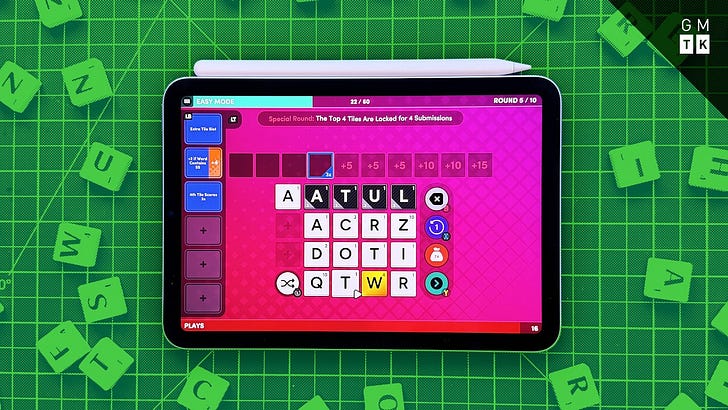
The vocabulary-focused roguelike game, Word Play, has officially expanded its availability to the iOS platform, specifically for iPhone and iPad users. This release complements the game’s existing presence on Steam, where it remains compatible with the Steam Deck. The developer utilizes a "try before you buy" monetization strategy, offering the game as a free trial with a single five-dollar in-app purchase to unlock the full experience. This model intentionally avoids advertisements and additional microtransactions to maintain a streamlined user experience.
The game functions as a strategic word-building title, drawing mechanical inspiration from classic games like Scrabble and Boggle. Players progress through rounds by forming words from a set of tiles, earning points that allow them to select game-changing perks. These modifiers introduce significant rule variations, such as altering board layouts, upgrading tile quality, or adjusting scoring logic based on specific linguistic criteria.
While the current mobile expansion is limited to Apple devices, the developer has expressed openness to a potential Android release. Development for that platform is considered technically feasible using the Unity engine, though it remains contingent on the acquisition of appropriate hardware for testing purposes. The announcement serves as a direct update to the community, emphasizing the game's portability and its suitability for casual, on-the-go play.
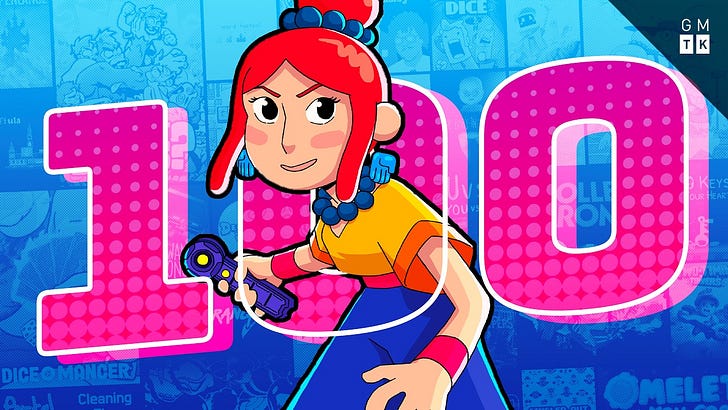
The GMTK Game Jam serves as a significant incubator for the independent gaming industry, with over 100 titles originating from the event successfully transitioning into full commercial releases on Steam. The primary purpose of this analysis is to highlight the viability of game jams as a starting point for professional development, showcasing how rapid prototypes can evolve into polished, market-ready products through iterative design, asset replacement, and expanded feature sets.
The scope of these findings encompasses a wide variety of genres, including puzzle platformers, roguelikes, horror games, and simulation titles. Notable examples include Rollerdrome, which evolved from a top-down prototype into a high-fidelity 3D arena shooter, and A Little to the Left, which achieved status as a top-rated cozy game on Steam. Other titles, such as Sol Cesto, demonstrate commercial success with over 100,000 copies sold, while games like Slider have garnered critical acclaim, including industry awards for student game design.
The methodology relies on tracking the lifecycle of jam entries from their initial development phase to their eventual storefront presence. While many projects remain in early access or demo stages, the data illustrates a clear pathway for developers to leverage jam participation for professional growth. By providing a platform for experimentation, the GMTK Game Jam functions as a catalyst for innovation, allowing developers to test core mechanics before committing to full-scale production. The findings underscore the potential for small-scale, time-constrained projects to achieve significant commercial and critical impact within the broader gaming landscape.
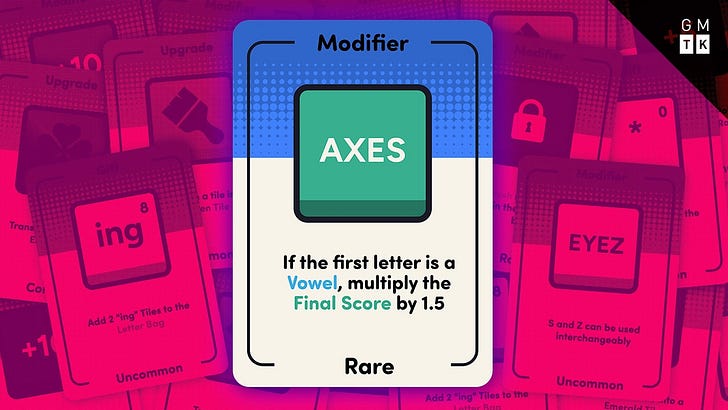
The post explains how the developer, Mark Brown, architected a scalable system for handling over 120 “perks” in his vocabulary roguelike, Word Play. The core thesis is that a modular inheritance‑based design in Unity can replace unwieldy if‑chains and enable easy addition, testing, and debugging of a large number of passive modifiers. Brown first describes the game’s three perk categories—gifts, upgrades, and modifiers—and focuses on score‑modifying perks such as “double score if the word starts and ends with the same letter.” He outlines the initial naïve approach of hard‑coding each perk as a conditional in a single script, noting its brittleness and maintenance problems.
To solve this, Brown introduces an abstract base class (ModifierClass) with virtual methods like OnWordScored. Each specific perk inherits from this base and overrides the relevant method, returning a modified score or –1 to indicate no effect. The main scoring script then iterates over the player’s owned modifiers, calling OnWordScored on each. This loop replaces the long chain of if‑statements and preserves execution order based on the modifier list. The same pattern extends to other game events (e.g., OnUpgradeUsed), demonstrating the system’s flexibility across gameplay mechanics.
The methodology relies on Unity’s component model and object‑oriented inheritance, allowing each perk to be a lightweight script that can be edited in the inspector. The result is a clean, maintainable architecture that supports more than 150 perks while keeping code modular and testable. The post concludes by highlighting the broader applicability of this pattern to other game systems, such as enemies or weapons.
The note explains that the Game Maker’s Toolkit (GMTK) will discontinue accepting paid Substack subscriptions. The author, Mark Brown, thanks supporters and cites administrative burdens—particularly tax reporting across multiple countries—as the main reason for the change. GMTK will shift its crowdfunding focus to Patreon, which offers simpler administration. Subscribers with annual Substack plans receive refunds for the remaining term; any issues can be resolved through a provided contact link. Brown assures that video content and transcripts will continue to appear on Substack for SEO benefits, encouraging free subscription retention. The announcement is dated June 18 2026 and includes a brief overview of GMTK’s presence on Substack, noting its launch three years prior. No quantitative data or broader industry analysis is provided; the communication serves as a direct update to existing backers about platform strategy and refund procedures.
The article explains how CD Projekt Red achieved the one‑minute‑twenty‑second cinematic montage in Cyberpunk 2077, a sequence that traverses fifteen distinct locations and features seventy‑nine cuts, three mirror scenes with multiple costumes, and roughly forty‑five NPCs. Rather than rendering a pre‑made video, the developers constructed an in‑engine “back lot” that contains miniature versions of each visited area. This design allows the game to teleport the protagonist and companion between scenes, keeping streaming demands low by loading only the necessary assets for each segment. The environment designer notes that scenes were optimised and positioned close together to facilitate rapid streaming, while low‑poly models and selective textures reduce memory usage. NPCs are preloaded to avoid texture–model stuttering, and cut‑scene pacing is achieved through rapid teleportation and animation jumps rather than continuous movement. Mirror scenes are implemented by duplicating rooms on the other side of a wall, enabling character customization to appear in real time. The piece also acknowledges early launch issues such as pop‑in and lighting glitches, noting that subsequent patches have largely resolved these problems on PC. Overall, the article details the technical strategies—back‑lot construction, asset optimisation, preloading, and teleportation—that enabled a seamless, real‑time montage within the game’s open world.
Grand Theft Auto III demonstrates how Rockstar North engineered a sprawling, 130‑megabyte city onto the PlayStation 2’s 32‑megabyte RAM by employing a sophisticated streaming system. The game divides Liberty City into thousands of sectors and loads only the assets within an invisible square surrounding the player, unloading distant objects as the character moves. This technique, known as streaming, allows a dense urban environment to be explored freely without loading screens.
To mitigate pop‑in and memory pressure, the engine uses level‑of‑detail (LOD) models: far‑away buildings are represented by low‑poly imposters that fade into high‑detail versions when approached. Vehicle and pedestrian assets are tightly pooled, with only eight vehicle types resident at any time, ensuring that dynamic entities share limited memory space. A custom memory manager combats fragmentation by merging blocks and freeing unused assets, while asset files are deliberately sized to 2 KB or 4 KB to fit neatly into memory slots.
The PlayStation 2’s DVD drive presents a seeking bottleneck; Rockstar optimised asset placement on disc, duplicated common models at multiple locations, and prioritized reads based on the drive’s current position to reduce latency. Additionally, gameplay constraints—such as capped vehicle speeds and altered city layouts—prevent players from outrunning the streaming pipeline.
These combined strategies enabled a richly detailed, open‑world experience on hardware that could not hold the entire city in memory simultaneously. The techniques pioneered in GTA III informed subsequent Rockstar titles and continue to influence modern open‑world development, even as storage media evolve from optical discs to solid‑state drives.
The article examines how Nintendo’s flagship series shifted from a linear, puzzle‑centric design to an open‑world, player‑driven model with Breath of the Wild and its sequel Tears of the Kingdom. It traces the 2013 promise by producer Eiji Aonuma to “re‑think” Zelda conventions, noting that earlier titles followed a rigid dungeon‑first, item‑acquisition sequence that critics described as stale. The author outlines five core changes introduced: non‑linear progression, a fully contiguous world, minimal guiding hints, physics‑based problem solving, and an expanded moveset. These alterations transformed the series from a “passive” experience—where designers dictate solutions—to an “active” one, empowering players to explore, experiment, and craft their own paths.
The piece highlights how fan feedback, younger staff perspectives, and external influences such as Minecraft and Skyrim informed the redesign. It also discusses how subsequent titles like Echoes of Wisdom, Donkey Kong Bananza, and even non‑Zelda franchises (Mario Odyssey, Pokémon Legends) adopted similar open‑world mechanics. The author critiques the loss of classic Zelda elements—structured progression, handcrafted dungeons, and narrative pacing—and argues that while the active design offers freedom, it can also lead to repetitive exploits and a sense of emptiness in vast environments.
Finally, the article speculates on future Zelda projects, suggesting a potential blend of active exploration with curated storytelling. It concludes that the series’ evolution reflects broader industry trends toward player agency, while acknowledging that both passive and active design philosophies have distinct merits.
The December 2025 industry digest serves as a year-end retrospective, focusing on the critical reception of major game releases as highlighted by the 2025 Game Awards. By curating a selection of post-mortem interviews, developer insights, and analytical content, the digest provides a window into the production philosophies behind the year’s most acclaimed titles. The primary objective is to offer professional context on the design and development processes that defined the industry landscape throughout the calendar year.
Key highlights include technical and creative breakdowns of several award-winning titles. Notable examples include Nintendo’s design methodology for Donkey Kong Bananza, Team Cherry’s development journey for Hollow Knight Silksong, and the narrative construction of the Southern Gothic fantasy South of Midnight. Additionally, the digest emphasizes the evolution of industry standards, specifically noting the advancements in accessibility features within Doom: The Dark Ages and the character-driven design shifts observed in Hades 2.
The scope of this analysis is limited to the global gaming market as reflected by major award-winning titles released in 2025. The content is presented as a curated resource for industry observers, drawing from a variety of media sources including developer interviews, technical retrospectives, and video essays. Following this final publication of the year, the digest will enter a scheduled hiatus, with operations expected to resume in early 2026.
Hollow Knight: Silksong establishes a sophisticated world design that balances structured, goal-oriented progression with expansive, non-linear exploration. By employing a concertina-style architecture, the game alternates between guided, linear sequences and open-ended environments, effectively managing player pacing while maintaining the sense of discovery essential to the Metroidvania genre. This design philosophy ensures that while the primary narrative path remains clear, players possess significant agency to deviate from the main quest to pursue optional objectives.
The kingdom of Pharloom serves as a complex, interconnected map where players are encouraged to engage in sequence-breaking and bypass mandatory encounters through clever exploration. With a total of 20 mandatory bosses and 25 optional encounters, the game rewards thorough investigation with powerful upgrades that mitigate difficulty spikes. The progression system utilizes a key-and-lock mechanic that initially guides the player through the first act, but gradually opens into a multi-act structure where the second act prioritizes freedom and the third introduces a corrupted world state to challenge experienced players.
Ultimately, the game succeeds by providing a cohesive, labyrinthine world that remains navigable through intuitive map systems and clear objectives. By integrating secret areas, side quests, and diverse character customization options, the design accommodates various playstyles and skill levels. This approach to world-building elevates the experience, positioning the title as a high-standard benchmark for modern exploration-based action games by ensuring that every player’s journey through Pharloom feels distinct and personally earned.
The November 2025 industry digest serves as a curated overview of significant developments, critical discourse, and labor issues within the global video game sector. The primary objective is to synthesize recent media coverage and analytical commentary regarding high-profile releases and corporate practices, providing a snapshot of the industry’s current cultural and operational climate.
Key findings highlight a growing tension between technological implementation and creative integrity. Notably, the release of Call of Duty: Black Ops 7 has sparked widespread criticism regarding the integration of artificial intelligence, which observers characterize as a watershed moment for negative industry trends. Simultaneously, critical reception for major titles like Hades 2 suggests a shift in player expectations, with some analysts arguing that the game’s narrative structure prioritizes repetitive maintenance over meaningful thematic revelation. The horror genre also remains a focal point for deep-dive analysis, particularly regarding the thematic exploration of trauma and gender dynamics in Silent Hill f.
Beyond product analysis, the industry faces mounting scrutiny over labor relations. A significant point of contention involves recent personnel changes at Rockstar Games, where the termination of staff prior to the completion of Grand Theft Auto 6 has drawn accusations of union busting. While the company cites gross misconduct as the justification for these departures, the incident underscores broader concerns regarding job security and corporate accountability within major development studios. This digest reflects a period of transition where technical innovation, narrative complexity, and labor rights intersect to define the current state of the gaming landscape.
Prototyping serves as a critical risk-mitigation strategy in the game development pipeline, allowing creators to test core concepts before committing significant time and resources to full production. By building scrappy, disposable versions of a game, developers can empirically answer fundamental questions regarding whether a mechanic is fun, if a project is technically viable, and if the concept resonates with an audience. This iterative approach prevents the common pitfall of investing years into a project that lacks a solid foundation, enabling developers to pivot or abandon unworkable ideas early in the process.
Effective prototyping relies on keeping iterations small, specific, and unpolished. Developers are encouraged to avoid "flashy" assets, instead utilizing placeholder art, grey boxes, or even non-digital mediums like paper, cardboard, or spreadsheets to simulate gameplay loops. While some "juice"—such as particle effects or satisfying feedback—can be essential for testing the visceral feel of a game, excessive polish often masks underlying design flaws. By isolating individual features or mechanics into separate, disposable project files, teams can conduct rapid experiments that provide actionable data.
The methodology emphasizes that prototypes are not intended to be comprehensive versions of a final product, but rather tools for gaining confidence in a direction. Expert insights suggest that while a prototype can confirm a project is heading toward "fertile soil," it does not need to solve every design challenge. Knowing when to stop prototyping and transition into full production is a vital skill, as the addictive nature of experimentation can otherwise lead to endless iteration without a finished game. Ultimately, prototyping is a versatile, cost-effective practice that can be applied throughout the entire development lifecycle to refine features, boss fights, or level designs.