Stardew Valley
Documents about Stardew Valley
On Perennial Sellers
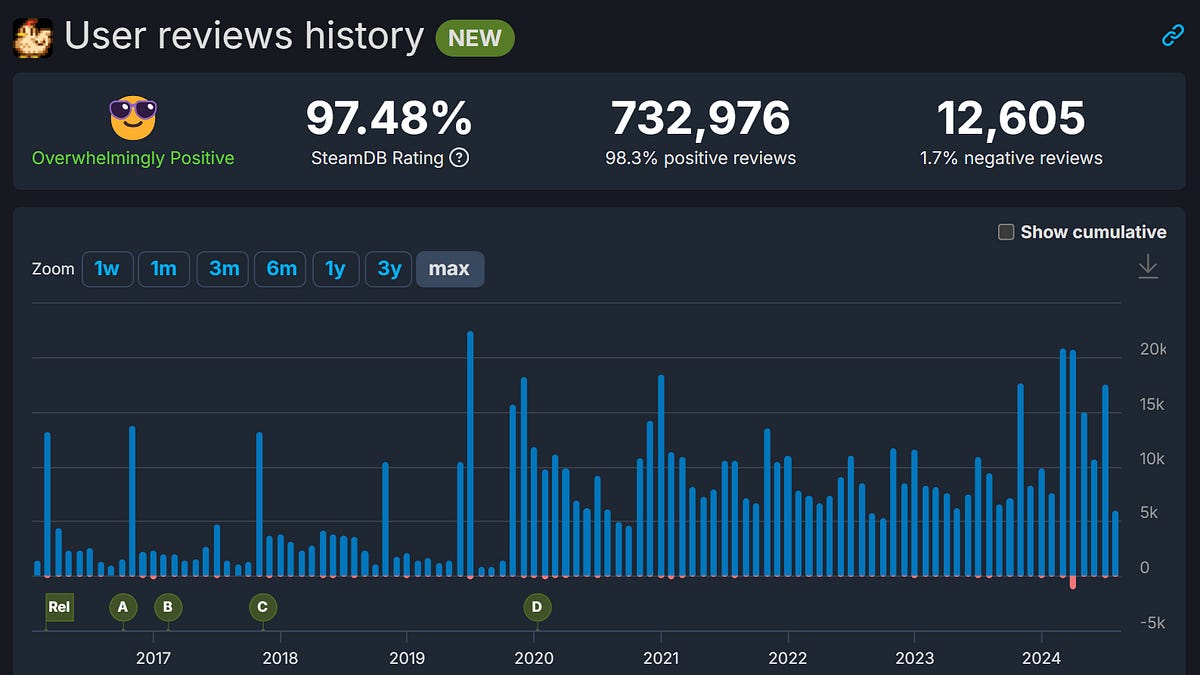
The gaming industry frequently relies on peak concurrent user (CCU) counts to measure success, yet this metric often fails to capture the long-term commercial viability of premium titles.
- Weekly Steam review volume is a more reliable proxy for long-term commercial viability than peak concurrent user (CCU) counts.
- Perennial sellers can be identified by applying a conservative multiplier of 30 sales per review to historical weekly review data.
- Successful long-term titles consistently maintain user review scores between 95% and 98%, establishing them as the definitive best in their respective genres.
Helldivers 2 Remains Top-Grossing Game on Steam
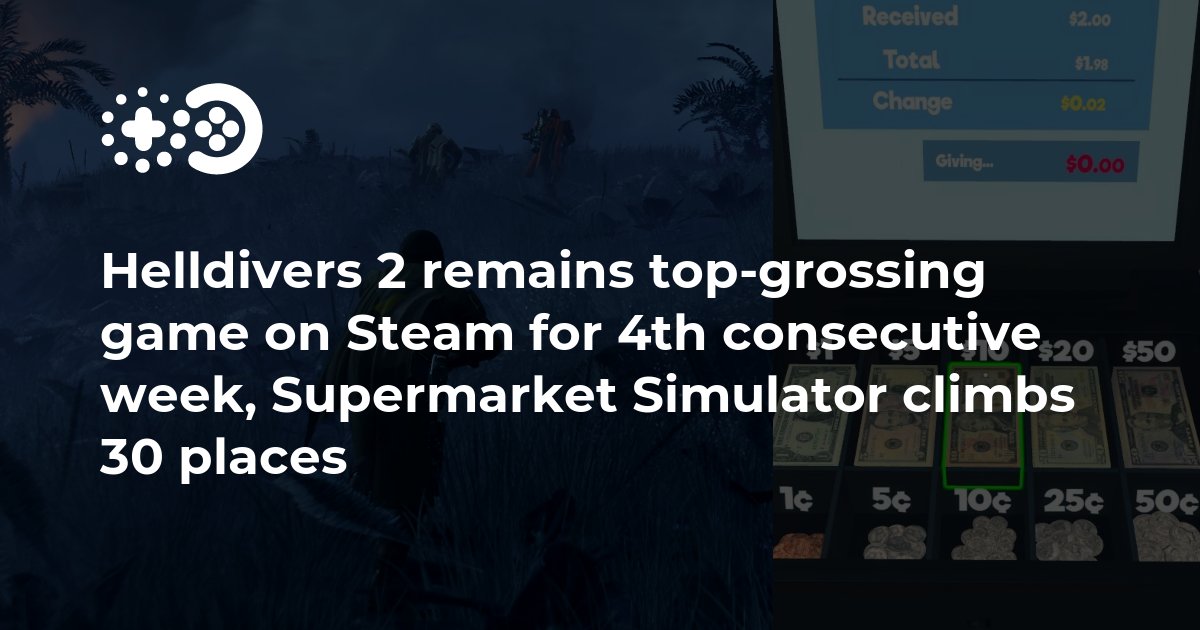
Helldivers 2 continues to lead the Steam marketplace, maintaining its position as the highest-grossing product for the fourth consecutive week during the period of February 27 to March 5, 2024.
- Helldivers 2 remained the top-grossing product on Steam for the fourth consecutive week between February 27 and March 5, 2024, consistently outperforming the Steam Deck and major free-to-play titles.
- Supermarket Simulator demonstrated significant growth, climbing 30 positions to reach the 12th spot in overall Steam revenue.
- Nightingale experienced a sharp decline in market performance, dropping 57 positions in the rankings.



The Games We Watched: Lurkit’s Top 500 Global Stream Report
The global gaming industry experienced a period of significant contrast in 2023, characterized by record-breaking streaming engagement despite internal industry volatility such as widespread layoffs.
- The top 500 games generated nearly 15 billion hours of viewership on Twitch in 2023, despite broader industry volatility.
- Market engagement is highly concentrated, with just 11 titles accounting for 50% of the total viewership among the top 500 games.
- Grand Theft Auto V was the most-watched title of 2023, accumulating 1.3 billion hours of viewership.
Dinkum's 350k Sales in a Month: Serendipity or Foregone Conclusion?
The success of the independent title Dinkum serves as a primary case study for analyzing how specific genre combinations and market timing drive Steam sales.
- The indie title Dinkum sold 350,000 units in its first month following its July 2022 release, achieving a 55x reviews-to-sales ratio and 8,000 peak concurrent users.
- Dinkum’s market success was driven by a hybrid genre appeal, combining Animal Crossing-style social mechanics with the survival and farming depth of Stardew Valley.
- Late-stage marketing momentum, fueled by gaming showcases and influencer coverage, more than doubled the game's wishlist count from 35,000 to 80,000 at launch.

How to Represent Mental Illness in Games
The gaming industry holds a significant moral responsibility to refine the representation of mental health, given that up to half of the global population will encounter mental health challenges during their lifetimes.
- Media portrayals of mental illness often rely on harmful tropes—such as the 'terrifying' asylum patient or the 'evil' psychotic—which discourage individuals from seeking professional help due to fear of institutionalization or personality-altering medication.
- When writing about mental health, developers should prioritize accuracy by conducting basic research, as even simple fact-checking can prevent the trivialization of complex conditions like OCD or anxiety.
- Accurate representation in games provides a significant benefit by allowing players to identify their own vulnerabilities, which can serve as a powerful tool for self-recognition and validation.
Cozy Games Gone Bad - Classifying Wholesome Games - Extra Credits
The emergence of cozy or wholesome games represents a significant shift in the gaming landscape, characterized by titles that prioritize low-stress mechanics, community-building, and optimistic narratives.
- The 'cozy' genre is defined not by specific mechanics, but by player emotional expectations for low-stress, optimistic, and inclusive experiences.
- Cozy games distinguish themselves from industry standards by replacing traditional power fantasies with mechanics centered on domestic simulation, cooperation, and community-building.
- The genre is characterized by fluid boundaries, often incorporating complex or dark narrative elements—such as depression or stalking—without losing the 'cozy' classification.

Making indie game money in the midst of this virus...
The primary objective is to demystify the financial landscape of independent game development, specifically addressing how developers secure funding and sustain operations.
- Relying exclusively on direct game sales is insufficient for most independent studios, necessitating a diversified revenue strategy to ensure long-term financial viability.
- Successful indie financing typically involves a combination of multiple streams, including crowdfunding, publisher advances, licensing agreements, and royalty payments.
- Publishers provide critical value beyond upfront capital, offering essential services such as porting, development support, and business development.
In Defense of Imagination - When to NOT Tell the Whole Story to Players - Extra Credits
The modern video game industry has increasingly prioritized high-fidelity graphics and exhaustive visual detail, a trend that inadvertently discourages player imagination.
- The modern industry's pursuit of photorealism often replaces active player participation with passive consumption, undermining the potential for deep, lasting immersion.
- True immersion is driven by world-building that invites player collaboration rather than high-resolution textures or particle effects.
- Titles like Undertale and Stardew Valley demonstrate that simpler aesthetics can effectively invite player participation and foster stronger personal connections to the game world.
Ditch toxic systems so we can finally love video game romance
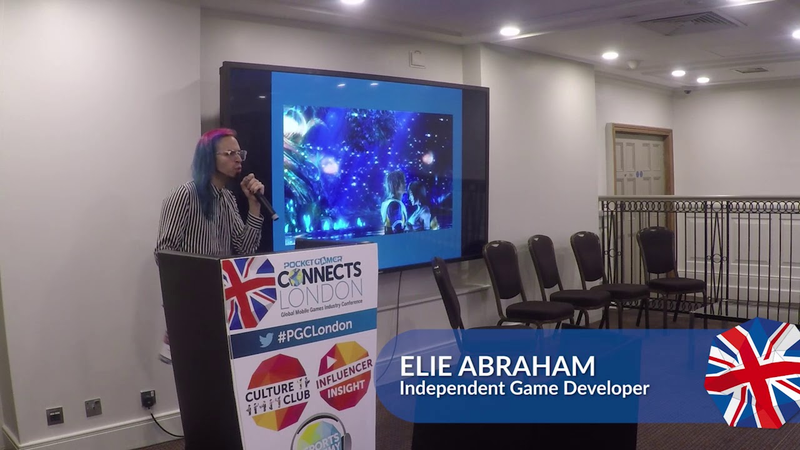
The presentation critiques the prevailing design of romantic systems in video games, arguing that current mechanics often reinforce toxic societal values, entitlement, and unrealistic expectations.
- Current romantic mechanics in RPGs and life-sims like Mass Effect, Dragon Age, Stardew Valley, and The Witcher rely on a 'kindness token' model that treats relationships as transactional rewards for repetitive tasks.
- The prevailing design framework prioritizes player entitlement and wish fulfillment, reducing complex human connections to predictable inputs rather than fostering genuine emotional growth.
- By framing romance as a goal to be achieved, these systems reinforce outdated tropes such as the 'damsel in distress' and the commodification of sexual encounters.
Gamer Motivation Model: Updated Reference Sheets
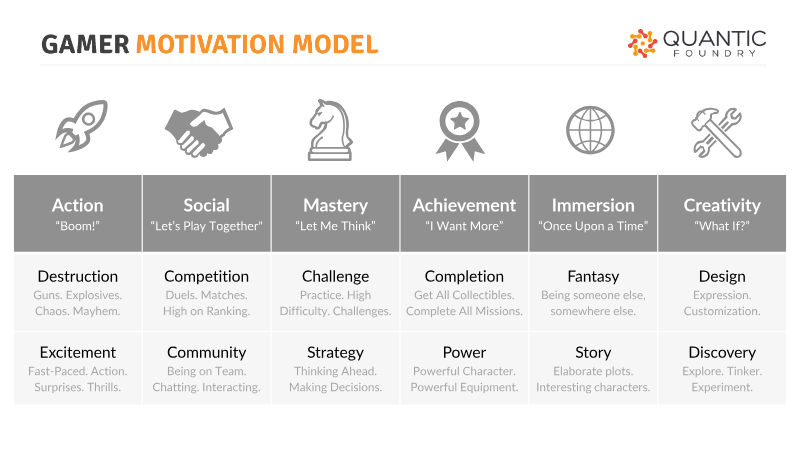
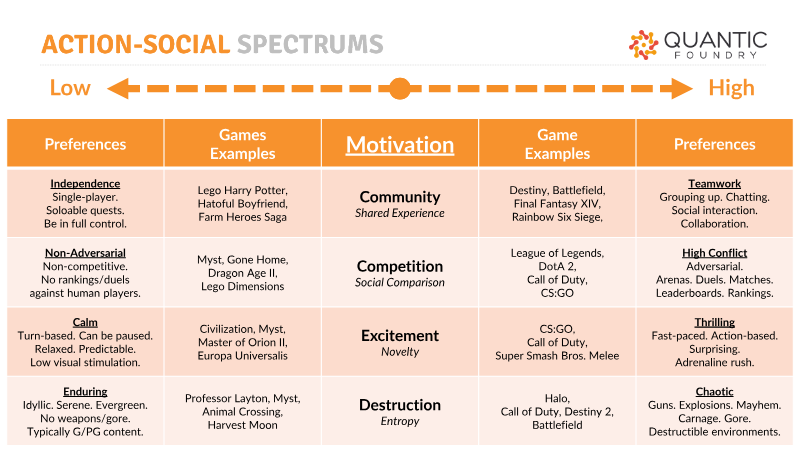
The Gamer Motivation Model provides a comprehensive framework for understanding player behavior by categorizing gaming preferences into three primary clusters: Action-Social, Mastery-Achievement, and Immersion-Creativity.
- The Gamer Motivation Model categorizes player behavior into three primary clusters: Action-Social (Bright), Mastery-Achievement (Tall), and Immersion-Creativity (Wide).
- Player preferences are defined by six core sub-categories—Action, Social, Mastery, Achievement, Immersion, and Creativity—which function as sliding scales rather than binary choices.
- The model uses specific spectrums, such as Destruction versus Excitement and Completion versus Power, to diagnose how individual game mechanics align with player psychological drivers.