Udonis
Technology44 documents
Documents

Article
Statistics
The page presents a series of mobile‑gaming performance snapshots, each focused on a single title and dated July 8 2026. For every game—Honor of Kings, Mobile Legends: Bang Bang, Fate/Grand Order, Plants vs. Zombies 2, Marvel Snap, Arena of Valor, State of Survival, Last War: Survival, Whiteout Survival, Gardenscapes, Toon Blast, and Block Blast—the content lists revenue figures, monthly active player counts, download totals, and key monetization or user‑acquisition insights. The data are displayed in concise image captions that summarize trends such as revenue peaks, player retention curves, and geographic spending splits. For example, Honor of Kings is highlighted as the top‑grossing mobile game of all time, while State of Survival’s chart covers a seven‑year span (2019–2026) to illustrate its growth trajectory. The page also includes a brief call‑to‑action for subscribing to insider insights, reinforcing the site’s positioning as a mobile‑gaming analytics provider.
Geographically, the statistics focus on global markets with occasional emphasis on specific regions that drive spending (e.g., a single country dominating Fate/Grand Order revenue). The time coverage varies by title, ranging from launch dates in 2016 (Gardenscapes) to recent 2022–2026 windows for newer titles. Methodologically, the page does not disclose raw survey sizes or data‑collection techniques; it relies on aggregated industry metrics likely sourced from app analytics platforms and financial reports. The overall purpose is to offer quick, visual performance overviews for stakeholders interested in mobile‑game economics and user engagement trends.
- Honor of Kings maintains its position as the highest-grossing mobile game of all time as of July 8, 2026.
- State of Survival demonstrates long-term market viability with a seven-year growth trajectory spanning from 2019 to 2026.
- Gardenscapes represents a mature mobile title with performance data tracking back to its 2016 launch.
- Recent market entrants, including titles like Last War: Survival and Whiteout Survival, are being tracked within a 2022–2026 performance window.
- Revenue and user engagement metrics for titles like Fate/Grand Order show significant geographic concentration, with single countries often driving the majority of spending.
+3
Udonis
Article
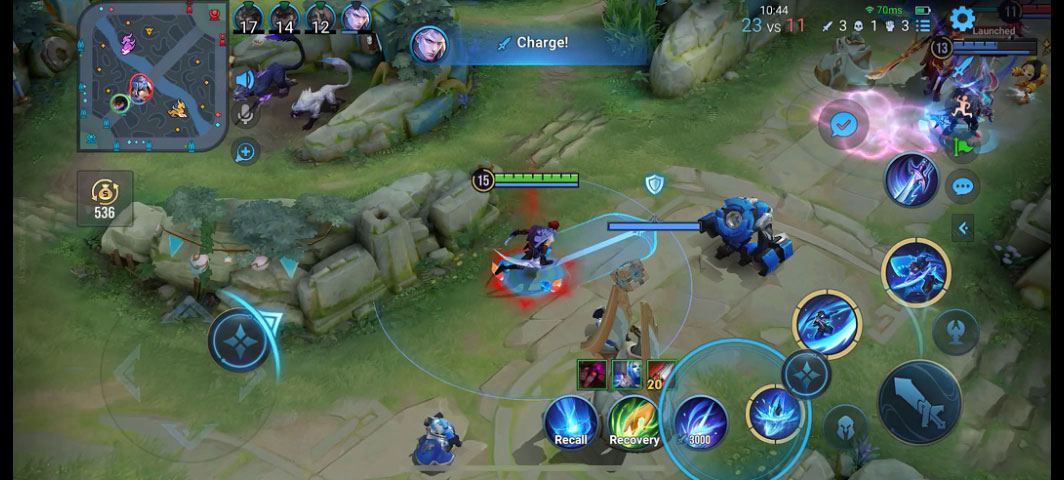
Honor of Kings Revenue & Monthly Player Count Stats 2026
Honor of Kings remains the highest‑grossing mobile title worldwide, generating $14.5 billion in lifetime revenue and sustaining a 2025 annual income of roughly $1.7 billion. All‑time installs total 447 million, with a peak of 76 million downloads in 2024 following the global launch. Monthly revenue reached $194 million at its peak, falling to $161 million in early 2026—a 17 % decline that mirrors a 48 % drop in monthly active users (MAU) from 100.3 million to 51.9 million, while daily active users (DAU) remain steady at about 10.3 million.
The game’s monetization model is almost entirely cosmetic, driven by hero skins sold through a tiered token system and seasonal Honor Passes. Limited‑edition IP collaborations (e.g., Sanrio, anime tie‑ins) generate spikes in spend, and a sizable whale population sustains high revenue per user. Revenue‑per‑download stands at $32.40 and revenue‑per‑MAU at $283.71, with a DAU/MAU ratio of 20.2 %, indicating strong daily engagement within a broader monthly audience.
Geographically, the core player base is concentrated in China (54 % female players) but global expansion has attracted audiences in Brazil, Indonesia, and the Philippines. The title’s growth is largely organic; paid user acquisition supports new markets post‑launch, while live operations and a creator ecosystem (HOK Studio) reinforce retention. The data portray a mature, monetization‑focused game that balances declining user numbers with robust per‑user spend.
- Honor of Kings remains the world's highest-grossing mobile title with $14.5 billion in lifetime revenue, though early 2026 monthly revenue declined 17% to $161 million.
- The game experienced a 48% drop in monthly active users (MAU), falling from 100.3 million to 51.9 million, while daily active users (DAU) remained stable at approximately 10.3 million.
- Monetization is driven by a high-spending whale population and cosmetic sales, resulting in a revenue-per-MAU of $283.71 and a revenue-per-download of $32.40.
- The DAU/MAU ratio of 20.2% indicates that while the broader monthly audience has shrunk, the game maintains a core base of highly engaged daily players.
- Global expansion efforts have successfully diversified the player base beyond the core Chinese market into regions including Brazil, Indonesia, and the Philippines.
+2
UdonisJul 2026
Article
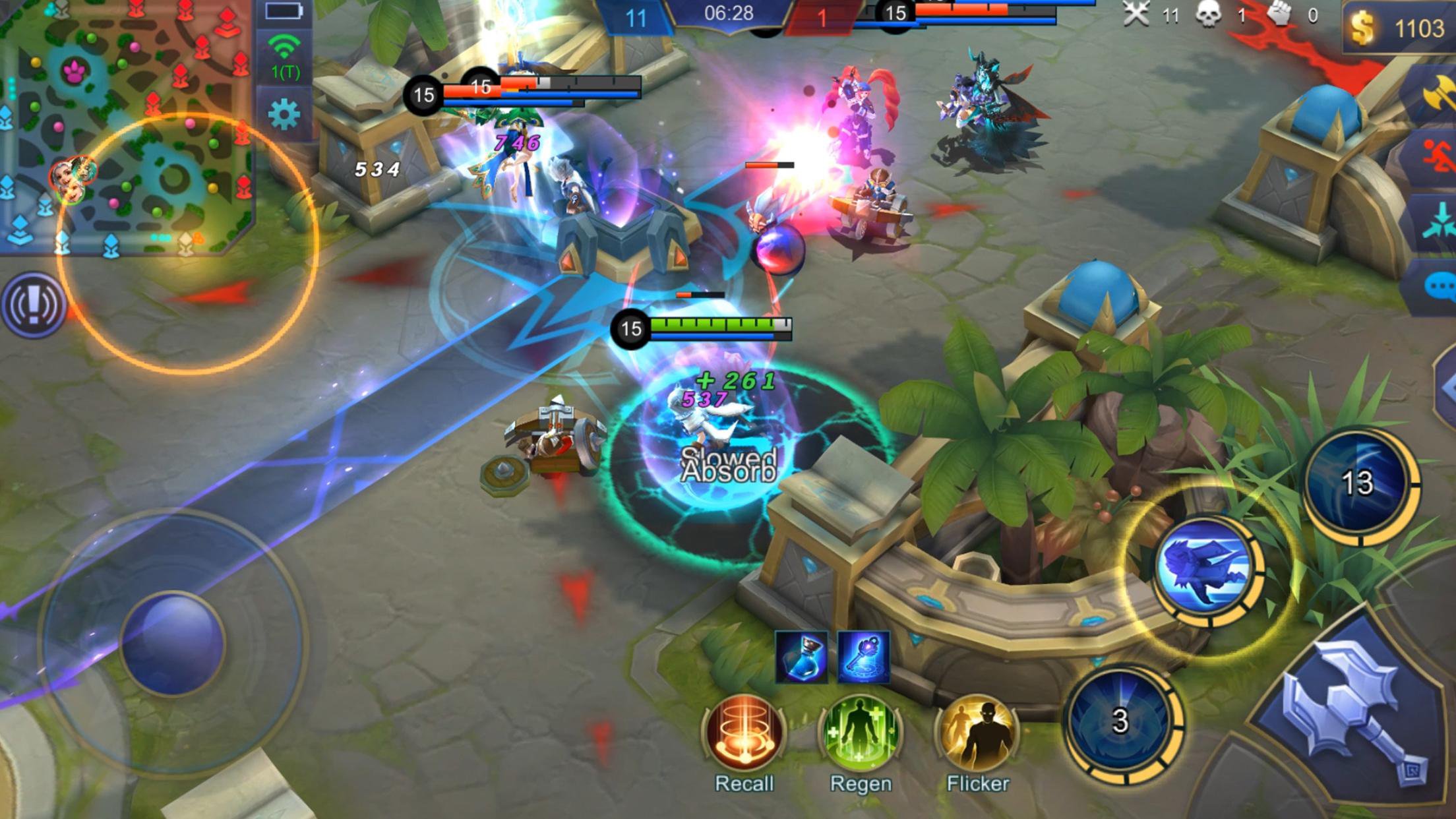
Mobile Legends: Bang Bang Downloads & Player Count
Mobile Legends: Bang Bang remains a dominant force in Southeast Asian mobile esports, boasting 781 million lifetime downloads and $1.58 billion in cumulative IAP revenue as of mid‑2026. Average daily players reach 24.4 million, with a monthly active user base of 85.6 million and an ARPDAU of $0.02, indicating a broad base of small spenders supported by premium cosmetic tiers. Revenue peaked in 2021 at $232 million and has since stabilized between $166 M and $189 M annually, reflecting a mature live‑service model that prioritizes retention over acquisition.
Downloads peaked during the 2020 pandemic surge (98 M in 2020) and again in 2025 (94.5 M), while monthly download velocity has declined by 40% from its May‑2020 peak, yet the active user base remains largely unchanged. The game’s monetization engine relies on cosmetic skins—especially high‑tier “Legend” variants—and gacha‑style collaboration events with popular IPs such as Hunter x Hunter and Star Wars, which generate periodic spending spikes. A recurring battle pass and Diamond currency further sustain engagement.
Geographically, Indonesia, the Philippines, and Malaysia dominate both playtime and spend; the player demographic skews male, ages 16‑34. User acquisition is driven primarily by esports exposure (M-Series championships) and IP collaborations rather than performance‑marketing spend. The current growth phase is characterized by deepening retention within a dense regional market, with esports and event cadence serving as the primary catalysts for new installs.
- Mobile Legends: Bang Bang has achieved 781 million lifetime downloads and $1.58 billion in cumulative IAP revenue as of mid-2026.
- The game maintains a stable, mature player base with 85.6 million monthly active users and 24.4 million average daily players.
- Annual revenue has stabilized between $166 million and $189 million following a 2021 peak of $232 million, reflecting a shift from aggressive acquisition to retention-focused live services.
- Monetization is driven by an ARPDAU of $0.02, supported by high-tier cosmetic skins, gacha-style IP collaborations like Star Wars and Hunter x Hunter, and recurring battle passes.
- While monthly download velocity has declined 40% from its May 2020 peak, the active user base remains consistent, with growth primarily concentrated in Indonesia, the Philippines, and Malaysia.
+2
UdonisJun 2026
Article
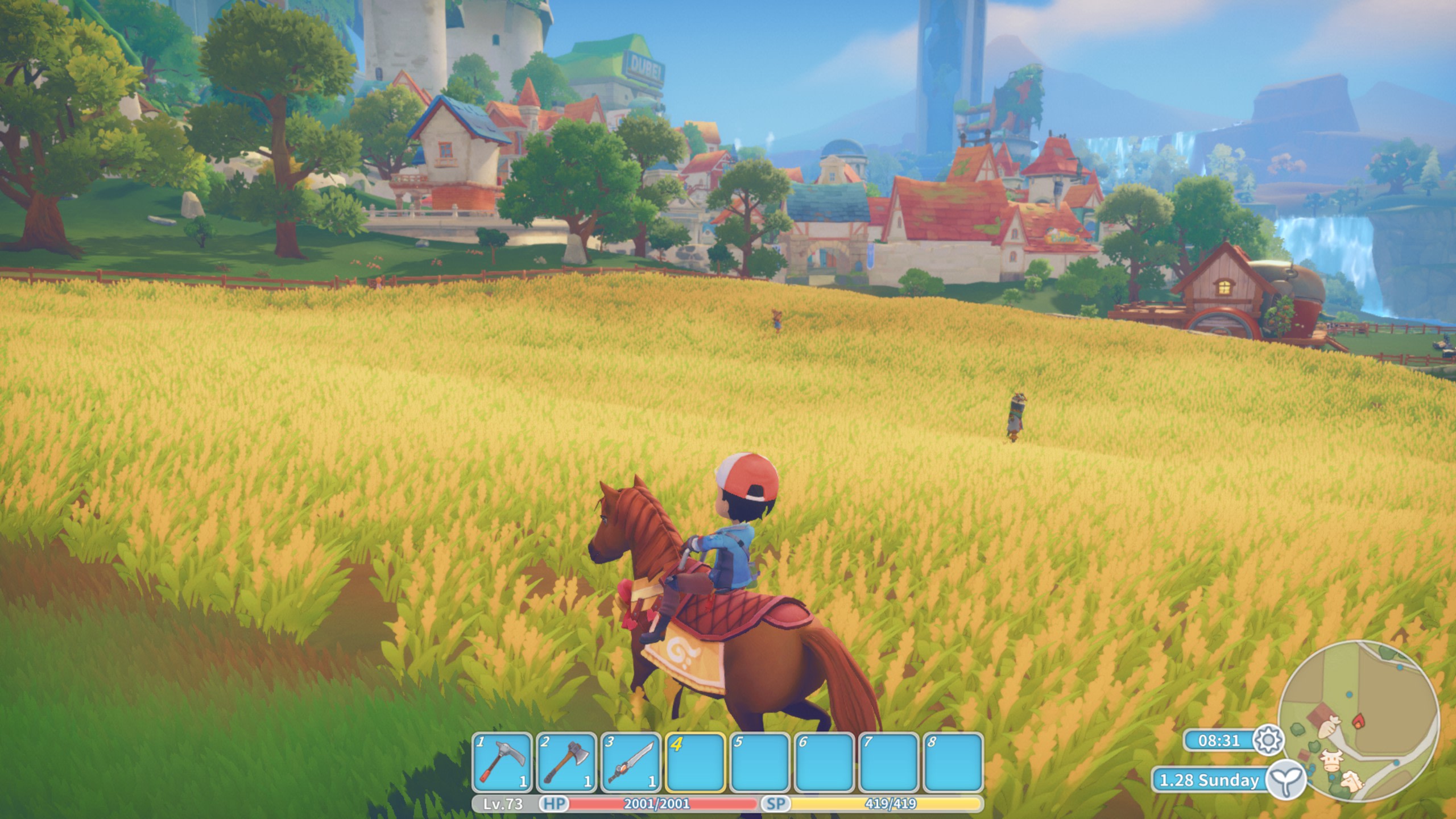
Mobile Games Like Animal Crossing: Your Next Cozy Download
The article surveys mobile titles that emulate the relaxed, routine‑driven experience of Animal Crossing, positioning them as alternatives for players seeking similar cozy gameplay on handheld devices. It lists ten games—ranging from official Animal Crossing spin‑offs like Pocket Camp Complete to independent sims such as Hello Kitty Island Adventure, Disney Dreamlight Valley Arcade Edition, and Japanese Rural Life Adventure—each described in terms of core mechanics, thematic focus, and how closely they mirror the original franchise’s daily loop. The piece highlights common features such as low‑stress chores, decorating, fishing, bug catching, and friendship building, while noting deviations such as increased goal‑driven quests, combat elements, or a heavier emphasis on farming and crafting. Geographic coverage is global, with games developed in Japan, the United States, and other regions, and the time frame spans releases up to mid‑2026. Methodology is informal; the author synthesizes observations from gameplay and public descriptions rather than conducting a formal survey. The conclusion recommends selecting a title that matches the player’s desired depth—quick check‑ins for Pocket Camp or Castaway Paradise, deeper progression for Stardew Valley and My Time at Portia, or pure decorating focus for Pocket Love. The article serves as a concise guide for mobile gamers looking to replace or supplement their Animal Crossing experience with comparable titles.
- The mobile market offers a diverse range of 'cozy' simulation alternatives to Animal Crossing, including titles like Hello Kitty Island Adventure, Disney Dreamlight Valley Arcade Edition, and Japanese Rural Life Adventure.
- Core mechanics across these titles consistently feature low-stress activities such as decorating, fishing, bug catching, and friendship building to replicate the Animal Crossing daily loop.
- Games are categorized by their gameplay depth, ranging from quick-session titles like Pocket Camp Complete and Castaway Paradise to progression-heavy experiences like Stardew Valley and My Time at Portia.
- While many titles mirror the Animal Crossing experience, some alternatives introduce distinct variations such as combat elements, increased goal-driven quests, or a heavier focus on farming and crafting.
- The available selection of cozy mobile games includes global development contributions from regions including Japan and the United States, with relevant titles identified through mid-2026.
+1
UdonisJun 2026

Article
Gardenscapes Revenue and Downloads Statistics: 2016–2026
Gardenscapes, launched in 2016 by Playrix, remains a top‑tier match‑3 mobile title in 2026, sustaining millions of daily active users and generating over $400 million annually since its pandemic‑era peak in 2020. Lifetime revenue has surpassed $4.47 billion, with 728.8 million installs worldwide; the most prolific year was 2020, after which annual downloads stabilized between 45 million and 85 million. Despite a sharper decline in new installs than revenue, the game’s monetization efficiency has improved: average revenue per install exceeds $7 and a 41 % DAU/MAU ratio indicates high daily engagement among monthly players.
The revenue model is entirely free‑to‑play, relying on in‑app purchases of lives, boosters, and event bundles. Live‑ops events, team competitions, and seasonal content drive concentrated spending spikes, while a broad base of paying users—rather than a few whales—contributes to sustained profitability. Player demographics skew older and female, with the United States, Germany, and Japan as leading markets.
User acquisition has shifted from launch‑phase growth to mature retention; paid social campaigns continue to deliver volume, but brand recognition and creative testing mitigate cost pressures. The strategy now prioritizes reactivating churned players through live‑ops rather than acquiring fresh installs. Overall, Gardenscapes exemplifies long‑term success in the casual puzzle segment through continuous monetization refinement and a focus on lifecycle management.
- Gardenscapes has generated over $4.47 billion in lifetime revenue since its 2016 launch, maintaining annual earnings above $400 million since 2020.
- The game has achieved 728.8 million total installs, with annual download volume stabilizing between 45 million and 85 million following a 2020 peak.
- Monetization efficiency has increased over time, resulting in an average revenue per install (ARPU) exceeding $7.
- The title sustains high player engagement with a 41% DAU/MAU ratio, supported by a broad base of paying users rather than a reliance on high-spending whales.
- Playrix has shifted its strategy from aggressive new user acquisition to prioritizing the reactivation of churned players through live-ops and seasonal content.
+4
UdonisJun 2026

Article
Toon Blast Revenue and Downloads Statistics: 2017–2026
Toon Blast has sustained near‑record revenue in 2026 despite a steep decline in downloads, illustrating a shift from scale to value. Lifetime installs now total 186.7 million, down more than 90 % from the 2018 peak, yet cumulative revenue exceeds $2.3 billion, with the most recent full year generating roughly $333 million—its highest annual haul. Daily active users hover around 2 million and monthly active users reach the high‑6 million range, yielding a DAU/MAU ratio of 29 %, indicative of a sticky player base. Revenue per download surpasses $12, placing the title among the elite in casual puzzle monetization.
Monetization is almost entirely IAP‑driven, centered on a single in‑game currency used for moves, life refills, and boosters. The “one move short” mechanic creates friction that prompts micro‑purchases, while live‑ops events such as Piggy Bank and Progress Pack offers sustain session frequency and incremental spend. The strategy relies on small, repeated transactions rather than large whale purchases, supported by aggressive user acquisition that continues to rank Toon Blast among top App Store advertisers.
The audience profile aligns with the broader match‑3 genre: predominantly female adults, favoring relaxed gameplay. Competitive pressure from titles like Royal Match and Candy Crush remains intense, but Toon Blast’s deep content backlog, proven live‑ops calendar, and brand recognition provide a durable advantage. The case underscores the importance of sustained live‑ops, disciplined creative testing, and long‑term UA investment for maintaining profitability beyond launch.
- Toon Blast has achieved a cumulative lifetime revenue exceeding $2.3 billion, with 2026 marking its highest annual performance at approximately $333 million.
- The game has successfully transitioned from a growth-focused model to a high-value strategy, maintaining record revenue despite a 90% decline in downloads from its 2018 peak.
- With a DAU/MAU ratio of 29% and 2 million daily active users, the title demonstrates strong player retention and a high revenue-per-download metric exceeding $12.
- Monetization is driven by a high-frequency, low-transaction model utilizing a single in-game currency and friction-based mechanics like the 'one move short' prompt.
- The game sustains its market position against competitors like Royal Match and Candy Crush through a consistent live-ops calendar, aggressive user acquisition, and a deep content backlog.
+4
UdonisJun 2026
Article
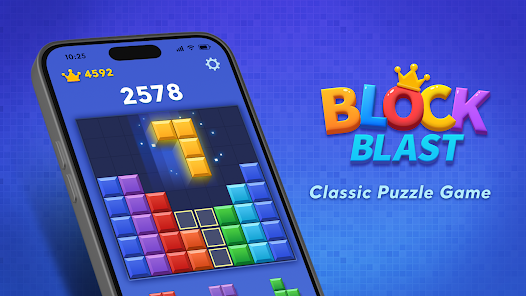
Block Blast Revenue, Downloads & User Statistics: 2026
Block Blast! remains a dominant force in mobile gaming, with 870 million lifetime downloads and an active base exceeding 200 million monthly users in 2026. The title, launched by Hungry Studio in 2022, has transitioned from rapid growth to a mature retention‑and‑monetization model. Daily active users average 17.3 million, while monthly active users hover around 104 million, comfortably above long‑term averages. Download velocity has slowed from a peak of nearly 49 million installs in late 2024, yet the player base remains flat, indicating a successful shift toward sustaining engagement rather than explosive acquisition.
Revenue is almost entirely ad‑based. In‑app purchase (IAP) revenue totals roughly $66,000 lifetime, with 2025 earnings under $10,000. In contrast, advertising generates an estimated $17.5 million monthly—about $584,000 per day—with peaks reaching $1.8 million on Black Friday 2025. This positions Block Blast! among the top in‑app advertising earners worldwide, driven by interstitials and rewarded ads that align with the game’s short, failure‑heavy sessions. The studio’s extensive A/B testing fine‑tunes ad frequency to preserve retention while maximizing revenue per user.
The game’s demographic reach is broad, with significant traction in Western and Southeast Asian markets and a younger player base. Engagement metrics show 12‑minute average sessions and multiple daily returns, while Day 1 retention sits at 26.1%, typical for mass‑market casual titles. User acquisition remains heavily paid, supported by the ad revenue flywheel; Hungry Studio purchases 30–40 million installs in peak months, a strategy sustainable only because each install feeds the same ad engine. Overall, Block Blast! exemplifies a mature casual title that balances large‑scale acquisition with high‑yield advertising to maintain profitability and player stability.
- Block Blast! generates approximately $17.5 million in monthly advertising revenue, with daily earnings averaging $584,000.
- The game has achieved 870 million lifetime downloads and maintains 104 million monthly active users as of 2026.
- In-app purchase revenue is negligible, totaling less than $10,000 in 2025, confirming the title's reliance on an ad-based monetization model.
- Hungry Studio sustains its player base by reinvesting ad revenue into paid user acquisition, purchasing 30–40 million installs during peak months.
- While download velocity has slowed from a 2024 peak of 49 million monthly installs, the game has successfully transitioned to a stable retention-focused model.
+3
UdonisJun 2026
Article
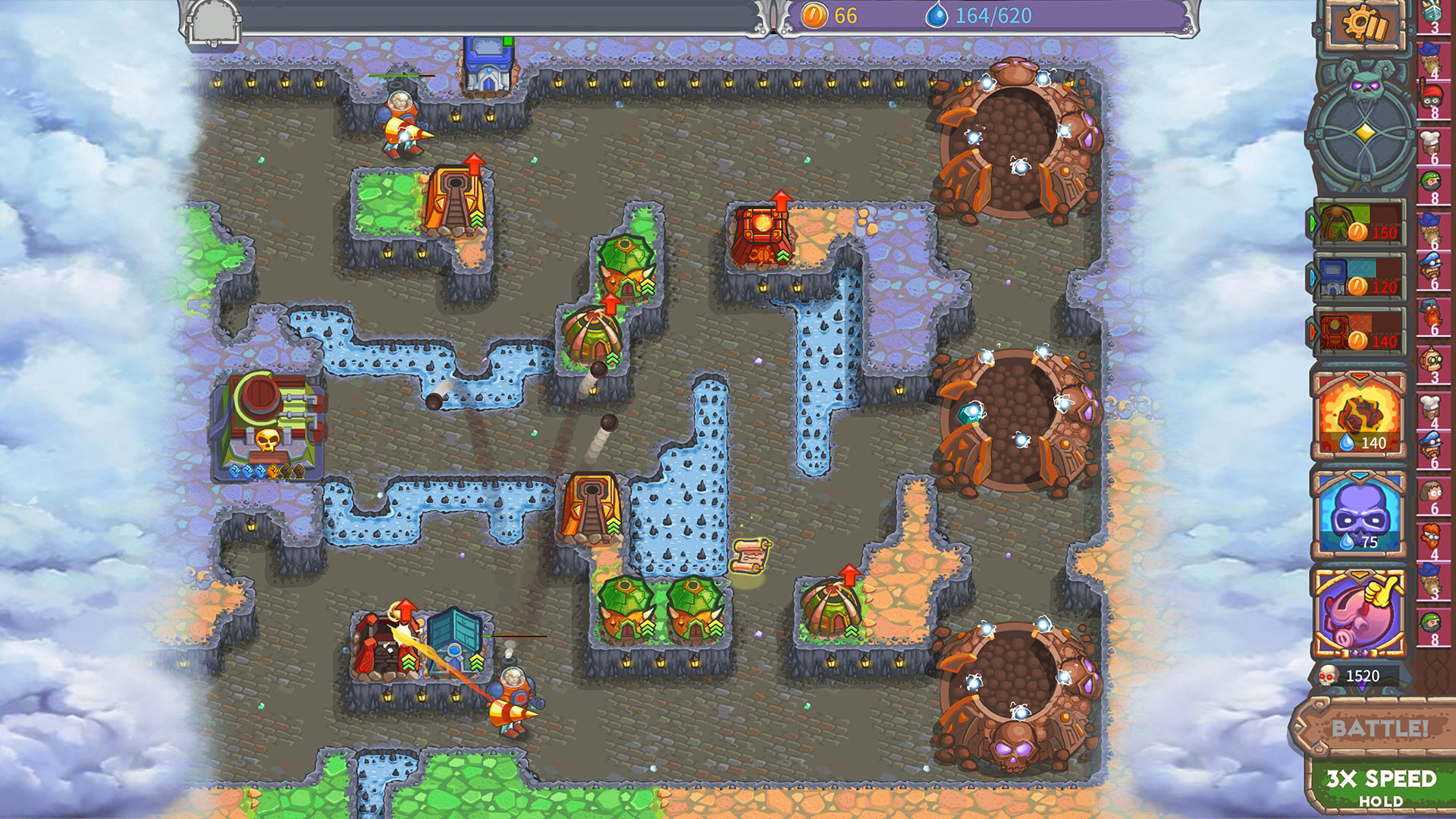
Games Like Plants vs. Zombies: 10 Fun TD Picks
The article presents a curated list of ten mobile tower‑defense titles that capture the same addictive loop found in Plants vs. Zombies, emphasizing quick setup, escalating waves, and satisfying counter‑play. Each entry includes a brief description of core mechanics, comparison points to Plants vs. Zombies, and the author’s recommendation for players seeking deeper strategy or a different thematic twist. The games span a range of sub‑genres: Kingdom Rush Frontiers adds hero units and active spells; Bloons TD 6 offers extensive upgrade trees and co‑op play; Arknights introduces grid tactics and gacha progression; Fieldrunners 2 focuses on maze‑building and puzzle levels; Dungeon Warfare 2 centers on trap design and physics chaos; Digfender lets players carve custom paths; Alien Creeps TD delivers frantic action and emergency abilities; Isle of Arrows mixes tile‑placement with roguelike randomness; Element TD experiments with elemental combos; and Cursed Treasure 2 flips the perspective to a villain defending gems. The piece is written for mobile gamers in 2026, referencing current app store trends and the popularity of casual yet strategic titles. No statistical data or survey methodology is provided; the content relies on descriptive analysis and personal insight to guide readers toward alternatives that preserve the core “plant‑and‑watch” satisfaction while offering varied depth, theme, and gameplay mechanics.
- The mobile tower-defense market in 2026 continues to prioritize the core 'plant-and-watch' loop while diversifying into sub-genres like roguelike, gacha, and physics-based puzzle mechanics.
- Kingdom Rush Frontiers and Bloons TD 6 represent the industry standard for integrating hero units, active spells, and complex upgrade trees into traditional tower-defense gameplay.
- Modern tower-defense titles are increasingly incorporating non-traditional elements, such as the tile-placement randomness found in Isle of Arrows and the grid-based gacha progression utilized in Arknights.
- Game design in the genre has shifted toward player-driven environments, exemplified by Digfender’s custom path-carving and Dungeon Warfare 2’s focus on trap-based physics chaos.
- The genre is expanding its thematic scope beyond standard defense, with titles like Cursed Treasure 2 reversing the player's role to that of a villain protecting assets.
+2
UdonisMay 2026

Article
Best Mobile Games on iPhone: Big Hits and Hidden Gems
The article presents a curated list of iPhone mobile games that balance short‑session enjoyment with long‑term depth, targeting a global audience of iOS users in 2026. It argues that the App Store is saturated with filler titles, and recommends a rotation of three game types—large open‑world adventures, quick competitive matches, and cozy simulation or puzzle games—to keep a device engaging. The selection includes ten titles: Genshin Impact, MARVEL SNAP, Call of Duty: Mobile, Stardew Valley, Balatro, League of Legends: Wild Rift, Minecraft, Bloons TD 6, Dead Cells, and Monument Valley 2. For each game the piece outlines core mechanics, strengths, and potential drawbacks, offering a quick “play or skip” guide. The author cites gameplay screenshots and links to further resources, but does not provide quantitative data or a formal methodology. The scope is limited to iPhone titles available in 2026, with no regional or demographic segmentation. The article serves as a practical recommendation list rather than an empirical study, aiming to help readers choose games that fit varied play styles and session lengths.
- The 2026 iPhone gaming landscape is characterized by a high volume of low-quality filler titles, necessitating a curated approach to app selection.
- Effective mobile device engagement is achieved by rotating between three distinct categories: large open-world adventures, quick competitive matches, and cozy simulation or puzzle games.
- The recommended selection of ten titles for 2026 includes Genshin Impact, MARVEL SNAP, Call of Duty: Mobile, Stardew Valley, Balatro, League of Legends: Wild Rift, Minecraft, Bloons TD 6, Dead Cells, and Monument Valley 2.
- The provided list functions as a practical guide for balancing short-session enjoyment with long-term gameplay depth rather than an empirical or quantitative study.
- The analysis lacks regional or demographic segmentation, focusing exclusively on a general global audience of iOS users.
+1
UdonisMay 2026

Article
Facebook Ads
The provided collection of resources serves as a comprehensive educational hub for digital marketers, specifically focusing on optimizing Facebook advertising strategies within the mobile gaming and application sectors. The primary objective is to provide actionable guidance on technical specifications, creative best practices, and troubleshooting common performance issues to improve user acquisition and conversion rates.
Key thematic areas covered include technical requirements such as ad specs and sizes for 2026, as well as integration tutorials for Android and iOS platforms. The content emphasizes the importance of creative production, offering insights into common pitfalls that hinder campaign performance and providing examples of effective ad creatives. Furthermore, the material addresses operational challenges, such as resolving delivery issues, managing disabled ad accounts, and navigating updates to the Facebook Ads Manager interface.
The scope of these resources is centered on the mobile app and game marketing industry, with a forward-looking perspective on platform trends for 2026. By synthesizing technical documentation with strategic marketing advice, the content functions as a professional toolkit for media buyers and developers. The information is presented as a series of expert-led guides, focusing on practical application and industry-standard methodologies for maximizing return on investment through the Facebook advertising ecosystem.
- The resource provides updated technical ad specifications and sizing requirements specifically for the 2026 mobile gaming and application landscape.
- Campaign performance optimization is addressed through a focus on creative best practices and the identification of common pitfalls that negatively impact user acquisition.
- The guide includes technical integration tutorials for both Android and iOS platforms to streamline the deployment of mobile app advertising.
- Operational support is provided for managing Facebook Ads Manager, including troubleshooting delivery issues and resolving account-level restrictions.
- The content synthesizes strategic marketing advice with technical documentation to improve return on investment for media buyers and developers in the mobile app sector.
+2
Udonis

Article
Mobile Game Dissections
The provided content serves as a repository of analytical case studies focused on the mobile gaming industry. The primary objective is to provide developers, marketers, and industry stakeholders with actionable insights into the mechanics, monetization strategies, and growth trajectories of successful mobile titles. By dissecting specific games, the content aims to bridge the gap between high-level market trends and practical application for mobile game development and user acquisition.
The scope of these analyses covers a diverse range of mobile game genres, including hyper-casual, hybrid-casual, and established live-service titles. Key examples highlighted include Royal Kingdom, which achieved $145 million in revenue and 55 million downloads within its first year, as well as in-depth examinations of titles such as Brawl Stars, Honkai: Star Rail, Among Us, and Subway Surfers. These profiles typically incorporate critical performance metrics, such as daily and monthly active user counts, revenue generation, and download statistics, alongside qualitative assessments of game design and monetization models.
The methodology relies on retrospective performance analysis and market research to identify the factors contributing to a game's success. By evaluating how specific titles leverage celebrity endorsements, unique game mechanics, and evolving monetization trends, the content offers a strategic framework for understanding what drives player engagement and long-term retention in a competitive market. The information is presented as a professional resource for those seeking to optimize their own mobile marketing and development efforts through evidence-based industry benchmarks.
- Royal Kingdom serves as a high-performance benchmark, generating $145 million in revenue and 55 million downloads within its first year of operation.
- Successful mobile titles achieve long-term retention by integrating a combination of unique game mechanics, celebrity endorsements, and evolving monetization models.
- The mobile gaming market landscape spans a spectrum of business models, ranging from hyper-casual and hybrid-casual titles to established, high-revenue live-service games.
- Analytical case studies of titles like Brawl Stars, Honkai: Star Rail, Among Us, and Subway Surfers provide evidence-based benchmarks for evaluating player engagement and growth trajectories.
- Strategic development and user acquisition efforts are most effective when informed by retrospective performance data, including daily active user counts, monthly active user counts, and specific revenue metrics.
+3
Udonis

Article
Mobile Game Market
The provided content serves as a comprehensive digital repository for the mobile gaming industry, functioning as a resource hub for market analysis, publisher performance, and strategic trends as of 2026. The primary purpose is to offer stakeholders, developers, and marketers data-driven insights into the competitive landscape, covering revenue milestones, valuation metrics, and growth trajectories of major industry players.
The repository highlights the financial performance of prominent entities, including Playrix, which has surpassed $12 billion in revenue and 2.6 billion downloads, and Playtika, which reports over $9.3 billion in in-app purchase revenue. Other featured organizations include Century Games, with $3.5 billion in revenue, and Outfit7, which has achieved over 25 billion total downloads. The content also provides longitudinal revenue analysis for major firms like Tencent and Dream Games, spanning the period from 2015 to 2026.
Beyond individual company profiles, the scope includes broader industry segments such as genre classification, regional market reports—specifically focusing on the Japanese gaming sector—and rankings of the top 50 mobile developers and publishers. The information is structured to assist industry professionals in understanding monetization strategies, marketing trends, and the evolving ecosystem of both global giants and indie publishers. By aggregating these statistics, the platform provides a centralized view of the factors driving success in the contemporary mobile gaming market.
- Playrix has reached a significant milestone of over $12 billion in total revenue and 2.6 billion downloads as of 2026.
- Playtika has generated more than $9.3 billion in revenue specifically through in-app purchases.
- Outfit7 has achieved a massive scale in user acquisition, recording over 25 billion total downloads.
- Century Games has established a strong market position with $3.5 billion in total revenue.
- The industry landscape is defined by longitudinal performance data for major players like Tencent and Dream Games covering the 2015–2026 period.
+2
Udonis