VideoGameMakers
Ubisoft: How to Destroy $15 Billion in Shareholder Value | Pixels & Profits
19 Jan 202672 min video
Transcript
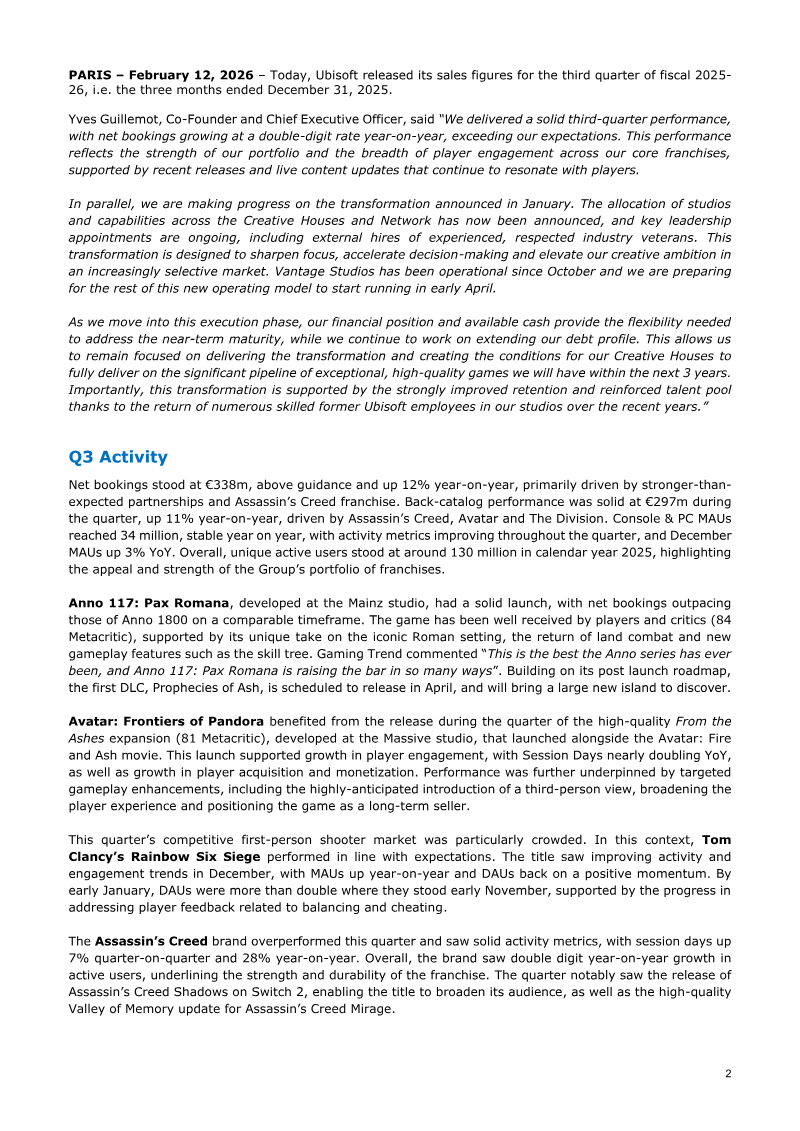
All right. Hey everyone and welcome to Pixels and Profits, where we break down the business of gaming. Today we are covering the decline and potential downfall of one of the few remaining public gaming companies and possibly one of the more controversial in the world, which is Ubisoft. So five years ago, Ubisoft was worth over 12 billion in market cap and today under a billion. So that's an over 90% collapse in market value, over 11 billion in shareholder wealth gone. However, Ubisoft still owns some of the most valuable franchises in gaming, which we'll discuss in more depth later. but franchises like, as many already know, Assassin's Creed, Rainbow 6, and Far Far Cry, amongst others. So, what is the current state of Ubisoft? How did it get there? What is the future outlook? And is a company going to make it? So,
I'm Joseph Kim, and today we have our regular Pixel Brothers, Matthew Contraman and Brian Pegenoff. And joining us we have special guest Eric Crest from Deconstructor Fund and Gossamer Consulting Group. Welcome, Eric. Yeah, thanks for being here. I assume this one's going to be a little spicy, but just to frame the conversation for today for the audience, we're going to start with a financial recap. We'll then cover the current Ubisoft portfolio and historical context. Next, we'll discuss a lot of the recent activity and transactions associated with the company. Then, negative drivers and what could potentially kill the company and finally end with each of our takes on the future outlook of the company. But yeah, let's go ahead and just get it started starting with financial overview. Why don't you go ahead, Matthew?
Financials are rough. That's the short version. That's the tilder. But the the
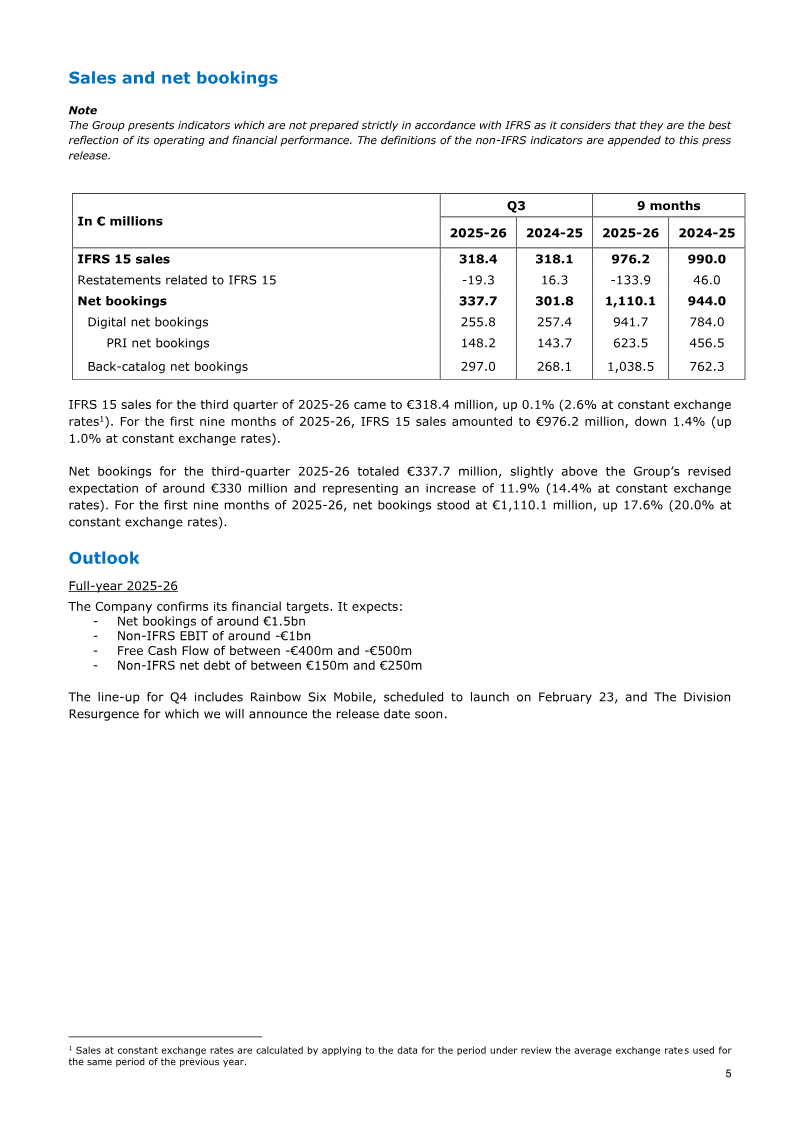
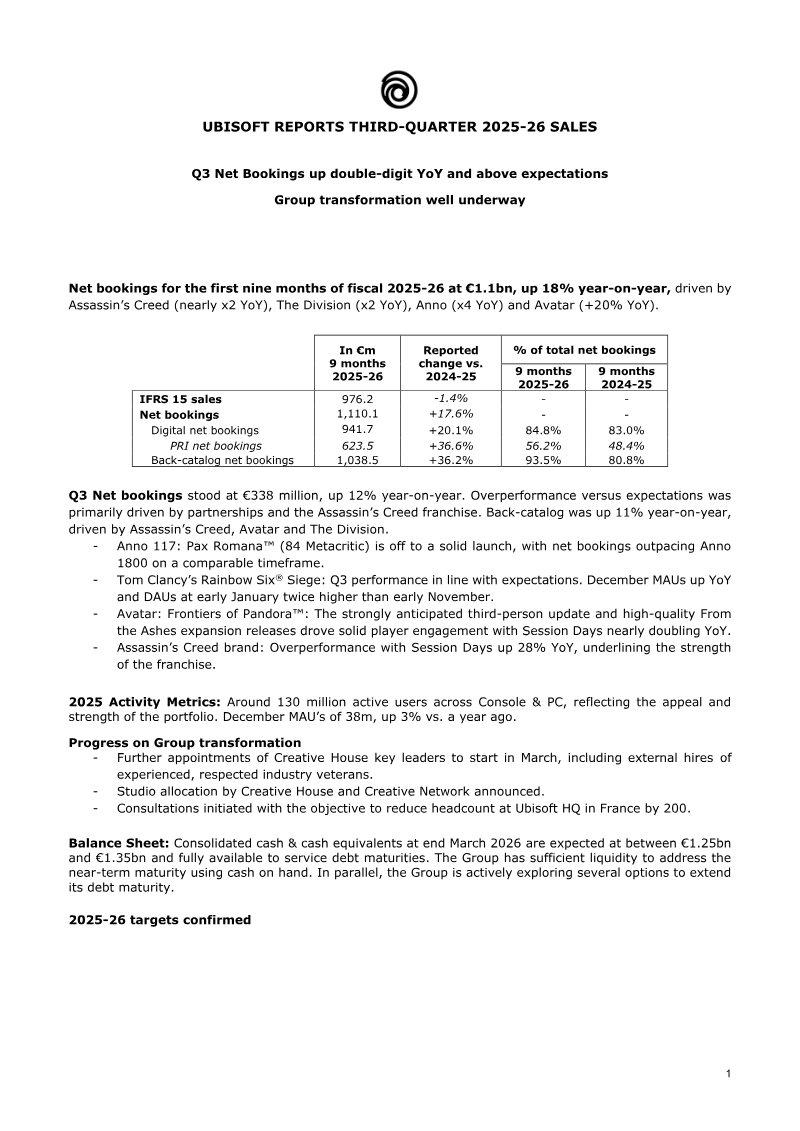
longer version is, as you said, market cap's about a billion dollars. Enterprise value is about $2.7 billion with the debt. And this does get messy with all the stuff that's going on. So bear with me for those that don't count other currencies. The Euro dollar rates like 1.16 to one. So I'm going to quote euros because that's what they reported obviously. So in the year, most gaming companies are on a March fiscal year. So last fiscal year, year ending March 2025, revenue for bookings was 1.85 85 billion euros. Operating loss was basically break even. About€130 million euros of free cash flow. And just important to note that 70% of their bookings comes from older games. They call it the back catalogs. That's like Rainbow Six Siege and things like that. Things that have been released outside of that current year. And then for the current year ending March of 2020, March of this year, oh, it's already 2026. So is projected to generate bookings of about 1.8 8 billion euros and roughly break even again on operating operating profit. So again roughly flat on both
metrics. I think a big story on the financials and we can talk about this obviously we will is is the cost cutting and the ability or lack thereof to reduce headcount and reduce bloat. Their cost structure is bloated. Everyone recognizes that from the from March 2023 to March 2025, they took out 205 million euros of fixed expenses and that included cutting headcount by 3,000. So they're down to 17,782 as of March of last year. And then looking ahead, they have a plan to take out another hundred million euros of fixed cost by the year ending March 2027 versus the base level last year. So if we're just apples to apples on headcount, that's another 1500 people or so. We'll dive in more of the strategic lever of what this whole joint venture with Tencent means. But from a financials perspective, just to give you the really boring financial legal side of it, they carved out a new subsidiary with their three biggest IPs. Assassin's Creed, Far Cry, and then the Tom Clansancy Rainbow Six brands. That's called Vantage Studios. In November,
Tencent put a little over a billion dollars into this subsidiary for a 26.32% stake. It actually notably, and this is something we talk about, it includes not just new games, but all of the existing IPs and all the live service games and everything, which is I think a notable point to call out. And there's a bunch of technical things. Ubisoft must retain a majority stake advantage for at least two years. Tencent has a five-year lockup so long as Ubisoft retains that majority stake. The co-CEOs, Crest, I'm sure you've got comments on Charlie Gimmo being one of the CEOs there. You know, what Ubisoft's doing with the cash that they got. Obviously, there's a chunk of the cash that stays with the subsidiary to fund its operations, but a bunch of it, roughly 25%, goes to paying off debt. That'll bring down their debt to under a billion net, probably 1.5 billion eurosish gross, depending on kind of moving pieces, and we'll get more visibility when they report their fullear financials. The last thing I
just want to mention, and again, not going to get into the accounting dorkiness of it, but just to call out when you're trying to compare Ubisoft versus EA and Take 2 and even Japanese peers, just remember that some of their accounting is weird because of European FRS rules. But they do like highlight how to kind of rightsize their financials and make them comparable against EA and Take 2 and other peers. This this is mostly on the R&D side where they have to fully capitalize pretty much all of their R&D spending and then they advertise it or depreciate it against the games when they release or when they write them down. So, just wanted to call that out. If you're looking at the financials and this all looks weird whereas all the R&D money going, it's not on the P&L. It's because it's being capitalized. So, that's kind of the financials overview of Ubisoft. And yeah, turn it over to JK to walk through the portfolio unless anyone else wants to jump in there. Well, before I start though, Matthew, if you were to look at a lot of the metrics that you had discussed, is there
anything that particularly sticks out to you as most concerning maybe with respect to the debt or
and obviously the the operational efficiency is very concerning to me at least. But if you were to highlight one or two metrics in particular, what do you think those would be?
The operational efficiency is a big one. It's something we've touched on and I did kind of pull the numbers on our my favorite metric, right, which is the revenue per employee as a comp against EA and take two the bookings and
roughly 123K in dollars for the year ending March 2025 for Ubisoft.
EA was over 500K and Take 2 is over 400 and Take 2's numbers will be a lot higher in a GTA than that, right? And so just as you're thinking about the efficiency of the business, it's not good. They're not growing. They're not making any profitability. They're generating barely any cash flow. The debt is less of a concern with this 10-centent deal because a lot of the cash is going to pay off the debt and there's probably more they can do there. But
yeah, it's just like this when you step back from the numbers and you just think about it and I've been saying this for six years from when I was a public equity analyst covering the stock to now. The story with Ubisoft has always been one of execution. And there's a lot of internal reasons as to why execution is poor, but they talk a great game and you think they should be successful and growing and they just can't release games on time or at the quality necessary to generate the return they need to justify the investment in them. Star Wars out like but like yeah Chris I mean you have you've obviously got thoughts there.
Well, I'll wait till later. I mean, well, it's more of like strategy and management than it is execution. Like, I think they execute really well against the franchises that they have. Actually, I can't really say that, but for the most part, they do, but it's just the management's been the big problem like from the get-go. Like, the Gilmont family is just not capable of managing this organization at scale. Like they
they lost their usefulness like almost like 15 years ago. And I think that's actually the underlying fundamental problem and why they're not likely going to pull out of it because they're still under the same management. So that
yeah,
there's almost a point where I agreed with you for a while until and yeah, I used to say, but you can bank on Assassin's Creed and you can bank on R six, but you can't really say you can bank on Assassin's Creed anymore based on the last couple releases here and R six just got hacked and their economy is broken. They're obviously trying to fix that, but like that's more of a recent kind of thing. But yeah, so it's almost like but I'm with you. Yeah.
Yeah. For
Go ahead.
I would say for what it's worth too, I would think that the public markets are doing their job here. I think over the course of the last five or six years, public investors have realized that they can own a significant chunk of this company and they don't own [ __ ] right? Because they can't make any decisions. Everything that they've have gotten done is a large disappointment over that period of time. I just don't hear it
coming up anymore. This is much more of like a trash bin stock. It's not institutional grade anymore. It's owned by Europeans that kind of have to own it. And it sucks because it it once was a very strong company and had a good narrative behind it.
Yeah. So, Eric, I'd probably push back a little bit on their executional capability, but maybe once we get to that section later on, it'd be great to hear your thoughts on Yeah.
why you think they may be better executionally than at least from my perception.
Sure. But I'll go ahead and jump into the essentially the current portfolio, the basically slate of live games that they're currently operating today, and then I'll jump into the historical context of how they got to where they are today. So, I'd like to discuss their live titles and franchises in four buckets, but I'll only go into depth in maybe two of them just so we don't bore the audience here. But the four tiers would be tier one, which is their billion plus franchises. The second would be emerging or potential
contributors which might have and it's hard to say because of the amount of disclosures that we have but something like maybe 100 to 500 million in revenue. Tier three would be more minor contributors where revenue contribution is likely less than 100 million and tier four are value destroyers. So maybe I'll focus a little bit more on tier one and tier four. And as I discuss these franchises and titles, you guys should feel free to jump in and push back if you think anything I've got here is wrong or just want to comment. But starting with tier one, which is the material revenue contributors, which are the titles or franchises that have generated over a billion in revenue contribution. We first start with Assassin's Creed, which was launched in November of 2007. Ubisoft actually they don't disclose a lot of like lifetime metrics but back in October 2024 they did kind of publish a set of metrics
around the past decade of revenue. So we've got like the past 10 years before October 2024 and we see that Assassin's Creed did about four billion over that previous decade. And maybe just a couple of notes here in terms of some of the metrics with respect to Assassin's Creed was that for the trailing 12 months of October 24, they had 30 million over 30 million MAU. They had over 138 million total players on console and PC. And at least it looked like between April to September of 25 of last year that that Assassin's Creed had exceeded management's expectations. But Assassin's Creed clearly the flagship franchise, potentially the most valuable IP, but it's pretty old and there is some potential of future franchise fatigue risk. Second major title here is Rainbow Six
Siege, which is which differs from Assassin's Creed also in that it's it's also a single title rather than more of a franchise with a number of titles behind the franchise. But Six Siege launched in December of 2015. The revenue disclosure of the past decade of revenue from October 24 was three and a half billion, but also did very well. So 30 million plus Mao for the trailing 12 months as of October 24. And again, this is a single game that is nearly matching the entire Assassin's Creed franchise revenue. Interesting point on Rainbow Six Siege though is like last year in June they kind of transitioned Siege to something that's called Siege X which is like a free-to-play version of Rainbow Six Siege. And essentially what this means is that they're shifting from a premium paid game plus live services
monetization, meaning like $40 to $60 upfront payment, and then you've got live services monetization in the form of season and battle passes, cosmetics, and operator unlocks. But with this new Siege X model, what's happening is that they're including a free tier with limited access to content. The upfronts are a little bit more expensive now. So $59.99 for elite edition, $89.99 for ultimate edition, and you still have that live ops monetization as well with battle season pass and allocart operator unlocks. So, there was some good news in October 24 where they indicated double digit year-over-year playtime and sessions days growth, but I think it's going to be really interesting to see what happens February, next month, when we get some more disclosure on what has been the impact of Sie X versus the
previous monetization model. I
I don't think CX was really well received by the community at all. Actually, it saw a great big jump at launch, which is always what you see, but the reality is people didn't stick with it. I think they [ __ ] screwed the pooch on this one.
Yeah, it's been pretty much dead flat
at best. At best.
And and remember that it was also broken as [ __ ] for two years when they launched it.
Yeah.
And they spent a lot of time and money fixing it live.
But again, Rainbow Six Siege is an example of a great IP that they actually did leverage and built something very, very successful from a live service perspective that was kind of
Yeah. could have been a benchmark for them. Sorry, not a benchmark. Could have been an example for the rest of their franchises to replicate, but they didn't. Like For Honor was a good one, but like anyway, yeah, this was this is a success by far for them for their Clancy stuff. I
think it also could have given them a little bit of false hope for stuff like Assassin's Creed, right? Because Assassin's Creed annual title and if you look back like five or six years ago for like EA, they were still disclosing
units every year for Madden or for FIFA,
right? and like trying to go away from that whenever that's literally all that your game contributes is that upfront price or the sale price that a customer purchase it for. It's just kind of like never able to morph out of that. And every time they did, they did something insanely stupid like customizing characters in single player games or some such like that.
Yeah, with Odyssey and Valhalla, they had a good run with morphing the game. Well, Assassin's Creed like lifers didn't like them because they weren't Assassin's Creed games. they were open world RPGs, but if you just liked open world RPGs, they were actually really fun. Valhalla is actually my favorite Assassin's Creed game, and they did see an uptick in post-launch monetization from the RPG mechanics. So, like that was successful. It's just they
have struggled since then. And the other thing that I still don't understand with Ubisoft is they only have like two studios in Canada making Assassin's Creed games and it takes them three years to make a game. with all the money they spend and all the employees they have, why they never built a third
Assassin's Creed studio and made it an annual franchise is just something that I will never understand.
Yeah, we'll get to that. I mean, because of all the other things Joseph's about to talk about.
Yeah, exactly.
The other 60 games that don't matter.
All right. In tier one, the next title is Far Cry, which launched back in March of 2004. Again, according to that October 24 disclosure, about two billion over the previous decade. And a couple of data points here is that as of March of 2024, Ubisoft disclosed that there were 90 million total players, 50 million plus units sold lifetime. But I think yeah, so we'll talk about this a little bit more, but it does seem like maybe some of the problem and maybe some of the decline here is because of this open world formula fatigue risk and the lack of innovation, which we'll we can talk about in more depth later. So after Far Cry, we have The Division launched March of 2016,
about a billion in that decade prior to October 24 revenue. And I would say that kind of like the interesting part is that for the first half of last year, net bookings exceeded the entire previous year of bookings. So showed a strong year last year and maybe I don't know if you guys disagree, but maybe having the most the strongest recent momentum amongst the tier one titles.
I think division has a tremendous amount of potential in the right hands. It doesn't have the same issue that Far Cry and Assassin's Creed have of being like these openw world single player driven games. Like it's co-op and it's PvP and PvE at its core, but like the last two iterations have just been like these broken bullet sponge games. They can't fix balance correctly. There's no real reason to stay engaged. But this has all the ingredients for live ops. And
well, part of the problem is that they put this team on the Star Wars Outlaws
game, right? which [ __ ] that was was so stupid to move a team that had actually had a successful franchise that they could have iterated of and it's a contemporary franchise in the sense it's a live service by definition right instead they put them on a stupid Star Wars game that was like super social like [ __ ] stuff going on there like this like torpedoed that whole team and their capability of
I'm actually genuinely confused as to why the division isn't in that Vantage portfolio and why Tencent didn't give about it.
I Yeah, I'm kind of with you on that. I think maybe it's because
I think it is. It's It's under the Tom Clancy umbrella. So, I think it's I think it's part of it because that includes all the Tom I think I think because that includes all the Tom Clancy IPs.
Oh, really?
Oh, well, that's
Yeah,
that's interesting because I think that's it makes a ton of sense whenever 10centent finally takes over and makes it themselves.
Yeah, basically. All right, continue.
All right, next franchise. Ghost Recon launched November of 2001. Again, they didn't disclose much besides it's made over a billion in the decade prior to
24, but yeah, over 10 million players for more most recently. But I guess the risk here is that it's got a little bit of an aging player base. And finally, in this tier one category, we have Just Dance, launched nove November of 2009. And over the over that past decade, 90 million plus copies sold lifetime and 100 or not lifetime but October 20 24 decade and 135 million total players.
Okay, can I stop you right here just to get one point across? Like
if they had focused on these franchises this whole time, we would be having a completely different conversation about Ubisoft. But everything that's below the fold here is [ __ ] irrelevant, right? Like this is the reason that they are in the situation that they are in is because they dedicated resources to a bunch of shite that didn't matter to the industry.
Chasing Chinese toys.
Yeah. And while every other publisher, even the Japanese guys are focus, focus,
focus on three, four, five, six franchises period. End of sentence. Right. So this is the challenge. So the fact that we're even talking about tier two, tier three, tier four, like that's that was fundamentally the problem with Ubisoft is that they chase rainbows and unicorns and don't focus on this on the plat on the IP that matters, right? So
we do it for no other company
unless you can run it unless you can run it efficiently in like in a skeleton crew dev team in Southeast Asia somewhere. But like that's
well that that was like what take you did with private division and then they closed that [ __ ] down too, right? Cuz it just doesn't make sense.
EA shut down their [ __ ]
EA original same [ __ ] Yeah. Like buy
because it's a shitty business. It's not the business that we're in. We're in a mature industry that needs big hits and big big investments. And you don't bet on [ __ ] like The Crew or Star Wars Outlaws or X Defiant or Skull and Bones or every single game that's listed underneath the tier one. Really
watch. Who the [ __ ] makes a game on Avatar,
right? Avatar. Dude, that that's crazy. Like, they would dedicate hundreds of millions of dollars on developing an Avatar game. They're out of their minds, right?
X Defiant, the
They picked the wrong avatar.
Yeah. Okay. All right. So speaking of the tier twos and tier threes and so tier two is categorized as potentially emerging or hopefully for Ubisoft growing but estimated to be between 100 and 500 million estimated because we don't know for sure as at least it seems to me that increasingly especially more recently there's less and less disclosures from Ubisoft. But I'll just mention the titles and if you guys want to jump in and add comments to some of these titles please jump in. But we've got, as Eric just mentioned, The Crew Motorfest, we've got For Honor, we've got Avatar Frontiers of Pandora as mentioned by Eric. But those would be the three that I would put into this tier 2 category,
right? And I want to call out Fore Honor really quickly because I do think that was a successful live service game if they generated decent amounts of revenue. This was likely a very profitable title for them. So these are the type of like shots on goal that are good because it's probably lower development costs and ongoing live service. So I I would make an exception for this game, but these other two, who in the [ __ ] is making a racing game these days? Like no one cares about racing, dude. Dedic it's dominated by two big franchises that and nothing else matters really. And Avatar we've already gone
or a single player game where you owe a royalty is just dead in the water.
Yeah. Right. Right. And maybe I shouldn't have had a tier three because the only game I have in there is Writers Republic, which is their extreme sports game. Oh, yeah. But that's thought to have done less than 100 million.
I don't know if you guys have any thoughts on that.
They've been building that game from the with the same team for decades, right? Because it was called forgetting the name of it. It was called something else before. Damn it. Anyway, that has been just a profound waste of money because
that that since SSX back in the 90s, you know, like that that hasn't been a relevant franchise or relevant genre forever. So, making that game made no sense,
right? Which then leads us to tier four, which are underperformers and potential value destroyers. So, Skull and Bones, which launched February of 2024,
this is the biggest piece of crap example of everything that's wrong with Ubisoft from a structural illusion level. Agree.
I remember at an investor day that they did at E3 in 2018 showing this off
and they they should have shut it down then.
Yeah.
And this thing continues to live. It's like on its fourth life at this point. Any other company would have shut this down seven years ago.
This is all because like in Assassin's Creed Black Flag like boats were fun. in instead of just like making it fun in that game, they decided to detonate a billion dollars to make a carve out of a mini game.
And then Xbox launched Sea of Thieves
and launched the game that they were going to make. So like this should have been dead long, long ago, right? And the fact that they still spend money on it is everything that's wrong with this company.
And Matthew, to your point, this could arguably be the most destructive value destroyer for Ubisoft. And to the point on the development budget, I think there's a lot of dispute in the industry of exactly what that is. And so there's some people saying the rumors range between 200 to 850 million in terms of development budget. But what we know for sure is that this is a game that has been on an 11-year development cycle. It's been known to have multiple reboots and 12 studios were involved. But if you were to do sort of back of the envelope estimations based on 500 employees from Ubisoft Singapore, you add in marketing. So it'll get you to like roughly estimating between 500 to 700 million in dev budget. And if you add in marketing,
there is that potential to the point you made Brian that it could have been it could have been over a billion dollars in loss.
Yeah. It doesn't really matter, right? Like what does it matter if it's 700 million or a billion? It's still a giant [ __ ] cash explosion. The only bigger value destroyer that's the next one on your list just because a minimum guarantees might be Star Wars Outlaws.
Yeah.
I don't know what the min guarantees are on that, but they probably had a big check to write to Disney regardless of how well or not that sold. It only sold what, a million units is what your notes say.
Yeah. But I would say so launched in August of 2024. We don't know how much revenue it made, but we know it's not much. And you guys have already commented on this. Other thoughts on Star Wars Outlaws or
I mean, look, I mean, Star Wars Outlaws was actually not a bad game from a mechanics perspective, but they took social justice and they put that into the design of the game and it just completely alienated the audience. The audience didn't give a [ __ ] about any of that, right? And so they just messed up on the holistic design
of the game, but not the gameplay itself was actually quite good. So anyway, it was a failed it was a failure of the higher level management of making decisions that made sense for the audience that they were trying to attract really like not the failure of the actual
people making the game. So this is what I want to really help people understand is that they do have good game developers, right? They do have good people in their teams that make great games. It's all from the top that has been what is the downfall of this company. It's all the Gilmont family and his lieutenants or lack thereof that have been the problem with this company, not the people that are actually making games in Montreal, right? So,
and it's just telling because like this game flopped and then when this flopped, the Starfield modders built a Star Wars mod to Starfield, which is basically this game and it's really successful. It's like the most popular mod for Starfield. I mean, Starfield is only so popular, but like the fact that that has like potentially done better than this AAA budget game that that Ubisoft made
is just kind of telling like the, as you said, the mechanics and the demand for this sort of a game was there and the narrative they wo through it just made it such a turnoff for so many people that it just flopped on on release and it never never had a chance.
Right. So this, let's see, launched in May of 2024 and shut down shortly thereafter June of 2025. So it was basically shut down after only about six months of operation, poor retention, and it seemed like they were just trying to chase a trend there in terms of freeto play. But that would be the other the last title in this tier four of destructive titles, franchises that they try to work on. Which now takes us to like okay well how did you know how did we get there? So we've got like the current pipeline which I've just described but if we kind of think about where was Ubisoft like five years ago
and if we roll back the clock to fiscal year 202122. So there was a time when many people in the industry just thought that Ubisoft was completely unstoppable. That fiscal year you had Assassin's Creed, Rainbow 6, and Far Cry, which each generated well above 300 million euros of net bookings. And in November 2020, this is something Matthew, you had alluded to as well, Assassin's Creed Valhalla had become the franchise's bestselling entry. And Far Cry 6 delivered that franchise's best year ever. Rainbow Six Siege was also just rolling. But if we think about that period, the high point in Ubisoft's history, which is essentially between 2018 to 2021, I mean they were hitting high peaks in terms of multiple metrics and I can discuss some of them from that period 2018 to 2021 and currently. So
uh we could start with the market cap. It hit a high of about 16 and a half billion in July of 2018. Today, it's under a billion. So, we're seeing an over 90% decline. In terms of employees, back in March of 22, they had over 20,000 employees. Today, they have or actually, yeah, and today they have about 17,000. So, that's about 17% decline. And from a net bookings perspective, they went from, we can keep it in euros for you, Matthew, 2.32 billion euros to 1.85 billion euros. So a decline of 20%. And in terms of peak fiscal year revenue, 2.13 billion in March of 22 to now being about 2.22 billion, so negative 11%. And maybe just to characterize that a little bit more in terms of the decline in market cap, Matthew, I think you had some numbers with respect to how did the industry do relative to Ubisoft.
Yeah, just the three closest comps are always well now it's two and soon to be one, but it was always Activision, EA, and Take Two and Right. Activision was like a 50 billionish market cap company before the Microsoft offer and it sold for 69 billion. EA was worth around 41 billion five years ago and is selling for 50 plus to the Saudis and Take Two was worth around 24 25 billion five years ago and is now almost 50 billion market cap. So like you know you just everyone else has seen for various reasons value accretion and shareholder value growth and Ubisoft has just destroyed value. And if you double click on that a little bit too, like what new games did Activision, EA, and Take 2 put out over that time frame? Not much. I mean, you could EA had Apex Legends, right? Which
that was before that time frame because that was 2018, 29th. That was before COVID, right?
Yeah. It was just like just work on the stuff that is important to your business
and you'll do fine,
right?
And wanted wanted to correct myself. I did fact check myself on the division. It's not part of Vantage. So, thank you for calling that out.
Oh, all right. See, what a waste. Why not?
All right. So, all of this to then beg the question, well, gosh, what happened? And I think we can debate this. I might disagree with you a little bit, Eric, in terms of development execution as well, but I would say for me, there's three primary reasons. The first and foremost to me was like the copy and paste design. So, they were really not trying to innovate much in terms of their existing proven the big ticket franchises. So, for example, starting in the 2010s, Ubisoft Ubisoft made great openw world games, but again, they didn't really evolve that design. So, they would just use the same same open world template across Assassin's Creed, Far Cry, Watchd Dogs, Ghost Recon, and then just copy and paste, which allowed Ubisoft to have a winning gameplay loop
for a time, but then because they just kept copying, pasting, and not reacting to the market and the players. It became those games and franchises became kind of stale in my opinion that led to this lack of innovation, increasingly repetitive gameplay. And I think the second reason, at least in my view, is that they have major structural and cultural problems. And I'll have to say this is more anecdotal, but basically, and I've I've actually spoken about this before, but there are actually some companies in the games industry who just will not hire Ubisoft folks because they feel that the Ubisoft culture and structure is very entitled, very narrow from a specialization perspective and they generally have low productivity workers. So to that point like Ubisoft is very specialized and verticalized in terms of their development philosophy and the way
that they develop. So instead of having like on the other side of development efficiency, you have companies like Supercell which are famous for having very small number of developers that work crossf functionally. You've got these very narrow slices of this person does this, this person does this and it's very narrowly sliced. And on top of that, you've got kind of very old school ways of developing in terms of command and control as far as communication or collaboration is concerned and it's very political. Like if you are if you are on this small slice of a team and you try to talk to this this person, then you can't do that. That's that's a no no. you have to talk to that person's manager and you've got to go up and talk to that manager, then go down and talk to that guy and then it's got to move back up and over and down. So, it's like a very inefficient structure and I don't think one that is relevant or effective in
modern game development. And I would have to say I haven't worked with a lot of former Ubisoft guys, but of the few that I have worked with, I would say they did seem to fit these stereotypes. So essentially, you've got these big, in my view, unproductive and slow teams. And again, we mentioned Matthew at the beginning of this podcast about if you were to look at revenue or bookings per employee, like they're of the major game studios, they're dead last, right? So that speaks to what I believe to be a very fundamental structural and potentially cultural and political problem, which I think is a fundamental part of how they operate. And that's really difficult in my opinion to turn around. So I'm not very optimistic and I do think that they've got development execution issues. Eric, you want to maybe we could just pause here and Eric,
I'd love to hear your take on why you think they might actually be executing better than than my perception.
I think I agree with most of what you're saying. I I think the iterative nature of what they're doing with Assassin's Creed, Far Cry, Watchd Dogs, and Ghost Recon is true. they were trying to do open world games and it kind of they they lacked differentiation after a while and so it became kind of for formulaic to some degree. Having said that, I think that was the right strategy. I think the execution was a little bit weak across some of those franchises. But there were some underlying problems with Ubisoft that needs to be talked about, right? Because their fundamental problem is they were stretched too thin, right? They were constantly chasing like rainbows and unicorns, like games and things that made no sense, right? EA, like I said, EA, all the other publishers were focusing on three or four big franchises and and doing a few risky bets. These guys were taking risky bets all over the place, and the list is so long, I'm almost hesitant to actually say it, but I'm going to do it. The Crew, they did Starlink, which was Toys to Life, like
four years after Toys to Life died, right? They had Rocksmith which was a great product but it was completely irrelevant for the marketplace and it was not a profitable game for them or even if it was it was so small it was just a a pain in the ass right the juice was not worth the squeeze for that right Hayes Avatar the NFT platform quartz defiance Skull and Bones this is like an endless list of projects that have made no sense in the current market period right and so they were always doing this not to mention oh their horrific mobile game strategy which was non-existent really They created a movie facility. A movie [ __ ] facility in France of all places. I mean, are they out of their minds? Like, they're building movies. They built like the Assassin's Creed movies in 2016, which was a complete disaster. They were just spending money on the all these pet projects for all the French people that they employed without any type of idea of a return on investment. Right? Again, while every other publisher in the space was focused, focus, focus, right? They were
not, right? They were all over the place. The other big thing is I think you have to understand from the history is that Serge who was who got fired in disgraced because he was a sexual pervert, right? He was the one that was keeping these studios on track from a design perspective, right? He was the creative genius that put all these things on the map, Assassin's Creed, Ghost Recon, Far Cry, etc. Like he's the one that was actually orchestrating a lot of these designs. And he wasn't without fault because I think he he did what you were saying is that they basically created this formulaic approach to their design. Having said that, he got fired in 2020 and so all decisions after Serge left were made by Eve who is not a design person. And this is the biggest fundamental problem with all the performance after 2020 was that they didn't have a creative lead in charge of all these franchises. So it was Eve who has no business whatsoever like making these type of decisions. And not only that, all the the nepotism that
happened within that was that his his sons and his cousins and his uncles and his aunts and all these mother all these Gilmont people were the ones that were feeding him the information about what how he should do manage these franchises. And that was an absolute disaster, right? And so that's what's so scary now is that all these people now are in charge of of the of the studios, including his son who's like 33 years old and barely out of diapers, is managing their biggest franchises, you know? And so this kind of leads to the other thing is like this was an absolute toxic work environment, right? Like the sexual harassment [ __ ] that was going on was was insane. Like and not only that, it was completely ignored by management, right? The French management because they they could they don't give a [ __ ] right? And so Serge was doing this stuff for years and years and years and and ultimately it led to three of their big executives getting, you know, suspended sentences, but they were all convicted of sexual harassment charges because it was it was endemic within this culture, right? The two other things like the
apocalypse thing is I've been talking about forever with this with this company is that this whole company is being managed by the Gilmont family in one way or another, right? They they have they are touching everything now and it's even worse now that that that his son is in charge of the three biggest franchises. But what when Serge left they lost both Giannis from Canada and Cecilele who's a global HR and that was the end of the era of any type of objective management outside of the family. And that's why we've seen such a decline over the last five years is because Eve and all his minions and family are the ones that are managing the studio. And so the toxic work environment may not be sexual harassment related, but it's certainly nepotistic behavior that's going on clearly. And then finally, the really the other culprit that we talk about all the time covering this company is it's French, right? The biggest problem is it's a French company and you can't do anything in France in terms of getting rid of people like right-sizing organizations. And this is a big challenge because I've
said a million times, if you actually shut down Paris, if you shut down all operations in France, you would lose almost no value to this company. Like they literally have no development and no management that is required to manage their biggest franchises in France, right? That's 4,000 people. 25% of the workforce are just adding no [ __ ] value, right? And so, and so what's ironic about this new structure is that the the big franchises they're talking about are all made in Canada, right? And so they if they what'll end up happening is that Canada will be Ubisoft and France will go nowhere, go out, just basically get shut down because all the value is in in [ __ ] Canada. And so this is what likely is going to be the ultimate result and this is what we'll talk about later. But anyway, so fundamentally it is this company is structurally just [ __ ] up from the get-go, right? And and the Gilamont is just regaining as much control as possible and he's the one that's basically destroyed all the value in
this company over the years in my opinion. So,
right. So it kind of sounds like Eric what you're saying is that sure there might be some structural and efficiency issues, but if they had just doubled down on the proven franchises that the revenue from those franchises would have made some of the loss less egregious and they may have been able to be successful despite those kind of operational challenges. And to the point that you've already made, they they had a string of failures from Ghost Recon Breakpoint in October of 2019 to The Crew in April of 2024, which were all shut down. Eric has already mentioned a bunch of those titles. But I would say maybe the one other thing to note here is that maybe the third reason and it's kind of to the point that you guys are talking about there's a famous Chinese saying about someone's eyes are too big for their face where they also tried a bunch of stuff in freeto play from Hyperscape, Ghost Recon Frontline, The Division
Heartland, and Xdeiant which just never really panned out for them as was probably a bad cultural expertise fit for the studios that they are operating. But maybe I could pause there though th that's my take on what happened between the high point 2018 to 2021 to now. Anything else that I missed or do you guys have any other thoughts on what went wrong?
I think that was well explained on both fronts and I I don't think I disagree with much of anything. I would say that number one, it's extraordinarily sad to see a lot of those IPs that I kind of grew up playing mismanaged in that manner. But what we're really talking about here is that the company is worth 5% of what it was five or six years ago when revenue was only down 20%. Right? So like that that's like that's like a clear abandonment by the investor community. Like no one gives a [ __ ] anymore because of much of what Eric has said. And you it's like this is not a mystery to anybody anymore. This company is using this as like a slush fund for
the family to kind of operate and do a terrible job and they don't give a [ __ ] anymore. So, like no one should be buying this with the hopes that Assassin's Creed and Far Cry and Rainbow 6 have some magical year in two or three years where they're doing 200 and 300 million a piece and all of a sudden the stocks up like 8x. It's just not going to happen until something bigger.
No. And maybe that just is the 10-centent Vantage deal falling apart. I don't know. Well, I do know, but you know, we can get there.
Yeah. I mean, this this whole thing was set up so that that they could maintain the family. I think Eve has always wanted his family to to inherit this company and this is what he set up and this is what this 10-centent deal gave him that security in order to make to do that. But it's definitely it's not good for the franchises certainly not good for the shareholders or well it's it's devastating for the shareholders and I don't think it's good for for the long-term health of the employees either. Right. And maybe maybe one last point I want to make before we hand it
over to Brian to talk about recent deals is that to the point you made Eric about them potentially having good people. I think we got to not forget that Clare Obscure Expedition 33 was led by a former Ubisoft producer who was just kind of fed up with Ubisoft. So there may be a lot of good people in on those teams. Maybe the again the structural, cultural, political issues are a big factor there and a problem from them being able to execute and
100% that that's what I want to make sure that because I typ So I've been ranting about Ubisoft for like 15 years. Like I mean I' I've never had a more frustrating company to cover in my entire career. Like every other company has their issues but Ubisoft is constantly making unforced errors, right? And so when I go on rants about Ubisoft, I want to be clear that I know that they do have quality people in their company that make great games. Like the Division team is amazing. The Assassin's Creed team is amazing in Montreal, right? Like they they do a
great job. It's just that they are completely mismanaged from the top.
Yeah. I don't think it's ever fair to say that just because someone worked at a certain organization, they are now polluted and they're bought into a structure that sucks. Uh because sometimes the the situation sucking so bad can make somebody not be able to put out their best work.
And I think you know 33 is a good rendition of what that exactly means.
If this all blows apart, the best people and the best teams at Ubisoft that make the best games will find a way to make games somewhere else. Someone will pick them up.
Yeah.
Everybody else, not so much.
All right, Brian, you want to talk about recent deals? Yeah, I guess like I wanted to just touch on this thematically because what everything that's been done over the past call it 18 to 24 months has been monetizing IP raising cash and not necessarily expanding the business. So the first one that we've already talked about quite a bit is just 10-centent advantage right so Ubie carved out its three biggest franchises Assassin's
Creed Far Cry Rainbow 6 into a new subsidiary called Vantage Studios. Tenset invested about a billion for a 25% minority stake. Ubisoft still controls Vantage and it's fully consolidated in revenues and cash flows, but economically they've sold a slice of the crown jewels to shore up liquidity, pay down debt. So that's an important transition to make. It's not a growth partnership. Tencent is not going to be developing games for them. I think that's also notable. We've talked in the past about how a lot of franchises that were western have made it on mobile because of Eastern teams developing for them, but essentially it's just crystallizing value because you need cash. And those those three important properties are no longer owned entirely by the company nor the shareholders. So I can we can put a pin in that for now unless anyone else has anything to say.
Well, I just want to say that they are making mobile games for them, right?
Isn't that part of the deal? They licensed the mobile games. They paid for like
But they did that a dec literally did that a decade ago.
No, no. I But he said that they Yeah,
you're right.
No, I know. I know. It's part of this new deal, too. But like that was what I was going to talk about also is like remember that Tencent and Ubisto have had some sort of relationship either passive or active for a decade now. There's Tensson started buying stock on the open market. They took a small stake. They took a bigger stake. They've been actively somewhat actively involved in in Ubisoft at this point. They've had licenses for mobile games and stuff like that. R six mobile has been in development hell and other games as well, right? And it's just if you just step back and you say, "Okay, they're valuing Vantage at $4 billion." Aside from what you described as the Gimmo family setting themselves up to pass it to the next generation, Tencent is not short of $4 billion. If they ever at one point thought there was real value in buying this whole company, financially that would never be an issue, right? So obviously that says something in of itself that the people that are investing a lot of money in this are still not are still wary of buying the whole thing.
Well because Vantage owns an irrevocable
license to that property. It gives them a eventual pathway to own the IP without owning Ubisoft.
Yeah.
Which is super dangerous.
Yeah. And on the mobile side, I I kind of agree with you, Matthew, where somebody had told me, I I don't know how true this is, so maybe you can file it under rumor, but that on R six mobile that they were taking a very console oriented approach where just the development team only developers, they had 120 people and it was as I described that same model of very narrow, very specialized roles for each developer. But anyway, go go ahead, Brad.
The next would be an Atari IP sale. So, it's just five older IPs to Atari. Cold Fear, I am Alive, Child of Eden, Grow Home, Grow Up. Probably everyone listening to this has no idea what those are. They're not major cash generators, but symbolically it matters again because uh Ubisoft has historically been an IP vault. So, selling this piece meal
tells you they're willing to shrink the library rather investing or rebuilding around it internally. It also suggests that uh everything that they own someone else can do a better job at than they can. So this is again monetization and not expansion. The last couple here before we get into pipeline are just recent acquisitions. Activity has been pretty modest and that's probably a good thing. Calibri games, it's a kind of a legacy mobile asset. And then March of Giants which was acquired from Amazon's Montreal games team. Uh no financials were disclosed. The game hasn't launched. There's no revenue to point to. So like you're taking on cost of employees without having any revenue assigned to it when you're already overburdened on employees which makes a ton of sense. So the question is are they really buying a MOA or are they buying a team? And I guess I probably would guess that they're this is like an aqua hire that they're going to plug some IP into and it doesn't make a ton of sense. Anybody else have any thoughts on that? Maybe it's a multi-billion dollar game.
Dude, buying a [ __ ] MOA in this day and age is so goddamn stupid. Like is
unbelievable. unbelievable that this is happening now like after all this disastrous things. It's like there's no market for MOBAs in the West, period. You know, end of sentence. And it's like if they were getting this team to build something else, yes, but this game is really far along, right? And it's really high quality. It's just there's no market for it. So, this is another stupid move by Ubisoft, by EV and Gilmonts, right? Like, this is dumb. Like, and even if it was an acquire, it's you're right. It's just more cost like level layering in on chasing rainbows and unicorns. It's stupid. So stupid.
It it it it made me think like if I asked like chat GPT to tell me what is the stupidest thing Ubisoft could acquire at the end of 2025 almost 2026 and it's a mobile game. Like that's literally the stupidest thing they could have bought. Maybe there's some talent there. I don't know the people there, but like just from what the product is and the fact that Amazon is punting it like
Yeah. And again, I always do this. I'm
I'm I'm trying to get nicer in my older age, but like the fact is that team is amazing. Like they're a great team and they have a high quality and so like hiring that team makes sense, right, to build something else, right? Not not build a MOA, right? So like it's No, it's not I'm not trying to cap on that team. So
I think like
using Gen Z slang also.
What's that?
Using Gen Z slang also. You're not trying to cap on that.
Oh, sorry. Yeah, that's my old cap. And I guess like historically, last time we did Ubisoft was probably two years ago. We went into like a really intense setup on the next year's pipeline and like the Q3 setup and all this other [ __ ] that doesn't matter anymore. From a pipeline perspective, they they technically still have games coming from pure Ubie, but not much that moves a needle. There's like Assassin's Creed Shadows is out in live ops. Avatar we've talked about. The next notable release is Prince of Persia: Sands of Time, which has been delayed multiple times,
and it's now expected in early 26, which is this year, I guess. Beyond that, the core franchises people actually care about are all pushed into this vague 26 27 window without real firm dates or marketing yet. Uh, it's about from Ubisoft's perspective, giving teams time and improving quality, which like why now? Um, but from an investor standpoint, there's just no solid vi visibility on bookings and payoff keeps getting pushed out. So yeah, this is just why again like revenues down 20%, stock down infinite. There's a pipeline, but it's delayed and longdated and no one cares anymore.
So that that's a pretty bad way of of it's just hard to be excited about pipeline.
No. And and I think like fundamentally like there's so much disarray at this company that that it's almost impossible to execute at this level, right, anymore, right? And so they have like Far Cry, the next Assassins are the two big games that are coming and they're just nowhere, right? Like they're in in
development hell right now as far as I understand it, right? Ghost Recon is nowhere. That's still in development. Um and Rainbow 6 just generally is floundering, right? Um, and we have no there's no value at all with Splinter Cell or Division at this stage because they just have have abandoned those franchises. Um, and so the fundamental problem that I talked about on the podcast a while ago is that Charlie Gillammont is now in charge of Vantage, right? The guy is 33 years old. Like again, barely out of diapers and he's managing some of the three biggest franchises in the world, right? And the only experience he has is is managing a failed mobile studio called Aliant, which made some Tom Clansancy Elite Squad in which he was fired in disgrace because of some controversial Black Lives Matter like like uh imagery that he used in the game, right? So he resigned in 2021 in disgrace and now he's managing the three biggest franchises in Ubisoft's Arsenal, right? He's 33 years old. Like it is crazy.
He's crazy. And so even when he was managing the the the studio um the mobile studio, people were questioning why this guy straight out of grad school is managing a studio. It doesn't make sense, right? And evidently, I've heard he's a very smart and nice guy, but it takes insane levels of experience and understanding of development processes to manage three huge studios. So, so this is this is so the problem with this with nepatism in general is that people don't want to h work for people like that, right? Because they know that they're they're their performance is not going to be based their the success is not based on performance. The success based on being part of a family, right? And so we saw this guy Mark Alex Mark Alexis Cotay he left after 20 years of managing the Assassin's Creed. Like literally he's had he's been on almost every game for the last 20 years. he left because he couldn't work in this structure, right? And so we should see more and more people like him leave
because they don't want to be part of this type of organization that only um you know gives opportunities to freaking family, right? Not to mention, by the way, Eve has another boy like another kid that that that needs to be have put in a position of power, right?
Oh, that's what division for.
Yeah. Cousins, uncles, whoever, right? let's just give them titles. It makes no sense. So anyway, so it's really hard for creative people to really work and and and thrive in this type of environment. So it's almost impossible for them to pull this [ __ ] out in my opinion. So
all right. Well, I think that was a good summary of some of the negative additional negative drivers. Although Eric, I think you've been sprinkling them throughout throughout the pod here. Before we
before we jump into future outlook and get each of our takes, is there anything else that we left out, is there anything else we should discuss before jumping in there?
Oh, sorry. So, sorry. I did want to say one thing like, and I kind of alluded to it earlier, the fact that they separated
the three biggest franchises into this company, it's like what the [ __ ] is going to happen to the rest, right? What is that company? This is what I don't really understand. It's like it's just a cost center. like you know like they I mean they have to shut this thing down and and and and and the one thing I didn't go through is is part of the French thing is that they got so many development credits and stuff from the French government over the years that they can't really fire employees here right I mean it's hard enough to fire employees in France in general but they owe so much goodwill towards the government who have provided them all these development credits part of the reason they expanded so heavily in France was because of all these development credits that they can't go back to the government and say they're firing like 4,000 people, right? Like that's impossible. Having said that, the fact that they moved all the big three franchises which are again all developed in Canada now what what is actually going to happen to all these people in France like maybe they will get fired ultimately like the way they should have like years ago, right?
They can just go bankrupt or whatever.
Yeah. Yeah. Yeah. Right. Forced bankruptcy, right? That that allows them to fire people because they actually have to go bankrupt, right? But it it's so [ __ ] up.
What I think is
what I think is more likely is what more what you said in the beginning. It's more going to be a cost sync and they're basically going to take money from public Ubisoft shareholders at the expense of the Vantage private shareholders. And I don't know if this is still the case, but I remember years ago they talked about how like some of these smaller franchises, they were partially R&D hubs. like they you know ghost re uh not ghost watchd dogs 3 I think it was they developed that like a you know AI NPC thing and then they took that technology they built and they used it in other games but that let them basically sync the R&D cost of that technology build into a game that isn't Assassin's Creed so like if they still do that I could see a world where the other games are effectively just cost centers for technology they need to develop for future gameplay mechanics for the big franchises and they do some
below low market IP license to kind of keep the cost away from Vantage. And so it's out of one pocket and into the other, but if you're only invested in the pocket that's getting the profit, you're happy,
right? And Eric, to your point about France and Ubisoft, I heard that that that that was part of the kind of calculus that went into continuing Skull and Bones because a similar deal with the Singaporean government with credits and things of that nature forced them to continue with Skull and Bones as well. So I Didn't all the employees leave for Riot
like the first time around? Like isn't that what happened?
Something like Yeah, I I I don't know, but I remember hearing something like
that's when Riot started hiring in Singapore and I think a lot of them all left for Riot Singapore and that's part of the reason the first version of it they had to start over because they lost all their people. I could be wrong. I mean, I could that that was hearsay, but I don't know if that's true or not.
All right. Well guys, let's let's close then with our with each of our takes on the future outlook of Ubisoft. Do they
make it? Are they going to survive? Maybe we could start with you, Matthew.
Are they going to survive? It depends on your time horizon and what survive means, but like this isn't going to implode overnight. It hasn't. I mean, this is Chris, you said you've been talking about this for 15 years, right? Like this doesn't implode overnight and it's not going to because there's no like looming bankruptcy risk, especially with the deal they just did. They've taken out some debt and you know, napkin math, you know, I think they could sell another 900 million or so worth of Vantage if they wanted to just keep a maj majority stake and again they could pay down more debt if they wanted to. So like bankruptcy is not an imminent threat here. But like just step back and look at signaling for example. So they're saying that Vantage is worth 3.8 billion euros. the current enterprise value of all of Ubisoft is like 2.3 and maybe there's some depressed valuation, but they're telling you that the rest of the company is worthless. There's no value. It's negative value right now. And they
may disagree on what the value of the business should be in the market, but like the market's pretty good as a scorecard, right? It's telling you right now everything else has negative value. So, if you're sitting here as a as an investor and you're looking at this, why why would I waste my time? To Brian's point, why should I think about Ubisoft right now? Because all of the good stuff is carved out and they have special privileges and then I'm left with all the [ __ ] that's losing money and is worthless.
All right, who wants who's got the next take?
Go ahead.
Look, I want to be positive a little bit. Like I do think like separating these three franchises, although they they should have included The Division by the way, um is very smart, right? And I think like carving this stuff out because it's basically all the Canadian development studios. And so again, this is where their focus should have been for the last 15 years. So like this is what they should have been doing all along. But this leadership issue, Charlie Gilmont is it just bothers me, right? Like the fact that he's in charge
is ridiculous. Like absolutely ridiculous. Like that's worse than like Sarah Bond, right? In charge of Microsoft, right? And so it's like and and I guess the only thing worse than having Eve in charge of the franchise is that having his son in charge of the franchises, you know, like it it's absurd. Absolutely absurd. But the franch the the positive here Oh, I said I was going to be positive, didn't I? So the the franchises are still relevant. Like I still think they have a a they are marketable franchises. They can innovate on them and actually be contemporary if they execute well, right? Um, despite all the gross mismanagement over the years between Serge and and and and Eve and all that stuff, they still have the talent and they still have the IP that matters in the space, right? But again, without strong leadership and strong creative u control or they they may become more and more irrelevant over time. It's un but ultimately what I think is going to happen is the French are going to [ __ ] this [ __ ] up and the Chinese are going
to take it over. Like that's that's what's going to happen, right? like it's it's inevitable, right, that 10-centent's going to own this stuff because they're they're going to [ __ ] it up. There's just no way that Charlie can figure this stuff out,
right?
Yeah. I think this is one of those rare situations where I'm actually applauding shareholders rather than beating them up because the market already knows what this is. It's not mispriced. It's priced for managed decline and the company is telling you that itself with the Vantage deal, right? And once you accept that, everything else makes sense. You can uh shrink to a certain point, but topline growth is required. And after years of inconsistent execution, there's just no reason to believe that's going to happen. They'll have some short-term catalysts, maybe pay down debt, generate headlines by time, but that's not a turnaround. The company is just being monetized and not fixed. And because Ubie still controls Vantage, you're not even getting a change in operating behavior. And if if outside capital were
to change how the company runs, we would have seen it already. So like it it sucks. But I think Eric's right here. It's going to be mismanaged continually until some sort of credit event makes it opportune to continue selling Vantage and then someone else owns the IP, Ubisoft becomes a stub and even even more irrelevant than it is now because it really is not.
I I will flip it though and just say like I don't think the stock going anywhere. But if they do go out and sell another 900 million euros worth of Vantage and they pocket 450 million for another debt repayment, the stock will I mean because it's like so upside down cap structure and the market cap is so depleted. There will be a huge upside volatility on that like just on the headline risk. So like you know but I'm not going to sit here and wait for it. It's just like
Yeah,
it's one of those things that we can't predict.
Yeah, exactly. It's it's just not worth the the mental energy as an investor. And it's I know we joke about it like in our group chat sometimes like every
every now what every 18 months 24 months there's some like you know hedge fund or long only investor who puts out a thesis like why Ubisoft's undervalued and it's a buy and I might my I just quote Game of Thrones every time. Oh my sweet summerchild.
Welcome to the game.
Yeah.
Yeah. Seriously. And
first time
it's just one of the Exactly. It's the first time meme every time. Right. And so it's just like um I agree with everything Crest said around the people and the franchises, but if you're sitting here as an investor, we we gave this more brain power than you should ever.
Yeah. It's no longer a publicly traded company really. It's a private company that's owned by a family that doesn't know how to manage [ __ ] Right. Really? Right. I want to say Eve is a really nice guy. I've met him. His lieutenants were really nice. They're really good people, right? But they're just not fit to be managing um a publicly traded
company in this day and age, period.
Right. And so to take this home, I'll give you guys my perspective, which is I think there's probably two scenarios here. One, the more likely scenario is where I actually agree with you, Eric. I think that maybe there's something like a twothirds chance that Tencent winds up acquiring Vantage, which is as as we all discussed, that's where all the crown jewels are. Well, almost all the crown jewels. Then everything else is kind of dead weight. I do know from experience that Tencent loves big western IP and so I don't see a high likelihood of a collapse just because these franchises, as as you guys have said, are so valuable. So probably something like a take private where Tencent and the Gimmo family well where the so it would be a take private and the family might own like some small percentage maybe Eve stays on as a figurehead and then
Tencent would wind up with majority and uh with the majority of ownership and would control operations maybe having like 80 to 90% ownership. And the other scenario I see is kind of zombie zone which I think is a little bit less of a chance which is to say that let's say through the 10-centent influence or something that happens the operations somehow improve. I don't think this is highly likely because I just feel like the structural political and cultural issues there as well as that leadership as Eric has talked about so much is fundamentally flawed. But there I can't see a potential scenario where they're able to improve just enough where their cash flow services the debt and maybe the market cap hovers around 1 to2 billion for a number of years and then kind of slowly declines as those franchises age. Um there's also a potential scenario of
asset stripping. I think Brian you might have alluded to this but I just think that 10-centent here is in pole position. I think the whole vantage structure in my opinion was set up as the kind of prelude for a tenscent takeover. So I haven't really assigned that big of a probability to the asset stripping scenario.
There's only there's there's two problems with that. You know, number one, they can't for two years. So fine, 2028, they could do something. But
then you get into it's Canada, right? Mostly it's not the US so it's not CPHAS but there still is geopolitics at play
you know Canada and western ally right do they want to let China Chinese 10-centent come in and buy the whole thing and control all of this and run all these employees they're less against that than the US is and but still right like you know if we get to 2027 2028 and Donniey's still in office you know sure
he's going to see that and tweet about it or post about it on truth social right and so like you know just when you think about it through that lens too it makes it very difficult unless you see a market shift in so western geopolitics and business climate overall I mean look just look at like how much these studios 10-centent nutties etc invested in the west and that have pulled back so much in the last few years with the change in the business climate like I I don't Canada unfortunately is part of the US and the west when it comes to that and I just don't see them tenscent taking the risk on themselves to do something like that when they've got plenty of other fish to fry and they don't need a headache with US government getting in their business.
I mean, just just imagine that conversation, right? Like your company is worth a billion dollars. You're looking at this uh rich Chinese investor and you're saying, "You can have my whole company for a billion dollars." And then instead they say, "How about I just give you a billion dollars if you give me 25% of the rights to your three biggest franchises?" And then they shake hands on that deal. This only ends one
way. I just I I actually I'm a little bit confused as why 10 cents even in evolved at all.
Like it's it's a call option on three of the best games of all time.
Yeah, but
who cares? That's it.
Yeah, I guess.
And there's and they don't have to put any more cash into it. It is it's like it's done. It's dusted. They don't have to have any influence. They don't have to make the games. They can just sit back and watch those people [ __ ] it up and then eventually be like, "Oh, all right. I I'll take that."
What's more likely to me than Tencent buying it out is in two years they flip this thing to private equity. They sell Vantage to private equity and they leave Ubisoft shareholders holding the bag on everything else and then that and then that implodes on its own.
Yeah, that Yeah,
it's going to be fun no matter what. It'll be it'll be good.
It's so I just want the last comment I It's really really really really sad though because it was the only European publisher that mattered um for for for decades. They had the biggest IPs in the world. Serge really did manage it really well and built up Assassins, Ghost Recon, Splinter Cell, like these huge
IPs that are still well beloved beloved by the consumer and they [ __ ] it all up. They just [ __ ] it all up and it was all unforced errors more or less. Like it was not the market. It had nothing to do with it was just all mismanagement from the get from from the get-go. And it's just really sad that this is what what it's become in my view.
All right. Well, on that positive note, any additional last comments here before we close this out.
I'm sorry.
All right. Well, there you have it, guys. The the time that Eve and Shigaru Miiamoto were on stage together at E3 when they announced the the Rabids Mario crossover. That was fun.
That was a good IP.
I'll leave it on a pot.
Yeah, that that was allowed. And that was actually built in France, so I should give them some credit for that one. The rabbits.
And that did like 7 million units. Yeah. like you know that that Mario.
I'll allow that one. I'll give I'll give a friend some Yeah, I'll throw them a bone on that one.
All right. Well, I guess that's it, guys. Thanks so much for joining, Eric. And for our audience, we will catch you next time. Bye, everybody. If you like the Game Makers content and if you found value in what you saw today, then please do me a huge favor. Become a part of the Game Makers community by hitting the subscribe button. you'll get notified of some of the really great content that's coming up and the bigger the channel gets, the better the guests I'll be able to get as well. Also, comment and let me know what you think. So, don't forget to like, to subscribe. Thank you so much and until next
Auto-generated captions from YouTube — names and numbers may be misheard.
Key insights
Distilling the key insights…
Ask AI about this video
Cite this video
Citation
Generating citation…















Comments