VideoThe Game Business
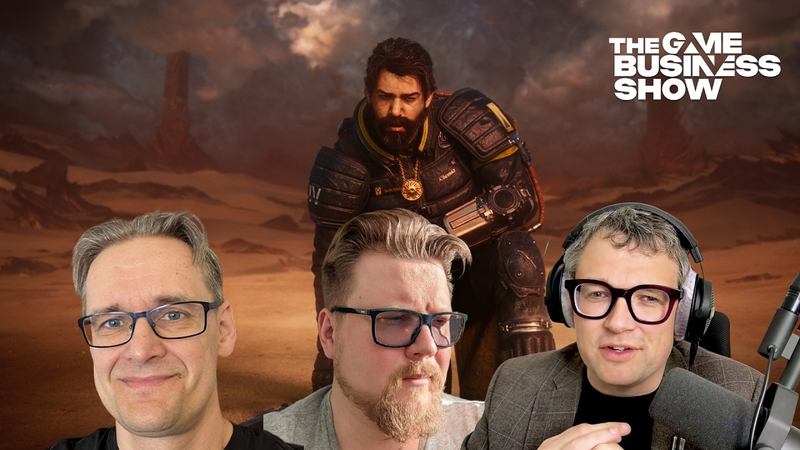
Star Fox developer Velan: How to survive as a North American game studio
13 Oct 202653 min video

The Nintendo partnership is a very special and unique one and the bar is really high. North America is the most expensive place to do game development in the world and so there's a lot of talk about okay what's the burn rate? What's the cost per man month for the teams and where we can go cheaper? The number of doomsayers like every 2 years it seems like everything is done. The dominant players are set. There's no new opportunities out there. It's a harsh environment and then somebody goes in and surprises everybody.
Today the IP holders like it recognize that it's matching it with the right teams that have the passion and capability. Hello and welcome to the game business show. This week's edition is sponsored by Exola. Now the PC studios that will be here in 10 years will be the ones building direct relationships with their players today. Selling direct means running your own PC game store alongside the storefronts you already sell on, such as Steam. You set the price, players buy from you, and you keep up to
95% of every sale. A launch of your branding handles delivery and updates, and payments work in every market that you sell in. This is not meant to be a replacement for traditional storefronts. It is a new revenue stream alongside them, and more than a thousand PC games already run one with Exola Publishing Suite. You can see how it works for your PC game by visiting the Exola website or in the links found in the newsletter associated with this very show. Speaking of this show, let's get on with it. This week, we are speaking to two video game legends, Guhar and Caric Barala. The brothers were the founders of Vicarious Visions where they worked on some of the biggest games and franchises in the world, including Tony Hawk, Skylanders, Spider-Man, Guitar Hero, Star Wars, James Bond, Crash Bandicoot. The list really does go on. Now they sold the studio to Activision in 2005 and then in 2016 they started again at Villain Studios. Now Villain has had quite the journey. It secured a partnership with Nintendo and has worked on two massive Nintendo franchises. The first was Mario Kart Live Home Circuit in 2020. That was
for Nintendo Switch. It was a mixed reality Mario Kart game. And this summer it handled the excellent remake of Star Fox for Nintendo Switch 2. But it's not been easy over the last 10 years. Its big 2021 live service dodgeball game, Knockout City, which was published by EA, attracted millions of players but struggled to maintain an audience. It public service was shut down in 2023. And in 2024, following a project cancellation from an external developer as Judy had to reorganize and make some cuts, but it's now growing again. It's just opened a new studio in Toronto, Canada, and over 10 years, it's put out six games. That's impressive. Now, I've spoken to the Barlers many times in my career, including on stage at events, and they are some of the most astute, considered, and intelligent people I've ever had the pleasure to interview. And now, fresh from their Star Fox triumph, I've finally managed to get them to join me on the game business, where we will be discussing how they've managed to survive and even grow in an increasingly hostile North American game development scene. So, without further ado, here is
my conversation with Guar and Kik Bala. Hey, Guhar. Hey, Caric. Welcome to the show.
It's really nice to be here. It's It's good to see you again, Chris.
It's It's been I find it's 10 years, which really I have I'm having like an existential crisis at that. Like it feels like, you know, it was only 6 months ago. We were like an investment summit in Boston talking about all your plans and dreams and aspirations and here we are what 10 years in and six games. Is it? It's incredible.
Time seems to be going faster and faster, doesn't it?
Yeah.
I think the older you get, the time goes faster. I don't know what it is, but it does seem like yesterday.
Well, I guess congratulations on on your latest game, Star Fox. I thought it was an excellent I'm a fan, as you can see from the poster. I thought it was an excellent remake. Um, visually very striking. I played for it a bunch. So, congratulations on it.
It was a lot of fun to work on. You know, we're really proud of uh of what we made in collaboration with Nintendo. So, yeah, we're just really happy about
it.
I'm really interesting. It's still relatively rare to see a independent western studio take on a a Nintendo IP. I know there's a few out there. Mercury Steam does Metroid and stuff, but 10 years, six projects and two of them with Nintendo, Mario Khan, Star Fox. What What do you think it is about you uh or about that some that makes someone like Nintendo sort of trust you to handle such treasured IP?
Well, I think that um you know, we've had u a long-standing collaboration with Nintendo. You know, I think our very first game with Nintendo was Spider-Man for GBA in 1998. And you know, from there, we've been on the launch of every system.
Game Boy Color.
I say GBA. Yeah. Game Boy Color in 1998. Yeah. That was before the GBA launch. Uh we were at the launch of GBA uh with Tony Hawk's Pro Skater 2.
I've got that game.
Yeah. And mysterious uh Menace uh as well. And uh we've been really admirers as many people have of both the hardware as well as the software that they
create, but also try to do something extra in each one of those releases, something that's really special for gamers.
And so over time, you know, sometimes people ask me sort of how do you build relationships throughout the industry over time? You especially young people coming out of college and so forth. I said, well, you make promises and you keep them and you try to exceed expectations. And this is if you do this consistently over time, you build trust, you build relationships, and you build really interesting opportunities to collaborate. And so, you know, throughout our history in the course of 35 plus years uh in this industry that will that's what we've tried to do and I think the latest watches is just the latest outcome of that.
Wow. I I went to the Nintendo Museum. Um Carpets would commented on this last week and I'd love seeing Mario Kart Live home circuit sort of featured. so prominently throughout the
the museums. That was I I don't know if you get a kick out of that, but I was I was pleased to see it.
It's an amazing place. It is an amazing
place. And uh you know, too bad you can't take photos inside. Uh
no, not that bit. No,
no, not that part Sanctum. But it is they've done such an incredible job of celebrating the history and seeing all those games there and then um seeing some of your own work in that museum is is quite uh quite a unique experience. It's it was pretty emotional.
Yeah.
The thing that stood out to me about that place is the number of really out there creative risks the company has taken over time.
Mhm. and you remember the successes like the dominant systems and things like that, but you don't necessarily remember the quirky things that they did. And the reality is that every one of those things when they were taking the atbat, when they were going there and trying to take the swing, they were like, "This could work. This would be something really special and surprising for consumers." Not everything does, but really it's a consistent habit producing
quality and taking creative risk that's produced their success as well. We've been trying to pattern that ourselves.
I do think they're quite masters of um turning ignoring it failure, but you know, even the Switch is like taking the Wii U and going, "Well, how can we turn that into they they turn I don't think the Switch would exist without the Wii U." And I think that was the thing that played it. And one of the things that was on display there was was I didn't even know this story was the Radar Scope, which was an arcade machine that that failed, but it led to the creation of Donkey Kong. Yep.
You have this weird like uh rooms where there are ping pong balls coming at you and you're swinging at the ping pong balls trying to take out different articles in your house as if that's a good idea to do in your actual house.
But it's one of their games.
Yeah. Yeah. That whole level is like a interactive warriorette. Look, I'm not going to look 5 minutes in the story about nothing but Nintendo. It's so um it's uh it's been 10 years of Ellen and obviously Marov was the first project the first big original project you had was with Knockout City and I I remember
really enjoying that game. thought it was a really promising project, but it obviously didn't work out in the end. And we just had a bit of a chat there about, you know, learning lessons from things that didn't necessarily work out and that, but looking back on that part of your story now, was there anything particularly you learned from that? Nad was such a great game and so so fun. It was so difficult to make as well. you know there's a lot of technical challenges and you know we had a clear vision of what we wanted to go after but we had to invent so many new things to make that possible. So it was uh it was quite a challenge you know we had to build our own game engine we had to build our own programming language that that the game was built on and and it had a lot of strict requirements in terms of like dedicated servers and and how it operated and how it worked you know in crossplay. So there's a lot of challenges and we had to learn how to do live service and as we were growing the studio I wouldn't trade that I wouldn't
trade that for anything you know and just all the stuff that we learned and we had 12 million players come in come through that game and uh there's a lot of people who uh really enjoyed it but you know ultimately you know we got to face some of the harsh of business realities and you know and if you're you keep trying to make it uh work at scale and the market shifted a lot right when we came up with the whole concept 2017 going into 2018 we showed it uh behind closed doors that at E3 in 2018 we thought it was cool we didn't know if anybody else thought it was cool and that's when we got a lot of publisher interest and then ultimately sign uh with EA and we thought we had something but it was early days for like um live service games back then right even Fortnite had just come out and the landscape shifted a a lot over those those years. So there's a lot of learnings you know from it. Still a
great grain. We want to bring it back you know and but we have to do it differently. I think there are enough things that have changed in the in the landscape and also technology that may make it more feasible and sustainable. So part of what we have to look at is even though we discovered sort of a new gameplay mechanic, new new uh new form of play with that, um we've got to figure out how to do that in a sort of a sustainable way, you know, for the community and and uh and fans and have it work at any scale. Uh that's the challenge,
right? So, uh, um, but it's an IP that we own and, uh, you know, and great gameplay and technology and, uh, remarkably still hasn't been copied yet.
It's hard to do.
It's a hard one to copy.
It's a hard one.
Um, I would say, you know, a couple things that I think um, were really interesting lendings for us. You know, we started Knockout City uh at a time
where many games do take a while to develop, but that in particular as kind of a seasonbased, you know, PvP uh you know, kind of game, a game is a service game when, you know, that was the thing to do. They structurally tend to have a lot of costs. There's a server component to it, but there's also just the amount of content you need to keep pumping out. And so it's not a great venue to experiment with things that are truly out there. And maybe it's okay for tried and true mechanics, but even that's very high risk
or tried to true game formulas or established brands. Even that's high risk. So do it with something that's completely different. The structural costs make innovation difficult.
There's that. There's also, and this is a bit of like time moves faster as you get older type of thing. The dynamics of the market change are changing very rapidly enabling technologies, consumer attention, where entertainment is coming from, the nature of discovery, you know, even the
things that are classified as like the black hole games, the games that people are spending all their time in. I believe that's going to change fundamentally over the next 18 months and really transform. So when we look at that developing a game that's structurally high cost over multiple years when the world around you and consumers around you are changing that is not the right way to approach innovation. So I think that in a lot of ways I feel like we made a great game. You know it was recognized that way and people love it and you still have fans asking for it. I would like to bring it back, but I'd like to bring it back in a much more agile way, in a leaner way where we could figure out what happens and or or what's going to happen if we try something in a very short window. In a lot of ways, we talked to a lot of experts in the process of trying to figure it out after we launched. And it turns out the experts are better historians than they are forecasters.
You never you never know what's actually going to happen, what people are really
going to think. And so I think actually just modifying our approach entirely, seeing how quickly we do things, we could change things and how the cost of that is low enough that you could take some real risks. Like that's really the big lessons from Knockout City and it shows up in the types of games that we make now murder club and other smaller
um you know wilder creative week experiences.
I always say to analysts um who I have on the show all the time and they'll admit it themselves. They're good at looking back and all their predictions are based on what's happened rather than what's going to happen. And when you're in a creative, artistic, innovative industry,
you can never predict what's going to in one minute something that you thought was dead can suddenly be the biggest thing in the world. And the things that you know it it the industry moves so fast,
but it's not one of the greatest things about our business.
I mean, sometimes it you got to take take the good, right? And uh but it's uh you know
I do think it's one of the greatest things of Garthik because I think it's like we we've heard the other thing that you learn over time and I'm sure you
recognize this too Chris is that um the number of doomsayers like every two years it seems like everything is done. The dominant players are set. There's no new opportunities out there. It's a harsh environment and then somebody goes and surprises everybody. So this is what keeps us hopeful.
I guess it can feel that way at the moment in the industry. you can feel like it's um taking a tumble, but as you talked about it, you know, you've you've gone through quite a rapid change. So, you talked about things moving smaller and needing to move faster and be more agile. Is it just being quicker to react to things? Is that is that how you deal with that?
I think it's um multiple things. It's, you know, rapid prototyping and trying new ideas uh quicker, you know, the whole fail faster, you know, kind of uh you know, mentality. being able to like try things and and get it into consumer hands even whether it's public or private tests and getting feedback and having tighter feedback loops. I think that's actually really important and especially if you're doing something
sort of really new,
you know, this is uh that the kind of like mindset and approach is um is pretty crucial. So building tools and pipelines or keeping it at a small and agile team uh when it comes to discovery I think that's that's absolutely crucial. But then even when a product is out there and then you're evolving it that's where the sort of the the rapid response um and being able to take consumer feedback is um is also really important. And I don't know if we're if if we're that good at it. I mean, we're we're pretty good, but like we, you know, there's there's room for, you know, improvement there. Um, and I think that's what's going to be necessary kind of going forward.
And most of the work that we've done is in the PC and console area. Um, and so for that, I think a lot of times the craftsmanship in involved in the product matters a lot. So, there's a real
balance there. It's not like we can crank out a prototype and then just put it out there in a test market, look for KPIs and respond to KPIs and suddenly optimize a perfect game. That's just not how this part of the industry works. And so these are real artistic expressions that you need to say, okay, this is an expression of what I want creatively. That could take a while. But then balancing that with the ability to respond to what's actually happening or shut it down and making it into something new, you know, that's um that's the problem that we've been working on.
I'm sort of interested. No, you I wasn't planning to ask this, but you mentioned that, you know, even you think black hole games um and what's happening there will change substantially 18 months. I got a poke at that. What do you how do you think that's going to uh what's going on there? Well, I just think that so much is going on right now with people go to user generated content platforms, people go to destinations for games to form social communities. Um, and there's a bit of a stickiness factor
because there's structural advantages to creating those communities and the obvious ones are going to be like Roblox and uh Fortnite and you know, places like that. There are others, right? Some big franchises that are out there,
you know, to do that. It's not at all clear to me that those barriers are going to be durable. Um, those walls are going to come down and maybe they're going to be more micro communities made.
Some of that could be because of AI generated environments. It might be it might be that the barriers to creating those the structural barriers to creating those environments may come down. It may come down because web becomes a more prominent means of consumption for more geographies because I do think that having high GPU systems is barriers to adoption or proprietary console systems as barriers to adoption. They're very geographically bound type of constraint.
I just see developers, consumers poking at all of these boundaries
at a rapid rate. We're gonna see a lot. I don't know what is going to happen exactly.
Um, speaking of being an expert or an analyst, I don't know what, right?
But the ways to poke at the boundaries are growing, you know, a tremendous amount. So, I think we're going to see a lot of change and those durable advantages. Well, to the owners of both those advantages, they can be quite comforting. I think they're going to be more fleeting than not. Of course, in the middle of all this, where do we see ourselves? I do think that um great creative teams, creative insights, trying to always think about creating something special for consumers, meaningful ways of spending time together, these are at the heart of what drives us. I think that'll continue to be valued,
the structural boundaries that all these advantages, I see so many ways that that could come down.
Interesting. Now, you've so let's go back to talking about Bellan. You've you've had mixed reality racing games
and Mario Kart and Hot Wheels, a sports action game with Knockout City. There's not Murder Club, which is like a horror party game thing. VR pinball game. Do you think there's like a what what would you say is a land game? I think uh you know sort of a core to our values is uh sort of staying curious and uh and we're always trying to go after sort of new sorts of play mechanics at the heart of it. Something we haven't experienced before.
When we do look at it like wow it's like cutting across lots of different genres and we we experiment. We see where we find unique fun and we build from it. But I do think that what we're finding is that uh over the course of the last 10 years, we've built teams that have a lot of expertise in in certain genres and trying to innovate and come up with new gameplay mechanics or new ideas within within those genres. But I think
the core of it really kind of comes down to like play feel and uh find something unique and new, a new kind of feeling or connection that you can have, you know, with the game. I think that's what makes it a valid game. Like we always talk about like create breakthrough games that have magic and that's something that's magical is inherently brings something new to the table, right? New trick.
And so we got to keep we got to keep doing that. Hm. You talked before back in my games in shop days. You talked before about the importance of finding that magic particularly in the initial sort of concept phase and I remember you saying you know you need to give yourself time to really know what makes the game special before sort of going full steam ahead with development. But you know we've just talked about the industry shifted things are tougher out there. People are moving faster. You need to react quicker. So how do you get the balance between giving yourself the time to find that magic but then also not taking too long because the industry moves moves so quickly? That is the that
is one of the core challenges. you know, we are prototyping, you know, all the time and trying new ideas, sort of percolating in the in the background and and we do internal game jams and things like that, you know, from time to time and folks have ideas and when we do latch on to projects that we feel, okay, there's there's a real sort of market opportunity as well as just the passion, you know, for the team, we have a pretty structured approach with internal uh green lights. The balance that we're that we're finding now is really when we think about the size of games that we can make as a as an independent studio with multiple teams is uh I think we're finding a a natural cadence where we can kind of go into a double A
scope game that has like an established IP licensed IP that might be a partner project or a licensed IP that we are directly licensed in and we can you make
a double A investment around that because there's an audience and so on. And then with more original IP or like something that's really out there, you know, in terms of gameplay, you know, we can sort of make more of a triple eye level investment with like an even smaller team. And so we're trying to sort of find that middle path, which there are there are some studios going down that. And uh
you know and
for a veteran team that's not a you know sort of garage band indie and we're not AAA you know multi-studio multiund person you know sort of efforts. This feels like a sort of a natural sweet spot for us and something that honestly like the industry has lost a little bit you know and maybe coming back you know but it seems like a more sustainable path for uh teams like ours. We don't see a lot of independent studios with bit more of a staggered slate. Some bigger projects that you know have a bit
more generous stability and a built-in and um and then smaller ones that are sort of creatively experimental with a path to market as well. I think more more independent studios should try to do that. they tend to be single product companies and if the slate plans if the publisher changes that becomes a real challenge or if they're solely investment driven and the metrics don't show up in our product um you know the funding gets cut off and I think that's a lot of where we see the carnage you know as well
um especially in an environment where the publishing world is really contracted to few like small number of operating businesses within each entity And that's across the board whether it's take 2 or most recent rec recently obviously Microsoft Embracer Actision even Activision really started that process 15 plus years ago EA um it leaves a lot of audiences a lot of IPs
that don't have great creative behind them that can effectively serve that fandom you know as well so we see an opportunity there but I do think as a independent developer We're trying to design a slate that allows within the capabilities of that developer to be able to have smaller more agile teams take more risks with stability with larger projects with which which have more defined genre requirements would be a good formula for that. I mean that's the approach that we have at Villain and it's been serving us pretty well. People talk about the sort of return of the middle and I guess Clare obscure um has been used as a bit of an example of that but you know Sabre sort of operates like that and they're a very big company and I find I quite like what you're suggesting there as well about you know there are lots of um big companies that have IPs that you know they might want to develop but they need someone to find them and you kind of just answer my question there but you think that this isn't just a couple of examples of companies that making this work this is something they can work on it
actually both of us actually went to business school uh you know and then you
know We graduated in 2013, so a number of years ago. And if you look at a business school strategy course, they will say do not be in the middle of anything. The middle is always a a giant hole be at one extreme or another because that's where you get differentiation. There's a classic collapse of the metal. So what we mean in terms of the metal here is that there are lots of opportunities with audiences that are not massive. Mhm.
So if you can, you still need to make an amazing experience because making mediocre experiences is not worth anybody's time.
So the puzzle to solve or the game to make is how can you make a remarkable experience for a fan base that's big but may may not be such a mega size to support hundreds of millions of dollars in production. And what we're finding is there are surprisingly large number of opportunities in this space. But it takes a different mindset towards development. Some companies solve it by having lowcost development locations.
Other companies solve it with technology and tools and high productivity. Some companies solve it with uh genre specialization. So particular teams are highly productive in certain types of games. So the different solutions that are available for that but it's still amazing products but which can be developed in a manner that can serve kind of audiences that don't have to be tens of millions of people. M oh the sort of I use the word uh it's it's sort of we live in an age of the niche and a niche I don't necessarily mean small but there's lots and lots of audiences looking for very specific things and I think you can build a business on um interesting there was an interview with Fuse Games making the Star Wars racing game and I said you know why why haven't we had that many Star Wars racing games and he thinks we live in a time where a Star Wars racing game could do really well today whereas maybe it wouldn't have been the case
um 10 15 years ago um I think IP holders have actually gotten smarter you know with with this whole thing, you know, uh
you know, we talked a little bit about our early days and on handheld on like Game Boy Advance and and and whatnot. And uh there was a lot of these licensed games, you know, back then where quality
was across the board and you know, we really try to like, you know, just really focus on quality and serve the fans. But the the licenses were granted to the big publishers. You know, all those deals, the the IP holders just went to the big big publishers. Today, the IP holders like it recognize that it's matching it with the right teams that have the passion and the capability, you know, for it. So, the deals are out there, you know, the partnerships are out there where it's in a way much more reasonable. They want the quality. It's an expression of the IP that actually gives longevity to the IP and actually bring in new audiences into the IP as well, you know, through games. So, there's actually more
opportunity that we're seeing now than there were before. And maybe it's also a function of the the big AAA publishers have doubled down on their own, you know, IP and projects and there's less licensing going on other than like integrations into like live service games and that sort of thing.
But when you've got that audience and it's sort of underserved in these niches and there's that there's that fandom and you can really deliver, you know, for those fans what they're looking for, it's also a great force and function of scope. So you can be really disciplined about uh about that.
So I think that's I think those confluence of those factors are actually opening up an interesting space for proving teams. I think it's probably worth noting that you uh obviously with your previous company as well, Vicious Visions, and is that you are very well known for taking uh a brand that might have existed somewhere or someone else's game and
then making a sequel or or taking it elsewhere and doing an incredibly good job of that. So, I imagine when people are looking out, they're going, I've got something, they you might be on their you might it might be someone they called before, maybe they called other people. So you've got that um you've got both that insight but that advantage I suppose.
I mean one of the things that we try to inform our prior games with is the brand itself is going to be able to help identify an audience or help an audience identify a type of game that they may enjoy. But on its own it doesn't make sense to do like we've rarely experienced commercial success based on brand strength alone. Um except for certain you know very specific types of products. You have to have an amazing creative experience for that audience. And so when we look at things we we look at we still start with a balance approach of saying what is an amazing creative experience. In some cases we could say well that would be amazing for this audience especially with this brand as well and then that's where that marriage occurs. And I think that that's
that's a worthwhile approach for others to take as well. you talked about some of the ways that people can structure themselves to sort of move quicker or react faster or or make games bit more I don't use the word intelligently but whether it's you know lowcost locations or being really particularly good or using tools and technology of course a lot of studios and I don't think this ne makes you move faster but it's a way of sort of managing size is they're using a lot of outsource teams and contractors people been talking about this Hollywood model for 15 years but it seems conversation certainly come back round again um is that something that you do is that what's your what's your take on We do uh and you know I think what we're finding is we're finding this balance where we have these core teams that have sort of been together a long time. You know they they've operated really well together and with that core team as well as a level of internal production. you know, we can figure out all the whiskey bits, figure out what what's core to the game and the glue and then we can partner with co-developers
or outsourcing team or individual freelancers for that scaling up, you know, in terms of production. And for a long time we were like observing this sort of trend of working on projects where as you get into the back half of production that the costs really go up and the risk also goes up and it's a nailbiter
to the finish line and you're hoping you can get down on time and hit the quality bar or you're at alpha. Is it fun yet?
Oh no, it's not quite fun yet. we still got to iterate soon and the risk is going up while the costs are going up and uh and this is actually one of the observations when we were starting valid it's like shouldn't that be inverted shouldn't the risks be really high when the costs are really low and then the risk goes down and then the costs can go higher and it can be sort of sort of more well managed and so that goes back to the structure of the teams you know
and how can you have a small core agile team figuring now all of these unknowns. That's that's obviously the ideal case, right? And it's like I don't think two game projects have ever gone the same. And and if they do, it's actually you're not taking enough risk. But going after that general sort of principle, I think allows you to again structure those teams. And now that we're finding sort of specialist co-developers and specialist outsourcers who are built for that to be able to go and support teams for that phase of the project, it can work out quite well. It's quite symbiotic.
Let me kind of build on that Caric. I mean, so it's important to be able to be deeply curious of all the different ways to make things. There's no one way to do it like Caric says, but there are some common elements. For example, having a strong core team with very clear
creative direction and trying to find the fun and the architecture of a game early on. So you understand where the value to the consumer is going to come from. That's very important. And having a team that it's not just about the individuals that are experienced, but a team that has veterans around doing that and has done that before tends to be much more dynamic and adaptable and you know not only quick but also quick to find the solutions and then to find the problems as well. So that's a commonality across the board. At the same time you know for us we have to be mindful that we're a North American studio. It is our philosophy to pay as much as we can for the best talent that we can possibly have employed that uh val and with that mindset we have to say well we we've also got a strong dollar so what are the tools available to us what are the production methodologies available to us sometimes outsourcing can play a role it has played a role and will continue to play a role but each
type of outsourcing is also a little bit different sometimes wholesale for certain types to work can be efficient. Sometimes it's highly inefficient as well. And so it's very important for us to be able to have many options and find the right fit for each project. And that's what we wind up doing. Some of the smaller projects that are indie have a very small role for outsourcing and it's just more about moving as quickly as possible.
Yeah.
With very focused systems and that kind of thing. on the ones large productions tend to try and say okay well how can we figure out the pipelines and the methodologies and who are the right set of partners to work with as well and we have developed trusted relationships over time that are very valuable to us in that also
I ask a lot about this subject on the show and we had Maverick making that new um racing game that you know and one of the people who run Maverick used to run Sumo and her thing was that you know outsourcing is really powerful but it can slow you down and it's their first game they want to get it out you know,
at a certain uh point in time and and make a statement. And then we had the Bulkhead who made War Dogs. They came on and um they're a little bit less trusting about sorting because sometimes you don't necess what your answer you just gave there that you do have to it's not a one-sizefits-all um thing that can just work for everybody.
I mean, sometimes it's written into a business plan to sound really good. The the readers tend to be it's like buyer on those types of business plans, let's say. It's tricky because you know I mean again North America is the most expensive place to do game development in the in the world and so there's a lot of talk about okay what's the burn rate what's the cost per man month for the teams and where we can go cheaper and that doesn't necessarily mean you get the same productivity. So it's a balance and you know if if a team is half as expensive as your internal core team but it takes twice as long or it takes more
than twice as long because you're not set up effectively for it or the type of work or the relationship isn't going as well as it could. It may end up costing you more. it may end up taking longer and it is trying to figure that out and there's no single answer I think you know one sizefits-all I guess
uh for the teams but like over time you build these trusted partnerships trusted relationships know which teams are really good at doing certain kinds of things and then you can find some productivity gains because ult ultimately it's like we're all after factor productivity not
not not the burn Right.
Not the cost per person model.
When you start with a creative insight and then you're like, well, how am I going to make this? And then you're after how, you know, how much output can I make for the input? And that really comes down to saying, okay, well, what are the, you know, let me put a great quality team together and all the components that that involves. Well, if
you don't know how to what you're trying to build where you don't have those pipelines down and you're trying to still figure that out, it'll cost you three times as much to do it outside than inside
because there's wait time, there's iteration speed, there's just communication gaps and interaction costs and that kind of thing. The same kind of truism is with upstream QA versus downstream QA. If you try to have a very large QA team pick up all the errors later on, it's usually three to times more three to five times more expensive than doing a more costly tester that's located on site but one with your development team and in line with development. Those are properties that have actually existed for the last 15 to 20 years.
I think people are looking at them a bit more now. Um well, you opened a studio in Toronto, right? Is the um so what was the so where's that fit into all this? Is what's thinking there? So there's a there's been a you know postco you know during co a lot of growth in general for studios has been with remote employees
and remote workers and so forth. We do find with especially with high RD exposure and rapid prototyping and things like that a remote system is not as effective as you know having inerson um iteration and development and doesn't give as much opportunity for serendipity for larger teams and so we've moved to really on a go forward basis hiring in Freud near our headquarters and then we knew that okay in the absence of more of a remote forward hiring, we need to have another location with a large potential talent base and the potential to draw talent as well. And so Toronto is actually not so geographically far from us because the flight that should only be an hour to fly, but we don't have a direct flight there. Um, but it's it's not so far from us. Um, in Canada, same time zone, hopefully very similar, you know, as well between the northeast of the United States and Canada, you know,
as well. great talent base. It allows us to essentially extend our team and uh we've uh we've been really excited about the new uh folks that we've brought on board in Toronto. We have active plans for that as well. So, it's sort of like a hiring and growth motif that has access to talent in the United States through our headquarters in Troy, but also in Canada and international head uh through our second location in Toronto. I have to be mindful when you say it's not so far from us is that I think you were you were at an event we did in PAX and you said uh uh or it's not so far from where we're based and it was like still like a 4-hour drive whereas in whereas in the UK that would get you across most of the country.
Well, I think we're in Boston and of course we're in capital region of New York
and it's literally 3 hours down the road. So we can get on a road about 2 minutes away from our office and go three hours down the road and be where you are.
All right. Yeah. Yes.
How big are you then today? How big is uh
we have we have about 120 uh full-time
okay
employees. So it's a it's a decent size.
Yeah. So interestingly I was going to ask this question but the more I've talked I don't know if it's a redundant one. You work with some big publishers right? And I wondered if there was a desire to get away from reliance on big partners or big publishers or big platforms or licensing partners but actually it seems like you might be you see that as an opportunity rather than a risk. It is an opportunity and it's balancing it as a as a multi-RO studio. We've always been there. We were we were multi-project studio at at Vicarious as well, you know,
and during the handheld heydays, there were a lot of games that were uh that were in development as a function of the the smaller uh teams. And that actually has been an important part of that formula for sustainability. and uh so we can sort of have offset release schedules and stuff uh as part
of it. So working with great partners, you know, having projects that are that are funded helps keeps the lights on uh but uh mix of partners and and also like self-funded uh project. So like one big step that we're taking is um directly licensing like worldclass IP uh that we're self-funding and publishing ourselves and uh and mixing that with uh having projects that are that are partner funded. So that's a big step for us uh to be able to to be able to do that. Um but again it's looking at where the teams have expertise and and passion and uh where we see opportunities. It's really interesting. I think one of the things that we can do being an independent outside of a large publishing structure is um really look
at the world in a broader scope than just a single singular publishing strategy of any individual content company. So Xbox has its own strategy. Um EA has its own around its core operating businesses and so forth. Here we can look at the opportunities for consumers you know at large so to speak and some cases it makes sense to co-und co-inance or work with larger entities and other other times it makes sense to do things on our own and that's the flexibility that we wanted because the number one thing for villain has been to be deeply curious and think about new types of surprising experiences so if that's your fundamental underwriting thesis then being independent becomes quite important part of that.
How are you with funding sort of projects like that? I imagine the landscape's quite different and everything's smaller deals and stuff compared to when 3 years ago when we used to uh but are you finding it easier
to find funding? I don't really know what my question is, but it's sort of you seem to be you seem to be doing quite a lot of projects. There there were there was a period of time where it seems like you can cast a stone and find somebody willing to fund game companies. And that existed between approximately like 2019 and 2023. But in the rest of the 35 years that we've been in in our industry, that has not been the case.
So, uh, funding has always been one of those things where, uh, it's like, okay, well, do you have a great plan and do you have evidence that your product will work as well? And so we try to look at that in our own products. We look at that in products that we may invest in as well uh with third parties, you know, also. So we do a bit of that. Uh I do think that for us, we've been able to make create a balance of having projects that are funded by larger entities, being efficient with our capital, maintaining a strong balance sheet in the process of doing that. So then we
can make our own investments also. And so the way we've been able to manage Valon Studios, it gives us that flexibility, you know, we've had our mission at the root, but you know, kind of a financing approach that's been able to help us underwrite that as a result. when you've got and to go back to the start in a way, when you've got a partner like Nintendo that trusts you, does that make you uh do you get a lot of phone calls when something like that happens from from people wanting to work with you or is that
I think um
go ahead car,
you know, I think there's a lot less publishing deals out there these days. You know, there's there's a lot less of that. And uh the the Nintendo partnership is a very special and unique one and the bar is really high you know uh in terms of um uh what we need to to make and it's it but that's always been the case right even when we were third party and uh with with the relationship
with Nintendo and it helped us back then you know because we even as a third party uh because we made really good games that uh uh that that Nintendo had liked and um and that gave us the opening to have conversations, but the reality is that the the funding environment is challenging. There's less publishing deals that are out there and um uh but we also need to be really strategic about, you know, what we take on and and what we say no to.
Obviously, you worked on the uh was it was the what was the game? was the Skylanders game that had the Nintendo characters in it. Um,
that was Skylanders Superchargers.
Superchargers. That that was I couldn't remember the name of escape. Um,
yes. Uh, going back to that. Yes, I remember that. That was a um that was a big moment for us because we finally were able to integrate uh Nintendo
characters into into one of our games and that was a big learning experience as well, you know, and uh
it was quite uh successful. We were all very happy with how that turned out. We were um a third party developer for the longest time and uh but I think we had a close relationship even as a third party working on Wii on Guitar Hero and then
and then Skylanders and all the DS stuff that did in Game Boy
and so which I think uh over time
that relationship grew
and I guess that's the that's interestingly because I've got I don't know I've got Fuse Games on the brain but they've got Stars GAC to raise how did an independent studio get a styles get to work with that IP and the answer is they used to work at EA they worked at Criterion they worked on Battlefront you know and so they got the relationship they built the trust and so um and that that led to that and I'm sure a big part of it is they also
deliver and they do what they say they're going to do
and uh I think that's really important I think the trusted relationships and stuff over time is is really important There was a period of time that uh I don't know that may still be the case. You can you have a amazing showman and they give a great kind of razledazzle presentation you know kind of really charm executives and charm IP holders and get uh financers and get their game funded and uh you know kind of like uh the Conan O'Brien Montreal episode in the Simpsons. Um we see less of that now and we should see less of that. It should be based more on what we've we relied on is competence delivery, keeping your promises and really making excellent products uh for gamers. So I think hopefully we've shipped it to that uh more than the others. I'm sure um
well,
you know, from a Galactic Racer standpoint that's been the case.
Yeah. Well um I'll ask one more question because I've taken way too much time, more than I was expecting. Um, but where would you I I normally ask five years, but seeing as this is the 10 years of Bell and I'm going to ask 10 years. Where would you like to see uh yourselves in 10 years time? I think for me I would be delighted if we can um one bring back Knockout City but two really you know create some special experiences uh that uh we can bring I mean we we have an active slate um you know right now bring out some really special experiences that become durable franchises that we continue to be doing creative experiments that people are really like wow where did that come That's very interesting. I'm glad somebody took the risk on that and be able to do that sustainably. It's also really important to me that the people that come here to work every day at Bellen, you know, have that spark and curiosity and the ability to say, "Yeah, here's a place I want to take creative
risks." So, if they say that in 10 years and we can we have the commercial success to keep supporting that, I will be absolutely delighted. I think um looking back at 35 years, it's been a journey and it's and it's it's not about the destination, you know, we want to keep creating great experiences, both original and uh, you know, and and world class IP and keep pushing ourselves in terms of, you know, what we can do. And there's just going to be new challenges, new constraints. you know, early on I think like it was actually after we made our first game uh called Synergist and we were in college and the game was not successful. uh you know, go and I when we started in high school, we thought oh we were going to be rich and famous and after making this first game and neither one of those things happened and uh it was we were just left in a lot of debt and it was
like it was a real downbeat, you know, and after 5 years uh and and but we shipped shipped our first game and it was really a moment of introspection in terms of like what we enjoyed about it And it was the game, but it was not the game. It was at first it started out was just this vision for the for making this game. But what we realized it was actually like the team and the people that we were working with dayto-day. That's actually what made it special and really fun. And it's like, oh, that's why we do what we do, you know? And we get to also bring joy to like potentially millions of people around the world. And and if we can keep doing that, well, that's just awesome. So, it continues to be that journey, you know, and uh as the industry keeps sort of changing and evolving and redefining itself in terms of what is a video game.
And I think that's that's what's so cool. Interesting. We had Arcane on um not Arcane, we had Harvey Smith on and he we talked about um Redful, right? And they said, you know, he said, "Look, we're disappointed how it ended up." what happened, how disappointing it was, but actually the journey was great and it was kind of the it was a very refreshing view on it. It's not really about the destination, you know. I do we regret it? No, we we we learned a lot and developed a lot and we had fun.
Exactly.
Yeah. Um, thank you so much for your time. I've taken up way too much of it. Uh, but good luck for the next uh project. Again, congratulations on Star Fox. I think it's brilliant and yeah, your insight is as always impeccable. So, uh, thank you so much. Thank you. Really enjoyed it. Lots of fun.
Thank you.
Thank you to Guhart and Caret there for diving so deep on so many of those subjects. That's it for today's episode of the Game Business Show. If you enjoyed that and want to make sure you don't miss the next one, head to the gamebus.com, sign up to our newsletter.
You'll not miss an episode. It'd be great. You can also become a paid subscriber if you want to support us in that way. But that's it from us today. Until next time, thank you for tuning in.
Auto-generated captions from YouTube — names and numbers may be misheard.
Operating within the high-cost North American game development landscape requires a strategic shift away from the traditional, multi-year development cycles that often stifle innovation. By moving toward a leaner, more agile model, studios can better navigate the volatility of the modern market. This approach prioritizes rapid prototyping and tight feedback loops, allowing teams to experiment with creative concepts without the crushing financial pressure associated with massive, long-term live-service projects. Success in this environment is not defined by chasing mega-hit audiences, but by carving out a sustainable middle-market niche that balances stable, licensed AA-scope projects with smaller, original intellectual properties.
This operational philosophy relies on maintaining a compact, highly skilled core team responsible for creative direction and complex problem-solving, while utilizing strategic outsourcing to handle production scaling. By focusing on high-quality internal talent rather than simply minimizing burn rates, studios can maximize productivity and foster long-term stability. A multi-project strategy that blends partner-funded work with self-funded initiatives provides the financial insulation necessary to maintain creative independence and weather the challenges of a consolidated industry.
Ultimately, long-term viability depends on building deep, institutional trust with major IP holders through consistent delivery and technical competence. Rather than relying on salesmanship, developers must demonstrate an ability to serve underserved fanbases with high-quality, specialized experiences. By fostering a collaborative environment where employees are empowered to take risks and prioritize the joy of creation over the outcome of any single project, studios can build durable franchises. This holistic approach ensures that creative flexibility remains intact, allowing for sustainable growth even in an increasingly competitive and unpredictable global market.

The Game Business · 2026

The Game Business · 2026

The Game Business · 2026

The Game Business · 2026

The Game Business · 2026

The Game Business · 2026

The Game Business · 2026

The Game Business · 2026

The Game Business · 2026

The Game Business · 2026

The Game Business · 2026

The Game Business · 2026

Deconstructor of Fun · 2026

The Game Business · 2026

The Game Business · 2026
The Game Business · 2026
The Game Business · 2026

The Game Business · 2025
The Game Business · 2025

Deconstructor of Fun · 2025
Naavik · 2024
Marvelous
Marvelous
GREE
Comments