VideoThe Game Business
How to announce a live service game in 2026? Plus, Star Wars, Nex Playground and new Xbox leaders
21 May 202652 min video
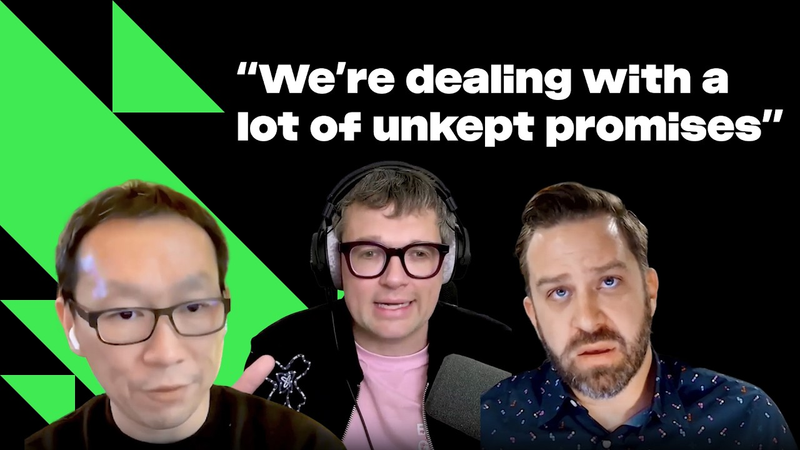
This week, Xbox names new leaders, Next Playground details its global strategy, Embracer plans to split in two, and how do you announce a live service game in 2026? Hello and welcome to the Game Business Show. We have not one, not two, but three guests for you this week. We have Next Playground CEO David Lee, he'll be on in a moment. 47 Communications is Chase Colasono and Eric Larson, who is the boss of EA's Capital Game Studio. So, there's lots to get through, including a lot of news. And I'm going to start with the news that broke yesterday. Xbox has added two big new names to its leadership team in the form of Matthew Ball and Scott Van Billett. Um this is a story that we broke actually yesterday, and it's all part of Xbox's ongoing drive to move faster, build better products, and make more focused business decisions. Now, for me, the biggest news is Matthew Ball. Regular listeners and readers and viewers of the Game Business Show will know who Matthew Ball is. He's been on
our show multiple times already. He's a top industry analyst. He's best known for the State of Video Gaming Report, which he releases every February, and is basically an essential read for the entire video game industry. He's going to be there to sort of strengthen the console side of Xbox, at least in the short term. There's other things he'll be doing as well. The console side is facing some significant pressures, as we know, not just from competition, but also from rising costs and memory and storage, which is causing all sorts of problems. In fact, when we spoke to Matthew Ball earlier in the year, he admitted he was pretty frightened by that situation. But he's a veteran of of the world of entertainment. He was a senior vice president at Illumination. He's been head of strategy for Amazon Studios. He currently a venture partner at investment group Makers Fund. He does all sorts of really cool things, and it's a wonderful hire that for Microsoft, really is. I actually was first introduced to Matthew Ball by Phil Spencer, and I have to say, I think his report this year, which talks about the growth the industry has gone through, but points out that most of that growth is concentrated on just a few areas. I think it's a really essential read. It's
why we did two episodes on it earlier in the year. If anyone can make sense of Xbox's sort of disparate business models, platforms, distribution options, and studios, it's him. Now, the other person I'm not so familiar with, although he has heck of a CV, this is Scott Van Blair. He is going to be chief technology officer. He was previously in charge of Azure Open AI and AI core infrastructure at Microsoft. He's also led engineering for Microsoft Teams during COVID-19 pandemic, so when everybody was using Microsoft Teams. He has a games background as well, so it's not just about technology. He worked at Amazon, did game stuff at Alexa, Amazon Game Studios, and the Amazon App Store. He actually directly worked on the Minecraft Fire TV edition. Prior to that, he was VP of digital player at Mattel, worked across brands like Fruit Ninja, Angry Birds, Cut the Rope, Batman, Barbie, all sorts of things. His job will be to improve how Xbox builds products so the team can move faster and deliver stronger results. And Xbox, it isn't just new people they've brought in. Obviously, there's a risk when you bring in a load of new people, it might change what the company is about and what makes the company special. But,
Asha Sharma, the new Xbox CEO, hasn't just been bringing in new faces, she has been promoting some of the existing team as well. And that includes Chris Schnackenberg, he's been promoted to corporate vice president partnerships and business development. This is going to be most interesting to most of our readers, actually, cuz he was previously VP of partnerships and business development. He joined from Activision Blizzard. His role is all about third-party games and partners, which are going to be really, really important for Xbox going forward. Asha Sharma's done a lot in her first but even the 3 months in charge. Obviously, she's named a bunch of new leaders in the company. She sort of rebranded the division, it's no longer Microsoft Gaming, it's now Xbox, Xbox all caps, by the way, according to their brand guidelines. By the way, if anyone's asking why we don't do all caps Xbox, the same reason we don't do all caps Sega and things like that, you know, it's it's sort of a style guide for the industry. You cap up a company name at the start. You might put a capital letter if it's two words stuck together. Loads of different media brands do it differently, but Xbox probably won't be branded Xbox by all of the media. But, that's nothing to do with trying to spite them. It's just the
way that the style guides work. But, anyway, she's done a lot. She's also corrected the price of Game Pass, let's not forget. And she's also won over fans. Like, the skepticism at the beginning when she was hired was quite high, and the fans have been quickly won over. The organization seems to be won over as well. They're really positive about her appointment, according to a lot of the people I've spoken to, anyway. So, there's a lot of positive buzz around Xbox at the moment, helped, of course, by the fact that Forza Horizon 6, which came out last week, has done incredibly well, both critically, it's over 90 on Metacritic, I think it was 92 last I checked, and it's done really, really well commercially, as well. So, it's it's a real hit. It's interesting, 6 months ago, Xbox seems it seemed a little bit defeated. It seems like it was fighting a load of losing battles, and it seemed, frankly, directionless, at least it did from the outside looking in. I'm not convinced it's found its purpose yet. I'm not convinced it's found a direction just yet, but I am really starting to believe that it will. There's really good positivity coming out of Xbox, I'd say. That was a story that we broke yesterday, and which I'm very pleased about. And of course, if you like Matthew Ball, if you know him, he know he's coming to our event in 3 weeks'
time, June 8th, Los Angeles, the Game Business Live. He's going to be joined by Laura Miele, that's the EA Entertainment president, and Jason Rubin, who is the video game legend behind Naughty Dog, Crash Bandicoot, and all sorts of things. Paid subscribers to the Game Business can come along to that for no extra cost. It's basically free if you're a paid subscriber. And tickets are available now for everyone else. I've got over 100 companies coming. You can find out more at the gamebusiness.com. Let's move on to the next story, and then another big story we broke yesterday was around Embracer. So, Embracer plans to split into two public companies, with a new spin-off taking over its biggest gaming IPs. And that spin-off is going to be called Fellowship Entertainment. They want to have it established in 2027, that's the goal. It will be an IP-led entertainment company built around development, publishing, and licensing of games. And crucially, it's a centralized approach. So, Embracer had a decentralized approach. All the businesses operated independently. All of these businesses are now going to operate as a central organization. The company will look after the Lord of the Rings IP, Tomb Raider, Darksiders, Dead Island, Kingdom
Come: Deliverance II, and Remnant. The studios that sort of fall under this division are 4A Games, Warhorse, Crystal Dynamics, Dambuster Studios, Eidos Montreal, Flying Wild Hog, Gunfire Games, Middle-earth Enterprises, Red Octane, that's the people doing that new Guitar Hero stuff game, and Dark Horse Media. It'll be led by CEO Phil Rogers. He used to lead Eidos and was actually in charge of things like Tomb Raider in the past. This seems to make sense. I also love that Dambuster Studios is still going. That's the original Free Radical Design. I do love that studio. Anyway, the normal Embracer, the traditional Embracer, will remain a decentralized operation. It will be overseeing Destroy All Humans, Desperados, Gothic, Killing Floor, Kingdoms of Amalur, MX vs. ATV, Re-Animal, Ride, Screamer, Titan Quest, and Wreckfest, as well as some of the licensed stuff like Hot Wheels Unleashed and SpongeBob SquarePants. The companies under the Embracer business include Aspire, Beamdog, Crazy Labs, Deck13, DPI Merchandising Limited, One Games, Milestone, Demurge, PlayOn Partners, Plan Pictures, THQ Nordic, which includes 35 studios, by the way, Tripwire, and Vertigo Games.
We know Embracer has become a byword in this industry for excess. It has been for a while. Its acquisition strategy was frankly a disaster for investors, and there was a real human cost to that, too. I have to say that the way they've deconstructed this business and developed these spin-offs and this new spin-off plan, I'm actually kind of impressed by this. It's an element of sophistication I wasn't expecting. Obviously, it's still not easy for them. They've just announced a $760 million non-cash impairment, most of which is due to past acquisitions. That's quite heavy. They've not quite shaken their past troubles yet. But, hopefully, we get to speak to Embracer soon. I think this is really interesting what they're doing. And I'm going to stick with Embracer for the next story, because I guess it's connected. It's Warhorse. That's the one that will fall under the Fellowship brand. They make Kingdom Come Deliverance. They made last year's hit Kingdom Come Deliverance 2. They just announced it is making two new games and a new Kingdom Come adventure and an open-world Middle-Earth Lord of the Rings game. So, and that's an interesting partnership. That'll be quite fun. Lots of stories. And this one is a new story. It's breaking right now. We're
breaking it. In its 20th year in business, 47 Communications is coming to London. 47 is one of the biggest PR agencies in the US. They're owned by Keywords Studios. Their new 10 European arm of the business will be led by 47 EVP and co-founder Craig Senell. He is relocating to London. What's interesting about this, particularly for UK listeners and viewers, is Indigo Pearl, which, you know, it's a very popular UK PR agency, is also owned by Keywords. Will now be integrated into 47. In addition to this European move, Keywords and 47 is also launching a creator relations practice. It'll be led by Megan Cameron, who people might know as Strawberry 17. I don't know what Strawberry 17 is. I'm not But, she's been a creator for 20 years across YouTube, Twitch, TV, and live production. 47 CEO and founder Sibel Sunar said, "The 20th anniversary rings in a new era for us. Bringing 47 leadership to the UK, welcoming the wonderful Indigo Pearl team, and launching our new creator practice opens up a whole new world of creative firepower and reach for our clients."
That's exciting. That's a big PR agency coming over to Europe and taking over another big PR agency. So, it's a big industry story there. I'm going to bring up this story because it's a little embarrassing for us actually, the game business, because Wizards of the Coast has ended its publishing agreement with Giant Skull. That's a new studio formed by Stig Asmussen. We interviewed him last year. So, basically, Wizards of the Coast has canceled an action-adventure game set in the Dungeons & Dragons universe that Giant Skull was working on. Now, this news broke 6 hours after we published our Hasbro interview this week. So, we interviewed Hasbro CEO Chris Cox, which is kind of unfortunate to have a big interview and then a big story breaks like later. Wizards says although it has decided not to pursue with early concept from Giant Skull, it will consider new project proposals from them and Giant Skull sound optimistic about its future plans. We'll see what happens there. Hasbro of course has spent about a billion dollars on video games including partnerships like this one but also their first-party teams that are making a couple of games. They're making They're making many games actually but two are coming out next year. Warlock
which is a Dungeons & Dragons action adventure game and a new IP called Exodus. If you want to hear more about the A stories, do check out the Hasbro interview I did earlier in the week. It's only about 20 odd minutes and I think it was interesting. Now let's run through some of the other news headlines, shall we? Fortnite is back on the Apple App Store worldwide except in Australia. The game was already available in the US on the App Store. The move appears to be to force Apple to disclose its commission structure which may see the reduction in fees worldwide. Apple Epic of course have been going to war with Apple over the 30% fees that it charges on its store and it's largely been winning that. There's another story from PlayStation. Beginning on May 20th, PlayStation Plus Essential prices will start at $10.99, 9.99 Euros, £7.99 depending on where you live of course and that's a one-month subscription price. Basically, it's a $1 increase on the monthly cost or $3 on the quarterly costs. This is due to ongoing market conditions and doesn't apply to existing subscribers. It is likely this is just to help soften the blow of some of those component price increases on hardware. We had We had Matthew Ball on recently
suggested that might be a solution for companies to sort of increase a bit of pricing around subscription that could help offset the impact of these hardware rises. Sticking with PlayStation, PlayStation Studios boss Herman Hulst has reportedly told staff that PlayStation single-player games will remain exclusive to its own consoles. We've previously reported on this. We've previously spoken about this. This is according to Bloomberg reporter Jason Schreier. Multiplayer games will remain multi-platform. They'll continue to be on PC like Helldivers 2 like Marathon. Sony single-player titles, they've had limited success on PC. There's a lot of headlines going on. "Millions of people won't be able to play Marvel's Wolverine." But millions of people weren't going to be playing it anyway on PC. The data doesn't suggest that putting the games on PC is damaging to PlayStation. But the case PlayStation don't put these games on the PC until much later. But the margins on them don't seem particularly high. And if you're trying to sort of present PlayStation as this is the place to play these games, putting them on other platforms sort of sort of is a branding challenge, I'd say. They could obviously release the
games sooner. You know, the the gap between the console and the PC release could have been shorter. That might have made the games more successful on PC than they have been. But they've obviously decided they're going to focus this the focus on the on the PlayStation brand. I don't necessarily think it's a wrong choice, but obviously it's a bit of a pivot away from the multi-platform strategies that a lot of other companies had been adopting. It'll be interesting to see if Microsoft make any changes to its plans there. Another story. This is a big story in the world of the game business. Sensor Tower has acquired App Magic. These are two data companies that sort of estimate how much mobile apps are making. We work with both of them. They both largely do the same thing. They cover revenue and downloads and all sorts of stuff. With more mobile developers going direct to consumer, estimating mobile game sales is becoming increasingly difficult, will become increasingly difficult because it's harder to measure those. But so I guess Sensor Tower and App Magic sort of strengthens hopefully their data. We'll see how that pans out. But we work with both of them. So we wish everybody there the best of luck. Gosh, loads of stories this week. Sorry. Valve has introduced 17 new classifications to Steam. They've
removed and consolidated or renamed many others in an effort to clear up confusion and improve discoverability. NSFW, so not safe for work and mature have been eliminated because things like gore, violence, and sexual content tags already exist. Well-written and masterpiece have been removed due to disagreements and sort of inconsistency in how they're used. Whereas things like drama and ambient have been cut because people didn't really use them. New additions include things like bullet heaven, zoo, organizing and decorating. Some others have been changed for clarity. The pool tag has been changed to billiards because people were confusing it with the swimming pool. And you can read the full list of tags on the Valve website. And that's quite big thing for discovery on Steam. It's obviously financial season. I mentioned the Embracer financials a little bit earlier, but Nexon reported net income rose 118% during its first quarter. The overall results were driven by strong sales of Arc Raiders and the popularity of Maple Story. Arc Raiders has now sold 4.6 million copies during that quarter, bringing its total sales to 16 million worldwide. And Square Enix sales are down 8.3% for the financial year ending March 31st. That was due to
reduced revenue from its MMO mobile and browser games. However, its overall profits are up 21% due to a strong sales of back catalog titles. And of course, it's been making a bunch of cost savings. A couple more I'm almost there. Spanish studio Mercury Steam is having to cut jobs due to the production cycle of our industry. This studio is behind the critically acclaimed games in the Metroid and Castlevania series. It's behind the Metroid Dread game that Nintendo published. It's also behind the Castlevania Lords of Shadow games. Recently, Mercury Steam has developed both the best-selling Metroid game and the best-selling Castlevania game. And And obviously that's part of the Metroidvania genre. However, its own internally developed titles haven't been quite so successful. It released Blades of Fire in 2025. Subnautica 2 has sold 2 million copies in 12 hours. The underwater survival game was the most wished title on Steam with over 5 million wishlists. Its success comes despite a dispute between the leaders of developer Unknown Worlds and its parent company Krafton, which saw both companies go to court in the US. Krafton initially fired the leaders of the studio, but was forced to reinstate them. The row involves royalty
payments that are associated with Subnautica 2. And it looks like those royalty payments will need to be paid cuz it's done extremely well. Finally, Ubisoft has rolled out accessibility tags to some of its games including Rayman Legends, Rayman 3D Anniversary Edition, Splinter Cell Blacklist, and Valiant Hearts Coming Home. More games will follow as part of Ubisoft's commitment to the Accessible Games Initiative that the Entertainment Software Association has been running. Um it's all around creating a tagging system so players with disabilities can find games and meet their accessibility needs. Those are the headlines. Um but we do have another story for you and it's around the next playground. If you forgotten what this is, the next playground is a new video game console that uses a camera to control the games. It's a bit like Kinect. It targets kids and families. It's got big license games like Bluey, Peppa Pig, Sesame Street, etc. And it was a hit in the US last year. It was one of the most popular games consoles over Black Friday. It actually outsold the Xbox Series S and X. And it was sold out for pretty much over Christmas. Now, in December we spoke with Nex CEO David Lee and he revealed that Nex is planning to come to
the world basically starting with the UK and now we have some details. So, it's coming to the UK and Ireland next month. It will cost £269 and €390. The play pass costs £19.99 a year or £45 or €49 a month. It is available to pre-order from pretty big retailers, Amazon UK, Smyths Toys, and Argos. They're doing a bunch of stuff in sports right now at Nex. It's not just about kids, they're trying to bring in parents to do some sort of sporting stuff with the kids. They're developing accessories related to sport and fitness and Nex is partnering with Emma Wells Tennis for four-day activation at Wimbledon Park tennis courts in the UK between July 1st and July 4th. Now, I was really interested to hear more about this and about how Nex is targeting the UK market, what games they're pushing, and also what to expect from the European and Asian launches. And I had a chance to chat with David Lee all about it. And here he is. David, welcome back to the show. Um it's only been it was six not even six months
since you were last with us with the sensational success you had at the end of last year and now you're coming to my stomping ground, you're here in the UK. So, I saw you at GDC and you showed me some of the stuff that you're doing in sports and things. A lot of that stuff is very US focused sports, right? And but I I know that broadly speaking next thing you've got Bluey in there, you've got Peppa Pig. That's very We We love those things over here as well. Is there anything that you're having to do What are you focusing on content-wise? Like what's What are you going, "Hey, this will suit this market?" Yeah. So, we we have been bringing in UK IP. Mhm. We also doing more to bring in UK music into our digital experiences. We have Yeah, we license some from Dua Lipa, we license some from Ed Sheeran, and world artists, UK artists' songs we would want to bring into our library as well. Uh we already work with three UK-based game studios Really?
to bring some of their creations onto the platform.
And we are adding a new mini game to Bluey, and it's really designed for the UK audience. Yes, in sports, we also doing more as well. Um I can't talk about it yet, but we are certainly doing more for sports that uh this market loves for sure. Like football.
[laughter]
We will be doing more on football. Obviously, I know that every hardware company is going through this at the moment is dealing with the memory, price rises, the cost components, the difficulties around that. Now, when we last spoke, you were really bullish about this year. You had really ambitious plans, not just international rollout, but even just taking a step up in the US as well. Has that put a damper on that? Those expectations? Um so, we are still fairly optimistic about how the product would do this year. Indeed, we did raise price um in the US as well um because of the rising cost. Mhm. Um we
want to continue to operate responsibly um because we have uh uh it's a service that we are operating. And um what's the in the subscription services is about like we constantly show up. We constantly build great content for the community we are serving. And operating the whole thing, whole business responsibly is very important. And as we explained to the community and and when the cost coming in the in in in a way that that we cannot solved then we do responsibly raise the price as well in order kind of remain to be sustainable and responsible as a business. Hm. Does it limit how many you can produce? We have secure our supply for the year. Mhm. Thankfully. [clears throat] So, you know, always these always I I don't have unlimited supply. So, they're always limited, but I think we should have uh better prepared for this year than the last. Um and we we would love
to uh be able to have many families be able to enjoy our product, um you know, this year. Oddly, it's becoming quite a competitive space this because there's you and obviously there's always Nintendo, but then there's we've just had with Netflix is doing is pushing things into the sort of family and partying kids. Amazon's doing it as well. And you all seem to be doing it very responsibly in a way that's, you know, designed to reassure parents it's a safe space. What do you make of all the competition?
I love competition. Competition um offer more choice for our customers. And and you know, it's just good for customers when there are competitions. And I personally like them. Um but Netflix as a company do not really focus on our competitions. We focus on our customers. And all we doing is that we have community of customers. They they we have interaction with them. They tell us what they want. They they we report bugs. Um and our goal is always focus on them
and serve them better. Um and and that's what how this operate, you know. Mhm. Okay. We can't control what other companies do, but we can we have 100% can control what we do. So, [snorts] we might as well just focus on that and do better products for our customers. Yeah. Our competition's a good thing, you know, I do think, you know, one of the challenges the console space has had is that it's not really being competitive enough. Not out of choice, it's just they haven't needed to. And I think and I think it kind of impacts excitement, it impacts interest, it impacts investment. Generally speaking, it's a good thing. Stressful, but good thing. The um It's it's it's a good thing for customers. So, um and and when there's competition, we can learn from each other as well. And collectively, that we can find a better solutions. So, with competition pushing us, it's always a good thing. Well. Um and but but obviously, we get a lot of customers already, and they also pushing us too. So, I don't I don't think we have any lack of like oh, we
don't have we we never run out of ideas to do. I guess as you go more international I guess as you go more internationally, you're going to need more development partners, more people to work with on these updates, on localized content, on all this kind of thing. It sounds like you're scaling up quite a bit in that area, or am I or is it you're being conservative? Yep. And our production budget actually keeping in increasing every year. And as we have more customers, we have to create a more layer file view of of of content um that that um uh when we have more customers, that we have more resources, and we invest those resources in making new games. And because of subscription service, it allow us to a lot of creative freedom Mhm. of you know, how we can, you know, bring in new innovations to the platform because hey, we don't really need to count on a compulsory success of a hit game. Um we can count on how we think about each new game have a role to play to
serve our customer better. Um so sometimes we invest in something new that bring something for a different to the families and they the families are kind of very very thankful for like you know we doing this thing for them. We just have a uh uh um a roll out a better meditation game you know in the lab. And families love it. They talk about like you know how that game changed the relationship with the the family the kids. And in a meltdown I have a story that a kid open the game and bring the parents into it hey let's do this breathing exercise together. And this is after meltdown. Yeah. A kid try to make an amend with the parents by hey let's do this together. Uh I I I thought about this oh wow what we have done. What we have done. So sometimes it's just like we want to get beautiful intention beautiful those moments and
Yeah. bring something the family together in some new special ways and you know that make my heart sing. I know you're only talking about the UK today but I'm imagining you're you're planning other markets and and things coming up. Yep. So UK is our first stop of our international uh roll out uh outside of North America. Okay. And naturally we want to kind of to slowly expand to rest of Europe. And next year we'll start Asia as well. Oh wow. So we do it step by step and going to each market we want to be respectful so then we will not localize the effort bringing local IPs, local artists, and and local studios as well. So it's uh step by step we want to get make a better better product. Great. Well I can't wait. Um and um so thank you so much for your time. Good luck with the launch. Thank you for having me again. Thank you David there. Now on to our next subject. One of the big stories of the year although it was a few months ago now, was what happened to the shooter High Guard. The big live service
game was revealed during the Game Awards and it and it went down poorly. Fans pushed against it and when the title finally arrived about a month later, it was surrounded by angry group of players for reasons that didn't seem very reasonable or fair, but it did highlight a negativity towards online live service games from the video game community. There's a clearly a strong skepticism from fans towards online games. So, how, if you're making one of these games, do you go about telling the world about it and avoiding the sort of backlash that High Guard and others have received? To ask that question, I contacted the folks of 47 Communications. This is before I found out about the 47 news, by the way. They're one of the bigger PR agencies operating in games, as I mentioned earlier, and they're one of the big agencies that work across Summer Game Fest. And I asked their senior vice president Chase Colasono about the best way to communicate your live service game to the wider games community. Here he is. Hello Chase. Welcome Welcome to the show. Thanks for having me, Chris. It seems to be a mystery in how you're supposed to
announce live service games these days. There's an element of hostility, I think it's fair to say, towards certain titles online. Always just seen with High Guard. That is my question, Chase. How do you do it? Right. I mean, that's a million dollar question, right? Or the the multi-million dollar question. Yeah. You know, I I I think I think the big thing that, you know, a lot of live service games needs to kind of go into their announcements and launches is understanding that trust is low and there are skeptics everywhere, right? Uh we're dealing with an oversaturated market. We're dealing with a lot of unkept promises from from other games over the last decade of, you know, this this the presence of live service games have been everywhere. Um and, you know, leading on hype alone just isn't enough, right? It's not cutting it, as as we've seen. And in my perspective, it comes down to refocusing. Uh and this is what I I think where you can see where the successes are. it's about, you know, the people who have credibility that are clear and provide clarity about what they're doing, what they're building, setting expectations, and then being in it for the long term,
showing the long commitment and the road [clears throat] map and what they're building and what they're building towards, and more importantly, how they're building with the community. Those are a bunch of the big things that pop out in my mind. Is there anything that used to work? You used to say, "Oh, we can do it this way." And then it's like, "No, you can't. You just can't put a game out in that way anymore." There was a time where a game was from the creators of, the team behind, the visionaries of, right? That the prestige by association. You know, I think I think those are great for financing and funding conversations, but I I just doesn't today, it doesn't carry the same cachet for players that that it did back in the day. Especially when you have the people from the same studio sitting out at the same time to do very similar things. Again, with the skeptics everywhere, it it it really is more about making sure you're talking about the promise of what you're doing, building it together, being transparent with with kind of what you're what you're putting out there. And then, you know, the other thing I'd say is the age of paying streamers to play on day one,
right? It's no longer a sure shot for for to win the long game at the end of the day. Knowing your audience and knowing who you're going after and building a community, focusing on them is is absolutely the most important thing. And then, you know, you build you you you take you want to bring the creators and the streamers and even press that that you think are part of that audience, and you want to bring them in early and show them the game and get them turn them into believers. And, you know, when when you get that that foundational level of people that are are that really believe in what you're doing, um that organic stickiness kind of uh helps people keep coming back and keep going back in the slow growth in sense. Somebody said to me around High Gard in particular, this is before what happened to it happened to it. But, he used to say, "I don't you you can't really be your own hype these days, particularly with that sort of genre. You sort of need the audience to be the hype." And I guess from their his perspective, he's a publisher. He wasn't a PR. It doesn't work in that. And his point of view was
get the [clears throat] game out there in front of people, get them playing it, and let them talk about it. Don't tell them you're going to be awesome. Let other people do the work for you. Which is what I Apex and Apex Legends our graders did, right? It was It It It boomed because of all of those play tests and stuff. They got people in. It generated that excitement. Exactly. I mean, gameplay coming first is is or or or a very, very close second is is just so, so important. Um if you again, if you if you create believers, um you know, they're going to stick with you. They're going to and there's this uh uh they feed off of each other. A studio, a creators of a game, and the uh the players and uh that are part of the community that are helping provide this feedback. When it's a two-way dialogue, it just works. So, you know, when and and you can see how that community feedback, which is really gold at the end of the day, how that applies back to the game, right? Through road map updates and uh
through the road map and and showing where their focus is. Like, "Hey, we're working on these bugs. We're working on this. This is what we're doing in a year from now, right? This is where we're going together." Um you know, the other thing I I I will mention is that like I think a a lot of times people have a plan in mind, and they're afraid to pivot. And change up their strategy, right? Like, when I was I'm thinking about this topic and I was like, you know, uh Mike Tyson said, "Everyone has a plan till they get punched in the face." Right? That may get to be from a community. He's He's a punch in the face, you know? When you're expecting things to go one way, and all of a sudden it's like, "Oh, no. No one's on board." It's important or or or they're digging their heels into something. You know, it's important that from uh your marketing communications team, you think about how to rework it. From a developer standpoint, you need to rethink rethink how you're doing your road map if if they're if they're if if the community's upset about, you know, what you're focused on at the at at the why in the campaign in in your in your uh you know, year one or early
announcement or whatever might be. Yeah, I think it's just everyone needs to be on the same page that um they're looking at feedback, they're listening, and they're ready to adjust. Um and and and I think that um often times honestly like that's why I said close second, you don't coming out of the gate with a really awesome announcement and then uh uh uh huge visibility and then you know, really kind of zeroing in on gameplay, right? That's that's something that we we see be really successful, really important. So, the model everyone seems to talk about is that if you put the game out there first, you build the community slowly, but you end up initially with defenders. You've not just got people that will give you the feedback. They're the people that when you do do the big break cover. So, you've been on you've been doing your discords for about a year and then you decide to do a big announcement that, you know, state of play or the game awards or whatever. And then there are loads of people might be skeptical about what they see, but you already have a base of fans that will go, "No, no, no, you're wrong. This is really good." And that is the other thing I think a benefit for um I don't want to use the word soft launching cuz it's not
actually launched, but sort of quietly making a smaller announcements and and building it that way rather than going bang, here's you should pay attention to this because as you quietly said at the beginning, people are skeptical. Their immediate reaction is I don't believe you. And um if you go, "Well, actually, we've been going a year and here's 5,000, 10,000, half a million, whatever people who will tell you that this is great." Um and I think about Marathon actually, which I know had a relatively slow start, but it clearly has a base of people that love what they've done. And and I think that's that bodes well for the future because you can build from there. Um so um Exactly on that, sharing that road map too, right? We learned that in SPU when they're they they they are transparent and they're effective in how they're communicating to that community. And and I think, yeah, for for that, we're going to see we're going to continue to see that same style of communication, which is massively important. So, is that what you recommend to people? Cuz I thought it was really interesting that before Sony did its State of Play, so they did a State of Play event in January or February time, I can't remember the exact day, but, um, uh, like a week
before they announced their Horizon MMO. And they And I thought it was really interesting they did that in a press release and not
[laughter]
in a State of Play showcase. It was more of a quieter announcement rather than the big "Hey, look at this." And I want I My my reading of that is that's them get That's them getting that, you know, you can't be your own hype. Don't over hype it.
Over hype it. Over hype it. I think what he's saying is don't over promise. Yeah. Cuz you're always going to you're always going to under deliver when you try to sell something in in in in an ex- really extravagant way and and hype it up. And um you know, and I and I again, I think the the key is to figure out where is the point in time where you can get people in. Um, you know, it start small. Uh, especially, you know, indie studios and everything like that, like start small. Like you people know people will know you as a studio and what you're trying to create. And, you know, when you start sharing out the world, people will will will be interested. And and And you need to bring them in closer and and form that community, form that trust. And then creators are going to
hop on, too, and be like, "Oh, this is really cool." And then you you you know, and then press. You know, you extend it, you you build The community isn't just the player. It's it's the whole ecosystem. And I think I think that often gets lost on people, too, right? You want to You need to bring people creators and press along with the players along for the whole ride. Um, lot of people committed in in in terms of what you're building and and excited uh about the road map and and everything. You know, it it's it is a um Yeah. It it it it's a again, it's a it's a constant dialogue and and and it's something that uh uh everyone needs to be part of. Don't be your own hype. Right, brilliant.
[laughter]
Or overhype. Don't overhype. Focus on everything but that's the other thing to do. It's like know who you are as a as a studio, as a creator. It's like you have to that tone. Right now I don't I I probably go out on a limb and say a lot of developers aren't like all about overhyping and you know, it's it ends up being a a marketing thing and and at the end of the day, you have to you have to
communications and marketing you need to align with the voice of uh of the um the studio. That's interesting. And and I think a lot of times that gets missed. And and it's like we're going to go big, we're going to go bombastic, we're going to go you know, uh awesome cinematic trailer and everyone's going to want to play because we're we're you know, and and I think that um uh yeah, at the end of the day that that just is proving to be not as effective um again with a ton of skeptics out there, a ton of burned players out there, a ton of um uh not that people are rooting for the next failure, but they're just like It does seem a little bit like that though sometimes. It's you know, it's it sometimes it might feel that way, but it it's honestly like it's uh how many how many games have burned a player?
Mhm. End of the day, right? And and I think it's it's horrible that the games launching now have to uh uh dig themselves out of the ditch that others
have helped create. But I think it's it's important uh the lessons we're learning now are important in that um you know, I keep going on about the same damn things, but community uh transparency and and and the s- letting the software do the talking is just going to be so so uh incredibly important for for the future. Yeah. Chase, um I've taken up plenty of your time and I think I've got your insight there Uh Thank you so much.
Thank you so much, Chris. Cheers. Thank you, Chase. I'll be interested to see how many live service games feature in the upcoming game showcases we're getting in just a few weeks. Now, before we go, I've got a little treat. You'd be forgiven for not realizing there's a new Star Wars movie out this week. It's the first one in 7 years and it's called The Mandalorian and Grogu. Now, towards the end of last year, I did an interview with EA's Capital Games Studio. You might not recognize the name, but it's one of the EA's mobile developers and they're behind the RPG Star Wars Galaxy of Heroes. Now, I spoke to him to discuss the game,
the studio, the popularity of mobile RPGs, the challenges and opportunities of working with Lucas. It was a really nice chat. I enjoyed hearing from one of EA's lesser-known studios. But, we've just never had a spot to run it. Other things just kept coming in, it kept getting pushed back. But, with the new Star Wars movie out this week, I thought it's probably now or never. So, here is my chat with Capital Games Studio Manager, Eric Larson. Hello. Hi, Eric. Welcome to the show. Hello. Hi, Christopher. Thank you for having me. It's interesting cuz I've heard I've heard from other companies when they work on licensed live service games that actually it can be quite challenging because you want to move fast, you want to react to what your players are doing, but then you need to go and get that thing you're doing approved by another organization. Is that Is How have you managed to, you know, manage that? Well, I'm you know, first I would say um big shout out to our partners at Wookiee they've been great working with us over the years and um and I would say a couple things here.
One, um we've worked really hard to be good stewards of the brand and earn the trust of Lucasfilm. Um that has certainly opened up doors for us over time. Um two, I would say like there is a there is a diversity here. Galaxy of Heroes has a really interesting conceit and something that makes Galaxy of Heroes such a powerful game and experience in the end is that we exist perpetually one moment after the last relevant thing that has happened in the Star Wars canonical things happened in the Star Wars universe. And so, we're able to touch um and bring to life in Galaxy of Heroes new movies, new shows, um comic books, uh you know, etc. We're able to bring together all of the breadth of Star Wars inside of Galaxy. And so, sometimes there's going to be moments when there's a new movie, really looking forward to Mandalorian and Grogu and Starfighter coming up here. In those
moments, um you know, we've been pushing again operationally to try to put ourselves in a position to be that trusted partner that could do day-and- date content um to be able to allow players to watch a Star Wars movie and then go seamlessly play it in Galaxy of Heroes. That's, you know, a lot of why we've been working so hard over the last 10 years is to get ourselves into a position so that when that show is in the zeitgeist, players can then go and play that experience in Galaxy of Heroes. There's going to invariably be other times where um there are spaces in between that content where we're bringing um original content to the table where we're bringing, you know, maybe other um chapters. And so, that diversity I think allows us to uh you know, have some things that are long pole that we're focused on for a long time. Um in the movie content, um you know, we may or may not be able to get a lot of deal details ahead of time. And so, one
of the other strategies that we've employed is uh let's take Mandalorian for instance. We have a couple seasons worth of of Mandalorian content. So, even if we weren't able to, you know, put Mandalorian in his latest outfit um and armor. We could go back and create an authentic Mandalorian story that takes you through those chapters of content composed of stuff that we have already delivered in the past and it puts you on the path to uh to being able to unlock that. So, yeah, there was a few different ways that we try to uh try to approach that with Lucasfilm. Cuz you have such a variety of I did a piece a little while ago on a Doctor Who mobile game a long time ago now. But I did this thing where every time a new episode of Doctor Who launched they had something straight after it. Because Doctor Who was known all the time, so in between that they did their own things and and obviously they've got such so much There's so much Doctor Who is there's so much Star Wars. Um both you canonically and then also what I all of
it's canonical but like in the spin-off stuff and all that kind of thing it gave them a lot of opportunity to to work on. So, I guess that's that's interesting. Um it must be quite fun actually. It's probably you know, I I I love this um It's I love the complexity of it. Our team really embraces the challenge of it and turns into the wind at every chance that we can. And so, I'm yeah, I'm really excited cuz we've kept a group This we've kept the studio together for an exceptionally long time. Our tenure is um our tenure is it is really quite high on average and um and I you know, I think in the end like a great brand plus a group that's been able to work together for such a long time and you know, we know when you're going to zig and you know what I'm going to zag. Um that's really led to a lot of shorthand with the team, a lot of being able to move fast inside of that. How have you been at One of the ways I'm told people can do that is is they have
lots of variety of different projects to work on. We can move this person onto this team and they can move onto that But your project has been mostly this one, right? So, how have you managed to keep people uh keep people motivated and engaged in in this when they're basically working on something potentially for up to 10 years? Well, I think part of it part of it is the people themselves. We worked really hard to to craft a great group of people and power great group of people here um and protect that um some of that is in the hiring. Um we've got a lot of people who have worked together at other companies now and they came to us with um with those deep connections and that and then have you know, figured out how to work together as a as a group um you know, we Galaxy of Heroes isn't the only game that this studio has done and so some of
our folks were able to work on a Heroes of Bel Earth game. We do prototyping. We do uh we do game jams and other kind of cultural events that provide moments to be able to focus on something out of side your your day-to-day. Um Hm. That's cool. That's a good way of doing it. You know, I I feel like we have a lot of really um really deep Star Wars fandom on this team as you would expect. Um and I think that our developers being excited about what is constantly coming down the line. I think that's the really key is finding the right people and then trying to create the right kind of studio context for them. Your PR team sent me some statistics. Mobile RPGs account for 34% of the global global mobile revenue from uh I think the player numbers are lower but the revenue is high which I guess speaks to the fact you've got a slightly more hardcore audience of players that perhaps are the mobile games they have. Tell us about who your players are. I mean my in my head I'm picturing someone
in between casual mobile players and hardcore PC players. Yeah, that's probably pretty apt. Um so our players Star Wars fan niche again it's yeah, it's really broad and global, right? And so trying to reduce that down. But I would say that 30 to 50 year old uh Yeah, we have all different we've got these several different generations and some who have even grown up inside of Galaxy of Heroes. I I heard a story today of uh uh somebody who uh just heard a story about somebody who started playing Galaxy of Heroes in high school um now has their own children and are introducing them to to Galaxy. And so I think I just see like those stories there, right? Best You know, and some of some of our players have met through this game and gotten married. It's been pretty incredible to be able to engage with the community and and hear about those stories. But um so Galaxy of Heroes is a is a CRPG. So,
you're collecting characters, you're leveling them up, putting them together in different combinations. It's also a resource management and and so there is certainly a um there's certainly like a strategic player who wants to play together in a guild and wants to min-max their way through this game. There's a very casual side of this game that that may not be paying um paying a lot of attention to that. They're collecting the characters that they want to play um and I would say one of the the areas where we know that we have um interest from our players or a particular type of uh maybe sort of underserved but opportunity for us is players who are really into the storytelling aspect [clears throat] of the game. I don't think we've gone into as much depth with the the story as we possibly could and so that's something that we're exploring for the future as well. Um I'll say too, you know, we're
who is the What the kind of daily active users that were we're currently reaching, there's a tremendous opportunity inside of Star Wars fandom to create new kinds of experiences and reach different types of audiences. We're going to to put continue to push to make Galaxy of Heroes more accessible and that could be we take principle from hybrid casual games and trying to make the the early game Uh maybe there's even different paths to come into the game, but um we're going to keep pushing in those directions and it's also driving us to think about Okay, we can probably push Galaxy of Heroes in a positive direction there, but it's probably not going to become the Star Wars game for every fan. What are the other kinds of experiences that we can create as well and there's there's certainly opportunity there. So, take what we have developed, what we're good at in CRPG live service and and particularly
in creating meaningful uh creating the systems that leads to meaningful engage. Why are you and I working together? Why are we investing in these characters to then go and be successful? Let's take that and look at other places where we can apply that and create sticky social experiences that for a long time. Um but reach different kinds of fandom. So, if you if you different angles on that. I was going to ask about whether or not these deep RPGs are you know, a hard market to break into because you have these established players. I imagine it's quite difficult, but if actually you're seem to be talking about actually we're not interested we we were interested in exploring different things and ways of speaking to different people than necessarily building something that might appeal to the speak to the same people that we're already speaking to. That makes sense. I guess they do yes it and here um Yeah, Uh, we're we're certainly going continue investing in Galaxy of Heroes. I think there's so much more
room Okay. for this game. And um, you know, in in these moments where we've got big exciting movies coming out that really uh, drives up the excitement around Star Wars and we tend to see a significant influx of new players during those times. And so, we're going to focus on Galaxy of Heroes. We're making investments in the top of funnel to reduce friction. Mhm. Get [clears throat] more players in, get them attached to the core of the experience, and then ultimately get them uh, into playing with guilds so that they're, you know, they they've got the contacts that they'll be seeing. Mhm. But yeah, I think there's in parallel we've also got other efforts going on doing exploratory things around creating new games. One of the things we've been covering a lot on the show this year has been the opening up of the app stores and the ability to go directly to players, which I know I know how that helps the EA's bottom line. Um, but does it change anything for you in terms of how you can speak to and react to your customers? Um, yeah, I mean it's uh, we've got a
you've got a direct channel to them and so, this is an area that that uh, we at Capital Games invested in early and have a web store and a loyalty program. So, anyway, we got we got to the web store first and then we we went from there and built a loyalty program Oh, nice. that rewards you for your in-game engagement and um, you know, creates kind of an engagement loop going back and forth and email and we were one of the first EA games to go cross-play and so, yeah, I think all of the the intersection of all of these different kind of operational tools that we have has allowed us to um, to be able to target more communicate with you in more personalized ways, understand where you are in the game, what do you need right now? Um, is it information? Is it particular kinds of resources? And then be able to
connect you with that. And that's you know, along with other advances and um, you've got like machine learning projects that are that are ongoing that helps for like custom create packs that would be relevant for you. Um, yeah, it's it's gone I mean it's exciting. It's uh it it it is all moving very fast. Yeah, it is. Being technical puzzle to to keep up with them, but you have to figure out where are we trying to go and what are the priorities and then pursue that aggressively. And um, and like I said, we're a team that is always trying to turn into the wind. We're trying to disrupt ourselves before we get disrupted externally and try to manufacture um, our own innovation inside of that space to to ultimately enable even more amazing Star Wars experiences for players. Trying to disrupt yourselves, I like that. Thank you, Chris. Thanks for It was great to be here with you and I hope to talk to you soon. That's it for today's episode of the
Game Business Show. It's a bank holiday weekend in the UK and the US. We won't have our micro this week, which is for paid subscribers, but we will have our new show next week and our interview show next week. In fact, we have a bit of a world exclusive next week. We have the first interview with Remedy's new CEO, Jean-Charles Gotay Shaan. So, look forward to that. If you want to make sure you don't miss it, head to the game business.com, put in your email address and you'll get an email as soon as that interview goes live. But, until then, thank you for tuning in.
Auto-generated captions from YouTube — names and numbers may be misheard.
The gaming industry is currently undergoing a period of structural realignment and strategic recalibration. Major players like Embracer Group are deconstructing their operations to mitigate financial pressures, while Xbox is restructuring its executive leadership to prioritize product strategy and technical growth. Amidst these corporate shifts, the market remains volatile, characterized by studio layoffs and complex financial disputes, even as successful titles like Subnautica 2 demonstrate the enduring demand for high-quality content. Simultaneously, hardware initiatives such as the Nex Playground console are scaling internationally, signaling a push toward localized, subscription-based models in European and Asian markets.
A central challenge facing the industry is the pervasive player skepticism toward live service games. To overcome this, developers must abandon traditional, hype-driven marketing in favor of radical transparency and authentic community engagement. Success in the current landscape requires building long-term trust through two-way dialogue, where studios remain flexible enough to pivot based on player feedback. By cultivating a core base of advocates, developers can effectively validate their products to broader audiences and foster sustainable growth.
Strategic management of intellectual property, particularly within the Star Wars ecosystem, serves as a blueprint for this approach. By prioritizing reduced friction, enhanced storytelling, and cross-platform integration, developers can maintain engagement over extended lifecycles. Furthermore, the integration of machine learning and direct-to-consumer channels allows for a more personalized player experience. Ultimately, the industry is moving toward a model where deep collaboration with brand holders and a proactive, data-informed approach to content updates are essential for navigating the complexities of the modern live service market.

The Game Business · 2026

The Game Business · 2026

The Game Business · 2026

The Game Business · 2026

The Game Business · 2026

The Game Business · 2026

The Game Business · 2026

The Game Business · 2026

The Game Business · 2026

The Game Business · 2026

The Game Business · 2026

The Game Business · 2026
The Game Business · 2026

Deconstructor of Fun · 2026

Deconstructor of Fun · 2026

Deconstructor of Fun · 2026
The Game Business · 2026

Deconstructor of Fun · 2026
The Game Business · 2025
Naavik · 2025
Deconstructor of Fun · 2025
Deconstructor of Fun · 2025
Naavik · 2025
Naavik · 2025
Comments