Monster Hunter
Game
Documents about Monster Hunter

Capcom Integrated Report 2016
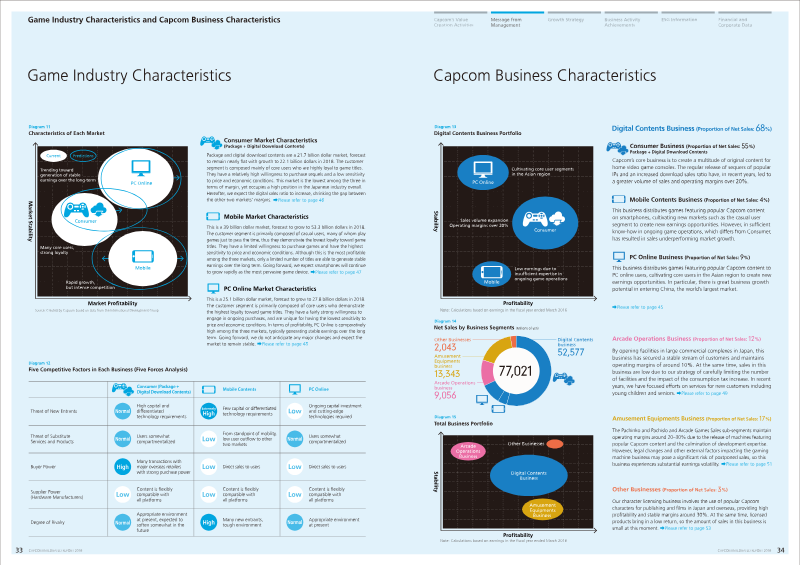
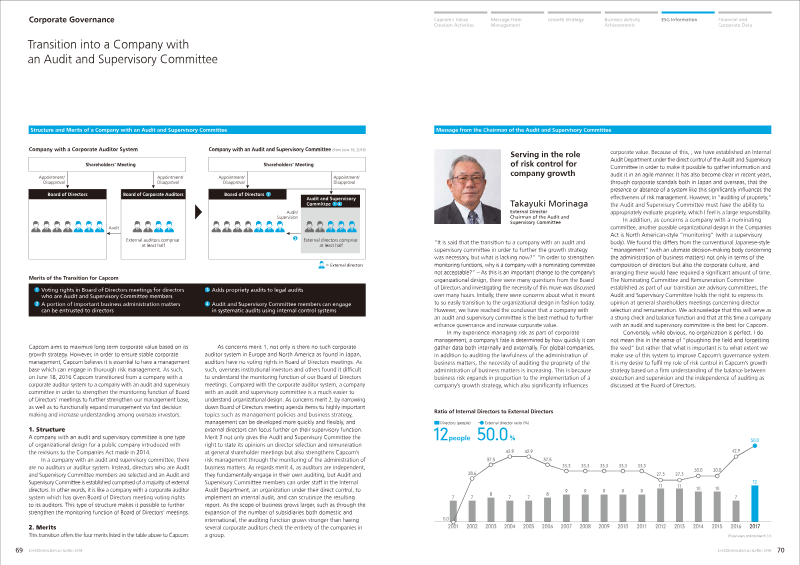
The 2016 Capcom Integrated Report outlines a comprehensive strategic pivot designed to secure long-term growth within an evolving global gaming market.
- Capcom is shifting its business model from one-time transactional sales to a recurring revenue framework, targeting a 50% digital download sales ratio.
- Fiscal year 2016 financial results showed net sales of 77.0 billion yen and net income of 7.7 billion yen, driven largely by the Digital Contents segment and the success of Monster Hunter X.
- The company is executing a 'Single Content Multiple Usage' strategy to maximize intellectual property value across mobile, arcade, and licensed entertainment platforms.

Capcom: Results of Operations and Strategies (First Half of Fiscal Year Ending March 31, 2016)
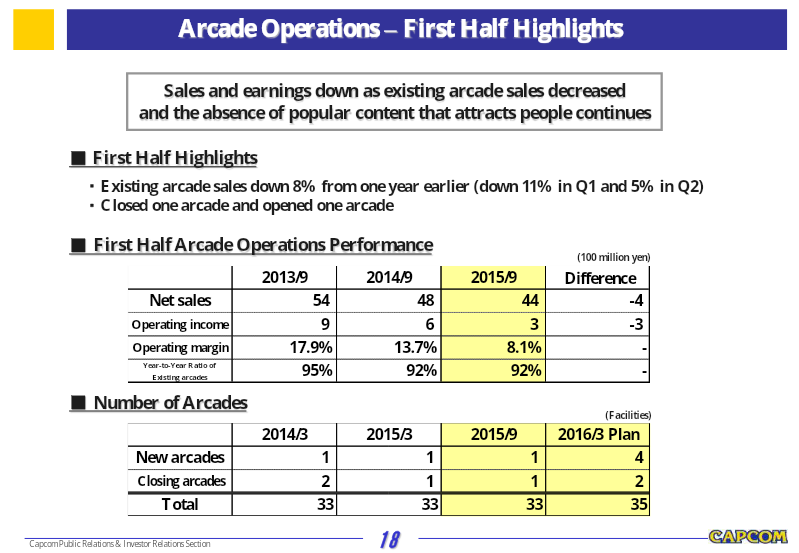
Capcom’s financial results for the first half of the fiscal year ending March 31, 2016, reflect a period of revenue growth accompanied by a decline in profitability.
- Capcom reported a net sales increase to 31.6 billion yen for the first half of the fiscal year ending March 31, 2016, though operating income declined to 2.8 billion yen due to rising development costs and weak pachislo performance.
- The company maintains its full-year fiscal forecast of 76 billion yen in net sales and 12 billion yen in operating income despite the first-half earnings contraction.
- The Digital Contents segment drove growth through increased unit sales, specifically benefiting from a rise in full-game digital downloads and strong repeat sales of catalog titles.
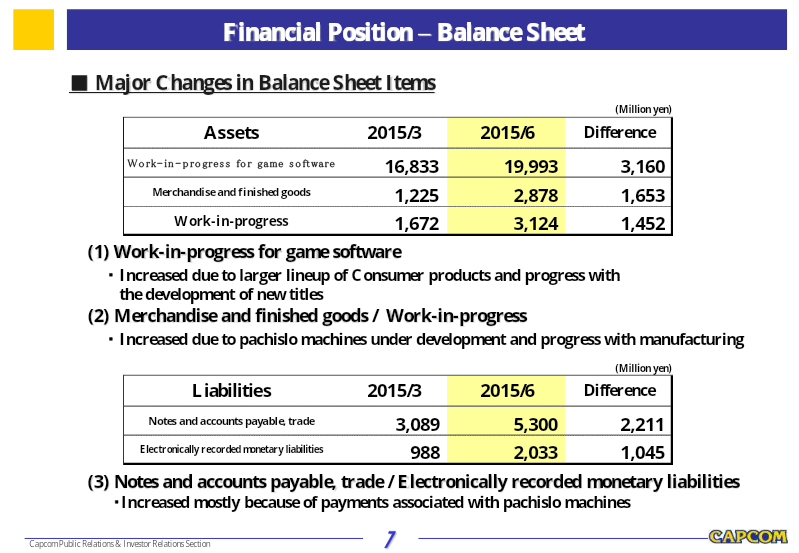
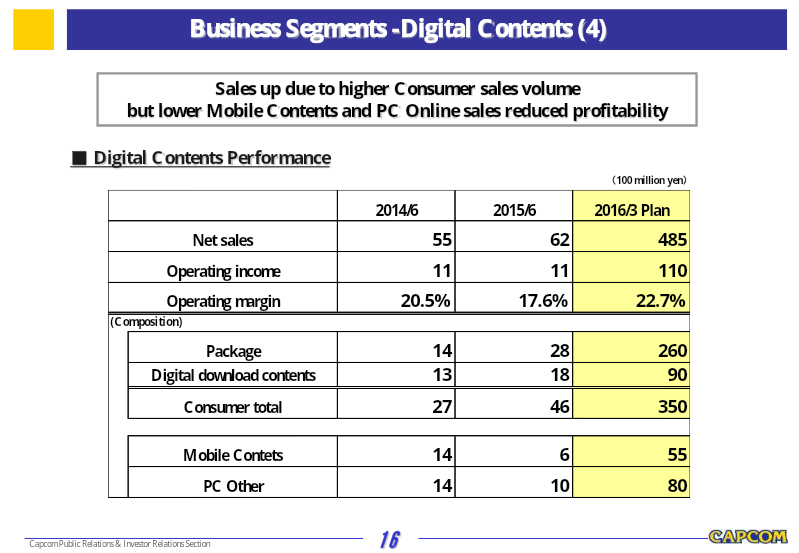
Capcom 1st Quarter Report: Fiscal Year Ending March 31, 2016
The first quarter report for the fiscal year ending March 31, 2016, outlines Capcom’s financial performance and strategic outlook, highlighting a period of growth driven by strong repeat sales in the consumer segment and successful performance in the amusement equipment business.
- Capcom reported net sales of 14.5 billion yen for the quarter ending June 30, 2015, a significant increase from 9.6 billion yen during the same period in 2014.
- Operating income grew to 2.0 billion yen from 1.3 billion yen, driven by strong repeat sales of consumer titles like Monster Hunter 4 Ultimate and the launch of the Resident Evil 6 pachislo machine.
- Digital distribution has become a primary revenue driver, with full-game digital download units surpassing physical package sales for the first time during this quarter.
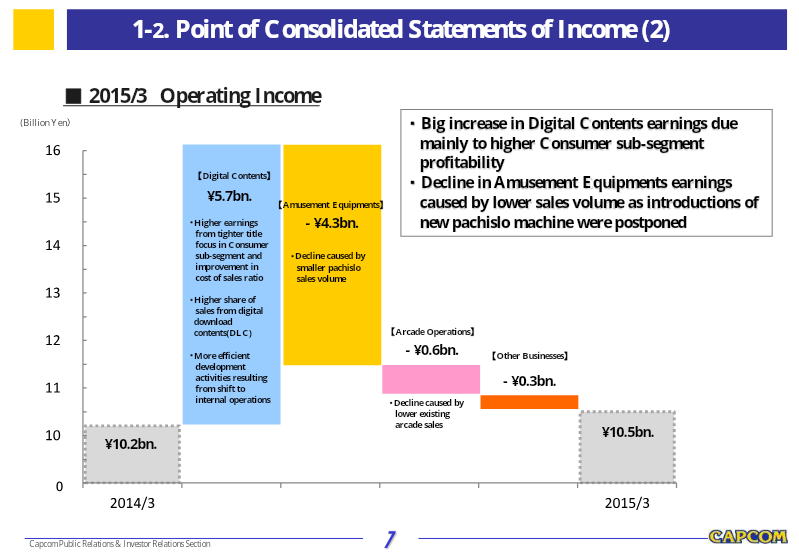
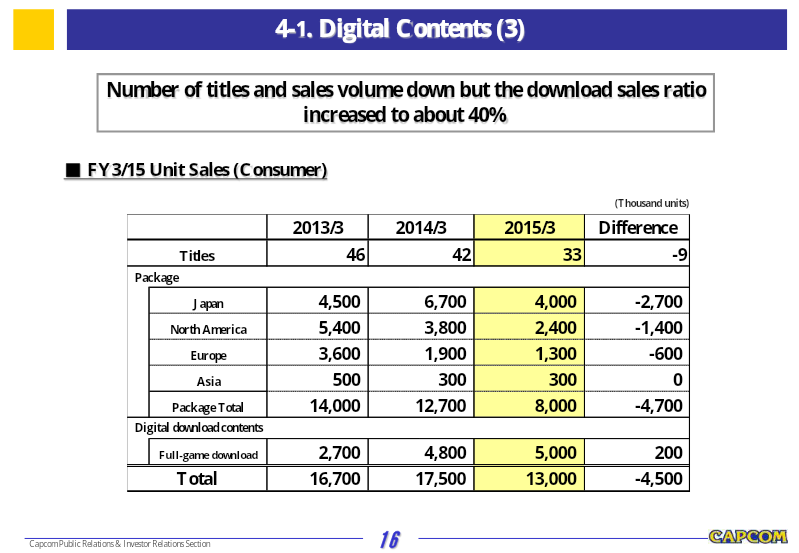

Capcom Financial Highlights: Fiscal Year Ended March 31, 2015
Capcom’s financial results for the fiscal year ended March 31, 2015, demonstrate a strategic pivot toward higher profitability through cost-reduction measures and an increased focus on digital distribution, despite an overall decline in net sales.
- Capcom achieved an operating income of 10.5 billion yen for the fiscal year ended March 31, 2015, despite net sales falling to 64.2 billion yen from 102.2 billion yen the previous year.
- The Digital Contents segment drove profitability through a shift toward digital distribution, with digital downloads accounting for 25% of consumer title sales and 40% of total unit volume.
- Core franchises including Monster Hunter and Resident Evil remained the primary earnings drivers, helping to offset the lack of major new mobile hits.



Capcom Overview of Strategies and Plans: Fiscal Year Ending March 31, 2016
Capcom outlines its strategic growth roadmap and financial objectives for the fiscal year ending March 31, 2016, emphasizing a transition toward digital distribution and the expansion of its core intellectual property across multiple platforms.
- Capcom targets a cumulative operating income of 70 billion yen over the five-year period ending in fiscal year 2017, aiming for a 20% operating margin by March 2018.
- Financial projections for the fiscal year ending March 2016 anticipate net sales of 76 billion yen and an operating income of 12 billion yen.
- The company is prioritizing a transition to digital distribution to offset declining physical package sales, specifically targeting growth in North American and European markets.
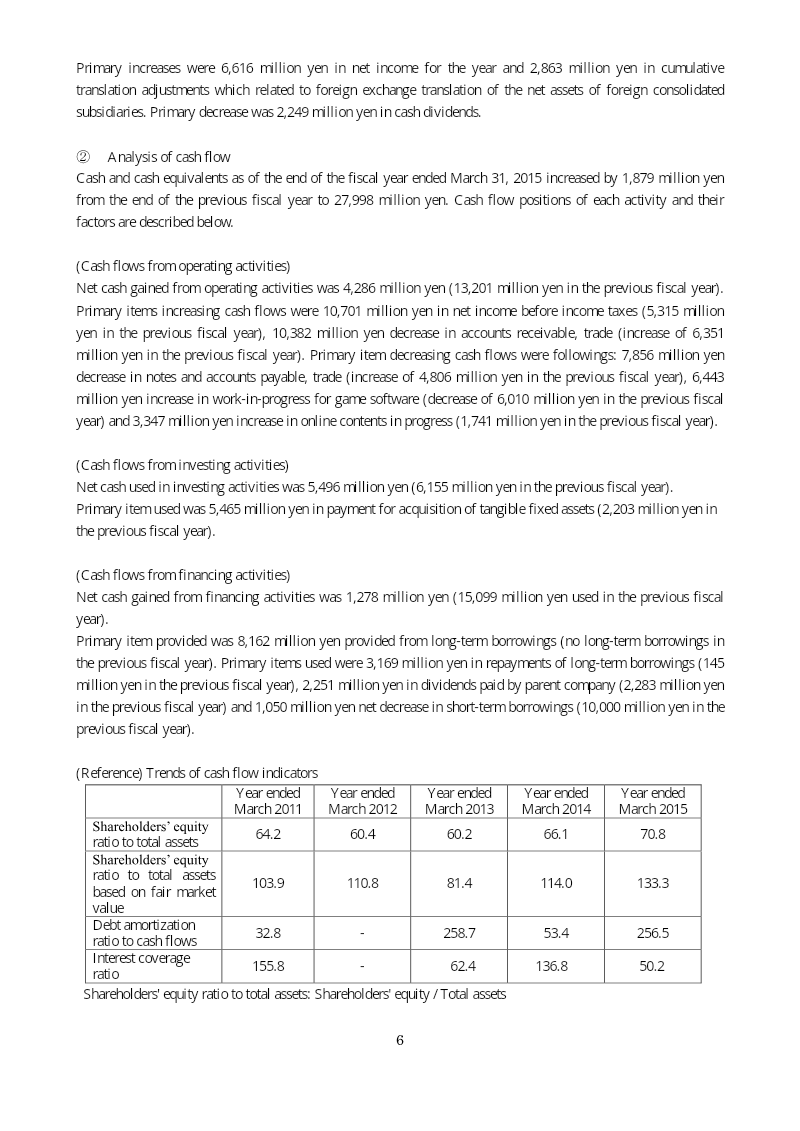
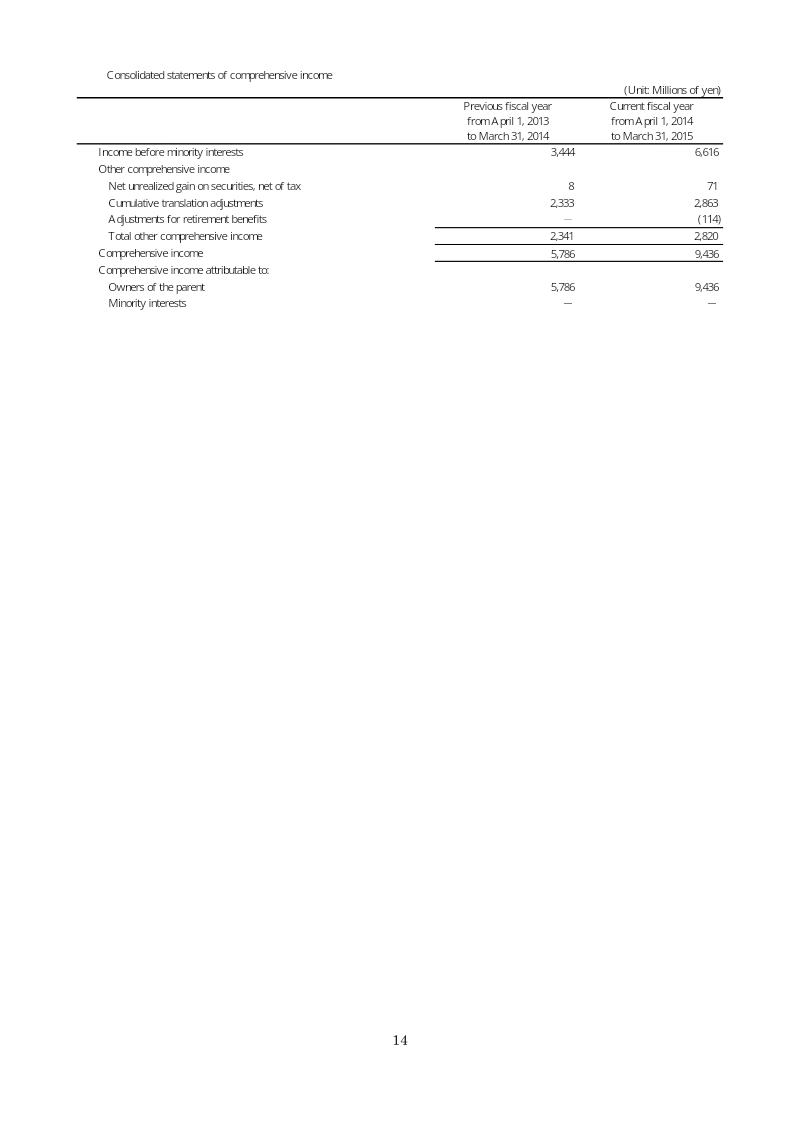
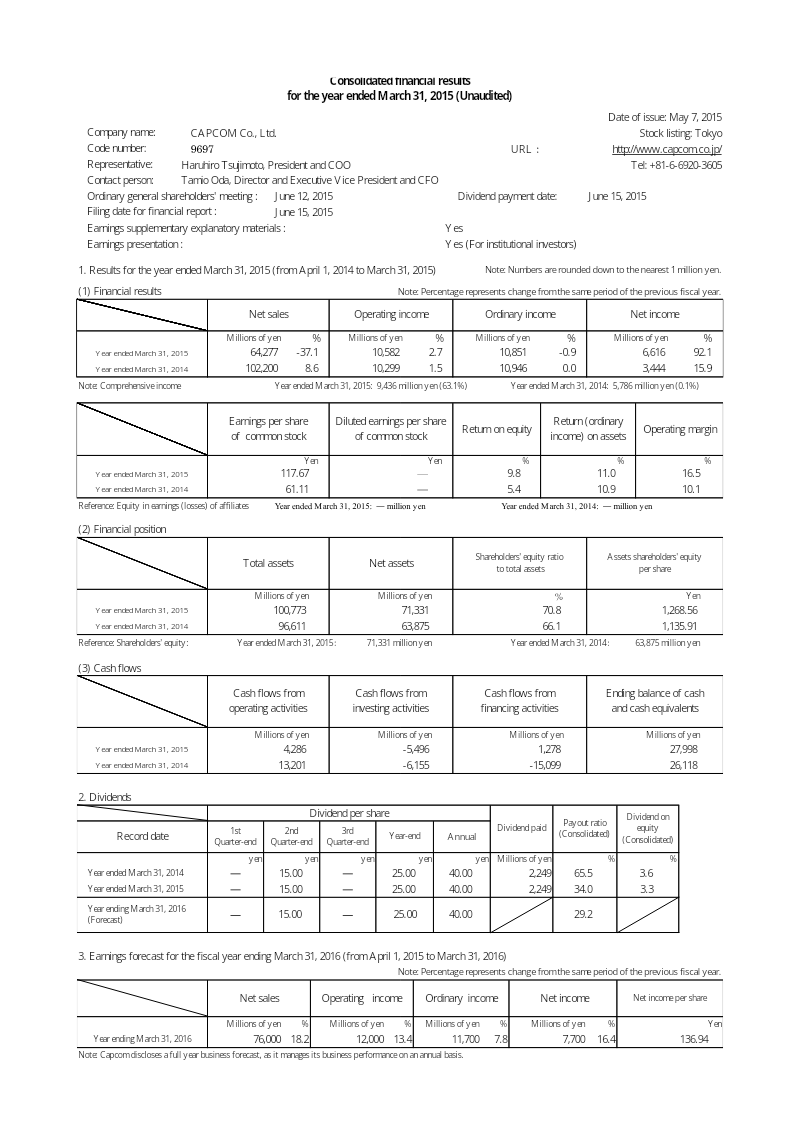
Capcom Consolidated Financial Results: Year Ended March 31, 2015
Capcom’s financial performance for the fiscal year ending March 31, 2015, reflects a strategic pivot toward higher profitability despite a significant contraction in top-line revenue.
Capcom 3rd Quarter Financial Results: Fiscal Year Ending March 31, 2015
Capcom’s financial results for the third quarter of the fiscal year ending March 31, 2015, reflect a strategic shift toward improved profitability despite a decline in overall net sales.
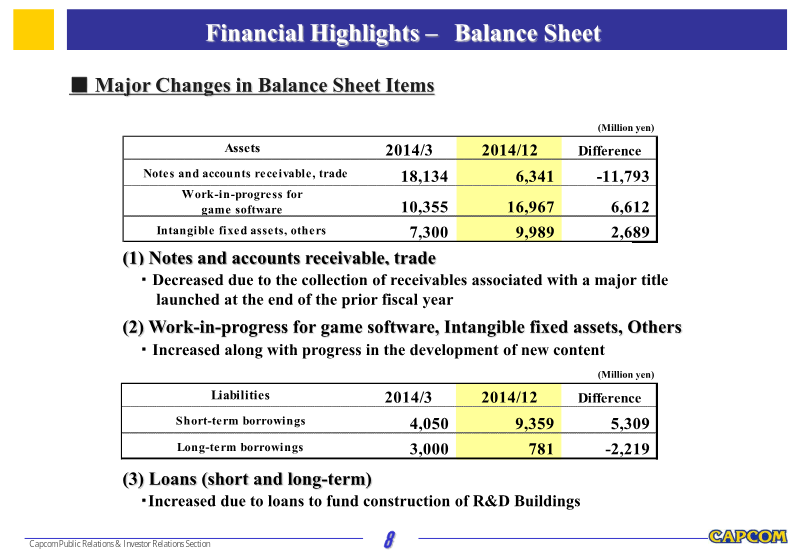
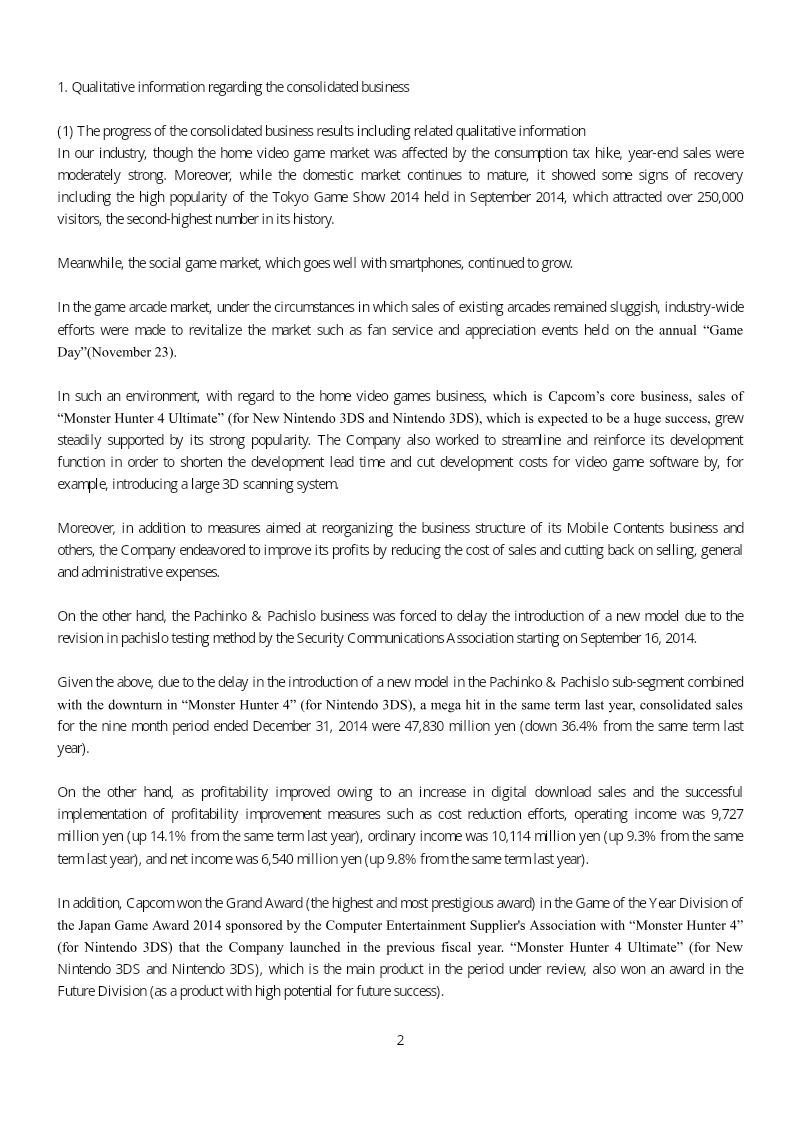
- Capcom reported a significant decline in net sales to 47.8 billion yen for the nine months ending December 31, 2014, down from 75.2 billion yen in the same period the previous year.
- Operating income increased to 9.7 billion yen from 8.5 billion yen, driven by structural reforms that reduced the cost of sales by 6 billion yen.
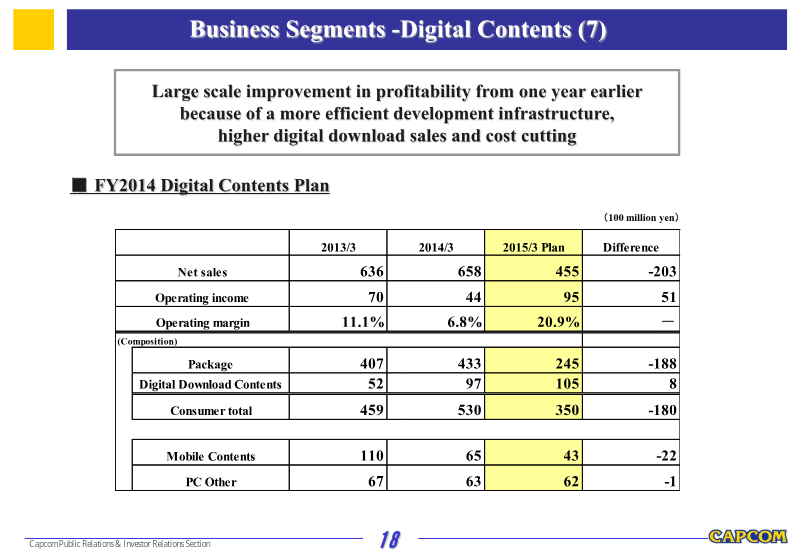
- The digital contents segment achieved an operating margin of 26.1%, bolstered by a higher ratio of digital download sales and more efficient internal development processes.
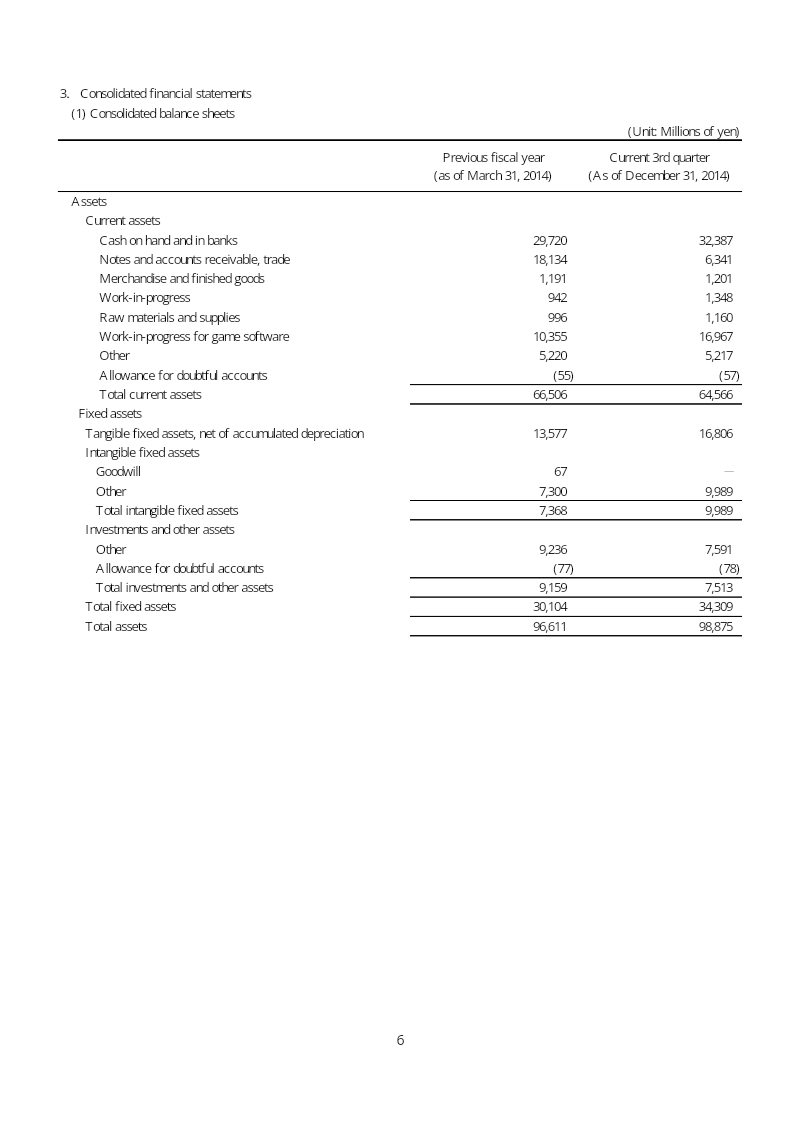
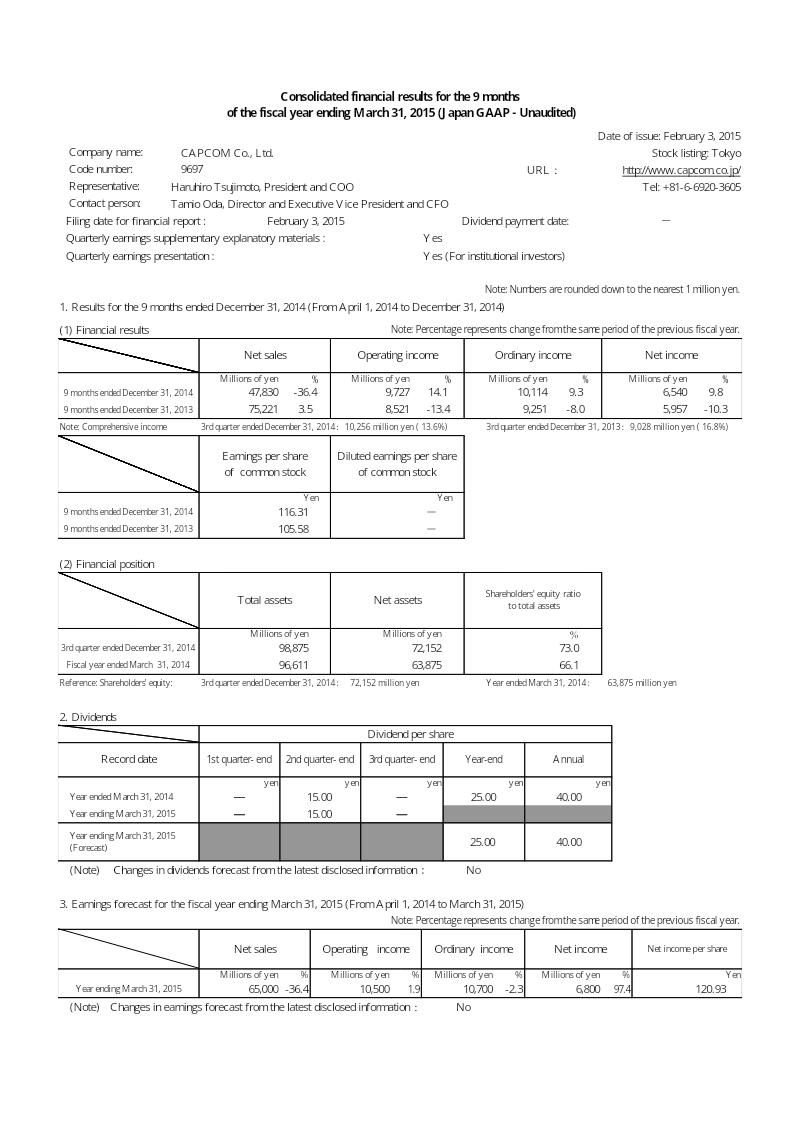
Capcom Consolidated Financial Results: 9 Months Ended March 31, 2015
Capcom’s consolidated financial results for the nine-month period ending December 31, 2014, reflect a period of significant structural transition and profitability improvement despite a sharp decline in top-line revenue.

Capcom Financial Highlights: First Half of Fiscal Year Ending March 31, 2015
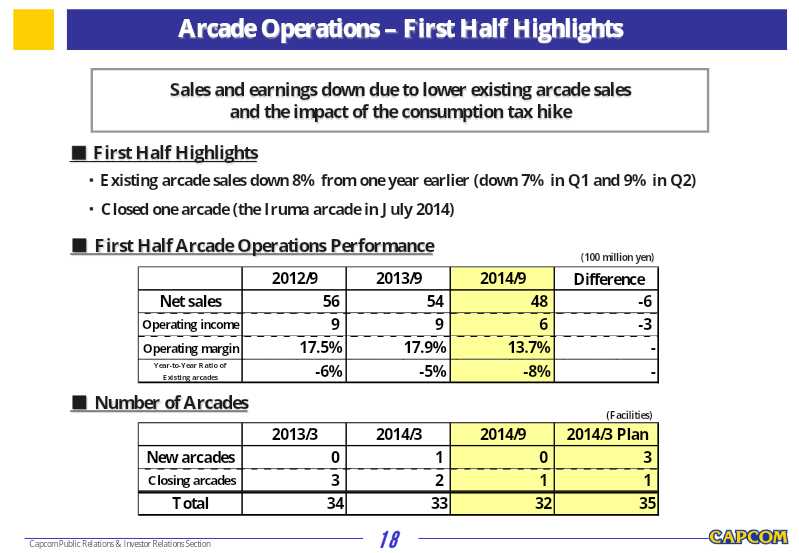
Capcom’s financial performance for the first half of the fiscal year ending March 31, 2015, reflects a period of contraction compared to the same period in the previous year.
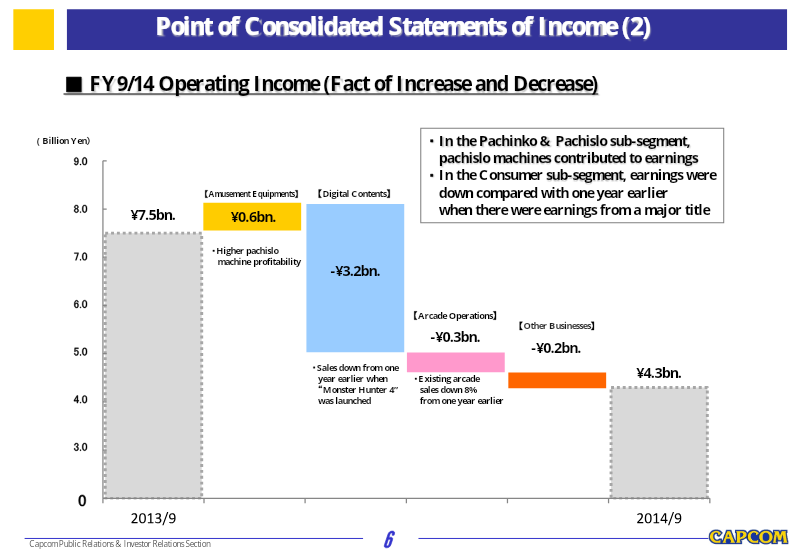
- Capcom experienced a significant financial contraction in the first half of fiscal year 2015, with net sales dropping to 25.9 billion yen from 53.2 billion yen and operating income falling to 4.3 billion yen from 7.5 billion yen.
- The revenue decline was primarily driven by the absence of a major hit title comparable to the previous year’s launch of Monster Hunter 4, resulting in a 24 billion yen decrease in digital content sales.
- Despite lower overall revenue, Capcom improved its operating margin by 2.8 percentage points to 16.9% through disciplined cost-cutting measures.

Results of Operations and Strategies: First Half of Fiscal Year Ending March 31, 2015
Capcom’s financial results for the first half of the fiscal year ending March 31, 2015, reflect a period of transition characterized by a year-over-year decline in sales and earnings, primarily due to the absence of a major hit title comparable to the previous year’s launch of Monster Hunter 4.
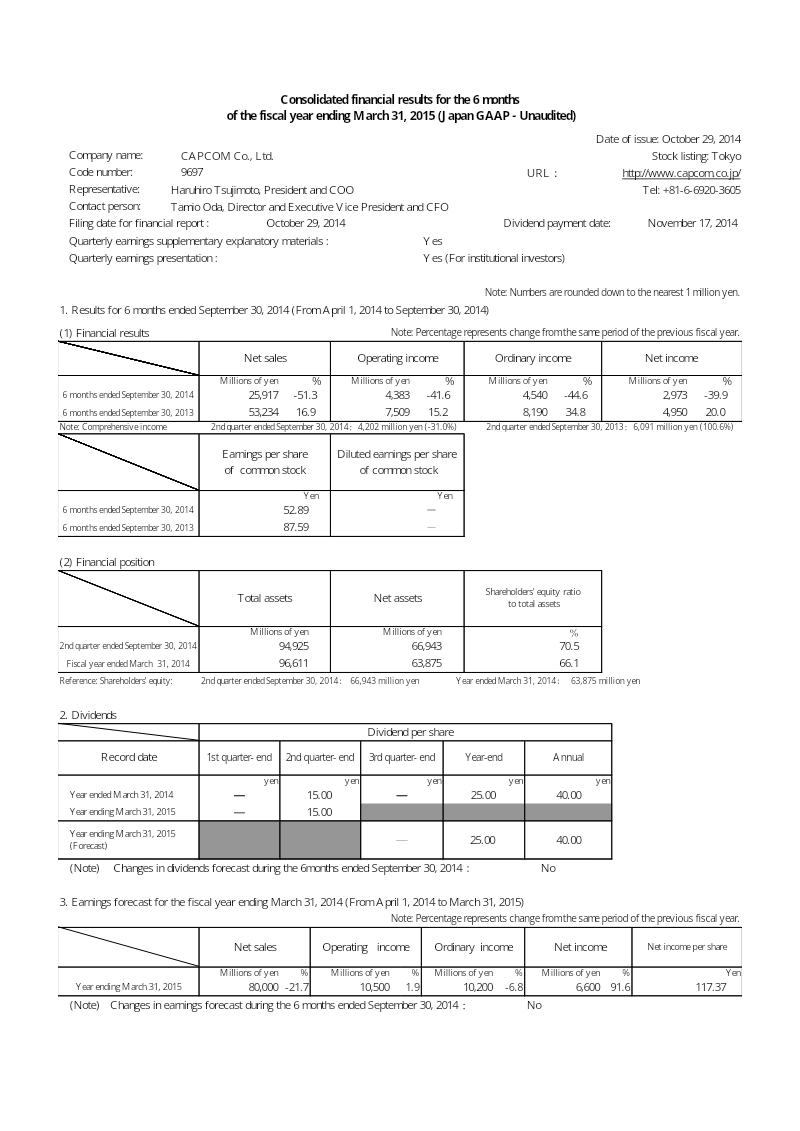
Capcom Consolidated Financial Results: 6 Months of FY2015
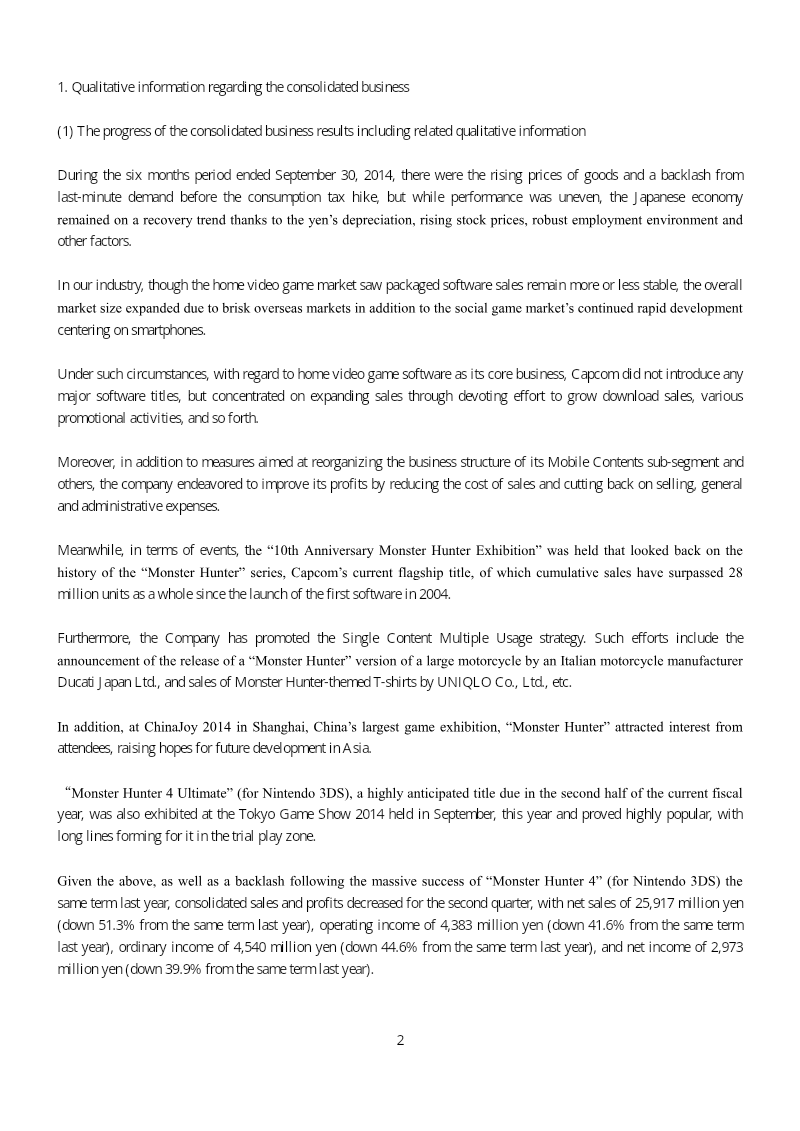
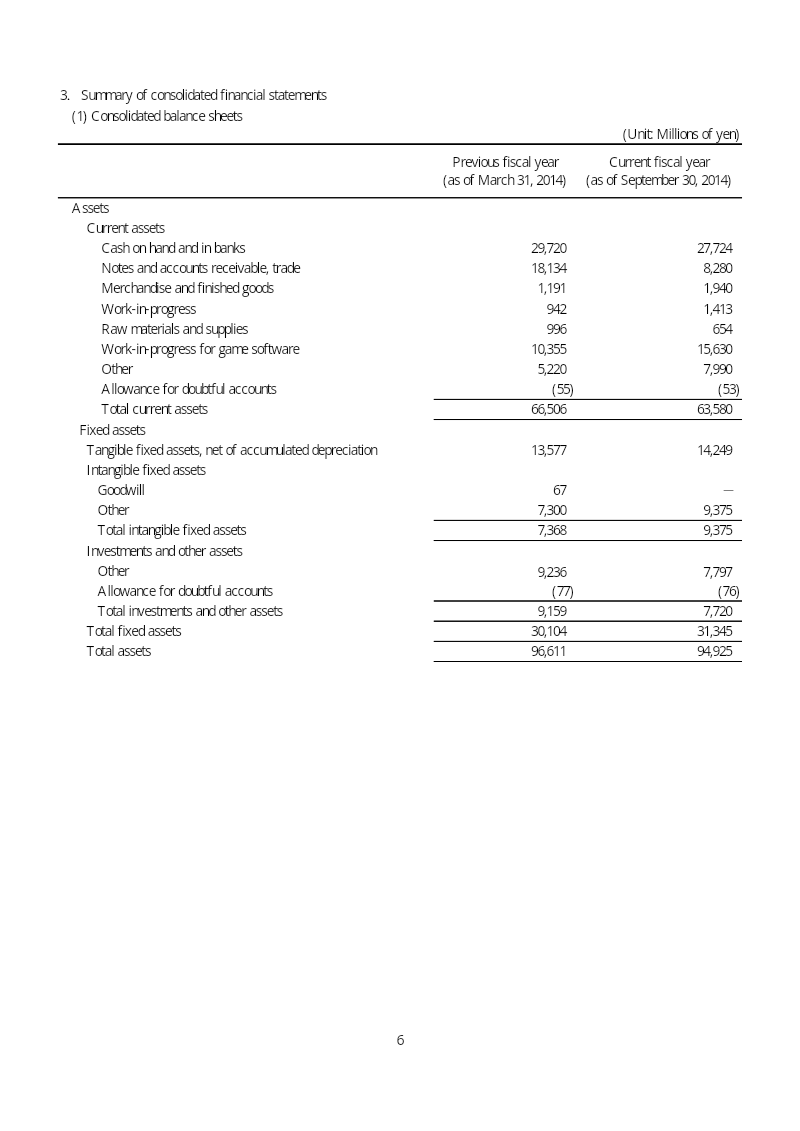
Capcom’s consolidated financial results for the six-month period ending September 30, 2014, reflect a significant year-over-year decline in performance.

Capcom Financial Highlights: Fiscal Year Ended March 31, 2014
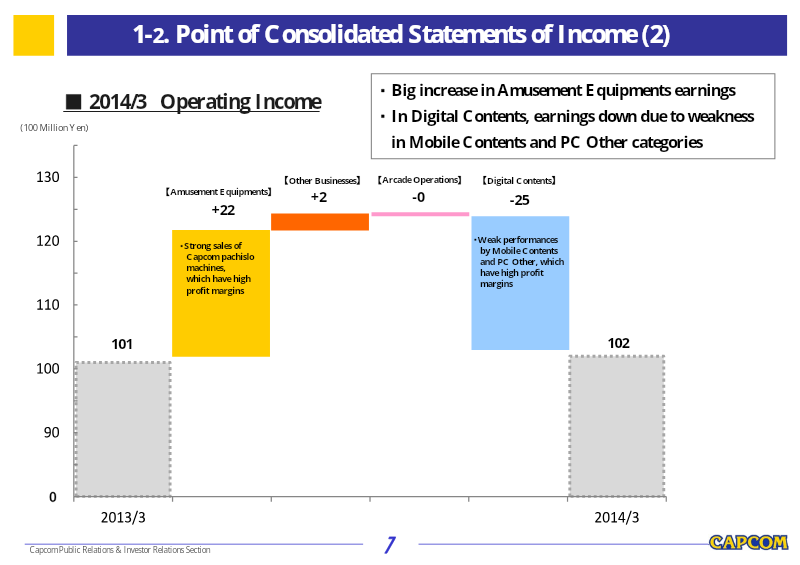
Capcom’s financial results for the fiscal year ended March 31, 2014, reflect a period of growth in net sales and net income, driven primarily by strong performance in the Amusement Equipments segment and robust consumer software sales.
- Capcom achieved net sales of 102.2 billion yen for the fiscal year ended March 31, 2014, up from 94.07 billion yen the previous year, though operating income remained flat at 10.29 billion yen.
- The Amusement Equipments segment became a primary growth driver, generating 23.1 billion yen in net sales and 7.1 billion yen in operating income, largely due to the success of Monster Hunter Gekka Raimei and Devil May Cry 4 pachislo machines.
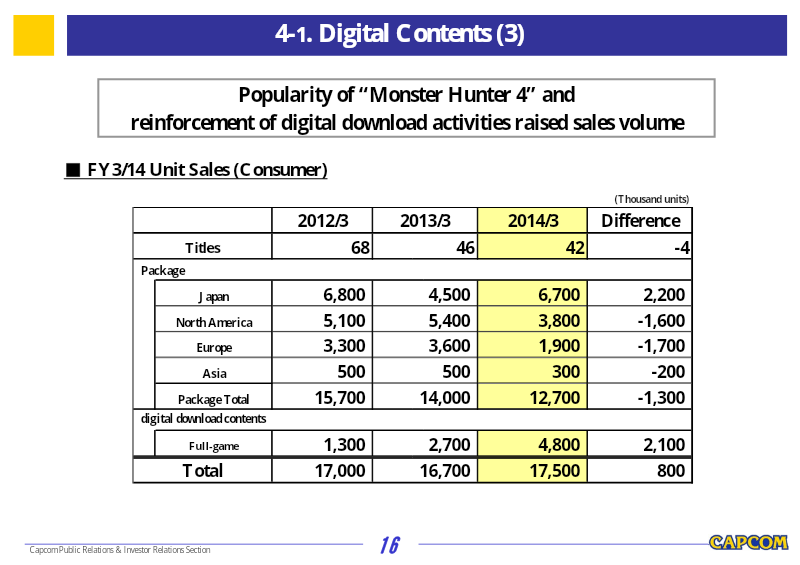
- Total consumer software sales reached 17.5 million units, with digital downloads and add-on content offsetting a decline in packaged software sales to 12.7 million units.
Companies behind it


As the documents state it.