Marathon
GameBy Bungie
49 documents in the library are about Marathon, from writers such as Deconstructor of Fun, The Game Post and GameDev Reports. Each has a summary and key insights with the page they come from.
- Articles
- 29
Connections
The documents about Marathon on the inner ring, the other games and companies they name on the outer one. Select a cover to see it up close and open it in a new tab; drag to move, pinch or Ctrl + scroll to zoom.
Key figures from the reports
Sony’s Marathon generated $61.0M from 1.7M copies sold, with Steam accounting for 56.7% of revenue, though the title currently maintains a daily active user count of approximately 50,000.
Alinea Analytics, 2026 · Top-Grossing First-Party Games: 2026
Bungie's Marathon has experienced a 96% decline in concurrent Steam players since its March 5, 2026, launch, with the daily peak falling from 88,337 to 3,507.
The Game Post, 2026 · Marathon Player Count Has Fallen 96% Since Launch, Leaving Bungie With a Make-or-Break Season 3
Sony's $3.6 billion acquisition of Bungie in 2022 failed to yield the expected live-service expertise, as Bungie's internal projects struggled, 'Marathon' saw underwhelming sales, and 'Destiny 2' was taken offline in 2026.
Jason Schreier, 2026 · PlayStation's Live-Service Initiative Could Not Have Gone Worse, p. 15
Wolfjaw Studios specializes in critical backend infrastructure for major titles, including Bungie’s Destiny 2 and Marathon, Innersloth’s Among Us, Tencent’s Transformers: Reactivate, and the NBA 2K series.
Game File, 2026 · Meet Wolfjaw: A Quietly Important Video Game Company
Bungie’s Marathon generated $55 million in its first three weeks against a reported development budget of $200 million to $250 million.
GameDev Reports, 2026 · Games and Numbers: April 7 - April 21, 2026
On Steam
Steam estimates as of 9 Oct 2026. Revenue is premium revenue on Steam only: game sales, without DLC.
- Revenue to date
- $33.9M
- Units sold
- 1.1M
- Last 12 months
- $33.8M
- 1.1M units
- Price
- $39.99
- Positive reviews
- 77%
- of 65K reviews
- Peak players
- 0
- at the same time
- Followers
- 125K
- Average playtime
- 62 h
On Steam since Mar 5, 2026 · Developer BungieSteam store page
Documents about Marathon
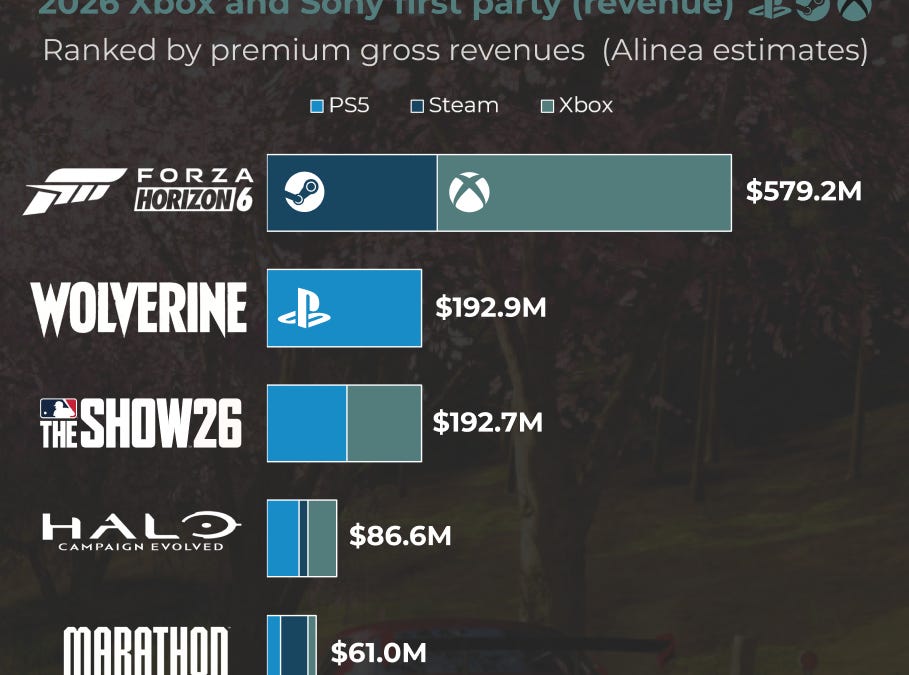
Top-Grossing First-Party Games: 2026
This analysis provides a performance overview of top-grossing first-party titles from Sony and Microsoft for 2026, utilizing proprietary estimates across Steam, Xbox, and PlayStation platforms.
- Xbox’s Forza Horizon 6 is the top-grossing first-party title, generating $579.2M in revenue from 8.8M copies sold, with 56.7% of revenue coming from Xbox platforms.
- PlayStation’s Wolverine generated $192.9M in revenue from 2.5M copies sold since its launch one month ago, maintaining a high player rating of 4.7/5 despite critical reception.
- MLB The Show 26 generated $192.7M in revenue, a 23% increase over the previous installment, with Xbox accounting for 48% of total revenue due to a strategy of transitioning former Game Pass users to full-price purchases.
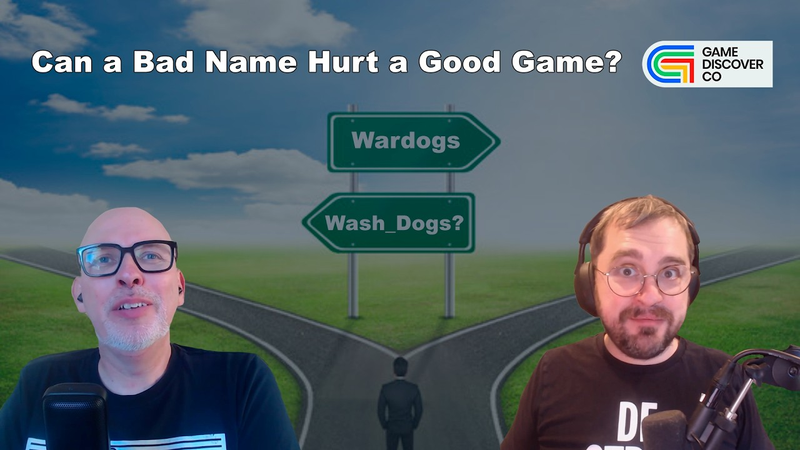
Can a Bad Name Hurt a Good Game?
The extraction shooter genre is undergoing a strategic evolution as developers increasingly integrate cooperative PvE modes to mitigate the high churn rates associated with purely competitive PvP environments.
- Extraction shooters like ARC Raiders are shifting toward PvE-focused co-op modes because player data shows a growing audience segment that prefers cooperative play over the high-stress, hardcore PvP experience.
- The lack of formal contracts in the Roblox ecosystem is leading to legal disputes, as early contributors to successful games seek compensation after being excluded from revenue shares that can reach millions of dollars per month.
- Game titles do not significantly impact commercial success as long as they are functionally distinct and searchable; generic names are common across successful titles like War Thunder, Delta Force, and World of Tanks.
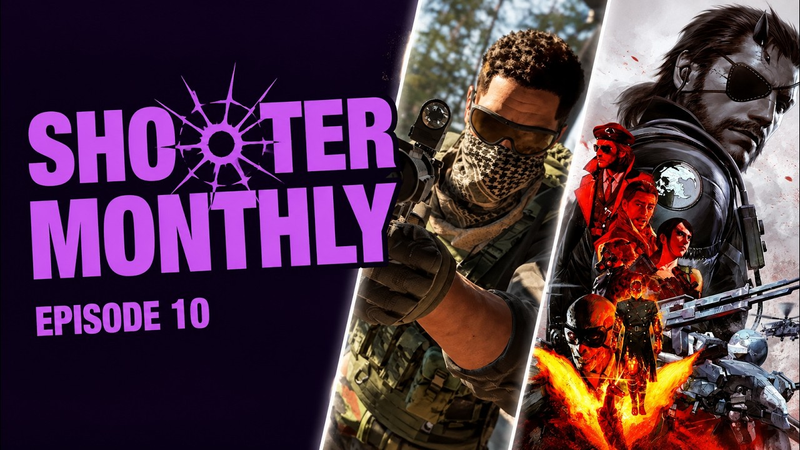
Shooter Monthly #10: War Dogs Sells 2.2M, Cash Economy Breakdown and the 1v1v1 Debate
Bulkhead Studios’ War Dogs has disrupted the military shooter landscape, achieving 2.2 million sales within its first four days by prioritizing a systems-based design over traditional genre conventions.
- Bulkhead Studios’ War Dogs sold 2.2 million units in its first four days by utilizing a 100-player, three-team format and a systems-based design.
- The game’s persistent in-round cash economy allows players to purchase tactical reinforcements, which incentivizes objective-oriented play and reduces gear fear.
- The 1v1v1 format creates a unique dynamic that increases player agency and comeback potential, though it introduces concerns regarding positioning and vulnerability.
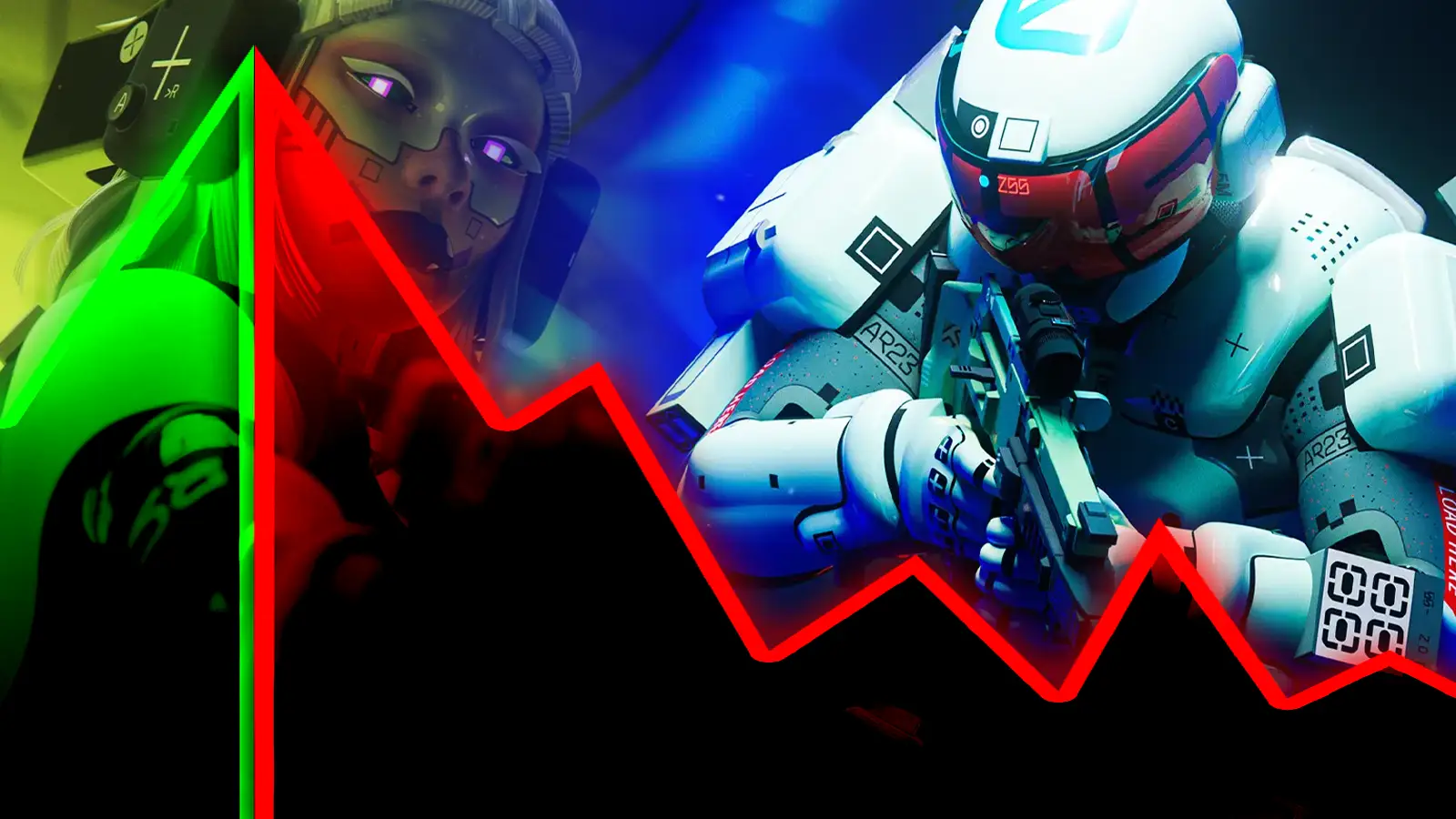
Marathon Player Count Has Fallen 96% Since Launch, Leaving Bungie With a Make-or-Break Season 3
Bungie is currently navigating a critical juncture for its extraction shooter, Marathon, which has faced a precipitous decline in user engagement since its initial release.
- Bungie's Marathon has experienced a 96% decline in concurrent Steam players since its March 5, 2026, launch, with the daily peak falling from 88,337 to 3,507.
- Despite an estimated 1.5 million copies sold across all platforms by late March 2026, the game's average concurrent player count on Steam dropped from 38,290 in March to 4,755 in July.
- Season 3 is considered a critical 'make-or-break' period for the title, as Bungie must attempt to stabilize and rebuild a player base that has seen non-peak concurrent counts fall as low as 1,125.
PlayStation's Live-Service Initiative Could Not Have Gone Worse
PlayStation’s strategic pivot toward live-service gaming, initiated around 2020–2021 with the goal of launching a dozen such titles by 2026, has largely failed to yield the intended results.
- Sony's live-service initiative, which aimed to launch a dozen live-service titles by 2025-2026, has largely failed, resulting in significant resource depletion and the cancellation of multiple high-profile projects.
- Guerrilla Games has rebooted 'Horizon Hunters: Gathering' following poor performance in playtests conducted throughout 2026, casting doubt on the project's future.
- Naughty Dog canceled its 'The Last of Us' online project in 2023 to avoid the long-term resource trap of becoming a dedicated live-service studio.
Bungie Once Had Up to Six Games in Development
Following its 2022 acquisition by Sony for $3.6 billion, Bungie initiated an ambitious expansion strategy that saw the studio juggling up to six concurrent development projects.
- Bungie had five to six distinct projects in development simultaneously, but the majority of these initiatives collapsed following Sony’s $3.6 billion acquisition of the studio.
- Bungie concluded live-service content updates for Destiny 2 on June 9, 2026, followed by significant layoffs on June 25, 2026, that impacted both the Destiny and Marathon development teams.
- Several high-profile projects were canceled during this period, including the new IP 'Matter' (2020), 'Project Sunspot' (2023), and the third-person Destiny spin-off 'Project Payback' (2024).
Bungie's Layoffs: The End of an Era?
The recent restructuring at Bungie, characterized by a significant reduction in workforce, marks a critical turning point for the studio following its 2022 acquisition by Sony.
- Bungie has reduced its workforce by approximately 600 positions since its 2022 acquisition by Sony, including a recent round of 400 layoffs that cut nearly 40% of the remaining staff.
- Sony recorded a $766 million impairment charge related to Bungie for fiscal year 2025, indicating that the original integration strategy has failed to meet financial expectations.
- The acquisition thesis—that Bungie would lead Sony's live service initiatives—failed because Bungie’s high-cost expansion model proved incompatible with the microtransaction-heavy frameworks Sony intended to implement.
Shooter Monthly #8: The Bungie Eulogy, Why Destiny Fell Off, and Can Marathon Save the Studio
Bungie’s trajectory serves as a definitive case study in the volatility of the live-service model, illustrating how a studio can pioneer a genre while simultaneously struggling with the sustainability of long-term engagement.
- Bungie generated between $1.5 and $2 billion in revenue by successfully blending high-fidelity gunplay with deep RPG progression.
- The decline of Destiny is attributed to the exhaustion of its ten-year narrative arc and a seasonal content model that made player progress feel temporary.
- Bungie failed to transition Destiny into a smaller, long-term maintenance phase, a strategy that successfully sustained competitors like Rainbow Six Siege.
Why did PlayStation buy Bungie in the first place?
The acquisition of Bungie by PlayStation for $3.6 billion in 2022 serves as a case study in the challenges of pivoting toward a live-service business model.
- PlayStation acquired Bungie for $3.6 billion in 2022 to accelerate its transition into the live-service market, but the strategy has resulted in approximately 700 layoffs and underwhelming performance for projects like Marathon.
- The console market is experiencing a period of stagnation, with U.S. hardware unit sales hitting record lows for both PlayStation and Xbox due to rising component costs and repeated price hikes.
- U.S. gaming revenue showed only a marginal 1% year-over-year increase in May, reflecting a broader cooling trend as consumers delay spending while anticipating the next generation of consoles expected in 2028.
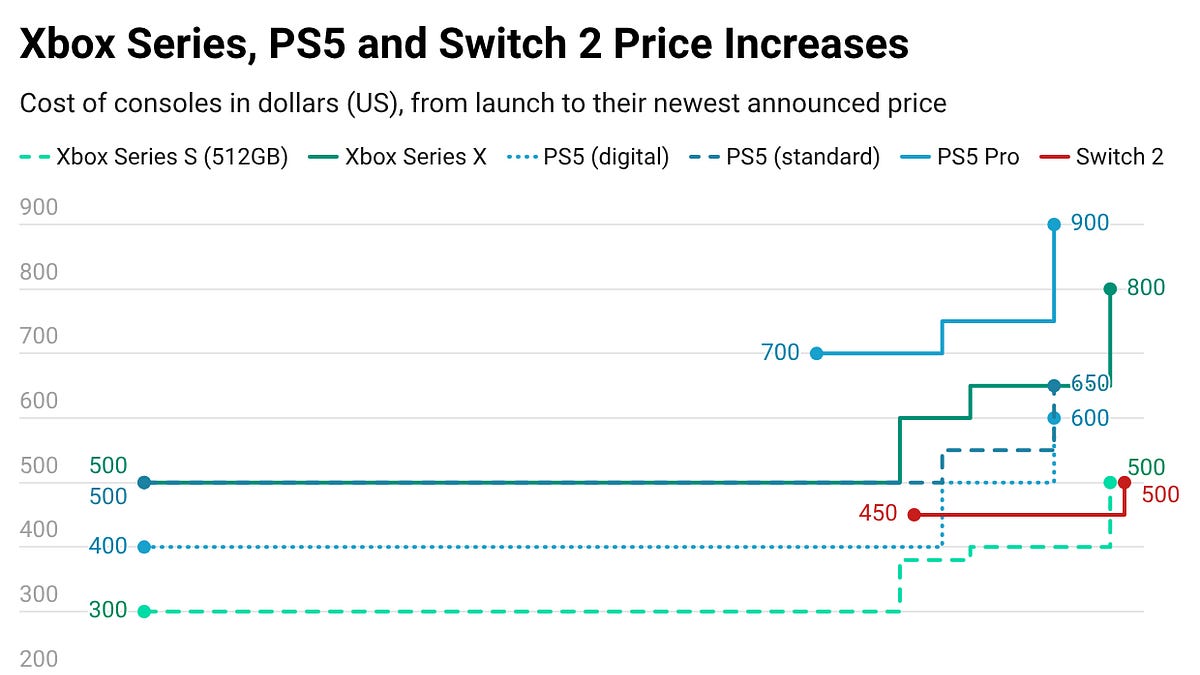
It's Xbox's Turn (Again), as Console Prices Keep Going Up
Microsoft’s latest price hike for the Xbox Series S and X, effective August 1, marks the third adjustment in just over a year.
- Microsoft announced a third price hike in just over a year for Xbox Series consoles, effective August 1, 2026, raising the Xbox Series S from $300 to $500 and the Xbox Series X from $500 to $800.
- This Xbox price increase follows similar actions by Sony for PlayStation 5 consoles in Spring 2026 and a "slow-motion increase" for Nintendo's Switch 2 starting September 2026, indicating a broader industry trend of rising console prices.
- Console prices, which historically decreased over a generation, have surged over the past year, with eight video game industry price hikes occurring in six months of 2025 alone.
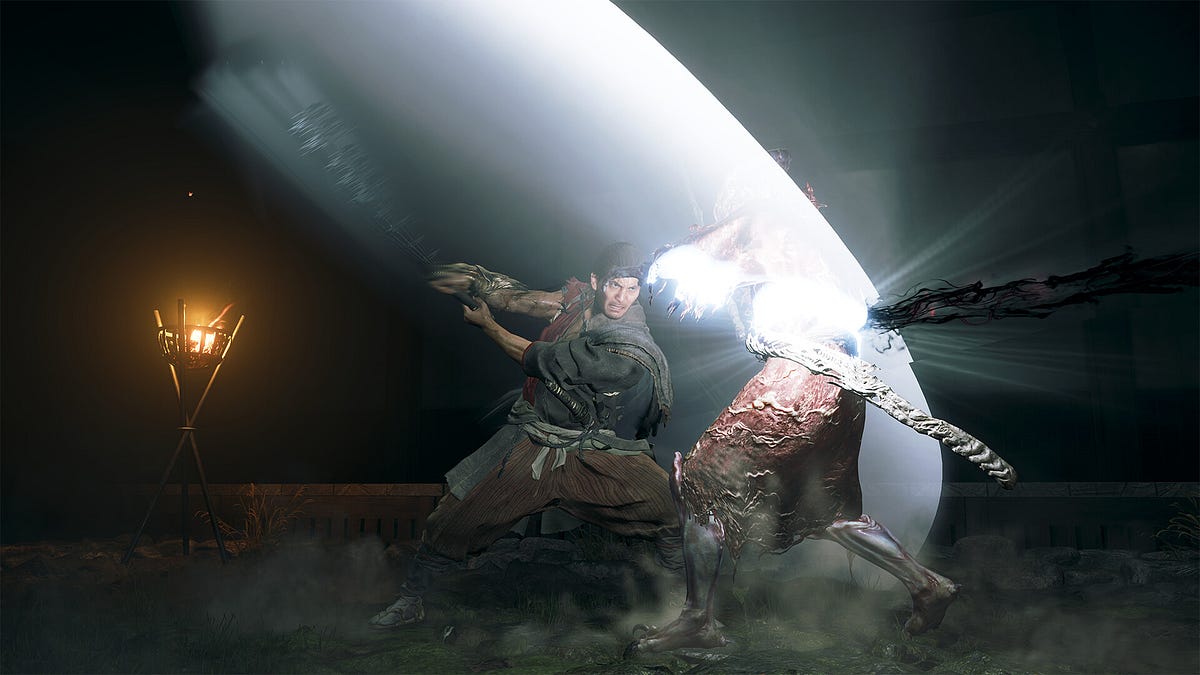
September's Packed Schedule
September’s release calendar is densely packed, with a cluster of high-profile titles slated for mid-to-late September across multiple platforms.
- The U.S. gaming market grew to 212.3 million players in 2026, an increase from 205.1 million the previous year.
- September features a highly competitive release calendar, with major titles like Marvel’s Wolverine (Sept 15), Dune Awakening (Sept 22), and a cluster of releases on Sept 24, including Silent Hill Townfall and Dragon Quest XI S, strategically scheduled to avoid the November launch of Grand Theft Auto VI.
- The Tokyo Game Show (Sept 17–22) is driving a surge in Japanese software releases, with multiple titles from publishers like Konami, Capcom, and Square Enix launching immediately following the event.
Destiny 2's Sunset, Pay-Per Click Game Journalism & Star Citizen's Billion $$$ | Games For Breakfast
The gaming industry is currently navigating a period of significant structural instability, characterized by the sunsetting of long-term live-service titles and the erosion of traditional labor standards.
- Star Citizen has officially surpassed $1 billion in total crowdfunding revenue, despite the game remaining in an alpha state and featuring high-cost digital assets like a $5,000 ship designed for large crews.
- Bungie is sunsetting Destiny 2, meaning the game will cease receiving new content updates after June 6, though the servers will remain online for existing players.
- Sony’s acquisition of Bungie for $3.6 billion has faced financial scrutiny, with reports indicating the studio has incurred approximately $766 million in losses since 2022.
Companies behind it


As the documents state it.