Bungie
129 documents in the library are about Bungie, from writers such as The Game Post, Deconstructor of Fun and Extra Credits, the newest from 2026. Each has a summary and key insights with the page they come from.

Bungie was founded in 1991 with two goals: develop kick ass games that combine state-of-the-art technology with uncompromising art, captivating storytelling, and deep gameplay, and then to sell enough copies to fund their ongoing quest for World Domination. Over the past twenty years, Bungie created a bunch of fun games, including the Halo Franchise, the Marathon Trilogy, and the first two Myth games. Now independent, employee-owned, and located in Bellevue, Washington.
- Founded
- 1991
- Country
- United States
- Games
- Halo: Reach, Halo 3, Halo 2, Destiny, Destiny 2, Halo: Combat Evolved, Myth II: Soulblighter, Operation: Desert Storm, Marathon, Marathon Infinity
- Links
- Official site
Company data from IGDB.com
Key figures
Bungie's Marathon has experienced a 96% decline in concurrent Steam players since its March 5, 2026, launch, with the daily peak falling from 88,337 to 3,507.
The Game Post, 2026 · Marathon Player Count Has Fallen 96% Since Launch, Leaving Bungie With a Make-or-Break Season 3
Sony's $3.6 billion acquisition of Bungie in 2022 failed to yield the expected live-service expertise, as Bungie's internal projects struggled, 'Marathon' saw underwhelming sales, and 'Destiny 2' was taken offline in 2026.
Jason Schreier, 2026 · PlayStation's Live-Service Initiative Could Not Have Gone Worse, p. 15
Bungie has reduced its workforce by approximately 600 positions since its 2022 acquisition by Sony, including a recent round of 400 layoffs that cut nearly 40% of the remaining staff.
Deconstructor of Fun, 2026 · Bungie's Layoffs: The End of an Era?, p. 3
The industry is moving toward service-oriented growth and ecosystem integration, exemplified by recent developments like Neon’s $13 million Series A funding and leadership changes at Bungie.
The Game Business, 2026 · Amazon Luna: We’re not trying to replace PlayStation, Xbox and Nintendo (but maybe we could), p. 31
The original Xbox achieved early success with over 1 million units sold in North America within three weeks of its 2001 launch, bolstered by the acquisition of Bungie and the introduction of the Xbox Live service, which reached 150,000 subscribers in its first week.
Extra Credits, 2026 · The Rise and Fall of the House of Xbox | Extra Credits Gaming, p. 8
Documents about Bungie

Microsoft Moves Halo to Activision, Discord Courts Fanduel & Is RPG Grind Gone? |Games for Breakfast
Microsoft is undergoing a significant structural transformation, marked by 268 layoffs across its first-party studios and the strategic reassignment of the Halo franchise to Activision-led teams.
- Microsoft has laid off 268 employees from Halo Studios (formerly 343 Industries) and is shifting the development of future Halo titles to an Activision-based team.
- Discord is updating its age verification processes to facilitate the integration of advertisements for FanDuel, a move linked to the platform's broader push into sponsored content.
- The role of 'grind' in modern RPGs is being criticized as an outdated mechanic used to artificially extend game length, with hosts suggesting that developers should instead offer level-boosting options or better-integrated side content to prevent player frustration.

Xbox Layoffs, Halo To Activision, Destiny's Back (And More)
The gaming industry is currently navigating a period of significant structural shifts, characterized by ongoing corporate restructuring, long-term project planning, and strategic pivots for major franchises.
- Microsoft is laying off approximately 300 additional employees as part of an ongoing restructuring, with the company reporting it is now 75% through its planned reset.
- Halo development is being moved to Activision, with a small team remaining at Halo Studios to support existing games and the community, while Playground Games and Turn 10 are merging.
- Bungie has reversed its stance on the future of the Destiny franchise, announcing that Destiny 2 will unvault previous campaigns, destinations, and raids to remain a foundational part of the studio's future.

Marathon Player Count Has Fallen 96% Since Launch, Leaving Bungie With a Make-or-Break Season 3
Bungie is currently navigating a critical juncture for its extraction shooter, Marathon, which has faced a precipitous decline in user engagement since its initial release.
- Bungie's Marathon has experienced a 96% decline in concurrent Steam players since its March 5, 2026, launch, with the daily peak falling from 88,337 to 3,507.
- Despite an estimated 1.5 million copies sold across all platforms by late March 2026, the game's average concurrent player count on Steam dropped from 38,290 in March to 4,755 in July.
- Season 3 is considered a critical 'make-or-break' period for the title, as Bungie must attempt to stabilize and rebuild a player base that has seen non-peak concurrent counts fall as low as 1,125.
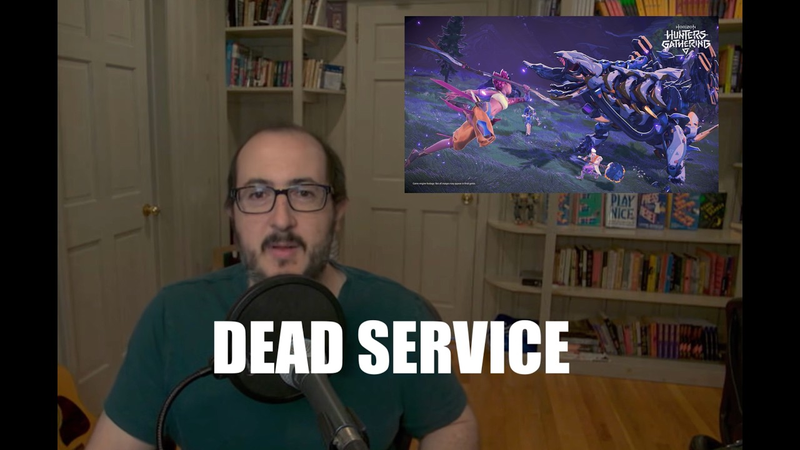
PlayStation's Live-Service Initiative Could Not Have Gone Worse
PlayStation’s strategic pivot toward live-service gaming, initiated around 2020–2021 with the goal of launching a dozen such titles by 2026, has largely failed to yield the intended results.
- Sony's live-service initiative, which aimed to launch a dozen live-service titles by 2025-2026, has largely failed, resulting in significant resource depletion and the cancellation of multiple high-profile projects.
- Guerrilla Games has rebooted 'Horizon Hunters: Gathering' following poor performance in playtests conducted throughout 2026, casting doubt on the project's future.
- Naughty Dog canceled its 'The Last of Us' online project in 2023 to avoid the long-term resource trap of becoming a dedicated live-service studio.

Bungie Once Had Up to Six Games in Development
Following its 2022 acquisition by Sony for $3.6 billion, Bungie initiated an ambitious expansion strategy that saw the studio juggling up to six concurrent development projects.
- Bungie had five to six distinct projects in development simultaneously, but the majority of these initiatives collapsed following Sony’s $3.6 billion acquisition of the studio.
- Bungie concluded live-service content updates for Destiny 2 on June 9, 2026, followed by significant layoffs on June 25, 2026, that impacted both the Destiny and Marathon development teams.
- Several high-profile projects were canceled during this period, including the new IP 'Matter' (2020), 'Project Sunspot' (2023), and the third-person Destiny spin-off 'Project Payback' (2024).
Sony Q1 2026 Earnings Results: Gaming Division Insights
Sony’s financial results for the first quarter of the 2026 fiscal year, covering April through June, reveal a gaming division characterized by stable revenue but significant growth in operating profit.
- Sony’s gaming division operating profit surged 37% year-over-year to 202 billion yen ($1.26 billion), primarily driven by a refund from U.S. authorities for canceled tariffs.
- Total revenue for the gaming division remained flat at 937.1 billion yen ($5.83 billion), representing a marginal increase of only 0.06% compared to the same quarter last year.
- Revenue from gaming services, including PlayStation Network and PlayStation Plus, grew 20.8% to 208.6 billion yen ($1.3 billion), while monthly active users on PSN reached a June record of 125 million.

Bungie's Layoffs: The End of an Era?
The recent restructuring at Bungie, characterized by a significant reduction in workforce, marks a critical turning point for the studio following its 2022 acquisition by Sony.
- Bungie has reduced its workforce by approximately 600 positions since its 2022 acquisition by Sony, including a recent round of 400 layoffs that cut nearly 40% of the remaining staff.
- Sony recorded a $766 million impairment charge related to Bungie for fiscal year 2025, indicating that the original integration strategy has failed to meet financial expectations.
- The acquisition thesis—that Bungie would lead Sony's live service initiatives—failed because Bungie’s high-cost expansion model proved incompatible with the microtransaction-heavy frameworks Sony intended to implement.
Amazon Luna: We’re not trying to replace PlayStation, Xbox and Nintendo (but maybe we could)
Amazon is strategically positioning its Luna cloud gaming service to capture the vast, underserved market of casual and lapsed players by integrating interactive gaming directly into the Prime Video ecosystem.
- Amazon is positioning Luna to capture casual and lapsed gamers by integrating cloud gaming directly into the Prime Video ecosystem, bypassing the need for dedicated console hardware.
- The U.S. gaming market experienced a 21% revenue decline as of June 2026, driven by a cooling in hardware sales following the launch of the Nintendo Switch 2.
- Retail models are shifting away from physical software, evidenced by GameStop’s pivot as software sales now account for less than 12% of its total business.
Shooter Monthly #8: The Bungie Eulogy, Why Destiny Fell Off, and Can Marathon Save the Studio
Bungie’s trajectory serves as a definitive case study in the volatility of the live-service model, illustrating how a studio can pioneer a genre while simultaneously struggling with the sustainability of long-term engagement.
- Bungie generated between $1.5 and $2 billion in revenue by successfully blending high-fidelity gunplay with deep RPG progression.
- The decline of Destiny is attributed to the exhaustion of its ten-year narrative arc and a seasonal content model that made player progress feel temporary.
- Bungie failed to transition Destiny into a smaller, long-term maintenance phase, a strategy that successfully sustained competitors like Rainbow Six Siege.

TWIG #390: Destiny Ends, Xbox's Biggest Layoff Ever, and Google Play's New Fee Chaos
The global video game industry is currently undergoing a painful period of structural realignment, characterized by the collapse of overly ambitious acquisition strategies and a pivot toward extreme fiscal conservatism.
- Sony’s $3.6 billion acquisition of Bungie has resulted in $766 million in impairment charges and the loss of over 600 jobs, highlighting the failure of the strategy to integrate independent studios into live-service operations.
- Microsoft is pivoting the Xbox division toward a 'fewer, bigger, better' strategy, prioritizing high-performing blockbuster franchises over niche titles to satisfy investor demands for immediate financial sustainability.
- The Xbox Series X has seen its pricing rise to $800, a move that effectively cedes competitive advantage to the PlayStation 5 as Microsoft shifts toward a digital-first, high-margin model.

Why did PlayStation buy Bungie in the first place?
The acquisition of Bungie by PlayStation for $3.6 billion in 2022 serves as a case study in the challenges of pivoting toward a live-service business model.
- PlayStation acquired Bungie for $3.6 billion in 2022 to accelerate its transition into the live-service market, but the strategy has resulted in approximately 700 layoffs and underwhelming performance for projects like Marathon.
- The console market is experiencing a period of stagnation, with U.S. hardware unit sales hitting record lows for both PlayStation and Xbox due to rising component costs and repeated price hikes.
- U.S. gaming revenue showed only a marginal 1% year-over-year increase in May, reflecting a broader cooling trend as consumers delay spending while anticipating the next generation of consoles expected in 2028.

Why Did PlayStation Buy Bungie in the First Place?
PlayStation’s $3.6 billion acquisition of Bungie in 2022 was fundamentally driven by a strategic imperative to transition from a reliance on traditional single-player experiences toward a sustainable live-service model.
- PlayStation acquired Bungie for $3.6 billion in January 2022 to gain expertise in live service games and leverage Bungie's hit live service game, Destiny, as PlayStation's first-party software business struggled to grow beyond 20-30 million sales for its single-player titles.
- Bungie's recent releases, Destiny 2's 'Monument of Triumph' expansion (June 9th) and 'Marathon' (March), have not achieved high numbers, with Marathon peaking at 2 million players, indicating the acquisition has not yet met expectations for PlayStation's live service ambitions.
- PlayStation's strategy to expand into live service games involved commissioning external studios (e.g., Arrowhead, Firewalk Studios) and internal teams (e.g., Insomniac, Naughty Dog) for new titles, a departure from its historical approach of acquiring studios only after prior collaborations.