Marathon
GameBy Bungie
Documents about Marathon
Can a Bad Name Hurt a Good Game?
The extraction shooter genre is undergoing a strategic evolution as developers increasingly integrate cooperative PvE modes to mitigate the high churn rates associated with purely competitive PvP environments.
- Extraction shooters like ARC Raiders are shifting toward PvE-focused co-op modes because player data shows a growing audience segment that prefers cooperative play over the high-stress, hardcore PvP experience.
- The lack of formal contracts in the Roblox ecosystem is leading to legal disputes, as early contributors to successful games seek compensation after being excluded from revenue shares that can reach millions of dollars per month.
- Game titles do not significantly impact commercial success as long as they are functionally distinct and searchable; generic names are common across successful titles like War Thunder, Delta Force, and World of Tanks.
Shooter Monthly #10: War Dogs Sells 2.2M, Cash Economy Breakdown and the 1v1v1 Debate
Bulkhead Studios’ War Dogs has disrupted the military shooter landscape, achieving 2.2 million sales within its first four days by prioritizing a systems-based design over traditional genre conventions.
- Bulkhead Studios’ War Dogs sold 2.2 million units in its first four days by utilizing a 100-player, three-team format and a systems-based design.
- The game’s persistent in-round cash economy allows players to purchase tactical reinforcements, which incentivizes objective-oriented play and reduces gear fear.
- The 1v1v1 format creates a unique dynamic that increases player agency and comeback potential, though it introduces concerns regarding positioning and vulnerability.
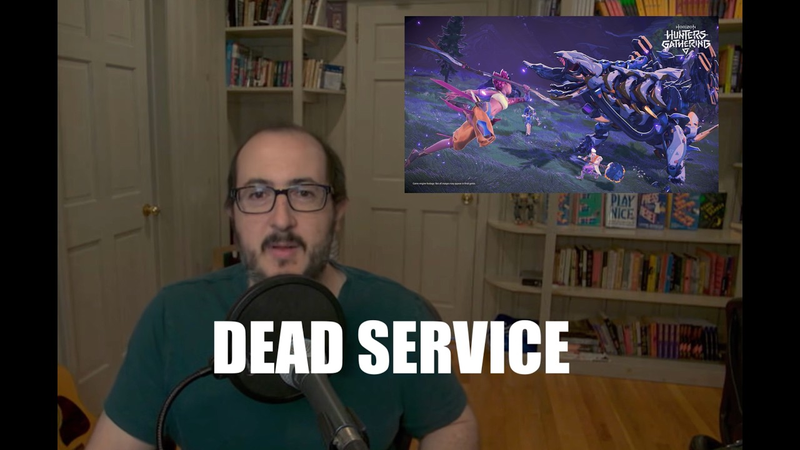
PlayStation's Live-Service Initiative Could Not Have Gone Worse
PlayStation’s strategic pivot toward live-service gaming, initiated around 2020–2021 with the goal of launching a dozen such titles by 2026, has largely failed to yield the intended results.
- Sony's live-service initiative, which aimed to launch a dozen live-service titles by 2025-2026, has largely failed, resulting in significant resource depletion and the cancellation of multiple high-profile projects.
- Guerrilla Games has rebooted 'Horizon Hunters: Gathering' following poor performance in playtests conducted throughout 2026, casting doubt on the project's future.
- Naughty Dog canceled its 'The Last of Us' online project in 2023 to avoid the long-term resource trap of becoming a dedicated live-service studio.
Bungie's Layoffs: The End of an Era?
The recent restructuring at Bungie, characterized by a significant reduction in workforce, marks a critical turning point for the studio following its 2022 acquisition by Sony.
- Bungie has reduced its workforce by approximately 600 positions since its 2022 acquisition by Sony, including a recent round of 400 layoffs that cut nearly 40% of the remaining staff.
- Sony recorded a $766 million impairment charge related to Bungie for fiscal year 2025, indicating that the original integration strategy has failed to meet financial expectations.
- The acquisition thesis—that Bungie would lead Sony's live service initiatives—failed because Bungie’s high-cost expansion model proved incompatible with the microtransaction-heavy frameworks Sony intended to implement.
Shooter Monthly #8: The Bungie Eulogy, Why Destiny Fell Off, and Can Marathon Save the Studio
Bungie’s trajectory serves as a definitive case study in the volatility of the live-service model, illustrating how a studio can pioneer a genre while simultaneously struggling with the sustainability of long-term engagement.
- Bungie generated between $1.5 and $2 billion in revenue by successfully blending high-fidelity gunplay with deep RPG progression.
- The decline of Destiny is attributed to the exhaustion of its ten-year narrative arc and a seasonal content model that made player progress feel temporary.
- Bungie failed to transition Destiny into a smaller, long-term maintenance phase, a strategy that successfully sustained competitors like Rainbow Six Siege.
Why did PlayStation buy Bungie in the first place?
The acquisition of Bungie by PlayStation for $3.6 billion in 2022 serves as a case study in the challenges of pivoting toward a live-service business model.
- PlayStation acquired Bungie for $3.6 billion in 2022 to accelerate its transition into the live-service market, but the strategy has resulted in approximately 700 layoffs and underwhelming performance for projects like Marathon.
- The console market is experiencing a period of stagnation, with U.S. hardware unit sales hitting record lows for both PlayStation and Xbox due to rising component costs and repeated price hikes.
- U.S. gaming revenue showed only a marginal 1% year-over-year increase in May, reflecting a broader cooling trend as consumers delay spending while anticipating the next generation of consoles expected in 2028.
Destiny 2's Sunset, Pay-Per Click Game Journalism & Star Citizen's Billion $$$ | Games For Breakfast
The gaming industry is currently navigating a period of significant structural instability, characterized by the sunsetting of long-term live-service titles and the erosion of traditional labor standards.
- Star Citizen has officially surpassed $1 billion in total crowdfunding revenue, despite the game remaining in an alpha state and featuring high-cost digital assets like a $5,000 ship designed for large crews.
- Bungie is sunsetting Destiny 2, meaning the game will cease receiving new content updates after June 6, though the servers will remain online for existing players.
- Sony’s acquisition of Bungie for $3.6 billion has faced financial scrutiny, with reports indicating the studio has incurred approximately $766 million in losses since 2022.
Shooter Monthly #7: Marathon’s Collapse, Apex’s Comeback, & Disney’s Extraction Shooter
The extraction shooter genre currently faces a critical inflection point, characterized by a tension between hardcore design philosophies and the necessity of mainstream accessibility.
- The extraction shooter genre is currently struggling with a critical tension between hardcore mechanics and the mainstream accessibility required for player retention.
- Titles like Marathon are seeing significant declines in daily active users, driven by punishing gameplay loops and a lack of effective onboarding for new players.
- Apex Legends serves as the industry benchmark for longevity by successfully oscillating between casual and hardcore audiences through sandbox refinements and accessibility features like bot-filled lobbies.
Shooter Monthly #6: RADICAL Marathon Solutions, Deadlock’s Secret Design, & Fortnite Extraction Mode
The modern shooter landscape is undergoing a significant transition as established titles struggle to balance core gameplay integrity with the demands of platform-based growth.
- Valve is prioritizing long-term polish for Deadlock by treating it as an iterative platform rather than a static product, leveraging expertise in both MOBA and shooter design.
- Bungie’s Marathon is currently underperforming in mass-market acquisition compared to competitors like Arc Raiders, despite possessing high-quality mechanics that drive strong player retention.
- Epic Games is facing competitive pressure from platforms like Roblox, forcing a strategic shift toward refining core monetization and gameplay quality rather than pursuing unfocused expansion in Fortnite.
Shooter Monthly #5: The Marathon Revelation, Overwatch Reborn & The Death of Highguard
The modern shooter landscape is currently defined by a tension between the volatility of community-driven spectacle and the necessity of sustainable, systems-based design.
- The collapse of Highguard demonstrates that relying on negative community sentiment and 'hate-playing' is an unsustainable strategy that fails to generate long-term player engagement.
- Bungie is positioning Marathon to disrupt the extraction shooter genre by combining high-stakes tactical gameplay with the accessibility and streamlined objectives typical of battle royale titles.
- Overwatch has successfully reclaimed market share by pivoting back to its core identity and implementing fundamental gameplay updates, validating the effectiveness of nostalgia-driven re-launch strategies.
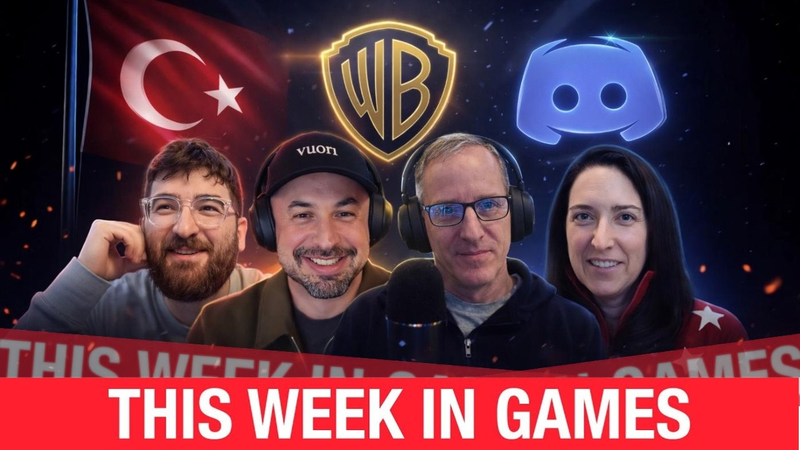
TWiG #373: Turkey Funds Game Dev, WB Games Uncertainty & Discord Drama
The global gaming industry is currently navigating a period of intense structural realignment, characterized by shifting monetization strategies, aggressive government intervention, and the consolidation of major intellectual property.
- Major publishers are facing significant strategic instability, with Ubisoft narrowing its focus to core franchises and WB Games potentially facing divestment or asset licensing due to parent company debt.
- Government-backed initiatives in Turkey are providing a sustainable growth model for studios by subsidizing employee salaries, platform commissions, and marketing expenses.
- Mobile developers are increasingly utilizing direct-to-consumer web shops to bypass platform fees, though these margin improvements are being offset by rising user acquisition costs and stagnant organic growth.
High Guard's Downfall, Marathon's Release, Xbox's Future | Roundtable News 370
The modern video game industry is currently navigating a period of profound instability, marked by the failure of high-budget live-service titles and a broader crisis in North American development.
- Wildlight’s HighGuard failed due to inconsistent art direction, poor performance, and a lack of public playtesting, resulting in significant layoffs and a drastically reduced team size.
- Modern live-service shooters are struggling due to post-COVID overfunding, leading to a market saturated with failed projects and a disconnect between long development cycles and shifting player interests.
- Bungie’s Marathon playtest demonstrated strong gunplay but highlighted critical issues with UI readability and the need for clearer art direction, underscoring the importance of early public feedback.
Companies behind it


As the documents state it.