Baldur's Gate
Game
Documents about Baldur's Gate

TWIG #406: What if Roblox Goes Private and Which Games Get Kicked by GTA VI
The global gaming industry is currently navigating a period of intense structural adjustment, characterized by a shift toward sustainable development models and the challenges of balancing creative ambition with public market expectations.
- Grand Theft Auto VI poses a significant market threat, with 69% of adult gamers intending to play the title at launch, likely displacing competitive shooters and sports games.
- Roblox may need to transition to a private company to escape quarterly earnings pressure and resolve the conflict between its low-fidelity content model and public market demands for AAA-quality experiences.
- The gaming industry is shifting away from high-frequency content models toward system-driven designs to improve player retention and operational efficiency.
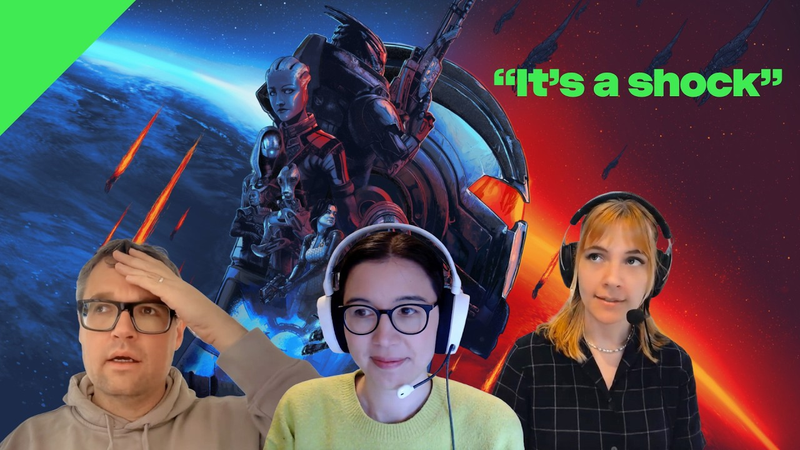
Where now for Mass Effect? Plus, Ken Kutaragi’s console fears and the rise of Poki
The gaming industry is currently navigating a period of profound structural transition, marked by the consolidation of major publishers and the emergence of alternative distribution models.
- Major publishers like Electronic Arts are pivoting toward live-service titles like EA Sports FC and Apex Legends, leading to studio closures such as BioWare and the cancellation of the Mass Effect franchise.
- Web-based gaming platform Poki has reached 100 million monthly users by utilizing an ad-supported, low-friction browser model that bypasses traditional mobile app store fatigue.
- Industry veteran Ken Kutaragi has expressed concerns regarding the long-term viability of high-end hardware, suggesting a shift toward lightweight, network-based systems that prioritize accessibility over raw processing power.
EA Shuts Down BioWare
Electronic Arts has officially shuttered the legendary game studio BioWare as part of a broader corporate reorganization and workforce reduction.
- Electronic Arts has officially closed BioWare as part of a corporate reorganization that includes 400 total job cuts, with 50 positions eliminated at the studio.
- The closure of BioWare results in the cancellation of the next entry in the Mass Effect franchise, which was in early-stage development.
- Dragon Age: The Veilguard sold approximately 1.5 million copies, failing to meet Electronic Arts' internal performance targets.

The Miraculous Story Behind Baldur’s Gate 3
The development and release of Baldur’s Gate 3 represents a significant anomaly in the modern video game industry, characterized by a complex history of licensing, financial instability, and creative perseverance.
- Larian Studios' success with Baldur's Gate 3 is attributed to its status as a rare, large-scale, privately owned developer, which allows it to avoid the short-term pressures of quarterly earnings and investor demands faced by publicly traded companies.
- The development of Baldur's Gate 3 required a massive scaling effort, with the studio growing its workforce from 140 to 450 employees to manage the complex production pipeline required for full cinematic integration.
- Baldur's Gate 3 has achieved significant commercial success, selling over 20 million copies and winning multiple Game of the Year awards despite facing major external challenges, including the COVID-19 pandemic and the forced relocation of staff due to the 2022 Russian invasion of Ukraine.
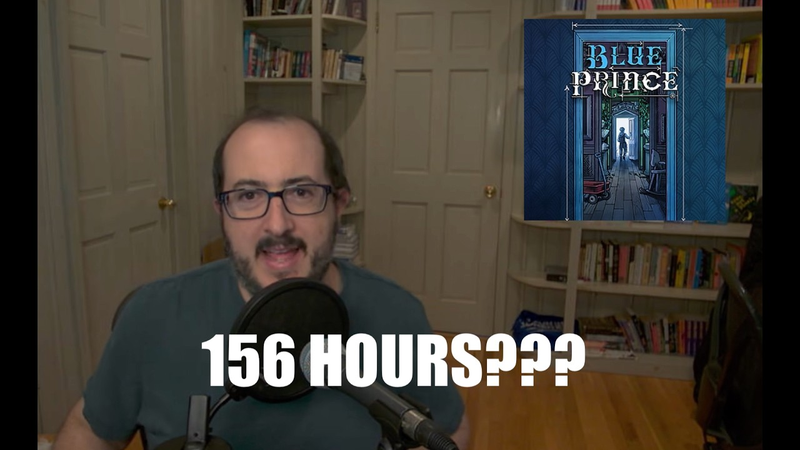
The 10 Games I've Played Most On Steam
This analysis examines the personal gaming habits of a prominent industry commentator, focusing on the ten most-played titles on their Steam account.
- Larian Studios' titles Baldur's Gate 3 and Divinity: Original Sin II are highlighted for their high-quality, non-filler combat systems and their ability to 'say yes to the player' through deep, interlocking mechanics.
- CrossCode, a Zelda-like RPG, is noted for its brilliant concept of an MMO-within-a-game, earning 155.1 hours of playtime across multiple playthroughs.
- Hundred Line Last Defense Academy is described as an extreme example of a slow-burn narrative, where the initial 30-hour playthrough functions primarily as a prologue to the actual game.

260 Hours of MoCap: Baldur's Gate 3's Karlach Actor on Game Performance | GDC Side Quest
The production of modern narrative-driven video games requires a fundamental shift in how studios engage with performers, moving away from treating actors as mere technical assets toward fostering deep, collaborative partnerships.
- Samantha Béart performed 260 hours of motion capture work for the character Karlach in Baldur's Gate 3, requiring the recording of multiple thematic variations for scenes to account for various player-driven narrative outcomes.
- Game studios should integrate actors earlier in the development process by utilizing traditional theatrical practices like table readings and chemistry tests to improve performance quality and character consistency.
- Actors can improve their performance in abstract or green-screen environments by applying theatrical techniques, such as Peter Brook’s 'magic space,' to visualize and ground their interactions within the game world.
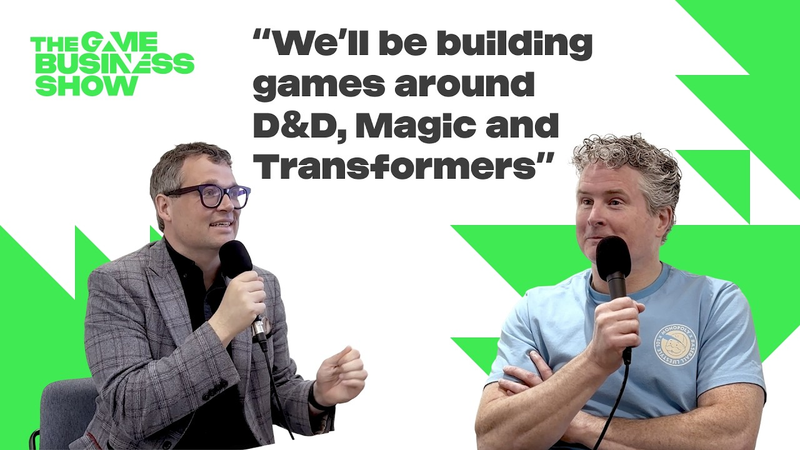
The D&D company is spending $1bn making video games, and none of them are games-as-a-service
Hasbro is currently executing a decade-long, $1 billion investment strategy to expand its footprint in the video game industry.
- Hasbro is executing a $1 billion, decade-long investment strategy to expand its video game footprint, explicitly rejecting the games-as-a-service (GaaS) model in favor of premium, single-player experiences.
- The company is prioritizing high-quality, 40-to-50-hour traditional PC and console titles to avoid the high volatility and low success rates associated with GaaS.
- Hasbro’s portfolio strategy divides development between internal studios for core brands like Dungeons & Dragons and Magic: The Gathering, and external partnerships for casual or mobile properties like Monopoly Go.
When Scale Stops Working: The New Rules Of Mobile Growth
The mobile gaming industry is undergoing a fundamental transition from a volume-based user acquisition model to a monetization-first strategy centered on long-term retention and deep player engagement.
- The mobile games market has shifted from a volume-based acquisition model to a 'monetization-first' era, where revenue growth depends on deepening engagement with existing players rather than incremental installs.
- Games are now services rather than one-time products, requiring studios to maintain continuous live operations to ensure long-term commercial viability.
- Roblox is significantly impacting industry growth, with research from Matt Ball indicating that the broader games industry's growth is stagnant when Roblox's performance is excluded.
Overwatch Drops the 2, Baldur’s Gate on HBO & Discord’s Face Scan Plan | Games For Breakfast
The gaming industry is currently navigating a period of significant strategic pivots and ethical challenges, characterized by attempts to reclaim brand identity and the contentious implementation of new technologies.
- Overwatch 2 is undergoing a strategic course correction, moving away from its previous branding and structure to return to a more traditional hero-shooter model.
- Discord is implementing new age-verification measures that may utilize existing user data, such as linked Steam account information, to infer if a user is at least 18 years old.
- The Magic: The Gathering community successfully raised $600,000 for the Trans Lifeline through a recent social media fundraising campaign.
Difficulty, Complexity, and the Single Player Experience | Design Club
The design of modern single-player role-playing games, particularly those rooted in complex tabletop systems like Dungeons & Dragons, centers on the tension between mechanical balance and player agency.
- Modern RPGs like Baldur’s Gate 3 treat complexity as a player-controlled lever rather than a rigid difficulty curve, allowing users to master systems to create overpowered builds.
- Developers prioritize player agency by accepting that allowing users to 'break' the game through deep engagement and optimization is a deliberate trade-off that enhances the sense of discovery.
- Balancing complex systems requires careful management of the action economy, resource expenditure, and recovery mechanics to maintain combat pacing without relying on artificial gating like boss armor.

Wizards of the Coast will bet on new talent for future D&D and Magic video games
Wizards of the Coast is strategically pivoting toward becoming a major publisher of premium video games by leveraging its core intellectual properties, Dungeons & Dragons and Magic: The Gathering.
- Wizards of the Coast is pivoting to become a major publisher of premium video games by leveraging its Dungeons & Dragons and Magic: The Gathering intellectual properties.
- The company has partnered with the newly formed studio Giant Skull, led by industry veteran Stig Asmussen, to develop a new Dungeons & Dragons title.
- Wizards of the Coast is establishing a centralized content creation team to support studios with fantasy-focused art and world-building for projects developed in Unreal Engine 5.
The State of UGC Games in 2025
The user-generated content (UGC) gaming sector in 2025 is defined by a strategic shift toward platform-integrated modding and a growing divergence in creator sustainability.
- Roblox continues to demonstrate strong growth, reporting 24% year-over-year bookings growth and 21% year-over-year daily active user (DAU) growth.
- Roblox's competitive advantage is driven by its low friction for discovery, allowing users to switch between games in approximately 8 seconds, compared to 20 seconds on the App Store and 31 seconds on Steam.
- To incentivize user acquisition, Roblox introduced a program that rewards creators with 50% of the revenue generated by new players they bring to the platform over a 6-to-12-month period.
Companies behind it
As the documents state it.