Wooga
Company
22 documents in the library are about Wooga, from writers such as PocketGamer.biz, Mobilegamer.biz and Deconstructor of Fun. Each has a summary and key insights with the page they come from.
Connections
The documents about Wooga on the inner ring, the other games and companies they name on the outer one. Select a cover to see it up close and open it in a new tab; drag to move, pinch or Ctrl + scroll to zoom.
Documents about Wooga

What Playtika's Competitive Intelligence Lead Wants the Industry to Rethink
The mobile gaming industry is undergoing a strategic shift in monetization, moving away from aggressive conversion tactics like excessive pop-ups and offers toward enhancing core gameplay value.
- Top-grossing mobile games are shifting focus from aggressive conversion tactics like pop-ups and excessive offers toward increasing the intrinsic value of core gameplay to drive revenue.
- Successful titles like Match Factory and Royal Match are utilizing streak mechanics to enhance player engagement and retention through gameplay design.
- Coin Master has successfully reinvented the traditional concept of a 'level' specifically for a spin-based game format to improve player progression.

Tencent, Playtika and SuperPlay shenanigans, further Google Play changes. Monopoly Go, MTG, more
The mobile games industry is currently navigating significant shifts in corporate ownership, platform accessibility, and market performance.
- Google has dropped its requirement for a 'registered app stores' program, allowing third-party app stores like the Epic Games Store to operate directly within the Google Play Store as of late July 2024.
- Tencent is reportedly in talks to acquire Superplay, the developer of Dice Dreams and Domino Dreams, for up to $1.5 billion following the studio's significant performance growth under Playtika.
- MTG reported Q2 group revenue of $306 million with a 24% profit margin, driven by Raid: Shadow Legends, which earned $111 million, while direct-to-consumer revenue grew to 38% of total group income.

Mobilegamer.biz Weekly Update: May 2026
The June 2026 weekly update from mobilegamer.biz provides a comprehensive overview of the mobile gaming industry, focusing on studio developments, market performance, and significant sector trends.
- Queen Digital Entertainment, a new studio founded by two former King executives, has closed after operating for at least three years, employing 25 staff, and soft-launching four titles.
- Amateur-made football drafting game '38-0' by Josh Pavey achieved over 100,000 downloads and entered the UK App Store's top ten games within days of its launch.
- The nine-person studio Northern Forge's RPG 'Orna' has surpassed 4.5 million downloads over eight years by maintaining a lean operation and focusing on its community.

Supercell reboots Mo.co, Fortnite is back on iOS, Nintendo's next mobile game, Embracer, Wooga, more
The mobile gaming industry is currently navigating a period of strategic pivots, legal challenges, and financial recalibration.
- Embracer Group has written down the value of its mobile division—comprising CrazyLabs, A Thinking Ape, and Deca—by $192.4 million following a 57% year-on-year decline in net sales to $244.9 million.
- Supercell has rebooted its monster-hunting title 'Mo.co' with a new season pass structure, though the game continues to rely exclusively on cosmetic monetization, raising concerns about its long-term viability compared to the discontinued 'Squad Busters'.
- Fortnite has returned to the iOS App Store worldwide (excluding Australia), a move Epic Games is using to force transparency regarding Apple's commission structures and fee-related legal challenges.

Weekly Industry Roundup: Sega-Rovio, Playtika, and Wooga Layoffs
The mobile gaming industry is currently navigating a period of significant structural realignment, characterized by workforce reductions and strategic pivots among major publishers.
- Playtika is shifting its focus from social casino games, which are in managed decline, to casual titles like Disney Solitaire, with casual games now representing 76% of its business.
- Rovio is undergoing a 'rebuilding' phase following a disappointing acquisition by Sega, clarifying a mistranslation in Sega's investor materials that initially used the word 'restructuring'.
- Wooga, owned by Playtika, has experienced another round of layoffs, with former staff criticizing management decisions.
Turning LiveOps Trends Into Actionable Strategies: Deconstruction of Fun Podcast Recap
This resource serves as a strategic guide for mobile game developers and publishers looking to optimize LiveOps performance.
- LiveOps has become a fundamental driver of player engagement and revenue growth within the modern mobile gaming industry.
- GameRefinery’s Chief Game Analyst Erno Kiiski collaborated with industry experts from Playtika and Wooga to analyze current LiveOps trends and best practices.
- The discussion focused on deconstructing successful LiveOps strategies to provide actionable insights for game developers and publishers.

How do Playtika and Wooga nail their Live Ops strategies?
Successful Live Ops strategies in the modern casual gaming market rely on a layered framework that integrates social interaction, engagement mechanics, and data-driven monetization.
- Top-performing casual games now utilize collectible frameworks, such as albums and multi-stage missions, in 75 percent of titles to unify progression and reduce player cognitive overload.
- Successful Live Ops strategies are shifting from large-scale clan structures to intimate, one-on-one partnerships that leverage social accountability and psychological triggers like the prisoner’s dilemma.
- Monetization models have evolved from static purchasing to gamified, effort-based bundles that are dynamically tailored to a player’s specific progression stage.
Soft launch Sonar #6: Is Capybara GO the next big hit from Habby?
The mobile gaming industry is currently defined by a strategic shift toward iterative design, where developers prioritize refining proven mechanics over original intellectual property.
- Mobile developers are increasingly prioritizing the refinement of proven mechanics over original IP, utilizing genre-mashups like merge, roguelite, and puzzle systems to optimize retention.
- Habby is shifting from hyper-casual roots toward complex hybrid-casual titles by integrating deep meta-layers such as collectible talent cards, gacha mechanics, and social casino elements.
- To combat rising user acquisition costs, 4X strategy studios are employing rapid prototyping and diverse creative hooks—including fantasy and survival mini-games—to validate concepts before global launch.

Playtika's $2 Billion Bet: Rolling the Dice on Inorganic Growth
This analysis examines the strategic implications of Playtika’s $2 billion acquisition of SuperPlay, positioned against a backdrop of broader mobile gaming trends and recent corporate performance.
- Playtika is acquiring SuperPlay for $2 billion, consisting of a $700 million upfront payment and up to $1.25 billion in potential earnouts.
- Playtika’s Q2 2024 financial performance shows a 2.5% year-over-year revenue decline to $627 million and a decrease in average daily paying users from 307,000 to 298,000.
- The acquisition strategy faces efficiency challenges, as SuperPlay’s user acquisition spending is estimated to be three times higher than Playtika’s current 18% of revenue.
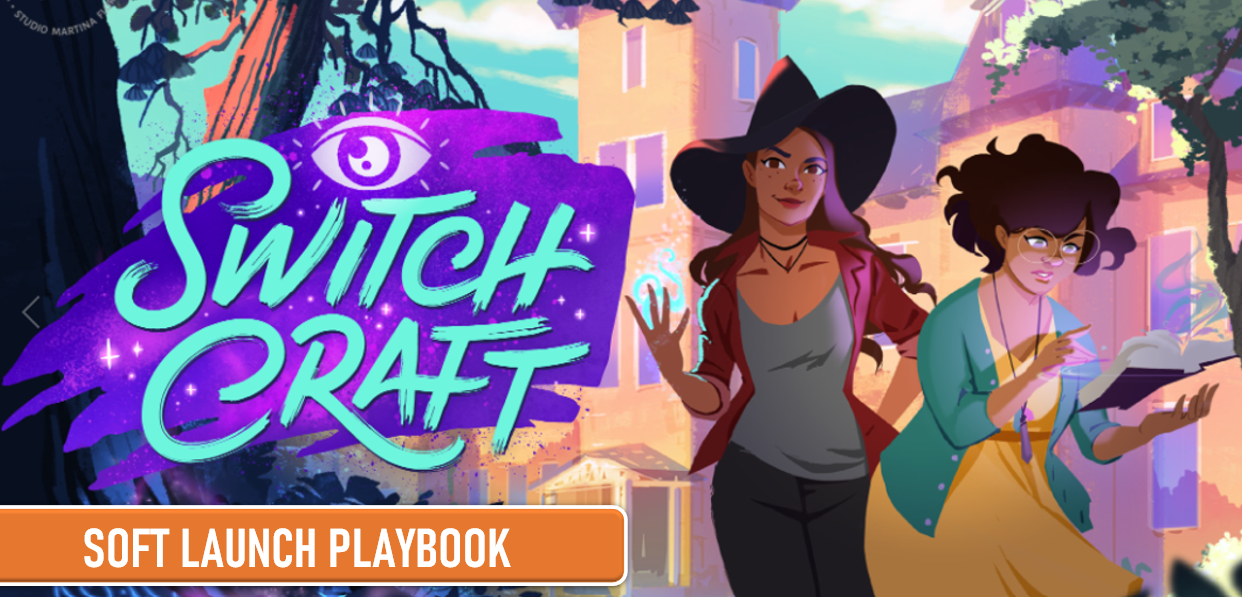
Soft Launch Playbook: 2022
The soft launch process for modern mobile games requires a rigorous, data-driven approach to validate core mechanics, audience fit, and marketability before a global release.
- Retention is the primary success metric for mobile games; if a game fails to retain users, no other performance indicator can compensate for the loss.
- A global launch should only proceed when there is a sustainable business case where lifetime value consistently exceeds the cost of user acquisition.
- Soft launches should be treated as iterative processes rather than linear paths, as demonstrated by Wooga’s Switchcraft, which required pausing user acquisition to rebuild the first-time-user-flow.


Construyendo un Sector del Videojuego en Igualdad
The Spanish video-game market now serves more than 18 million players, with women representing 48% of the audience, yet women occupy only about 20% of development roles across Europe’s roughly 90 000-person sector.
- Women comprise 48% of the 18 million players in the Spanish market, yet they hold only 20% of development roles within the 90,000-person European industry.
- Systemic hiring reforms—including gender-neutral job advertisements, transparent salary bands, and multi-reviewer processes—are essential to increasing the entry and retention of women in development roles.
- Companies such as Wooga have achieved higher retention and increased female representation in senior leadership by utilizing unconscious-bias training, inclusion nudges, and data-driven KPIs.



Campo da Gioco Equo
The guide argues that gender equity is both a commercial necessity and a social responsibility for the European video-game sector, which employs roughly 90 000 people while women constitute only about 20% of developers despite half of Europe’s population being gamers.
- Women currently represent only 20% of the 90,000-person European video-game workforce, despite comprising half of the continent's gaming population.
- A persistent 14.1% gender-pay gap exists within the EU gaming sector, exacerbated by promotion disparities rooted in biased assessments of employee potential.
- Proactive, data-driven interventions—such as AI-enhanced moderation and diversified teams—successfully reduced toxic in-game chat by 5% in pilot programs.