VideoDeconstructor of Fun
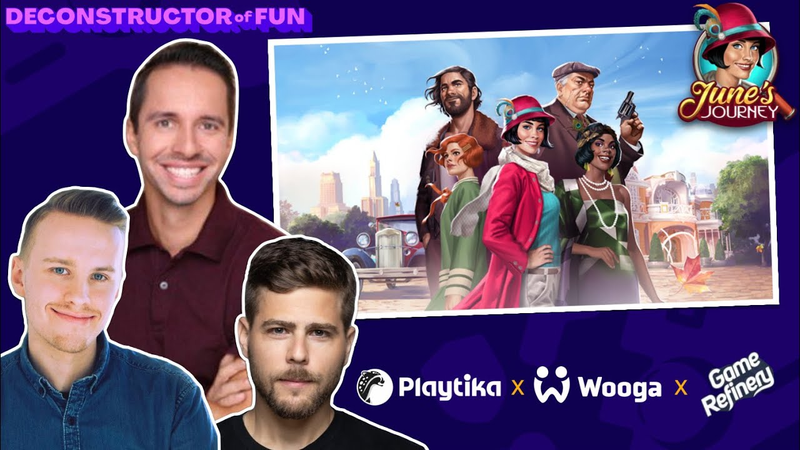
How do Playtika and Wooga nail their Live Ops strategies?
27 Jan 202568 min video
Transcript
Hello everyone and welcome to our Deconstructor of Fun interview series or deep dives, whichever you'd like to think of it. I'm your host Jen Donahoe, co-host of This Week in Games podcast and a strategic marketing consultant. So, our topic today and I first thank you to our guests who just gave me all of the best information. We've got so many live ops insights to cover and it'll be great insights for leaders and for teams. What we're going to cover applies both to mobile and PC console. So, everybody stay tuned because there are great tools and great services, especially from our folks at Game Refinery that are here today that are going to help us really dig into all the best around live ops and events. So, even if your game isn't a live service, I think the framework that we're going to talk about and the approach that we're going to cover is still valuable for people to think about how do you best service players and give them these
really great engaging experiences. So, to help me today I cat wrangled together three great experts to share their tips and tricks on approaching live ops. So, we have Nadav from Plarium, Max from Wooga, Erno from Game Refinery. I'm actually going to let them introduce themselves because I want you to hear their street cred. Like these these folks live and breathe this every day. And so, first Nadav, welcome. Yes, hi everyone. It's great to be here. Very excited and so hi everyone, I'm Nadav and I lead the product marketing insights team at Plarium for the last 3 years. Basically, the team's mission is to conduct ongoing game research to identify trends, market opportunities, gaps, and eventually to drive product growth and improvements. We work closely with all of the game studios and senior management as well. And by the way, in terms of the position in the company, we sit within a central unit called Bizdom that gathers under one umbrella growth analytics, player research and game research. So, it's
kind of it's how we structured in the company and yeah, it's great to be here. I love that structure, how you centrally help the different teams like Max. So, Max I'm one of the different teams that I've working with Lena. Hello everyone. I'm Maxim, I'm the head of product management at Wooga. That means I'm leading the discipline across all of the product managers working in different teams, different products at Wooga. And that means essentially trying to make sure that they are the best they can be and that means providing insights from competitors in the market, so benefiting from that services. But also that means providing mentoring, coaching, acting as a mini consultant within the company, helping when there are problems that need to be solved. In addition, I'm in the creative division leadership team. So, the creative division is the the part of Wooga that's working on new games, new game concepts, so the future. Very exciting. And before Wooga, I've been working for 10 years on free-to-play
games. First half of my career was more on hardcore gaming, PC shooters, MMO RPGs. And then the second half was in casual gaming. So, Oh, amazing. You've touched it all and might I say you're you have the best background. You're like in a library with a fancy mic in the Wooga headquarters, so if you're watching if you're watching on Spotify or on on YouTube, but you you'll get to see that. So, thank you and welcome. It's great to have someone who works on live games and on the future. And so, hopefully we'll we'll get an insight into how you're thinking about things. And and then finally, Erno, thank you. I've been such a fan of Game Refinery for years and years. I've used you at many companies and especially with this live ops feature, I didn't know that you actually had it on HD games as well as mobile games. But first let me Sorry, let me let you introduce yourself. I was fan girling over your service. I think that Thank you. Thank you. Hi.
Hi everybody. I'm Arno. I don't unfortunately have as fancy background as Maxim has, but I got to deal with it. So, I'm chief game analyst at Game Refinery. So, we are basically a market provider market data provider in the games market focusing on mobile games and nowadays also on the HD side. All kind of market research tools, insights for our partners. And as of course today's topic leans so much heavily on the on the live and live event side, one of our main main product is of course focusing on the live event tracker like Jen mentioned. And actually the latest addition that we are just adding on it is this kind of like a motivational drivers also to the daily granular like level of data what what is going on in the market, but what are the actual motivations that are driving individual events? And that's something kind of unique in in the current market lands- landscape. And overall about me, I've been actually in the company for over 9 years, which is ages to be honest. I joined as the win very one of the very very very first
employees when we were just tiny tiny startup back in the day. Whole journey from the early days to wherever we are nowadays. So, happy to be here. Oh, that's amazing. I'm excited about the motivations feature tied to live events. I know that you've had that for games. It's something I love using so that you don't have to do a ton of like custom research, but you can get a good handle on tying motivations to features and now live events. So, super cool. Kick-ass live ops need kick-ass tools. That's where Heroic Labs comes in. They just released a massive update to their Satori live ops platform. And having done my research, I can say with confidence that it's second to none. In a single product, you get everything you need including event capture, player segmentation, feature flags, remote configuration, AB testing, experimentation, live events calendar, messaging, retention grading, analytics, and so much more. If you're serious about running live services in a game, get serious about
the tools you use. Connect with Roic Labs and make some serious cheese with your live ops. All right. So, we have a ton to get to. It might end up being a super-sized episode because everyone has contributed so many great examples and insights. So, hang in there with us. But, first let me just set up how we're going to approach today and today's conversation. So, starting at the highest level, Max actually gave me their approach to how they think about game development, which is in layers. And there are the the ideas of a you know, the core game, the meta game, and then your live ops or your live events. And at the number of companies that I've worked at, there haven't necessarily been those three specific teams. In many cases where I've been, I've broken it up into like core game and then meta game, live ops and core game, but not necessarily all three. So, I think that's a really cool and interesting approach. And so, once
you talk specifically about live ops, that breaks into three kind of smaller layers of the layer cake. So, you've got social events in live ops, engagement events, and monetization events. So, not quite AEM, which is, you know, acquisition, engagement, monetization, but the A becomes the S. So, you have social, engagement, and monetization. And so, that's how we're going to approach today. We're going to talk about social live ops engagement or events, engagement, and then monetization. So, let's start with social, if that makes sense. So, first let me just set this up, give a little context, and then I'll bring in the guys for this. So, social, I mean, I I truly think that when you look at games like Monopoly Go, this is what is driving a lot of as a marketer, I'm very pleased. It's driving a lot of organic because you get K-factor, you get organic K-factor, you get other folks into the game because people want to play with their friends. So, here's the trend.
Monopoly Go Partners events had a huge success, quickly becoming a popular event across many of the top games. This is in addition to multiple collaborative events. So, I always like to think of this is I'm playing games for good and not evil. We're helping each other and not necessarily screwing each other over, although Monopoly has that as well. So, this happens a lot in casual and casino. So, anyone want to give me a little bit more about like partner events and examples? Nadav, do you want to like help me out and explain that? First of all, as you said, this is generally a huge trend right now and on social it's not new. Of course, it's been there for a long, long time, but it's definitely evolving and it started back then since basically Monopoly Go has launched their famous partners event and since then it's exploding across a lot of genres, casual, casino, and and other and other as well. And basically, by designing this feature, player have to work together toward the shared goal. It can be to collect tokens or points
from the gameplay and then together they can kind of achieve the goal together. And it's very, very powerful because as you just said, you watch your friends, you see they're contributing to the shared effort and then you feel like, "Oh, why wouldn't I do the same as them?" to reach the reward together. So, this is what makes it super powerful and engaging among players. And also, I'm sure that you guys have seen that across, I think, all of these kind of short-term collaboration features, similarly to the partners one, it's being structured in pairs. So, basically, you have a few pairs you're collaborating with together and it's kind of creating for the players this few progression systems simultaneously, which is also a very interesting part of this feature. So, yeah, this is generally a huge trend right now in the market. One thing that to me is very interesting about three this trend is because like I go back and think about especially in the casual market and the social how the social has been in the past let's say 4 years, 5 years and even then like like guild mechanics and
this like clan mechanics did it used to be a thing in casual games for a while. But nowadays it's kind of like a given. Like pretty much all the top games have it nowadays. But it used to be that most of the social driven events were built around that mechanic usually. So, you have your bigger social groups, you have your like 20 30 people communicating together working towards like a common goal and so on and so on. And now when Monopoly Go brought this partner event which had a like big big impact clearly correlation on the game's performance. And the difference here is that you actually make these one-on-one social connections. So, you're not actually working just with a 20 people inside a clan, but you're actually I feel you're much more socially responsible because like we made a deal now. We are working together one-on-one. And then am I letting you down? Especially if you're participating in this event with someone you know like your friends and so on. So, the social push is even much more stronger than
let's say this historical like clan based cooperative events. And I feel that is one very very strong social driver that has made this event format stand out. And then so many other games have you know looked into this oh okay, they had such a positive impact on their their KPIs. And I feel that is a very very kind of like a key factor that this differentiates kind of like a many of the other previously seen social events in the market. Yeah, Arno. I wanted to ask you a little bit about that. So, number one, we we talked earlier about motivations, and when I think about the types of audiences that play these games, you know, one of the thing that always pops up, and this happened way back when I worked with the Pogo team at EA, Pogo was an online kind of web-based game system that did a lot of collaborative events. And many times female audiences have motivations and traits that want them to be altruistic
and help other people. When I was on FarmVille, like women wanted to go to other people's farms and water the garden or feed the animals because they they had this altruistic na- Now, as state to them. So, another thing that I saw that you you all put in here was that Monopoly Go has launched a new collaborative event that interestingly combines the prisoner's dilemma. The player they have to choose if they contribute to the shared goal or they keep it for themselves. Yeah. a little bit about this one, Nadav. Yeah, so Monopoly Go again kind of try to try to innovate in that field and actually a few days ago went out with this fresh, brand new, and collaborative event. This time, you're not like paired with four three or four other players in pairs, you're kind of working together with actually seven other players. It's a group of eight this time working together toward the shared goal, but there is a catch because you as a player in different moments during this event have this decision, should I contribute
to the team effort or actually should I spend this token for myself and kind of steal this reward? So, I've been the number one stealer in my group. Of course. But, this time Remind me not to play with you. Yeah, yeah, I will. But, it's again a super cool twist on this kind of event. And it's actually very interesting to me because like the partner event that we have seen as a trend in the market and all of these games basically emulating and you know, trying to make that same idea, same format on their own game that has been the big trend, has been this collaborative one. But then Monopoly Go after they first initiated that's collaborative, you know, co-op event. I think they are using like once a month and so on. In the summer, they basically did a little bit of twist to that format and made it like a competitive, like pretty similar concept, but they made this like competitive aspect into it. And now just like Nadam mentioned last week, they brought this new one. So it has a little
bit of like collaboration, it has a little bit of competitive, so it's kind of like trying elements from all of these iterations that they're So they are like very much pushing and like experimenting with the different ways to bring that social experience to the game. I think while we wrap this one up cuz I do want to get Maxim's thoughts on what he does in June's Journey. So two things to kind of wrap this section. Number one is when you introduce live ops, make sure that they fit with the IP and the and the the approach of your brand. Monopoly is about screwing your neighbor. It is also about working together. And they're doing both things and so that's why that can make sense for that audience is it is true to what you would expect to get in that experience. The other thing Erno, I think you just said was let's mix it up and don't always have the same event and the same motivations to an event right after each other kind of mix it up. Um that's kind of my takeaway from that section. But Maxim, tell me about what's going on. You do
this every day inside of June's Journey, which is still like a top 10 top 20 US revenue game I or top 50 I don't know. Exactly. We are doing very well, I have to say and it's interesting that we we managed to grow the the segments of hidden objects quite drastically if you compare to where hidden an was like before June's Journey, right? Yeah, that it was a different landscape. But, talking about social, I think it's it's very interesting to to talk about June Journey because the game is actually quite social and it's it's not natural. You don't you don't imagine as hidden object as being a social type of game. I can echo what has been said about the play motivation of wanting to collaborate because I've seen that in the user research that we've been doing in June Journey, but also on the new games for for Wooga. So, as we are kind of investigating, try asking different audiences what they like, what they want to do, what what motivates them when they play. We saw that actually few players describe themselves as competitive and like primarily looking
for social connection. It's like not like the thing that makes you want to play casual games. However, we noticed that whenever they were asked about the idea of collaborating with others towards a common goal, there are actually quite a lot of the players showed significant interest. And I I could directly connect that what I've been seeing in the data and what happened on the market on in casual games like Royal Match, Monopoly Go, and all of the games that followed was like exactly spot-on on that. Like players want to collaborate. Actually in casual, they are more collaborative types of players than competitive types of players. Yeah. So, talking about June Journey, like I said, the game is social. Like we have 2/3 of our players of our DAU that are in clubs. And I think it it's huge because I I don't think of this as a a social game by default, but when the feature is great, when the players see the value and have fun, you can get people into social. On the research, you see people don't come in for social, but social in casual gaming is a is a learned behavior. And if you do the
right onboarding, if the experience is fun, if you basically take players by the hand, then they will become social players and they will be happy to be very involved in the community, but you know, it's a step-by-step process. It's not like some MMORPGs where people come in wanting the social experience. But, I feel we underestimate a lot how social, let's say, casual players can be social and competitive. And I've seen it in June's Journey. Honestly, I worked in MMO RPGs that were super competitive and like for hardcore gamers. But, the behaviors that I see in the top clubs in June's Journey, in terms of level of engagement, strategy, uh like uh really planning together, and like pushing to to get the win, this is the same behavior as I've seen in 30-years-old hardcore gamers, you know? It's very interesting. That's a learning to me. Let's take example maybe from June's Journey. So, we try to also kind of surf on that wave of collaboration with a mini-event we released this year which is called uh club mysteries. And the purpose of that was to improve the social space that we have in clubs
by adding the collaborative part. Because we had competition, we had the chat, and it was already very fun, but we were missing that part of working together. And in this event, we decided to make it that you solve a case uh where you try to catch a thief, but as a team. So, every member can help together by playing the game you can earn clues so that you can build as a club evidence. And then, once you have enough evidence, you catch the culprit and you get the big rewards for your club. And very, very fun. We definitely saw players engage with it a lot. But, one thing that's was also a learning for us is that whenever you want to iterate on a feature, it is actually quite challenging because these one have more emotions attached to it. Players talk about it because it's the social space. So, if you touch something, if some clubs see a different thing, it is a definitely something that you have to be very careful with. Like the balancing and and how you personalize the experience, how you make it fair for all the clubs depending on their structure and the level of engagement they have. That's actually
the difficult part, but that's how you can really level up your your social events. But, by adapting to the social structures that you have in the event. The thing that that I love that I'm hearing is that from a even from a PM perspective, you know, maximum you're you're really thinking about what are the player motivations? Again, how does it fit with the IP? What do players expect to do together? And then I like your almost like gatewayed into social gaming is you have to hold their hand through many, many players that I encounter in my cuz I've done a lot of casual games is they don't come in wanting to do social. They're like, "Ooh, I just want to escape. I just want to play by myself. I want to have that sense of achievement." But if you can slowly and and gently introduce them to seeing the benefit of engaging with other people, then they're hooked and they can't leave because their clan or their club like won't you don't want to let them down. So, sorry, Nadav, like did you have something to add? Yeah, I I think first of all, it's it's
it's a good point because we're talking about motivations, but maybe we should look at this as needs cuz these are the basic needs of the player, but then we can see that some players might develop or discover new motivations during the gameplay because we introduce them more kind of elements in the gameplay like social elements and collaborative elements. And if we do it correctly as Maxim just described, it might work. That's why even though that I completely agree that casual players are more collaborative by nature, we even start to see this short-term collaboration event trending also into the casino category. Yes, it feels fresh. We need to see how how it's going to work in the casino as well, but there is a potential there, I believe, as well if it will do it correctly. And should not just say, "Okay, this type player are individual player. They don't like to socialize." It's all about how you do it, where, and yeah, and of course, justify the effort for the player because eventually they would like to get the right benefit for what they do. Mhm.
No, that makes sense. We did touch on mid-core or core. I think social in those genres is pretty obvious. Erno, did we miss anything? You know, so our our mid-core and core friends don't feel left out. Yeah, yeah, for sure. Like, I think like, you know, in mid-core and core, where the social is if you think about let's say four extra edges, all about social. It's built around social. It's much more kind of like that being always there, to be honest. So, that's why I find it find it interesting because like in especially historically, and I feel there's still a little bit this discussion that the yeah, like casual players like they're not that social or like social is not so big part, but like look at data look go and look at any of the top games like for example all the top events is like over half of them are social in some way at least. So, it's not like it's I think it's a very outdated way of thinking that, you know, casual wouldn't be social in in many ways, to be honest. I just passed 10,000
levels on on Royal Match. Thank you very much. I'm rocking my my 10,000 level badge very proudly on my on my avatar. Yes, I I am flexing right now. Royal Match tends to even for a game that is, you know, traditionally you would think is very individual, there are a lot of social mechanics. There's the the dragon egg feature where you have to invite your friends to do the little plink pachinko thing to unlock that. And what I love too is for a while I wasn't playing in a a very active clan, and it it allowed me to invite bots or other players like, you know, I think they were bots. And so, I think what's important too is remembering that not everyone does want to engage in social. And so, how do you kind of fake it for players to then still do what they need to do in the game? Do you have you encountered that problem? I know this is maybe off-topic, but I'm just experiencing it. I can say something about it because one of the priorities is to make sure that the event feels
fair and fun to everyone knowing that not everyone is the same. Like every player has different motivation, not every player can play 10 hours in a day the game. That's not what we expect. But for the player who is willing to play 10 hours in a day because they want to, you need to have also something for them. And for me the the solution in live ops is always the the right level of customization and personalization so that you you basically create events that feel tailored to each player or each club. So in the case of a social feature, if it's for clubs, you cannot handle all clubs the same. You have to identify which clubs are the most engaged, want the most challenge. And then for them, more fun means maybe more challenge, bigger rewards, everybody's happy. But if you if you want to onboard somebody into social and want to show that, "Oh, you can do some small lightweight level of engagement in a social space and be rewarded and feel fun." Then of course they need to have a different setup for that event than the crazy super motivated and competitive
people in the top clubs. So that's why Yeah, light your chain. Exactly. So I really think that it's really important also to combine some level of individualism even in social events and feature because you just mentioned the the Pachinko kind of mini game as a part of this event. Now, this kind of events is luck-based mini games are not accidentally there. First of all, they're there to create this volatile experience, right? And to allow some control for the game on this event. But also it allow to the player to like to control this risk versus reward because he can actually decide the bet he wants to go with and this kind of small decision during this kind of event. So this like mini games are important as well there. Yeah, luck-based mini games with multipliers. Basically, they're adding mini casino experiences into events is kind of my takeaway. Whether it's you know, a little mini jackpot machine. It's the Pachinko. It's It's why I can't
stop playing this thing. But anyway, all right. So, I think that wraps up social. Let's move to our next kind of bucket of live ops events and live events, which is engagement. And so, for engagement, you know, what we're seeing kind of overall are these umbrella events, which I love. You know, it's almost like what the battle passes were back in the day, but now it's more event-based. And so, there's both a long umbrella event, which goes over, you know, probably a month if not longer in some cases, and then there's short-term. It could be a weekend or it could be a week. And so, first, umbrella events seem to be this, you know, interconnection between your event framework that has been getting more and more popular across the gaming market. The initial concepts, like the collection albums, are nowadays a staple of the industry, but these features also show innovation and evolvement, especially concepts for the shorter umbrella events have become more more popular. I see this Monopoly Go, Royal Match, Family
Island, Gossip Harbor, Project Makeover, Lily's Garden, Twisted Tangle. Oh, that's a new one. My wife's playing the hell out of that one right now. I don't have the 3D space to do that. Anyway, Arno, so tell me a little bit about what's going on with this trend, and and what do we need to take away? Yeah, sure. So, like you mentioned already, collectible albums, it's not necessarily the newest thing anymore. And nowadays, it's it's stable. Everybody is using it, but I feel that especially the the the trend kind of like a got into another gear after the Monopoly Go's release because like when Monopoly Go Go
released globally launched, it has it as a part of like one of the features at part of the event framework already from the global launch. And even before Monopoly Go, these features had been used pretty much in all of the top slots games. So, that's an actually trend that is coming from there. So, in slots it's been years already. But now, after Monopoly Go came, I feel that it has taken to another gear in the especially in the casual market. So, if you look at the data and just like past past year past 12 months, like said all of some of those games that you already mentioned like Project Makeovers and Family Islands and Hay Days and Lily's Gardens all across the casual kind of like a sub genre landscape from puzzle games to tycoon games to these energy-based adventure games like the Family Island and so on have implemented the same features. Now, what is actually when I look at look at our data, 75% of all the top crossing 200 casual games actually have this feature. So, it's pretty much
everybody. So, it's a stable. Everybody does it. Why I find it very interesting is exactly that that it's a way for casual games that are especially more simpler casual games it's a way to create progression vectors for your game. When you have let's say why does work so well in puzzle games? You are just going level after level and especially if you have very light meta, then you have this like three-month casual collectible albums and you have another progression vector into the game that you can progress and you know get rewards from and have goals and so on and so on. And then also for these simpler games, it gives depth to the economy and it gives you another reward type. So, like you know, match-three game it used to be what what can you give as a reward? So, like different boosters and then the pre-level boosters for like a limited time, unlimited lives, or a limited time the main currency, and so on. But now, with this, again talking about randomized mechanics, you can give these card backs as a reward on all of your other events.
And that also brings me to the interconnection for your event framework. So, event framework needs to be very interconnected, and you need to have events intertwined. So, when you have this like album on the top, and then basically where you get those cards and packs are usually by playing the game, playing all the other events. So, it gives you this interconnection for your whole event framework, and gives you this like holistic framework, other than you have, okay, one event on on here, one over what over there, but there's actually a proper interconnection for the event as well. So, that's I feel is kind of like the key reason why basically everybody is now a day using it, and why it has become such a stable in the market. Yeah, there's even a little bit of social, you know, in my Royal Match, I joined a more active clan in Royal Match, and we were trading cards. It was a pain in the ass to trade it, because you have to like type it all out. I would love if if it was more
automated, you know, I get why or why not, but it definitely created not only the engagement of me chasing those new cards, because the bonuses, the rewards are pretty killer, but it also made me want to engage more with my clan, which I usually didn't care about in a match three game. Are we seeing more of that? Like that the ability to trade the cards is and and adding those social layers is important? Yes, definitely. Like uh for example, Royal Match didn't initially have it, but they did I think it was over this year when they added it. Like Royal Match also, actually interestingly, they used to have it as like a permanent feature, then Monopoly Go Go game, and this whole trend got to another gear in the casual, and now Royal Match also has those like limited time limited time seasons like 3 months or whatever is the is the length. So they also shifted from there and then they also added the kind of like the social aspect and the trading and and kind of like the social connection to this feature. So yes, definitely as a trend the addition of even social elements and then this creating the
communities and Monopoly Go since the early days like it pushed all players to lots to their social media like go, you know, in our Facebook trading groups and they had a like millions of people there and that okay, hey, I have this card and I have that card and so on. So definitely the social aspect has that become a one kind of like a more crucial part of it as well. I think also it's definitely looking recently about let's say the recent album that came out it's almost a standard to allow this kind of trading system or or swapping because, you know, there's all the time these duplicates that the player collect and it's very, you know, frustrating so you need to try to solution for the player, right? To do something with these duplicates so maybe to exchange it for something else in the game or to trade with your your friends. So these kind of things are I would say even expected from an album that comes out these days at least. Yeah, in many of the games that I've been engaging in they all work the same now. You're filling your album, you can trade your duplicates or you can build them up
and cash them in for some kind of reward. So this seems pretty standard. So maximum for for June's Journey, how do you all think about engagement live ops features? That's interesting with albums because I know you said it's a it's a staple. It's become a staple over the years for a good reason is because when it's well executed it's such a powerful feature for your long-term engagement long-term fun and ultimately also for monetization because a lot of these events are very strong monetization mechanics. You have these like these long-term goals. It adds usually a lot of monetizable items and in June July we have seen it with our the release of our memoirs feature. So memoirs for us it's the three months long collection feature that added a lot of let's say things that the game was missing. It added a lot of progression vectors making like every session more engaging and more rewarding because you were getting a lot of new things. So the freedom of random drops, also it expanded for us the
reward space because now we introduced new things that you can get in every session and ultimately a super exciting chase. That's always the most important for the album. Like it needs to feel that the long-term engagement is really worth it. So you need to provide something that's exclusive, appealing, high quality. But for us the impact was tremendous. If I can tell a little story, I can tell a little story about the memoirs because we like story at Wooga. So the initial iteration of the feature, the first album, was really really good. Like we saw tremendous impact. But like always with live ops it's all about iteration meaning that the impact of the feature between the first iteration and the eighth one was plus 60%. It's very impressive. And ultimately so through these iterations on collections adding features, adding more depth, improving the end game of collection so that even when you finish there are still exciting things to do. This allowed us to reach kind of the the maximum potential, let's let's say it like that, for the feature. It's just a feature, it's just an event. If that cannot tell you how important
live ops is and how important you can build your game beyond the core loop, I I I don't know a lot of story that can tell that better. No, that's wow, that's that's incredible. And I think I wanted to touch on what you said is how do you make it interesting for people that have finished the album? So again, as a hardcore royal match player, when I actually was in Travel Town as well and I was playing pretty hardcore, many games give you a chance to complete the album twice. And so that's that's what I do. And then they give you a badge of visual if you do complete it twice. Now, I am, you know, in Royal Match, there I I have lost the ability to do anything else. I can't collect more cards. I cashed them all in and and I can't help my clan, which is a bit of a bummer, and I understand that I'm a like I'm an edge case, probably. Although, there are a lot of clans out there that are much, much higher than ours, so I have to imagine that this is something that folks are still trying to think about is like what are the
different levels, to your point earlier, Maximum, which was like how do I make this fair? And what you mentioned is literally what we are working on, so trying to make sure that a 3-month-long feature first doesn't ends after 1 week, and that's all about economy design, segmentation, customization to make sure that you have an event that cater to the type of player that's is right now playing your game. But then, in addition, you have these mechanics to extend the collections. So, I I've seen a lot of games do it with trading. We have other approaches that we that we look into on your journey, but it's it's a lot about basically either getting new chases, so that's where you can keep playing the same mechanic, but then there are additional things to unlock, whether it's vanity items or things for decoration for your journey, or sometimes it's just on the economy side that you can recycle what you worked towards, so that you feel that what you anyway still keep getting is valuable to you. And we are experimenting a lot that
the motto for live ops, like keep experimenting and keep doing user research, so you understand now, right now, how your players are playing the game. Right now, because this evolves, like compared to how our players were playing collections with the first iteration and now, after months, years of experience, how they play collections, of course, they have different needs, they have different expectations, so we try to always keep things fresh, recycle, and reinvent ourselves. Oh, wow. Okay. Super cool. I am not envious of that constant need for reimagining core features. I am not jealous. But let's let's talk a little Okay. I can only imagine. Let's talk about short-term umbrellas. You know, these are the, you know, collection mechanics that take place over a shorter amount of time. You see this in Dice Dreams with Dream Collection, Slotomania with Slotto Stickers, House of Fun with Flickers, Coin Master Swap a Sticker. I mean, obviously, I mean, there's a there's a trend here. Yeah.
So, Nadav, talk to me a little bit about this live ops feature and mechanic. Yeah, definitely. This is the trend over the last year, this short-term kind of sets or collection. I mean, they look very similar to the traditional album, but the fact that they are short-term, as you said said before, it can be a weekend, a few days, I would say maximum week and a half or two. This what makes this kind of short-term collection almost as a tool for developers to kind of improve weaker periods of other long-term engagement features. So, what we can see in the market, games are trying, for example, to boost the beginning of the long-term album or the end of a long-term album, even sometimes to create this bridge between album cycles in order to avoid this hangover effect in between cycles, which happens sometimes. So, this is definitely interesting trend that you can see that actually develop a look at it as a tool to, as I said, improve the longer term engagement features. And even here again, as we said in other
example, it combine often the social elements, for example, in Dice Dreams it's called Friends Apple, you can actually collect these collectibles together with your friends. So, yeah, it's definitely interesting trend that happening right now in the market. Mhm. How does this fit in with multi-stage mission events? Are they They're kind of similar, but not Walk me through that. How I see they are similar is that they connect other events under one short-term umbrella. So, what I mean we mean by multi-stage mission event is like Well, if you have bad royal match, you know, they just this year introduced like this mission control and mission pursuit type of events. They are this like multi-stage events that okay, first phase, you have let's say five tasks, complete those, and then you move to the stage two, and so on and so on. And then what are those tasks then? Then again, most of the tasks are actually interconnected. Okay, hey, play this mini-game. Hey, play this or like collect cards in your like seasonal
collectible albums. So again, when I talked about earlier about making your event framework interconnected and intertwined, this is another tool that we have seen in the market getting traction. This kind of like actually creating these like list formats, you know, missions, and then introduce it in multi-stage fashion. So, this kind of like structure also that's If you think about the motivational drivers, some of the players are like very very task-driven that they need to want to have like I have this task X, and then I want to complete that, and then I move to the next one. And it very much motivates a specific type of a player. So, this is a one way to kind of like a create and tap into this kind of like similar motivations as these kind of like other umbrella type of an event. If I were in your shoes, I would be like, great, I can use this to send people all across my game to areas of the game that maybe they didn't interact with. Is that Is that something that you see happen where you're able to kind of leverage
and push people to engage more with maybe unknown features or untouched features? Yeah, definitely. I mean, you know, there are these mature game with such complex calendar. So many things are going on in any second. And sometimes as a player, you're not on top of everything. You don't know what's going on right now in the game. That's why it's interesting here that the kind of stage mission events to kind of navigate the players into the different areas in the game to make sure they are aware of everything to make sure they are progressing in all of the areas in the game right now. And yeah, this way of like staging these missions into stages can be days or just random stage really incentivize the player to come back the next day because you actually see your progress also towards longer term goals in the next 2 days or the four fourth days from now. So, the way of communicating the progress to the player in this kind of events is it's really interesting and what makes it powerful.
And as you said, it's used as a tool to navigate the players indeed along the different events or activities in the game. Definitely. One of the things too for me is I don't know did any of you play like Mafia Wars on Facebook or were you all like 3 years old and this was too long ago? So, it was the idea of filling the bar and so some of the original Facebook games were just about filling the bar. And what these limited time events that I noticed especially in Royal Match is that each of the different categories that you need to navigate to your it's old school like I see the bar. Oh, the bar is almost there. And so that social or that psychological mechanic I think I don't think we talk about that enough like the psychology that goes into navigating these events. Some developers call it the near miss effect. It's a near miss. Yeah. Well, that's amazing. powerful. Yeah. That's what Royal Match is doing
amazingly. Like I remember and a report on this that was comparing like Royal Match economy design compared to some other match three games and they were much better than other games at giving you this near miss where you are one move close of a miss or or a success, and that makes the game more fun because you feel I have a chance. Because sometimes you miss is like, "Okay, I I am completely off. This game is way too hard. I will not get extra moves ex- I will not spend anything." But if you are one move away, this motivates you to play the next round and the next round and the next round. Royal Match is amazing at that. Also, in terms of like creating the event framework, what I think these top games usually do so well, is also that near completion. That is like near miss. Like playing Royal Match, they have a very complex event frame- framework nowadays, but you're always very close on getting to the next step somewhere. So, you get these small nuggets of progression every single level you complete, which create this very engaging loop compared to that, okay, you would just, you know,
need to complete like 50 levels to get anything, but it's very very well balanced in terms of like how the event framework also feels to the player. And that's very important, I feel, in the and most of the top games do it very well. Oh, man, what does the math look like to do that? I can't I can't even imagine. That's the thing. I mean, now some things are even automatized because you have a lot of machine learning. I mean, all the top companies working on these big games that everybody's playing, they have huge team of analysts, data scientists, and very very smart economy designer that will build all of these models, forecast models, and and then, like I I said already a few times, the the key release is to segmentation. Is making sure that you don't provide the same experience to everyone because every player's different, and it doesn't make sense to to balance your event for your top 5% most engaged players and make basically the other 95% like suffer because it's impossible. So, it's all about the balancing, and if you think about the level of math and complexity, I I've
been talking to people in different companies, seeing it within Playtika, within Muga. we are talking about events that can be segmented into 30, 50, 100 segments for one event. Like you can't even go beyond 100. I know companies that work on like three-digit level of segmentation per event. That we are at that level with the tools we have nowadays and also with the machine learning and advanced analytics we have. By the way, think about event that we spoke about earlier like this short-term collaboration events. Sometimes like or other events within the same clan, different clan members are in different situation in the game right now. It have to be segmented, right? Because like the effort that's required from one player it won't be the same from other player because they're completely different level in the game. Or I don't know other activities. It's super important to segment this kind of event, definitely. Oh, wow. I didn't realize thousands of segments. I Yeah, I hadn't quite experienced that. But let's talk a
little bit more about June's Journey and you know these short-term events. I think you've implemented a few, right? Yes. I I think these like umbrella events are becoming a trend because the casual market has matured so much that now all of the top games they have very very advanced like live ops feature set. You talk about like three, four events for engagement going on at the same time. And then you have all of the sales on the side. So it's becoming very overwhelming. And this cognitive overload very often we see that lead to no decision. Like when the player is overwhelmed, instead of basically picking something they may decide it's just too much. So what a lot of companies try to do is to ease the path especially towards the event that may be less played but that the player could like if they would actually try it. In June's Journey we try to do with our season pass feature that is quite quite new. It's called Travels and here the the idea the pitch was really to have a feature over all of our live ops events that kind of
unifies them have a single like kind of progression vector there and make sure that you get value out of all of the events because they all fuel towards your your season pass to towards the travels. And of course, it's Wooga, so we add a a nice story twist to it, nice narrative. But the story for for us is very interesting with travels because we got initially a lot of praise from the gaming professionals. Actually, we got the best use of narrative in an event at the 2024 Mobile Game Dev Awards. And that's really really nice, but usually like the praise from professionals or even the player doesn't necessarily mean that it's economically a good feature for us. And we struggled a little bit because the the balancing of a feature that is interconnected to everything else is very difficult. Like you were talking about the challenge of like the math behind some things. Here a feature that affects every single event and where you have to adjust all of the rewards because now you have a new currency, you have these like travel token that you can get from all of the events. This was for us quite a
challenge because players were seeing, "Oh, now I don't get the same type of event of rewards as before. Now I get tokens." But the value of a token initially doesn't exist. They don't know what it is. And naturally you feel, "Oh, I get less because instead of boosters that are very easy to understand, now I get tokens and I don't know yet how it works. So over time, you educate your audience and then you can make it work. But it's always to keep in mind when you work on these umbrella events that if you think about like having inter laced currencies, etc., you really need to make it super clear UI wise and and balancing wise to the player that he still gets same or even more value thanks to the feature. Because you can shoot yourself in the foot and introduce a feature that you know economically is very viable for the player and is fun, but players will see, "Oh, but now I don't get this anymore, so I'm sad." So very interesting story with us, but it's a good story because after the initial hassle, like the the difficulties we had with the feature, we paused it, went
back to the drawing board, user research, data analytics. We tried to really understand the pain points that players had with the initial version. And after pausing it for several months, when we relaunched travels this year actually, in the middle of this year, then we saw much better result and we could fix our main issues with cannibalization for example. Cannibalization over the performance of other events, that was the main issue. But, like always, you analyze data, you try to fix the issue both qualitative Understand the issues qualitatively, quantitatively and and with data. And then basically, you can get it back on track. And now we are very happy with travels. And I think from the player perspective, it's really fun to have these additional stories that we can tell every month, new locations, new fun with with June. So, definitely a fun fun feature, but far from an easy feature when you worked on features that touch all parts of your game. That's fascinating that you mentioned it was cannibalistic of other events. I'll I'll just give you a player perspective of Royal Match. I can always tell when
something doesn't work. So, at one point in the game, you could build up the ability to get three extra moves. This dog would come in and give you three extra moves. That was amazing. Like, remember the the whole like just miss? Well, now I had a feature that would for free give me the ability to keep going for that like, you know, the being close to the last So, that that feature's gone and hasn't been back. And then there were some other kind of event features like I haven't seen the slot machine in a long time and I don't know if that is also, you know, not working or it's paying out really differently. And so, what's fun as a player is to see the progression of like everything that you all are trying on me and what works and what doesn't work. I Yeah, I can only imagine that cannibalization is a challenge that player dissatisfaction and drop off is a the Any other challenges that you guys see when you're testing these events? One challenge I have witnessed is that usually when you test, let's say a early version of your feature or prototype,
and you you show it to players, you get feedback that is based on the early experience. Like, players don't have the time in an interview or in a playtest to really experience and think long-term on the feature. So, you get a lot of feedback that is mostly about the the direct things, like the bling bling, etc. But, sometimes this feedback is not actually relevant to what will make the long-term success of the feature, because to really let the player experience the economy impact of the feature and how it mixes with every the rest of the ecosystem, it is very very difficult to see that early when you prototype, when you do playtests before the release. So, that's why I think you have to sometimes take bets and release something with the real audience, even though there are still something that may need tweaking. And you need to do two things. You need to first iterate, learn, and constantly try to optimize, but you also need to be not afraid of killing your darlings. That even though you worked a lot on the feature, it might still be that once player really get to play it, it is
actually not as fun as we thought, it is not as good for the game, and you need to put it back to the drawing board or just park it and move on something else. Like, it's very difficult as a as a creative person. You work on something, you put it live, and then you realize, "Okay, we we need to change." But, good companies do that. You have to do it. So, let's hit the final section, which is monetization and you know, something maybe not as interesting for players, but super interesting for us of that how do we make money. And so, on this first topic, it's really the evolution or the involvement of bundle offers. So, Nadav, do you want to take us through some examples? Like, tell me what you mean by bundle offers. Yeah, first of all, generally speaking, bundle offers are offered that combine different SKUs or different items together for specific price. It can be for example a bunch of coins together with a few boosters or power-ups together at a random price, but the trend that we see right now in the market is offers suddenly become
much more attractive not only necessarily in in the offering or the price, but in terms of how they are communicated or being structured. Usually you can see it's combined a lot of elements such as sense of choice in the offers or sense of progression even in an offer. And one of the main trends right now that we can see in the market connection between the effort and the price that you get. So we call it effort based monetization. Can see the examples for example in Coin Master called chop the price where for example you get an offer for a specific price, but you can invest and put effort into the game in order to make it even better to get an extra value or a discount. So this is super powerful because okay, you know that you want to purchase this offer right now. But you know that you're also going to play more in this session or in the next session. So why won't you invest some effort in order to make it even a better offer. So this is something that we definitely see as a beginning of a trend right now that called effort based
monetization. We also spoke about sense of choice, sense of progression. So these kind of thing are also heavily trending right now in different offers in the market. And I think what we can definitely recognize is that the fact offers become much more gamified. So developer gamified the offer in order to attract players and incentivize them to interact with the offer. It can be simple things for example pick one of three hidden offers to see what you're going to get. Or sometimes it can be as I said sense of choice. They allow the player to pick what does he want to to get for purchasing this kind of offer. So all of this kind of thing make it's much more attractive for players, much more fun. It's all about fun, right? You not just want to get them to purchase, but also to enjoy this experience as well. So, yeah, this is something that we definitely see, gamifying the offers and combining this kind of elements right now. Yeah, I saw a lot of that in Whiteout Survival, where I got to pick elements that were more beneficial to
me. Arno, what what else are you seeing that's that's interesting on this? Yeah, that's actually very good point, the Whiteout Survival highlight, because like most of these mechanics have been happening in the mid-core market for a quite a while, and most of them are actually coming from there, and they have been more utilized. But, I feel now, especially again, casual market is taking elements from there, whether it's these like progress packs that, you know, there's a price point, and then you need to play the game in order to get the more value out of it, or then whether it's just like, yeah, build your own bundle, make your own choices, or, you know, the rolling endless offers. It's pretty much all the casual games nowadays. All the big ones and everything. And again, like we talked about earlier in terms of like, this is very much psychology. Like, you could have the same items in a one bundle with a one price point. Offer it like that. But, how then you package your bundle? It can be so much more powerful, and that's comes all the way to that, okay,
how do you sell it? How do you communicate to the player? It can be so much more stronger incentive for the player, depending on how you basically build it. So, Nadav, tell me about how that might relate to limited time offers. I mean, I get, personally, this gets me every time. And anytime I see a ticking time clock on a value with a value percentage, it gets me. What are you seeing around this? Yeah, so it's an exclusive offer, it's live only for a few hours, and you have to communicate this to the player in the way that you will understand. You have this great offer right now, wouldn't you purchase it? And And course, combining this timer on top of so many other thing that incentivize the player as you mentioned before, this kind of progress bars. So, for example, well, some of us probably saw this endless or rolling offer trend right now in the market that we see in many games like Monopoly Go and Coin Master where you pick a free offer for example and then it opens another one and another one and another one, some kind of an endless effect within the offer.
So, when you have this endless effect combined with a progress bar that progress you toward a reward at milestones because each offer that you collect give you some points. And then on top of it, you even put this time limited element, really makes it feel like an exclusive offer. So, not only exclusive but also gamified and attractive with free rewards on top of it. So, this is the perfect pack for the player, basically. Awesome. So, Maxim, are you looking at limited time offers in June's Journey or you always talk to me about segmentation? I know you learn to do a lot of segments. How do you think about it for June's Journey? We we have a lot of different tools that we can use to to provide the right offer and and try to essentially I always say this this sentence like monetization in gaming, it's all about having the the right offer to the right player at the right time at the right price point and with the right message. Like you need to get all of these five things right and then you can really maximize
and it it's a long way to get there because you need to identify the right moment at the right like variable for all of this. So, what I find interesting here is that my personal experience, so what you read online is always about the try to copy the feature the sale that this game is making, this game is making. And yes, the type of sales you have this this is a medium. You can try to leverage some cognitive biases, but to me that's not really the the fun of it. For me, the monetization this is the tip of the iceberg. What's the below like the bigger part of the iceberg is really this like segmentation, personalization of the offer, and making sure that you identify, okay, for this specific player, when they are having fun, when they have a good experience with your game, when they feel that, okay, I want to engage on a deeper level with the game, that you manage to come up with an offer that is actually matching how they play the game, what they're looking for, and that is also adapted to like what they are willing to pay on the game, for example.
I always give this example like in in real life, if you go to a store and you're presented something that is completely out of your budget, it is not fun, it's not interesting, it's irrelevant. And it's a bit the same if you have somebody that's looking for a very expensive watch, you don't present them a a little Casio that you got for fake Casio for 5 euros. And like you have to adapt to the player. And likely, thanks to segmentation tools that we can have on on games nowadays, and all of the basically the back-end tooling, we are able to to actually make an offer that's relevant. And it is important because in the industry we often hear this like monetizing the fun sentence. And it is true and I I actually like it because it puts the focus on the fun. Like monetization, a lot of people see it as, okay, it's just about offers and and mathematics and it's all the bling bling. But no, it starts with the fun. So, first you identify the fun, then you identify the need. So, what do does the player need to have more fun in your game in the future after they would eventually make a purchase.
And then from there, then you make the features that will help you provide this offer, you try to have the best execution, but still you need to have the deep understanding of the the needs. What what I discuss a lot with uh product managers, especially more junior ones, is that there's often a focus at first to look at the execution of the feature. Like this feature will be the solution because it has all of these variables and you can do all of that and I can trigger this and for me the pitch always starts with what you're going to show in it. Is it relevant to the player? Is it really helping the player have fun? That's the most important thing for me. No, I love that. In general, if I try to summarize the advice for all of the teams out there working on their live ops, working on features to support a live ops ecosystem, I repeated it a lot like a lot of it is happening happening under the hood. That means think about early about your back-end tooling, about the configurability of any feature you build. Because the live ops team or or yourself when you are going to operate it, you will want to AB test, you will
want to change the configurations on the fly, you will want to basically then provide different configurations to different player segments. And this needs to be very early in your mind as you prepare the work on the feature. Uh second advice would be that good live ops is never fire and forget. It's always like iterative. It's always a process of getting the data once the feature is live, seeing how players interact with it, and then see how you can make the feature more fun, better optimized, more adapted. Like it's it's relentless so that you make sure that your events fit your game and your player. And copying Royal Match, it will not work. It might give you a an edge at the beginning, but then you still need to tailor it to your game. And finally, on the fact that live ops can so dramatically change your game and its performance that even if you let's say your core loop and your meta game show some limitation in terms of engagement, in terms of monetization a well thought through live ops feature set can
actually expand it so much that it actually can lead to a big success. And if I take a simple example in Garena, it's really the fact that our core gameplay doesn't have fail condition. You cannot fail a hidden object level, but we saw that there's definitely a lot of strong motivations in playing some streak events and features. So we said, "Hey, it's not the core of the game. that's not for everyone, but as an event, we can have events that have a fail condition and strict mechanics. So always think about how your feature set can expand the core loop that you have. No, thank you. That's a great summary and it's funny as you talk about this, I did we didn't even talk about Brawl Stars which I think their entire 2024 success can be attributed to live ops. Yeah. And everything that they're doing. But Erno, what are the takeaways that you would like the audience to hear? Sure. So the first point that I would like to make, of course, coming from my background, coming from the research side. So one thing that I constantly see, exactly like Maxim
mentioned that okay, you people are of course they're looking at their direct competitors and the top games over there, but I always say that think try to think also a little bit outside of the box because like like Maxim said, just copying Royal Match on your game, it doesn't necessarily work. So if you want to innovate for example, think about okay, look outside. What are the different games that are doing in maybe not so directly in your competition. What are the elements that work in their events? What are what are the kind of like a motivations that they try to tap into? Okay, what kind of a learnings we could take from there and then, you know, combine it with something. Usually innovation is a mixture of ideas nowadays. It's quite rare to see something totally totally new. So think about outside of the box, look outside of your closest competitors also when you're thinking about these events and then iterate iterate iterate. What works for your game? And then the second we've been on the engagement side we talked a lot about the umbrella events and you know,
holistical event frameworks. I think that is a my my second point. So thinking very holistically about your game and your event framework. So like Maxim mentioned a great real life use case of like implementing event and then it's affecting all of your other events and it can have a negative side as well. So, think about your whole event framework, how everything is intertwined, how everything is connected. It can be such a strong driver, but it also needs to be really well thought through. I just want to chime in on this. Streaks. I think I see here that you're you're saying streaks is one of the the strongest psychological drivers. I know for me as a player, it absolutely changed my behavior in gaming. It made me think about, you know, spending that extra on the booster, or spending that extra to keep my streak going, because it is so painful, especially when I'm in the end game in Royal Match, when all the levels are harder. If I lose my streak, I'm just I'm
And I know it cost me more money when I lose the streak than it does to like keep it. Yeah, definitely. The the fear of loss is super powerful. You want to preserve and maintain your benefits, and also we spoke about this super light bulb, or or whatever it is. You want to maintain this great experience, and yes, you will spend boosters and currency to maintain it. Yeah, definitely. And that's actually the one of the topics that we didn't touch on, but like one of the big big trends in the market has been, like win streaks are not necessarily new, but this year we have seen so many implementations of these different kind of a streak mechanics that have become so popular. Like you guys mentioned the super light bulb, and then we had this Lava Quest style like social-ish win streak events, and then the multipliers in competitions, and all this kind of stuff. And also expanding outside of these fail state games, that okay, it used to be just the puzzle games where you have the clear fail
state. But then they're like merge two games, like Gossip Harbor, for example, having this that okay, now it's a timed event, and you have 10 minutes to complete order and stuff like that. But like what combined all of this is the streak mechanics and it it's such a strong driver. So also very good to think about like a how we could involve streak mechanics also outside of this kind of like us fail state level based games and that's been a such a trend. So I feel that we're going to see much more of that in the upcoming years for sure. Now Dov, bring us home. What are your takeaways? I mean, we've covered a lot, but I mean, you get to see so much sitting in your central location at Playtika. What knowledge can you drop on the audience? Yeah, well, so definitely I will try to speak from the central unit perspective. And basically on our day-to-day we try to provide different frame frameworks and methods to our studios to operate efficiently in their games. And one of them is definitely the layer perspective. Um it's very
recommended as a live game to look at your game, as we spoke earlier, as a layer cake, right? It has different layers. It has the core game play, which is the main reason for the player to come to play the game, which is first. The meta game play, which provides long-term meaning. And then we have the topping, right? which are the live ops that diversify the game experience. And it's recommended to make sure that when you plan your calendar, just try to make sure that the player can taste from all of these layers, as we said before. And remember, each layer serve and represent different goals and KPIs, of course. And eventually it's all about providing the player the reason to play, the reason to stay, and sometimes also the reason to pay, right? Well, thank you so much and really an extra thank you to the three of you for really spending a lot of time and effort to put thought and content into this podcast. It might be the most amount of work I've seen in a script. So well done each of you. I I really really appreciate it. That's going to wrap it up. I will put links to
you in our show notes if anyone wants to reach out to the three amazing folks on the call. And thank you again. Thanks so much. Been a pleasure. Thanks you. Thanks.
Auto-generated captions from YouTube — names and numbers may be misheard.
















Comments