Time
Company
Documents about Time
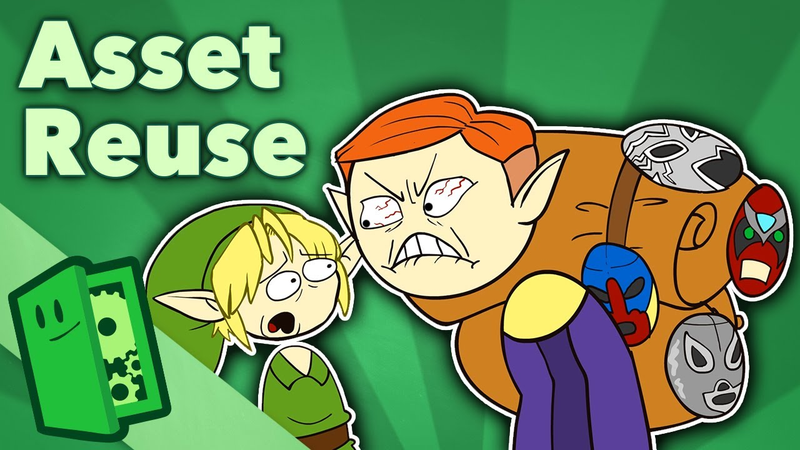
Asset Reuse - Working Smarter, Not Harder - Extra Credits
The practice of asset reuse in game development is often unfairly stigmatized as laziness or cost-cutting, when it is, in fact, a strategic design tool that allows developers to prioritize innovation and depth.
- Asset reuse is a strategic design tool that allows studios to shift finite resources away from redundant technical labor and toward core gameplay, narrative depth, and world-building.
- Reusing existing assets can enable rapid production cycles, such as the 16-month development timeline achieved for Dragon Age 2.
- Successful implementations like Fallout: New Vegas and The Legend of Zelda: Majora’s Mask demonstrate that reusing assets can facilitate superior role-playing depth and unique narrative experiences.

It’s 2020, Time to Change Your Ad Monetisation Strategies!
The mobile game advertising industry is undergoing a significant shift in 2020, moving away from traditional, inefficient waterfall monetization models toward real-time bidding (RTB) and unified auctions.
- The mobile game industry is shifting from inefficient, legacy waterfall monetization models to real-time bidding (RTB) and unified auctions to better capture the true market value of individual impressions.
- Unified auctions utilize first-price auction mechanics to provide developers with increased pricing transparency and more dynamic competition among ad networks, DSPs, and brands.
- Approximately 35% of surveyed companies have already tested in-app bidding, with an additional 35% planning to implement the technology within the next year.

UA Coffee: All About LTV (Life Time Value) and pROAS with Algolift
Predictive Lifetime Value and predictive Return on Ad Spend have emerged as critical metrics for mobile marketers navigating an increasingly competitive landscape defined by rising user acquisition costs.
- Mobile marketers are shifting from short-term metrics like Day 7 ROAS to long-term, user-level predictive modeling to improve bidding precision in auction-based environments.
- Machine learning-based projections for LTV and pROAS outperform traditional retention-curve models by ingesting historical data to account for temporal trends and anomalies.
- Predictive models should be utilized as directional tools for acquisition strategy rather than absolute predictors due to inherent market volatility and fluctuating costs.
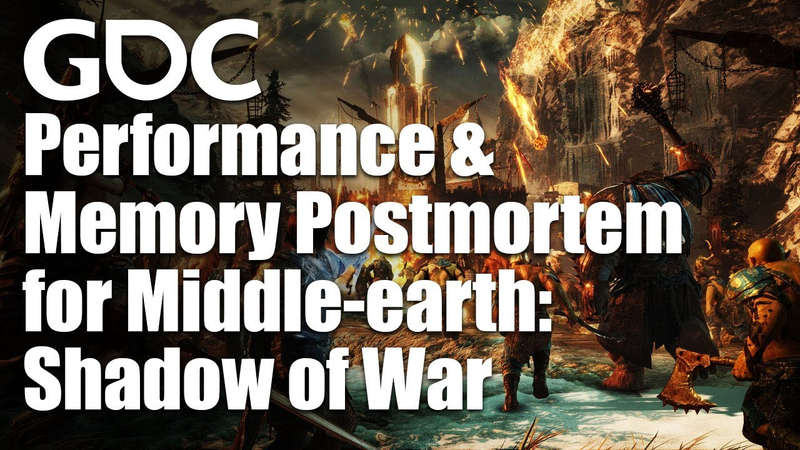
Performance and Memory Postmortem for Middle-earth: Shadow of War
Middle-earth: Shadow of War required extensive technical optimization to support a complex open-world environment featuring up to 200 unique AI actors.
- To manage 200 unique AI entities in Middle-earth: Shadow of War, the team moved away from individual system threading in favor of a 'monolithic' approach, where entire systems like effects were scheduled to run on a single core to minimize context switching and cache misses.
- The engine team replaced expensive kernel semaphores with lightweight multiple-reader/single-writer primitives, such as Microsoft’s Slim Reader/Writer (SRW) lock, to reduce CPU overhead during high-contention scenarios.
- To optimize GPU constant buffer uploads, the team implemented named constant buffers and heuristic-based data packing, which prioritized frequently used constants and zero-valued data to minimize memory footprint and avoid cache line flushing issues.

Time IS on Your Side: Personal Time Management Strategies for Crunch
Game development professionals face significant challenges during high-pressure crunch periods, necessitating a transition from reactive firefighting to proactive, outcome-based time management.
- Transition from reactive firefighting to proactive, outcome-based planning to maximize output quality and minimize task completion time during crunch periods.
- Prioritize high-impact objectives by utilizing the Results-Oriented Purpose-Driven system and the 'big rocks' method to prevent non-essential distractions from depleting cognitive resources.
- Automate daily rituals to preserve finite willpower, ensuring consistent productivity throughout demanding development cycles.
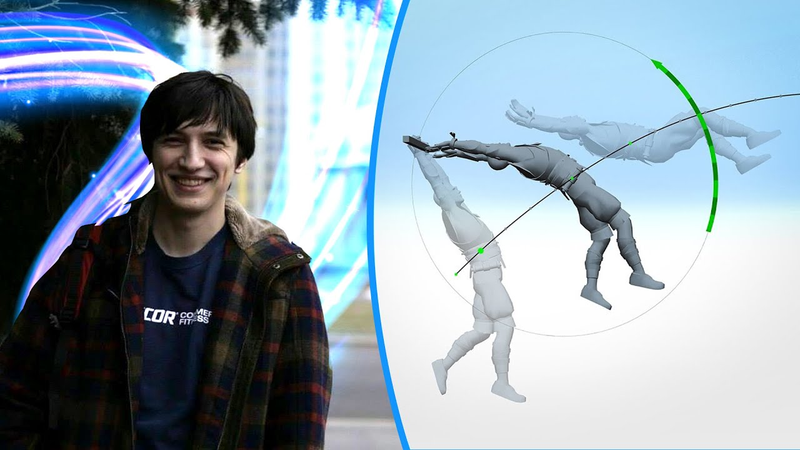
Cascadeur: Changing the World of Animation One Frame at a Time with Alexander Grishanin | GduX.me
The animation industry faces a persistent challenge in achieving physical accuracy, as traditional 3D tools often lack integrated systems for tracking center-of-mass and inertia.
- Cascadeur integrates physics-based simulation directly into the 3D animation workflow to automate the calculation of ballistic trajectories and angular momentum.
- The software utilizes neural networks to allow animators to achieve realistic, physically accurate movements like parkour and mid-air rotations without the need for expensive motion capture.
- The platform aims to disrupt the dominance of legacy software like Maya by offering a modern, accessible alternative that prioritizes physics-compliant movement.
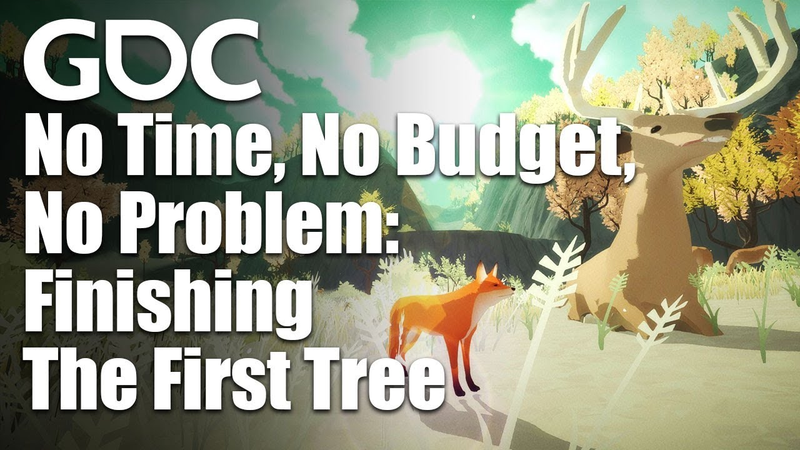
No Time, No Budget, No Problem: Finishing The First Tree
Solo game development requires a disciplined, high-impact strategy to overcome the inherent constraints of limited time and budget.
- David Wehle developed 'The First Tree' over 18 months while working a full-time job and raising two children, completing the project with approximately 1,000 hours of work and a $10,000 budget.
- The game generated $150,000 in revenue during its first year on Steam, demonstrating that a low-budget, hobbyist project can achieve commercial success through focused, high-impact strategies.
- To save roughly 600 hours of development time, Wehle utilized licensed, publicly available assets and prototypes, revising them to add a unique creative twist rather than building every element from scratch.
Changing the Time Between Shots for the Sniper Rifle from 0.5 to 0.7 Seconds for Halo 3
Game balance is fundamentally defined by a game’s long-term stability and player engagement rather than a rigid, scientific process.
- The Halo 3 sniper rifle fire rate was adjusted from 0.5 to 0.7 seconds between shots to prevent it from functioning as a 'newbie hammer' in close-quarters combat.
- Designers should avoid making incremental changes; instead, they should implement drastic adjustments to verify if a mechanic is truly broken before fine-tuning.
- Balance is a state of the game rather than a process, and designers must guard against internalizing the game so deeply that their perception diverges from the actual player experience.

Shoot for the Sky: The Ambitious HDR Time-Lapse Skies of Forza Horizon 3
The development of Forza Horizon 3 marked a significant shift in open-world environmental rendering by replacing traditional procedural sky simulations with high-fidelity, HDR time-lapse photography captured on location in Australia.
- Forza Horizon 3 replaced procedural sky simulations with 25 distinct HDR time-lapse sequences captured on location in Australia to achieve superior lighting realism and physical accuracy.
- The development team engineered a custom three-camera rig to record 24-hour sequences, resulting in 1.2 terabytes of raw data per shoot.
- To optimize performance, the team used motion vectors to interpolate between two-minute capture intervals, reducing the final data footprint from over a terabyte to under 2 gigabytes.

Apple Arcade: First Time User Experience
The launch of Apple Arcade represents a strategic shift in mobile gaming, introducing a subscription-based model that eliminates in-app purchases, microtransactions, and advertisements.
- Apple Arcade operates on a $4.99 monthly subscription model that removes all in-app purchases, microtransactions, and advertisements across its library.
- The service launched with a curated catalog of 50 to 70 titles, featuring contributions from established developers such as Sega, Capcom, and Konami.
- Content is accessible across iPhone, iPad, Mac, and Apple TV with cross-platform synchronization, though it relies on local app downloads rather than cloud streaming.

ONLINE MULTIPLAYER | A Game Dev Answers.
Developing competitive online multiplayer games presents significant technical and community-building challenges for independent developers.
- Implement robust networking solutions like Photon Unity Networking (PUN) early, prioritizing data efficiency by converting floats to integers and using serialization streams to minimize packet sizes.
- Transition from client-side networking to authoritative server models as a project scales to effectively mitigate cheating and ensure long-term game stability.
- Integrate Discord directly into the game UI with automated prompts that trigger during long matchmaking wait times to facilitate organized play and prevent refund requests.

How To Animate In Unity 3D
This tutorial provides a comprehensive guide to the fundamentals of animation within the Unity 3D engine, focusing on practical applications such as moving platforms, interactive bridges, and patrolling enemies.
- To prevent conflicts between animation data and physics components like Rigidbodies, animate a child object relative to an empty parent object rather than animating the parent directly.
- The Animator window manages state transitions using logic-driven parameters such as triggers, integers, and floats to control when specific animations occur.
- Animation curves should be adjusted to achieve precise linear movement for mechanical objects like platforms and elevators.